Key Takeaways
- The 2008 declaration fundamentally altered the security architecture of the Balkans, shifting from a post-Yugoslav framework to a contested statehood model, perpetuating regional instability and requiring sustained international oversight.
- The crisis served as a critical pivot point in US-Russian relations, crystallizing the ideological divide over state sovereignty versus the right to self-determination and contributing to a broader re-escalation of geopolitical tensions.
- Belgrade’s pursuit of legal redress via the International Court of Justice created a complex and often contradictory precedent in international law, deepening debates surrounding the legality of secessionist declarations and the scope of 'remedial secession'.
- The declaration highlighted the deep internal divisions within the European Union regarding sovereign recognition, complicating its common foreign and security policy and demonstrating the persistent legacy of ethno-nationalism on European integration.
- Beyond immediate political fallout, Kosovo's independence spurred a challenging state-building process, marked by economic fragility, persistent inter-ethnic tensions, and significant international administrative and security presences.
Historical Context and Origins
The roots of the 2008 Kosovo declaration of independence are deeply embedded in the tumultuous history of the Balkans, particularly the violent disintegration of the Socialist Federal Republic of Yugoslavia. For centuries, Kosovo has been a focal point of ethnic and historical claims by both Serbs and Albanians, often referred to by Serbs as their "cradle of civilization" and by Albanians as their ancestral homeland. This deeply contested narrative fueled the ethnic nationalism that surged in the late 1980s, fundamentally reshaping the political landscape.
Slobodan Milošević's ascent to power in Serbia was predicated on an aggressive nationalist platform that sought to centralize power and revoke the autonomy of Kosovo, which had been granted under the 1974 Yugoslav constitution. In 1989, Belgrade effectively stripped Kosovo of its autonomous status, replacing Albanian-language education and media with Serbian control and instituting widespread discrimination against the ethnic Albanian majority. This period of systematic repression, marked by political purges, job dismissals, and cultural subjugation, fostered a growing sense of alienation and resentment among Kosovar Albanians, who responded initially with a non-violent resistance movement led by Ibrahim Rugova.
However, the failure of non-violent resistance to achieve tangible results, coupled with the international community's inaction during the Bosnian War, led to the rise of the Kosovo Liberation Army (KLA) in the mid-1990s. The KLA, an armed guerrilla movement, escalated its attacks on Serbian police and military targets, prompting a brutal crackdown by Serbian forces. The conflict spiraled into the 1998–1999 Kosovo War, characterized by widespread human rights abuses, including massacres, forced displacement, and systematic ethnic cleansing campaigns orchestrated by the Milošević regime. The international community, after initially pursuing diplomatic solutions, eventually intervened.
The intervention of NATO in 1999, through Operation Allied Force, was a decisive moment. Launched without explicit UN Security Council authorization, it aimed to halt the humanitarian catastrophe unfolding in Kosovo. The 78-day bombing campaign ultimately forced Serbian forces to withdraw from Kosovo, effectively ending Belgrade's administrative control over the territory. However, the resulting UN Security Council Resolution 1244, adopted in June 1999, created a complex and ultimately unsustainable framework for Kosovo's future. While it placed Kosovo under the transitional administration of the United Nations (UNMIK) and mandated a political process to determine its final status, it also reaffirmed the "sovereignty and territorial integrity" of the then-Federal Republic of Yugoslavia (later Serbia and Montenegro, and then Serbia). This "constructive ambiguity" was a deliberate compromise to secure Russian and Chinese assent in the Security Council, but it ultimately provided a fragile peace for nearly a decade without resolving the fundamental disagreement between Belgrade's claim of sovereignty and Pristina's aspiration for full independence. This ambiguity sowed the seeds for future conflict, as the UNMIK administration struggled to build effective institutions while managing the deep-seated ethnic divisions and the growing impatience of the Kosovar Albanian population for statehood.
Timeline of Events and Key Moments
The tumultuous path to Kosovo's declaration of independence was paved with a decade of international administration, protracted diplomatic negotiations, and escalating internal pressures. The failure of successive international efforts to reconcile the conflicting aspirations of Belgrade and Prist ultimately made a unilateral declaration almost inevitable.
| Date | Event | Key Stakeholders | Description |
|---|---|---|---|
| 1989 | Abolition of Kosovo's Autonomy | Slobodan Milošević (Serbia), Kosovar Albanian leadership | Serbian government revokes Kosovo's autonomous status, intensifying repression and setting the stage for future conflict. |
| 1996 | Emergence of KLA | Kosovo Liberation Army (KLA) | Armed resistance against Serbian rule begins to gain momentum, shifting from non-violent protest to armed insurgency. |
| 1998-1999 | Kosovo War | KLA, Serbian forces, NATO | Conflict escalates, leading to Serbian ethnic cleansing campaigns and NATO's aerial intervention (Operation Allied Force). |
| June 1999 | UNSCR 1244 Adopted | UN Security Council, G8 Nations | Resolution establishes UNMIK administration in Kosovo, but leaves final status ambiguous, affirming FRY's territorial integrity while outlining a political process. |
| 2004 | March Riots | Kosovar Albanians, Serb minorities, UNMIK, KFOR | Widespread inter-ethnic violence, primarily targeting Serbs, signals the fragility of the peace and the urgency of status resolution. |
| Oct 2005 | Start of the Status Talks | Martti Ahtisaari (UN Envoy), Serbia, Kosovo representatives | UN-led negotiations begin in Vienna to determine Kosovo's final status, marking a critical diplomatic phase. |
| Feb 2007 | Ahtisaari Plan Proposal | Martti Ahtisaari | UN Envoy proposes "supervised independence" for Kosovo, including broad protections for minorities and international oversight. |
| July 2007 | Rejection of Ahtisaari Plan | Serbia, Russia | Serbia rejects the plan as it implies independence; Russia supports Serbia, blocking UN Security Council endorsement. |
| Aug-Dec 2007 | 'Troika' Negotiations | US, EU, Russia (Troika), Serbia, Kosovo | Final diplomatic push, with the US, EU, and Russia attempting to broker a compromise, but ultimately failing due to entrenched positions. |
| Dec 2007 | Kosovar Elections | Hashim Thaci (PDK), Fatmir Sejdiu (President) | Elections held amid stalled status talks, intensifying domestic pressure on Kosovar leaders to declare independence. |
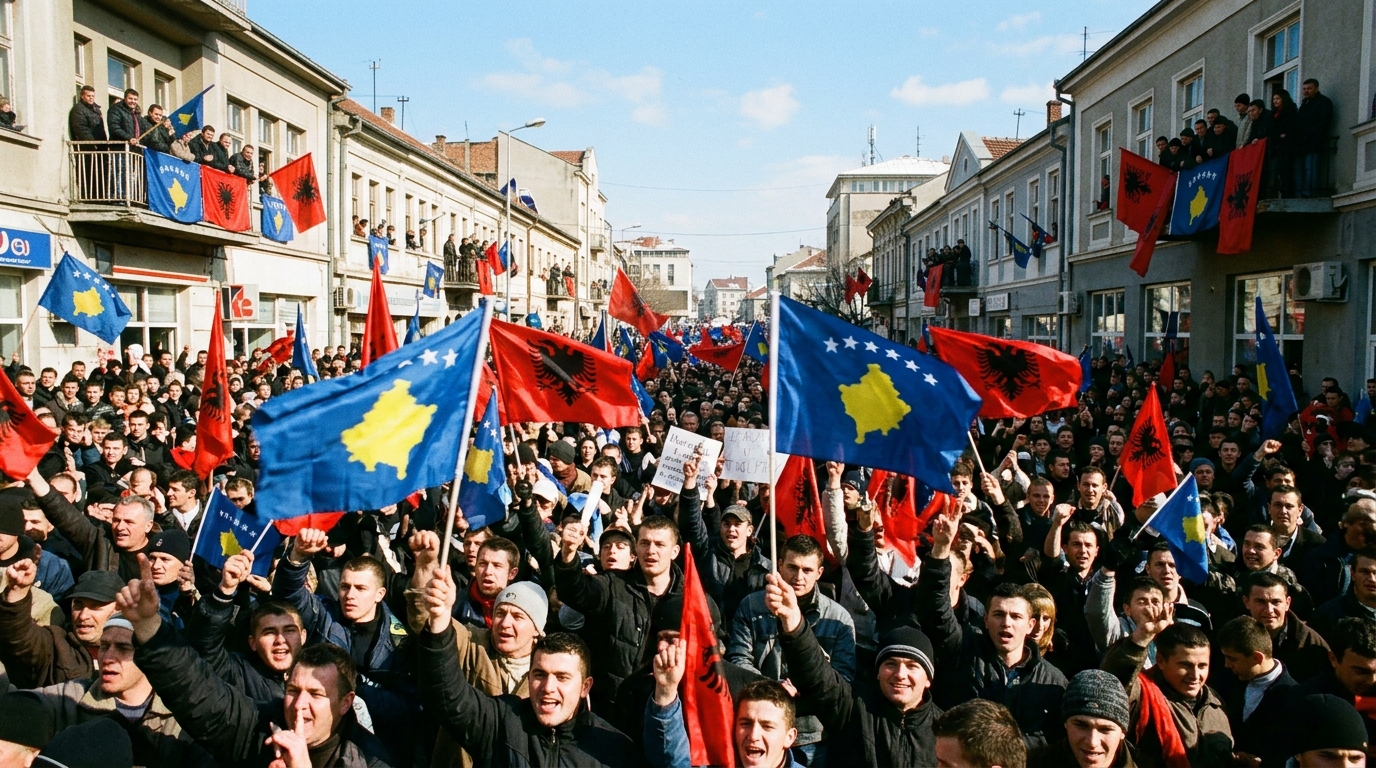
| Feb 17, 2008 | Declaration of Independence | Hashim Thaci (Prime Minister), Fatmir Sejdiu (President) | Kosovo's Assembly unilaterally declares independence, citing the failure of negotiations and the will of the people. |
| Feb 18, 2008 | US/EU Recognition Process | George W. Bush (USA), EU Member States | United States and major European powers rapidly recognize Kosovo, while others, notably Russia and some EU members, object. |
| Oct 2008 | UN Referral to ICJ | Serbia (supported by Russia) | Serbia initiates proceedings at the International Court of Justice, requesting an advisory opinion on the legality of the declaration. |
| July 2010 | ICJ Advisory Opinion | International Court of Justice | ICJ rules that the declaration did not violate general international law, a nuanced opinion that pleased neither side entirely but cleared a legal hurdle for Kosovo. |
| 2013 | Brussels Agreement | Serbia, Kosovo, EU (facilitator) | Landmark agreement on normalizing relations, establishing the Community of Serb Municipalities in Kosovo. |
The failure of the "Troika" (comprising representatives from the United States, the European Union, and Russia) to broker a final status agreement by late 2007 was a pivotal moment. Russia's unyielding opposition, rooted in its insistence on state sovereignty and its geopolitical rivalry with the West, effectively utilized its veto power in the UN Security Council to block any UN-sanctioned path to independence. This stalemate signaled to the leadership in Pristina, particularly Prime Minister Hashim Thaci, that a negotiated settlement within the UN framework was politically impossible. Consequently, the declaration became a matter of political necessity, driven by the imperative to satisfy an impatient domestic electorate that had endured nearly a decade of international administration and craved full sovereignty.
Geopolitical Consequences and Aftermath
The 2008 declaration of independence was not merely a regional event; it fundamentally disrupted the delicate post-Cold War security architecture, intensified the "Great Power" friction between Washington and Moscow, and created lasting ripples in international law and diplomacy. Its consequences continue to shape the geopolitical landscape of the Balkans and beyond.
The Western Perspective and Remedial Secession: For the United States, led by President George W. Bush, and a majority of its European allies, the independence of Kosovo was viewed as the inevitable and just conclusion to the stabilization efforts initiated by NATO in 1999. Washington framed the creation of an independent Kosovo as a humanitarian imperative—a clear case of "remedial secession." This controversial doctrine posits that a population has the right to secede from a state when it faces severe and systemic human rights violations, and all other remedies for self-determination within the existing state have been exhausted. The memory of Milošević's ethnic cleansing campaigns and the failure to achieve a consensual solution within Serbia's borders were presented as overwhelming justifications. The US moved swiftly to recognize the new state, aiming to cement its influence in the region, anchor a multi-ethnic democracy, and consolidate a pro-Western orientation in the Balkans. Key European powers like the United Kingdom, France, and Germany followed suit, seeing Kosovo's independence as crucial for long-term regional stability, albeit with an understanding of the thorny precedent it might set.
The Russian and Serbian Perspective and State Sovereignty: For Belgrade, under President Boris Tadic, the declaration was an illegal violation of international law and a direct assault on the territorial integrity of a sovereign nation. Serbia viewed Kosovo as an integral and inalienable part of its territory, a claim deeply rooted in historical, cultural, and religious narratives. This position was vehemently supported by Russia, which utilized the crisis as a powerful platform to challenge the US-led "unipolar moment" and reassert its own geopolitical influence. Moscow argued that the unilateral declaration set a dangerous precedent that undermined the foundational principle of state sovereignty, a cornerstone of international law since the Treaty of Westphalia. Russian President Vladimir Putin publicly condemned the recognition of Kosovo, explicitly warning that it would embolden other separatist movements globally and lead to instability. This concern was not merely theoretical; it soon mirrored Russia's own interests in its "near abroad." The Kosovo precedent was immediately invoked by Russia to justify its subsequent recognition of Abkhazia and South Ossetia after the 2008 Russo-Georgian War, and later in its actions regarding Crimea and eastern Ukraine. Moscow saw an opportunity to demonstrate the West's perceived hypocrisy—supporting self-determination in Kosovo while condemning it elsewhere—thereby eroding Western moral authority and challenging the international legal order that it felt was being selectively applied.
"The unilateral declaration of independence by the authorities in Pristina is a violation of the sovereignty of the Republic of Serbia, the Charter of the United Nations, and the Helsinki Final Act. This act will have grave consequences for international peace and security, and creates a dangerous precedent that will be used by other separatist movements around the world." — Official position of the Russian Federation Ministry of Foreign Affairs, February 2008.
Impact on Regional Stability and International Law: The declaration significantly destabilized the Balkan peninsula. While preventing an immediate return to large-scale conflict, it cemented a "frozen conflict" dynamic, particularly in northern Kosovo where Serb majorities resisted Pristina's authority. The future of Bosnia and Herzegovina, with its own complex ethnic divisions and a Serb-dominated entity (Republika Srpska) often threatening secession, also became a perennial concern. In international law, the ICJ's advisory opinion in 2010 was a masterclass in judicial avoidance. While stating that the declaration itself did not violate general international law, it meticulously avoided ruling on whether Kosovo had actually achieved statehood or whether a right to remedial secession existed. This narrow interpretation allowed both sides to claim partial victory while leaving the overarching legal questions unresolved, ensuring that Kosovo's status would remain a contested issue on the global stage for years to come. The mixed recognition—with over 100 UN member states recognizing Kosovo, but many others, including five EU members, refusing to do so—underscores the deep ideological chasm created by this event.
Analysis of Key Actors and Decisive Actions
The 2008 declaration of independence was the culmination of years of diplomatic maneuvering, political will, and strategic calculations by a diverse array of actors. Each played a crucial role in shaping the final outcome.
- Hashim Thaci (Prime Minister of Kosovo): As the Prime Minister at the time of the declaration, Thaci was the public face of Kosovo's independence. A former political leader of the Kosovo Liberation Army (KLA) during the war, his background lent him credibility and significant influence among the Kosovar Albanian population. Thaci expertly navigated the delicate balance between satisfying the impatient domestic demand for sovereignty and maintaining the crucial support of Western powers. He meticulously coordinated with US and EU officials, ensuring the timing and messaging of the declaration would maximize international recognition. His decisive action to declare independence, despite Serbian and Russian opposition, was a calculated gamble based on a firm belief in Western backing and the exhaustion of diplomatic alternatives.
- Boris Tadic (President of Serbia): Representing the democratic, pro-European face of Serbia, Tadic faced an immense challenge. He attempted to balance fervent national sentiment—which viewed Kosovo as the "cradle of Serbian civilization" and a non-negotiable part of Serbia's territory—with the strategic desire for European integration. Tadic's government pursued a multi-pronged strategy: on one hand, vehemently rejecting Kosovo's independence and initiating legal challenges (like the ICJ referral), and on the other, maintaining a commitment to dialogue and stability in the Balkans to prevent any backlash on Serbia's EU aspirations. His primary strategy became a legalist approach, moving the struggle from the battlefield to the halls of international law, aiming to delegitimize the unilateral act and preserve Serbia's territorial claims.
- George W. Bush (President of the United States): The Bush administration prioritized the consolidation of democratic regimes in Eastern Europe and viewed Kosovo's independence as a moral imperative and a necessary step for regional stability. By providing early and robust recognition, the US effectively pressured its European allies to overcome their internal divisions regarding the precedent of secession. Bush's foreign policy team saw the resolution of Kosovo's status as a continuation of the post-Yugoslav conflicts' closure, believing that protracted ambiguity was more dangerous than a clear, albeit contested, declaration of independence. His administration's steadfast support was a critical enabler for Pristina's unilateral move.
- Vladimir Putin (President/Prime Minister of Russia): Putin, then Prime Minister but effectively the dominant figure in Russian foreign policy, saw Kosovo as a direct affront to Russia's geopolitical interests and an opportunity to challenge American hegemony. He framed NATO's 1999 intervention and subsequent support for Kosovo's independence as violations of international law, selective application of principles, and a dangerous precedent for undermining state sovereignty. Putin used Russia's veto power in the UN Security Council to block any consensus on Kosovo's status, ensuring that any move towards independence would be unilateral and thus, in Russia's view, illegal. His strong opposition signaled a growing assertiveness in Russian foreign policy and a clear divergence from the West, laying groundwork for future confrontations.
- Martti Ahtisaari (UN Special Envoy): The former President of Finland, Ahtisaari was appointed by the UN Secretary-General to lead the final status negotiations for Kosovo. His comprehensive proposal, known as the Ahtisaari Plan, foresaw "supervised independence" for Kosovo, granting it sovereignty while embedding robust protections for minority rights and mechanisms for international oversight. Despite his tireless efforts, the plan was ultimately rejected by Serbia and Russia, unable to bridge the fundamental gap between self-determination and territorial integrity. However, its detailed framework became the de facto blueprint for Kosovo's constitution and state-building, making Ahtisaari an indispensable figure in the transition, even if his negotiated settlement failed.
- Javier Solana (EU High Representative for Common Foreign and Security Policy): Solana played a pivotal role in the EU's attempts to forge a common position on Kosovo. Faced with deep internal divisions among member states, he spearheaded the EU's participation in the 'Troika' talks and championed the idea of a significant EU presence (EULEX) in Kosovo post-independence. His efforts, though complicated by divergent national interests within the EU, aimed to ensure European leadership in the region's stabilization and integration, even as the declaration itself exposed the limits of EU foreign policy coherence.
These actors, driven by national interests, historical grievances, and ideological commitments, collectively shaped the high-stakes drama that unfolded in 2008, leaving a complex legacy for global governance and regional stability.
Historical Precedents & International Law Debates
The 2008 Kosovo declaration ignited one of the most fervent and divisive debates in contemporary international law concerning statehood, self-determination, and territorial integrity. While proponents argued for "remedial secession," opponents steadfastly upheld the principle of uti possidetis juris (the inviolability of existing borders).
The concept of remedial secession gained prominence in the context of Kosovo. It suggests that a people, particularly an ethnic or national group, has the right to secede from an existing state when they have suffered severe and sustained human rights violations, including genocide or systematic discrimination, and when all avenues for internal self-determination (autonomy, power-sharing) have been exhausted or denied. Proponents pointed to the atrocities committed by Serbian forces during the 1990s, culminating in ethnic cleansing, as clear justification for the Kosovar Albanians to form their own state, arguing that Serbia had forfeited its moral and legal claim to the territory by failing to protect its citizens and indeed persecuting them. This argument draws parallels, albeit imperfect ones, with instances like Bangladesh's secession from Pakistan in 1971, often cited as a case where extreme human rights abuses justified external intervention and self-determination.
However, this doctrine is highly controversial because it challenges the bedrock principle of territorial integrity, which holds that the borders of existing states are sacrosanct and cannot be altered unilaterally. This principle is enshrined in the UN Charter and numerous international agreements, aiming to prevent instability and endless fragmentation. For many states, particularly those with internal separatist movements (like Spain with Catalonia, or Russia with Chechnya), upholding territorial integrity is paramount. They argued that recognizing Kosovo would set a dangerous precedent, encouraging other groups to unilaterally declare independence, potentially leading to a chaotic breakdown of the international system. Serbia, backed by Russia, China, and others, consistently argued that the unilateral declaration was a direct violation of UNSCR 1244, which explicitly affirmed the "sovereignty and territorial integrity" of the Federal Republic of Yugoslavia.
The International Court of Justice (ICJ) advisory opinion in 2010 was eagerly anticipated as a potential clarification of these complex legal issues. However, the Court, ever cautious and aware of the political ramifications, delivered a remarkably narrow ruling. It stated that "the declaration of independence of 17 February 2008 did not violate general international law." Crucially, the ICJ explicitly avoided answering three broader, more contentious questions:
- Whether Kosovo had achieved statehood.
- Whether the right to remedial secession exists under international law.
- Whether UNSCR 1244 precluded the declaration of independence (it only found that the authors of the declaration were not bound by the resolution).
This nuanced and deliberately constrained opinion meant that neither side could claim a complete legal victory. While it cleared a legal hurdle for Kosovo by not deeming the declaration illegal, it did not provide a definitive right to secession, nor did it mandate recognition by other states. This selective interpretation allowed states to continue supporting or opposing Kosovo's independence based on their political interests, rather than a clear legal consensus. The sui generis (unique) nature of the Kosovo case, often emphasized by Western powers, sought to prevent it from being a universal precedent, yet its invocation by Russia and others for their own geopolitical objectives underscored the difficulty of containing its impact on international norms.
Socio-Economic Aftermath and State-Building Challenges
The declaration of independence marked the end of one struggle but the beginning of another: the arduous process of state-building for a nascent nation with deep internal divisions and formidable socio-economic challenges. Kosovo's journey since 2008 has been characterized by both progress and persistent difficulties, heavily reliant on sustained international assistance and oversight.
Economic Fragility and Development: Kosovo emerged from war and a decade of UN administration with a largely undeveloped economy, high unemployment (especially among youth), and significant poverty. Its economic base was narrow, primarily driven by remittances from the large diaspora, foreign aid, and a small service sector. The lack of full international recognition hindered foreign direct investment, complicated trade relations, and blocked access to international financial institutions and agreements critical for long-term growth. The country struggled with high levels of corruption and organized crime, which further deterred legitimate investment and undermined public trust in nascent institutions. Despite efforts to privatize state-owned enterprises and attract investment, Kosovo's economic performance remained modest, perpetuating a reliance on external donors and challenging its long-term viability as an independent, self-sustaining state.
Institution-Building and Governance: Establishing legitimate and effective governing institutions from scratch was a monumental task. Under the guidance of international missions like UNMIK and later the European Union Rule of Law Mission in Kosovo (EULEX), Kosovo adopted a constitution, established a parliament, judiciary, and executive branches, and began building a professional civil service. However, these institutions often suffered from a lack of capacity, political interference, and persistent issues of corruption. The international community, particularly through EULEX, played a significant but often controversial role, overseeing judicial reforms, law enforcement, and customs, and prosecuting sensitive cases. This extensive international presence, while necessary, also created a dependency and sometimes an ambiguous chain of command, hindering the full development of local ownership and accountability.
Minority Rights and Inter-Ethnic Relations: One of the most critical challenges was integrating and protecting the rights of minority communities, particularly the Serb population concentrated in the north and in enclaves throughout Kosovo. The Ahtisaari Plan had detailed provisions for decentralization, cultural protections, and guaranteed representation for minorities, which were largely incorporated into Kosovo's constitution. However, mistrust between Albanians and Serbs remained profound. Serbs in northern Kosovo, supported by Belgrade, largely rejected Pristina's authority, leading to a de facto partition and ongoing administrative friction. The creation of the Community of Serb Municipalities, as agreed in the 2013 Brussels Agreement, was intended to provide a framework for greater Serb autonomy within Kosovo but remained largely unimplemented due to differing interpretations and political roadblocks, becoming a perpetual source of tension. The security of non-Albanian communities, the return of displaced persons, and the protection of Serbian cultural and religious heritage sites remained significant concerns, necessitating the continued presence of NATO's Kosovo Force (KFOR) to ensure stability.
Geopolitical Realignment and European Integration: The Kosovo declaration had profound implications for regional geopolitical dynamics and the broader European integration project. For the Western Balkans, it solidified a contested statehood model, with Serbia refusing to recognize its former province, and other regional actors watching cautiously. Kosovo’s path towards full integration into European and Euro-Atlantic structures (EU, NATO) was complicated by the non-recognition of five EU member states and ongoing Serbian opposition. While the EU offered a Stabilization and Association Agreement and visa liberalization, full membership remained a distant prospect, tied to resolving its relationship with Serbia and implementing comprehensive reforms. The situation in Kosovo also became a proxy battleground for broader US-Russia geopolitical rivalries, complicating regional stability and hindering dialogue. The declaration thus contributed to a more fragmented and contested landscape in Southeast Europe, with implications for its long-term security and development.
Trivia and Lesser-Known Facts
- The Colors of Statehood: During the preparation for the declaration, the design of the Kosovo flag was carefully crafted through an international competition to avoid any resemblance to the Albanian national flag (featuring a double-headed eagle). The winning design, featuring a golden map of Kosovo and six white stars on a blue background, was deliberately chosen to emphasize the multi-ethnic character of the new state, representing its diverse communities (Albanians, Serbs, Bosniaks, Turks, Roma, Gorani), as demanded by the Ahtisaari Plan and as a gesture of inclusivity to the significant Serb minority.
- A Divided EU: The 2008 declaration caused significant internal strain within the European Union. Five member states – Spain, Greece, Cyprus, Romania, and Slovakia – refused to recognize Kosovo, fearing the dangerous precedent this might set for their own domestic separatist movements. Spain was particularly concerned about Catalonia and the Basque Country, while Cyprus faced its own division with the self-declared Turkish Republic of Northern Cyprus. This division hampered the EU's ability to speak with one voice on foreign policy matters and complicated Kosovo's path to full European integration.
- The "Cold War" Echo: The crisis was widely interpreted by geopolitical analysts as the "last chapter of the Cold War," as the US and Russia faced off using proxy rhetoric that echoed the ideological battles of the 20th century. Russia's firm stance was seen as a reassertion of its geopolitical influence and a direct challenge to the post-Cold War liberal international order, which it perceived as being dominated by the West.
- The Parallel Institutions: Following the 1999 war, Serbia maintained a network of "parallel institutions" in Serb-majority areas of Kosovo, providing services in education, healthcare, and social welfare that bypassed UNMIK and later Kosovo's central government. These institutions, funded by Belgrade, were a significant obstacle to Kosovo's territorial integrity and governance, creating a de facto dual administrative system that persists to some extent even today.
- The Role of the Diaspora: The Kosovar Albanian diaspora, particularly in Western Europe and North America, played a crucial role in the lead-up to independence. Beyond providing significant remittances that propped up the economy, they were vocal advocates for Kosovo's cause, lobbying Western governments and providing financial and moral support to the independence movement. Their sustained engagement remains vital for Kosovo's international standing and economic development.
- The Name Dispute with Macedonia: Even Kosovo's very existence subtly contributed to regional identity issues. The term "Kosovo and Metohija" is the official Serbian name for the region, with "Metohija" referring to the western part and signifying "land of monasteries," emphasizing its Serbian heritage. The Kosovar government deliberately omitted "Metohija" from its official name and symbols to distance itself from Serbian claims and underscore its distinct identity.
References and Literature
- The Kosovo Report - An exhaustive analysis commissioned by the Independent International Commission on Kosovo, offering critical perspectives on the humanitarian crisis and the justification for intervention.
- Martti Ahtisaari, The Ahtisaari Plan (Comprehensive Proposal for the Kosovo Status Settlement) - The primary document that formed the legal basis for the 2008 constitutional framework, outlining the blueprint for supervised independence and minority protections.
- Marc Weller, Contested Statehood: Kosovo’s Struggle for Independence - A definitive academic account of the legal and diplomatic maneuvering during the 2000s, providing deep insights into the international legal arguments.
- ICJ Advisory Opinion (2010) - The official record of the International Court of Justice regarding the accordance with international law of the unilateral declaration of independence, detailing the Court's narrow and influential ruling.
- Tim Judah, The Serbs: History, Myth and the Destruction of Yugoslavia - Provides essential historical context for Serbian claims and nationalist narratives surrounding Kosovo.
- Noel Malcolm, Kosovo: A Short History - An extensive historical overview of Kosovo from antiquity to the late 20th century, offering a counter-narrative to Serbian nationalist interpretations.
Footnotes & Explanations
- The concept of "remedial secession" suggests that a group has the right to secede when its fundamental rights are systematically violated by the state and no other remedy exists. This concept remains highly contested in international law. ↩
- The UNMIK administration remained the de facto authority in several northern municipalities, leading to a long-term "frozen" conflict in those specific enclaves, which continues to pose challenges to Kosovo's sovereign control. ↩