Key Takeaways
- The 1998 conflict marked a paradigm shift from the passive resistance championed by Ibrahim Rugova to the armed insurgency of the Kosovo Liberation Army (KLA), driven by a sense of abandonment after the Dayton Accords.
- Slobodan Milosevic’s heavy-handed security response, characterized by widespread human rights abuses and scorched-earth tactics, inadvertently fueled international condemnation and catalyzed NATO's eventual intervention, transforming a regional crisis into a global flashpoint.
- The breakdown of the Rambouillet negotiations in early 1999 underscored the deep-seated ideological divide between Belgrade's unwavering claims of territorial sovereignty and the Kosovar Albanian push for self-determination, revealing a fundamental incompatibility that diplomacy alone could not bridge.
- The conflict served as a profound test case for the principle of "humanitarian intervention" versus state sovereignty, fundamentally reshaping international law, security alliances, and the role of global powers in addressing internal conflicts with severe humanitarian dimensions.
- The economic and social aftermath within Kosovo was devastating, necessitating massive international rebuilding efforts and challenging the fledgling state's ability to forge a multi-ethnic society, leaving a complex legacy of unresolved issues.
Historical Context and Origins: The Looming Shadow of a Fractured State
The conflict in Kosovo during the 1990s was not an isolated incident but the culmination of centuries of complex inter-ethnic relations and, more immediately, the final, most intractable chapter in the violent disintegration of the Socialist Federal Republic of Yugoslavia. To understand the 1998 escalation, one must delve deeper into the historical tapestry of the region and the specific trajectory of Serbian-Albanian relations.
Historically, Kosovo holds immense symbolic significance for Serbs, revered as the "cradle of Serbian identity," the site of the 1389 Battle of Kosovo Polje against the Ottoman Empire. For Kosovar Albanians, who constitute the overwhelming demographic majority, it is their ancestral homeland. This deeply divergent historical narrative laid the groundwork for continuous tension.
During the Tito era in post-World War II Yugoslavia, Kosovo enjoyed a significant degree of autonomy. Granted the status of an autonomous province within Serbia, it had its own parliament, judiciary, and a seat in the federal presidency, effectively functioning as a de facto republic. This period, from the 1974 Yugoslav Constitution until the late 1980s, saw Albanian language and culture flourish, along with economic development, albeit unevenly. However, the rise of Serbian nationalism in the 1980s, fueled by economic decline and a perceived threat to Serbian minorities in Kosovo, began to unravel this delicate balance.
Slobodan Milosevic, a cunning and opportunistic politician, masterfully exploited these nationalistic sentiments. His iconic 1987 speech at Kosovo Polje, promising "no one will dare to beat you," solidified his image as the defender of Serbdom. This paved the way for the revocation of Kosovo's autonomy in 1989. Under Milosevic’s regime, the province was effectively governed as a police state. Albanian language institutions were shut down, thousands of Albanians were fired from state jobs, and a systematic process of discrimination and cultural repression began.
Throughout the early 1990s, while Slovenia, Croatia, and Bosnia descended into brutal warfare, the Kosovar Albanian majority, under the charismatic leadership of the Democratic League of Kosovo (LDK) and its president, Ibrahim Rugova, pursued a policy of "parallelism" or non-violent resistance. They established an underground education system, healthcare clinics, cultural institutions, and a shadow government, largely funded by diaspora remittances. Rugova's strategy was to eschew violence, believing that international mediation and the sheer moral force of non-violent resistance would eventually lead to independence. This approach, while preventing a wider war in Kosovo during the early-to-mid 1990s, also bred a deep sense of frustration.
The crucial turning point arrived with the 1995 Dayton Accords. These peace agreements, brokered by the United States, effectively ended the Bosnian War but pointedly ignored the "Kosovo question." This omission was devastating for Rugova's strategy. The realization that peaceful resistance had seemingly failed to yield international recognition or tangible independence created the fertile ground necessary for more radical elements to gain traction. The Kosovo Liberation Army (KLA) – an ethnic Albanian paramilitary group that had existed in scattered cells since the early 1990s – began to emerge from the fringes of political discourse to the vanguard of the national movement. They argued that only armed struggle and a willingness to confront Serbian forces directly would compel the international community to take notice and intervene. The KLA's transformation from a fragmented, poorly equipped group to a significant fighting force was dramatically aided by the collapse of pyramid schemes in neighboring Albania in 1997, which led to widespread civil unrest and the looting of state armories, providing the KLA with an unprecedented influx of weaponry.
Timeline of Events and Key Moments: The Escalation to Conflict
The escalation of 1998 was rapid, brutal, and by the latter half of the year, had spiraled into a profound humanitarian crisis that drew increasing international alarm. The following timeline captures the pivotal shifts in the conflict's intensity, demonstrating the accelerating pace of violence and diplomatic failures:
| Date | Event Description | Significance |
|---|---|---|
| January 1998 | The KLA initiates a series of coordinated ambushes on Serbian police patrols in the Drenica region, intensifying their attacks beyond isolated incidents. | Marks a clear shift from sporadic guerrilla activity to a more organized insurgency, signaling the KLA's intent to provoke a large-scale Serbian response. |
| February 1998 | Clashes in Likoshane and Qirez (Drenica region) result in the deaths of over 20 Albanian civilians and several Serbian policemen. | These early, high-casualty confrontations highlight the escalating brutality and draw initial international media attention to the conflict. |
| March 5-7, 1998 | The "Drenica Massacre": Serbian special police units launch a massive offensive against the Jashari family compound and surrounding villages in Drenica. Adem Jashari, a prominent KLA commander, is killed along with an estimated 60-80 family members, including women and children. | A critical turning point. It galvanized Kosovar Albanian support for the KLA, creating martyrs and fueling recruitment. It also triggered widespread international condemnation, shattering any illusion that the conflict was a minor internal matter. |
| March 31, 1998 | UN Security Council Resolution 1160 condemns the excessive use of force by Serbian police and imposes an arms embargo on Yugoslavia. | The first significant international response, but the embargo was largely symbolic as the KLA already sourced weapons from Albania. |
| May 1998 | Full-scale hostilities break out across the province. Serbian forces launch large-scale offensives to retake KLA-held areas, particularly in western and central Kosovo. Hundreds of thousands of civilians begin to flee their homes, creating a rapidly worsening humanitarian crisis. | This period marks the start of major military actions, including the use of heavy artillery and tanks by Serbian forces. Mass displacement signals the beginning of widespread ethnic cleansing. |
| June 1998 | The KLA launches a counter-offensive, attempting to seize control of significant territory, including border crossings, to establish supply lines from Albania. | The KLA demonstrates increased organizational capacity, leading to intense fighting and further civilian displacement. |
| July 1998 | Serbian forces, with superior firepower, push back KLA advances, retaking key towns and corridors, inflicting heavy casualties on the KLA. | Belgrade's military superiority becomes evident, leading to KLA retreats and increased refugee flows. |
| September 1998 | Serbian forces launch a major offensive to clear remaining KLA pockets and consolidate control, leading to widespread destruction of villages and evidence of massacres (e.g., the Gornje Obrinje massacre). Refugee numbers swell to over 250,000 internally displaced and tens of thousands fled to neighboring countries. | The peak of Serbian military operations and humanitarian crisis in 1998, drawing strong warnings from NATO and Western powers of potential military action. |
| October 13, 1998 | US Envoy Richard Holbrooke negotiates an agreement with Slobodan Milosevic to halt hostilities, reduce Serbian forces, and allow for the deployment of the OSCE Kosovo Verification Mission (KVM). | A temporary diplomatic breakthrough, preventing immediate NATO airstrikes. However, the "Holbrooke Paradox" meant a lasting peace was not guaranteed. |
| November-December 1998 | Despite the ceasefire, sporadic clashes continue. Both sides use the pause to regroup and re-arm. The KVM begins deploying but faces significant obstacles. | The fragile nature of the ceasefire becomes apparent, with continued low-level violence and preparations for renewed conflict. |
| January 15, 1999 | The Racak massacre: 45 Albanian civilians are found executed in the village of Racak, sparking international outrage. Forensic investigations are hampered by Serbian obstruction. | This event provides the casus belli for Western powers to move beyond failed diplomacy and seriously consider military intervention, arguing it was clear evidence of systematic atrocities. |
| February 1999 | Rambouillet negotiations begin in France, aimed at securing a political settlement, autonomy for Kosovo, and the deployment of a NATO-led peacekeeping force. | A final diplomatic push to avert war, but characterized by Milosevic's intransigence and the KLA's growing demands. |
| March 1999 | Rambouillet talks fail. Serbian forces begin a massive troop buildup around Kosovo. | The failure of diplomacy sets the stage for military intervention. |
| March 24, 1999 | NATO begins its air campaign against targets in Serbia and Montenegro, marking the start of the Kosovo War. | The ultimate international intervention, triggered by the humanitarian crisis and Serbian refusal to comply with international demands. |
Geopolitical Consequences and Aftermath: Reshaping International Security
The 1998 conflict and its subsequent escalation into a NATO bombing campaign in 1999 fundamentally altered the architecture of European security and set profound precedents in international law and relations. The international community, still reeling from its previous failures to prevent genocides and mass atrocities in Srebrenica and Sarajevo during the Bosnian War, felt compelled to take a more proactive, albeit controversial, stance in Kosovo.
The consequences of the 1998 conflict were far-reaching and continue to resonate:
- NATO Transformation and Expansionism: The conflict served as a pivotal test case for NATO's post-Cold War identity. Initially founded as a defensive alliance against the Soviet Union, its intervention in Kosovo marked a definitive shift towards a proactive security guarantor, willing to operate "out of area" and without explicit UN Security Council authorization, to address humanitarian crises. This "humanitarian intervention" doctrine, while debated, established a precedent for NATO's evolving role. The success of the air campaign, despite its controversies, also reinforced the alliance's relevance and contributed to its eastward expansion, further solidifying its dominance in European security.
- The Precedent of "Humanitarian Intervention" vs. State Sovereignty: NATO's intervention in 1999, undertaken without a specific UN Security Council mandate (due to anticipated Russian and Chinese vetoes), created a lasting and intense debate on international law. It pitted the principle of state sovereignty—the bedrock of the international system—against the emerging doctrine of the "Responsibility to Protect" (R2P) and the moral imperative to intervene to prevent mass atrocities. Critics argued it was an illegal act of aggression, a dangerous precedent of unilateralism. Proponents maintained it was a necessary and justified intervention to stop ethnic cleansing and prevent further genocide. This debate continues to shape discussions on intervention in conflicts globally.
- Regional Destabilization and Refugee Crisis: The Serbian strategy of mass displacement and ethnic cleansing in 1998, which intensified dramatically in early 1999, led to one of Europe's largest refugee crises since World War II. The outflow of hundreds of thousands of refugees into neighboring Macedonia and Albania placed extreme stress on the already fragile economies and social fabrics of these states. This threatened to spread the conflict further into the Balkans, risking regional contagion that could destabilize the entire peninsula. The humanitarian catastrophe was a major factor in galvanizing international public opinion and governmental resolve for intervention.
- Fractured UN Security Council and US-Russian Relations: The Kosovo conflict deepened divisions within the UN Security Council, particularly between Western powers and Russia. Russia, a traditional ally of Serbia and a permanent member of the UNSC, vehemently opposed NATO's intervention, viewing it as a blatant violation of international law and a unilateral assertion of Western power. This disagreement further strained already tense post-Cold War relations between the US and Russia, contributing to a hardening of positions that would influence future geopolitical dynamics.
- Legacy for the Balkans: The conflict permanently redrew the political map of the Balkans. While Kosovo declared independence in 2008, it remains unrecognized by Serbia and several other UN member states, including Russia and China, perpetuating a frozen conflict. This unresolved status continues to hinder regional integration and create ongoing political and security challenges. The conflict also reinforced ethnic divisions within the region, complicating reconciliation efforts and leaving a legacy of bitterness and mistrust, particularly between Serbs and Albanians.
Analysis of Key Actors and Decisive Actions: The Escalation Ladder
The interplay between the primary belligerents was defined by an "escalation ladder" that neither side was willing to descend, each move by one side provoking an increasingly severe reaction from the other, propelling the region towards open warfare.
Slobodan Milosevic and the Serbian Security Apparatus
Slobodan Milosevic's strategy in Kosovo was deeply rooted in a nationalist narrative that viewed Kosovo as the "cradle of Serbian identity" and any challenge to Serbian sovereignty there as an existential threat. His primary goal was to suppress the KLA insurgency and reassert Belgrade's full control over the province.
- Strategic Miscalculation: Milosevic consistently underestimated the international community's resolve to intervene, particularly after the perceived inaction in Bosnia for so long. He believed that he could execute a brutal counter-insurgency campaign without significant foreign military reprisal, relying on Russia's traditional support and the West's reluctance for another Balkan entanglement.
- Tactical Approach: The Serbian security apparatus, comprising the Yugoslav Army (VJ), the Ministry of Interior (MUP) special police units (PJP, SAJ), and various paramilitary formations (some with direct state ties), employed overwhelming and indiscriminate force. Their strategy was to break the insurgency's logistical spine by targeting not just KLA fighters but also the civilian population perceived as supporting them. This involved:
- Propaganda and Domestic Support: Domestically, Milosevic portrayed the KLA as a terrorist organization funded by external enemies, justifying the severe reprisals as necessary anti-terrorism operations. Serbian state media vigorously supported this narrative, often denying atrocities and portraying NATO as an aggressor. This fostered a climate of fear and nationalism that insulated Milosevic from internal dissent for much of 1998. However, this policy proved fundamentally flawed on the international stage, only serving to radicalize the remaining Albanian population, swell KLA ranks, and ultimately provide the moral and political justification for NATO's eventual intervention.
The Kosovo Liberation Army (KLA)
The KLA, under emerging leaders like Hashim Thaci ("Snake"), Kadri Veseli, and Agim Ceku, operated on a strategic premise that mirrored historical guerrilla movements: provoke the state into a repressive response so brutal that the international community is forced to intervene. Their transition from a shadowy group to a significant fighting force was swift in 1998.
- Organizational Structure and Evolution: Initially fragmented into localized cells, the KLA began to centralize its command structure in 1998. Its leadership, often drawn from the Albanian diaspora and former political prisoners, included both ideologues and pragmatic commanders. Recruitment surged dramatically following the Drenica massacres, transforming it from a few thousand fighters to an estimated 15,000-20,000 armed men by late 1998.
- Sources of Support:
- Guerrilla Tactics: The KLA primarily engaged in classic guerrilla warfare:
- Strategic Goal: The KLA's strategic goal was not necessarily to militarily defeat the vastly superior Serbian forces (which they couldn't) but to:
This calculated provocation, combined with Belgrade's brutal response, effectively transformed an internal policing issue into an international conflict, ultimately leading to the outcome the KLA desired: external intervention.
Intelligence Failures and Miscalculations: A Blind Spot in the Balkans
The Kosovo conflict of 1998-99 was profoundly shaped by a series of critical intelligence failures and miscalculations by all key actors, exacerbating the crisis and hindering effective diplomatic resolution.
Belgrade's Blindness
Slobodan Milosevic and his security apparatus were consistently prone to misjudging international resolve and the impact of their own actions.
- Underestimation of KLA Potential: Initially, Belgrade dismissed the KLA as a small, fringe "terrorist group" with limited popular support. This led to an underestimation of its ability to regroup, re-arm (especially after the Albanian unrest), and gain widespread public backing following Serbian atrocities. Milosevic believed he could crush the insurgency swiftly and brutally without significant international fallout, echoing his successful repression of dissent in other parts of Yugoslavia earlier in the 1990s.
- Misreading Western Red Lines: Milosevic repeatedly miscalculated the West's willingness to intervene militarily. Despite clear warnings from NATO and the Contact Group, he seemingly believed that concerns about "state sovereignty" and divisions within the UN Security Council (especially Russia's opposition) would prevent military action. He failed to grasp that the scale of ethnic cleansing and the visible humanitarian catastrophe, particularly after the Drenica and Racak massacres, had shifted the political landscape and created an overwhelming moral imperative for intervention in Western capitals.
- Information Silos and Propaganda: The Serbian security and political establishment often operated within a self-reinforcing echo chamber of nationalist propaganda. Intelligence gathering and analysis were likely colored by the regime's narratives, leading to an inaccurate assessment of the situation on the ground and international sentiment.
Western Intelligence Shortcomings
While often portrayed as having a clear view of events, Western intelligence agencies also faced significant challenges and made miscalculations.
- Delayed Recognition of KLA's Rise: For much of the early to mid-1990s, Western intelligence largely focused on Bosnia and Croatia. The KLA was initially viewed as an insignificant, fragmented group. The rapid transformation of the KLA into a formidable, if untrained, fighting force in 1997-98, fueled by the collapse in Albania, surprised many analysts. This delayed recognition meant that diplomatic efforts were often playing catch-up to the rapidly deteriorating security situation.
- Underestimation of Milosevic's Intransigence: Despite a decade of dealing with Milosevic, Western diplomats and intelligence analysts struggled to accurately gauge his absolute commitment to maintaining Serbian control over Kosovo, even at the cost of war. There was a lingering hope that threats of force or targeted sanctions would compel him to negotiate a meaningful autonomy agreement, a hope that proved unfounded at Rambouillet.
- Difficulty in Penetrating KLA Command Structure: The KLA's decentralized and often clandestine nature made it challenging for Western intelligence to gain a clear understanding of its internal divisions, command structures, and specific operational capabilities. This sometimes led to an overestimation of their military capacity or a misjudgment of their willingness to accept certain diplomatic compromises.
- Humanitarian Intelligence Gaps: While satellite imagery and SIGINT provided valuable information, the ability to collect reliable human intelligence on the ground regarding atrocities and civilian movements was often hampered by the conflict's intensity and the deliberate obfuscation by Serbian forces. This meant that the full scale of the humanitarian disaster often became apparent only after significant events had occurred.
These intelligence failures contributed to a situation where diplomatic initiatives often lagged behind the rapidly escalating violence, making it harder to find common ground and ultimately contributing to the outbreak of full-scale war.
Socio-Economic Aftermath and Long-Term Legacy for Kosovo: The Scars of Conflict
The immediate aftermath of the 1998-99 conflict left Kosovo devastated. The legacy of war, ethnic cleansing, and international intervention created profound socio-economic challenges that continue to shape the young state today.
Human Cost and Displacement
The war resulted in an estimated 13,000 deaths or disappearances, with the vast majority being Kosovar Albanians. The systematic expulsions orchestrated by Serbian forces led to the displacement of nearly 90% of Kosovo's Albanian population by the time NATO intervention concluded – over 800,000 refugees fled to neighboring countries and over half a million were internally displaced. The return of these populations after the war was a monumental logistical challenge, orchestrated by international agencies, but it also brought its own set of challenges, including property disputes and renewed inter-ethnic tensions.
Economic Devastation and Reconstruction
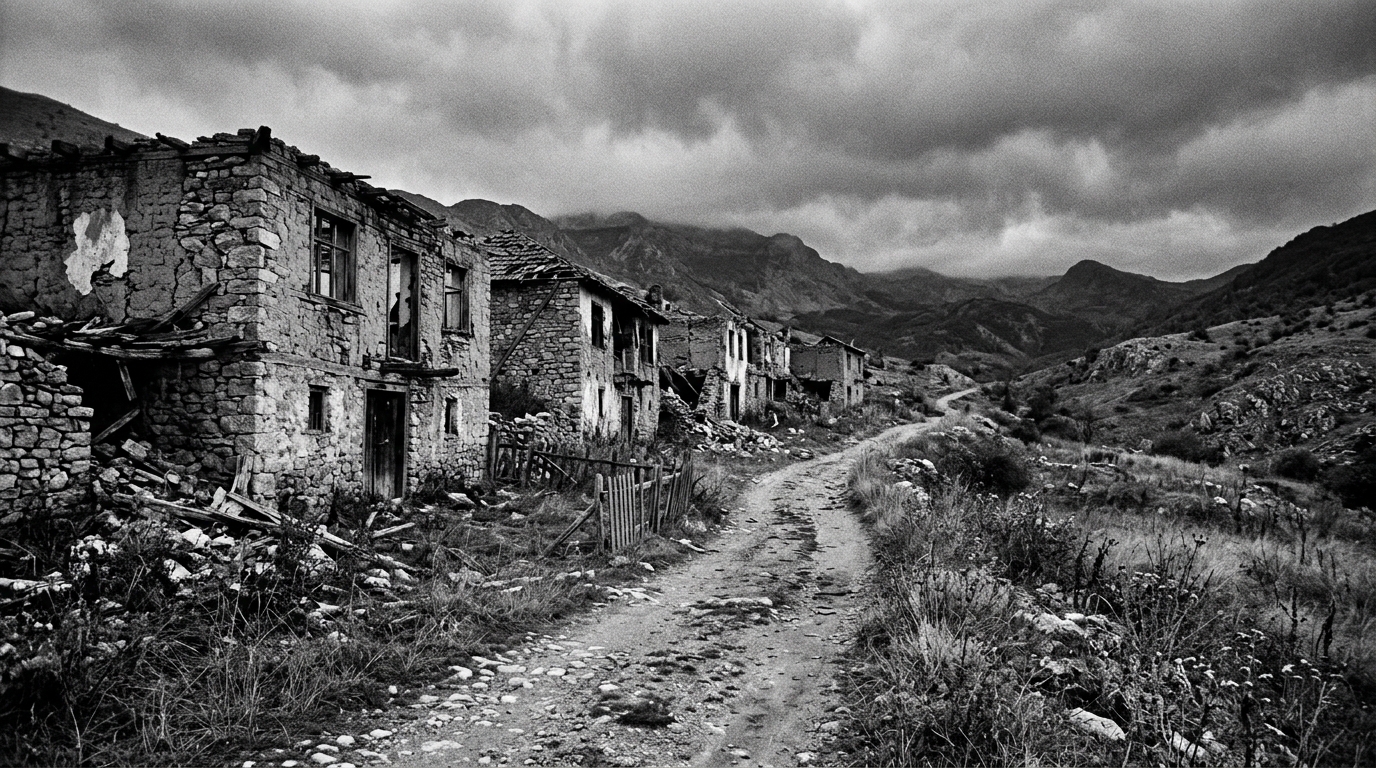
Kosovo's infrastructure was severely damaged during the conflict, with thousands of homes, public buildings, and vital utilities destroyed or severely damaged. The economy, already impoverished under Serbian rule, was in ruins. The international community responded with a massive reconstruction effort, coordinated by the United Nations Interim Administration Mission in Kosovo (UNMIK) and later by local institutions. Billions of dollars in aid flowed into the region, focusing on:
- Infrastructure Repair: Rebuilding roads, bridges, power grids, and water systems.
- Housing Reconstruction: Providing shelter for returning refugees.
- Institution Building: Establishing a functional civil administration, police force, and judiciary from scratch.
Inter-ethnic Relations and the Challenge of Multi-ethnicity
The conflict severely exacerbated inter-ethnic divisions. While the vast majority of Kosovar Albanians returned, most Kosovar Serbs and other minorities (like Roma) who fled during or immediately after the war did not. Those who remained often live in isolated enclaves, protected by NATO-led KFOR troops, due to continued tensions and occasional violence.
- Minority Rights: The challenge of establishing a truly multi-ethnic society, where the rights and safety of all communities are guaranteed, remains a central issue. Serbs in Kosovo, particularly in the north, largely reject Pristina's authority, maintaining strong ties with Belgrade.
- Reconciliation: Genuine reconciliation efforts have been slow and difficult, hampered by unaddressed war crimes, differing narratives of the past, and the unresolved political status of Kosovo.
State-Building and International Supervision
Kosovo's path to statehood has been unique, operating under international supervision for nearly a decade after the war (UNMIK) before declaring independence in 2008.
- Limited Sovereignty: Even after independence, Kosovo's sovereignty remains circumscribed by international actors (such as EULEX, the EU Rule of Law Mission, and KFOR). Its inability to gain full UN membership due to opposition from Russia and China (and Serbia) severely limits its international standing and development potential.
- Governance Challenges: Building robust democratic institutions, combating corruption, and establishing the rule of law have been ongoing challenges. The legacy of a parallel state structure and wartime commanders transitioning into political roles also complicated governance.
The 1998 conflict and its resolution laid the groundwork for an independent Kosovo, but the scars of the war run deep. The path towards full political normalization, economic prosperity, and genuine inter-ethnic harmony remains a long and arduous one, intricately linked to the broader stability of the Western Balkans and the complex relationship with Serbia.
Trivia and Lesser-Known Facts: Intricate Details of a Defining Conflict
- The "Albanian Link": The collapse of the Albanian pyramid scheme in 1997 was arguably the greatest logistical windfall for the KLA. The ensuing civil unrest led to the looting of military depots across Albania, providing insurgents with vast quantities of small arms, ammunition, and even anti-tank weapons at bargain prices, fundamentally transforming their operational capacity. This was a critical, albeit accidental, enabler of the KLA's 1998 offensive.
- The Holbrooke Paradox: US diplomat Richard Holbrooke, the architect of the 1995 Dayton Accords, spent weeks in late 1998 in late-night, high-stakes negotiations with Slobodan Milosevic. While the agreement he secured initially held and deferred NATO airstrikes, its fundamental flaw—the failure to disarm both sides—ensured that the ceasefire was only a tactical pause. The KLA used it to regroup and re-arm, while Serbian forces maintained their repressive presence, proving the temporary nature of the "peace."
- Media Warfare: 1998 saw the rise of satellite news coverage in the Balkans, with journalists from CNN, the BBC, and others embedded with both Serbian forces and KLA units. This marked one of the first times a conflict of this scale was documented in near-real-time globally, profoundly influencing public opinion and accelerating the internationalization of the crisis. Both sides actively sought to control the narrative, often engaging in sophisticated "media warfare."
- The Drenica Heart of Resistance: The Drenica region, a mountainous area in central Kosovo, was not just a KLA stronghold but a historical bastion of Albanian resistance against various occupying powers for centuries. Its geographic isolation and strong clan structures made it difficult for Serbian authorities to control, cementing its role as the birthplace and operational heartland of the KLA.
- The "Kosovo Verification Mission" (KVM) Challenges: The OSCE-led KVM, deployed under the Holbrooke-Milosevic agreement, comprised thousands of unarmed international observers. Their mandate was to verify compliance with the ceasefire and report on human rights abuses. However, they faced immense challenges, including obstruction by Serbian forces, threats from both sides, limited mobility, and an inability to enforce their findings, ultimately proving ineffective in preventing further escalation leading up to the Racak massacre.
- The Russian Factor: Russia's historical ties to Serbia and its deep-seated opposition to external intervention without a UN mandate created significant diplomatic hurdles throughout the conflict. While Russia participated in the Contact Group, its stance fundamentally differed from Western powers, complicating any unanimous international action and ultimately leading to NATO's intervention without explicit UNSC approval.
- The Role of the Albanian Army: Although not directly involved in offensive operations in Kosovo, the border regions with Albania were crucial for KLA logistics. The Albanian Army was heavily destabilized after the 1997 unrest, and its collapse effectively turned Albania into a vast open-air arms bazaar and transit route for KLA fighters and weaponry.
- The "Kacanik Republic": Even before the full-scale conflict, some areas of Kosovo, particularly around the town of Kaçanik, had established rudimentary forms of local self-governance or "parallel structures" that openly defied Serbian authority, becoming early symbols of Albanian autonomy and resistance.
References and Literature
- The Kosovo Conflict: A Long-Term Perspective - A comprehensive analysis of the historical grievances that fueled the 1998 insurgency and its broader implications.
- Kosovo: A Short History by Noel Malcolm - The seminal and highly detailed text for understanding the demographic, political, and cultural shifts in Kosovo from the Ottoman era to the modern conflict, offering extensive historical context.
- UNHCR Archive on the Kosovo Crisis - Official documentation regarding the displacement patterns, humanitarian impact, and refugee flows during the 1998-1999 conflict, providing primary source data on the human cost.
- War in the Balkans: The Death of Yugoslavia by Misha Glenny - An expert and highly readable account of how the collapse of the federal state led to the specific escalation in Kosovo, contextualizing it within the broader Yugoslav wars.
- To End a War by Richard Holbrooke - A firsthand account by the principal American diplomat involved in the Balkan peace efforts, offering insights into the complex negotiations and the "Holbrooke Paradox."
- Waging Modern War: Bosnia, Kosovo, and the Future of Combat by General Wesley Clark - The perspective of the Supreme Allied Commander Europe (SACEUR) during the Kosovo crisis and NATO intervention, detailing military strategies and geopolitical considerations.
- Kosovo: The Politics of Identity and Space by Denisa Kostovicova - An academic exploration of how identity and spatial control shaped the conflict and its aftermath in Kosovo.
- International Criminal Tribunal for the former Yugoslavia (ICTY) Archives - Official legal documentation, judgments, and evidence related to war crimes committed during the Kosovo conflict, offering crucial insights into atrocities and accountability.
Footnotes & Explanations
- Referring to the structural weakness of the Yugoslav Federal state after the death of Tito, which allowed nationalist movements to flourish. ↩
- Referring to the specific terminology used by the Contact Group during the 1998 peace negotiations, which aimed for significant autonomy rather than outright independence for Kosovo within Yugoslavia. ↩