Key Takeaways
- The internal structural crises of the USSR were accelerated by Mikhail Gorbachev's reforms of Glasnost and Perestroika, which inadvertently unleashed suppressed nationalist and democratic movements across the Soviet republics.
- The abortive August Coup of 1991 by hardline communist elites fatally weakened the central Soviet apparatus while elevating Boris Yeltsin as the preeminent political force in Moscow.
- The signing of the Belovezha Accords by the leaders of Russia, Ukraine, and Belarus formally dissolved the Soviet Union, replaced it with the Commonwealth of Independent States (CIS), and established Russia as the successor state.
Historical Context and Origins
The dissolution of the Union of Soviet Socialist Republics (USSR) on December 25, 1991, stands as one of the most transformative geopolitical disruptions of the twentieth century. To understand the sudden collapse of this nuclear-armed superpower, one must analyze the convergence of systemic economic decay, structural political paralysis, and the unintended consequences of late-Soviet reform efforts.
- Era of Stagnation (1964–1982)
The Economic Legacy of Stagnation
By the early 1980s, the Soviet command economy was suffering from deep structural crises. Under Leonid Brezhnev’s tenure, known retrospectively as the "Era of Stagnation," the USSR became heavily reliant on oil and gas exports to fund its massive military-industrial complex and import basic foodstuffs 1. When global oil prices collapsed in 1985–1986, the Soviet treasury lost its primary source of hard currency.
The rigid central planning system, managed by Gosplan, proved incapable of transitioning to a modern, high-tech economy. Chronic shortages of consumer goods, long queues for basic provisions, and a burgeoning black market (the "shadow economy") characterized daily life for Soviet citizens. The agricultural sector was highly inefficient, requiring the state to expend precious hard currency reserves to import grain from the West.
Perestroika and Glasnost: The Catalyst of Reform
In March 1985, Mikhail Gorbachev was selected as the General Secretary of the Communist Party of the Soviet Union (CPSU). Recognizing that the Soviet system was stagnating, Gorbachev introduced a dual policy of reform designed to modernize and revitalize socialism rather than dismantle it:
- Perestroika (Restructuring): Aimed at decentralizing economic decision-making, allowing limited private enterprise (cooperatives), and introducing self-financing for state enterprises. Instead of improving output, these partial reforms disrupted the established distribution networks of the command economy without replacing them with functional market mechanisms, leading to severe inflation, rationing, and hoarding.
- Glasnost (Openness): Designed to foster public discussion, transparency, and intellectual freedom. Gorbachev hoped that permitting criticism of bureaucratic corruption and historical Soviet crimes (such as Stalinist purges) would enlist the intelligentsia in his fight against conservative party hardliners. However, Glasnost quickly outgrew its intended boundaries, exposing the deep-seated illegitimacy of the Soviet regime and lifting the veil of censorship that had suppressed nationalist sentiment for decades.
The Rise of Baltic Defiance and the "Parade of Sovereignties"
The relaxing of political control enabled dormant nationalisms to resurface across the multi-ethnic empire. The Baltic republics—Estonia, Latvia, and Lithuania—which had been forcibly annexed by the Soviet Union in 1940 under the Molotov-Ribbentrop Pact, led the charge for self-determination.
The Parade of Sovereignties (1988–1990)
| Date | Event |
|---|---|
| Nov 1988 | Estonia declares sovereignty |
| May 1989 | Lithuania declares sovereignty |
| Jul 1989 | Latvia declares sovereignty |
| Mar 1990 | Lithuania declares outright independence |
| Jun 1990 | RSFSR (Russia) under Yeltsin declares sovereignty |
By 1989, the Baltic "Singing Revolution" and the massive human chain known as the Baltic Way demonstrated a powerful public consensus for independence.
This assertion of local autonomy rapidly spread. Throughout 1990, in a phenomenon known as the "Parade of Sovereignties," nearly all fifteen Soviet republics declared the supremacy of their local laws over federal Soviet legislation. Crucially, on June 12, 1990, the Congress of People's Deputies of the Russian Soviet Federative Socialist Republic (RSFSR) adopted the Declaration of State Sovereignty of the RSFSR 2. This move, spearheaded by the rising political figure Boris Yeltsin, effectively created a dual-power dynamic within Moscow: the federal Soviet government led by Gorbachev versus the newly assertative Russian republic government led by Yeltsin.
Timeline of Events and Key Moments
The year 1991 was marked by a rapid escalation of political tension, culminating in the complete dissolution of the Union over a period of five critical months.
| Date | Event |
|---|---|
| August 19–21 | Failed GKChP Coup against Gorbachev; Yeltsin leads resistance at the White House. |
| December 1 | Ukraine votes overwhelmingly for Independence in democratic referendum. |
| December 8 | Belovezha Accords signed by Russia, Ukraine, and Belarus, dissolving the USSR. |
| December 21 | Alma-Ata Protocol expands the CIS to eleven post-Soviet republics. |
| December 25 | Gorbachev resigns; Soviet flag is lowered; the Russian Federation emerges. |
The August Coup (GKChP): The Point of No Return
By the summer of 1991, Gorbachev was preparing to sign the New Union Treaty, scheduled for August 20. This treaty aimed to restructure the USSR into a decentralized federation of sovereign republics with a common president, foreign policy, and military. Fearing that this treaty would dismantle the centralized state and strip the Communist Party of its monopoly on power, a group of high-ranking Soviet officials staged a coup d'état.
On August 19, 1991, the State Committee on the State of Emergency (GKChP), which included Vice President Gennady Yanayev, KGB Chairman Vladimir Kryuchkov, Defense Minister Dmitry Yazov, and Prime Minister Valentin Pavlov, placed Gorbachev under house arrest at his dacha in Foros, Crimea. They declared a state of emergency, banned independent media, and ordered tanks into Moscow.
However, the coup plotters miscalculated the public's resolve and the political skill of Boris Yeltsin, who had been elected President of the Russian Republic in June 1991. Yeltsin rallied the democratic opposition, famously climbing atop an armored personnel carrier outside the Russian parliament building (the White House) to denounce the coup as an illegal usurpation of power.
"We are dealing with a reactionary, anti-constitutional coup... We call upon the citizens of Russia to give a fitting rebuff to the putschists and to demand that the country be returned to normal constitutional development." — Boris Yeltsin, August 19, 1991 [^3]
When elements of the military and the elite Alpha Group refused to storm the Russian parliament, the coup collapsed within three days. Gorbachev returned to Moscow on August 22, but he found his political authority shattered. He had been rescued by Yeltsin, who now wielded de facto control over the levers of administrative power in the capital.
The Collapse of the CPSU and Republic Declarations
In the immediate aftermath of the coup, Yeltsin signed a decree suspending, and later banning, the Communist Party of the Soviet Union within the territory of the Russian Republic. This action effectively demolished the organizational spine of the entire Soviet state.
Seeing the center completely paralyzed, the remaining Soviet republics moved quickly to protect themselves from potential chaos or Russian domination:
- August 24: Ukraine's parliament (the Verkhovna Rada) adopted the Act of Declaration of Independence of Ukraine.
- August 25: Belarus declared its national independence.
- August–September: Moldova, Azerbaijan, Kyrgyzstan, Uzbekistan, Tajikistan, and Armenia followed suit with formal declarations of independence.
The Ukrainian Referendum of December 1, 1991
Despite the disintegration around him, Gorbachev spent autumn 1991 attempting to negotiate a revised Union Treaty (the Union of Sovereign States) that would retain a loose confederated structure. This effort was completely dependent on the participation of Ukraine, the second-most populous and economically vital republic of the USSR.
The decisive blow to Gorbachev's plans came on December 1, 1991, when Ukraine held a national referendum on its declaration of independence. The results were overwhelming: 92.3% of voters, with an 84% turnout, supported independence. Crucially, the independence option secured a majority in every single region of Ukraine, including Crimea (54.1%) and the heavily industrial eastern oblasts of Donetsk (83.9%) and Luhansk (83.8%) 4.
| Metric | Value |
|---|---|
| Overall National Support | 92.3% |
| Voter Turnout | 84.2% |
| Support in Kyiv | 92.9% |
| Support in Donetsk Oblast | 83.9% |
| Support in Crimea | 54.1% |
This democratic mandate meant that Leonid Kravchuk, newly elected as President of Ukraine on the same day, had no political authority to sign any new Union treaty, effectively rendering the Soviet Union non-viable.
The Belovezha Accords (December 8, 1991)
Recognizing that the Union could not continue without Ukraine, Boris Yeltsin met with Leonid Kravchuk of Ukraine and Stanislav Shushkevich of Belarus on December 8, 1991, at a state dacha in the Belovezha Forest (Viskuli) near Brest, Belarus.
Belovezha Accords
Signed: December 8, 1991 (Viskuli)
| Signatory | Representation |
|---|---|
| Boris Yeltsin | Russian SFSR |
| Leonid Kravchuk | Ukraine Republic |
| Stanislav Shushkevich | Belarus Republic |
Key Declaration: "The USSR, as a subject of international law and a geopolitical reality, ceases to exist." — Preamble of the Accords
The three leaders signed the Belovezha Accords, which declared:
- The Union of Soviet Socialist Republics had ceased to exist as "a subject of international law and a geopolitical reality."
- The establishment of the Commonwealth of Independent States (CIS), a loose confederation designed to facilitate a peaceful separation, coordinate economic and monetary policies, and maintain unified control over the Soviet nuclear arsenal.
The leaders justified their decision by noting that Russia, Ukraine, and Belarus were the original three Slavic founders of the Union, having signed the 1922 Treaty on the Creation of the USSR, and therefore retained the legal right to dissolve it.
The Alma-Ata Protocol and the Final Act
Gorbachev initially denounced the Belovezha Accords as illegal and unconstitutional, but he lacked the military or institutional backing to contest them. On December 21, 1991, leaders of eleven of the fifteen former Soviet republics (excluding the three Baltic states and Georgia) met in Kazakhstan to sign the Alma-Ata Protocol. This agreement formally expanded the CIS and confirmed the dissolution of the Soviet Union. The protocol also specified that the Russian Federation would assume the USSR’s permanent seat on the United Nations Security Council.
Four days later, on the evening of December 25, 1991, Mikhail Gorbachev delivered a live, nationally televised address from the Kremlin, announcing his resignation as the President of the Soviet Union.
"I hereby discontinue my activities at the post of President of the Union of Soviet Socialist Republics... An end has been put to the 'Cold War,' the arms race, and the insane militarization of the country, which has crippled our economy, public consciousness, and morals. The threat of a world war has been removed." — Mikhail Gorbachev, December 25, 1991 [^5]
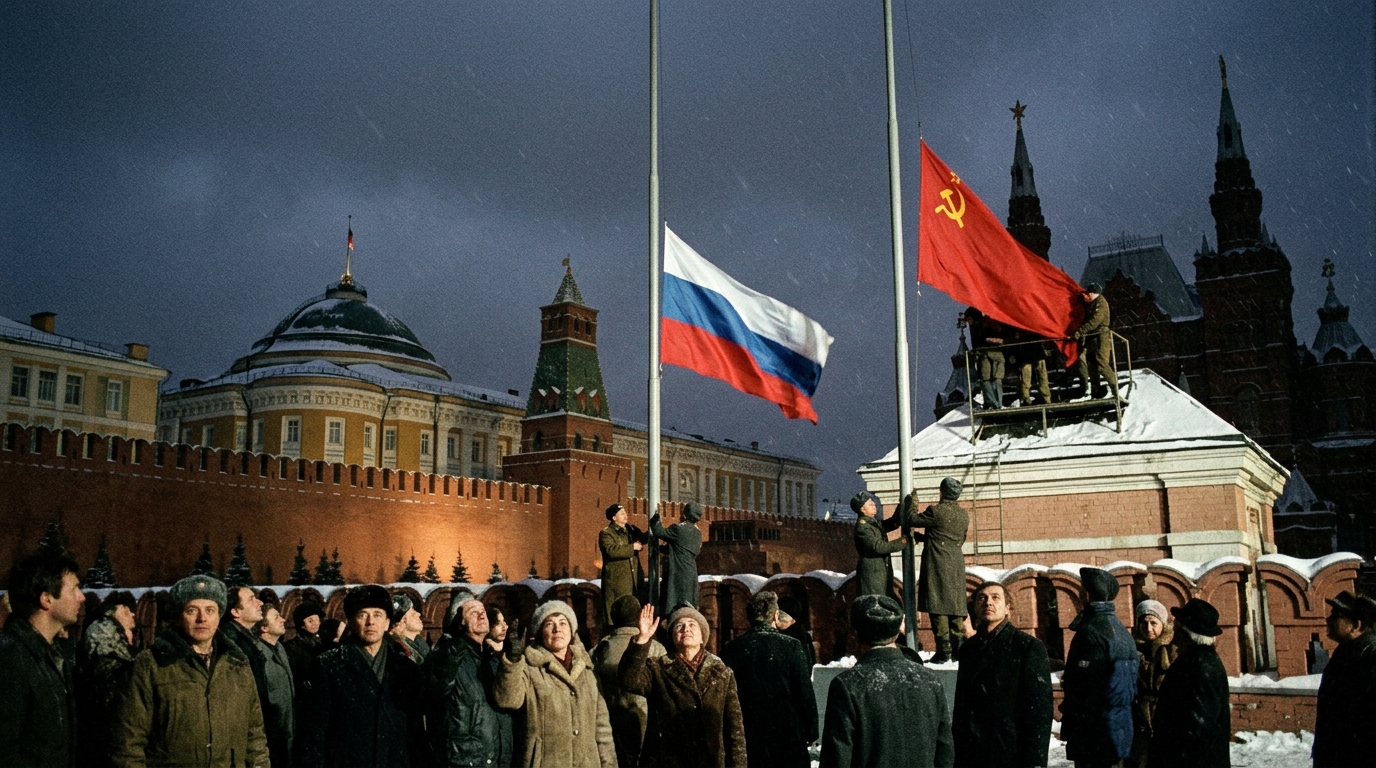
Directly following his speech, the red Soviet hammer-and-sickle flag was lowered from the flagpole of the Senate Palace in the Kremlin for the last time. It was immediately replaced by the white, blue, and red tricolor flag of the Russian Federation. At midnight on December 31, 1991, the Soviet Union formally ceased all operations, marking the definitive end of the Soviet state.
Geopolitical Consequences and Aftermath
The sudden collapse of the Soviet Union redrew the map of Eurasia and produced deep geopolitical consequences that continue to shape global affairs.
| Impact of the Soviet Dissolution (1991) |
|---|
| Transition to Capitalism |
| - Economic "Shock Therapy" |
| - Mass Inflation & Poverty |
| - Rise of the Oligarchs |
| Post-Soviet Conflicts |
| - Transnistria (Moldova) |
| - Nagorno-Karabakh |
| - Abkhazia & South Ossetia |
| Re-ordering Global Power |
| - End of the Bipolar Cold War |
| - US "Unipolar Moment" |
| - NATO & EU Expansion Eastward |
The Transition to Market Economies and "Shock Therapy"
For the newly independent post-Soviet states, the transition from a command economy to a market system was economically painful. In Russia, the administration of Boris Yeltsin, guided by reformist economists like Yegor Gaidar, implemented "shock therapy" reforms in early 1992. These measures included:
- The sudden liberalization of prices, which caused hyperinflation and wiped out the lifetime savings of millions of citizens.
- Rapid privatization of state assets through a voucher system, which was quickly exploited by insider elites. This process laid the groundwork for the rise of the "oligarchs"—a small class of ultra-wealthy individuals who seized control of Russia’s oil, gas, and metallurgical industries [^6].
Throughout the 1990s, the Russian Federation suffered a severe economic contraction, with GDP falling by nearly 40%. This economic decline was accompanied by a rise in organized crime, a decline in public health, and a significant drop in life expectancy, particularly among working-age males. This prolonged instability fostered deep resentment among parts of the Russian population toward Western-style democratic reforms.
The Nuclear Inheritance and Denuclearization
At the moment of dissolution, Soviet nuclear weapons were stationed across four newly sovereign states: Russia, Ukraine, Belarus, and Kazakhstan. Ukraine, in particular, inherited the world’s third-largest nuclear arsenal, including 1,900 strategic nuclear warheads 7.
Through concerted diplomatic coordination led by the United States and codified under the Lisbon Protocol (1992), all non-Russian republics agreed to join the Treaty on the Non-Proliferation of Nuclear Weapons (NPT) as non-nuclear-weapon states. Under the terms of the Budapest Memorandum on Security Assurances (1994), Ukraine, Belarus, and Kazakhstan surrendered their nuclear arsenals to Russia for dismantling. In return, the United States, Great Britain, and the Russian Federation formally pledged to respect the independence, sovereignty, and existing borders of the signatory states, and to refrain from the threat or use of force against them.
Ethnic Conflicts and "Frozen" Border Disputes
The dissolution of the highly centralized state triggered a series of violent ethnic and territorial conflicts along the periphery of the former empire. Because internal administrative borders had been arbitrarily drawn by Soviet authorities (such as the transfer of Crimea to Ukraine in 1954 or the placement of Nagorno-Karabakh inside Azerbaijan), the emergence of independent states created major border disputes:
- The Nagorno-Karabakh War (1988–1994): An ethnic conflict between Armenia and Azerbaijan over the mountainous enclave of Nagorno-Karabakh, which cost tens of thousands of lives and displaced over a million people.
- The Transnistria War (1990–1992): A brief conflict in Moldova where Russian-backed separatists in the industrial strip east of the Dniester River broke away, fearing reunification with Romania.
- The Georgian Civil Wars (1991–1993): Separatist wars in South Ossetia and Abkhazia, supported by Russia, which effectively carved out autonomous, unrecognized enclaves within Georgia.
- The Chechen Wars (1994–2009): Within the Russian Federation itself, the Chechen Republic's declaration of independence led to two devastating, bloody military conflicts, highlighting the fragility of Russia's internal stability during the 1990s.
Analysis of Key Actors and Decisive Actions
The dissolution of the Soviet Union was shaped by the distinct personalities, ideologies, and tactical maneuvers of Mikhail Gorbachev and Boris Yeltsin.
| Political Aspect | Mikhail Gorbachev | Boris Yeltsin |
|---|---|---|
| Primary Goal | Preserving the Soviet Union as a modernized, democratic socialist federation. | Securing Russian sovereignty and dismantling the central Soviet bureaucracy. |
| Ideological Stance | Democratic Socialism, Leninist reform, gradual structural transformation. | Populist liberalism, rapid market transition, anti-communist pragmatism. |
| Tactical Approach | Compromise, consensus-building, avoidance of mass violence, reliance on institutional processes. | Direct public mobilization, populist rhetoric, decisive executive decrees, willingness to break existing laws. |
| Key Political Base | The reformist wing of the CPSU, Western governments, and international public opinion. | The urban Russian public, democratic intelligentsia, and regional elites. |
Mikhail Gorbachev: The Tragic Reformer
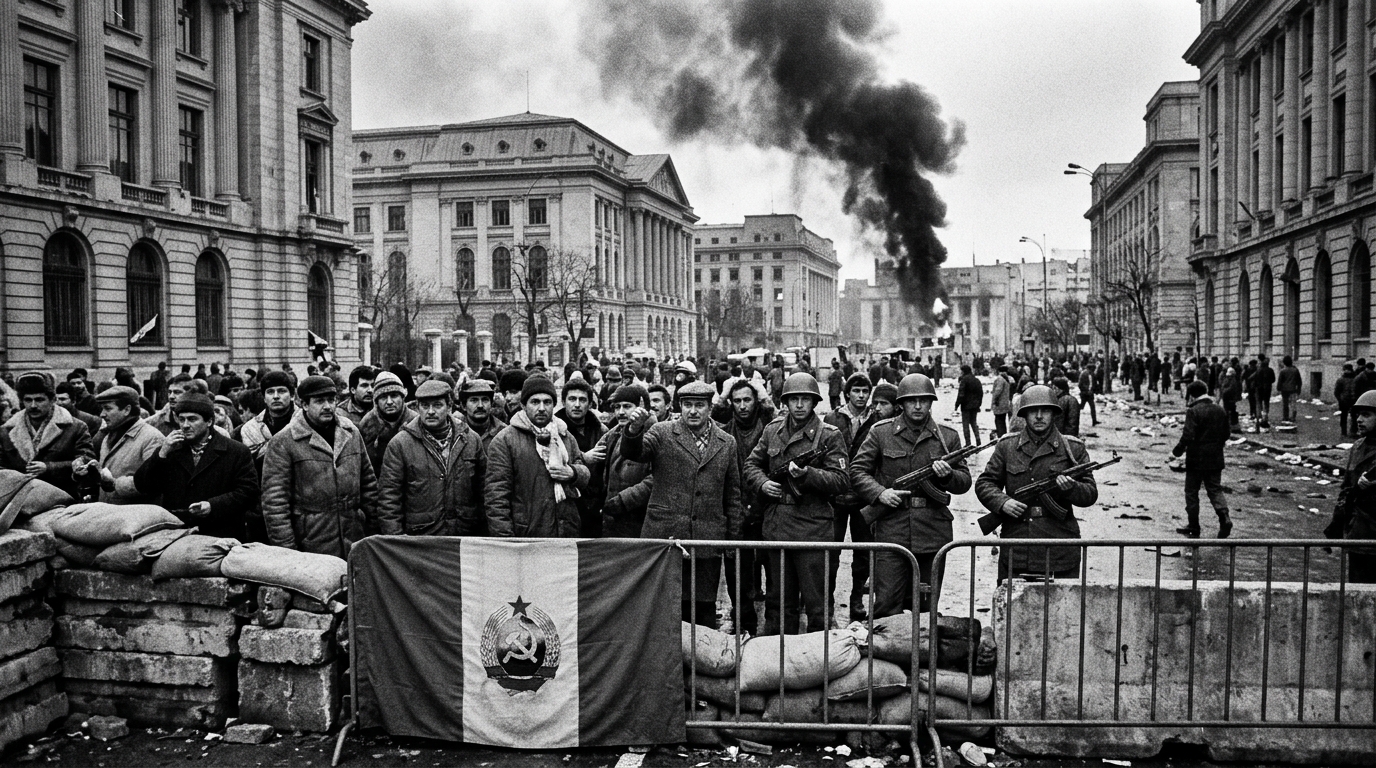
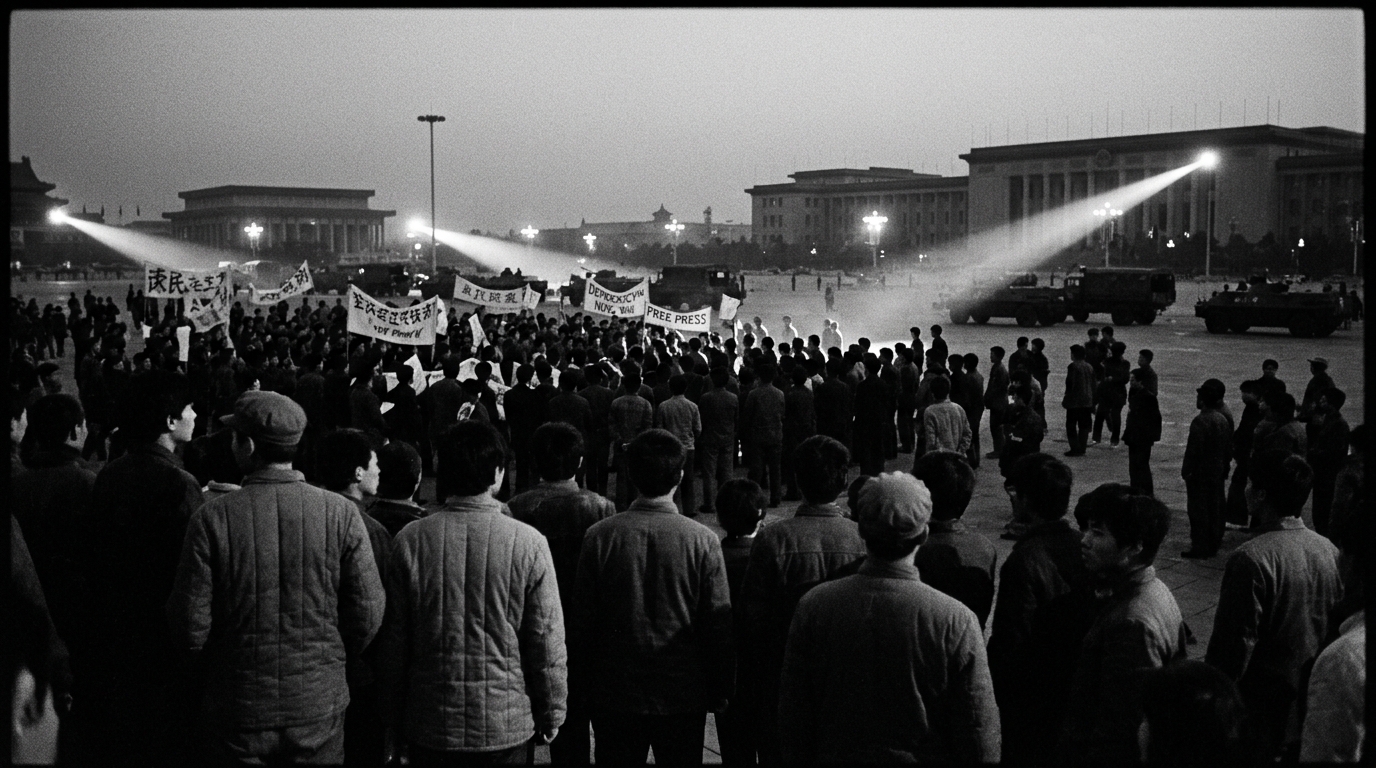
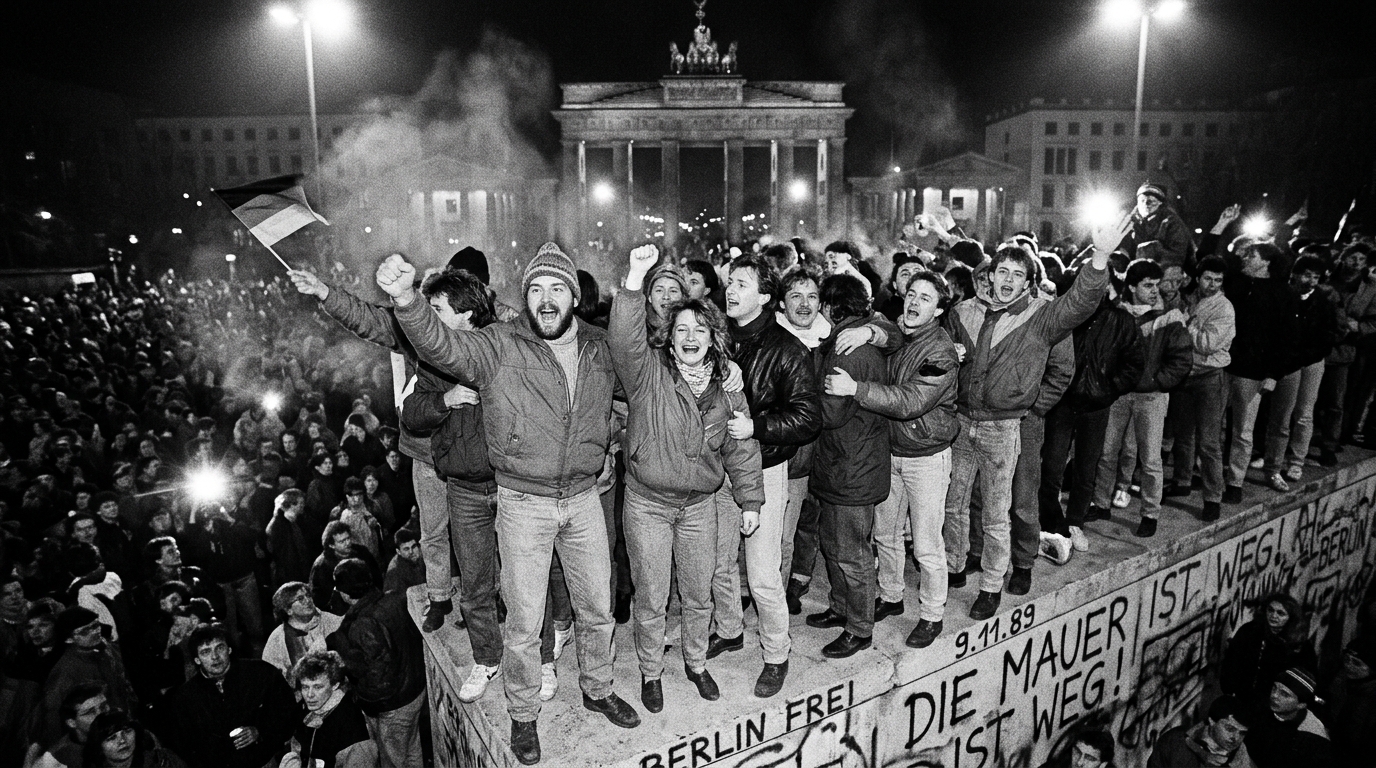
Gorbachev's legacy is defined by a fundamental paradox: he dismantled the authoritarian structures of the Soviet state in an attempt to save it, only to watch those new freedoms tear the Union apart. His refusal to use systemic, massive state violence to hold the empire together set him apart from previous Soviet leaders. Confronted with mass protests in Eastern Europe in 1989 and rising nationalism within the USSR, Gorbachev consistently rejected the path of military suppression, choosing instead to negotiate 8.
However, Gorbachev was often politically isolated. He was caught between conservative communist hardliners (who believed his reforms were destroying the state) and radical democratic reformers (who argued his economic transitions were too slow and cautious). By trying to satisfy both factions, he ultimately lost the support of both, leaving him politically isolated when the final crisis arrived in late 1991.
Boris Yeltsin: The Political Disruptor
In contrast to Gorbachev, Boris Yeltsin was a highly intuitive and decisive political actor who used the rising tide of Russian nationalism and democratic reform to advance his political career. After being marginalized by Gorbachev in the late 1980s, Yeltsin built a new base of support by appealing directly to the Russian public.
Yeltsin realized that by asserting the sovereignty of the Russian Republic (the RSFSR), he could systematically undermine the federal Soviet institutions that supported Gorbachev. His actions during the August Coup of 1991 demonstrated exceptional political courage, but his subsequent actions—especially his push to bypass Gorbachev and sign the Belovezha Accords—showed a calculated willingness to dissolve the entire Soviet state to secure his own position of supreme executive power in Moscow.
Trivia and Lesser-Known Facts
- The "Nuclear Football" Deviation: During the formal transfer of power on December 25, 1991, Boris Yeltsin refused to enter the Kremlin office of Mikhail Gorbachev to receive the Soviet nuclear suitcase (Cheget) in person. Instead, Soviet military officers had to carry the device from Gorbachev's office directly to Yeltsin in a separate neutral room, breaking established security protocol.
- The Cosmonaut Left Behind: When the Soviet Union collapsed, Soviet cosmonaut Sergei Krikalev was aboard the Mir space station. He had launched from the Baikonur Cosmodrome in May 1991 as a Soviet citizen. By the time he returned to Earth in March 1992, his home country of the USSR had ceased to exist, his hometown of Leningrad had been renamed Saint Petersburg, and his salary was paid by the newly independent nation of Kazakhstan [^9].
- The "Chicken Kiev" Speech: On August 1, 1991—just three weeks before the August Coup—U.S. President George H.W. Bush delivered a speech in Kyiv to the Ukrainian parliament. He warned the deputies against "suicidal nationalism" and urged them not to seek absolute separation from Moscow, reflecting Washington’s fear that a sudden, chaotic collapse of the USSR could lead to nuclear instability or ethnic civil war across Eurasia. Conservative columnists in the West mockingly dubbed the address the "Chicken Kiev" speech.
- The Forest Meeting Secrecy: The leaders who gathered to sign the Belovezha Accords in December 1991 were deeply concerned about a potential military intervention or arrest by the KGB, which remained under nominal federal control. Because they were only miles from the Polish border, the participants had prepared escape routes to cross the border in the event that Soviet military forces or special units moved to arrest them.
References and Literature
- The Collapse of the Soviet Union - A comprehensive analysis of the economic, political, and social forces that led to the disintegration of the Soviet state.
- Plokhy, Serhii. The Last Empire: The Final Days of the Soviet Union. Basic Books, 2014 - A highly detailed, day-by-day account of the geopolitical negotiations and high-stakes drama surrounding the fall of the USSR.
- Kotkin, Stephen. Armageddon Averted: The Soviet Collapse, 1970-2000. Oxford University Press, 2008 - An academic analysis focusing on the structural stagnation and the surprising lack of mass civil conflict during the collapse.
- The Belovezha Accords: December 1991 Archives - The Wilson Center's collection of declassified diplomatic cables and meeting transcripts detailing the Viskuli negotiations.
---
Footnotes & Explanations
- Kotkin, Stephen. Armageddon Averted: The Soviet Collapse, 1970-2000. Oxford University Press, 2008, pp. 32-35. ↩
- Plokhy, Serhii. The Last Empire: The Final Days of the Soviet Union. Basic Books, 2014, pp. 58-62. ↩
- Excerpts from Boris Yeltsin's address to the Russian public from the steps of the White House, Moscow, August 19, 1991. ↩
- Commission on Security and Cooperation in Europe (CSCE) Report: The Ukrainian Independence Referendum of December 1, 1991, Washington D.C., 1992. ↩
- Mikhail Gorbachev's Resignation Address, broadcast live on Central Television, Moscow, December 25, 1991. ↩
- Gaidar, Yegor. Collapse of an Empire: Lessons for Modern Russia. Brookings Institution Press, 2007, pp. 192-198. ↩
- "The Lisbon Protocol and the Nuclear Legacy of the Soviet Union," Arms Control Association, Fact Sheet Archive. ↩
- Brown, Archie. The Gorbachev Factor. Oxford University Press, 1996, pp. 240-245. ↩
- "The Last Soviet Citizen: Sergei Krikalev's Journey on Mir," NASA History Division, Space Flight Studies, 2011. ↩