Key Takeaways
- The 2001 insurgency represented a critical juncture where the Balkan region stood on the precipice of a full-scale ethnic war following the collapse of the Yugoslav federation, narrowly averted by intensive international intervention.
- The Ohrid Framework Agreement serves as a landmark, albeit controversial, model for conflict resolution through institutional decentralization, power-sharing mechanisms, and the codification of enhanced minority rights within a unitary state.
- International intervention, led by NATO and the EU, shifted from traditional peacekeeping to a proactive 'coercive diplomacy' model, leveraging political, economic, and potential military pressure to maintain state sovereignty and prevent humanitarian catastrophe.
- The agreement fundamentally reshaped Macedonia's internal political dynamics, laying the groundwork for its future Euro-Atlantic integration while simultaneously creating new challenges regarding identity, governance, and inter-ethnic trust.
Historical Context and Origins: The Fragile Peace of Post-Yugoslav Macedonia
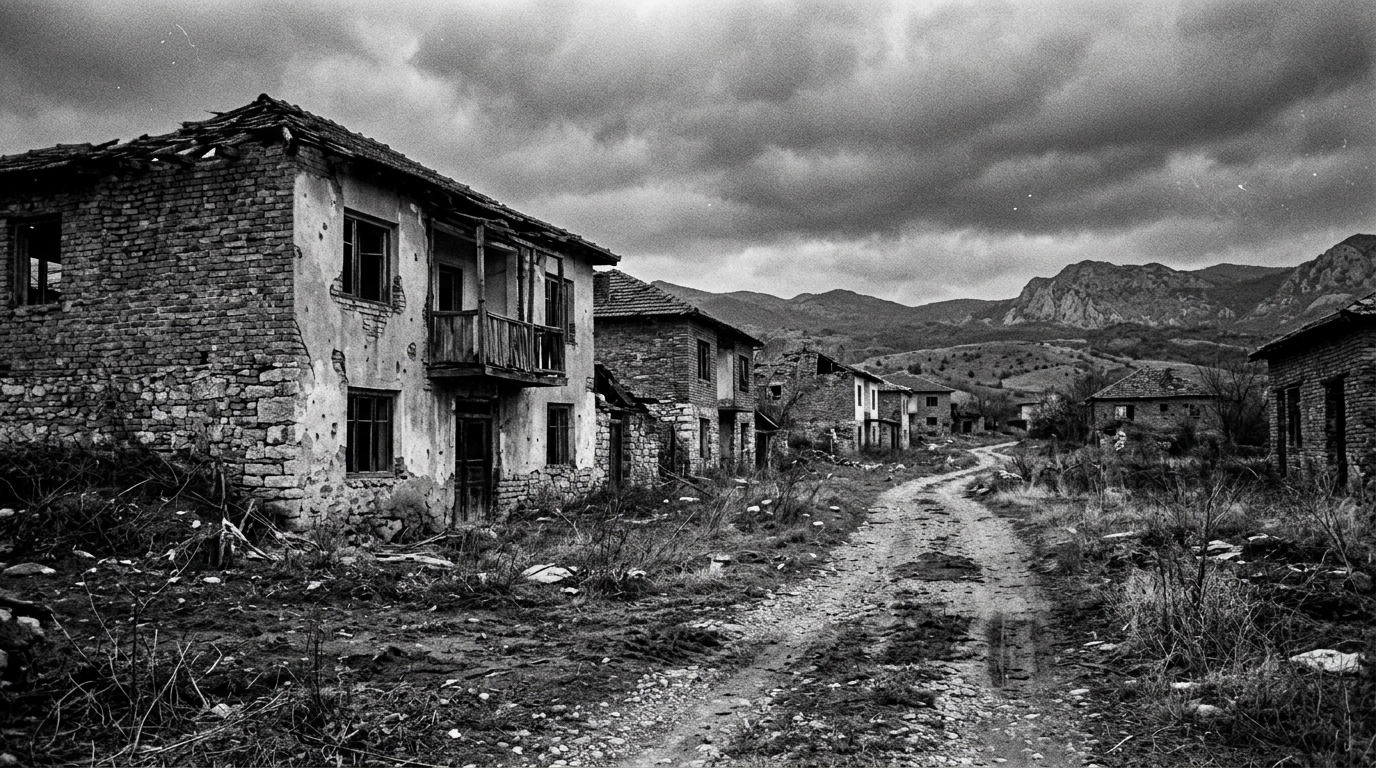
To understand the 2001 insurgency in the Republic of Macedonia (now North Macedonia), one must look toward the profound regional instability caused by the violent collapse of Yugoslavia. Throughout the 1990s, while brutal wars ravaged Bosnia-Herzegovina, Croatia, and later Kosovo, Macedonia remained an "island of peace." This unique status, however, masked deep-seated ethnic tensions and structural vulnerabilities that made the country a powder keg waiting for a spark.
Macedonia declared independence from Yugoslavia in 1991, a relatively peaceful secession compared to its northern neighbors. However, its path to statehood was fraught with challenges. Greece's objection to the new state's name, historical symbols, and constitutional provisions led to a crippling economic embargo and stalled international recognition. Internally, the 1991 Constitution, while establishing a democratic framework, was perceived by the large ethnic Albanian population, comprising approximately 25-30% of the country’s demographic, as defining the state exclusively for the ethnic Macedonian majority. The preamble stated that Macedonia was the "national state of the Macedonian people," with other groups categorized as "nationalities" or "parts of nations," a distinction that immediately fueled feelings of systemic marginalization among Albanians, Turks, Roma, Serbs, and others.
Albanian political parties, such as the Party for Democratic Prosperity (PDP) and later the Democratic Party of Albanians (DPA), consistently voiced grievances concerning their community's status. These included chronic underrepresentation in state institutions, the judiciary, and the police force; limited official use of the Albanian language; restrictions on Albanian-language education, particularly at the university level (with the unofficial Albanian-language university in Tetovo frequently being a point of contention); and significant economic disparities in Albanian-majority areas. These issues fostered a pervasive sense of exclusion and a growing demand for greater constitutional recognition and political rights.
By the late 1990s, the Kosovo War (1998-1999) served as a critical catalyst for radicalization in Macedonia. The conflict led to a massive influx of over 300,000 ethnic Albanian refugees into Macedonia, straining the country's limited resources and exacerbating inter-ethnic tensions. The presence of these refugees, alongside the porous border with Kosovo, facilitated the proliferation of small arms and light weapons. More significantly, it created a direct conduit for the transfer of personnel and ideology from the Kosovo Liberation Army (KLA) into Macedonia. Many veterans of the KLA, having gained combat experience and a sense of ethnic solidarity, found a new cause in Macedonia, perceiving similar injustices against their brethren.
The National Liberation Army (NLA), or Ushtria Çlirimtare Kombëtare (UÇK) – intentionally sharing the same Albanian acronym as the KLA – emerged from these conditions. Led by figures like Ali Ahmeti, who had previously served in the KLA, the NLA articulated objectives that initially appeared ambiguous but centered on gaining greater constitutional recognition for Albanians, official parity for the Albanian language, and decentralized local government powers. While the Macedonian government and many international observers initially labeled the NLA as a "terrorist" organization, its leadership maintained that it was a legitimate liberation movement fighting for the rights of a marginalized community. The historical context of Balkan conflicts, where armed struggle often preceded political negotiation, lent a certain, albeit controversial, logic to the NLA's emergence.
Timeline of Events and Key Moments: Escalation and De-escalation
The conflict escalated rapidly in the spring of 2001, pushing Macedonia to the brink of a full-scale civil war and threatening to destabilize the entire southern Balkans. The following table highlights the critical progression of the crisis, underscoring the rapid shift from localized skirmishes to an internationally mediated peace process:
| Date | Event | Significance |
|---|---|---|
| January 2001 | First skirmishes in Tanuševci | NLA militants, crossing from Kosovo, begin attacking police stations and outposts in the border village of Tanuševci. This marks the overt beginning of the insurgency, initially dismissed by the Macedonian government as isolated banditry. |
| February 2001 | Increased border incidents | NLA activity intensifies along the northern border, particularly in the Kumanovo region. Macedonian security forces respond, but the NLA demonstrates growing organization and access to sophisticated weaponry, indicating a more serious threat. |
| March 2001 | Tetovo escalation | Armed conflict spills into the city of Tetovo, the de facto cultural and political center of Albanians in Macedonia. The NLA establishes positions in the hills overlooking the city, engaging Macedonian forces in intense urban and suburban fighting. This shift from rural skirmishes to a major urban center signals a critical escalation. |
| April 2001 | Formation of Grand Coalition | Amidst escalating violence, President Trajkovski forms a broad-based "grand coalition" government, bringing together the two largest Macedonian and two largest Albanian political parties (VMRO-DPMNE, SDSM, DPA, PDP) to present a united front for negotiations and reforms, signaling a political, not just military, response. |
| May 2001 | Kumanovo-Lipkovo Offensive | Macedonian security forces launch a major offensive against NLA positions in the Kumanovo and Lipkovo regions. The offensive achieves some tactical success but also results in significant civilian displacement and accusations of disproportionate force, further polarizing ethnic communities. |
| June 2001 | Aracinovo crisis | Intense fighting erupts near the village of Aracinovo, just kilometers from the capital, Skopje, and its international airport. The NLA's proximity to the capital brings the country to the absolute brink of civil war, prompting immediate and decisive international intervention to prevent a collapse of the Macedonian state. |
| July 2001 | Intensive International Mediation | Following Aracinovo, US and EU envoys (James Pardew and François Léotard) intensify shuttle diplomacy, holding marathon negotiations with all political parties and the NLA leadership. Multiple ceasefires are negotiated and frequently broken, underscoring the fragile nature of trust. |
| August 2001 | Ohrid Framework Agreement | After weeks of arduous negotiations under immense international pressure, the peace framework is signed in Ohrid. This landmark document outlines comprehensive political and constitutional reforms aimed at enhancing minority rights and decentralizing power, effectively ending the hostilities. |
| September 2001 | Operation Essential Harvest (NATO) | NATO deploys a 3,500-strong force (led by the UK) to oversee the voluntary collection of NLA weapons. This mission is crucial for securing the peace and demonstrating international commitment to the agreement. |
| October 2001 | Adoption of Constitutional Amendments | The Macedonian Parliament formally adopts the constitutional amendments agreed upon in Ohrid, marking a pivotal step in the implementation phase of the peace agreement and transforming the legal framework of the state. |
The "Aracinovo crisis" in June 2001 was undeniably the definitive moment of the conflict. With NLA positions just kilometers from Skopje's international airport and the capital, the Macedonian government was poised for a major military offensive aimed at decisively crushing the rebel forces. The mood in Skopje was one of panic and nationalist fervor, with public protests demanding stronger action against the insurgents. However, NATO and EU envoys, led by the astute American diplomat James Pardew and the former French Defence Minister François Léotard, intervened decisively. Fearing a humanitarian catastrophe, a regional spillover, and the complete collapse of a fragile state, they brokered a highly controversial ceasefire and an agreement for the NLA fighters to be evacuated by NATO forces. This intervention, despite infuriating many ethnic Macedonians who felt betrayed and believed they had the rebels surrounded, averted a potentially devastating full-scale civil war and created the necessary conditions for political negotiations.
International Mediation and Coercive Diplomacy
The resolution of the 2001 insurgency stands as a prime example of "coercive diplomacy," where international actors leveraged significant political, economic, and even military pressure to compel warring parties towards a negotiated settlement. From the outset, the international community, particularly the United States, the European Union, and NATO, recognized the potential for the Macedonian conflict to ignite a wider regional conflagration, especially given its proximity to the still-unstable Kosovo and the historical sensitivities of the Western Balkans.
Key figures in this international effort included US envoy James Pardew, EU envoy François Léotard, NATO Secretary General Lord George Robertson, and EU High Representative for Common Foreign and Security Policy Javier Solana. Their strategy involved intense, sustained shuttle diplomacy, often holding separate and joint meetings with Macedonian government officials, leaders of Albanian political parties, and even direct engagement with NLA representatives.
The pressure exerted was multi-faceted:
- Political Pressure: Threats of international isolation and non-recognition of any territorial changes or unilateral declarations were aimed at both sides. The Macedonian government was pressured to offer substantial reforms to minority rights, while the NLA was pressed to lay down arms and transition to a political process.
- Economic Leverage: The prospect of continued international financial aid and future integration into Euro-Atlantic structures (NATO and EU) served as a powerful incentive for the Macedonian government. Conversely, the threat of sanctions and economic disengagement loomed if the conflict escalated unchecked.
- Security Guarantees: NATO's presence in neighboring Kosovo provided a backdrop of military capability. While direct military intervention against the NLA was never explicitly on the table from the international side (lest it appear to be taking sides in an internal conflict), the implied threat of NATO forces securing borders or protecting civilians was a subtle but potent factor. The decision to evacuate NLA fighters from Aracinovo under NATO protection, despite Macedonian protests, demonstrated the international community's willingness to act decisively to prevent a bloodbath, even if it meant overriding sovereign wishes in a crisis.
- Drafting the Agreement: International experts, primarily from the US and EU, played a direct role in drafting the Ohrid Framework Agreement. They acted not merely as facilitators but as active participants, proposing solutions, defining constitutional language, and mediating contentious points between the Macedonian and Albanian political leaders. This hands-on approach was essential in bridging the deep trust deficit between the domestic actors.
The success of this coercive diplomacy lay in its ability to convince all parties that a military victory for either side was undesirable and unsustainable, and that a negotiated political solution, backed by international guarantees, was the only viable path to long-term stability and Euro-Atlantic integration.
Geopolitical Consequences and Aftermath
The signing of the Ohrid Framework Agreement on August 13, 2001, effectively ended the major hostilities. However, the agreement was not merely a ceasefire; it mandated profound and systemic changes to the Macedonian political structure, aiming to transform the state into a truly multi-ethnic democracy. Key provisions included:
- Decentralization: This was a cornerstone of the agreement, granting significantly increased powers to local municipalities to manage their own affairs, including police, education, urban planning, and local taxation. This addressed a key Albanian grievance about central government control and aimed to empower communities to reflect their local demographic realities. Implementation was complex, involving redrawing municipal boundaries and transferring resources and expertise.
- Constitutional Amendment: The preamble of the constitution was changed from defining Macedonia as a "national state of the Macedonian people" to a civic state that protects the "sovereignty, territorial integrity and social stability of the Republic of Macedonia as a common homeland of all its citizens." This crucial shift legally recognized the multi-ethnic character of the state and elevated the status of minority communities. Additionally, specific amendments were introduced to ensure non-discrimination and equitable representation.
- Language Rights: Albanian was recognized as an official language, alongside Macedonian, in areas where ethnic Albanians constituted more than 20% of the population. This provision had significant implications for public services, official documents, and education. It also stipulated that, at the state level, a double majority (majority of all MPs and a majority of minority-ethnicity MPs) would be required for laws pertaining to culture, language, and identity.
- Proportional Representation: The agreement mandated enhanced and equitable representation for minorities in state institutions, including public administration, the judiciary, and, crucially, the police forces. This was intended to address the historical exclusion of Albanians from these sectors, ensuring that the state apparatus reflected the country's demographic makeup.
- Amnesty: A contentious but necessary component, the agreement included an amnesty for NLA fighters who surrendered their weapons, a provision that outraged many ethnic Macedonians but was critical for securing the NLA's commitment to disarming and entering the political process.
The aftermath was a delicate balancing act, requiring sustained international oversight. While the agreement halted the bloodshed, it left a legacy of deep mistrust and resentment. Many ethnic Macedonians felt that their government had been forced to negotiate with "terrorists" under international duress, compromising the unitary character of their state. Nationalist elements capitalized on these sentiments, often portraying the reforms as concessions rather than necessary steps towards stability. Conversely, some Albanian nationalists felt the agreement did not go far enough, failing to deliver full federalization or greater autonomy.
Implementation of the Ohrid Agreement was slow and challenging, facing bureaucratic hurdles, political resistance, and insufficient financial resources. Yet, the agreement's enduring framework provided a roadmap for institutional reform and inter-ethnic coexistence, preventing the country from fracturing further and positioning it for eventual Euro-Atlantic integration.
Analysis of Key Actors and Decisive Actions
The successful, albeit contentious, resolution of the conflict relied heavily on the personal agency and political courage of several key leaders, both domestic and international.
Boris Trajkovski, the then-President of Macedonia, emerged as a pivotal figure. A relatively moderate politician from the nationalist VMRO-DPMNE party, Trajkovski was elected on a platform of closer ties with the West. Throughout the crisis, he faced immense pressure from hardliners within his own party (including his Prime Minister, Ljubčo Georgievski, who advocated for a military solution) and a furious public demanding decisive action against the NLA. However, Trajkovski consistently prioritized international integration and the long-term survival of the Macedonian state over short-term military victory or nationalist appeasement. His willingness to engage in the Ohrid negotiations, often against significant domestic opposition, was essential in providing the necessary political cover for the peace process. His leadership represented the "civilian" and diplomatic face of the Macedonian response, tirelessly advocating for the country's Euro-Atlantic future amidst internal strife. His tragic death in a plane crash in 2004 left a void in Macedonian politics, underscoring the fragility of the post-conflict leadership.
"We have a common goal, which is a modern, democratic, and prosperous Macedonia, integrated into the Euro-Atlantic structures, where all citizens, regardless of their ethnic or religious background, can live in dignity and security." — Boris Trajkovski.
Ali Ahmeti, as the military and political leader of the NLA, also played a decisive role in the conflict's resolution. Ahmeti, a former KLA commander, skillfully navigated the complex transition from armed insurgency to mainstream politics. By effectively disbanding the NLA and transitioning the organization into a political party, the Democratic Union for Integration (DUI), Ahmeti successfully channeled the grievances of the armed struggle into the parliamentary system. This transition was, and remains, a subject of intense historical debate—viewed by some as an act of pragmatic political evolution that averted further bloodshed and brought Albanian demands into legitimate political discourse. Others see it as the problematic legitimization of armed insurrection, rewarding violence and setting a dangerous precedent. Regardless, Ahmeti's decision to embrace the political process was instrumental in convincing many NLA fighters to lay down their arms and accept the Ohrid Agreement. DUI subsequently became a significant political force, participating in numerous coalition governments and playing a continuous role in Macedonian politics.
Beyond these domestic figures, international mediators were indispensable. James Pardew (US envoy) and François Léotard (EU envoy) are particularly credited with the intense shuttle diplomacy and direct negotiation skills required to bring the warring parties to the table and keep them there. Their ability to articulate the red lines for the international community, coupled with their detailed knowledge of the region and the specific issues, allowed them to craft an agreement acceptable enough to both sides. Their persistence in the face of numerous setbacks, broken ceasefires, and strong nationalist sentiments was critical to the agreement's eventual signing.
Historical Precedents and the 'Macedonian Question'
To fully grasp the depth of the 2001 crisis, one must delve into the long and tumultuous history of the "Macedonian Question," a geopolitical puzzle that has plagued the Balkans for centuries. The territory of Macedonia has historically been a crossroads of empires and ethnicities – Roman, Byzantine, Ottoman – making it a complex mosaic of Macedonians, Albanians, Turks, Vlachs, Roma, and Serbs, each with their own historical narratives and claims.
During the late Ottoman period and the subsequent Balkan Wars (1912-1913), the region became a battleground for competing nationalisms (Bulgarian, Serbian, Greek), all vying for control. This era solidified the region's reputation as a flashpoint, leading to its partition among neighboring states. The creation of the Socialist Republic of Macedonia within post-WWII Yugoslavia by Marshal Tito was an attempt to resolve this question, creating a distinct Macedonian national identity and granting specific rights to its various ethnic groups, albeit within a unitary communist framework.
However, Tito's "solution" primarily addressed the Macedonian identity vis-à-vis its Slavic neighbors, while the Albanian population's grievances within this new republic often went unaddressed or were suppressed. They often looked to Albania or the larger Albanian population in Kosovo for cultural and political solidarity. The collapse of Yugoslavia in the 1990s, therefore, did not create new ethnic tensions from scratch but rather rekindled dormant, unresolved historical issues. The 1991 Macedonian Constitution, which defined the state for the "Macedonian people," inadvertently reverted to a "titular nation" concept reminiscent of earlier nationalistic frameworks, deeply alienating the large Albanian minority.
Furthermore, the 2001 crisis can be seen within the broader context of post-communist state-building in multi-ethnic societies. While some post-Yugoslav states descended immediately into war, Macedonia sought to balance a unitary state with multi-ethnic realities. The Ohrid Agreement's adoption of certain consociational principles (power-sharing, segmental autonomy, minority vetoes on specific issues) reflected an attempt to move beyond simple majoritarian democracy, acknowledging that in deeply divided societies, mechanisms must exist to protect minority interests and ensure their participation in governance. This model drew inspiration from other multi-ethnic states, though its application in Macedonia was specific to its unique historical and demographic context. The international community, burned by the failures in Bosnia, was determined to prevent another state from fracturing along ethnic lines, making the rapid and decisive intervention in Macedonia a priority.
Socio-Economic Aftermath and Ongoing Challenges
While the Ohrid Framework Agreement successfully averted a civil war, its implementation and the broader socio-economic aftermath presented significant long-term challenges for Macedonia. The conflict itself dealt a severe blow to the country's already fragile economy. Foreign investment dried up, tourism suffered, and trade routes were disrupted. The initial months post-agreement saw unemployment rise and economic growth stagnate, exacerbating existing disparities between regions and ethnic groups. The human cost extended beyond immediate casualties, with thousands displaced, many suffering from psychological trauma, and a lingering sense of insecurity pervading daily life.
The structural reforms mandated by Ohrid, particularly decentralization and proportional representation, proved difficult to implement effectively. Granting greater powers to municipalities required significant capacity building, financial resources, and expertise, which were often lacking in newly empowered local governments. Redrawing municipal boundaries to reflect ethnic majorities, while aimed at empowering local communities, also led to accusations of creating ethnically homogenous "ghettos" or further dividing communities rather than integrating them.
The drive for equitable representation in state institutions, especially the police, also faced hurdles. While progress was made, quotas sometimes led to challenges in maintaining professional standards or accusations of reverse discrimination. The pervasive issue of corruption, already endemic in the post-Yugoslav transition, was arguably exacerbated in the post-conflict environment as institutions struggled to reform and establish accountability.
Perhaps the most significant long-term challenge has been the slow and arduous process of inter-ethnic reconciliation at the societal level. While political elites eventually learned to share power, trust between ordinary citizens remained fragile. Educational systems largely remained segregated, and media outlets often catered to specific ethnic audiences, reinforcing existing narratives and prejudices. The "double majority" rule, while protecting minority interests, sometimes led to legislative gridlock or created a perception among Macedonians that reforms were being pushed through against their will.
Despite these challenges, the Ohrid Agreement profoundly reshaped Macedonian society. It provided a constitutional framework for a more inclusive state, even if the practical implementation was imperfect. It became the bedrock for the country's Euro-Atlantic aspirations, with NATO and the EU consistently linking progress on Ohrid implementation to Macedonia's membership prospects. The name change to North Macedonia in 2019, finally resolving the dispute with Greece, can be seen as a delayed, indirect consequence of the Ohrid process, as the country had to demonstrate internal cohesion and democratic maturity before fully integrating into Western alliances. The legacy of Ohrid continues to be debated, but its role in transforming Macedonia from a state on the brink of civil war into a multi-ethnic democracy, albeit imperfect, is undeniable.
Trivia and Lesser-Known Facts
- The "Aracinovo Extraction": One of the most controversial events of the war was the NATO-brokered evacuation of NLA fighters from the village of Aracinovo in June 2001. Many Macedonian soldiers and citizens were enraged, believing they had the rebels surrounded and defeated, only to be ordered by international mediators to let them leave. This incident deeply undermined trust in the international community among many Macedonians and fueled nationalist resentment. NATO justified the move as a humanitarian imperative to prevent a wider conflict and allow for negotiations.
- Language Precedent: The "Badenter Principle": The Ohrid Agreement did not just grant language rights; it fundamentally altered the Macedonian legislative process. It introduced a "Badenter principle" (named after the Badenter Arbitration Committee that advised on Yugoslavia's dissolution), requiring that any law affecting cultural, linguistic, or identity rights of non-majority communities must be approved not only by a majority of all MPs but also by a majority of MPs representing minority-ethnicity constituencies. This effectively gives minority MPs a "veto" on such sensitive legislation, a powerful tool for protecting minority rights.
- The Name Dispute Connection: The 2001 crisis solidified the state's focus on internal cohesion and the protection of national identity, which ironically made it more difficult for the country to resolve the external "name dispute" with Greece. Nationalist sentiments, heightened by the insurgency and the perceived "concessions" of Ohrid, became a common fallback for political legitimacy. The resolution of the name dispute in 2019, through the Prespa Agreement, represented a belated step towards fully realizing the Euro-Atlantic integration vision that the Ohrid Agreement had originally sought to secure.
- International Presence: Following Operation Essential Harvest, the international community maintained a significant presence. The OSCE mission in Skopje played a continuous role in monitoring implementation. The European Union deployed a police mission (EUPOL Proxima) to assist in reforming and restructuring the Macedonian police force, ensuring its multi-ethnic character and democratic accountability, demonstrating a long-term commitment to the country's stability.
References and Literature
- The Ohrid Framework Agreement (Full Text) - The official document published by the OSCE outlining the specific legal and constitutional changes required for peace. An essential primary source for understanding the details of the agreement.
- V. P. Gagnon, "The Myth of Ethnic War" - A seminal work examining how political elites, rather than ancient hatreds, strategically manipulate and mobilize ethnic identities to serve their own political interests, thereby driving ethnic conflicts in the former Yugoslavia. Offers a critical perspective on the origins of the Macedonian insurgency.
- International Crisis Group, "Macedonia's Ohrid Agreement: The First Year" - A comprehensive report detailing the immediate challenges of implementing the reforms mandated by the Ohrid Agreement, the slow progress of reconciliation, and the political hurdles faced in its initial phase. Provides valuable insights into the practical difficulties post-agreement.
- John Phillips, "Macedonia: Warlords and Rebels in the Balkans" - An in-depth account of the 2001 insurgency, providing rich detail on the motivations of the NLA, the Macedonian government's response, and the broader regional dynamics of the UÇK and its spin-offs. Offers a vivid narrative of the conflict.
- [Florian Bieber, "Nationalism, Minorities and Conflict in Post-Socialist Southeastern Europe"] - A critical academic analysis that places the Macedonian conflict within the broader context of nationalism and minority rights in the Western Balkans, exploring the structural causes of ethnic tensions and the effectiveness of international interventions.
- [Ana S. Trbovich, "A Legal and Political Analysis of the Ohrid Framework Agreement"] - An academic article offering a detailed examination of the legal provisions and political implications of the Ohrid Agreement, discussing its innovative aspects as a conflict resolution mechanism and its impact on the Macedonian constitutional order.
Footnotes & Explanations
- Historical analysis often characterizes the 2001 crisis not solely as an ethnic war, but as a political challenge to the structural design of the post-Yugoslav state, driven by elite manipulation of ethnic grievances rather than inherent inter-ethnic hatreds. This perspective highlights the agency of political leaders in either escalating or de-escalating conflict. ↩
- The success of the Ohrid Accord is often debated in political science, specifically regarding the effectiveness of the "consociational" model of democracy it implemented. While proponents argue it fosters stability by institutionalizing power-sharing, critics argue it can lead to the "ghettoization" of ethnic groups, perpetuate ethnic divisions, and impede the development of a unified civic identity. ↩
- The term "coercive diplomacy" in this context refers to the use of threats and limited force (or the credible threat thereof) by external powers to induce an opponent to stop or undo an action. In Macedonia, this involved a combination of diplomatic pressure, economic incentives/disincentives, and the implicit threat of broader international intervention if peace efforts failed. ↩