Key Takeaways
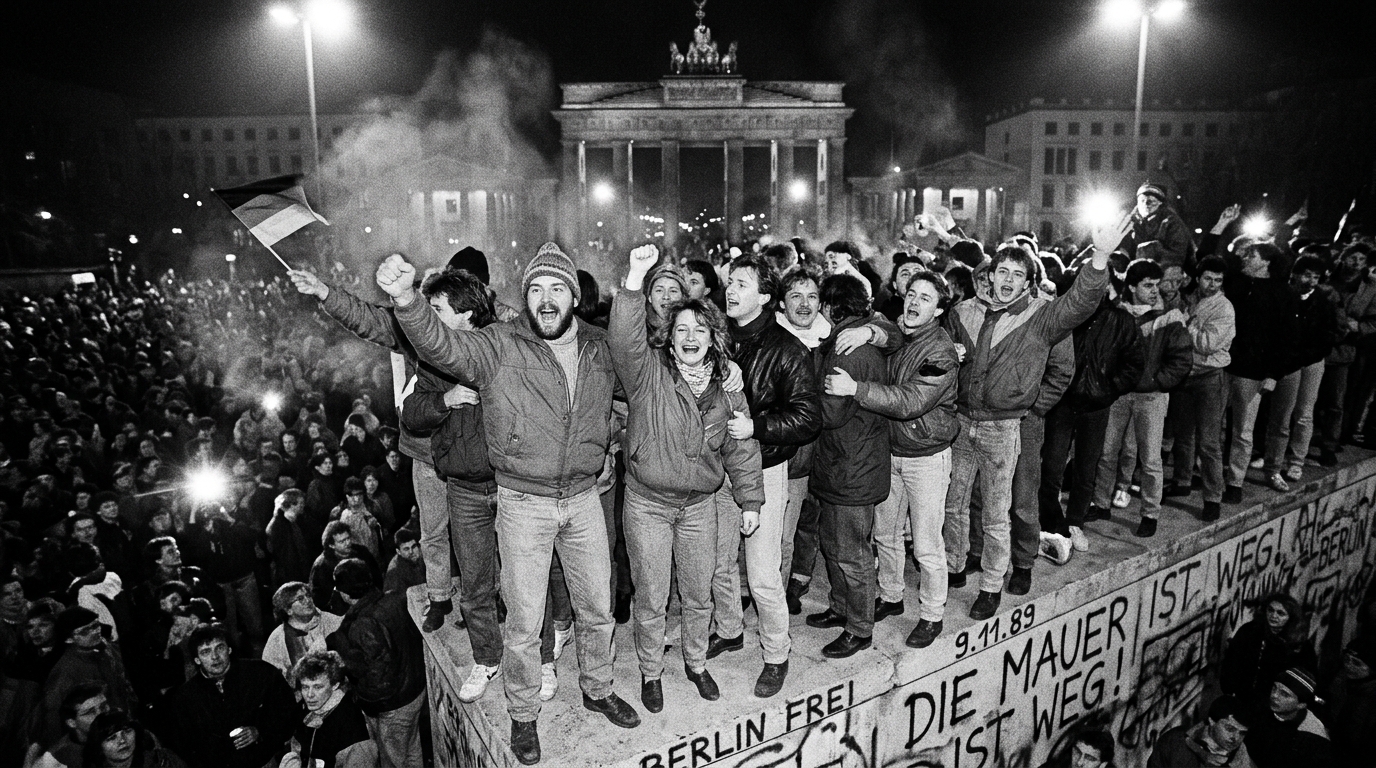
- The fall of the Berlin Wall on November 9, 1989, was the geopolitical climax of a turbulent year characterized by mass civil resistance and shifting Soviet policies.
- Mikhail Gorbachev's decision to abandon the Brezhnev Doctrine in favor of the 'Sinatra Doctrine' prevented military intervention, allowing Eastern Bloc nations to determine their own futures.
- The event paved the way for the reunification of Germany in October 1990 and catalyzed the rapid disintegration of the Warsaw Pact and the Soviet Union itself.
Historical Context and Origins
To understand the sudden collapse of the Berlin Wall on November 9, 1989, one must examine the geopolitical architecture established at the end of the Second World War. Following the defeat of Nazi Germany in 1945, the Allied powers—the United States, Great Britain, France, and the Soviet Union—divided the defeated nation and its capital, Berlin, into four occupational zones. As Cold War tensions hardened, these zones crystallized into two adversarial states: the Federal Republic of Germany (FRG, or West Germany) aligned with the democratic West, and the German Democratic Republic (GDR, or East Germany), a satellite state of the Soviet Union 1.
For the first decade and a half of division, Berlin remained a loophole in the Iron Curtain. Hundreds of thousands of East Germans, many of them highly educated professionals and skilled laborers, fled to the West via the open border between East and West Berlin. This "brain drain" threatened the economic viability of the GDR. To halt this existential demographic flight, the East German regime, led by Walter Ulbricht and supported by Soviet Premier Nikita Khrushchev, executed a covert operation in the early hours of August 13, 1961. Code-named "Operation Rose," East German soldiers and police began stringing barbed wire and constructing concrete barriers across the city. Over the decades, this makeshift barrier evolved into a highly fortified, dual-walled defensive system featuring armed guard towers, dog runs, anti-vehicle trenches, and a cleared "death strip" where guards possessed standing orders to shoot anyone attempting to defect 2.
By the mid-1980s, the structural flaws of the Eastern Bloc's command economies had become glaringly apparent. Chronic shortages of consumer goods, technological stagnation, environmental degradation, and a stifling lack of personal freedom generated deep-seated domestic discontent. In 1985, the ascension of Mikhail Gorbachev as General Secretary of the Communist Party of the Soviet Union introduced a paradigm shift. Recognizing that the Soviet Union could no longer sustain its costly arms race with the United States or prop up failing satellite regimes financially, Gorbachev introduced two revolutionary policies: Glasnost (openness) and Perestroika (restructuring) 3.
Crucially, Gorbachev signaled that the Kremlin would no longer enforce the "Brezhnev Doctrine," a foreign policy doctrine which asserted the Soviet Union's right to intervene militarily in any Warsaw Pact state where communist rule was threatened. Instead, Soviet officials jokingly referred to the new policy as the "Sinatra Doctrine"—allowing East European nations to do things "their way." This abandonment of military patronage severely undermined the legitimacy and authority of hardline East European leaders, most notably the GDR’s long-standing General Secretary, Erich Honecker, who stubbornly resisted Gorbachev's reformist agenda.
COLD WAR DIVISION OF GERMANY
| Federal Republic of Germany (FRG - West) | German Democratic Republic (GDR - East) |
|---|---|
| Capitalist Democracy | Soviet Satellite |
| NATO Member | Warsaw Pact Member |
| Supported by US/UK/FR | Stasi Surveillance |
The Enclave of Berlin
- Berlin Wall (Erected August 1961)
Timeline of Events and Key Moments
The collapse of the Berlin Wall was not an isolated incident but the culmination of a rapidly accelerating chain of events throughout 1989. This timeline traces the critical milestones that dismantled the physical and political barriers of the Cold War.
The Spring and Summer of 1989: The Iron Curtain Frayes
- May 2, 1989: Hungary begins dismantling the barbed-wire fences along its border with Austria. This action creates the first physical tear in the Iron Curtain, offering East Germans a potential escape route to the West.
- August 19, 1989: The "Pan-European Picnic" is held near Sopron, Hungary, close to the Austrian border. Organized by civic groups and patronized by Otto von Habsburg, the peace demonstration sees the border gate temporarily opened. Over 600 East Germans seize the opportunity to flee to the West, with Hungarian border guards choosing not to fire upon them [[^4]].
- September 4, 1989: The "Monday Demonstrations" (Montagsdemonstrationen) begin in Leipzig, East Germany. Led by Christian activists at Saint Nicholas Church (Nikolaikirche), citizens march weekly to demand democratic reforms, civil liberties, and the end of the Socialist Unity Party's (SED) monopoly on power. The protesters chant the powerful slogan: "Wir sind das Volk!" ("We are the people!").
Autumn 1989: The Regime Crumbles
- September 11, 1989: The Hungarian government officially opens its borders to East Germans, rendering the Berlin Wall practically obsolete as a tool to contain the population. Within weeks, tens of thousands of East Germans flood into West Germany via Hungary and Austria.
- October 7, 1989: The GDR celebrates its 40th anniversary amid rising tensions. Visiting Soviet leader Mikhail Gorbachev publicly warns the East German leadership that "life punishes those who come too late," signaling that Moscow will not rescue the regime from its own citizens [[^5]].
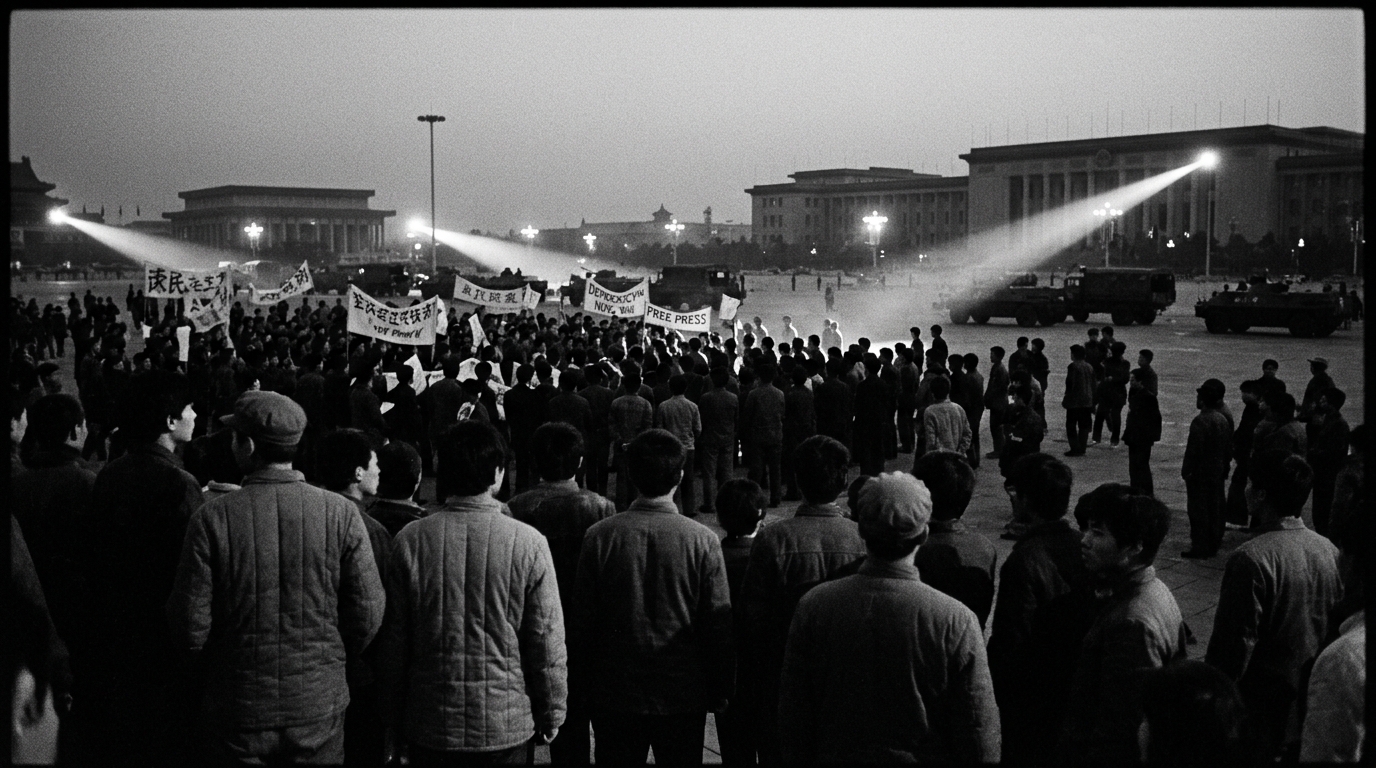
- October 9, 1989: Over 70,000 peaceful protesters march through Leipzig. Despite fears of a "Tiananmen Square" style military crackdown, local security forces, lacking explicit orders from Berlin and reluctant to slaughter their fellow citizens, stand down. This marked the point of no return for the civil rights movement.
- October 18, 1989: Faced with massive protests and a worsening economic crisis, Erich Honecker is forced to resign by his own politburo. He is replaced by Egon Krenz, a younger hardliner who attempts to placate the public with promises of moderate reform, which the population rejects as too little, too late.
- November 4, 1989: An estimated one million people gather at Alexanderplatz in East Berlin to demand democratic reforms, freedom of speech, and freedom of movement. It is the largest demonstration in the GDR’s history.
| Date | Event |
|---|---|
| May 2 | Hungary opens border |
| Aug 19 | Pan-European Picnic exodus |
| Sept 4 | Leipzig protests begin |
| Oct 18 | Honecker resigns |
| Nov 9 | The Wall Falls |
November 9, 1989: The Night of the Breakthrough
The immediate trigger for the fall of the Wall was an administrative error by East German officials. In an effort to ease the immense pressure on the borders, the SED Politburo drafted new travel regulations designed to permit orderly exit visas.
At 18:00 CET, Günter Schabowski, the government's newly appointed spokesman, held a live-televised international press conference to announce the regime’s decisions. Schabowski had not been fully briefed on the details of the draft document, nor had he been instructed to hold back the announcement until the next morning to allow border security to prepare.
At 18:53 CET, Italian journalist Riccardo Ehrman asked when the new travel rules would take effect. Schabowski, shuffling his notes, read the draft document aloud:
"Applications for travel abroad by private individuals can now be made without the presentation of requirements... Personal travel permits will be issued at short notice..."
When asked by journalists when this would go into effect, Schabowski hesitated, checked his papers, and uttered the fateful words:
"As far as I know, this enters into force... immediately, without delay." [[^6]]
The Miscommunication Chain (Nov 9, 1989)
- Politburo drafts complex travel regulations
- Schabowski handed the draft without briefing
- Live Press Conference (18:53 CET): "Effective immediately, without delay."
- Mass gatherings at Berlin border checkpoints
- Bornholmer Crossing opened by Harald Jäger
Within minutes, West German television networks (ARD and ZDF) reported that East Germany had opened its borders. By 20:00 CET, crowds of East Berliners began gathering at the city’s border checkpoints, demanding to be let through. The border guards, lacking instructions from their superiors, were left in a dangerous vacuum. Central authorities remained silent, unwilling to take responsibility for ordering lethal force against thousands of unarmed civilians.
At the Bornholmer Straße crossing, Lieutenant Colonel Harald Jäger, the Stasi officer in charge, faced an increasingly volatile situation. Afraid of a stampede or a violent clash, and unable to get clear directives from his superiors, Jäger made an executive decision at 23:30 CET. He ordered his men to open the gates, deactivate passport controls, and allow the citizens to pass freely into West Berlin. Other checkpoints quickly followed suit.
Tens of thousands of East and West Berliners met at the wall, embracing, weeping, singing, and dancing atop the concrete barriers. Many brought hammers and chisels to chip away at the hated symbol of division—becoming known as the Mauerspechte (wall woodpeckers).
Geopolitical Consequences and Aftermath
The fall of the Berlin Wall triggered a rapid domino effect that reshaped the global political landscape, permanently altering European security and ending the bipolar Cold War system.
The Reunification of Germany
The most immediate consequence was the rapid dissolution of the GDR and the reunification of Germany. While West German Chancellor Helmut Kohl sought to manage the process carefully, the sheer momentum of events forced a rapid timeline. On October 3, 1990—less than eleven months after the fall of the Wall—the German Democratic Republic officially ceased to exist, and its territory was incorporated into the Federal Republic of Germany. This historic milestone was facilitated by the Two Plus Four Agreement (the Treaty on the Final Settlement with Respect to Germany), signed by the four Allied occupying powers and the two German states 7. This treaty granted a reunited Germany full sovereignty and resolved outstanding post-WWII territorial claims.
| Date | Milestone |
|---|---|
| Nov 9, 1989 | Fall of the Wall |
| Nov 28, 1989 | Kohl's 10-Point Program |
| July 1, 1990 | Monetary Union (DM introduced) |
| Oct 3, 1990 | Official Reunification |
The Dissolution of the Soviet Union and the Warsaw Pact
The peaceful dismantling of the Berlin Wall exposed the absolute fragility of communist authority in Eastern Europe. Without the threat of Soviet military intervention, the communist regimes of the Warsaw Pact collapsed in rapid succession:
- In Poland, the Solidarity movement formed a non-communist coalition government.
- In Czechoslovakia, the Velvet Revolution swept Václav Havel into the presidency.
- In Bulgaria, long-time dictator Todor Zhivkov was ousted.
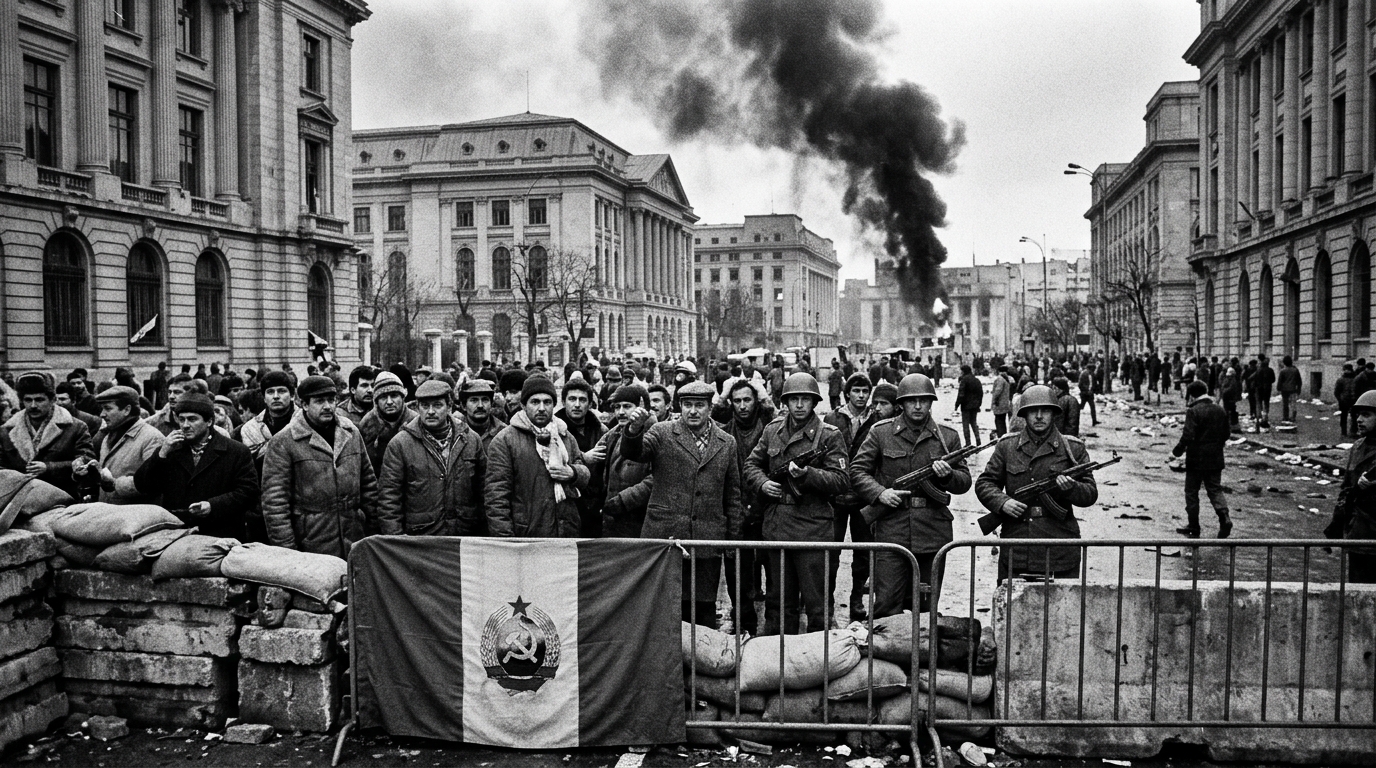
- In Romania, the transition was marked by violence, culminating in the trial and execution of Nicolae Ceaușescu on Christmas Day 1989.
By July 1991, the Warsaw Pact was officially dissolved. The internal collapse of Soviet power reached its zenith on December 25, 1991, when Mikhail Gorbachev resigned as President of the USSR, and the Soviet flag was lowered from the Kremlin for the last time, splitting the former superpower into 15 independent republics.
A New Security Architecture for Europe
The end of the Cold War required a total renegotiation of European security. With the collapse of the Soviet Union, the North Atlantic Treaty Organization (NATO) and the European Union (EU) expanded eastward, integrating former Warsaw Pact nations. While this expansion brought stability and economic growth to Central and Eastern Europe, it also planted the seeds for future geopolitical tensions with the Russian Federation, which viewed the expansion of Western military structures to its borders as a direct threat and a violation of implicit understandings reached during the reunification negotiations 8.
Analysis of Key Actors and Decisive Actions
The peaceful outcome of November 1989 was by no means guaranteed. It required a unique alignment of political personalities who prioritized diplomacy, reform, and restraint over violent suppression.
| Actor | Key Actions in 1989 | Long-term Geopolitical Impact |
|---|---|---|
| Mikhail Gorbachev | Revoked the Brezhnev Doctrine; refused to authorize force to suppress demonstrations; agreed to German reunification within NATO. | Facilitated the peaceful ending of the Cold War; allowed the collapse of the Soviet empire in Europe. |
| Helmut Kohl | Formulated the "Ten-Point Program" for reunification; negotiated financial aid to the USSR in exchange for Soviet withdrawal. | Unified Germany under Western democratic and economic structures; cemented Germany’s role as the anchor of European integration. |
| Ronald Reagan | Applied strategic economic and military pressure; framed the Cold War in stark moral terms ("Tear down this wall!"). | Weakened Soviet economic resilience; emboldened dissident movements behind the Iron Curtain. |
| George H.W. Bush | Managed the Western response with strategic restraint; avoided gloating or declaring victory, preserving Gorbachev’s political standing. | Prevented a nationalist or militarist backlash in Moscow; paved the way for peaceful transition treaties. |
Mikhail Gorbachev: The Architect of Restraint
Gorbachev's contribution to the peaceful collapse of the Berlin Wall cannot be overstated. Unlike his predecessors, who utilized military force to crush dissent—such as in East Germany in 1953, Hungary in 1956, and Czechoslovakia in 1968—Gorbachev recognized that the Soviet Union could no longer afford the economic and diplomatic costs of maintaining its empire through terror. By signaling to the East German leadership that the Red Army would remain in its barracks, he effectively disarmed the SED regime, which relied on the threat of Soviet intervention to maintain power 9.
Helmut Kohl: The Chancellor of Unity
West German Chancellor Helmut Kohl seized the historical moment with extraordinary diplomatic skill. On November 28, 1989, without consulting his Western allies or Moscow beforehand, Kohl presented a bold "Ten-Point Program" for overcoming the division of Germany and Europe. He successfully negotiated with a highly skeptical Soviet Union, offering massive financial credits to prop up the failing Soviet economy in exchange for Gorbachev's consent to a unified, sovereign Germany that would remain a member of NATO. He also successfully reassured Western leaders—notably British Prime Minister Margaret Thatcher and French President François Mitterrand—who harbored deep historical anxieties about a resurgent, powerful German state at the heart of Europe.
Ronald Reagan and the American Doctrine
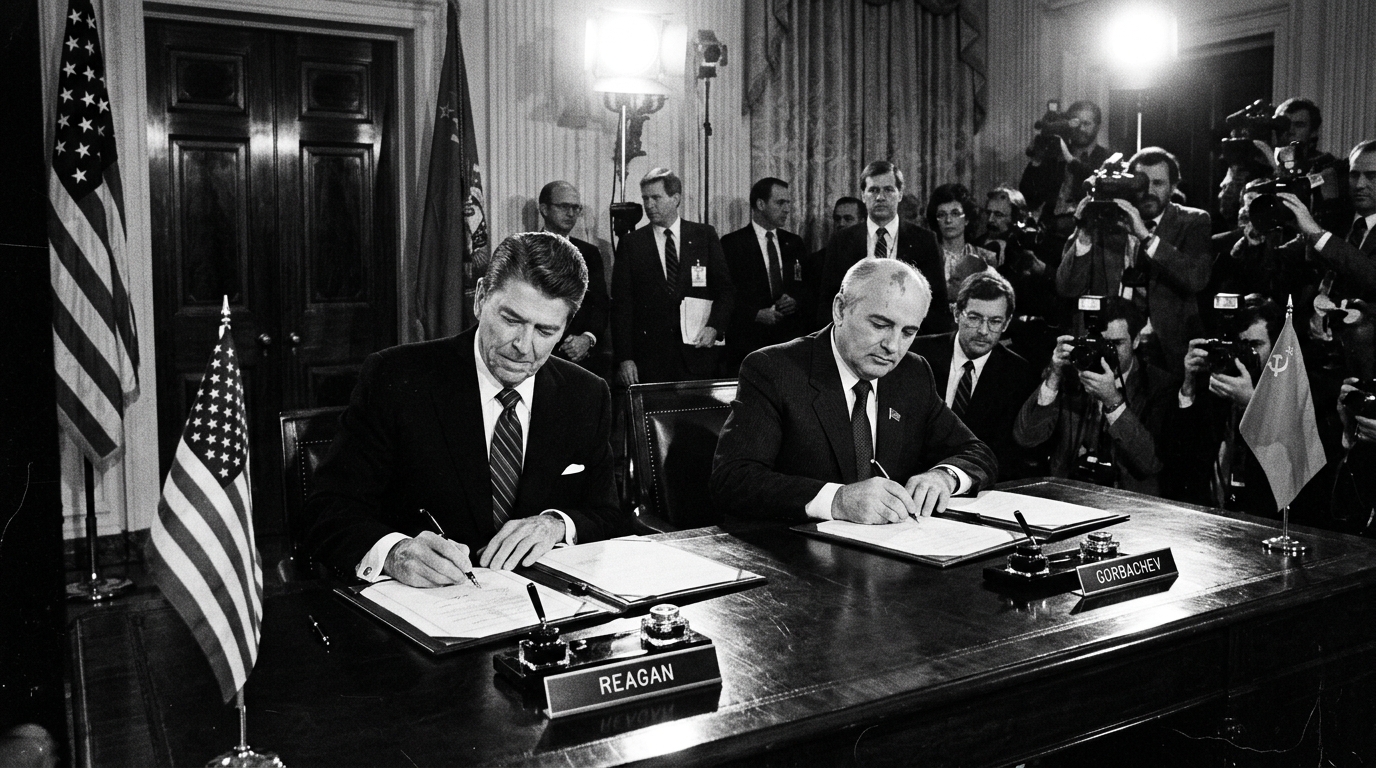
While US President Ronald Reagan had already left office by the time the Wall fell, his administration’s policies during the 1980s set the stage for the collapse of the Eastern Bloc. Reagan's dual-track approach of confronting the "Evil Empire" with a massive military buildup (including the Strategic Defense Initiative) while simultaneously engaging in direct arms-reduction negotiations with Gorbachev pushed the Soviet economy to its breaking point. His June 12, 1987 speech at the Brandenburg Gate provided the defining rhetorical challenge of the decade:
"General Secretary Gorbachev, if you seek peace, if you seek prosperity for the Soviet Union and Eastern Europe, if you seek liberalization: Come here to this gate! Mr. Gorbachev, open this gate! Mr. Gorbachev, tear down this wall!" [[^10]]
Trivia and Lesser-Known Facts
- The Guard Who Made the Choice: Lieutenant Colonel Harald Jäger, who opened the Bornholmer Straße crossing, was a loyal Stasi officer for 28 years. On the evening of November 9, he was eating a sandwich in the guard house when he watched Schabowski's press conference on television. Disgusted by the lack of clear directives from his superiors and terrified that the swelling crowd would attempt to rush his heavily armed but outnumbered guards, he acted on his own conscience to prevent a bloodbath.
- The "Wall Woodpeckers" (Mauerspechte): In the days following November 9, thousands of citizens attacked the wall with household tools. While many wanted souvenirs, some of the larger, graffiti-covered concrete slabs were salvaged, officially cataloged, and sold at international auctions. Today, segments of the Berlin Wall are on public display in diverse locations around the globe, including the Ronald Reagan Presidential Library in California, the Vatican Gardens, and various public parks across Europe and Asia.
- The Hasselhoff Myth: American actor and singer David Hasselhoff performed his hit song "Looking for Freedom" while standing on a platform above the Berlin Wall on New Year's Eve 1989. While Hasselhoff became a pop-culture symbol of the era, his performance occurred nearly two months after the Wall had actually been opened, though he remains affectionately linked to the event in German popular culture.
- The Unsung Hero of the Press Conference: Riccardo Ehrman, the correspondent for the Italian news agency ANSA, is widely credited with asking the decisive question that tripped up Günter Schabowski. However, West German journalist Peter Brinkmann also played a critical role by shouting, "Ab wann?" ("As of when?"), which forced Schabowski to search his notes and state, "sofort, unverzüglich" ("immediately, without delay").
References and Literature
- The Berlin Wall: A World Divided, 1961-1989 - Frederick Taylor's definitive historical account detailing the construction, operational life, and ultimate demise of the Wall.
- The Collapse: The Accidental Opening of the Berlin Wall - Mary Elise Sarotte's highly detailed archival investigation into the bureaucratic errors and human choices on the night of November 9, 1989.
- The Cold War: A New History - John Lewis Gaddis's comprehensive analysis of the geopolitical forces, policies, and leaders that shaped the rise and fall of the Eastern Bloc.
- German Unification and the End of the Cold War - A contemporary academic assessment from Foreign Affairs analyzing the diplomatic steps taken by Helmut Kohl, George H.W. Bush, and Mikhail Gorbachev.
---
Footnotes & Explanations
- Taylor, Frederick. The Berlin Wall: A World Divided, 1961-1989. London: Bloomsbury, 2006. ↩
- Ibid., pp. 142–155. ↩
- Gaddis, John Lewis. The Cold War: A New History. New York: Penguin Press, 2005, pp. 228–235. ↩
- Sarotte, Mary Elise. The Collapse: The Accidental Opening of the Berlin Wall. New York: Basic Books, 2014, pp. 45–49. ↩
- Ibid., p. 61. ↩
- Transcript of the press conference with Günter Schabowski, November 9, 1989. Federal Archives of Germany (Bundesarchiv). ↩
- Treaty on the Final Settlement with Respect to Germany, September 12, 1990. United Nations Treaty Series, vol. 1696, No. 29226. ↩
- Sarotte, Mary Elise. Not One Inch: America, Russia, and the Making of Post-Cold War Stalemate. New Haven: Yale University Press, 2021. ↩
- Gorbachev, Mikhail. Memoirs. New York: Doubleday, 1996. ↩
- Reagan, Ronald. "Address at the Brandenburg Gate." West Berlin, June 12, 1987. Reagan Presidential Library Archives. ↩