Key Takeaways
- The 2006 referendum marked the peaceful, democratic end of the State Union of Serbia and Montenegro, effectively concluding the protracted process of Yugoslav disintegration without resorting to armed conflict.
- The imposition of a uniquely high 55% threshold by the European Union created a stringent standard for democratic legitimacy, intended to ensure broad societal consensus and mitigate future instability, thereby setting a significant global precedent for secessionist movements.
- The outcome starkly highlighted and solidified a deep societal schism within Montenegro, pitting a Euro-Atlantic oriented elite and a diverse pro-independence coalition against a pro-unionist demographic deeply rooted in historical, cultural, and religious ties to Serbia.
- The process was heavily influenced by international mediation, particularly from the European Union, which played a crucial role in shaping the referendum's legal framework and ensuring its peaceful and legitimate conduct.
Historical Context and Origins
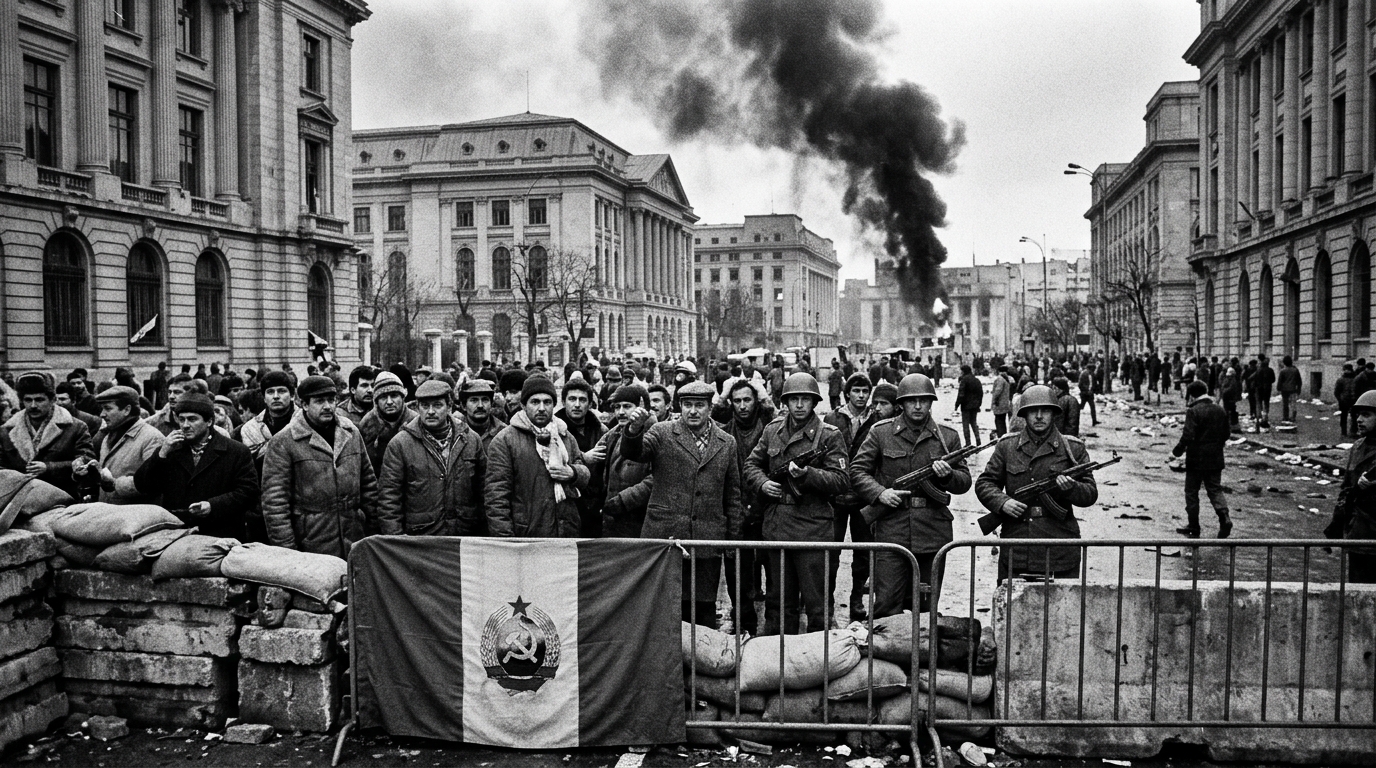
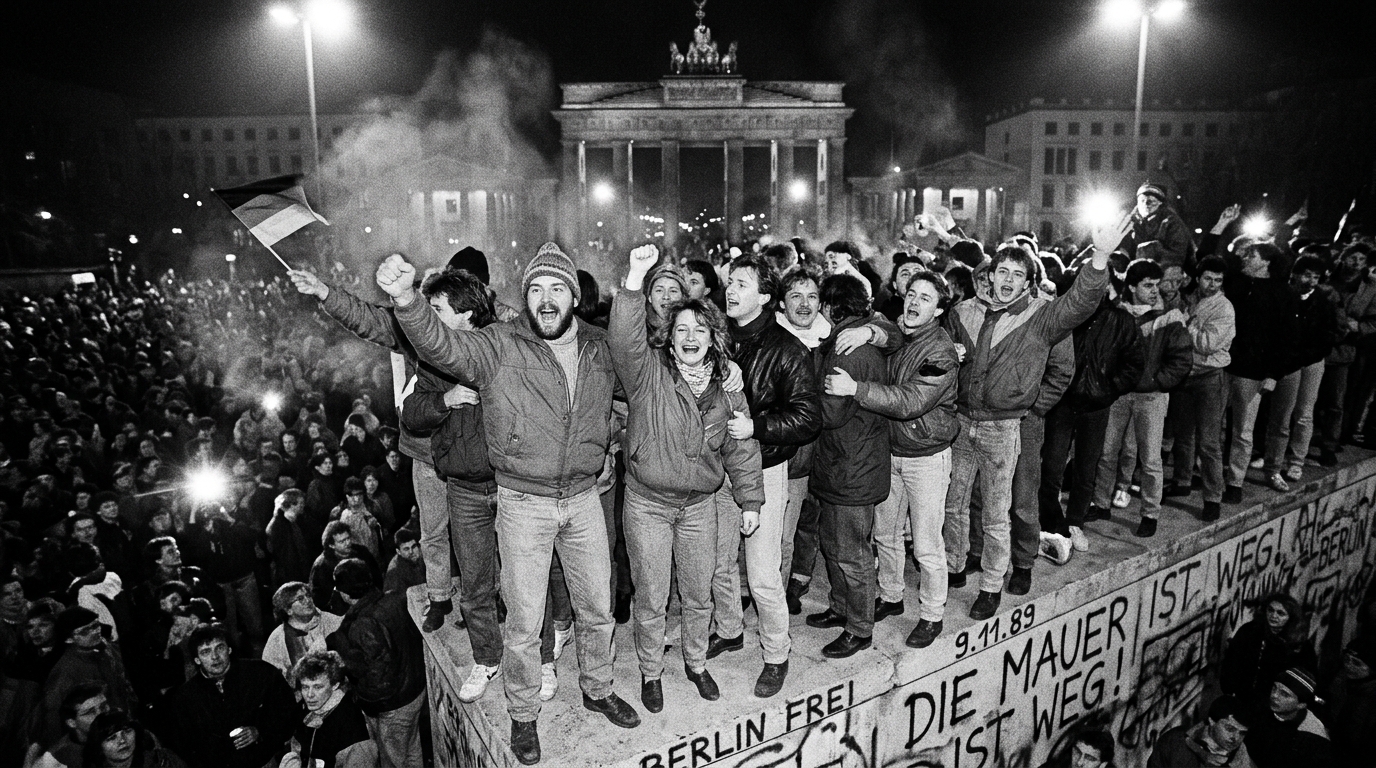
The dissolution of the State Union of Serbia and Montenegro (SCG) did not occur in a vacuum; it was the final, meticulously choreographed chapter of a geopolitical collapse that began with the fall of the Berlin Wall in 1989 and accelerated through the bloody wars of the 1990s. The former Socialist Federal Republic of Yugoslavia had splintered violently, leaving behind a trail of devastation and newly independent states. By the turn of the millennium, only Serbia and Montenegro remained within a federal structure, initially known as the Federal Republic of Yugoslavia (FRY).
This "Third Yugoslavia," proclaimed in 1992, was predominantly a Serbian project, led by Slobodan Milošević, with Montenegro playing an increasingly restive junior partner. While Montenegro participated in the early stages of the Yugoslav wars, particularly in the siege of Dubrovnik, its leadership under Milo Đukanović began to distance itself from Belgrade's policies in the mid-1990s. This divergence was driven by both economic pragmatism and a growing realization that continued association with Milošević's regime was hindering Montenegro’s economic development and its prospects for international integration. Montenegro unilaterally adopted the German Mark, and later the Euro, as its currency in 1999/2002, a clear economic separation from Serbia, which continued to use the dinar.
Following the overthrow of Slobodan Milošević in October 2000 and the subsequent democratic transition in Serbia, the international community, particularly the European Union, faced a dilemma. While Montenegro's desire for full independence was palpable, the EU was deeply wary of further fragmentation in the Western Balkans, a region still reeling from a decade of conflict. European foreign policy chief Javier Solana became the chief architect of a compromise solution. In 2003, after intense negotiations, the "Belgrade Agreement" was signed, replacing the FRY with a much looser entity: the State Union of Serbia and Montenegro.
This union was, from its inception, widely regarded as a "marriage of convenience" or, more cynically, a "Solana's compromise" forced upon the political elites of Podgorica and Belgrade. Its primary purpose, from the EU's perspective, was to stabilize the region and avoid another potentially contentious secession, giving both entities three years to evaluate the arrangement before holding an independence referendum. For Milo Đukanović, the Montenegrin leader who had navigated a complex political path from being a Milošević loyalist in the early 1990s to an ardent Western-oriented reformer by the late 1990s, the union was a constitutional straightjacket. It prevented Montenegro’s direct integration into European institutions, which he saw as essential for the nation's future prosperity and security. Conversely, for Serbian Prime Minister Vojislav Koštunica, preserving the state union was a matter of constitutional integrity, historical continuity, and maintaining Serbia's regional influence, particularly in the shadow of the unresolved status of Kosovo.
The Constitutional Charter of the State Union of Serbia and Montenegro, adopted on February 4, 2003, outlined a highly decentralized state. It stipulated that both member states would retain substantial autonomy over economic, financial, and judicial matters. There was no single currency (Montenegro used the Euro, Serbia the Dinar), no unified customs territory, and very limited central authority beyond foreign policy and defense. This created an awkward and often dysfunctional arrangement, which many critics dubbed "two states in one name." This inherent lack of functionality and the divergent strategic interests of its two constituent parts made its eventual dissolution almost inevitable.
Timeline of Events and Key Moments
The trajectory toward Montenegrin independence was marked by intense legal maneuvering, persistent international mediation, and a grueling, often emotional, political campaign.
| Period | Key Development | Detailed Description |
|---|---|---|
| February 4, 2003 | Adoption of the Constitutional Charter | The formal creation of the State Union of Serbia and Montenegro, replacing the Federal Republic of Yugoslavia. This document stipulated a three-year moratorium on independence referendums. |
| Early 2006 | EU-mediated negotiations intensify | As the three-year moratorium drew to a close, intense negotiations began, primarily facilitated by EU Special Envoy Miroslav Lajčák, regarding the terms and conditions for a potential independence referendum. |
| March 1, 2006 | Agreement on referendum conditions | Following weeks of talks, the EU, the Montenegrin government, and the pro-union opposition reached a landmark agreement on the referendum's terms, most notably the 55% threshold. |
| March 2, 2006 | Montenegrin Parliament passes Referendum Law | The Parliament of Montenegro formally adopted the Law on the Referendum on the State-Legal Status of the Republic of Montenegro, incorporating the EU-brokered conditions. |
| April 13, 2006 | Official campaign period begins | Both the pro-independence "Bloc for an Independent Montenegro" and the pro-union "Bloc for the Preservation of Serbia and Montenegro" (often referred to as 'Better Montenegro') officially launched their campaigns. |
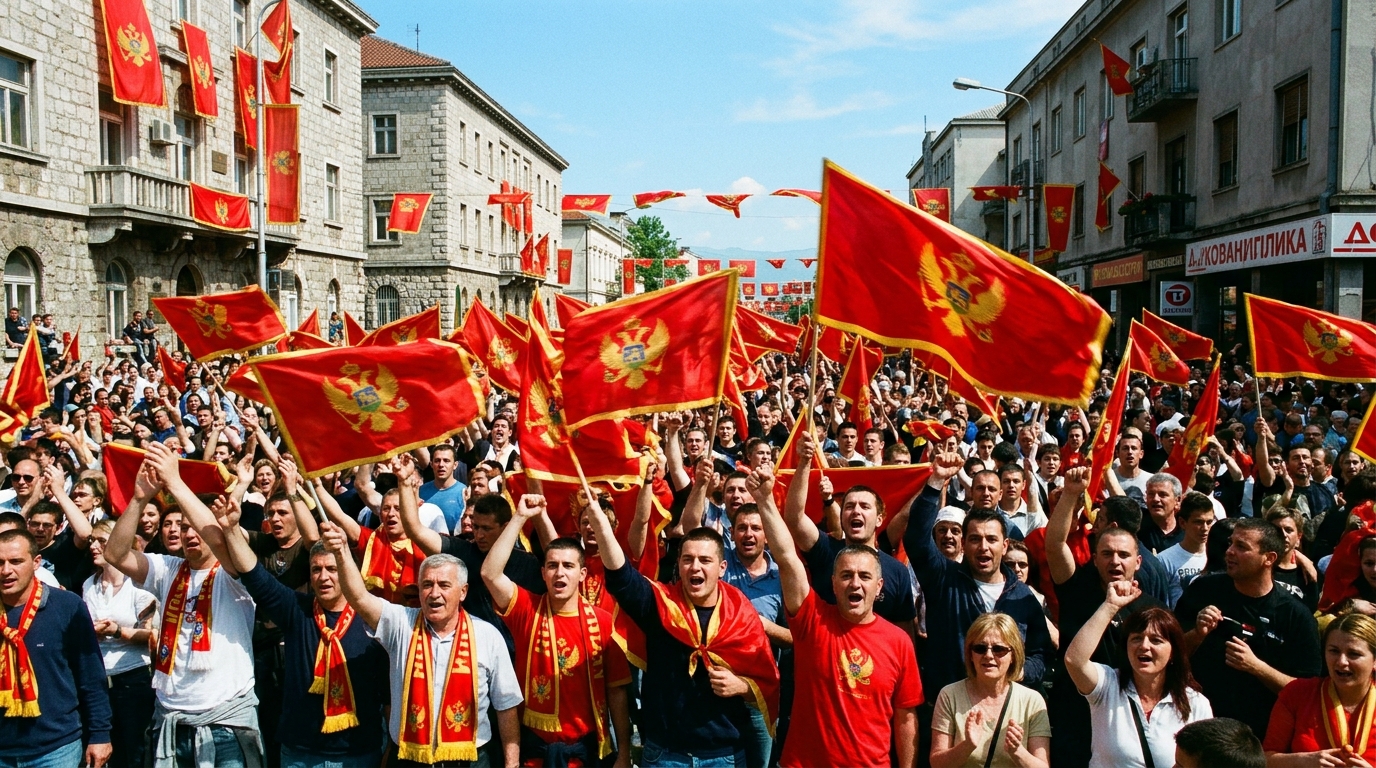
| May 21, 2006 | The Referendum Day | Polling stations across Montenegro opened for the historic vote. A high turnout of 86.5% of eligible voters participated, reflecting the immense importance attached to the decision. |
| May 22, 2006 (early hours) | Preliminary results announced | Independent monitors and campaign headquarters began releasing preliminary projections. The independence bloc declared victory shortly after midnight, with unofficial results hovering just above the 55% threshold. |
| May 23, 2006 | Official results confirmed | The State Referendum Commission (DIK) officially announced the results: 55.5% voted for independence, and 44.5% voted against. The turnout was confirmed at 86.5%. |
| May 23, 2006 | EU and international recognition | EU foreign policy chief Javier Solana acknowledged the result, stating that the EU would respect the democratic will of the people of Montenegro. Recognition from individual EU member states and other international actors followed swiftly. |
| May 26, 2006 | Serbia formally accepts outcome | Serbian President Boris Tadić and Prime Minister Vojislav Koštunica formally acknowledged the referendum results, affirming Serbia's respect for the democratic decision of Montenegrin citizens. |
| June 3, 2006 | Montenegrin Parliament declares independence | The Parliament of Montenegro held a solemn session where it officially declared the independence of the Republic of Montenegro, formally ending the State Union of Serbia and Montenegro. |
| June 28, 2006 | Montenegro becomes UN member | Montenegro was admitted as the 192nd member state of the United Nations, solidifying its international recognition and full sovereignty. |
The crucial moment occurred in early 2006 when the European Union envoy Miroslav Lajčák brokered an agreement on the referendum rules, particularly the "qualified majority" requirement. The stipulation—that 55% of the total vote must be in favor for the result to be legally binding—was viewed as an Herculean task for the independence camp. This threshold, higher than the simple majority typically required in such votes, was a direct consequence of EU concerns regarding the deep divisions within Montenegrin society and the desire to prevent a narrow victory from destabilizing the newly independent state or the wider region.
Geopolitical Consequences and Aftermath
The immediate and profound consequence of the referendum was the definitive end of the Serbian-Montenegrin state entity, marking the complete disintegration of the former Yugoslavia into its constituent republics. For Serbia, the result was a significant geopolitical blow; it meant the irrevocable loss of direct access to the Adriatic Sea, ending centuries of maritime aspiration and fundamentally altering its strategic depth. Psychologically, it represented the final chapter in the diminishment of Serbia's historical role as the dominant federal power, forcing a re-evaluation of its national identity in the post-Yugoslav era. However, paradoxically, it also streamlined Serbia’s own path toward eventual EU accession, as the constitutional ambiguities and the cumbersome "two states in one name" structure of the union were finally resolved, allowing Belgrade to focus singularly on its own reform agenda and the complex issue of Kosovo.
For Montenegro, the victory ushered in a period of rapid institutional building and a decisive pivot toward the West. Under the sustained leadership of the Democratic Party of Socialists (DPS), the state accelerated its integration into Euro-Atlantic structures. By 2017, this trajectory culminated in Montenegro’s accession to NATO, signaling a total departure from its historical orbit around Belgrade and a clear alignment with Western security architecture. This move, however, was highly controversial domestically, further deepening the rift with the pro-Serbian opposition and sparking significant protests. Montenegro also intensified its efforts for EU membership, aligning its legislation and economic policies with Brussels' standards. The economy, heavily reliant on tourism and foreign investment, benefited from increased stability and a clear international orientation.
Regionally, Montenegro's peaceful separation set a complex precedent. On one hand, it demonstrated that secession could occur without violence, unlike earlier Yugoslav breakups. On the other hand, the unique conditions—the EU's high threshold, the historical context of a pre-existing federal unit, and international mediation—made it difficult to replicate elsewhere, particularly for regions like Kosovo, whose path to independence was more fraught and internationally contentious. The dissolution also influenced the geopolitical dynamics of the Western Balkans, strengthening the trend towards smaller, nation-states seeking individual paths to European integration, while also highlighting the enduring influence of external powers like the EU, NATO, and Russia in the region.
The referendum also left a deep legacy of domestic polarization. The "Unionist" camp, which had campaigned under the "Better Montenegro" banner, felt disenfranchised by the EU's threshold rules and the intense focus on national identity by the independence movement. Many within this group, comprising ethnic Serbs and a significant portion of Montenegrins who identified more closely with Serbian culture and the Serbian Orthodox Church, viewed the outcome as a tearing away from their historical roots. This created a profound political rift that continued to characterize Montenegrin internal politics for over a decade. This polarization manifested in persistent divisions between pro-independence and pro-unionist parties, influencing electoral outcomes, shaping national identity debates (Montenegrin vs. Serbian identity), and contributing to political instability, including a change of government in 2020 that ended the DPS's long dominance.
Analysis of Key Actors and Decisive Actions
The 2006 referendum was a masterclass in political maneuvering, strategic diplomacy, and grassroots mobilization, driven by a few pivotal figures and institutions.
Milo Đukanović: The Architect of Statehood
Milo Đukanović, as Prime Minister and leader of the Democratic Party of Socialists (DPS), proved to be a master of political pragmatism and strategic foresight. His political evolution, from a Milošević ally to a staunch advocate for Montenegrin sovereignty, was a testament to his adaptability. By positioning himself as a democratic reformer and a guarantor of stability, he secured the crucial support and legitimacy of the West, particularly the European Union. He artfully framed independence not as a narrow nationalist project, but as the only viable path to economic prosperity, good governance, and Euro-Atlantic integration, implicitly contrasting it with the perceived economic stagnation and political instability of a union with Serbia.
His most decisive action was the meticulous strategy to mobilize a broad coalition. Recognizing that a purely ethnic Montenegrin vote might fall short of the demanding 55% threshold, Đukanović and the DPS actively courted the support of Montenegro's significant minority ethnic groups – primarily Albanians, Bosniaks, and Croats. His campaign provided assurances of minority rights, cultural preservation, and a clear vision of a multi-ethnic, civic-oriented independent state. These communities, often feeling marginalized or targeted during the Milošević era, largely sided with independence, viewing it as a safer and more prosperous future away from Belgrade's sphere of influence. Their collective vote proved to be the decisive factor that tipped the scales above the 55% threshold, showcasing Đukanović's profound understanding of Montenegro's diverse demographic landscape.
Vojislav Koštunica: The Defender of Unionism
Vojislav Koštunica, then Prime Minister of Serbia, approached the state union from a position of constitutionalism and legal continuity. For him, the State Union of Serbia and Montenegro represented the legitimate successor state to the Federal Republic of Yugoslavia and, by extension, a final bulwark against the complete disintegration of the post-Yugoslav space. He viewed the Montenegrin independence drive with deep skepticism, seeing it as a dangerous precedent and a historical injustice.
Koštunica largely refrained from active, direct campaigning in Montenegro, primarily to avoid accusations of interference in another sovereign entity's internal affairs, which could have been counterproductive and alienated international observers. Instead, he preferred to rely on the existing institutional framework of the state union and the arguments presented by the Montenegrin pro-unionist bloc, led by figures like Predrag Bulatović. His adherence to constitutional legality and his appeal to a shared historical and cultural heritage, however, proved insufficient against the well-organized and internationally legitimized wave of national sentiment orchestrated by the pro-independence camp. Koštunica's government in Belgrade, grappling with its own internal challenges, particularly the looming question of Kosovo's status and the demands of ICTY cooperation, was also under significant international pressure to ensure a peaceful and democratic process in Montenegro. This limited Belgrade's capacity for assertive intervention.
The European Union: Stabilizer and Arbitrator
The European Union played an indispensable role, acting as both a stabilizer and an arbitrator in the independence process. Haunted by the violent collapse of Yugoslavia in the 1990s, the EU's paramount objective was to ensure a peaceful and democratic outcome, whatever the result. Javier Solana, the EU's High Representative for the Common Foreign and Security Policy, was instrumental in forging the "Belgrade Agreement" in 2003, which created the SCG and established the three-year moratorium.
Later, Miroslav Lajčák, a Slovak diplomat, took on the critical role of special envoy for the referendum. His diplomatic efforts were central to bridging the deep divide between the Montenegrin government and the opposition on the referendum's crucial modalities. Lajčák's most significant achievement was brokering the agreement on the 55% threshold. This unusually high bar reflected the EU's desire to prevent a narrow victory from igniting post-referendum instability and further ethnic tensions. The EU's involvement ensured that the referendum was conducted under stringent international supervision, including extensive observer missions from the OSCE and the Council of Europe, thereby lending significant legitimacy to the entire process.
Historical Precedents & Context of Yugoslav Dissolution
To fully grasp the significance of the 2006 Montenegrin referendum, it is essential to place it within the broader narrative of the Yugoslav dissolution. The Socialist Federal Republic of Yugoslavia (SFRY) was a complex, multi-ethnic, and multi-religious federation forged in the aftermath of World War II under the authoritarian rule of Josip Broz Tito. Its unique "self-management" socialism and non-aligned foreign policy distinguished it from both the capitalist West and the communist East. However, beneath the veneer of "brotherhood and unity," deep-seated national, economic, and political fault lines persisted.
The death of Tito in 1980 unleashed a slow but inexorable unraveling. Economic crises in the 1980s exacerbated regional disparities, fueling resentment in the more prosperous northern republics (Slovenia, Croatia) and a sense of grievance in the poorer south (Serbia, Montenegro, Macedonia, Bosnia and Herzegovina). This economic discontent quickly intertwined with resurgent nationalism. Serbia, under Slobodan Milošević, pursued a centralizing, Greater Serbia agenda, challenging the autonomy of provinces like Kosovo and Vojvodina and asserting Serbian dominance within the federation.
Montenegro's relationship with Serbia within Yugoslavia was historically unique. Often seen as Serbia's "little brother" due to shared language, religion (Orthodox Christianity), and significant historical ties, Montenegro nonetheless maintained its distinct republican status. Its population, while culturally close to Serbs, developed a nascent Montenegrin national identity distinct from Serbian nationalism, particularly as Milošević's policies became more aggressive. Montenegro had historically been more integrated into Yugoslavia's federal structures compared to, say, Slovenia, but also retained a strong sense of its own statehood rooted in its pre-Yugoslav history as an independent kingdom.
When Slovenia and Croatia declared independence in 1991, leading to brutal wars, Montenegro, then under Milošević's influence, initially remained tied to Serbia within the rump Federal Republic of Yugoslavia (FRY). However, even within the FRY, Montenegro began to assert greater autonomy. Its strategic location on the Adriatic and its smaller population made a violent independence bid highly risky, leading its leadership to seek a more gradual, negotiated separation. The creation of the State Union of Serbia and Montenegro (SCG) in 2003 was precisely this type of interim, non-violent solution. It reflected a delicate international compromise: satisfying Montenegro's drive for sovereignty while placating Serbia and the international community's desire for regional stability. The SCG was thus an anomaly, a "postponed independence" rather than a true federation, an acknowledgment that the complete dissolution of Yugoslavia was unavoidable but needed to be managed peacefully. The 2006 referendum was the culmination of this carefully managed final act, distinctly different from the preceding violent breakups.
Socio-Economic Aftermath and Geopolitical Realignment
Montenegro's independence ushered in a new era of socio-economic transformation, deeply intertwined with its geopolitical realignment towards Euro-Atlantic integration. Economically, the country fully embraced a market economy, leveraging its stunning natural beauty to become a premier tourist destination on the Adriatic. Foreign direct investment, particularly from Russia, but also increasingly from Western Europe and China, poured into the real estate and tourism sectors. The unilateral adoption of the Euro in 2002 (confirmed by independence) provided monetary stability and facilitated integration with the Eurozone, though it also meant a lack of independent monetary policy tools.
However, this rapid economic transformation was not without its challenges and criticisms. Montenegro faced issues common to many post-communist economies, including pervasive corruption, organized crime, and a dependence on a few key sectors (tourism, energy, aluminum production). Accusations of illicit financial flows and close ties between political elites and business interests became a persistent feature of the political landscape, often highlighted by opposition parties and international watchdog groups. Despite these challenges, GDP per capita saw significant growth in the decade following independence, and living standards generally improved, fueling the narrative that independence had indeed brought economic benefits.
Geopolitically, the most significant realignment was Montenegro's determined push for NATO membership, which it achieved in 2017. This move was a clear statement of its pro-Western orientation and a definitive break from the traditional, Orthodox-Slavic alliance with Russia and Serbia. NATO accession was fiercely opposed by pro-Serbian and pro-Russian opposition parties, leading to major protests and even allegations of a Russian-backed coup attempt in 2016 aimed at preventing the country from joining the alliance. This episode underscored the ongoing geopolitical contestation for influence in the Western Balkans.
Montenegro also pursued European Union membership with zeal, aligning its laws and institutions with EU standards. This path, while challenging, offered the promise of deeper economic integration, institutional reform, and increased rule of law, serving as a powerful anchor for the country's development.
The social fabric of Montenegro remained deeply divided along identity lines. The political polarization evident during the referendum continued to define national discourse. Debates over national identity, language, the role of the Serbian Orthodox Church versus a nascent Montenegrin Orthodox Church, and historical narratives of Montenegrin statehood versus Serbian-Montenegrin unity became central to post-independence politics. These divisions often reflected the cleavages of the referendum itself, with pro-Western, civic-oriented Montenegrin nationalists on one side, and pro-Serbian, more traditionalist unionists on the other. This polarization shaped every election and major policy debate, frequently leading to political stalemates and government crises, as evidenced by the watershed parliamentary elections in 2020 that saw the long-dominant DPS lose power for the first time in three decades. The legacy of the 2006 referendum, therefore, continues to resonate not only in Montenegro's foreign policy and economy but also in the very foundations of its national identity and domestic political life.
Trivia and Lesser-Known Facts
- The Diaspora Controversy: A major sticking point in the drafting of the referendum law was the contentious issue of voting rights for the Montenegrin diaspora. The pro-unionist bloc vehemently argued that all Montenegrin citizens, regardless of their current residence, should have the right to vote. However, the independence bloc, backed by the EU and the Venice Commission, insisted on restricting voting to those permanently residing in Montenegro for at least two years prior to the referendum. The final compromise, brokered by Lajčák, was to exclude Montenegrins residing in Serbia from the voting rolls, while allowing those in other countries to vote in Montenegrin consulates. This decision was a direct result of negotiations intended to ensure that the sovereign choice was primarily made by those permanently residing within the territory of Montenegro, thereby mitigating potential interference or undue influence from outside political actors and reinforcing the principle of self-determination for the resident population. This effectively reduced the potential "unionist" vote.
- The "Quiet" Aspect: Unlike the violent disintegrations that defined other parts of the former Yugoslavia—Slovenia (Ten-Day War), Croatia (Croatian War of Independence), Bosnia (Bosnian War), and Kosovo (Kosovo War)—the 2006 Montenegrin referendum was remarkable for its lack of armed conflict or civil unrest. This "quiet" aspect can be attributed to several factors:
- Economic Transition: The referendum effectively confirmed the transition to the Euro as the official currency in Montenegro—a policy that had been in place unilaterally since 2002. This decision, initially made by Podgorica to stabilize its economy and distance itself from the volatile Serbian Dinar, became a de facto economic declaration of independence even before the political one. It underlined Montenegro's distinct economic trajectory and its ambition for closer integration with the Eurozone.
- Election Observers: The OSCE (Organization for Security and Co-operation in Europe), through its Office for Democratic Institutions and Human Rights (ODIHR), deployed one of its largest-ever observation missions to ensure the credibility of the ballot. Comprising over 500 international observers from 43 countries, the mission concluded that the referendum was conducted in line with OSCE commitments and other international standards for democratic electoral processes. They noted a high degree of transparency and professionalism in the administration of the vote, although they also identified some minor irregularities and criticized the intensity of the political polarization during the campaign. This strong international presence was vital for the domestic and international acceptance of the results.
- The "Green" and "Blue" Camps: The pro-independence camp was often symbolically referred to as the "green" camp (after the green color of the Montenegrin flag), while the pro-unionist camp was sometimes called the "blue" camp (after the blue of the Serbian flag, or the blue background of the FRY/SCG flag). Campaign materials and rhetoric often played on these symbolic distinctions. The independence bloc's main slogan was "Glasajte za nezavisnost!" (Vote for independence!), while the unionist bloc's main message was "Bolja Crna Gora" (Better Montenegro), focusing on the supposed benefits of remaining united with Serbia.
References and Literature
- The Venice Commission - Opinion on the Referendum Law - An in-depth look at the legal framework governing the 2006 vote, including the recommendations and insights of the Council of Europe's advisory body on constitutional law.
- OSCE/ODIHR Final Referendum Report (2006) - The comprehensive report by the international observer mission detailing their findings on the conduct and fairness of the referendum.
- Independent Montenegro: A Review - Academic analysis from Foreign Affairs on the regional impact and significance of the dissolution of SCG.
- The New York Times Archive: Montenegro Votes for Independence - Contemporary reporting on the atmosphere in Podgorica on May 22, 2006, offering an immediate journalistic perspective.
- Florian Bieber, 'Montenegro in Transition: Problems of Identity and Statehood' - A scholarly exploration of the post-Yugoslav political landscape, the referendum's societal impact, and the ongoing challenges of state-building in Montenegro.
- Kenneth Morrison, 'Montenegro: A Modern History' - A detailed historical account providing extensive background to Montenegro's path to independence.
- European Commission, 'Serbia and Montenegro 2005 Progress Report' - Documents from the European Commission detailing the pre-referendum political and economic context of the State Union, reflecting EU perspectives and concerns.
Footnotes & Explanations
- Miroslav Lajčák's role was pivotal in reconciling the opposing factions within the Montenegrin parliament and ensuring the referendum process met international democratic standards. His diplomatic efforts were key to preventing a potential political stalemate or even unrest. ↩
- The 55% threshold was statistically unconventional, as it required a supermajority rarely seen in democratic referendums. It reflected the EU's cautious approach to managing post-Yugoslav fragmentation and ensuring robust popular support for any change in status. ↩