Key Takeaways
- The 2008 crisis fundamentally shattered the 'Washington Consensus' model of neoliberal deregulation, exposing its inherent fragilities and systemic risks.
- China's rapid and massive fiscal stimulus, coupled with its accumulation of US debt, transitioned the nation from a peripheral manufacturing hub to a central pillar of global economic stability and an alternative development model.
- The crisis served as the primary catalyst for the Eurozone debt crisis, disproportionately impacting periphery nations like Greece, Ireland, Spain, and Portugal, and exposing the structural flaws of the monetary union's incomplete institutional design.
- It led to unprecedented government interventions and central bank actions, including massive bailouts and quantitative easing, reshaping the relationship between state and market.
- The socio-economic fallout, characterized by rising inequality and austerity measures, fueled widespread public distrust in established institutions and contributed significantly to the global rise of populist political movements.
- The crisis spurred the emergence of the G20 as the premier forum for international economic cooperation, signaling a shift towards a more multipolar global economic governance structure.
Historical Context and Origins
The global financial crisis of 2008, often referred to as the Great Recession, was not merely a random market shock but the catastrophic culmination of decades of evolving financial practices, policy decisions, and a prevailing economic ideology. The intellectual underpinnings were rooted in the "Washington Consensus" – a set of neoliberal policies advocating for deregulation, privatization, and fiscal austerity – which had gained widespread acceptance since the 1980s. This framework encouraged financial liberalization globally, assuming that markets were inherently efficient and self-correcting.
A pivotal moment often cited is the repeal of the Glass-Steagall Act in 1999 through the Gramm-Leach-Bliley Act. This legislative change dismantled firewalls between commercial and investment banking, allowing financial conglomerates to grow unprecedentedly large and interconnected. This fostered a climate where traditional deposit-taking banks could engage in riskier trading activities, blurring the lines of responsibility and oversight.
Following the "dot-com" bubble burst of the early 2000s and the September 11th attacks, the U.S. Federal Reserve, under Chairman Alan Greenspan, maintained exceptionally low interest rates for an extended period to stimulate economic recovery. While achieving its immediate goal, this policy inadvertently fueled a massive housing boom, creating an environment of cheap credit that permeated all levels of the financial system. This period saw the proliferation of subprime mortgages—loans issued to borrowers with poor credit histories, often with deceptive terms like "teaser rates" that ballooned after a few years. Lenders, driven by aggressive sales targets, relaxed underwriting standards significantly, often issuing "liar loans" without verifying income or assets.
Financial institutions, operating in a climate of "light-touch" regulation and spurred by the pursuit of ever-higher returns, engaged in the aggressive securitization of these loans. They packaged thousands of individual mortgages into complex financial derivatives known as Mortgage-Backed Securities (MBS). These MBS were then often sliced into different tranches based on perceived risk, with the riskiest (equity) tranches paying the highest returns and the safest (senior) tranches receiving top credit ratings. Even more complex were Collateralized Debt Obligations (CDOs), which pooled various debt instruments, including tranches of MBS, student loans, and credit card debt. Some financial wizardry went further, creating synthetic CDOs which were essentially bets on the performance of existing CDOs, effectively multiplying the exposure to underlying subprime mortgages without creating new loans.
The opacity of these instruments made it incredibly difficult to assess their true value or risk. Crucially, credit rating agencies like Moody's, Standard & Poor's, and Fitch, which were paid by the very institutions issuing these securities, routinely granted AAA ratings to highly volatile assets. This created a profound conflict of interest and provided a false sense of security to institutional investors—pension funds, insurance companies, and banks worldwide—who purchased these seemingly safe, high-yielding investments.
This systemic fragility was exacerbated by the explosive growth of the shadow banking system—a network of non-bank financial intermediaries that engaged in credit intermediation but were largely outside traditional regulatory oversight. Investment banks, hedge funds, and special purpose vehicles (SPVs) operated with extraordinarily high leverage ratios. Major investment banks reached leverage ratios as high as 30-to-1, meaning a mere 3-4% drop in the value of their assets could wipe out their entire capital base. They relied heavily on short-term wholesale funding (e.g., repurchase agreements or "repos" and commercial paper), making them highly vulnerable to sudden withdrawals of liquidity. The widespread use of Credit Default Swaps (CDS) further complicated matters. These were essentially insurance contracts against bond defaults, but they were largely unregulated and could be traded speculatively, massively expanding the risk exposure of firms like AIG without sufficient capital reserves.
Warnings about these excesses, such as Raghuram Rajan's prescient speech at the 2005 Jackson Hole conference, were largely dismissed by policymakers and financial leaders who continued to believe in the efficiency of markets and the robustness of their innovations. The stage was set for a dramatic collapse, triggered when the underlying housing market, the foundation of this complex financial edifice, inevitably began to crumble.
Timeline of Events and Key Moments
The descent into the "Great Recession" occurred in rapid, cascading stages, characterized by a loss of confidence that quickly paralyzed the international financial architecture.
| Date | Event | Significance & Detail |
|---|---|---|
| August 2007 | BNP Paribas freezes funds | French bank BNP Paribas announced it was freezing withdrawals from three investment funds exposed to U.S. subprime mortgages, stating it could not value the assets. This was one of the earliest public signals that the liquidity issues in the U.S. housing market were spreading to Europe and threatening the global interbank lending market. |
| February 2008 | IndyMac Bank fails | One of the largest mortgage lenders, IndyMac Bank, became the largest regulated thrift to fail in U.S. history up to that point, signaling the escalating crisis in the mortgage industry. |
| March 2008 | Bear Stearns collapse | The fifth-largest U.S. investment bank, Bear Stearns, facing a massive liquidity crisis due to its exposure to subprime mortgages, was on the brink of collapse. The Federal Reserve, fearing systemic contagion, facilitated an emergency, forced sale to JPMorgan Chase at a fire-sale price of $2 per share (later raised to $10). This intervention set a controversial precedent for government involvement, highlighting the "too big to fail" dilemma. |
| July 2008 | Fannie Mae & Freddie Mac placed into conservatorship | The U.S. government placed the two giant government-sponsored enterprises (GSEs), Fannie Mae and Freddie Mac, which owned or guaranteed over half of the $12 trillion U.S. mortgage market, into conservatorship. This move effectively nationalized them, injecting billions of dollars to prevent their collapse and avert further systemic risk. |
| Sept 7, 2008 | Washington Mutual fails | The largest bank failure in U.S. history by assets ($307 billion), Washington Mutual was seized by the FDIC and its banking assets sold to JPMorgan Chase. This sent shockwaves through the regional banking system. |
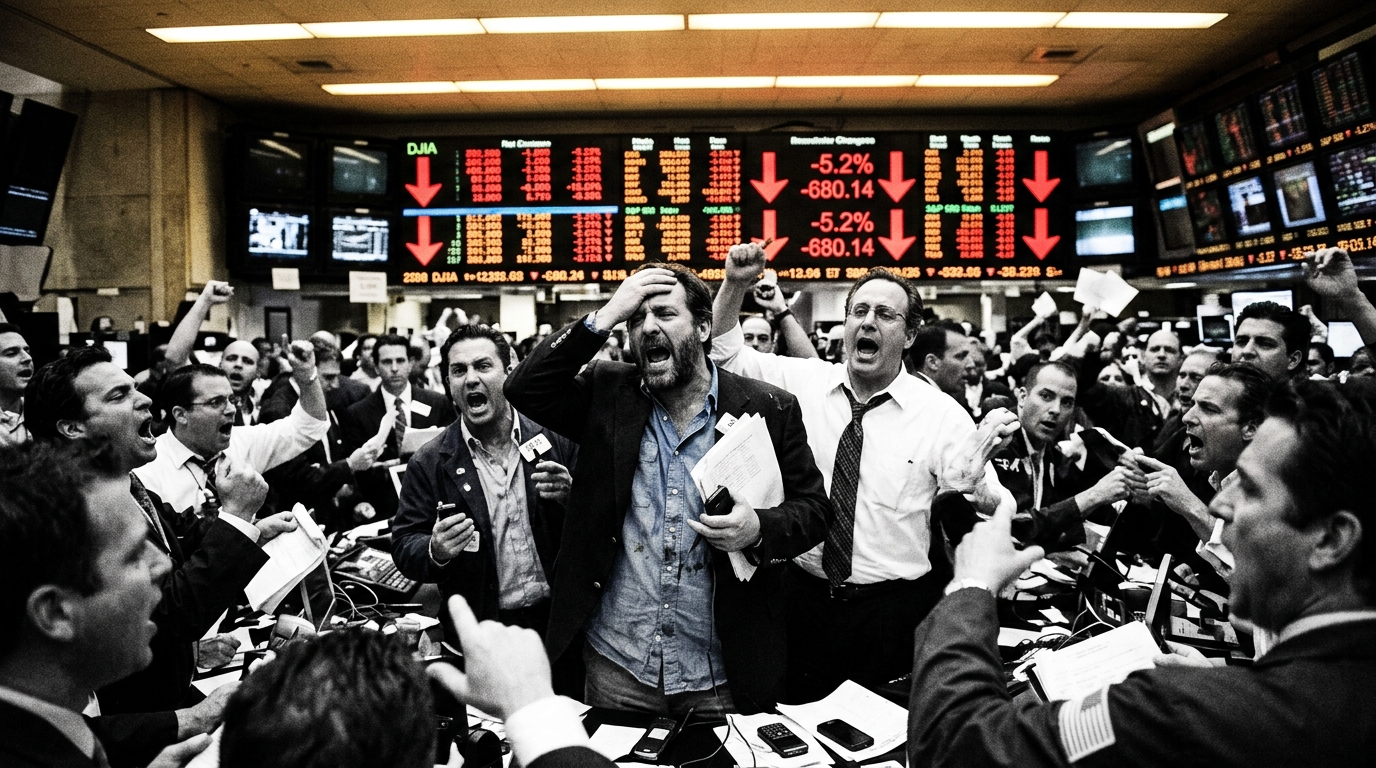
| Sept 15, 2008 | Lehman Brothers bankruptcy | After failing to find a buyer or secure a government bailout, Lehman Brothers Holdings Inc., the fourth-largest U.S. investment bank, filed for Chapter 11 bankruptcy protection. This was the largest bankruptcy in U.S. history, with over $600 billion in assets. The decision not to bail out Lehman, in contrast to Bear Stearns and AIG, sent immediate and profound shockwaves globally, triggering systemic panic. Interbank lending froze completely as institutions feared each other's solvency. |
| Sept 16, 2008 | AIG Bailout | Just one day after Lehman's collapse, the U.S. government, through the Federal Reserve, announced an $85 billion bailout of American International Group (AIG), the world's largest insurer. AIG's failure would have triggered a cascade of defaults due to its massive exposure to Credit Default Swaps (CDS) written against toxic mortgage assets, threatening the entire global financial system. The bailout was expanded multiple times, eventually reaching over $180 billion. |
| Oct 3, 2008 | TARP Passage | After initial rejection by the House of Representatives, leading to a dramatic stock market plunge, the U.S. Congress approved the $700 billion Troubled Asset Relief Program (TARP). This program authorized the Treasury to buy "toxic assets" (initially mortgage-backed securities) from troubled banks. It later shifted to recapitalizing banks by buying equity stakes. |
| Nov 2008 | G20 Leaders Summit in Washington | Leaders of the G20 nations met for the first time at the head-of-state level to coordinate a global response to the crisis, signaling the emergence of a new multilateral forum. |
| 2009-2010 | The Great Recession | The global economy experienced its most severe downturn since the Great Depression. Global GDP contracted for the first time since World War II in 2009. Unemployment rates soared, and governments worldwide enacted massive stimulus packages. |
| May 2010 | First Greek Bailout | Greece, unable to finance its spiraling public debt, received a €110 billion bailout package from the Eurozone and the IMF, marking the beginning of the sovereign debt crisis in Europe. |
Regulatory Failures and Systemic Blind Spots
The roots of the 2008 crisis lie not only in reckless financial behavior but also in profound regulatory failures and systemic blind spots that allowed such behavior to flourish unchecked.
Fragmented and Outdated Regulation: The U.S. financial regulatory system was a patchwork of agencies (Federal Reserve, OCC, OTS, SEC, FDIC, state banking commissions) each with limited jurisdiction and often competing mandates. There was no single regulator with a comprehensive view of systemic risk across the entire financial system. This fragmentation created regulatory arbitrage, where institutions could choose the least restrictive regulator or structure their activities to fall through the cracks. Moreover, existing regulations were largely designed for traditional commercial banks and failed to adapt to the rapid innovation and growth of the shadow banking system.
"Light Touch" Philosophy and Neoliberal Ideology: A prevailing belief in the efficiency of financial markets and the benefits of minimal government intervention—a core tenet of neoliberalism—led to a "light touch" regulatory philosophy. Policymakers and regulators often viewed financial innovation as inherently good, believing that new instruments like MBS and CDOs dispersed risk rather than concentrated it. Alan Greenspan, then-Federal Reserve Chairman, famously championed deregulation, arguing that markets were the best regulators. This ideological stance led to a reluctance to impose new restrictions on powerful financial institutions or to seriously question their complex products.
The Shadow Banking Regulatory Gap: The most significant blind spot was the burgeoning shadow banking system. Investment banks, hedge funds, money market funds, and Structured Investment Vehicles (SIVs) engaged in many activities traditionally associated with commercial banks (credit creation, maturity transformation, liquidity provision) but operated with far less oversight and capital requirements. They were highly leveraged and interconnected, yet not subject to the same strict capital adequacy rules, liquidity requirements, or deposit insurance that applied to traditional banks. This allowed systemic risk to build up unseen and unaddressed.
Credit Rating Agencies' Failures: The crisis exposed the fundamental flaws in the credit rating industry. Agencies like Moody's and S&P were paid by the issuers of the securities they rated, creating a perverse incentive to assign overly optimistic ratings. Their complex mathematical models failed to adequately account for the possibility of a widespread housing market collapse, assuming geographic diversification would protect against localized defaults. Regulators, in turn, relied heavily on these flawed ratings for capital requirements and investment mandates, effectively outsourcing critical risk assessment to conflicted private entities.
Lack of Authority and Political Will: Despite some warnings from within the regulatory community, there was often a lack of political will to implement more stringent oversight, particularly given the lobbying power of the financial industry. Regulators sometimes lacked the statutory authority to intervene in certain markets (e.g., the Commodity Futures Modernization Act of 2000 prevented the SEC from regulating Credit Default Swaps). Even when they had the authority, a culture of complacency and an unwillingness to challenge the lucrative business models of powerful institutions prevented decisive action. The result was an environment where excessive risk-taking was not merely tolerated but, in many ways, facilitated by a system ill-equipped to understand and mitigate it.
Geopolitical Consequences and Aftermath
The 2008 crisis signaled a fundamental challenge to the "unipolar moment" that had defined U.S. global leadership since the fall of the Soviet Union. As the American economy, the perceived engine of global prosperity, faltered and required massive state intervention, the credibility of the "Washington Consensus"—the package of free-market policies championed by the U.S. and international financial institutions—was severely undermined. It was an ideological blow as much as an economic one, suggesting that unchecked financial liberalization could lead to systemic collapse rather than prosperity.
As Western economies grappled with deep recessions, banking crises, and the politically contentious process of bailouts and austerity, the focus of the international community shifted towards the "BRIC" nations—Brazil, Russia, India, and China—which suddenly appeared as the new engines of global growth and resilience.
China's Geopolitical Ascent: China, in particular, utilized its vast foreign exchange reserves (the largest in the world) to inject liquidity into its own market and, by extension, the global economy. Beijing’s ability to avoid a deep recession through a massive 4-trillion-yuan (approx. $586 billion) fiscal stimulus package – focused heavily on infrastructure development, housing, and social welfare projects – provided a stark contrast to the dysfunction and perceived paralysis in Washington and European capitals. While Western governments preached austerity, China demonstrated that a state-led capitalist model could achieve rapid recovery and maintain high growth rates. This not only bolstered China's domestic legitimacy but also solidified its stature as a reliable economic partner for developing nations, offering an alternative model to the market-centric approach of the West. China's continued accumulation of U.S. Treasury bonds made it a critical creditor for the American government, further intertwining their economies but also subtly shifting the balance of global influence eastward. This period marked a clear acceleration of China's rise as a global economic and geopolitical power, laying the groundwork for its more assertive foreign policy in the subsequent decade.
The Eurozone Sovereign Debt Crisis: In Europe, the aftermath of the 2008 global financial crisis was equally, if not more, profound and protracted. The crisis exposed and then brutally exploited the inherent flaws in the Eurozone's design—specifically, the creation of a monetary union without a corresponding fiscal or political union. Member states shared a common currency and central bank (the ECB) but retained independent fiscal policies, which proved disastrously mismatched.
Countries like Greece, Ireland, Portugal, and Spain—dubbed the "PIGS" by some analysts—had experienced boom years fueled by cheap credit under the umbrella of the Euro, which effectively reduced their borrowing costs. This cheap money masked structural weaknesses, facilitated property bubbles (Ireland, Spain), and allowed for unsustainable public spending (Greece, Portugal). When the global credit crunch hit in late 2008 and 2009, these countries found themselves unable to refinance their sovereign debt at sustainable rates. Unlike countries with independent currencies, they could not devalue to boost exports or inflate away their debt.
- Greece: The most dramatic case, Greece's underlying fiscal problems were compounded by years of statistical misreporting. When its true debt levels became apparent, it lost market access, requiring multiple bailout packages from the "Troika" (the European Commission, European Central Bank, and International Monetary Fund). These bailouts came with stringent and often brutal austerity conditions, leading to severe economic contraction, mass unemployment, social unrest, and deep-seated political resentment across Southern Europe towards the perceived imposition of German-led policies. The crisis brought the Eurozone to the brink of collapse on several occasions and led to the rise of anti-establishment parties like Syriza.
- Ireland: Faced a catastrophic banking sector collapse tied to a property bubble. Its government chose to recapitalize its banks, effectively transferring massive private debt onto the sovereign balance sheet, necessitating an international bailout and severe austerity.
- Spain: Experienced a similar property bust, resulting in a banking crisis, mass unemployment (peaking over 25%), and regional government debt issues.
- Portugal: Struggled with low productivity and long-standing fiscal imbalances, also requiring a bailout.
The Eurozone crisis not only threatened the very existence of the European Union but also fostered deep divisions between creditor nations (like Germany) and debtor nations. It compelled the EU to embark on significant, albeit incomplete, institutional reforms, including the creation of the European Stability Mechanism (ESM) and efforts toward a banking union.
The Rise of the G20: In the face of a truly global crisis that transcended the capacity of the traditional G7 (Group of Seven industrialized nations), the G20 (Group of Twenty) emerged as the premier forum for international economic cooperation. Initially formed at the finance minister level in 1999, it was elevated to the head-of-state level in November 2008. This move formally acknowledged the growing economic clout of emerging powers like China, India, Brazil, and Indonesia, signaling a shift towards a more inclusive, multipolar global governance structure. The G20 played a crucial role in coordinating stimulus packages, resisting protectionism, and reforming international financial institutions in the immediate aftermath of the crisis.
The crisis undeniably accelerated a geopolitical shift: the West, particularly the U.S. and Europe, became increasingly reliant on Chinese capital and global demand to finance its deficit spending and drive recovery. The confidence in Western economic models, previously held as universal, was profoundly shaken, creating space for alternative development paradigms and contributing to a more complex, contested, and multipolar international system.
Analysis of Key Actors and Decisive Actions
The response to the crisis was defined by extraordinary interventions from governments and central banks, marking a fundamental philosophical shift from laissez-faire to active state management in times of systemic risk.
The George W. Bush Administration (2001-2009): Although historically associated with deregulation and market-friendly policies, the Bush administration presided over the initial, massive state interventions.
- Treasury Secretary Henry Paulson: A former CEO of Goldman Sachs, Paulson found himself in the unprecedented position of leading the rescue of the very financial system he had once helped shape. His administration’s decision-making in the chaotic weeks of September 2008 was critical. The decision to allow Lehman Brothers to fail, influenced by concerns about moral hazard and a miscalculation of its systemic interconnectedness, unleashed a tidal wave of panic. This contrasted starkly with the swift, albeit controversial, bailout of Bear Stearns and the colossal rescue of AIG. The latter, in particular, was seen as a necessary evil to prevent the collapse of the global financial insurance market.
- TARP (Troubled Asset Relief Program): The administration pushed hard for the $700 billion TARP, initially designed to buy illiquid "toxic assets" from banks. Its initial rejection by Congress sent markets into a freefall, forcing a rapid reconsideration and passage. Paulson's desperate plea to Congress, famously stating, "If you don't do this, the financial system will simply melt down," underscored the extreme gravity of the situation. While controversial, TARP's shift to directly recapitalizing banks through equity injections (buying preferred stock) proved more effective in stabilizing the system, though it was deeply unpopular with the public.
The Barack Obama Administration (2009-2017): Inheriting an economy in freefall in early 2009, President Obama and his economic team, led by Treasury Secretary Timothy Geithner and National Economic Council Director Larry Summers, continued the interventionist approach.
- American Recovery and Reinvestment Act of 2009: A monumental $787 billion stimulus package (later revised to $831 billion), it was designed to jumpstart aggregate demand through a combination of tax cuts for individuals and businesses, increased infrastructure spending, and aid to state and local governments. While credited with preventing a deeper depression, its impact was debated, with some arguing it was too small given the scale of the crisis, and others criticizing its size and scope.
- Bank Stress Tests: The administration implemented rigorous "stress tests" for the largest U.S. banks. These tests assessed how banks would perform under severe economic scenarios and compelled those with capital shortfalls to raise additional private capital. This move was crucial in restoring confidence in the banking sector and preventing further government nationalization.
- Dodd-Frank Wall Street Reform and Consumer Protection Act (2010): The most significant regulatory overhaul since the Great Depression, Dodd-Frank aimed to prevent a recurrence of the crisis. Key provisions included:
The Federal Reserve (under Ben Bernanke): The Fed's actions were unprecedented in scope and scale, redefining the role of a central bank in a modern financial crisis.
- Lowering Interest Rates to Zero: Starting in late 2008, the Fed aggressively cut the federal funds rate target to near zero, signaling its commitment to providing ample liquidity.
- Emergency Liquidity Facilities: The Fed created numerous emergency lending programs to unfreeze credit markets (e.g., Commercial Paper Funding Facility, Term Auction Facility), effectively acting as the "lender of last resort" to the entire financial system.
- Quantitative Easing (QE): A revolutionary monetary policy, QE involved the Fed purchasing large quantities of long-term government bonds and mortgage-backed securities from banks. This had several objectives:
International Coordination (G20, IMF): The crisis highlighted the need for global cooperation.
- G20 Summits: Leaders of the G20 nations met in Washington (2008) and London (2009) to coordinate fiscal stimulus, resist protectionism, and reform international financial institutions.
- IMF (International Monetary Fund): Played a crucial role in the European sovereign debt crisis, providing financial assistance to Greece, Ireland, and Portugal alongside the EU and ECB, often demanding strict austerity measures in return.
The actions of these key actors, though controversial, are widely credited with preventing a second Great Depression. However, they also fundamentally altered the relationship between governments, central banks, and markets, ushering in an era of greater state intervention, expanded central bank mandates, and a heightened awareness of systemic risk.
Socio-Economic Aftermath and the Rise of Populism
The economic stabilization achieved through unprecedented government and central bank interventions came at a significant socio-economic cost, sowing the seeds for widespread public discontent and reshaping the political landscape in Western democracies.
Economic Inequality and Austerity's Impact: The crisis exacerbated existing trends of economic inequality. While financial institutions were bailed out and returned to profitability relatively quickly (often with hefty executive bonuses), ordinary citizens faced job losses, foreclosures, and stagnant wages for years. Unemployment soared, particularly among youth and less-skilled workers, creating a "lost generation" in some regions. In Europe, the imposition of stringent austerity measures as a condition for bailouts led to deep cuts in public services, pensions, and welfare programs, significantly impacting the living standards of millions and disproportionately affecting vulnerable populations. This stark contrast—"socialism for the rich and capitalism for the poor"—fueled a powerful sense of injustice.
Erosion of Trust in Institutions: The perception that the financial elites responsible for the crisis escaped accountability, while taxpayers bore the burden, severely eroded public trust in governments, financial institutions, and even democratic processes themselves. The close ties between politicians, regulators, and Wall Street fostered a narrative of crony capitalism, where the system was rigged in favor of the powerful. Movements like "Occupy Wall Street" emerged in the U.S. and mirrored similar anti-establishment protests globally, articulating a deep frustration with economic disparity and corporate greed.
The Rise of Populism and Political Polarization: The post-crisis environment became a fertile ground for populist movements, both on the left and the right. These movements successfully tapped into the anger, anxiety, and disillusionment of populations who felt ignored or betrayed by the political establishment.
- United States: The crisis is widely seen as a foundational moment for the rise of the Tea Party movement on the right, which channeled anger at government spending and bailouts, and later contributed to the conditions for Donald Trump's presidential victory in 2016. On the left, the Bernie Sanders campaign also resonated with anti-establishment sentiment, advocating for greater regulation of Wall Street and addressing economic inequality.
- Europe: The sovereign debt crisis and the ensuing austerity measures fueled the rise of nationalist and anti-EU populist parties across the continent.
This populist surge often led to increased political polarization, with centrist parties struggling to respond effectively to the public's grievances. It fragmented political landscapes, making governance more challenging and highlighting the deep social and economic cleavages exposed and widened by the crisis. The crisis did not just reshape economies; it fundamentally altered the socio-political fabric of many Western nations, the ramifications of which continue to be felt today.
Global Policy Coordination and the Emergence of the G20
The sheer scale and interconnectedness of the 2008 crisis quickly made it apparent that no single nation or even a small group of industrialized nations could effectively address it alone. The traditional G7 (Canada, France, Germany, Italy, Japan, United Kingdom, United States), which had long served as the primary forum for coordinating global economic policy, proved insufficient. Its limited membership excluded major emerging economies whose growing influence was undeniable.
Failure of the G7 and the Call for a Broader Forum: As the crisis deepened, the G7's inability to forge a truly global, coordinated response became evident. The crisis was spreading rapidly beyond the advanced industrial economies, impacting emerging markets through trade, capital flows, and commodity prices. There was a clear need for a more inclusive body that reflected the shifting balance of global economic power.
The Activation and Elevation of the G20: Against this backdrop, the Group of Twenty (G20), originally established in 1999 as a forum for finance ministers and central bank governors, was elevated to the head-of-state and government level. This pivotal decision, largely driven by calls from European leaders and the U.S. during the crisis, marked a symbolic and substantive shift in global governance.
- First G20 Leaders' Summit (Washington, November 2008): Just weeks after the Lehman Brothers collapse, leaders of the G20 nations met for the first time as heads of government. This initial summit was crucial for stabilizing the immediate panic. Key outcomes included:
- Second G20 Leaders' Summit (London, April 2009): This summit, held at the peak of the crisis, solidified the G20's role as the premier forum for international economic cooperation. It resulted in:
Significance of the G20's Emergence: The rise of the G20 was profoundly significant for several reasons:
- Acknowledgment of Emerging Powers: It formally recognized the indispensable role of countries like China, India, Brazil, Indonesia, and South Africa in global economic stability and governance. This shift away from the exclusive G7 reflected the reality of a more multipolar global economy.
- Enhanced Global Coordination: The G20 provided a platform for unprecedented coordination of policy responses, which many observers believe was instrumental in preventing a deeper and more prolonged global depression.
- Legitimacy and Inclusivity: Its broader membership lent greater legitimacy to global policy decisions, fostering a sense of shared responsibility for global economic health.
Despite its initial successes in crisis management, sustaining this level of coordination proved challenging as the immediate threat receded. Differing national interests (e.g., currency debates between the U.S. and China, trade imbalances, and regulatory approaches) often created friction. Nevertheless, the 2008 crisis firmly established the G20 as the most important forum for discussing and coordinating global economic issues, fundamentally altering the architecture of international economic governance.
Long-Term Legacy and Modern Historiographical Debates
The 2008 Global Financial Crisis left an indelible mark on the global economy, politics, and society, triggering profound shifts whose full implications continue to unfold and be debated by historians and economists.
Regulatory Reforms and Their Limitations: The crisis spurred a wave of regulatory reforms globally, with the U.S. Dodd-Frank Act and the international Basel III accords for banking capital being prime examples. These aimed to increase bank capital, improve liquidity, expand oversight to the shadow banking system, and establish mechanisms for orderly resolution of failing institutions. While the financial system is arguably more resilient today, debates persist:
- "Too Big to Fail" (TBTF): Despite efforts, many argue that the largest financial institutions remain TBTF, meaning their collapse would still pose a systemic risk, potentially necessitating future government intervention.
- Shadow Banking's Persistence: While some segments were brought under oversight, the shadow banking system continues to innovate and expand, posing new and evolving risks.
- Regulatory Burden: Critics argue that the reforms stifled growth and innovation, particularly for smaller banks.
The Central Bank's Expanded Role and the Limits of Monetary Policy: The crisis fundamentally redefined the role of central banks. Quantitative Easing, once an unconventional tool, has become part of the standard toolkit for managing economic downturns. This raises critical questions:
- Dependence on Monetary Policy: Has the world become overly reliant on central banks to solve economic problems, with fiscal policy often constrained by political gridlock or austerity demands?
- Asset Bubbles and Inequality: Did QE and sustained low interest rates contribute to asset price inflation, exacerbating wealth inequality without sufficiently stimulating the real economy?
- Exit Strategy: How do central banks normalize policy without triggering new instability?
The Persistence of Debt: Despite the initial deleveraging in some sectors, global debt—both public and private—has continued to rise, reaching unprecedented levels. This "debt supercycle" poses a significant challenge for future economic stability, particularly in an environment of rising interest rates and slowing growth.
Geopolitical Power Shift and US-China Rivalry: The crisis solidified the trend towards a multipolar world and profoundly accelerated China's geopolitical influence. The U.S.-China relationship, initially characterized by cooperation during the crisis, has since evolved into a complex rivalry encompassing trade, technology, and strategic influence. Historians debate whether the crisis was a mere blip in U.S. hegemony or a definitive turning point towards a post-American global order.
Democracy vs. Authoritarianism: The perceived failure of Western liberal democratic capitalism to prevent and effectively manage the crisis, particularly in contrast to China's state-led recovery, gave renewed ideological ammunition to proponents of more authoritarian, state-controlled models. This framing continues to inform global debates about governance and development, particularly in the Global South.
Modern Historiographical Debates:
- Avoidability: Was the crisis an inevitable outcome of financial innovation and deregulation, or could it have been prevented by more astute policy choices and regulatory interventions?
- Necessity of Bailouts: Was the "too big to fail" approach, with its moral hazard implications, truly necessary to avert a greater catastrophe, or could a more punitive approach have been taken without systemic collapse?
- Austerity vs. Stimulus: The debate over the efficacy of austerity in Europe versus stimulus in the U.S. continues. Historians and economists argue whether austerity prolonged the pain or was a necessary correction for fiscal profligacy.
- Role of Key Individuals: To what extent did the personalities and decisions of key figures (Greenspan, Bernanke, Paulson, Geithner) shape the crisis and its aftermath, versus the overwhelming force of systemic factors?
The 2008 crisis remains a potent reminder of the interconnectedness of global finance and the profound impact of economic events on political and social stability. Its legacy continues to shape contemporary policy debates on everything from financial regulation and central bank independence to international cooperation and the future of global power.
Trivia and Lesser-Known Facts
- The "Toxic Assets" Paradox: The term "toxic assets" became ubiquitous during the crisis. Ironically, many of these assets, particularly the Mortgage-Backed Securities that the government eventually bought through TARP, largely recovered their value by 2012. The U.S. Treasury ultimately recouped its $426 billion investment in TARP, turning a small profit for taxpayers. However, this fact often gets lost in the public narrative of outrage over the initial bailouts.
- Iceland's Unique Path: While most Western nations bailed out their banks, Iceland, whose banking sector had grown to nearly ten times the country's GDP, famously allowed its three largest banks to fail. The government focused on protecting depositors and prosecuting bankers. Though initially painful, this unorthodox approach is often cited as a successful, albeit extreme, example of handling a systemic crisis, leading to a relatively robust recovery.
- CDO-squareds and Synthetic CDOs: The complexity of the financial instruments went beyond just CDOs. "CDO-squareds" were CDOs made up of tranches of other CDOs. "Synthetic CDOs" didn't even hold actual mortgages; they were simply bets on the performance of other CDOs, magnifying risk and making the system incredibly opaque.
- The Fed's "Money Market Mutual Fund Guarantee Program": After Lehman's collapse, a major money market mutual fund "broke the buck" (its net asset value fell below $1 per share), triggering a run on money market funds, which are critical for corporate short-term funding. The Treasury and Fed quickly implemented an unprecedented guarantee program, stabilizing a critical component of the shadow banking system that most people didn't even know existed.
- Rating Agency Accountability: Despite their egregious failure to identify the risks in mortgage-backed securities, leading to AAA ratings on highly speculative assets, credit rating agencies like Moody’s and S&P faced remarkably little regulatory punishment. They successfully argued, with some legal precedent, that their ratings were merely "opinions" protected by the First Amendment, rather than factual statements.
- The "Great Moderation" Myth: Prior to 2008, many economists believed the global economy had entered a period of "Great Moderation," characterized by stable growth and low inflation, thanks to sound monetary policy. The crisis brutally shattered this illusion, revealing systemic vulnerabilities that had been building beneath the surface.
- The Role of CDS on Sovereign Debt: During the Eurozone crisis, the burgeoning market for Credit Default Swaps (CDS) on sovereign debt amplified fears. Speculative trading in these instruments, which allowed investors to bet on a country's default, often put upward pressure on borrowing costs for vulnerable nations, even if the underlying fundamentals weren't immediately catastrophic.
References and Literature
- The Financial Crisis Inquiry Report (FCIC): The official U.S. government record, produced by a 10-member commission, detailing the causes of the collapse of the U.S. financial system. An indispensable primary source.
- Sorkin, Andrew Ross. Too Big to Fail: The Inside Story of How Wall Street and Washington Fought to Save the Financial System—and Themselves. Viking, 2009. A seminal narrative account detailing the behind-the-scenes negotiations and decisions during the height of the 2008 crisis.
- Paulson, Henry M. Jr. On the Brink: Inside the Race to Stop the Collapse of the Global Financial System. Business Plus, 2010. A candid memoir from the Treasury Secretary at the time of the crisis, offering a unique perspective on the desperate efforts to avert catastrophe.
- Bernanke, Ben S. The Courage to Act: A Memoir of a Crisis and Its Aftermath. W. W. Norton & Company, 2015. The former Federal Reserve Chairman's account of the crisis, his policy decisions, and the rationale behind quantitative easing.
- Reinhart, Carmen M., and Kenneth S. Rogoff. This Time Is Different: Eight Centuries of Financial Folly. Princeton University Press, 2009. A historical analysis demonstrating that financial crises, including the 2008 event, often follow similar patterns of boom and bust, debt accumulation, and policy responses.
- Johnson, Simon, and James Kwak. 13 Bankers: The Wall Street Takeover and the Next Financial Meltdown. Pantheon, 2010. A critical perspective arguing that the financial industry's political power prevented meaningful structural reform after the crisis.
- International Monetary Fund (IMF) Archive: The Great Recession: Comprehensive data, research papers, and policy analyses from the IMF on global economic contraction, recovery cycles, and policy lessons.
- Foreign Affairs: The Future of the Global Economy: Academic analysis and geopolitical insights focusing on the shifting global influence from the G7 to the G20, and the long-term implications for international relations.
- Tooze, Adam. Crashed: How a Decade of Financial Crises Changed the World. Viking, 2018. A panoramic and deeply detailed historical account that meticulously connects the dots between the U.S. subprime crisis, the European sovereign debt crisis, and broader geopolitical shifts.
Footnotes & Explanations
- Subprime mortgage: A loan granted to individuals with poor credit histories, characterized by higher interest rates and higher risk of default. ↩
- Quantitative Easing: A monetary policy where a central bank purchases government securities or other financial assets from commercial banks to increase the money supply and encourage lending and investment. ↩
- Shadow Banking System: Financial intermediaries (e.g., investment banks, hedge funds, money market funds) that conduct maturity, credit, and liquidity transformation without direct access to central bank liquidity or explicit public sector guarantees. ↩