Key Takeaways
- The 2017 crisis represented the most significant constitutional challenge to the Spanish state since the transition to democracy in 1978.
- The clash between regional self-determination claims and the rigid interpretation of national sovereignty triggered a deep political and social fracture.
- The legal and judicial response from Madrid successfully halted the secessionist bid but initiated a long-standing cycle of political exile and judicial polarization.
Historical Context and Origins
The roots of the 2017 Catalan crisis are deeply embedded in the historical tension between Catalan nationalism—which prizes the region’s distinct linguistic, cultural, and historical identity—and the centralist tendencies of the Spanish state. This relationship has been a recurring theme throughout Spanish history, marked by periods of intense regional assertion and subsequent central government crackdowns. The concept of Catalonia as a distinct political entity predates the modern Spanish nation-state, with a rich medieval history and periods of significant self-governance. However, these autonomies were often curtailed or outright abolished by various Spanish monarchies and dictatorships, most notably during the Franco regime (1939-1975), when Catalan language, institutions, and cultural expressions were suppressed.
The advent of democracy in Spain with the 1978 Constitution was intended to usher in an era of decentralized power and recognition of regional identities. Catalonia, like other regions, was granted significant autonomy through its Statute of Autonomy. The contemporary conflict, however, crystallized following the 2010 ruling by the Spanish Constitutional Court on the 2006 Statute of Autonomy. This revised Statute, approved by the Catalan Parliament, Spanish Parliament, and subsequently by Catalan voters in a referendum, sought to redefine Catalonia’s relationship with Spain, notably by granting it the status of a "nation" within Spain and expanding its powers in areas like justice and taxation. The Court’s decision, however, struck down or significantly weakened numerous articles, including the contentious "nation" descriptor, and limited Catalan legislative authority in various domains. This judicial intervention was viewed by a substantial segment of Catalan society not merely as a legal correction but as a profound political affront and an assault on their democratic mandate. It effectively transformed a push for more significant federal-style reform into a powerful, widespread demand for full sovereignty and independence.
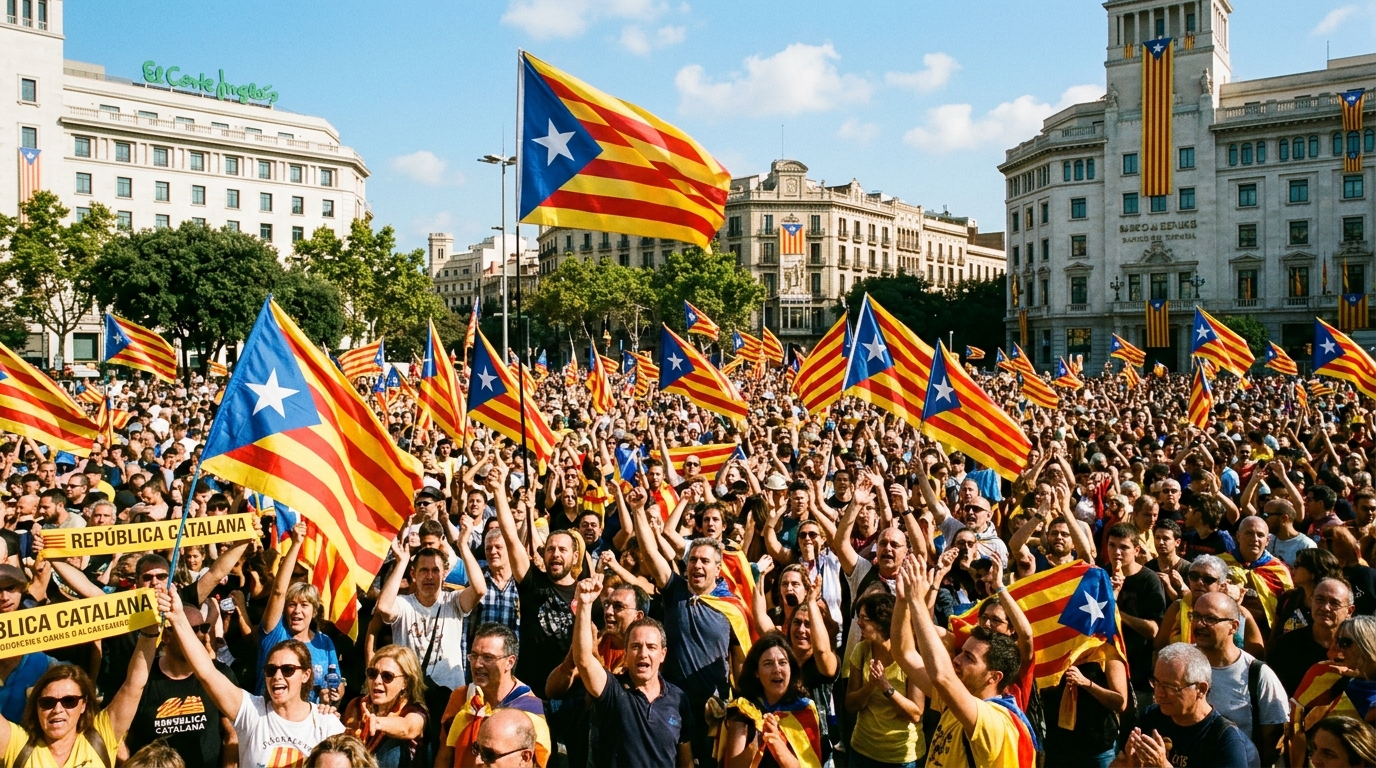
The economic crisis that began in 2008 acted as a significant accelerant to these simmering resentments. Catalonia, as one of Spain’s most economically dynamic regions, felt it was contributing a disproportionately large share of tax revenue to the central government, particularly during a period of severe national austerity. Nationalist leaders effectively framed this as an exploitative relationship, where Catalonia was subsidizing less productive regions of Spain while its own public services were being cut. This narrative of economic injustice, coupled with the perceived political emasculation by the Constitutional Court ruling, provided fertile ground for the growth of the independence movement, shifting it from a fringe political aspiration to a mainstream political force. The movement gained momentum, organizing massive annual demonstrations, particularly on the Diada (Catalonia's National Day) on September 11th, which increasingly became a powerful display of pro-independence sentiment.
Historical Precedents and Context
The 2017 crisis was not an isolated incident but rather the culmination of centuries of complex and often fraught relations between Catalonia and the Spanish state. Throughout history, Catalonia has maintained a distinct identity, characterized by its own language, legal traditions (such as the Usatges de Barcelona), and a unique political evolution. During the Middle Ages, the Crown of Aragon, of which Catalonia was a core component, possessed considerable institutional and fiscal autonomy. However, the dynastic union with Castile in 1469 and the subsequent centralizing policies of the Bourbon dynasty after the War of the Spanish Succession (1701-1714), which led to the abolition of Catalan institutions and laws, marked a turning point. This period of imposed centralization left a lasting scar on Catalan collective memory, reinforcing a sense of historical grievance.
The 19th century witnessed the resurgence of Catalanism as a cultural and political movement, advocating for the recognition of Catalonia’s distinctiveness. This movement, however, faced significant hurdles, including internal divisions and the turbulent political landscape of Spain, which oscillated between liberal reforms and periods of authoritarianism. The Second Spanish Republic (1931-1936) saw a brief period of restored autonomy for Catalonia, with the approval of a new Statute of Autonomy in 1932. Yet, this fragile autonomy was brutally extinguished with the Nationalist victory in the Spanish Civil War and the subsequent imposition of Franco's dictatorship. During the Franco era, the Catalan language and culture were systematically suppressed, and Catalan institutions were dissolved. The restoration of democracy in 1975 with the 1978 Constitution provided an opportunity for regions like Catalonia to reclaim their autonomy. The framework established by the Constitution, while granting extensive self-governance, also enshrined the principle of national unity, creating an inherent tension that would ultimately fuel the 2017 crisis. The 2006 Statute of Autonomy represented a further attempt by Catalonia to deepen its self-governance, and its subsequent curtailment by the Constitutional Court was widely interpreted as a deliberate provocation by the Spanish state, reigniting old historical grievances and galvanizing the independence movement.
Timeline of Events and Key Moments
The trajectory toward the October 1 referendum was characterized by a series of escalating provocations and legal rebuttals between the regional government in Barcelona and the central government in Madrid. Each action and reaction heightened tensions, pushing both sides towards a confrontation from which it became increasingly difficult to retreat.
| Date | Event | Significance |
|---|---|---|
| May 2015 | Catalan Regional Elections | Pro-independence parties win a majority of seats in the Catalan Parliament, campaigning on a de facto independence mandate. |
| November 9, 2015 | Non-binding Independence Consultation | Catalan Parliament holds a symbolic vote on sovereignty, not a referendum, as a precursor to potential independence. |
| January 2016 | Carles Puigdemont becomes President | Puigdemont takes office, pledging to deliver on the mandate for independence. |
| September 6, 2017 | Law of Juridical Transition (or Law of Self-Determination) passed | The Catalan Parliament approves the legislative framework for the independence referendum, establishing the legal basis for secession. |
| September 7, 2017 | Law on the Referendum of Self-Determination passed | A separate law is approved, setting the date, rules, and conditions for the October 1 referendum. |
| September 20, 2017 | "Operation Anubis" | Spanish police raid Catalan government buildings and arrest 14 officials involved in organizing the referendum, seizing millions of ballot papers and boxes. This marks a significant escalation by Madrid. |
| October 1, 2017 | Independence Referendum | Held despite being declared unconstitutional by the Spanish Constitutional Court and actively disrupted by national police and Guardia Civil; marred by significant police violence against voters and peaceful demonstrators. |
| October 3, 2017 | King Felipe VI's Address | The Spanish monarch condemns the referendum organizers and vows to uphold the rule of law and the Constitution, implicitly backing Madrid's hardline stance. |
| October 10, 2017 | Puigdemont's Speech to Catalan Parliament | Puigdemont announces a unilateral declaration of independence (UDI) but suspends its effect for a period of dialogue, offering a conditional approach that fails to satisfy either side. |
| October 21, 2017 | Spanish Government invokes Article 155 | The Spanish cabinet decides to apply Article 155 of the Constitution, which allows for the suspension of regional autonomy and direct rule from Madrid. |
| October 27, 2017 | Catalan Parliament declares independence | Following the Spanish Senate's approval of Article 155, the Catalan Parliament passes a resolution declaring the establishment of the Catalan Republic. Simultaneously, the Spanish Senate approves the measures for direct rule. |
| October 30, 2017 | Puigdemont and other leaders flee Spain | Carles Puigdemont, along with several other government members, flees to Brussels, Belgium, to avoid arrest on charges of rebellion, sedition, and misuse of public funds. |
| November 4, 2017 | Arrests of Catalan leaders | Spanish authorities issue arrest warrants for Puigdemont and his ministers abroad. Within Catalonia, key figures like former Vice President Oriol Junqueras are arrested and imprisoned. |
| December 21, 2017 | Catalan Regional Elections | Held under direct rule imposed by Article 155; despite a fractured political landscape and the imprisonment or exile of leaders, pro-independence parties secure a slender majority of seats, demonstrating continued popular support for their cause. |
The Referendum Day: A Day of Confrontation and Images
October 1, 2017, was a day that etched itself into the collective memory of Spain and Catalonia, characterized by deep societal division and dramatic confrontation. The Catalan government, led by President Carles Puigdemont, proceeded with its self-determination vote despite the Spanish Constitutional Court's unequivocal ruling that it was illegal and unconstitutional. In response, the Spanish central government, under Prime Minister Mariano Rajoy, deployed thousands of National Police and Guardia Civil officers across Catalonia with the explicit mission of preventing the referendum from taking place. Their instructions were to seize ballot boxes, confiscate voting materials, and shut down polling stations, thereby dismantling the infrastructure of the vote.
The scenes that unfolded throughout the day were broadcast globally and became the defining visual narrative of the crisis. Police forces were seen using batons and rubber bullets against crowds of voters, including elderly individuals and women, who were attempting to defend polling stations or cast their ballots. Images of voters being dragged away, bloodied faces, and overflowing ballot boxes in makeshift locations circulated with alarming speed across international news outlets and social media platforms. While the Catalan government claimed a high turnout and a majority in favor of independence (over 90% of those who voted, though turnout was low, around 43%, due to the disruption), the primary impact of the day was the forceful assertion of state power against a regional population’s will. This heavy-handed approach, intended to assert Madrid's authority, inadvertently generated immense sympathy for the Catalan cause in some quarters and severely damaged the international image of the Spanish state, portraying it as authoritarian rather than a defender of the rule of law. The violence, though condemned by some international observers, was largely defended by the Spanish government as a necessary action to uphold the Constitution and prevent a breakdown of legal order. This polarization of interpretations—between a defense of constitutional legality and an accusation of state brutality—became a hallmark of the crisis.
Geopolitical Consequences and Aftermath
The Catalan independence crisis reverberated far beyond Spain's borders, posing a significant challenge to the foundational principles of the European Union and prompting intense diplomatic maneuvering. Brussels, under the leadership of then-Commission President Jean-Claude Juncker, was quick to adopt a firm and unified stance: the Catalan question was an internal Spanish affair, and the EU would not interfere. This position was strategically calculated. The primary concern for the EU was the potential for "contagion." A successful unilateral secession by Catalonia could have emboldened separatist movements in other member states, such as Scotland within the United Kingdom (which had already held its own referendum in 2014), Flanders in Belgium, Bavaria in Germany, or Corsica in France. Such fragmentation was seen as a direct threat to the stability and integrity of the EU itself. Therefore, maintaining the territorial integrity of member states and upholding constitutional order became paramount for the European Commission and most national governments. The overwhelming international reaction was one of solidarity with Madrid. The United Nations, NATO, the United States, and virtually all major global powers reiterated that Catalonia was an internal matter for Spain to resolve within its constitutional framework. This lack of international recognition or mediation significantly weakened the Catalan independence movement's claim to legitimacy on the world stage.
Domestically, the crisis instigated a profound and enduring judicial reckoning. Following the declaration of independence and the subsequent application of Article 155, the Spanish judiciary initiated a series of legal proceedings against the leaders of the independence movement. Key figures, most notably former Vice President Oriol Junqueras, who remained in Spain, were arrested, detained, and subsequently put on trial. In October 2019, the Spanish Supreme Court delivered its verdict, sentencing Junqueras and several other leaders to lengthy prison terms for sedition and misuse of public funds, while others received shorter sentences or were acquitted. These sentences, viewed by many Catalans as politically motivated and disproportionate, triggered massive, prolonged street protests in Barcelona and other Catalan cities. These demonstrations, while largely peaceful, sometimes devolved into clashes with police forces, leading to significant property damage and injuries, paralyzing parts of the city for weeks and highlighting the deep social and political fracture within Catalonia. The ensuing political landscape became highly polarized, with the judicial processes creating a cycle of grievance, protest, and political stalemate that continues to shape Catalan and Spanish politics.
Geopolitical Realignment and EU Cohesion
The Catalan crisis served as a critical stress test for the European Union's internal cohesion and its approach to territorial integrity. The crisis occurred at a time when the EU was already grappling with multiple existential challenges, including the aftermath of the Brexit referendum, the rise of populist nationalism across the continent, and the ongoing migration crisis. The Commission’s swift and decisive stance in support of Spain’s territorial unity was therefore not merely a reaction to Catalonia but a proactive measure to prevent the unraveling of the Union.
This unified response from EU institutions and member states underscored a tacit agreement that the principle of national sovereignty, as enshrined in member states' constitutions, superseded any claims of regional self-determination that bypassed national legal frameworks. The Commission’s refusal to engage with the Catalan leadership or acknowledge the referendum’s legitimacy sent a clear message to other regions with separatist sentiments: the EU would not sanction or legitimize unilateral secessionist movements that contravened the constitutional order of its member states. This reinforced the established international norm that the right to self-determination, while recognized in decolonization contexts, does not automatically extend to sub-state regions within sovereign nations when such aspirations are pursued outside of legal and constitutional parameters.
Furthermore, the crisis highlighted a pragmatic solidarity among European leaders. The fear was that a precedent set by Catalonia could embolden similar movements, potentially leading to a more fragmented and unstable Europe, which could be exploited by external actors seeking to weaken the Union. The collective adherence to the principle of constitutional legality by member states served to bolster the EU’s credibility as an institution committed to stability and the rule of law within its borders. While some critics argued that Brussels was being too rigid and ignoring the democratic will of a significant portion of the Catalan population, the overarching geopolitical calculation favored the preservation of existing state structures, a decision that ultimately strengthened Madrid’s hand and solidified the EU’s position against unilateral secession.
Analysis of Key Actors and Decisive Actions
The conflict was defined by the binary opposition between two stubborn political figures and their respective strategies, each convinced of the righteousness of their cause and the inevitability of their victory. Their decisions, or lack thereof, shaped the course of the crisis.
Carles Puigdemont: As President of the Generalitat de Catalunya, Puigdemont inherited the mantle of the independence movement from his predecessor, Artur Mas, and committed himself to fulfilling the mandate for independence. His strategy hinged on the belief that a sufficiently large and decisive turnout for the October 1 referendum, regardless of its legality under Spanish law, would create a political fait accompli. He gambled that the sheer democratic legitimacy derived from the vote, coupled with the international attention it would inevitably attract, would force the Spanish state to negotiate or at least accept external mediation. Puigdemont envisioned a scenario where the international community, faced with a clear expression of popular will, would pressure Madrid to recognize Catalonia’s right to self-determination, potentially leading to a negotiated path to independence. His failure to accurately anticipate Madrid’s unwavering resolve to uphold the Constitution, its willingness to employ stringent legal and police measures, and its ability to leverage international support for its "legalist" position proved to be his strategic undoing. His subsequent decision to flee to Brussels, while intended to avoid immediate prosecution and continue advocating for independence from abroad, also signaled a retreat from direct governance and a shift in the nature of the struggle.
Mariano Rajoy: The Spanish Prime Minister, Mariano Rajoy, operated under a strict "legalist" framework. His government's overarching strategy was to defend the Spanish Constitution and the territorial integrity of the state by any legal means necessary. Rajoy consistently refused to engage in any form of political negotiation or dialogue regarding a referendum on independence while the Catalan government was perceived to be acting outside the bounds of the law. His approach was predicated on the belief that any concession or political negotiation under duress would set a dangerous precedent, encouraging further secessionist demands throughout Spain and undermining the rule of law. By invoking Article 155 of the Constitution, Rajoy demonstrated his government's willingness to deploy the full force of state power, including direct administrative control over Catalonia, to halt the secessionist bid. While this legalistic strategy was successful in preventing immediate independence and dismantling the institutional framework for secession, it was widely criticized for its lack of political imagination and flexibility. Critics argued that Rajoy’s rigid adherence to the law, without offering alternative political solutions or avenues for dialogue on Catalan grievances, only served to deepen the sense of estrangement and fuel the very secessionist sentiment he sought to quell. His approach preserved the state’s legal structure but arguably sowed the seeds for a prolonged period of political and social antagonism that continues to characterize relations between Catalonia and Madrid.
"The law is the law, and the Constitution is the only guarantee of our coexistence." — Mariano Rajoy, during the height of the October crisis, encapsulating his unyielding legalistic stance.
Socio-Economic Aftermath and Long-Term Legacies
The immediate aftermath of the 2017 crisis was marked by significant economic uncertainty and social polarization that had far-reaching implications for both Catalonia and Spain. In the short term, the political instability led to a notable exodus of businesses from Catalonia. Hundreds of companies, including major banks like CaixaBank and Banco Sabadell, as well as large corporations, relocated their registered headquarters to other parts of Spain. This move was primarily driven by concerns over economic stability and the prospect of Catalonia exiting both the EU and the Eurozone, which would have severely impacted their operations and access to markets. While the Catalan economy did not collapse as some had feared, the relocation of headquarters represented a symbolic blow and a loss of significant fiscal and employment potential in the region.
Beyond the economic sphere, the social fabric of Catalonia was deeply rent. Families, workplaces, and social circles found themselves divided along pro- and anti-independence lines, leading to strained relationships and a pervasive sense of division. This polarization manifested in public discourse, academic debates, and even local community interactions, creating an atmosphere of deep mistrust. The ongoing judicial processes and the imprisonment or exile of prominent Catalan figures further fueled this division, creating martyrs for one side and symbols of defiance for the other.
The long-term legacies of the 2017 crisis are multifaceted. Politically, it entrenched the issue of Catalan independence as a central and divisive force in Spanish national politics. Subsequent elections in both Catalonia and Spain have been heavily influenced by the ongoing debate, making it difficult for any government to form stable coalitions without addressing the Catalan question. The crisis also led to a reassessment of Spain's territorial model, with calls for greater decentralization and reform of the 1978 Constitution, although consensus on these reforms remains elusive. Furthermore, the international perception of Spain has been impacted, with the images of police brutality lingering in the minds of many. For Catalonia, the crisis solidified a sense of distinct identity and grievance for a significant portion of the population, while also galvanizing a strong counter-movement emphasizing unity with Spain. The wounds inflicted in 2017 have proven slow to heal, and the question of Catalonia’s future relationship with Spain remains one of the most persistent and complex challenges facing the Spanish state.
Intelligence Failures and Miscalculations
A critical, yet often understated, aspect of the 2017 Catalan crisis was the series of significant intelligence failures and miscalculations on both sides, which significantly exacerbated the situation.
Madrid's Misjudgment of Catalan Resolve: The Spanish government, particularly under Mariano Rajoy, appeared to significantly underestimate the depth of Catalan nationalist sentiment and the commitment of the independence movement. They seemed to believe that a firm legal and police response would swiftly dismantle the movement, failing to grasp that the suppression of Catalan identity and autonomy under Franco, and the perceived affronts of the 2010 Constitutional Court ruling, had deeply ingrained the desire for self-determination for a significant portion of the Catalan populace. The assumption that legalistic enforcement alone would suffice ignored the potent emotional and historical dimensions of the conflict. They also seemed to believe that the international community would universally back their stance without question, underestimating the potential for negative optics stemming from police violence.
Barcelona's Overestimation of International Support: Conversely, the Catalan leadership, led by Carles Puigdemont, harbored a profound miscalculation regarding the international community's willingness to intervene or recognize their unilateral declaration of independence. They appeared to believe that the symbolic power of a referendum, coupled with the visual impact of police repression, would compel the European Union, major powers like the US, or international organizations to mediate or acknowledge Catalonia's right to self-determination. This was a fundamental misunderstanding of state sovereignty principles in international law and the EU's own internal dynamics. The EU's primary interest was maintaining the integrity of its member states, and it was highly unlikely to countenance a precedent that could destabilize its own framework. The Catalan leadership failed to secure any significant diplomatic backing or recognition, leaving them isolated on the international stage.
Misjudging the Impact of Article 155: Both sides may have misjudged the immediate impact of Article 155. While Madrid saw it as a necessary tool to restore constitutional order, they may have underestimated the profound sense of grievance and defiance it would provoke among a large segment of the Catalan population, leading to sustained protests and continued political polarization. The Catalan leadership, on the other hand, likely did not anticipate the sheer speed and comprehensiveness with which Madrid would implement direct rule, dissolving institutions and arresting leaders, thus effectively neutralizing their immediate secessionist plans.
These intelligence failures and miscalculations, rooted in a poor understanding of the opposing side's motivations, capabilities, and the broader geopolitical context, transformed a complex political dispute into a full-blown constitutional crisis with lasting repercussions.
Trivia and Lesser-Known Facts
- The Ballot Box Smuggling: In the days and weeks leading up to October 1, the Catalan government and its supporters engaged in a clandestine logistical operation to hide thousands of plastic ballot boxes across the region. These efforts were crucial to counter the Spanish police's efforts to seize them, with some being stored in private homes, schools, and even church basements. This clandestine network highlighted the resourcefulness and dedication of the pro-independence movement.
- The "Digital" Republic: Facing the potential shutdown of official government servers by Madrid and the seizure of communication lines, pro-independence activists and sympathizers rapidly created a parallel "digital state." This involved hosting voting data, government communication platforms, and other crucial information on a distributed network of servers located in multiple countries outside of Spain. This initiative was designed to ensure continuity and maintain the integrity of the referendum results and independence declaration, even if physical infrastructure was compromised.
- The Article 155 Record: The implementation of Article 155 of the Spanish Constitution was a landmark event. It was the first time in the history of the 1978 Constitution that the central government had exercised its power to directly intervene in the autonomy of a Spanish region in such a comprehensive and forceful manner. This invoked article effectively suspended Catalonia's self-governance, underscoring the gravity of the constitutional challenge posed by the independence movement.
- The "Pacto del Botón" (Button Pact): Whispers persist of a secret agreement, sometimes referred to as the "Pacto del Botón," allegedly brokered by a prominent European figure or intermediary in the tense days of late October 2017. This supposed pact aimed to de-escalate the crisis by offering Puigdemont a dignified exit in exchange for abandoning the UDI, or by ensuring a more lenient judicial process. However, the veracity and details of such a pact remain unconfirmed and debated among historians and political analysts.
- International Observers' Ambiguity: While the referendum was officially banned, a number of international observers, many from civil society groups and academic backgrounds rather than official state delegations, were present. Their reports often highlighted the irregularities and the use of force by police but rarely offered a definitive judgment on the legality of the referendum itself, reflecting the complex and divided international perspective on the crisis.
References and Literature
- The Catalan Independence Crisis - Foreign Affairs article analyzing the structural roots of the conflict.
- The Spanish Constitution of 1978 - The foundational legal document cited by both sides, providing the constitutional framework for Spanish governance and regional autonomy.
- Human Rights Watch Report - An objective assessment of the police actions on the day of the referendum, detailing instances of excessive force and their implications for human rights.
- The Battle for Catalonia: A History of Spain's Worst Political Crisis by Raphael Minder - A comprehensive journalistic account of the events leading up to and including the 2017 crisis, offering deep insights into the political machinations and societal divisions.
- Catalonia: A Very Short Introduction by John Hope - Provides a concise overview of Catalonia's history, culture, and political landscape, offering essential background for understanding the contemporary conflict.
- The Price of Unity: How Political Science Can Help Solve the Catalan Crisis by Joan Costa-Font and Nikos A. Stavrou - An academic examination of the political science aspects of the crisis, exploring different theoretical approaches to secession and state unity.
- Reports from the Catalan National Assembly (ANC) and Òmnium Cultural - Provide the perspective of the leading pro-independence civil society organizations, detailing their motivations, strategies, and accounts of events.
- Government publications and parliamentary records from the Spanish Congress and the Catalan Parliament - Essential primary sources for understanding the legislative and executive actions taken by both the central and regional governments.
Footnotes & Explanations
- Historical data retrieved from the official Spanish government archives regarding the activation of Article 155 and related legal proceedings. ↩
- Analysis of European Union policy positions during the late 2010s regarding regional secessionism, including statements from the European Commission and key member states. ↩
- Academic studies and journalistic investigations into the logistical and digital infrastructure developed by the Catalan independence movement in anticipation of and during the 2017 crisis. ↩