Key Takeaways
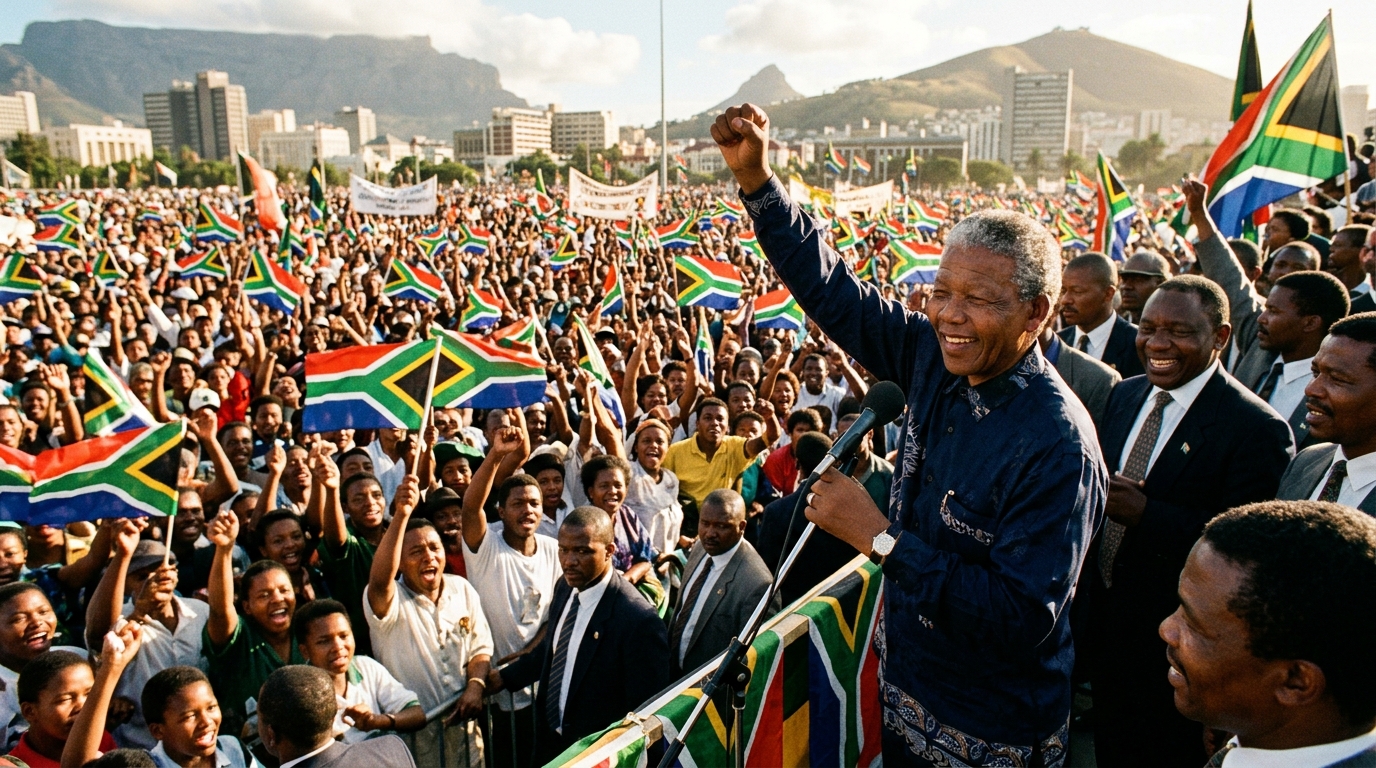
- The 1994 elections represented the definitive dismantling of the institutionalized system of white minority rule that had governed South Africa since 1948, culminating decades of internal struggle and international pressure.
- Nelson Mandela’s strategy of reconciliation and his unwavering commitment to a non-racial, democratic future were instrumental in preventing a descent into large-scale civil war during the volatile transitional period.
- The peaceful transition served as a global landmark for conflict resolution, shifting South Africa from a pariah state to an active and influential player in international diplomacy and a beacon of hope for post-conflict societies.
- The process involved intricate negotiations between the liberation movements and the apartheid government, facilitated by critical domestic and international actors, ultimately leading to a new constitutional order.
Historical Context and Origins
The roots of racial segregation and discrimination in South Africa run deep, predating the formal institution of Apartheid. European colonial expansion, particularly by the Dutch East India Company in the 17th century and later the British Empire, established a hierarchical society where race was a primary determinant of status, rights, and access to resources. Early discriminatory laws, such as the Native Lands Act of 1913, forcibly dispossessed black South Africans of their land, restricting their ownership to a mere 13% of the country despite forming the vast majority of the population. This foundational injustice laid the groundwork for future oppression.
However, the system known as Apartheid, an Afrikaans word meaning "apartness," was formally institutionalized by the National Party (NP) following its victory in the 1948 general election. Campaigning on a platform of "apartheid" to protect white racial purity and economic privilege, the NP systematically legislated white supremacy through a battery of draconian laws. Key pillars of this infrastructure of inequality included:
- The Population Registration Act (1950): Classified every South African by race (White, Black, Coloured, Indian), determining their rights, opportunities, and place in society. This classification was arbitrary and often led to families being separated.
- The Group Areas Act (1950): Designated specific urban and rural areas for each racial group, leading to the forced removal of millions of non-white people from their homes in "white" areas, often to underdeveloped townships or Bantustans (homelands).
- The Pass Laws: Required Black Africans to carry internal passports (
dompas) at all times, restricting their movement and controlling their access to "white" urban areas. Failure to produce a pass was a criminal offense, leading to mass arrests. - The Bantu Education Act (1953): Created a separate, inferior education system for Black children, designed to limit their intellectual development and prepare them only for manual labor and subservient roles in society. Hendrik Verwoerd, a key architect of apartheid, famously stated that black people should not be educated beyond the needs of the white man.
- The Immorality Act and Prohibition of Mixed Marriages Act: Criminalized interracial relationships and marriages, enforcing social separation at its most intimate level.
For decades, this infrastructure of inequality relied on the brutal suppression of dissent. Early resistance movements, such as the African National Congress (ANC), initially adopted non-violent methods like the Defiance Campaign of the 1950s, inspired by Mahatma Gandhi. However, the Sharpeville Massacre in 1960, where police opened fire on peaceful protestors, killing 69, marked a turning point. It led to the banning of the ANC and the Pan Africanist Congress (PAC) and the decision by liberation movements to adopt armed struggle, forming military wings like Umkhonto we Sizwe (MK) – "Spear of the Nation" – led by Nelson Mandela. The Rivonia Trial (1963-64) saw Mandela and other leaders sentenced to life imprisonment, effectively decapitating the internal liberation movement for a period.
The 1970s witnessed a resurgence of internal resistance, particularly with the rise of the Black Consciousness Movement, led by figures like Steve Biko, which emphasized self-reliance and psychological liberation. The Soweto Uprising of 1976, ignited by the imposition of Afrikaans as the language of instruction in schools, saw thousands of students protest, met by brutal state violence. This event galvanized a new generation of activists and drew unprecedented international attention and condemnation. In the 1980s, the United Democratic Front (UDF) emerged as a broad, internal anti-apartheid coalition, coordinating resistance against the apartheid state while the ANC leadership remained largely imprisoned or in exile, maintaining international pressure.
By the late 1980s, the apartheid state was facing an existential crisis. A combination of intensified internal resistance—spearheaded by the UDF and the ANC (through its external operations)—and the crippling economic and political costs of international isolation had rendered the status quo unsustainable. The "Total Strategy" of the P.W. Botha government, which sought to combat perceived "total onslaught" from communism and internal resistance through military strength, regional destabilization, and limited cosmetic reforms, ultimately failed. The collapse of the Soviet Union at the turn of the decade also profoundly shifted the geopolitical landscape; the "Total Strategy" narrative, which justified apartheid as a bulwark against communist expansion, lost its potency, removing a key argument against Western sanctions and forcing the South African government to consider a negotiated settlement as the only viable path forward.
Historical Precedents & Global Anti-Colonial Struggles
South Africa's apartheid system, while uniquely formalized, was not an isolated phenomenon but rather an extreme manifestation of global historical trends, particularly settler colonialism and racial subjugation. Its origins can be traced to the colonial practices that dominated much of the world, where European powers established rule over indigenous populations, often displacing, dispossessing, and dehumanizing them.
Comparisons can be drawn to other settler-colonial states such as Rhodesia (modern-day Zimbabwe), where a white minority also maintained political and economic control, and Australia and the United States, which have histories of indigenous land dispossession and racial segregation, albeit in different forms. The "Jim Crow" laws in the American South, which enforced racial segregation and denied civil rights to African Americans, shared striking similarities with apartheid's legal framework, though they lacked the explicit state-mandated racial classification and 'homelands' policy. These parallels highlight a shared legacy of racial hierarchy designed to consolidate power and resources in the hands of a dominant group.
However, South Africa's situation was unique due to the demographic imbalance where a relatively small white minority (around 15-18% of the population) rigorously controlled a vast black majority, alongside significant "Coloured" and Indian communities. This made the concept of a "white homeland" or outright physical separation logistically and economically untenable, yet the apartheid regime attempted precisely that through its Bantustan policy, creating theoretically "independent" black states within South Africa's borders. These were widely condemned internationally as puppet states designed to strip black South Africans of their citizenship and further entrench white control.
The anti-apartheid struggle also resonated deeply with broader decolonization movements across Africa and Asia in the mid-20th century. For many newly independent African nations, apartheid South Africa was an anachronism, a stark symbol of the colonial past they had fought to shed. The Organization of African Unity (OAU), forerunner to the African Union, consistently called for sanctions against South Africa and supported liberation movements. Similarly, the global Civil Rights Movement, particularly in the United States, found common cause with the anti-apartheid movement, seeing both as battles against systemic racial injustice. Figures like Martin Luther King Jr. and Jesse Jackson actively spoke out against apartheid, connecting the struggles for freedom and equality across continents.
The Cold War further complicated the international response. While Western democracies officially condemned apartheid, their initial responses were often muted due to strategic interests. South Africa was seen by some as an anti-communist bulwark in Southern Africa, and its mineral wealth (gold, diamonds, platinum) was crucial to global markets. The United States, particularly during the Reagan administration, pursued a policy of "constructive engagement" rather than outright sanctions, which was widely criticized by anti-apartheid activists as tacit support for the regime. Conversely, the Soviet Union and its allies actively supported the ANC and its armed wing, Umkhonto we Sizwe, providing military training and financial aid, framing the struggle within the larger East-West ideological conflict. This geopolitical maneuvering meant that effective international pressure was delayed until the late 1980s, when the Cold War waned, allowing for a more unified global front against the apartheid regime. The eventual global consensus on sanctions, divestment, and isolation proved to be a critical factor in weakening the apartheid government's resolve.
Timeline of Events and Key Moments
The transition to a democratic South Africa was neither linear nor inevitable. It was a perilous process marked by intense negotiations, political assassinations, and near-catastrophic failures in communication between the ANC and the government, often teetering on the brink of civil war.
| Year | Milestone Event | Description |
|---|---|---|
| 1985 | Rubicon Speech | President P.W. Botha delivers a defiant speech, refusing significant reforms, leading to increased international sanctions and capital flight. |
| 1986 | State of Emergency | Botha's government declares a nationwide State of Emergency, granting sweeping powers to the police and military, escalating repression. |
| 1989 | F.W. de Klerk takes office | De Klerk replaces Botha as President, initiating secret contacts with Nelson Mandela and signaling a shift towards reform. |
| 1990 | Unbanning & Mandela's Release | F.W. de Klerk unbans the ANC, PAC, SACP, and other organizations; Nelson Mandela is released from Victor Verster Prison after 27 years. |
| 1991 | Repeal of Apartheid Laws & CODESA I | Parliament repeals core apartheid legislation (Population Registration and Group Areas Acts); the Convention for a Democratic South Africa (CODESA I) begins. |
| 1992 | White Referendum & CODESA II Stalls | A white-only referendum overwhelmingly approves the continuation of reform negotiations; CODESA II stalls amidst escalating political violence and mistrust. |
| 1993 | Chris Hani Assassination & Interim Constitution | The assassination of popular ANC and SACP leader Chris Hani by white extremists threatens to derail the peace process; an interim constitution is signed; Mandela and de Klerk are awarded the Nobel Peace Prize. |
| 1994 | First Democratic Elections | April 27–29: The first democratic, multi-racial elections take place, resulting in an ANC landslide victory and Nelson Mandela's inauguration as President. |
The period leading up to 1990 was marked by increasing clandestine talks between the imprisoned Nelson Mandela and senior government officials, including Justice Minister Kobie Coetsee. These secret dialogues were crucial in laying the groundwork for official negotiations, demonstrating Mandela's commitment to a negotiated settlement and the government's growing recognition of the inevitable.
When F.W. de Klerk, a Verwoerdian Nationalist who nonetheless proved pragmatic, assumed the presidency in 1989, he quickly moved to dismantle the pillars of apartheid. His address to Parliament on February 2, 1990, announcing the unbanning of liberation movements and Mandela's imminent release, sent shockwaves through the country and the world. Mandela's release from Victor Verster Prison on February 11, 1990, was a watershed moment, televised globally, symbolizing the beginning of the end of apartheid. His first public address called for peace but reaffirmed the ANC's commitment to fundamental change and armed struggle until negotiations progressed.
The repeal of the Population Registration Act and the Group Areas Act in 1991 formally abolished the legal framework of apartheid. However, the path to democracy was far from smooth. The Convention for a Democratic South Africa (CODESA), launched in December 1991, brought together 19 political parties to negotiate a new constitution. While CODESA I achieved significant agreements, CODESA II, in 1992, stalled over disagreements on power-sharing and constitutional principles. This period was marred by escalating "third force" violence, including events like the Boipatong massacre, where dozens of township residents were killed, widely blamed on Inkatha Freedom Party (IFP) supporters allegedly aided by elements within the state security forces.
The assassination of Chris Hani, the charismatic leader of the South African Communist Party and chief of staff of Umkhonto we Sizwe, in April 1993, was a pivotal and profoundly dangerous moment. Hani was immensely popular, particularly among young, disillusioned Black South Africans. His murder by white extremists created an explosive atmosphere that brought the country to the very brink of a racial civil war. Had Nelson Mandela not intervened with an extraordinary televised appeal for calm, transcending the partisan anger of his own movement and addressing the nation as a statesman, the country might have dissolved into chaos. His leadership during this period, demonstrating a profound commitment to stability over partisan vengeance, underscored his unique moral authority and strategic vision.
Following Hani's assassination, negotiations resumed with renewed urgency, leading to the adoption of an interim constitution in late 1993, which included a Bill of Rights and established a Government of National Unity (GNU) for five years after the first democratic elections. This monumental achievement paved the way for the historic elections of April 27-29, 1994.
Geopolitical Consequences and Aftermath
The victory of the African National Congress in 1994 and the inauguration of Nelson Mandela as President on May 10, 1994, fundamentally altered South Africa’s position in the global order. No longer a pariah state, South Africa was rapidly readmitted to the international community. It rejoined the Commonwealth of Nations, took its seat in the United Nations General Assembly (having been expelled in 1974), and became a vital member of the Organization of African Unity (OAU), later the African Union (AU).
"Never, never, and never again shall it be that this beautiful land will again experience the oppression of one by another and suffer the indignity of being the skunk of the world. The sun shall never set on so glorious a human achievement! Let freedom reign. God bless Africa!" — Nelson Mandela, Inaugural Address.
Geopolitically, the end of apartheid signaled the definitive end of the Cold War’s influence on Southern African regional stability. For decades, the apartheid regime had destabilized its neighbors through military incursions, funding proxy wars, and economic coercion, justifying its actions as a defense against communist expansion. The "Frontline States"—nations like Angola, Mozambique, Zimbabwe, Zambia, and Tanzania—which had bravely supported liberation movements and suffered immense costs, could now integrate into a more collaborative regional economic and political bloc, the Southern African Development Community (SADC). South Africa, with its relatively advanced economy, became a powerful, if sometimes controversial, regional player, promoting peace and economic development across the continent.
The South African transition proved that deeply entrenched ethno-nationalist and racially divided conflicts could be resolved through negotiated settlements, even after decades of violence and oppression. This provided a powerful template and source of inspiration for future peacemaking efforts globally, influencing approaches to conflict resolution in places like Northern Ireland, the Balkans, and Rwanda. The concept of "truth and reconciliation" as a model for transitional justice, pioneered in South Africa, gained international currency.
Furthermore, South Africa’s return to the world stage brought a new, influential voice from the Global South to international forums. Mandela’s government championed multilateralism, human rights, and the peaceful resolution of disputes, often advocating for a more equitable global order. South Africa became a significant player in the Non-Aligned Movement and later a key voice within BRICS (Brazil, Russia, India, China, South Africa), demonstrating its commitment to a multi-polar world and challenging the dominance of traditional Western powers. The "Rainbow Nation" concept, coined by Archbishop Desmond Tutu, while facing internal challenges, presented a powerful, aspirational vision of diversity and unity that resonated far beyond its borders.
Analysis of Key Actors and Decisive Actions
The success of the 1994 transition rests on the unlikely political chemistry, strategic foresight, and personal courage of a diverse array of actors.
Nelson Mandela: The Architect of Reconciliation
Mandela's genius lay in his ability to broaden his base of support beyond the liberation movement, convincing his supporters to accept a "Government of National Unity" (GNU) and embrace reconciliation over retribution. Despite 27 years of imprisonment, he emerged without bitterness, demonstrating extraordinary strategic patience and a pragmatic understanding of power. His consistent message of non-racialism, even while leading a predominantly black liberation movement, was crucial. He understood that alienating the white minority would lead to protracted conflict, and that their skills and capital were essential for nation-building.
Mandela's clandestine negotiations from prison, beginning in the mid-1980s, were a testament to his foresight, bypassing hardliners in both the apartheid government and his own movement. Upon release, he skillfully navigated the competing demands of radical youth, hardline MK commanders, and the cautious elder statespeople within the ANC. His iconic appearance in the Springbok rugby jersey at the 1995 Rugby World Cup, an emblem of white Afrikanerdom, symbolized his commitment to uniting the nation and disarming white fears. This inclusive approach mitigated white fears of retribution and discouraged potential right-wing insurgency, preventing a descent into civil war.
F.W. de Klerk: The Pragmatic Reformer
As the last president of apartheid-era South Africa, de Klerk recognized that the survival and long-term prosperity of the Afrikaner people and the broader white community required the sacrifice of political monopoly. His decision to unban liberation movements and release Mandela, despite immense pressure from hardliners within his own National Party and the broader white right-wing, was the decisive catalyst for reform. De Klerk's motivations were complex: he sought to avert a looming economic collapse, prevent a full-scale civil war, and reposition South Africa globally. While some critics argue his reforms were too slow and reactive, his courage in initiating negotiations and steering his party through a period of radical change cannot be overstated. He played a critical role in convincing the white electorate, via a 1992 referendum, to endorse the negotiations, providing a vital mandate for the transition.
Other Key Figures and Their Contributions:
- Oliver Tambo: As the ANC President in exile for three decades, Tambo maintained the international anti-apartheid front, built solidarity networks, and ensured the ANC's organizational survival and diplomatic legitimacy. His leadership provided continuity and kept the flame of resistance alive globally until Mandela's release.
- Archbishop Desmond Tutu: A relentless moral voice against apartheid, Tutu's consistent advocacy for non-violent resistance and human rights earned him the Nobel Peace Prize in 1984. After apartheid, he chaired the Truth and Reconciliation Commission, playing a crucial role in healing and national reconciliation.
- Joe Slovo: A white communist and leader of the South African Communist Party (SACP) and a prominent figure in the ANC leadership, Slovo played a critical role in drafting the ANC's negotiating positions, notably advocating for the "sunset clauses" that ensured jobs for white civil servants in the new administration, which helped assuage white fears and smooth the transition.
- Cyril Ramaphosa: As the ANC's chief negotiator, Ramaphosa's sharp intellect and strategic skills were instrumental in the intricate and often fraught CODESA and Multi-Party Negotiating Forum discussions. His ability to compromise while upholding fundamental ANC principles was key to reaching agreements.
- Mangosuthu Buthelezi: Leader of the Inkatha Freedom Party (IFP), Buthelezi's role was highly controversial. While opposing apartheid, his rivalry with the ANC, particularly in KwaZulu-Natal, fueled significant political violence during the transition, often threatening to derail the peace process. His eventual participation in the 1994 elections was crucial for their legitimacy and for preventing further destabilization.
Institutional Mechanisms: The Foundations of a New Democracy
The creation of the Convention for a Democratic South Africa (CODESA) in 1991, and its successor, the Multi-Party Negotiating Forum (MPNF), provided the indispensable legal and political framework for the transition. These forums, despite profound distrust and outbreaks of violence, allowed representatives from all major political groups to debate, compromise, and ultimately draft the interim constitution.
The subsequent adoption of the 1996 Constitution, largely shaped by the interim document, enshrined comprehensive protections for human rights, established an independent judiciary, and introduced proportional representation. The Constitutional Court, established during the transition, emerged as a robust bulwark against potential executive overreach and a defender of the new democracy's principles, reflecting a deep commitment to the rule of law and human rights that was revolutionary for South Africa.
Socio-Economic Challenges of Post-Apartheid Reconstruction
While the political transition of 1994 was a triumphant moment, the newly democratic South Africa inherited a deeply fractured society riddled with profound socio-economic inequalities. Decades of apartheid had created a dual economy and systematically disadvantaged the black majority, leaving a legacy of poverty, landlessness, and a lack of access to basic services. The challenge for the new government was not just political reconciliation but also radical socio-economic transformation.
The Reconstruction and Development Programme (RDP)
The ANC-led government's initial response to these challenges was the Reconstruction and Development Programme (RDP), launched in 1994. The RDP was an ambitious, integrated socio-economic policy framework aiming to address the fundamental needs of the majority, redistribute wealth, and build a more equitable society. Its key objectives included:
- Meeting Basic Needs: Providing access to housing, water, sanitation, electricity, healthcare, and education.
- Developing Human Resources: Improving education and skills training, promoting a culture of learning.
- Building the Economy: Restructuring the economy for growth, job creation, and equitable distribution of wealth.
- Democratizing the State and Society: Empowering communities, strengthening local government, and promoting civil society participation.
While the RDP made some initial strides in providing basic services (e.g., millions gained access to clean water and electricity), it faced significant implementation challenges, including lack of capacity, corruption, and the sheer scale of the problems. By 1996, it was largely superseded by the Growth, Employment and Redistribution (GEAR) strategy, which adopted a more fiscally conservative, market-oriented approach, focusing on macroeconomic stability and foreign investment, a shift that proved controversial and was criticized for not sufficiently addressing inequality.
Persistent Economic Inequality and Land Reform
Despite two decades of democratic rule, South Africa remains one of the most unequal societies in the world, often referred to as a "tale of two countries." Wealth and income disparities largely continue along racial lines, with the majority of black South Africans still living in poverty. Key challenges include:
- Unemployment: High rates of unemployment, particularly among black youth, persist.
- Land Reform: The highly contentious issue of land redistribution, aimed at reversing historical dispossession, has seen limited success. The pace and methods of land reform, including debates around expropriation without compensation, remain central to political discourse and social unrest.
- Black Economic Empowerment (BEE): Policies designed to increase the participation of black South Africans in the economy, while creating a new black middle and elite class, have also been criticized for fostering cronyism and not benefiting the broader population sufficiently.
Social Challenges and HIV/AIDS
Beyond economics, South Africa grappled with severe social challenges. The legacy of apartheid-era migrant labor and social disruption contributed to:
- High Crime Rates: A significant rise in violent crime, including murder and sexual assault, became a major concern for both citizens and investors.
- HIV/AIDS Epidemic: South Africa faced one of the world's most severe HIV/AIDS epidemics. The Mbeki administration's initial denialism and reluctance to roll out antiretroviral treatment tragically exacerbated the crisis, leading to immense suffering and loss of life before a more robust public health response was implemented.
- Education Disparities: Despite efforts, the quality of education remains highly unequal, perpetuating a cycle of poverty for many.
- Housing and Service Delivery: While progress has been made, millions still live in inadequate housing and informal settlements, often lacking reliable access to water, sanitation, and electricity.
The Truth and Reconciliation Commission (TRC)
A cornerstone of post-apartheid reconstruction and healing was the Truth and Reconciliation Commission (TRC), established in 1995 and chaired by Archbishop Desmond Tutu. Its unique mandate was to investigate gross human rights violations committed during the apartheid era (from 1960 to 1994). The TRC aimed for "restorative justice" rather than "retributive justice," operating on the principle that full disclosure of abuses by perpetrators could lead to amnesty, while victims would have a platform to tell their stories and seek recognition and some form of reparations.
The TRC consisted of three committees:
- Human Rights Violations Committee: Documented abuses from victims' testimonies.
- Reparation and Rehabilitation Committee: Recommended measures for victims' redress.
- Amnesty Committee: Considered applications for amnesty from perpetrators in exchange for truthful testimony.
The TRC captured global attention, with harrowing accounts of torture, murder, and political violence alongside confessions from perpetrators. Its successes included:
- Providing a public record of atrocities, creating a shared historical narrative.
- Giving a voice and validation to countless victims.
- Offering a non-retributive model for post-conflict justice, influencing peace processes worldwide.
However, the TRC also faced significant criticisms:
- Limited Accountability: Many felt the amnesty process allowed perpetrators to escape punishment, especially those at the highest levels of the apartheid regime.
- Incomplete Justice for Victims: Reparations were often delayed or insufficient, leaving many victims feeling that their suffering had not been fully acknowledged or addressed.
- Lack of Economic Justice: The TRC primarily focused on political violence and largely sidestepped the deep structural economic injustices of apartheid, which critics argue was a fundamental flaw.
Despite its imperfections, the TRC remains a crucial part of South Africa's healing process, demonstrating an ambitious attempt to confront a painful past in the service of a shared future. Its legacy continues to be debated, but its global influence on transitional justice is undeniable.
Trivia and Lesser-Known Facts
- The Election Vibe: The 1994 election was more than just a vote; it was a deeply emotional and celebratory act of liberation. Millions of people, many voting for the first time in their lives, waited in massive, winding queues for hours, often singing and dancing, underscoring the profound significance of the moment. The indelible image of these long, patient queues remains the defining visual narrative of South African democracy's birth.
- The New Flag: The current South African flag, with its distinctive "Y" design, was a last-minute decision. It was designed by Frederick Brownell and adopted just weeks before the 1994 elections. Its six colors are symbolic of the country's diverse population and its journey towards unity, intentionally avoiding the historical baggage associated with the old apartheid-era flag and the flags of the liberation movements.
- The "Lost" Years: Before 1990, the African National Congress (ANC) was officially listed as a terrorist organization by both the United States and the United Kingdom, a designation that was not fully lifted until after Mandela's release and well into the transitional period. This designation heavily influenced Western foreign policy towards South Africa during the Cold War.
- Mandela's Secret Visits: During his imprisonment, Nelson Mandela was secretly moved from Pollsmoor Prison to a private house on the grounds of Victor Verster Prison in 1988, where he had access to a swimming pool and could receive visitors. This facilitated the secret talks with government officials that paved the way for negotiations.
- The Springbok Rugby Jersey: In a powerful gesture of national unity after the 1995 Rugby World Cup victory (hosted by South Africa), Nelson Mandela, dressed in a Springbok jersey (previously a symbol of white supremacy), presented the Webb Ellis Cup to the largely white Afrikaner captain, François Pienaar. This moment, famously depicted in the film Invictus, was a profound act of reconciliation that spoke volumes about Mandela's vision for a united "Rainbow Nation."
- Pretoria's Name Change: While the capital city's name remains Pretoria, its overarching municipal area was renamed Tshwane in 2000, a move that sparked considerable debate and controversy over heritage and transformation. Many other cities and towns across South Africa have also undergone name changes to shed their colonial or apartheid-era names.
References and Literature
- Nelson Mandela Foundation Archives: https://www.nelsonmandela.org - The official repository of documents, speeches, correspondence, and multimedia relating to the life and legacy of Nelson Mandela and the transition to democracy.
- Long Walk to Freedom: Nelson Mandela (1994). The definitive autobiography of Nelson Mandela, detailing his early life, political awakening, imprisonment, and the arduous path to the 1994 elections and reconciliation.
- South African History Online (SAHO): https://www.sahistory.org.za - A comprehensive digital archive and educational resource providing primary source material, detailed historical narratives, and biographies related to the anti-apartheid movement and the 1994 transition.
- Truth and Reconciliation Commission of South Africa Report: (1998). The multi-volume official report detailing the findings, testimonies, and recommendations of the TRC. Available through various university and government archives.
- A History of South Africa: Leonard Thompson (4th ed., 2001). A widely respected academic overview of South African history, including extensive coverage of apartheid and its demise.
- The South African Miracle: Foreign Affairs articles (various authors, post-1994). Academic and geopolitical analyses often published in journals like Foreign Affairs, discussing the diplomatic, political, and economic pressures that facilitated the collapse of the apartheid regime and the challenges of the post-apartheid era.
- Desmond Tutu: A Spiritual Biography of South Africa's Confessor: Michael Battle (2009). Explores the life and moral leadership of Archbishop Desmond Tutu, particularly his role in the anti-apartheid movement and the TRC.
- Critique of the TRC and Transitional Justice: Mahmood Mamdani, "Amnesty or Impunity? A Critique of the Report of the Truth and Reconciliation Commission of South Africa (TRC)," Diacritics, Vol. 32, No. 3/4, South Africa: The State of the Nation (Autumn - Winter, 2002), pp. 33-50. An example of critical academic analysis of the TRC's limitations.
Footnotes & Explanations
- Convention for a Democratic South Africa (CODESA) was the multi-party forum that laid the groundwork for the 1994 elections. It was succeeded by the Multi-Party Negotiating Forum after CODESA II stalled. ↩
- The Reconstruction and Development Programme (RDP) was the primary socio-economic policy framework adopted by the ANC-led government to address systemic inequalities and poverty post-1994, later largely replaced by the GEAR strategy. ↩