Key Takeaways
- The Syrian Civil War originated from localized pro-democracy protests that were met with disproportionate state violence, leading to a nationwide insurgency.
- Decades of Ba'athist authoritarian rule under the Assad family, coupled with socio-economic hardships and a severe drought, created fertile ground for widespread discontent that erupted during the Arab Spring.
- The conflict evolved from a domestic uprising into a complex proxy war involving regional powers and global superpowers with diverging strategic interests, profoundly reshaping Middle Eastern geopolitics.
- The collapse of internal order provided a power vacuum that facilitated the rise of non-state actors, including extremist groups like ISIS, and triggered an unprecedented humanitarian crisis.
- International paralysis, particularly within the UN Security Council due to geopolitical rivalries, prevented early intervention or a unified diplomatic solution, allowing the conflict to fester and escalate.
Historical Context and Origins
The Syrian Civil War, erupting in 2011, was not an isolated event but the culmination of decades of simmering internal grievances, authoritarian rule, and profound socio-economic pressures. The roots of the conflict stretch deep into the Ba’athist era, particularly the rule of Hafiz al-Assad (1970-2000), who built a formidable, secular authoritarian state based on a powerful military-security apparatus. His regime, while providing stability, was characterized by the dominance of the Alawi minority in key positions, suppression of political dissent—most notably the brutal Hama massacre in 1982—and a state-controlled economy that stifled private initiative and fostered corruption.
Upon inheriting power in 2000, Bashar al-Assad initially inspired hopes for reform, a period dubbed the "Damascus Spring." However, these aspirations quickly faded. While some limited economic liberalization occurred, it primarily benefited an elite circle connected to the regime, exacerbating existing inequalities and fueling crony capitalism. The majority of Syrians, especially the burgeoning youth population, faced high unemployment, limited opportunities, and pervasive corruption within state institutions. The vast and pervasive security apparatus, the Mukhabarat, remained the backbone of the regime, ensuring compliance through surveillance and repression.
Crucially, a severe and protracted drought between 2006 and 2010 devastated Syria's agricultural heartland, particularly in the northeastern regions. This ecological catastrophe led to the internal displacement of hundreds of thousands of rural Syrians, who migrated to already strained urban centers like Damascus, Homs, and Aleppo. These internal migrants often settled in informal tent communities or overcrowded slums on the outskirts of cities, competing for dwindling resources and jobs. This demographic shift created a large, marginalized, and deeply discontented urban underclass, susceptible to mobilization and ripe for unrest.
When the "Arab Spring" swept through North Africa and the Levant in early 2011, toppling regimes in Tunisia and Egypt, Syria—ruled by Bashar al-Assad—appeared outwardly stable, but the veneer of control was brittle. The Syrian regime, wary of the popular uprisings, framed the events unfolding in neighboring countries as foreign-backed conspiracies rather than legitimate expressions of internal dissent. This narrative would profoundly shape its response to the burgeoning protests within its own borders.
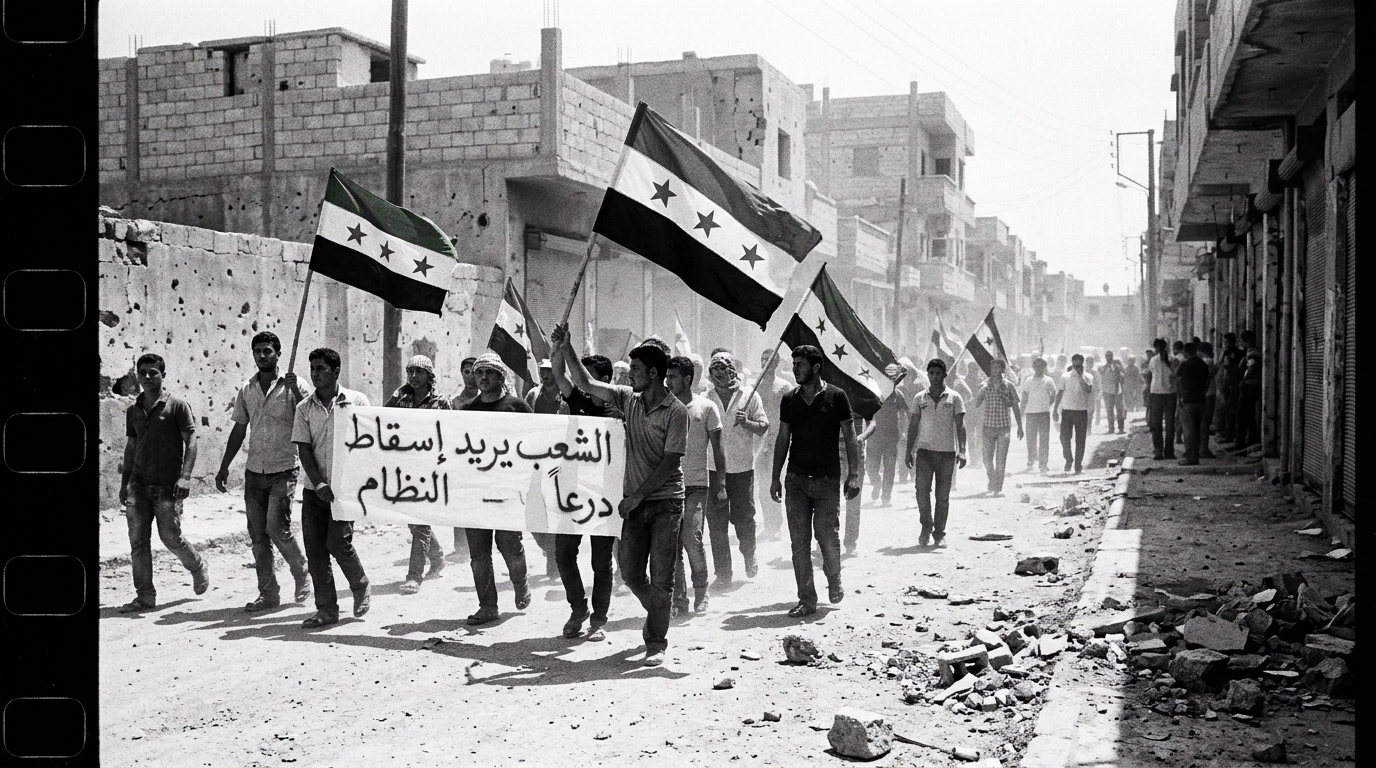
The immediate spark for the Syrian uprising occurred in the southern city of Daraa in March 2011. A group of schoolchildren, inspired by the revolutionary fervor gripping the region, painted anti-government graffiti on the walls of their school, echoing slogans of freedom and regime change. The local security chief, Atef Najib, a cousin of President Assad, responded with disproportionate and brutal force, arresting and torturing the children. Public outrage over the arrests and the torture of minors quickly escalated. When families and local residents demonstrated for their release, security forces opened fire on the peaceful protests, resulting in multiple deaths. The subsequent funerals for the victims transformed into larger, more defiant demonstrations, met with further lethal force. This cycle of protest, violent crackdown, and escalating public anger quickly spiraled out of control. The government’s decision to treat these localized grievances as a foreign-backed insurrection, rather than an internal political challenge requiring dialogue and reform, set a trajectory of escalating violence that left little room for peaceful compromise and paved the way for a devastating civil war.
Intelligence Failures and Miscalculations
The outbreak and subsequent escalation of the Syrian conflict were profoundly shaped by a series of critical intelligence failures and miscalculations made by virtually all key actors, both domestic and international. These errors in judgment exacerbated the crisis, prolonged the conflict, and created unforeseen consequences.
The Syrian Regime's Myopia: Bashar al-Assad's government made the initial and arguably most catastrophic miscalculation by underestimating the depth and breadth of popular discontent. Steeped in a culture of authoritarian control and insulated by loyalist elites, the regime dismissed the early protests as the work of foreign agitators, sectarian extremists, or limited groups of troublemakers. This fundamental misreading prevented any consideration of genuine political or economic reforms that might have defused the situation. Instead, it opted for an immediate, brutal security crackdown, believing that the same tactics used to quell previous unrest would quickly reassert control. This heavy-handed approach, epitomized by the events in Daraa, alienated vast segments of the population, pushed peaceful protestors towards armed resistance, and dissolved any remaining trust between the state and its citizens. The regime also misjudged the potential for defections within its own military, believing its Alawi-dominated officer corps would remain monolithic.
Western Underestimation and Strategic Ambiguity: Western powers, particularly the United States and its European allies, exhibited their own set of critical miscalculations. Initially, there was an underestimation of Assad's resilience and his willingness to employ extreme violence—including chemical weapons and barrel bombs—to retain power, even if it meant destroying the country. Conversely, there was often an overestimation of the coherence and capacity of the Syrian opposition, which was always fragmented, ideologically diverse, and plagued by internal rivalries. The West struggled to identify and effectively support a credible, moderate alternative, often fearing that arms would fall into the hands of extremist groups.
The most profound Western miscalculation centered on President Barack Obama's "red line" declaration in 2012 regarding the use of chemical weapons. When the Ghouta chemical attack occurred in August 2013, the subsequent decision not to enforce this red line with military action was widely perceived as a sign of hesitancy and weakness. This move, while framed by the administration as a diplomatic success for averting immediate strikes and securing chemical disarmament, severely undermined U.S. credibility, emboldened the Assad regime, and signaled to regional and global actors that the United States was unwilling to commit significant military force to achieve regime change in Syria. This created a vacuum that other powers, notably Russia and Iran, were quick to fill.
Regional Actors' Shifting Sands: Regional powers also made significant misjudgments. Turkey, under President Recep Tayyip Erdoğan, initially pursued a policy of "zero problems with neighbors" and maintained relatively close ties with Assad. As the uprising intensified, Turkey quickly pivoted to backing the opposition, miscalculating the speed with which Assad's regime would fall and the endurance of the conflict. Saudi Arabia and Qatar, eager to counter Iranian influence and support Sunni opposition groups, often failed to adequately vet the factions they funded, inadvertently contributing to the rise of extremist elements. Both nations, like the West, misjudged the depth of Russian and Iranian commitment to the Assad regime.
Underestimation of Russian and Iranian Resolve: Perhaps one of the most significant collective intelligence failures was the widespread underestimation of Russia's and Iran's unwavering strategic commitment to the Assad regime. Russia viewed Syria not merely as a client state or a naval outpost but as a critical buffer against Western-backed regime change, a challenge to unipolarity, and a vital platform for reasserting its geopolitical influence. Iran saw Syria as an indispensable link in its "Axis of Resistance" and a vital strategic depth for Hezbollah. Western and regional intelligence often failed to fully grasp the ideological, geopolitical, and strategic depth of these commitments, leading to surprise when Russia intervened militarily in 2015, fundamentally altering the conflict's trajectory. These accumulated failures in analysis and foresight by all parties contributed directly to the protracted nature, extreme violence, and devastating consequences of the Syrian Civil War.
Timeline of Events and Key Moments
The transition from a protest movement to an armed insurgency occurred with startling velocity, punctuated by key military and diplomatic events that continually reshaped the conflict.
| Period | Key Event | Significance |
|---|---|---|
| March 2011 | Daraa Uprising | First major pro-democracy protests sparked by the arrest and torture of schoolchildren; met with lethal force by security services, igniting nationwide unrest. |
| April-May 2011 | Protests Spread | Demonstrations spread to major cities including Homs, Hama, Banyas, and the outskirts of Damascus. The regime's crackdown intensifies, employing live ammunition against protestors and conducting mass arrests. |
| June 2011 | First Major Defections | Elements of the Syrian Arab Army (SAA) begin to defect, refusing orders to fire on civilians. Initial armed clashes between defectors and loyalist forces occur, particularly in Rastan. |
| July 2011 | Formation of the Free Syrian Army (FSA) | Led by defecting SAA officers, the FSA is formally announced in Turkey. It aims to protect protestors and eventually overthrow the Assad regime, marking the official transition from a protest movement to an organized armed insurgency. |
| August 2011 | International Condemnation | U.S. President Barack Obama calls for Bashar al-Assad to step down. The U.S. and European Union impose further sanctions on the Syrian regime, escalating international pressure. |
| February 2012 | Siege of Homs; UN Vetoes | Syrian government forces launch a brutal siege on Homs, a key opposition stronghold dubbed the "Capital of the Revolution." Russia and China cast double vetoes in the UN Security Council, blocking a resolution condemning the crackdown, effectively paralyzing international action. |
| April 2012 | Kofi Annan Peace Plan | Former UN Secretary-General Kofi Annan brokers a fragile ceasefire plan, including the deployment of UN observers. The plan quickly collapses due to continued violations by both sides, signaling the futility of early diplomatic efforts. |
| July 2012 | Damascus and Aleppo Offensives | Rebel forces launch major offensives into the heart of Damascus and the economic hub of Aleppo, briefly seizing parts of both cities. A bombing in Damascus kills several high-ranking security officials, including Assad’s brother-in-law, further escalating the conflict. |
| August 2013 | Ghouta Chemical Attack | A sarin gas attack in the Ghouta region near Damascus kills hundreds, primarily civilians. International outrage ensues, bringing U.S. President Obama's "red line" on chemical weapons use to the forefront. Russia brokers a deal for Syria to surrender its chemical weapons, averting immediate U.S. military strikes. |
| Early 2014 | Rise of ISIS and Internal Conflicts | The Islamic State of Iraq and Syria (ISIS) emerges as a dominant, brutal force, clashing with other rebel groups and gaining significant territory in eastern Syria. Jabhat al-Nusra, al-Qaeda's affiliate, also solidifies its presence, further complicating the opposition landscape. |
| September 2014 | US-led Coalition Against ISIS | The United States, leading an international coalition, begins airstrikes against ISIS targets in Syria, expanding its military involvement beyond Iraq. This signals a shift in focus to counter-terrorism rather than explicit regime change in Syria. |
| September 2015 | Russian Intervention | Russia launches a decisive military intervention, deploying airpower and special forces to support the Assad regime. This dramatically shifts the military momentum in favor of the Syrian government, preventing its collapse and securing Russia's long-term influence in the region. |
The rise of the Free Syrian Army (FSA) in the summer of 2011, primarily comprised of defectors from the Syrian Arab Army (SAA) who joined civilians seeking to protect protestors and overthrow the regime, marked the formal end of the "protest" phase. As these defectors became more organized, the conflict quickly transitioned from a civil resistance movement into a full-scale armed insurgency. By 2012, the war had reached the outskirts of Damascus and the economic hub of Aleppo, turning the conflict into an existential struggle for the state and a devastating war for its population. The international community, particularly the UN Security Council, found itself paralyzed by deep geopolitical divisions, most notably between Russia and China on one side, and Western powers on the other, preventing unified action and allowing the conflict to fester and expand.
Geopolitical Consequences and Aftermath
The Syrian War rapidly transcended its internal origins to become the defining geopolitical crisis of the early 21st century, fundamentally reshaping the Middle East and impacting global power dynamics. It created a dangerous vacuum that facilitated the rise of the Islamic State (ISIS), triggered an unprecedented humanitarian migration crisis in Europe, and resurrected an era of great power competition.
For the United States, the war represented a profound strategic dilemma. Barack Obama’s administration initially called for Assad to step down but eventually opted for a cautious, non-interventionist approach, primarily focused on containing the spread of chemical weapons and later, combating ISIS. The infamous "red line" declaration in 2012 regarding the use of chemical weapons, and the subsequent lack of direct military engagement after the 2013 Ghouta attack, signaled a significant shift toward a policy of containment rather than direct regime change. This decision, driven by a desire to avoid another costly Mideast war, domestic political fatigue, and fear of empowering extremist elements within the opposition, was widely criticized by allies and adversaries alike. It was perceived by many as a sign of U.S. disengagement and strategic ambiguity, which allowed for the intensification of the conflict and enabled regional powers—most notably Iran and Turkey—to assert their influence more aggressively. Subsequent U.S. policy under President Trump remained inconsistent, oscillating between limited strikes, troop withdrawals, and renewed engagements, reflecting the enduring complexity and intractability of the conflict.
Russia, under Vladimir Putin, masterfully utilized the conflict to re-establish its status as a major player in the Middle East and on the global stage. Moscow viewed the Syrian crisis through the prism of challenging American unipolarity and preventing Western-backed regime change, which it saw as a direct threat to its own sphere of influence and global stability. By intervening militarily in September 2015, deploying significant airpower and special forces, Russia prevented the imminent collapse of the Assad regime. This intervention was a game-changer, stabilizing the Syrian government, securing Russia's strategic naval base in Tartus and airbase in Hmeimim, and providing Moscow with unparalleled leverage in regional diplomacy. Russia's actions not only tested new military technologies and tactics but also solidified its alliance with Iran, cemented its role as a power broker, and demonstrated its willingness to use force to protect its strategic interests, fundamentally altering the military balance and the geopolitical calculus in the region.
The conflict unleashed an unparalleled humanitarian catastrophe. Over half of Syria's pre-war population—more than 13 million people—were displaced, either internally or as refugees in neighboring countries. Turkey, Lebanon, and Jordan bore the brunt of the refugee influx, placing immense strain on their economies and social infrastructure. Lebanon, with its already fragile sectarian balance, saw its population increase by over a quarter. The mass migration to Europe in 2015, largely composed of Syrian refugees, triggered a continent-wide political crisis, fueling nationalist movements and fundamentally reshaping European immigration policies. The destruction of cities, vital infrastructure, and cultural heritage sites (like Aleppo's ancient souk and Palmyra) has left a lasting scar on Syria's physical and cultural landscape.
The power vacuum and breakdown of state authority created fertile ground for the dramatic rise of the Islamic State (ISIS). Exploiting the chaos and sectarian grievances, ISIS seized vast swathes of territory across eastern Syria and western Iraq by 2014, establishing a self-proclaimed "Caliphate." Its extreme brutality, sophisticated propaganda, and ability to attract foreign fighters posed a significant global security threat, prompting a U.S.-led international coalition to intervene primarily against ISIS, diverting focus and resources from the original goal of supporting the moderate opposition against Assad.
The Syrian war also triggered a profound regional realignment:
- Iran consolidated and deepened its influence, effectively establishing a land bridge from Tehran through Iraq and Syria to Lebanon, strengthening its "Axis of Resistance." Tehran deployed Iranian Revolutionary Guard Corps (IRGC) advisors and thousands of Shi'ite foreign fighters (from Lebanon's Hezbollah, Iraq, Afghanistan, and Pakistan), providing critical ground support to the Syrian army.
- Turkey, under Recep Tayyip Erdoğan, initially a proponent of regime change, found itself entangled in a complex multi-front strategy. It became a primary logistical hub for various rebel factions, aimed to prevent the establishment of an autonomous Kurdish entity along its southern border (viewing the Syrian Kurdish YPG as an extension of the PKK terrorist group), and sought to manage the massive influx of Syrian refugees. Its objectives often clashed with those of its NATO allies, leading to strained relations.
- Saudi Arabia and Qatar actively funded and armed Sunni rebel groups, viewing the conflict as a proxy battle against Iranian expansionism and a chance to assert their regional leadership. This contributed to the sectarianization of the conflict.
- Israel maintained a policy of non-intervention in the internal Syrian conflict but established "red lines," conducting numerous airstrikes against Iranian and Hezbollah targets in Syria to prevent the transfer of advanced weaponry and the permanent entrenchment of Iranian-backed forces near its border.
The paralysis of the UN Security Council, largely due to Russia's and China's vetoes, undermined international law and the principle of the Responsibility to Protect (R2P). The conflict highlighted the limits of multilateralism in an era of renewed great power competition, demonstrating how divergent strategic interests can prevent collective action even in the face of mass atrocities.
Socio-Economic Aftermath and Demographic Shifts
Beyond the immediate conflict and geopolitical realignments, the Syrian Civil War has inflicted a devastating and potentially irreversible socio-economic aftermath, leading to profound demographic shifts that will shape Syria for generations.
Destruction of Infrastructure and Economic Collapse: The scale of physical destruction in Syria is staggering. Major cities like Homs, Aleppo, and Daraa have been systematically pulverized by aerial bombardment, artillery shelling, and urban warfare. Estimates suggest over half of the country's housing stock has been damaged or destroyed, along with critical infrastructure including hospitals, schools, power grids, water networks, and transportation routes. The economic consequences have been catastrophic: Syria's GDP has plummeted by over 90% since 2011. Sanctions, coupled with the internal destruction of productive capacity (oil fields, agricultural lands, industrial zones), have crippled the economy. Hyperinflation has rendered the national currency almost worthless, and over 90% of the population now lives below the poverty line, struggling to access basic necessities. The once vibrant Syrian economy, a mix of agriculture, oil, and light industry, lies in ruins, necessitating a monumental, multi-decade reconstruction effort that current geopolitical realities make unlikely to materialize fully.
Human Capital Flight and Brain Drain: One of the most insidious long-term effects has been the massive displacement and "brain drain" of Syria's most educated and skilled professionals. Millions of Syrians, including doctors, engineers, academics, entrepreneurs, and skilled laborers, have fled the country, seeking refuge and opportunities abroad. This exodus represents an irreparable loss of human capital, essential for any future recovery and rebuilding. Syria’s educational system has been decimated, with countless schools destroyed and teachers displaced, impacting an entire generation's access to learning and future prospects. The loss of its intellectual and professional class will hamper Syria’s ability to innovate, rebuild, and govern effectively for decades to come, perpetuating a cycle of underdevelopment.
Demographic Engineering and Shifts: The conflict has fundamentally altered Syria's demographic landscape. Mass displacement has not been random; in many instances, it has been driven by deliberate strategies of forced displacement and sectarian cleansing. The regime, often backed by Iran and Russia, has sought to consolidate control over strategically vital areas, sometimes by driving out Sunni populations from contested regions and allowing loyalist, often Alawi or Shi'ite, populations to settle. Conversely, some rebel groups engaged in similar tactics in areas they controlled. This has resulted in significant shifts in the sectarian and ethnic composition of various regions, with potential long-term implications for social cohesion and future stability. The pre-war ethnic and sectarian mosaic of many cities has been irrevocably altered. The challenges of return for refugees and internally displaced persons are immense, complicated by destroyed homes, lack of documentation, land ownership disputes, and the absence of security and services.
Environmental Degradation and Resource Scarcity: The war has also taken a heavy toll on Syria's environment. The widespread use of explosive ordnance has contaminated soil and water. Industrial facilities, often targeted or abandoned, have released pollutants. The collapse of governance has led to unregulated resource exploitation, including illegal oil extraction and logging. Water resources, already strained by the pre-war drought, have been further depleted and contaminated, exacerbating a looming crisis in a region already prone to water scarcity.
Psychosocial Trauma: Less visible but equally profound is the pervasive psychosocial trauma endured by the Syrian population. Millions have witnessed unimaginable violence, lost loved ones, endured torture, or suffered prolonged displacement and deprivation. The psychological scars of war, including high rates of PTSD, depression, and anxiety, will require extensive and long-term mental health support, which is currently severely lacking. This collective trauma will undoubtedly affect societal stability, inter-communal relations, and the ability of a generation to rebuild their lives and communities. The socio-economic aftermath and demographic shifts are not merely consequences of the war; they are integral to its enduring legacy, promising a future for Syria marked by poverty, instability, and a struggle for identity and recovery.
Analysis of Key Actors and Decisive Actions
The Syrian Civil War is a complex tapestry woven from the actions and decisions of numerous domestic, regional, and global actors, each with distinct motivations and often conflicting objectives.
Bashar al-Assad and the Syrian State
Assad’s strategy was centered on survival at all costs, adapting his regime's tactics to the existential threat. From the outset, he opted for extreme violence, framing the uprising as a foreign-backed terrorist conspiracy rather than legitimate internal dissent. This narrative allowed him to justify the use of overwhelming force, including indiscriminate barrel bombs, artillery, and later, chemical weapons, against civilian areas perceived as opposition strongholds. The Syrian Arab Army (SAA), initially a conventional fighting force, quickly adapted to urban attrition and siege tactics, prioritizing the control of key population centers and strategic corridors. However, facing significant defections and battlefield losses, the SAA relied heavily on the support of the Mukhabarat (intelligence services) for internal control and on a growing network of loyalist militias (e.g., National Defense Forces, Shabiha). Crucially, the regime's survival became inextricably linked to the "Axis of Resistance" – Iran and Hezbollah, and later Russia. Assad’s core constituency of Alawites and other minorities, fearing an Islamist takeover, remained largely loyal, providing a crucial base of support despite the horrific costs.
Regional and Global Powers
Iran and Hezbollah: Tehran's support for Assad was unwavering and multi-faceted. Iran provided substantial financial aid, weapons, and strategic guidance, viewing Syria as its most vital Arab ally and a critical link in its regional "Axis of Resistance" against Israel and Sunni rivals. The Islamic Revolutionary Guard Corps (IRGC), particularly its Quds Force led by General Qassem Soleimani until his death in 2020, played a pivotal role. They organized, trained, and commanded tens of thousands of foreign Shi'ite fighters drawn from Iraq, Afghanistan, and Pakistan, alongside Lebanese Hezbollah, which deployed its seasoned fighters on the front lines. This ground support was instrumental in preventing the SAA's collapse and retaking key territories like the city of Qusayr and later Aleppo.
Russia: Moscow’s involvement, especially its direct military intervention in September 2015, was a decisive turning point. Russia’s motivations were manifold: to preserve its only naval base in the Mediterranean (Tartus), to challenge perceived U.S. unilateralism, to prevent another Western-backed regime change, and to project its renewed global power. The Russian air force launched extensive bombing campaigns, targeting not only ISIS but also moderate opposition groups, effectively crushing their advance and providing crucial air cover for the beleaguered SAA and its allies. Russia also deployed special forces, military advisors, and sophisticated air defense systems, solidifying its strategic presence. Diplomatically, Russia used its permanent seat and veto power on the UN Security Council to block numerous resolutions aimed at condemning the Assad regime or authorizing intervention, providing invaluable political cover.
Turkey: Initially pursuing a policy of "zero problems with neighbors," Turkey under President Recep Tayyip Erdoğan pivoted dramatically as the conflict escalated. Ankara became a primary logistical and military patron for various rebel factions, providing sanctuary, training, and arms to groups broadly aligned with its interests, including elements of the Free Syrian Army and Islamist factions. Turkey's objectives were complex: to see Assad removed, to support Sunni opposition, to manage the immense flow of Syrian refugees into its territory (now hosting over 3.6 million), and most critically, to prevent the establishment of an autonomous Kurdish region in northern Syria, which it viewed as a direct national security threat due to its links with the Kurdistan Workers' Party (PKK). This led to several cross-border military operations and a highly complex relationship with both the U.S. and Russia.
United States and Western Allies: The Barack Obama administration's policy was characterized by extreme caution and strategic ambiguity. While calling for Assad to step down and providing limited non-lethal and eventually lethal support to "vetted" moderate rebel groups (through CIA and Pentagon programs), the U.S. was reluctant to commit large-scale military force or enforce a no-fly zone. This hesitation stemmed from the failures of intervention in Iraq and Libya, a desire to avoid being drawn into a protracted conflict, and the inherent difficulty of distinguishing and vetting reliable moderate opposition groups from increasingly dominant extremist elements. After the rise of ISIS, U.S. policy shifted primarily to leading an international coalition to degrade and defeat the terrorist group, a mission that sometimes put it at odds with other anti-Assad forces.
Saudi Arabia and Qatar: These Gulf monarchies actively supported various Sunni rebel factions, driven by a desire to counter Iranian influence in the region and to promote Sunni Islamist groups (often with Salafi leanings) that they believed could overthrow Assad. Their funding and arming of groups like Ahrar al-Sham and Jaish al-Islam contributed to the sectarian dimension of the conflict and further fragmented the opposition.
Non-State Actors (Rebel Groups): The Syrian opposition was never a monolithic entity. The Free Syrian Army (FSA), composed of defecting soldiers and civilian volunteers, was an umbrella term for a highly decentralized and often localized network of armed groups. While many fought for a democratic Syria, they lacked unified command, training, and consistent external support, making them vulnerable. As the conflict progressed, more ideologically driven Islamist groups, such as Ahrar al-Sham and Jaish al-Islam, gained prominence, often with funding from Gulf states. The most significant non-state actors that emerged were Jabhat al-Nusra (al-Qaeda's official affiliate, later renamed Hay'at Tahrir al-Sham) and the Islamic State of Iraq and Syria (ISIS). Both were Salafi-jihadist organizations that exploited the power vacuum, the regime's brutality, and the opposition's disunity to gain territory and influence, ultimately overshadowing the initial pro-democracy movement with their extremist agendas and global ambitions.
Trivia and Lesser-Known Facts
- The "Aleppo Room": The war caused significant damage to the Aleppo Citadel, a UNESCO World Heritage site, illustrating how ancient cultural history became collateral damage in modern proxy warfare. The Citadel, one of the oldest and largest castles in the world, suffered structural damage to its entrance, minaret, and walls during intense fighting.
- Daraa's Graffiti: The specific graffiti in 2011, which referenced the slogans of the Tunisian and Egyptian revolutions ("The people want the overthrow of the regime"), was done by schoolchildren as young as 12. Their brutal treatment by local security chief Atef Najib, a cousin of Bashar al-Assad, was the immediate trigger for the widespread unrest.
- The "YouTube War": The Syrian conflict is often cited as the first major "YouTube War," where citizen journalists and activists uploaded real-time footage of protests, crackdowns, and fighting. This raw, unfiltered content forced the global media to contend with the immediate, visceral reality of the war, though it also became a battleground for propaganda and misinformation.
- Destruction of Cultural Heritage: Beyond Aleppo, numerous other ancient sites suffered extensive damage or outright destruction. ISIS infamously razed parts of the ancient city of Palmyra, including the Temple of Bel and the Arch of Triumph, in a deliberate act of cultural annihilation. The ancient souks of Aleppo, part of a UNESCO site, were also largely destroyed by fire and fighting.
- Foreign Fighters on All Sides: The conflict attracted foreign fighters not only to extremist groups like ISIS (thousands from over 100 countries) but also to the Assad regime (thousands of Shi'ite militias from Iraq, Afghanistan, and Pakistan, alongside Hezbollah), and even to some Western-backed Kurdish and Christian militias. This globalized the fighting, blurring ideological lines and creating diverse motivations among combatants.
- The White Helmets: Officially known as the Syria Civil Defense, this volunteer organization of unarmed civilian first responders gained international recognition for their daring rescues from bombed buildings and their motto, "To save one life is to save all of humanity." They operated primarily in opposition-held areas, providing essential humanitarian aid under constant threat.
References and Literature
- Al-Shami, Leila & Yassin-Kassab, Robin. Burning Country: Syrians in Revolution and War. Pluto Press, 2016. A seminal account offering firsthand perspectives on the transition from civil resistance to armed conflict, focusing on the Syrian people's experiences.
- Haddad, Bassam. Understanding Syria: From Revolution to Civil War. Pluto Press, 2021. Provides a comprehensive analytical framework for understanding the Syrian conflict's origins and evolution, drawing on extensive historical and political context.
- Lynch, Marc. The New Arab Wars: Uprisings and Anarchy in the Middle East. PublicAffairs, 2016. Offers a broader perspective on the Arab Spring and contextualizes the Syrian conflict within regional dynamics and international responses.
- Gelvin, James L. The Arab Uprisings: What Everyone Needs to Know. Oxford University Press, 2015. An accessible overview of the Arab Spring, with a detailed chapter on Syria's specific trajectory into civil war.
- Pollack, Kenneth M. (Ed.). Lessons from Iraq and Afghanistan: The Future of Irregular Warfare. Brookings Institution Press, 2019. Contains analyses relevant to the U.S. and coalition's counter-insurgency and counter-terrorism strategies, particularly concerning ISIS in Syria.
- Zoubir, Yahia H. The Arab Spring: Uprisings, Power Shifts and US Policy. Routledge, 2013. Examines the impact of the Arab Spring on US foreign policy, offering insights into the early hesitancy and evolving strategies towards Syria.
- The Syrian Conflict and the Role of External Actors - Foreign Affairs provides ongoing analysis and deep dives into the strategic motivations and impact of various international actors, including Russia, the United States, and regional powers, in the early and later years of the conflict.
- UN Archive on the Syrian Arab Republic - Official documentation regarding the various Security Council resolutions, reports from UN Special Envoys, and extensive humanitarian reports from 2011 to the present, detailing the human cost and diplomatic efforts.
- Human Rights Watch Reports on Syria - Provides extensive, detailed documentation of human rights abuses, war crimes, and crimes against humanity committed by all parties to the conflict since 2011, including initial documentation of the Daraa uprising.