Key Takeaways
- The ICC's establishment culminated a century-long quest for permanent international justice, accelerated by the atrocities of the 1990s in Yugoslavia and Rwanda.
- The Rome Statute fundamentally shifted international law from ad hoc tribunals to a permanent, treaty-based institution focused on individual criminal responsibility, challenging absolute state sovereignty.
- The United States, under the Bush administration, adopted a policy of 'active non-cooperation,' manifested through the American Service-Members' Protection Act and bilateral immunity agreements, creating a deep rift with many traditional allies.
- The principle of complementarity is central to the ICC's authority, mandating that it acts as a court of last resort, intervening only when national legal systems are genuinely unwilling or unable to prosecute core international crimes.
- The Court's activation in The Hague signified a growing international consensus on the prioritization of human rights and accountability over impunity for grave atrocities.
Historical Context and Origins
The establishment of the International Criminal Court (ICC) on July 1, 2002, was not an isolated event but the culmination of a century-long, often faltering, aspiration to create a standing body capable of adjudicating crimes that shock the conscience of humanity. While the concept of holding individuals accountable for egregious international offenses has roots stretching back to the Lieber Code during the American Civil War and the Leipzig trials post-World War I, it was the cataclysmic scale of human suffering during the Second World War that decisively shifted global consensus towards the necessity of international criminal justice.
Following the devastation of the Second World War, the landmark Nuremberg and Tokyo trials set a powerful, albeit controversial, precedent for individual accountability, particularly for crimes against peace, war crimes, and crimes against humanity. These ad hoc tribunals, however, were characterized by their reactive nature, limited jurisdiction to specific conflicts, and the perception of "victors' justice." The subsequent Cold War, with its entrenched ideological divisions and superpower rivalry, effectively paralyzed the prospect of a permanent international criminal court for nearly five decades. Efforts by the United Nations to draft a statute for such a court in the 1950s repeatedly stalled, caught in debates over sovereignty, the definition of aggression, and the political will to surrender national prerogatives to an international body.
The impetus for a permanent court was dramatically revived in the 1990s by the brutal realities of ethnic cleansing, mass atrocities, and genocide that unfolded in the former Yugoslavia (e.g., Srebrenica, Bosnia) and Rwanda. The international community, reeling from its collective failure to prevent these horrors, realized that ad hoc tribunals like the International Criminal Tribunal for the former Yugoslavia (ICTY) and the International Criminal Tribunal for Rwanda (ICTR) were reactive, slow, immensely costly, and limited in their jurisdiction and temporal scope. There was a palpable desire to move beyond this piecemeal approach to a more consistent, proactive, and universally applicable system of justice.
Under the robust stewardship of the United Nations, a Diplomatic Conference of Plenipotentiaries was convened in Rome in 1998, attended by representatives from 160 states. After five weeks of intense, often fraught negotiations, 120 nations voted in favor of the Rome Statute on July 17, 1998. This monumental treaty laid the foundational legal framework for the ICC. The Statute defined the Court's jurisdiction, its structure, fundamental principles like complementarity, and the four core international crimes it would prosecute: genocide, crimes against humanity, war crimes, and the crime of aggression.
"The establishment of the Court is a gift of hope to future generations, and a giant step forward in the march towards universal human rights and the rule of law." — Kofi Annan, UN Secretary-General, upon the ratification of the Rome Statute.
By focusing on individual criminal responsibility for the most heinous offenses rather than state liability, the ICC fundamentally altered the Westphalian concept of absolute state sovereignty, introducing a new era where national borders could no longer provide an impenetrable shield against accountability for mass atrocities.
The Intellectual and Legal Genesis: From Nuremberg to Rome
The journey from the post-World War II legal innovations to the Rome Statute of the ICC is a rich tapestry woven with legal theory, political pragmatism, and humanitarian imperatives. The Nuremberg and Tokyo Tribunals, while foundational, were imperfect. Criticized by some as "victors' justice" due to their retrospective application and the limited scope of defendants, they nonetheless enshrined the principle that individuals, not just states, could be held criminally responsible for international crimes. This concept, often encapsulated in the "Nuremberg Principles," stated that acting as a head of state or government official did not grant immunity from prosecution for international crimes, and that obeying superior orders was not an absolute defense.
In the immediate aftermath of Nuremberg, the newly formed United Nations quickly recognized the need to build upon these precedents. In 1948, the UN General Assembly unanimously affirmed the Nuremberg Principles and, in 1950, tasked the International Law Commission (ILC) with drafting a statute for a permanent international criminal court. However, these early efforts quickly became ensnared in the geopolitical quagmire of the nascent Cold War. Fundamental disagreements, particularly over the definition of the "crime of aggression" (which both the US and Soviet blocs feared could be used against them), and profound concerns about state sovereignty, stalled progress for decades. Both superpowers, wary of any external judicial body that could scrutinize their actions or those of their allies, effectively ensured that the dream of a permanent court remained dormant.
This "gap" in international law persisted until the geopolitical landscape dramatically shifted with the end of the Cold War. The brutal ethnic conflicts and genocides of the 1990s in places like the former Yugoslavia and Rwanda exposed the profound limitations of the existing international system. The UN Security Council, no longer paralyzed by superpower vetoes, was able to authorize the creation of ad hoc tribunals – the ICTY in 1993 and the ICTR in 1994. These tribunals, while groundbreaking in their operation and jurisprudence (pioneering jurisprudence on sexual violence as a war crime and genocide, for instance), highlighted the urgent need for a more permanent, universally applicable mechanism. They were expensive, slow to establish, and had a limited mandate tied to specific conflicts. This realization provided the final, irresistible impetus for states to overcome long-standing political obstacles and commit to the creation of a truly permanent international criminal court. The Rome Conference, building on decades of stalled proposals and the recent experiences of the ad hoc tribunals, finally delivered the foundational document for the ICC, completing a protracted intellectual and legal journey.
Timeline of Events and Key Moments
The trajectory toward the activation of the ICC was marked by intense diplomatic maneuvering, particularly between the adoption of the Rome Statute in 1998 and its entry into force in 2002.
| Year | Event | Significance |
|---|---|---|
| 1998 (July 17) | Rome Statute Adopted | 120 nations voted in favor of the treaty in Rome after five weeks of intense negotiations, establishing the legal framework for the ICC. |
| 1998-2000 | Initial Signatures & Ratifications | Numerous states, particularly from the "Like-Minded Group," began signing and ratifying the Statute, demonstrating strong political will. |
| 2000 (Dec 31) | Clinton Signs Statute | President Bill Clinton signs the treaty on his last day in office, a symbolic gesture of engagement, but recommends against ratification without further amendments. |
| 2001 (Jan) | George W. Bush Takes Office | A new US administration, with significantly more hostile views towards the ICC, takes power, signaling a shift in US policy. |
| 2002 (April 11) | Threshold Reached | The 60th ratification is deposited by 10 countries simultaneously at a special ceremony, triggering the Statute's entry into force 90 days later. |
| 2002 (July 1) | Rome Statute Enters Into Force | The ICC officially becomes a functioning legal entity under international law. |
| 2002 (May 6) | US Unsigns Treaty | The Bush administration officially notifies the UN that the US does not intend to ratify or be bound by the Rome Statute, a rare diplomatic move. |
| 2002 (Aug) | American Service-Members' Protection Act (ASPA) Enacted | US Congress passes legislation aimed at prohibiting cooperation with the ICC and shielding US personnel from its jurisdiction. |
| 2003 (Feb) | Judges Sworn In & Prosecutor Elected | The first bench of 18 judges is sworn in at The Hague. Luis Moreno Ocampo is elected as the first Chief Prosecutor. |
| 2004 (June) | First ICC Investigation Launched | The ICC formally opens its first investigation into alleged crimes in the Democratic Republic of Congo (DRC) after a referral from the DRC government. |
Geopolitical Consequences and Aftermath
The entry into force of the Rome Statute created a profound division within the international order, highlighting fundamental differences in approaches to international law, national sovereignty, and global governance. While the European Union, Canada, Australia, and many Latin American and African nations championed the ICC as an essential instrument for peace, stability, and the prevention of future atrocities, the United States, under the George W. Bush administration, viewed it with deep skepticism and active opposition.
The American Withdrawal and 'Active Non-Cooperation'
The US government's stance was rooted in a profound fear of "judicial imperialism," arguing that the ICC could subject American military personnel and government officials to politically motivated or frivolous prosecutions. This concern was particularly acute given the global reach of the US military and its involvement in numerous conflicts and peacekeeping missions.
The US response was swift and robust. On May 6, 2002, the Bush administration took the unprecedented step of "unsigning" the Rome Statute, a rare diplomatic maneuver signifying that the US not only rejected ratification but sought to legally distance itself from the treaty’s object and purpose. This was followed by a policy of "active non-cooperation," spearheaded by figures like then-Under Secretary of State for Arms Control and International Security, John Bolton, who was a vocal critic of the Court.
This policy manifested in several key actions:
- The American Service-Members' Protection Act (ASPA) of 2002: Colloquially dubbed "The Hague Invasion Act," this legislation was a powerful domestic response. It authorized the President to use "all means necessary and appropriate" to bring about the release of any American or allied personnel detained by the ICC. Furthermore, ASPA prohibited US military assistance to countries that ratified the Rome Statute (with some waivers), restricted US participation in UN peacekeeping missions unless US personnel were exempted from ICC jurisdiction, and banned cooperation with the ICC.
- Bilateral Immunity Agreements (BIAs): Leveraging its considerable diplomatic and economic influence, the US aggressively negotiated Article 98 agreements (named after the relevant article in the Rome Statute) with numerous states. These BIAs committed signatory states not to surrender US citizens to the ICC without US consent. While some allies resisted, over 100 countries ultimately signed such agreements, creating a complex web of legal exemptions and significantly undermining the Court's universal jurisdiction.
- Diplomatic Pressure: The US consistently lobbied international organizations and individual states to withdraw support for the ICC or to grant exemptions for US personnel. This generated significant friction, particularly with European allies who were staunch supporters of the Court and saw US actions as an assault on the multilateral legal order.
The European Commitment and Transatlantic Rift
In stark contrast to the US, the European Union, alongside Canada, Australia, and many developing nations, emerged as the ICC's staunchest advocates. For European states, the Court represented a crucial pillar of a rules-based international order, a multilateral response to global challenges, and a commitment to human rights and accountability after centuries of conflict on their own continent. The divergence over the ICC became a significant point of contention in transatlantic relations, emblematic of broader philosophical differences on international law, unilateralism versus multilateralism, and the reach of national sovereignty in a globalized world. This rift underscored the challenges of forging a cohesive international approach to justice and security in the post-9/11 era.
The Role of The Hague
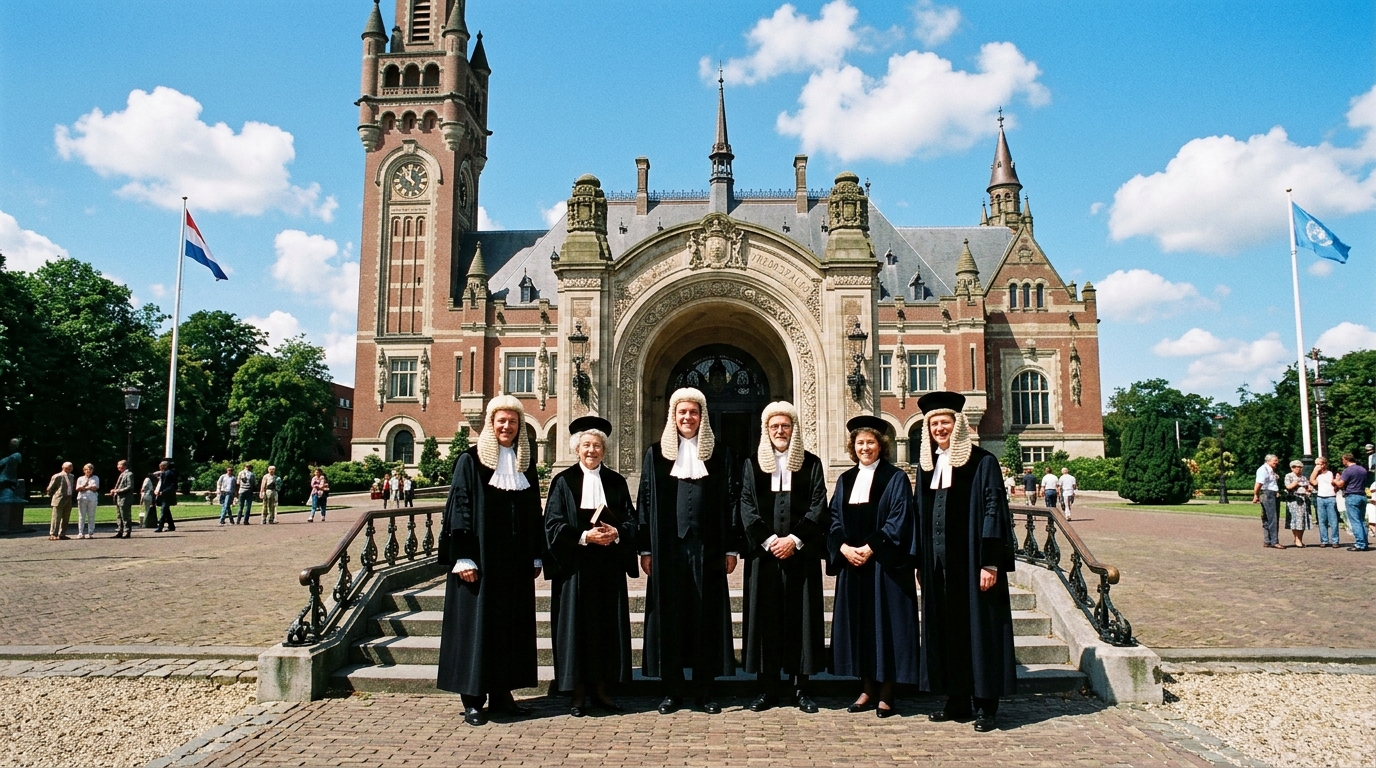
The Netherlands, by hosting the Court in The Hague, reinforced its status as the "legal capital of the world." This decision placed the Court physically and symbolically alongside other pivotal international judicial institutions, most notably the International Court of Justice (ICJ), bridging the gap between state-level international law and individual criminal accountability. The infrastructure, legal expertise, and international environment provided by The Hague were critical for the Court's operationalization.
Complementarity: A Cornerstone, A Challenge
One of the most crucial and often misunderstood principles underpinning the ICC's authority is complementarity. Far from being a supranational court designed to supersede national judicial systems, the ICC is explicitly designed as a court of last resort. This principle is enshrined in Article 17 of the Rome Statute and is fundamental to the Court's legitimacy and its relationship with sovereign states.
Definition and Purpose
Complementarity dictates that the ICC can only exercise its jurisdiction when national legal systems are genuinely "unwilling or unable" to investigate or prosecute the core international crimes within its mandate (genocide, crimes against humanity, war crimes). The primary responsibility for prosecuting these crimes thus rests with the states themselves. The ICC steps in only when national avenues for justice are demonstrably failing.
The purpose of complementarity is multi-faceted:
- Respect for Sovereignty: It acknowledges and respects the primary sovereign right and responsibility of states to exercise criminal jurisdiction over their own citizens and within their own territories.
- Efficiency and Subsidiarity: It prevents the ICC from being overwhelmed by cases and encourages states to strengthen their own domestic legal systems to address international crimes.
- Local Ownership of Justice: It promotes the idea that justice is best served closer to the victims and communities affected by the crimes, fostering local reconciliation and accountability mechanisms where possible.
The "Unwilling or Unable" Test
The Rome Statute provides specific criteria for determining whether a state is genuinely "unwilling or unable" to prosecute. This involves a rigorous assessment by the ICC Prosecutor and, ultimately, the Pre-Trial Chambers.
- Unwillingness: A state might be deemed unwilling if:
- Inability: A state might be deemed unable if:
Practical Implications and Challenges
The principle of complementarity profoundly influences the ICC's operational strategy. The Prosecutor must undertake preliminary examinations to determine if a case is admissible under this principle before proceeding to a full investigation. This often involves extensive communication with national authorities and an assessment of their judicial capacity and will.
However, complementarity also presents significant challenges:
- Politicization: The determination of "unwillingness" can be highly politically charged, leading to accusations of bias or interference.
- Capacity Gaps: Many states, particularly those emerging from conflict, genuinely lack the resources, expertise, or secure environment to conduct complex investigations and prosecutions of international crimes.
- "Sham" Investigations: There is a risk that national governments might initiate superficial or inadequate investigations merely to preempt ICC intervention, a tactic that the Court must carefully scrutinize.
Despite these challenges, complementarity remains a vital safeguard, reinforcing the idea that the ICC is not a replacement for national justice but a necessary backstop when national systems falter in their fundamental duty to uphold justice for the gravest international crimes.
Analysis of Key Actors and Decisive Actions
The interplay between institutional actors during this pivotal period revealed the profound limitations of global consensus but also the power of concerted diplomatic action.
- Kofi Annan: As the then UN Secretary-General, Annan's advocacy was absolutely pivotal. He viewed the ICC not merely as a legal instrument but as a moral imperative, arguing that a world of impunity is a world of perpetual conflict. His personal experiences, particularly with the Rwandan genocide during his tenure as head of UN peacekeeping, instilled in him a deep conviction that a standing court was essential to prevent future atrocities. He actively used his diplomatic platform to rally support among member states, emphasizing the ICC as the "missing link" in the international legal order and connecting its establishment directly to the emerging concept of the Responsibility to Protect (R2P), which posits that states have a responsibility to intervene to prevent mass atrocities when national governments fail to do so. Annan maintained a delicate diplomatic bridge between the Court's enthusiastic supporters and its powerful detractors, notably the United States.
- The "Like-Minded Group": This informal but highly effective coalition of middle-power states, including Canada, Australia, New Zealand, the Netherlands, Germany, the Nordic countries, and several Latin American nations, provided the essential diplomatic momentum and strategic leadership to ensure the Rome Statute reached the required number of ratifications quickly. These states championed the principles of multilateralism, human rights, and the rule of law. They played a crucial role in drafting key provisions of the Statute, lobbying other nations, and coordinating ratification efforts. Their unity and persistent efforts were instrumental in navigating the complex political landscape and overcoming the skepticism of more powerful states.
- The US Executive Branch (Clinton vs. Bush Administrations): The transition from the Clinton to the Bush administration represented a sharp and decisive pivot in US policy towards the ICC.
Early Operations, Initial Cases, and Emerging Criticisms
With the Rome Statute entering into force and the ICC becoming fully operational in 2003, the Court quickly moved from institutional setup to active engagement with cases of mass atrocity. The early years were crucial for establishing its credibility, defining its operational procedures, and facing its first tests and criticisms.
Establishment and First Steps
The swearing-in of the first bench of 18 judges and the election of the first Chief Prosecutor, Luis Moreno Ocampo of Argentina, were foundational steps. The Court's Registry, responsible for administration and support, was also established, and crucial operational procedures, informed by the experiences of the ICTY and ICTR, were formalized. Building an entirely new international institution from the ground up, complete with investigative capabilities, victim support mechanisms, and witness protection programs, was a formidable undertaking.
First Investigations and Referrals
The ICC's initial investigations predominantly stemmed from referrals by member states themselves or by the UN Security Council.
- Democratic Republic of Congo (DRC, 2004): The DRC government became the first to refer a situation to the ICC, leading to investigations into widespread war crimes and crimes against humanity in the Ituri region. This resulted in the first conviction by the ICC, of Thomas Lubanga Dyilo, for using child soldiers.
- Uganda (2004): The Ugandan government referred the situation involving the Lord's Resistance Army (LRA) and its leader Joseph Kony, leading to the ICC's first arrest warrants.
- Central African Republic (CAR, 2005): The CAR government referred its own situation, prompting investigations into crimes committed during the 2002-2003 conflict.
- Sudan/Darfur (2005): In a landmark move, the UN Security Council, despite the non-membership of key permanent members like the US and China, referred the situation in Darfur to the ICC. This led to an indictment against Sudan's sitting President, Omar al-Bashir, for genocide, war crimes, and crimes against humanity—the first time the Court had issued an arrest warrant for a sitting head of state.
- Kenya (2010): The Prosecutor initiated investigations proprio motu (on his own initiative) into post-election violence in Kenya, a move that would later become a significant point of contention.
The "Africa Focus" Controversy
As the vast majority of the ICC's initial investigations and cases focused on situations within African countries, a significant criticism emerged: the perception of an "Africa focus" or "bias." African leaders and some scholars argued that the Court disproportionately targeted African individuals, while powerful non-African states enjoyed impunity.
Counter-arguments from the ICC and its supporters highlighted several points:
- Self-Referrals: Many of the early cases (DRC, Uganda, CAR) were initiated by the African states themselves, seeking assistance from the ICC when their own justice systems were unable to cope.
- UNSC Referrals: The Darfur and Libya cases were referred by the UN Security Council, demonstrating broad international concern.
- African Victims: The focus on African conflicts was, in part, a response to the profound suffering of African victims who had nowhere else to turn for justice.
- Principle of Complementarity: The reality that many African states lacked the robust judicial infrastructure or political will to prosecute these complex crimes meant that the "unwilling or unable" test was frequently met.
Nevertheless, the "Africa focus" led to strained relations between the Court and the African Union, with some African states threatening to withdraw from the Rome Statute, underscoring the delicate balance the ICC had to strike between universal justice and geopolitical realities.
Challenges of Enforcement and Jurisdiction
From its inception, the ICC has faced formidable challenges in enforcing its authority. Lacking its own police force, the Court is entirely reliant on the cooperation of member states for arrests, evidence collection, and witness protection. This dependency means that individuals indicted by the ICC, particularly sitting heads of state like Omar al-Bashir, can often evade justice if states are unwilling to apprehend them. Furthermore, the Court's jurisdiction over nationals of non-member states (such as the US) when crimes occur on the territory of a member state, or when referred by the UN Security Council, remains a contentious legal and political issue, continually fueling debates about its legitimacy and universal reach.
Trivia and Lesser-Known Facts
- The "Unsigning": The United States' act of "unsigning" the treaty in 2002 was a rare diplomatic maneuver. While typically a state must merely refrain from acting in a way that would defeat the "object and purpose" of a treaty it has signed but not ratified, unsigning explicitly signals that the state intends to have no further legal obligation, even of this limited nature.
- Funding Models: Unlike the UN, which is funded through assessed contributions from all member states, the ICC is not primarily funded through the UN budget. Instead, it relies on assessed contributions from its member states, creating a unique financial dependency on the coalition of the willing and potentially influencing its operational capacity.
- The Seat of the Court: While the ICC is based in The Hague, it has the authority under the Rome Statute (Article 3, para. 3) to sit elsewhere if it is deemed in the interest of justice or practicality. This provision allows it to maintain a presence closer to the scenes of the crimes it investigates, though it has not frequently been invoked for trials.
- The Precedent of the ICTY: The successes and limitations of the International Criminal Tribunal for the former Yugoslavia (ICTY) served as the primary blueprint for the ICC’s procedural rules, particularly regarding victim and witness protection programs, which are crucial for obtaining testimony in sensitive cases. Many early ICC staff members and judges had experience working at the ad hoc tribunals.
- The Crime of Aggression: While listed as one of the four core crimes in the Rome Statute, the definition and conditions for the exercise of jurisdiction over the crime of aggression were only finalized at the Kampala Review Conference in 2010 and activated in 2018. This long delay reflected the initial Cold War-era challenges in defining the crime, which had paralyzed earlier efforts to create an international criminal court.
- Victim Participation: The ICC introduced an innovative provision allowing victims not just to testify as witnesses but to participate directly in proceedings, separate from the prosecution, to present their views and concerns. This revolutionary approach gives victims a more active role than in most national and international criminal justice systems.
References and Literature
- The Rome Statute of the International Criminal Court - The foundational legal document outlining the jurisdiction, principles, and structure of the ICC.
- Bassiouni, M. Cherif. The Legislative History of the International Criminal Court: Introduction, Analysis, and Integrated Text. Transnational Publishers, 2005. - A comprehensive analysis of the negotiating process that led to the Rome Statute.
- Schabas, William A. An Introduction to the International Criminal Court. 5th ed. Cambridge University Press, 2017. - A leading academic text providing detailed legal and historical context for the ICC.
- Human Rights Watch: The US and the ICC - Detailed analysis and advocacy regarding the diplomatic friction between the United States and the international legal community during the early 2000s and beyond.
- Annan, Kofi A. Interventions: A Life in War and Peace. Penguin Press, 2012. - A memoir providing personal insight into the Secretary-General's efforts to secure international support for the ICC and other global justice initiatives.
- The American Society of International Law - A reputable source for academic commentary and analysis on the legal implications of the American Service-Members' Protection Act and US policy toward the ICC.
- Cryer, Robert, et al. An Introduction to International Criminal Law and Procedure. 4th ed. Cambridge University Press, 2019. - Provides context on the evolution of international criminal law and the role of the ICC within it.
- International Criminal Court Official Website: https://www.icc-cpi.int/ - Provides up-to-date information on current cases, investigations, and the Court's operational activities.
Footnotes & Explanations
- The Rome Statute was opened for signature on July 17, 1998, following the Diplomatic Conference in Rome. ↩
- "Active non-cooperation" refers to the US policy of refusing to provide assistance to the Court while actively discouraging other states from supporting it, coupled with domestic legislation and bilateral agreements to shield its personnel. ↩
- The threshold of 60 ratifications was reached on April 11, 2002, with a mass deposit of 10 ratifications simultaneously, primarily by states from the "Like-Minded Group." ↩
- The American Service-Members' Protection Act of 2002, signed into law by President George W. Bush, was designed to protect US military personnel and elected officials from the jurisdiction of the ICC. ↩
- Article 98 of the Rome Statute allows for agreements between states that would prevent the surrender of nationals of non-member states to the ICC without the consent of their home state, which the US heavily leveraged to negotiate BIAs. ↩
- The principle of complementarity is enshrined in Articles 1 and 17 of the Rome Statute, clearly positioning the ICC as a court of last resort. ↩
- The "Africa focus" critique gained significant traction, particularly after the African Union passed resolutions urging its member states not to cooperate with the ICC in cases involving sitting heads of state. ↩