Key Takeaways
- The fall of Mosul in June 2014 marked a paradigm shift in asymmetric warfare, turning a regional insurgency into a quasi-state entity with global aspirations and capabilities.
- The proclamation of a caliphate by Abu Bakr al-Baghdadi successfully radicalized and mobilized a global audience, moving beyond al-Qaeda's decentralized model to demand direct allegiance and territorial migration.
- The swift, brutal expansion of ISIS exposed profound governance failures within the post-2003 Iraqi state, particularly the sectarian policies of the Nouri al-Maliki government and the systemic collapse of the Iraqi Security Forces.
- The US-led international intervention, Operation Inherent Resolve, demonstrated the complex interplay between immediate counter-terrorism objectives, humanitarian imperatives, and the inherent instability of the Middle East, necessitating a "light footprint" approach.
- ISIS's sophisticated use of propaganda, its robust financial apparatus, and its strategic blend of jihadi ideology with Ba'athist military tactics posed an unprecedented challenge to global security and international norms.
Historical Context and Origins
The ascent of the Islamic State of Iraq and al-Sham (ISIS), also known as Daesh, was not a spontaneous occurrence but rather the violent culmination of nearly a decade of regional destabilization, profound sectarian division, and a series of strategic miscalculations following the 2003 US-led invasion of Iraq. To truly grasp the seismic events of 2014, one must look back to the foundational decisions and power vacuums that defined post-Saddam Hussein Iraq.
The Coalition Provisional Authority (CPA), led by Paul Bremer, implemented two pivotal orders in May 2003 that fundamentally reshaped Iraqi society and inadvertently laid the groundwork for future insurgencies. CPA Order 1: De-Ba'athification of Iraqi Society purged tens of thousands of Ba'ath Party members from public life, including state institutions, universities, and schools. While intended to dismantle Saddam's apparatus, it alienated a significant portion of the Sunni Arab elite and middle class, many of whom had joined the party out of necessity rather than ideological conviction. Crucially, CPA Order 2: Dissolution of Iraqi Entities disbanded the entire Iraqi army, security services, and intelligence agencies, immediately rendering approximately 400,000 largely Sunni, well-trained, and armed soldiers jobless and resentful. These disenfranchised military personnel, possessing vital tactical and operational skills, later formed a critical reservoir of experienced fighters and commanders for various insurgent groups, including those that would eventually coalesce into ISIS.
Into this crucible of resentment and chaos stepped Abu Musab al-Zarqawi, a Jordanian jihadist who had pledged allegiance to Osama bin Laden. His group, Jama'at al-Tawhid wal-Jihad (Monotheism and Jihad), rapidly became al-Qaeda in Iraq (AQI) in 2004. Zarqawi’s strategy was brutally explicit: to ignite a sectarian civil war between Iraq's Sunni and Shia populations, believing this would hasten the arrival of an Islamic caliphate. His group's indiscriminate bombings of Shia mosques, pilgrim sites, and civilian markets, along with the beheading of Western hostages, marked a new level of savagery in the Iraqi insurgency. This period saw the Shia majority, emboldened by their newfound political power, increasingly alienated from the Sunni minority, whose grievances, initially legitimate against the occupation, were now increasingly conflated with the extremist violence of groups like AQI.
Following Zarqawi’s death in a US airstrike in June 2006, AQI struggled amidst the "Anbar Awakening," a tribal revolt against its extremism, and the subsequent US surge. The group rebranded itself multiple times, eventually becoming the Islamic State of Iraq (ISI) in October 2006. Under the leadership of Abu Omar al-Baghdadi, ISI survived underground, adapting its tactics and maintaining a network of loyalists despite significant setbacks. When Abu Omar was killed in 2010, Abu Bakr al-Baghdadi (born Ibrahim Awad Ibrahim al-Badri al-Samarrai) ascended to leadership. An enigmatic figure with a reported PhD in Islamic studies from Baghdad University and a history of imprisonment in Camp Bucca, Baghdadi brought a new level of strategic acumen and ruthless ambition to the organization.
The transformative catalyst for ISI's resurgence was the Syrian Civil War, which erupted in 2011. As Bashar al-Assad's regime fought for survival against a fragmented opposition, Baghdadi shrewdly leveraged the chaos, sending operatives to Syria to establish Jabhat al-Nusra (the Nusra Front) as an al-Qaeda affiliate. However, Baghdadi soon sought to merge Nusra with ISI to form the Islamic State of Iraq and al-Sham (ISIS), a move that al-Qaeda central leader Ayman al-Zawahiri explicitly rejected. This defiance marked a crucial ideological and strategic schism within the global jihadi movement, with Baghdadi declaring independence from al-Qaeda and asserting his group's dominance. By exploiting the porous frontier between Syria and Iraq, ISIS transformed from a struggling insurgency into a sophisticated transnational actor, seizing territory, oil fields, and key infrastructure in eastern Syria (most notably Raqqa, which became its de facto capital), thereby establishing a logistical and financial hub that fueled its expansion back into Iraq.
The Iraqi State's Collapse: A Deeper Look
The stunning ease with which ISIS swept through northern and western Iraq in 2014 was not merely a testament to the group's strength but a stark indictment of the profound systemic failures, deep-seated corruption, and entrenched sectarianism that had plagued the Iraqi state since its post-2003 reconstruction. The government of Prime Minister Nouri al-Maliki, in power since 2006, played a particularly significant role in creating the conditions ripe for ISIS's resurgence.
Maliki, a Shia Islamist, increasingly pursued exclusionary and authoritarian policies that systematically alienated Iraq's Sunni Arab minority. His government initiated widespread arrests of Sunni political figures and protesters, disbanded Sunni tribal militias (the "Sons of Iraq" or "Sahwa") who had previously helped the US defeat al-Qaeda, and used counter-terrorism laws to target political opponents. These actions fueled deep-seated resentment and a sense of marginalization among Sunnis, many of whom had felt disenfranchised since the "de-Ba'athification" process. When peaceful Sunni protest camps, which had emerged in provinces like Anbar and Nineveh in 2012-2013, were violently dispersed by government forces, it sent a clear message: Baghdad was not interested in reconciliation or shared governance. This created a fertile recruitment ground for ISIS, allowing the group to position itself not as a foreign entity, but as a defender of Sunni rights against a perceived Shia-dominated oppressive regime.
The Iraqi Security Forces (ISF), meticulously built and funded by the United States after 2003, proved catastrophically unprepared for the ISIS onslaught. Years of political meddling, corruption, and sectarian purges had hollowed out the military's effectiveness. Senior officer positions were often filled based on political loyalty rather than merit, leading to rampant incompetence. The infamous phenomenon of "ghost soldiers"—non-existent personnel whose salaries were siphoned off by corrupt commanders—further depleted the forces' actual strength and morale. Moreover, the ISF lacked effective leadership, cohesion, and a unified command structure. Soldiers, many of whom were Shia, felt little loyalty to Sunni-majority areas they were deployed to protect, and commanders frequently abandoned their posts when faced with serious resistance.
When ISIS launched its offensive into Iraq in early 2014, capturing Fallujah in January, it was a clear warning. Yet, Baghdad's response was insufficient, characterized by denial and a desperate attempt to portray the group as a minor criminal element rather than a formidable military threat. The psychological warfare waged by ISIS, including its brutal executions and propaganda videos, further demoralized an already fragile ISF. The collapse of entire divisions in Mosul, a city of over two million people, in June 2014, often involving minimal resistance and the abandonment of vast quantities of advanced US-supplied military equipment, was the ultimate manifestation of these deep-rooted systemic failures. The Iraqi state, internally fractured and externally challenged, was teetering on the brink of collapse, necessitating an urgent and unprecedented international intervention.
Timeline of Events and Key Moments (2014)
The year 2014 remains the most critical juncture in the organization's history, as it moved from shadow warfare to open conquest, culminating in the declaration of a state-like entity.
| Date | Event | Significance |
|---|---|---|
| January 2014 | Fall of Fallujah and parts of Ramadi | This marked an early and ominous signal of ISIS’s resurgence and its ability to seize and hold major Iraqi urban centers, particularly in the Sunni-majority Anbar province, where anti-government sentiment was high. It demonstrated the ISF's inability to effectively counter the group and was a direct result of the Maliki government's crackdown on Sunni protest camps. |
| June 10, 2014 | The Fall of Mosul | Iraq's second-largest city, a crucial economic and strategic hub, collapsed within days to a force of perhaps 1,500 ISIS fighters, despite being defended by an Iraqi army corps of over 30,000 soldiers. This signaled the total failure and dissolution of the Iraqi Security Forces (ISF) in the face of ISIS's combined psychological warfare and tactical prowess, providing the group with immense financial resources, military hardware, and a vast population to govern. |
| June 29, 2014 | Proclamation of the Caliphate | On the first day of Ramadan, Abu Bakr al-Baghdadi declared the establishment of a global caliphate, renaming the group 'the Islamic State' (ad-Dawlah al-Islamiyah) and abolishing the border between Iraq and Syria. This move shattered historical precedent, claiming universal authority over Muslims worldwide and initiating a new, revolutionary phase in jihadi ambitions: the immediate establishment of a state governed by strict Salafi-jihadi interpretations of Sharia law. |
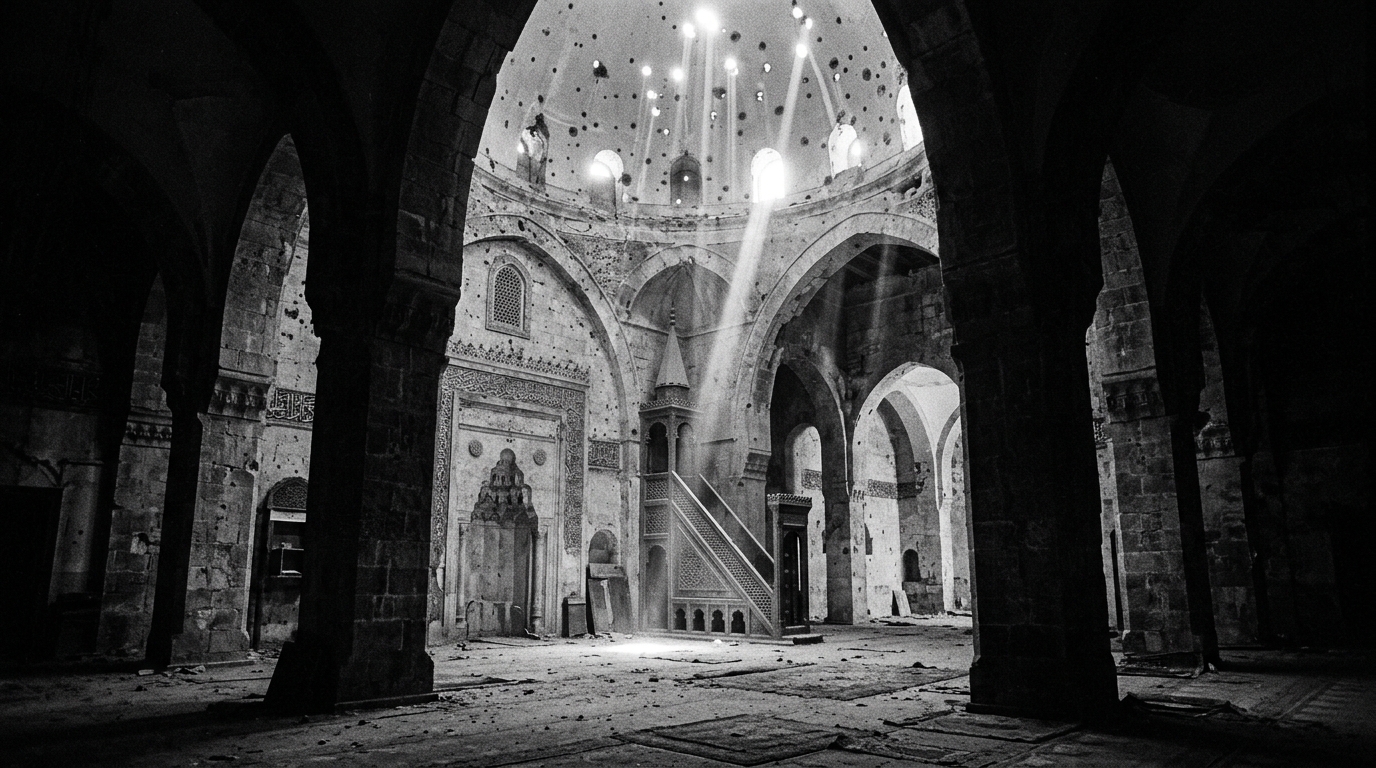
| July 4, 2014 | Al-Nuri Mosque Sermon | Baghdadi made his first and only widely publicized public appearance as Caliph, delivering a sermon from the pulpit of Mosul’s Great Mosque of al-Nuri. Dressed in black clerical robes, he demanded global loyalty (bay'ah) from all Muslims, presenting himself as the rightful leader of the entire Islamic world. This calculated performance served to legitimize his claim of authority and rally supporters globally, providing a visible figurehead for the newly proclaimed state. |
| August 2014 | Yazidi Genocide (Sinjar) and Christian Exodus | ISIS launched a brutal campaign against religious minorities in northern Iraq, most notably the Yazidis in the Sinjar region. Tens of thousands of Yazidis were massacred, kidnapped, or besieged on Mount Sinjar, while women and girls were enslaved. Simultaneously, large numbers of Christians fled their ancestral homes. This brought international humanitarian horror to the forefront and became a crucial catalyst, prompting the United States to commence targeted airstrikes against ISIS positions in Iraq on August 8, marking the beginning of direct Western military intervention. |
| September 2014 | Formation of CJTF-OIR | Following the dire humanitarian situation and the direct threat posed by ISIS, President Obama announced the formation of a broad international coalition. The formal establishment of the Combined Joint Task Force – Operation Inherent Resolve (CJTF-OIR) in September brought together over 70 nations, marking a global commitment to degrade and ultimately defeat Daesh through a comprehensive strategy involving air power, training and equipping local forces, and counter-financing efforts. This signaled a major realignment of international security priorities. |
The Global Jihadi Landscape: Ideological Schism and Competition
The rise of ISIS in 2014 was not merely a military phenomenon but also represented a profound ideological schism and a fierce competition for leadership within the broader global Salafi-jihadi movement, fundamentally challenging the long-established authority of al-Qaeda. This divergence was crucial in shaping the subsequent trajectory of both organizations and their global appeal.
Al-Qaeda, under the leadership of Osama bin Laden and later Ayman al-Zawahiri, primarily advocated for a strategy of "global jihad" focused on attacking the "far enemy" (the United States and its Western allies) to provoke a decisive confrontation and undermine their global influence. Its model was largely decentralized, relying on affiliated groups and individual cells to carry out attacks. While al-Qaeda aspired to a caliphate, it viewed it as a long-term, eventual goal that would emerge after the 'Crusader-Zionist' enemies were weakened and regional 'apostate' regimes destabilized. It maintained a more cautious approach to declaring an Islamic state, recognizing the immense logistical and governance challenges involved.
ISIS, by contrast, under Abu Bakr al-Baghdadi, prioritized the immediate and absolute establishment of a territorial caliphate – the "near enemy" strategy within a defined geographic space. Baghdadi’s declaration of the Caliphate on June 29, 2014, was a direct and audacious challenge to al-Qaeda's patient, incremental approach. He argued that the conditions for a caliphate were ripe and that it was an immediate religious obligation for all Muslims to pledge allegiance (bay'ah) to him as Caliph and, ideally, to migrate (hijra) to the newly proclaimed 'Islamic State'. This was a revolutionary concept within the modern jihadi movement, offering a tangible, physical entity for adherents to rally around and contribute to, rather than just an abstract, aspirational goal.
The ideological rift between al-Qaeda and ISIS stemmed from several key differences:
- Legitimacy and Authority: Baghdadi explicitly claimed universal authority as Caliph, requiring allegiance from all Muslims, a claim Zawahiri and al-Qaeda rejected as premature and unwarranted. Zawahiri viewed Baghdadi as a rebellious subordinate who had violated orders by expanding into Syria without permission and by unilaterally declaring a caliphate.
- Targeting and Brutality: ISIS's ideology was notably more extreme and indiscriminate in its violence. While al-Qaeda engaged in mass casualty attacks, ISIS's public beheadings, mass executions of prisoners, enslavement of Yazidi women, and systematic destruction of cultural heritage were designed to terrorize and purify territory. It viewed Shia Muslims as apostates deserving of death, a stance al-Qaeda, while sectarian, did not explicitly or universally endorse to the same degree. This unbridled brutality initially attracted many hardliners but also alienated some within the broader jihadi movement.
- State-Building vs. Insurgency: ISIS’s immediate focus on governing territory, establishing administrative structures, collecting taxes, and providing (or at least claiming to provide) services differentiated it sharply from al-Qaeda's primary focus on insurgency and external attacks. This state-building ambition, though short-lived, gave it a unique appeal to those who sought to live under a strict Islamic legal system and escape the perceived corruption of existing Muslim states.
- Propaganda and Recruitment: ISIS’s propaganda machine was far more sophisticated and prolific than al-Qaeda’s, utilizing social media, slick video productions, and online magazines (like Dabiq and Rumiyah) to disseminate its message globally. It effectively capitalized on a sense of grievance, adventure, and religious fervor, drawing thousands of foreign fighters from over 80 countries, an unprecedented phenomenon.
This ideological schism led to direct military clashes between ISIS and al-Qaeda-affiliated groups (like Jabhat al-Nusra/HTS in Syria), further fragmenting the jihadi landscape. While al-Qaeda largely maintained its clandestine network, ISIS's audacious declaration and territorial control forced other jihadi groups worldwide to choose sides, leading to various pledges of allegiance to Baghdadi and the establishment of "provinces" (wilayat) of the Islamic State in places like Libya, Afghanistan, West Africa, and the Sinai Peninsula. The competition ultimately weakened the global jihadi movement by fostering internal divisions but also intensified the threat by creating a more brutal and territorially ambitious strain of extremism.
Geopolitical Consequences and Aftermath
The proclamation of the caliphate by ISIS in 2014 forced a radical and immediate realignment of Middle Eastern geopolitics, sending shockwaves across the globe. The sudden territorial success of ISIS, encompassing vast swathes of Iraq and Syria, threatened the very survival of the Iraqi state and further destabilized the already fractured Syrian regime.
For the United States, under the presidency of Barack Obama, the crisis presented a profound geopolitical dilemma. Having withdrawn US troops from Iraq in 2011, Obama had explicitly campaigned on ending costly military engagements in the Middle East and pivoting US strategic focus towards Asia. The re-emergence of a potent jihadi threat on such a scale compelled a reluctant re-engagement. The challenge was how to confront ISIS effectively without reverting to the large-scale, open-ended troop commitments that defined the previous decade, which were unpopular domestically and deemed unsustainable.
The resulting strategy—a "light footprint" model—relied heavily on the synergy between the Global Coalition's overwhelming air power and local proxy forces. This approach, codified under Operation Inherent Resolve (OIR), involved:
- Sustained Airstrikes: A massive air campaign by the US and its allies targeted ISIS leadership, infrastructure, oil facilities, and fighting positions, significantly degrading their military capabilities.
- Training and Equipping Local Forces: Extensive efforts were undertaken to rebuild and train the Iraqi Security Forces (ISF), including the elite Counter Terrorism Service (CTS) and the Kurdish Peshmerga. This also extended to certain vetted Syrian opposition groups.
- Counter-Financing and Counter-Propaganda: Initiatives aimed at disrupting ISIS's illicit revenue streams (oil sales, extortion, looting) and countering its sophisticated online propaganda narrative.
- Humanitarian Assistance: Providing aid to millions displaced by the conflict and those suffering under ISIS rule.
This strategy eventually eroded the caliphate's territorial base, but the social, psychological, and physical scarring of the region remains profound. The displacement of millions of Iraqis and Syrians, creating one of the largest refugee crises in modern history, continues to strain host nations and international aid agencies. The systematic destruction of ancient cultural heritage sites by ISIS, such as Palmyra, Nimrud, and Hatra, represents an irreplaceable loss for humanity, a deliberate act of cultural genocide. The iconic al-Nuri Mosque in Mosul, from which Baghdadi declared his caliphate, was itself destroyed by ISIS forces during the battle for the city, a tragic symbol of the conflict's devastation.
Regional Actors and their Responses:
- Iran: Saw ISIS as an existential threat to its Shia allies in Baghdad and Damascus. Tehran significantly increased its military support to Iraq's Popular Mobilization Forces (PMF) and the Assad regime in Syria, deploying Quds Force commander Qasem Soleimani to direct operations, thereby expanding its influence across the region.
- Turkey: Initially cautious, due to its complex relationship with Syrian Kurdish groups (which it viewed as linked to the PKK), Ankara eventually joined the coalition. However, its primary focus remained on preventing Kurdish territorial gains in northern Syria, which sometimes conflicted with the broader anti-ISIS effort.
- Saudi Arabia and Gulf States: Viewed ISIS as a destabilizing force and a rival for Sunni leadership, while also being concerned about Iranian expansion. They provided financial and, to varying degrees, military support to the coalition, though their roles were often complicated by their own regional rivalries and internal concerns about radicalization.
- Europe: Faced an unprecedented wave of foreign fighters joining ISIS and a surge in refugee flows, leading to significant domestic security challenges and political upheaval. The specter of ISIS-inspired terror attacks within European capitals became a grim reality.
The legacy of ISIS's rise and fall continues to ripple through the Middle East. It exacerbated existing sectarian divisions, empowered non-state actors, and redefined the nature of modern terrorism. The deep instability left in its wake demands ongoing international vigilance and a long-term commitment to political stability, economic reconstruction, and social reconciliation, without which the conditions for the resurgence of similar extremist groups will persist.
Analysis of Key Actors and Decisive Actions
The dramatic events of 2014 were shaped by the interplay of charismatic leadership, strategic decision-making, and critical failures on multiple fronts.
Abu Bakr al-Baghdadi: The Architect of Fear and False Caliphate
Baghdadi’s leadership was foundational to ISIS’s unprecedented success. Unlike his al-Qaeda predecessors, his strategy was distinctly radical:
- Territorial Imperative: He prioritized the immediate administration and defense of a geographic state (
tamkin) over global, clandestine attacks. This focus on "territorial permanence" compelled followers to migrate to the 'Dar al-Islam' (Land of Islam) he had proclaimed, fostering a sense of belonging and a tangible, if brutal, project. - State-Building Aspiration: Under Baghdadi, ISIS established a centralized bureaucracy that taxed populations, policed territories, administered justice (through a harsh interpretation of Sharia), and even attempted to provide basic services. This pseudo-state attracted ideologues, administrators, and technocrats, creating an apparatus far more sophisticated than a typical terrorist cell.
- Theological Legitimacy: Baghdadi carefully crafted his image as a direct descendant of the Prophet Muhammad through the Quraysh tribe, a crucial qualification for a Caliph in Islamic tradition. His public sermon in Mosul, appearing as a traditional Caliph, was a calculated move to reinforce his religious authority and universal claim.
- Brutal Governance: His vision was underpinned by extreme violence, not just as a tactic of war but as an instrument of governance and ideological purity. Mass executions, enslavement, and destruction of non-Islamic heritage were central to his vision of establishing an unadulterated Islamic state.
The Obama Administration: The Doctrine of Containment and Limited Intervention
President Barack Obama’s response to the ISIS surge was characterized by a cautious, multilateral, and ultimately decisive approach, constrained by domestic political considerations and the lessons of the Iraq War.
- Reluctant Intervention: Initially hesitant to re-engage militarily in Iraq, Obama's hand was forced by two critical factors: the humanitarian catastrophe unfolding with the Yazidi genocide on Mount Sinjar, and the direct threat ISIS posed to the Erbil, the capital of Iraqi Kurdistan, which hosted US personnel.
- "No Boots on the Ground" Principle: A cornerstone of his strategy was to avoid large-scale deployment of US ground troops, seeking instead to empower local partners. This was a direct repudiation of the nation-building efforts that had characterized the Bush administration's approach to Iraq.
- Comprehensive Strategy: In his September 10, 2014, address to the nation, Obama explicitly defined the objective: "Our objective is clear: We will degrade, and ultimately destroy, ISIL through a comprehensive and sustained counterterrorism strategy." This emphasis on a "comprehensive strategy" included military action, counter-terrorism efforts, humanitarian aid, and diplomatic pressure.
- Multilateralism: The Obama administration actively built a broad Global Coalition to Defeat Daesh, comprising over 70 nations. This ensured that the effort was perceived as an international endeavor rather than a unilateral Western crusade, lending it greater legitimacy and burden-sharing, particularly from regional powers like Turkey, Jordan, Saudi Arabia, and the UAE.
- Strategic Constraints: Obama’s strategy was also complicated by the ongoing Syrian Civil War, where the US faced the dilemma of fighting ISIS while also seeking the overthrow of the Assad regime, which was indirectly strengthened by the anti-ISIS campaign. The lack of reliable and unified ground partners in Syria presented a persistent challenge.
Nouri al-Maliki: Architect of Division
While not a member of ISIS, former Iraqi Prime Minister Nouri al-Maliki played a crucial, albeit indirect, role in creating the conditions for its rise.
- Sectarian Politics: Maliki's governance was characterized by increasing sectarianism, marginalizing Sunnis and concentrating power within his Shia-dominated bloc. This fueled deep-seated grievances among Sunnis who felt excluded and persecuted by the central government.
- Authoritarian Tendencies: His crackdown on peaceful Sunni protests in 2013 and the targeting of Sunni political rivals intensified feelings of injustice and pushed many Sunnis towards radical alternatives, seeing ISIS as the only force willing to stand against Baghdad.
- Military Incompetence and Corruption: Maliki directly interfered with military appointments, promoting loyalists over competent commanders. This, combined with rampant corruption, hollowed out the ISF, leading to their catastrophic collapse in 2014 when faced with ISIS. His removal from office in August 2014, under significant international pressure, was a prerequisite for forming a more inclusive government and galvanizing international support against ISIS.
These key actors, through their decisions and actions, collectively shaped the trajectory of the ISIS crisis, leading to a period of unprecedented regional instability and global counter-terrorism efforts.
Trivia and Lesser-Known Facts
- The "Digital Caliphate" and Media Blitz: ISIS utilized social media, particularly Twitter, YouTube, and encrypted messaging apps, with unprecedented sophistication. Its propaganda wing produced thousands of high-quality videos, glossy magazines (e.g., Dabiq, Rumiyah), and audio messages designed to recruit foreign fighters, intimidate enemies, and promote its ideology. This "viral propaganda machine" appealed to a global audience, successfully drawing foreign fighters from over 80 countries, many of whom were radicalized online.
- The Financial Engine: Wealthiest Terror Group: At its territorial peak, ISIS was arguably the wealthiest terrorist group in history, generating millions in monthly revenue. This was achieved primarily through the control of lucrative oil fields (selling crude at discounted rates), sophisticated taxation and extortion schemes on populations and businesses under its control, kidnapping for ransom, and the illicit sale of looted historical artifacts from ancient sites like Palmyra and Nimrud, often trafficked through corrupt networks.
- The Mosul Currency Experiment: In a bold move intended to assert state-like sovereignty and economic independence, ISIS attempted to establish its own economic system. It announced the minting of gold dinar, silver dirham, and copper fulus coins to replace the Iraqi dinar and Syrian pound in areas under their control, though this was largely symbolic and rarely achieved widespread use.
- Internal Fissures and Ba'athist Influence: Despite its outward appearance of fanatical unity, the group was rife with internal intelligence rivalries between its Iraqi-led military council, heavily influenced by former Ba'athist intelligence and military officers (who provided crucial organizational and tactical expertise), and its more ideologically driven international foreign fighter contingents. This internal tension, often over theological purity versus pragmatic military strategy, was a weakness that was eventually exploited by coalition intelligence.
- "Breaking the Walls": Prison Breaks and Resurgence: A lesser-known but critical factor in ISIS's resurgence was its "Breaking the Walls" campaign in 2012-2013. This systematic series of prison breaks targeted major Iraqi prisons, freeing hundreds of hardened jihadists, including many senior commanders and experienced fighters who had been imprisoned during the Anbar Awakening and US surge periods. These veterans provided a crucial boost in manpower, leadership, and operational experience to the then-struggling Islamic State of Iraq, laying the groundwork for its 2014 offensive.
- Apocalyptic Theology: ISIS’s ideology was deeply rooted in an apocalyptic interpretation of Islamic prophecies, particularly those concerning the "end times." They believed in a final, decisive battle between Muslims and the "Rome" (Western powers) in Dabiq, Syria, after which the Caliphate would expand globally. This eschatological narrative fueled their uncompromising brutality and willingness for self-sacrifice.
References and Literature
- The ISIS Reader: Milestone Texts of the Jihadist Movement by Haroro J. Ingram, Craig Whiteside, and Charlie Winter (Hurst Publishers, 2020) - An essential collection of primary documents, speeches, and writings providing unparalleled insight into the ideological foundations, strategic thinking, and historical evolution of the organization, indispensable for understanding its internal logic.
- Black Flags: The Rise of ISIS by Joby Warrick (Doubleday, 2015) - A Pulitzer Prize-winning narrative that meticulously traces the lineage of ISIS from Abu Musab al-Zarqawi through the Syrian Civil War, offering compelling insights into the key figures and crucial turning points that led to its explosive growth.
- The ISIS Apocalypse: The History, Strategy, and Doomsday Vision of the Islamic State by William McCants (St. Martin's Press, 2015) - Provides a deep dive into the apocalyptic theology and historical narrative that underpins ISIS's ideology, explaining how these beliefs motivate its extreme violence and territorial ambitions.
- Foreign Affairs: The Rise and Fall of the Islamic State (Various Authors) - The archives of Foreign Affairs magazine contain numerous authoritative articles and analyses by leading scholars and policymakers offering a detailed, evolving understanding of the strategic errors and tactical adaptations of both the international coalition and the Caliphate during the 2014-2017 period.
- National Archives: Operation Inherent Resolve Archive (defense.gov) - Official documentation, press releases, and reports from the US Department of Defense and the Global Coalition to Defeat Daesh, providing granular details of the US-led coalition's operations, mission objectives, and progress in Iraq and Syria.
- Countering the Islamic State by Daniel L. Byman and Charles Lister (Brookings Institution, 2015) - A comprehensive analysis of the sociological, political, and strategic drivers of the 2014 territorial surge, offering policy recommendations and examining the effectiveness of various counter-terrorism approaches.
- The Jihadi-Salafism: A Political Theology of the Islamic State by Cole Bunzel (Carnegie Endowment for International Peace, 2018) - Explores the distinctive features of ISIS’s Salafi-jihadi ideology, differentiating it from other Islamist movements and providing context for its extreme interpretation of Islamic texts.
Footnotes & Explanations
- Excerpt from President Barack Obama’s Address to the Nation on the Strategy to Degrade and Destroy ISIL, September 10, 2014. ↩