Key Takeaways
- The 2015 Russian intervention marked Moscow's first major power projection outside the former Soviet space since the collapse of the USSR, demonstrating a renewed global strategic reach.
- By stabilizing the Syrian Arab Army through crucial air support and advisory roles, Russia effectively prevented the total collapse of the Assad government at a critical tactical and political juncture.
- The intervention successfully forced a transition in regional dynamics, positioning Russia as a primary power broker in Middle Eastern security architecture and challenging the unipolar international order.
- The conflict became a testing ground for modernized Russian military doctrine and equipment, showcasing its capabilities in combined arms operations and precision strikes.
Historical Context and Origins
The Syrian Civil War, which erupted from the broader "Arab Spring" uprisings in March 2011, had by the summer of 2015 escalated into a multifaceted and brutal conflict, fundamentally threatening the survival of the government of President Bashar al-Assad. The initial wave of peaceful protests demanding political reforms was met with a harsh government crackdown, leading to armed rebellion. Over the years, this insurgency metastasized, involving a diverse array of opposition groups ranging from the Free Syrian Army (FSA) to powerful transnational jihadist organizations like Jabhat al-Nusra (later Hayat Tahrir al-Sham) and the self-proclaimed Islamic State of Iraq and Syria (ISIS). By mid-2015, the Syrian Arab Army (SAA) was severely degraded by attrition, suffering from significant desertions and a general state of exhaustion. The regime had lost control of major economic arteries, oil fields, and key cities, with the rebels threatening the coastal Alawite heartland and even Damascus itself.
For the Kremlin, the potential fall of Damascus represented not merely a local humanitarian catastrophe, but a geopolitical nightmare. Russia and Syria shared deep historical ties dating back to the Soviet era, with Syria serving as Moscow's staunchest Arab ally and host to its only Mediterranean naval facility at Tartus. Furthermore, the memory of the 2011 NATO-led intervention in Libya, which resulted in the overthrow and death of Muammar Gaddafi and plunged the country into chaos, loomed large in Moscow. President Vladimir Putin viewed such interventions as direct challenges to state sovereignty and dangerous precedents for externally-imposed regime change. From Moscow's perspective, the Syrian conflict was not just a civil war but a proxy battleground reflecting a broader struggle for influence in a multipolar world, one where the West sought to undermine sovereign states under the guise of humanitarian intervention.
By the summer of 2015, intelligence reports reaching Moscow painted a grim picture: Assad’s forces were on the verge of losing critical strongholds, including parts of Latakia province, the regime's traditional power base. The SAA was struggling to hold ground against coordinated assaults by various rebel factions, including those supported by Western and regional powers. Russia's intervention, therefore, was a calculated gamble—a decisive move to prevent the collapse of its ally and reassert its role as a major player on the international stage. By securing an official invitation from the Assad government, Moscow ensured the legality of its operations under international law, a stark contrast to the US-led coalition's operations against ISIS in Syria, which lacked a direct mandate from Damascus and were thus viewed by Russia as infringing on Syrian sovereignty. This legal framing was crucial for Russia's narrative, bolstering its image as a defender of national sovereignty against external interference.
Historical Precedents and Russia's Strategic Calculus
Russia's decision to intervene in Syria was not an isolated event but rather the culmination of a decade-long evolution in its foreign policy doctrine, marked by a growing assertiveness and a desire to challenge the unipolar world order dominated by the United States. Following the collapse of the Soviet Union, Russia experienced a period of perceived decline and strategic retreat. However, under Vladimir Putin, Moscow began to systematically rebuild its military capabilities and reassert its influence in its near abroad and beyond.
Key precedents informed Russia's calculus:
- Chechnya Wars (1994-1996, 1999-2009): These conflicts, fought within Russia's own borders, solidified Moscow's resolve against Islamist separatism and demonstrated its willingness to use overwhelming force to maintain territorial integrity. The experience also highlighted the importance of strong centralized control and the dangers of allowing foreign-backed insurgencies to take root.
- Georgia (2008): Russia's swift military intervention in Georgia demonstrated its capability to project power into a neighboring state and challenge NATO expansion. It also served as a warning to former Soviet republics contemplating closer ties with the West.
- Libya (2011): The NATO-led intervention in Libya, authorized by UN Security Council Resolution 1973, was viewed by Russia as a betrayal. Moscow abstained from the resolution, which authorized a no-fly zone to protect civilians, but later argued that NATO exceeded its mandate by pursuing regime change. This experience deeply ingrained in Putin's mind the imperative to prevent similar outcomes for allied regimes.
- Ukraine and Crimea (2014): The annexation of Crimea and support for separatists in eastern Ukraine demonstrated Russia's willingness to act decisively to protect its perceived national interests, even in the face of international condemnation and sanctions. It also highlighted Russia's hybrid warfare capabilities.
Against this backdrop, Syria presented a confluence of Russian strategic interests:
- Naval Access: The port of Tartus provided Russia with its only warm-water naval base outside the Black Sea, essential for power projection into the Mediterranean and beyond. Losing Tartus would severely diminish Russia's global naval reach.
- Anti-Terrorism: Russia framed its intervention as a vital component of the global fight against terrorism, particularly against ISIS and al-Nusra. Moscow expressed genuine concerns about the potential return of radicalized fighters, including those from the Caucasus and Central Asia, to Russian territory.
- Restoring Global Influence: By successfully intervening in Syria, Russia aimed to break out of perceived international isolation following the Ukraine crisis and demonstrate its indispensable role in resolving major international conflicts. It sought to prove that no significant Middle Eastern issue could be resolved without Moscow's involvement.
- Military Modernization Showcase: The Syrian theater offered a unique opportunity to test new weapons systems, integrate various military branches, and refine combat doctrines in a real-world, high-intensity environment, showcasing Russia's modernized military capabilities.
The intervention was thus a multi-faceted operation, designed to achieve both immediate tactical objectives—saving the Assad regime—and broader strategic goals—reasserting Russia's geopolitical standing and challenging the existing international order.
Timeline of Events and Key Moments
The rapidity and scale of the Russian military buildup in Syria caught many global intelligence agencies off guard. While initial reports spoke of increased Russian logistical support to Damascus, the true extent of the planned deployment only became evident in late August and early September 2015. Satellite imagery and open-source intelligence began to confirm the rapid expansion of the Bassel al-Assad International Airport near Latakia, swiftly being transformed into the Khmeimim Air Base, capable of hosting a significant contingent of combat aircraft and personnel.
| Date | Key Event | Description |
|---|---|---|
| August 2015 | Rapid construction of Khmeimim Air Base begins | Russia initiated a swift and clandestine buildup at Bassel al-Assad International Airport near Latakia, constructing housing units, a control tower, and expanding runways, transforming it into a full-fledged air base for combat operations. |
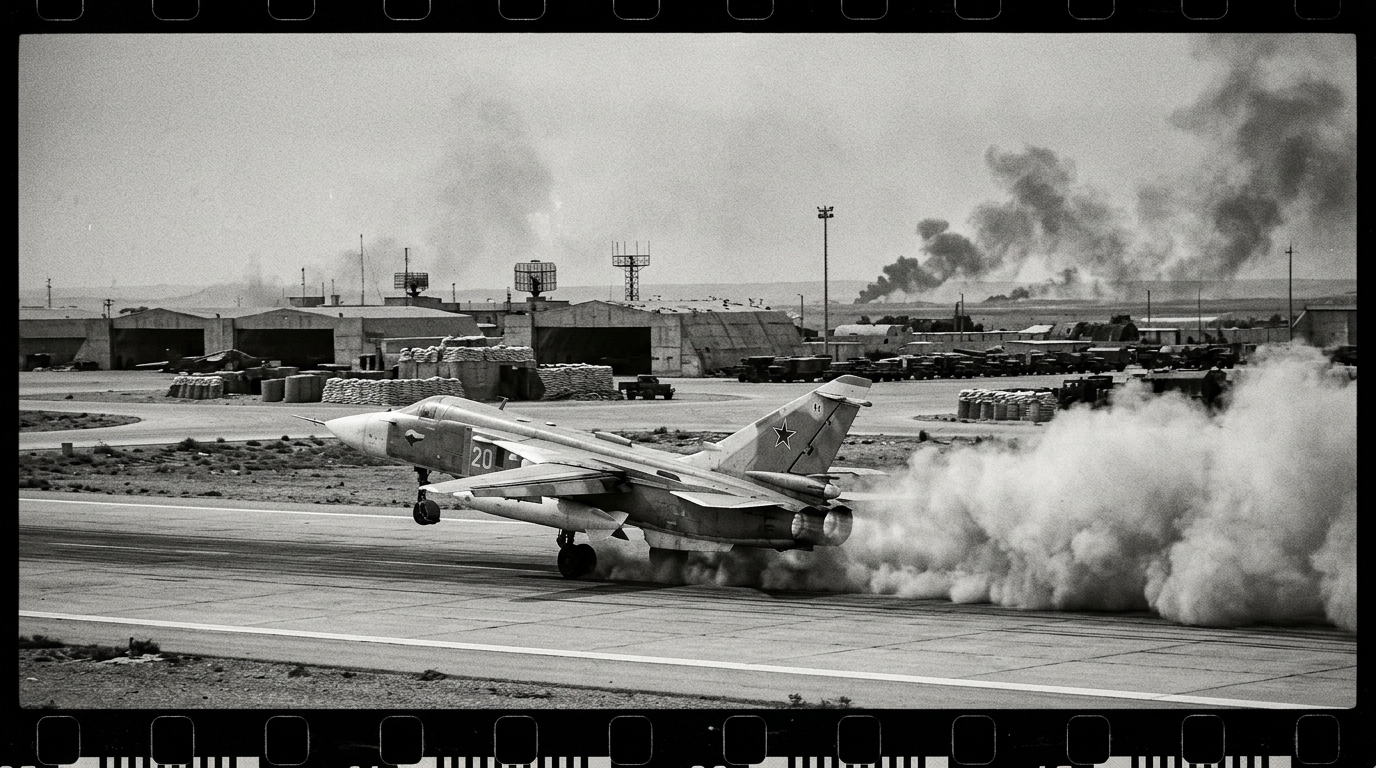
| September 2015 | Deployment of Russian combat aircraft and personnel | Su-24M, Su-25SM, Su-30SM, and later Su-34 and Su-35S aircraft, along with ground support, logistics, and special forces, began arriving at Khmeimim, signaling an imminent large-scale intervention. |
| September 30, 2015 | Federation Council approves military use abroad | The Russian Federation Council unanimously approved President Putin's request to use military force in Syria, citing the need to combat terrorism and protect Russia's national security interests at the request of the Syrian government. |
| October 1, 2015 | Initial Russian airstrikes commence | Russian Aerospace Forces launched their first airstrikes, primarily targeting rebel positions in Homs and Hama provinces, rather than exclusively ISIS, immediately clarifying Russia's primary objective: propping up the Assad regime. |
| October 7, 2015 | Kalibr cruise missile strikes from Caspian Sea | Russian warships of the Caspian Flotilla launched 26 Kalibr cruise missiles at targets in Syria, demonstrating a new long-range precision strike capability and global power projection. |
| November 24, 2015 | Turkish shootdown of Russian Su-24 | A Turkish F-16 fighter jet shot down a Russian Su-24M bomber near the Syrian-Turkish border, claiming it violated Turkish airspace. The incident led to a severe diplomatic crisis between Russia and Turkey, and Russia subsequently deployed S-400 air defense systems to Syria. |
| March 14, 2016 | Partial Russian troop withdrawal announced | President Putin announced a partial withdrawal of Russian forces, stating that the primary objectives had been achieved. While some assets remained, the announcement aimed to signal de-escalation and encourage a political settlement, even as the military campaign continued. |
| March 27, 2016 | First liberation of Palmyra from ISIS | Syrian forces, with heavy Russian air support and special forces assistance, recaptured the ancient city of Palmyra from ISIS, a significant symbolic and strategic victory against the jihadist group. |
| December 22, 2016 | Recapture of Aleppo by regime forces | After a brutal siege and intense urban warfare, Syrian government forces, backed by Russia and allied militias, fully recaptured Aleppo, marking the most significant military victory for the Assad regime and a major turning point in the war. |
| March 2, 2017 | Second liberation of Palmyra from ISIS | Following a renewed ISIS offensive that recaptured Palmyra, Syrian forces with robust Russian air and ground support liberated the city for the second time, solidifying the regime's control over central Syria. |
| December 11, 2017 | Putin announces 'significant' withdrawal | President Putin visited Khmeimim Air Base and announced a 'significant' withdrawal of Russian forces, declaring that ISIS had been largely defeated in Syria. This marked a transition to a more permanent, but smaller, long-term presence. |
The campaign was notable for its rapid deployment and the effective integration of air, sea, and ground assets. The primary aircraft utilized included Su-24M frontline bombers for precision ground attacks, Su-25SM close air support aircraft, and Su-30SM and Su-35S multirole fighters to maintain air superiority and provide escort. The deployment also saw the use of Tu-160 and Tu-95 strategic bombers launching long-range cruise missiles from Russian airspace, further showcasing Russia's standoff strike capabilities. A significant departure from previous Syrian Air Force tactics, the Russian campaign emphasized the use of "high-precision" guided munitions, including satellite-guided bombs and Kalibr cruise missiles, significantly enhancing the SAA's ability to target rebel command centers, logistics hubs, and fortified positions with greater accuracy and reduced collateral damage (though civilian casualties remained a major concern for human rights groups).
Geopolitical Consequences and Aftermath
The Russian intervention fundamentally altered the Middle East's geopolitical landscape, ushering in a new era of great power competition and regional realignment.
Firstly, it signaled the dramatic return of Russia as a decisive actor in the region, effectively sidelining the diplomatic leverage of the United States and its regional partners like Saudi Arabia and Qatar, who had heavily invested in supporting various rebel factions. By successfully preventing the collapse of the Assad regime, Russia demonstrated its capacity to defy Western policy goals and shape outcomes independently. This re-assertion of Russian power challenged the post-Cold War unipolar order, forcing other global and regional players to acknowledge Moscow's indispensable role in any future Middle Eastern security architecture.
Secondly, Russia solidified a permanent power-projection footprint in the Mediterranean. The expansion of the Khmeimim airbase into a fully operational, state-of-the-art facility, alongside the upgraded naval facility at Tartus, provided Russia with strategic access and influence far beyond its traditional sphere. These bases serve as crucial nodes for intelligence gathering, military operations, and diplomatic leverage, allowing Russia to monitor NATO activities, protect its interests, and project power across the broader Middle East and North Africa.
Furthermore, the intervention compelled a complex and often uneasy "deconfliction" framework between Russia and the United States. Despite deep-seated ideological animosity and competing strategic objectives, both powers recognized the imperative to avoid direct military confrontation. The establishment of a military hotline and regular discussions between commanders and diplomats prevented accidental kinetic engagements, even as their respective air forces operated in the same crowded airspace. This pragmatic coexistence reflected a "new realism" in international relations: the acknowledgment of overlapping interests (such as the degradation of ISIS) despite profound disagreements on the broader future of Syria. This deconfliction model would later influence interactions in other contested zones globally.
The intervention also triggered significant shifts in regional alliances. Turkey, initially a strong opponent of Assad and a supporter of various rebel groups, found itself in an increasingly complex position. The downing of the Russian Su-24 led to a period of intense hostility, but pragmatic considerations—particularly shared concerns over Kurdish expansion in northern Syria and a desire to balance against US influence—eventually led to a rapprochement between Ankara and Moscow. This resulted in the Astana Process, a parallel diplomatic track involving Russia, Turkey, and Iran, which largely marginalized the UN-backed Geneva talks. Iran's role, already significant in supporting the Assad regime through proxy militias like Hezbollah and Revolutionary Guard advisors, was further cemented by its cooperation with Russia. This created a powerful pro-regime axis that reshaped the region's balance of power.
The humanitarian cost of the intervention, however, remains a point of intense international debate and condemnation. Human rights organizations and UN bodies have extensively documented alleged war crimes, including the indiscriminate use of cluster munitions, thermobaric bombs, and the deliberate targeting of civilian infrastructure—hospitals, schools, and markets—especially during the sieges of Aleppo and Eastern Ghouta. The tactic of "starve or surrender" applied to rebel-held areas resulted in immense suffering and forced displacement. While Russia and Syria consistently denied these allegations, attributing civilian deaths to terrorist actions, the evidence collected by independent observers paints a grim picture of widespread violations of international humanitarian law. However, from the Kremlin’s perspective, the primary objective—regime survival—was achieved with surgical efficiency compared to the prolonged, expensive, and often futile nation-building exercises associated with Western interventions. The intervention solidified the principle that state sovereignty, as defined by Moscow, could take precedence over the Western-championed "Responsibility to Protect" (R2P) doctrine.
Analysis of Key Actors and Decisive Actions
The success of the Russian intervention rested on a highly centralized command structure and the effective integration of diverse military and diplomatic instruments.
Key Actors:
- Vladimir Putin: The architect and ultimate decision-maker of the intervention. His vision was to project Russian strength, safeguard national interests, and challenge perceived Western hegemony.
- Bashar al-Assad: The Syrian President whose regime was on the brink of collapse. His invitation provided the crucial legal justification for Russia's presence.
- General Alexander Dvornikov: The first commander of the Russian force grouping in Syria (September 2015 – June 2016). Widely credited with integrating Russian airpower and advisory capabilities with the Syrian Arab Army's ground operations. He earned the moniker "Butcher of Syria" from some Western media for his aggressive tactics.
- Sergei Shoigu: Russia's Minister of Defence, instrumental in overseeing the military buildup and logistical support for the operation.
- Sergei Lavrov: Russia's Foreign Minister, who masterfully navigated the diplomatic landscape, providing political cover and advancing Russia's agenda on the international stage, particularly through the Astana Process.
- Iranian Revolutionary Guard Corps (IRGC) and Hezbollah: Crucial ground forces and advisors, working in close coordination with the SAA and Russian command to bolster regime defenses and spearhead offensives.
Decisive Actions and Strategy:
The Russian strategy focused on a multi-tiered approach, meticulously crafted to achieve maximum impact with limited direct ground troop deployment:
- Air Dominance and Precision Strikes: The initial phase focused heavily on disrupting rebel logistics, suppressing artillery fire, and eliminating command-and-control centers. Russian Aerospace Forces systematically targeted rebel strongholds, supply routes from Turkey and Jordan, and infrastructure vital to their operations. The deployment of advanced fighter jets like the Su-35S and Su-30SM ensured air superiority, preventing any meaningful rebel air defense or counter-attacks. The use of Kalibr cruise missiles, launched from the Caspian Sea and later from submarines in the Mediterranean, demonstrated Russia's advanced long-range strike capabilities and significantly degraded high-value rebel targets.
- Professionalization and Advisory Role: While Russia avoided a large-scale ground invasion, it deployed a significant number of military advisors, Special Operations Forces (Spetsnaz), and private military contractors (PMC) like the Vagner Group. These elements were embedded within Syrian units, providing crucial training, tactical planning, and real-time intelligence. They helped professionalize the depleted SAA, improve coordination between different pro-regime militias (including Hezbollah, Iranian-backed groups, and various national defense forces), and integrate Russian air support effectively with ground maneuvers. This limited but impactful ground presence provided the necessary impetus for the SAA to switch from defensive holding actions to offensive operations.
- Diplomatic Offensive: Concurrently with military operations, Russia launched a robust diplomatic offensive. It co-sponsored the Astana Process with Turkey and Iran, creating a parallel negotiation track that effectively marginalized the UN-backed Geneva talks. This allowed Moscow to shape the agenda, establish "de-escalation zones" (which often served to consolidate regime control), and position itself as the primary mediator in the conflict. This diplomatic success demonstrated Russia's ability to forge ad-hoc alliances and exert influence over regional powers, bypassing traditional Western-led diplomatic frameworks.
The Siege of Aleppo (2012-2016) proved to be the most decisive tactical pivot. By late 2016, a concentrated effort involving sustained Russian airstrikes, heavy artillery bombardment, and combined ground assaults by the SAA, Hezbollah, and other pro-regime militias led to the recapture of the entire city. The humanitarian cost was staggering, but strategically, Aleppo's fall shattered the morale of the moderate opposition, deprived them of their most significant urban stronghold, and consolidated the regime's control over Syria's major population centers and industrial heartland. This victory demonstrated Russia's commitment to achieving its objectives through overwhelming force and became a symbol of the intervention's military effectiveness.
The Liberation of Palmyra in March 2016 and again in March 2017 held immense symbolic and strategic importance. Palmyra, a UNESCO World Heritage site, had been captured by ISIS, which systematically destroyed ancient monuments. Its recapture with Russian air support and ground elements not only dealt a blow to ISIS's prestige but also showcased Russia as a defender of global heritage against jihadist barbarism, reinforcing its narrative in the anti-terrorism fight.
Intelligence Failures and Western Responses
The swift and decisive nature of Russia's intervention in Syria caught many Western intelligence agencies and policymakers off guard, exposing significant analytical shortcomings.
Intelligence Failures:
- Underestimation of Russian Intent: Western intelligence largely misjudged Moscow's willingness to commit substantial military assets outside its immediate neighborhood. While concerns about Russian support for Assad were present, the scale, speed, and strategic depth of the 2015 deployment—including advanced aircraft, naval assets, and long-range cruise missiles—were unexpected. Many analysts believed Russia would limit itself to arms shipments and diplomatic support, not direct military intervention.
- Underestimation of Russian Capability: There was a prevailing perception in some Western circles that the Russian military, despite recent reforms, lacked the logistical capabilities and precision strike capacity for a sustained expeditionary operation far from its borders. The effective establishment of Khmeimim Air Base, the successful deployment of air assets, and the demonstrated use of precision-guided munitions (e.g., Kalibr missiles) challenged these assumptions, showcasing a more modern and capable Russian military than previously assessed.
- Misreading Assad's Vulnerability: While the SAA was indeed in a dire state, Western intelligence perhaps overestimated the imminence of Assad's collapse. This might have contributed to a sense that direct intervention was too risky or that the regime's fall was inevitable, thus limiting proactive measures.
- Focus on ISIS: The dominant Western strategic focus by mid-2015 was on the defeat of ISIS. This singular focus may have diverted intelligence resources and political attention from the broader proxy war against the Assad regime and the potential for a Russian intervention in that context.
Western Responses (Primarily US):
The Obama administration's response to Russia's intervention was characterized by caution, strategic ambiguity, and a reluctance to escalate militarily.
- Limited Military Escalation: The US chose not to directly challenge Russian air operations or significantly increase its own military footprint to counter Russia's support for Assad. This decision was driven by several factors:
- Deconfliction Channel: The establishment of a military-to-military deconfliction channel with Russia was a pragmatic necessity to prevent accidental clashes in the crowded Syrian airspace. This operational imperative overshadowed broader political disagreements.
- Rhetorical Condemnation: US and European leaders consistently condemned Russia's intervention, accusing it of propping up a dictator, targeting moderate opposition groups, and exacerbating the humanitarian crisis. However, these condemnations were largely rhetorical, lacking significant punitive actions beyond existing sanctions related to Ukraine.
- Limited Support for Rebels: While the US and its allies continued to provide limited support (training, weapons) to some moderate rebel factions, this aid was insufficient to counter the combined might of Russian airpower and pro-regime ground forces. The effectiveness of these programs was also hampered by vetting issues and the frequent defection of recipients or their equipment to more radical groups.
- Continued Diplomatic Efforts: The US continued to participate in various diplomatic initiatives, including the UN-backed Geneva talks, advocating for a political transition that would see Assad eventually step down. However, Russia's military success significantly weakened the US negotiating position.
In essence, the Western response highlighted a strategic dilemma: a desire to see Assad removed versus a deep reluctance to engage in another costly, potentially escalatory military intervention. Russia effectively exploited this hesitancy, demonstrating that a determined and well-executed military intervention could decisively alter a conflict's trajectory, even in the face of significant international opposition, if the opposing powers were unwilling to match that commitment.
Socio-Economic and Humanitarian Aftermath
The Russian intervention, while achieving its military objectives of preserving the Assad regime, came at an immense and lasting socio-economic and humanitarian cost for Syria and its people. The conflict, significantly prolonged and intensified by the intervention, exacerbated an already catastrophic situation.
Humanitarian Crisis:
- Casualties: The intervention prolonged the war, directly contributing to hundreds of thousands of additional deaths, both from direct combat and indirect consequences like starvation, lack of medical care, and disease. Independent monitors like the Syrian Observatory for Human Rights and the UN High Commissioner for Human Rights have documented extensive civilian casualties attributed to Russian and Syrian forces.
- Displacement: Syria became the world's largest source of refugees and internally displaced persons (IDPs). Millions fled the country, seeking refuge in neighboring states (Turkey, Lebanon, Jordan) and Europe, triggering a major international migration crisis. Within Syria, millions more were displaced multiple times, moving from one conflict zone to another, often living in precarious conditions. The Russian-backed sieges, particularly in Aleppo and Eastern Ghouta, forced mass evacuations, often under harsh conditions, constituting what some critics termed "demographic engineering."
- Infrastructure Destruction: Russian and Syrian forces engaged in widespread destruction of civilian infrastructure, including hospitals, schools, bakeries, and housing, particularly in opposition-held areas. This destruction was often deliberate, aiming to break the will of the population and render areas uninhabitable for rebels. This tactic crippled essential services and severely hindered any prospects for immediate recovery.
- War Crimes Allegations: Numerous international bodies and human rights organizations (e.g., Amnesty International, Human Rights Watch, UN Commission of Inquiry on Syria) have accused Russia and the Syrian government of committing war crimes and crimes against humanity, including the indiscriminate targeting of civilians, use of banned weapons like cluster munitions and thermobaric bombs, and attacks on medical facilities. The systematic nature of these alleged violations has led to calls for international accountability, though progress has been slow due to geopolitical considerations.
Socio-Economic Devastation and Reconstruction Challenges:
- Economic Collapse: Syria's economy has been decimated. Pre-war industries, agriculture, and trade networks have collapsed. Sanctions imposed by the US and EU, coupled with the destruction of infrastructure and widespread corruption, have plunged the vast majority of the population into poverty. Food insecurity is rampant, and essential goods are scarce and expensive.
- Lost Generation: Years of conflict have deprived millions of children of education, leading to a "lost generation" with severe psychological trauma, limited skills, and bleak prospects. The healthcare system is in ruins, with a critical shortage of doctors and medical supplies.
- Reconstruction Dilemma: The estimated cost of rebuilding Syria runs into hundreds of billions of dollars. However, Western nations are largely unwilling to fund reconstruction efforts as long as Assad remains in power and there is no credible political transition. Russia and Iran, while allies, lack the financial resources to undertake such a massive project on their own. This creates a stalemate, perpetuating the suffering of the Syrian people.
- Demographic Shifts: The massive displacement and emigration have fundamentally altered Syria's demographic fabric. Many skilled professionals and educated individuals have left the country, creating a severe brain drain. The return of refugees is hampered by security concerns, lack of housing, and fears of retribution from the regime.
- Narcotics Economy: The conflict has fostered the rise of a illicit drug trade, particularly Captagon production, which has become a significant source of revenue for the regime and its associates, turning Syria into a major narco-state.
The socio-economic and humanitarian aftermath represents a profound and enduring legacy of the Russian intervention. While the regime survived, the country itself was shattered, facing an uncertain future plagued by poverty, division, and the long shadow of international isolation.
Trivia and Lesser-Known Facts
- The "Vagner" Factor and Private Military Companies (PMCs): The conflict in Syria saw the first major public emergence of the Vagner Group (PMC), a Russian private military company. Vagner operatives served as the "boots on the ground" force, often undertaking dangerous missions and spearheading assaults, minimizing the political risk of official Russian military casualties. Their involvement allowed Moscow deniability and flexibility, a tactic later replicated in other conflicts globally. Vagner, funded through various opaque channels, provided a cheap and deniable means of projecting power, blurring the lines between state and non-state actors.
- "Museum Pieces" and Combat Testing: The Russian military used the Syrian theater as an unparalleled testing ground not only for modern cruise missiles like the Kalibr and Kh-101/102 (launched from strategic bombers and warships) but also for older, refurbished equipment. Vintage tanks, artillery pieces, and aircraft that had been sitting in storage since the Soviet era were deployed, proving their combat readiness and effectiveness in modern warfare scenarios. This demonstrated Russia's ability to revitalize its older military hardware while simultaneously showcasing its cutting-edge technology.
- International Law and Sovereignty: Russia’s insistence on the "invitation" from the legitimate Syrian government served as a crucial legal template for its actions, emphasizing state sovereignty over the concept of "Responsibility to Protect" (R2P) championed by the West. This allowed Moscow to frame its intervention as a defense of international law against Western-backed regime change, bolstering its narrative globally and providing a precedent for future interventions where state consent is paramount.
- Medical Diplomacy and Soft Power: Beyond military might, Russia frequently utilized its specialized military medical brigades as a form of "soft power." Providing humanitarian aid, setting up field hospitals, and offering medical services to local communities in recaptured areas aimed to win the "hearts and minds" of the civilian population. This was often accompanied by propaganda efforts to portray Russia as a benevolent force contrasting with Western "destructive" interventions.
- The S-400 Deployment: Following the downing of a Russian Su-24 by Turkey in November 2015, Russia dramatically deployed its advanced S-400 air defense missile system to Syria. This move created an "anti-access/area denial" (A2/AD) bubble over significant parts of Syria, significantly complicating air operations for the US-led coalition and effectively limiting potential Western military responses, showcasing Russia's determination to protect its assets.
- Electronic Warfare (EW) Capabilities: Syria became a crucial testing ground for Russia's sophisticated electronic warfare capabilities. Russian EW systems were deployed to jam rebel communications, disrupt drone operations, and potentially even interfere with coalition aircraft avionics, demonstrating a significant technological advantage and a new dimension of modern warfare.
The legacy of the 2015 intervention is not merely the survival of a specific leader, but the birth of a new multipolar reality. Russia proved that, under specific conditions, an intervention defined by a clear end-goal, robust air support, and a comprehensive diplomatic strategy could reverse the momentum of a multi-year conflict and reassert a major power's influence, a lesson that has echoed throughout subsequent geopolitical maneuvers globally 1. It showcased Russia’s capacity to act decisively and strategically, even against the prevailing wishes of Western powers, forever altering the calculus of international engagement.
*
References and Literature
- The Russia-Syria Intervention - Foreign Affairs analysis of the strategic shifts in the Levant following 2015, detailing the implications for regional and global power dynamics.
- The New Art of War - A deep dive by the Carnegie Endowment into how the Syrian theater served as a laboratory for the modernization of the Russian Armed Forces and the refinement of its military doctrine.
- Syrian Civil War Documentation - Official UN reports from the Independent International Commission of Inquiry on the Syrian Arab Republic, documenting tactical developments, human rights violations, and humanitarian consequences of the conflict.
- Russia's Military Strategy in Syria - A detailed report from the Center for Strategic and International Studies (CSIS) providing an in-depth analysis of Russian military operations and their strategic objectives.
- The Geopolitics of Russia's Syria Intervention - Analysis from the Brookings Institution exploring the broader geopolitical implications of the intervention on US-Russia relations and regional stability.
- Humanitarian Impact of the Syrian Conflict - Reports and data from the UNHCR detailing the immense humanitarian cost, including refugee flows, internal displacement, and needs assessments.
Footnotes & Explanations
- Research on modern conflict trends indicates that the 2015 operation influenced later military doctrines in regional conflicts, particularly concerning the use of long-range standoff weapons, the coordination of auxiliary and non-state combatants, and the integrated use of electronic warfare and information operations. The intervention's hybrid nature, combining conventional military force with irregular elements and diplomatic maneuvering, has become a subject of intense study and emulation by various state and non-state actors. ↩