Key Takeaways
- The election of Mikhail Gorbachev in March 1985 marked a decisive generational shift in Soviet leadership, bringing an end to the era of 'gerontocracy'.
- Initially conceived as technocratic modernization, Gorbachev's reforms evolved into 'Perestroika' (restructuring) and 'Glasnost' (openness) to overcome bureaucratic inertia.
- The unintended domestic consequences of political liberalization, combined with severe economic crises, ultimately destabilized the USSR and led to its dissolution in 1991.
On March 11, 1985, the Politburo of the Communist Party of the Soviet Union (CPSU) convened in Moscow to make a decision that would permanently alter the course of global history. Following the death of Konstantin Chernenko—the third elderly Soviet leader to die in less than three years—the ruling elite chose fifty-four-year-old Mikhail Sergeyevich Gorbachev as General Secretary. As the youngest member of the Politburo, Gorbachev inherited a superpower that was militarily formidable but economically, socially, and structurally decaying.
His ascension marked the end of the zastoy (stagnation) era under Leonid Brezhnev and the beginning of an ambitious, high-stakes experiment to reform the world's largest communist state. What started as an effort to streamline the Soviet planned economy through uskorenie (acceleration) rapidly evolved into a dual program of perestroika (economic and political restructuring) and glasnost (cultural and political openness). Ultimately, these reforms unleashed forces that Gorbachev could neither anticipate nor control, culminating in the peaceful collapse of the Eastern Bloc and the dissolution of the Soviet Union itself.
Historical Context and Origins
To understand the rise of Mikhail Gorbachev, one must examine the profound systemic crisis that gripped the Soviet Union by the mid-1980s. For nearly two decades, the USSR had been governed by a conservative, risk-averse elite that prioritized stability over modernization.
The Era of Stagnation (Zastoy)
Under Leonid Brezhnev (1964–1982), the Soviet Union achieved military parity with the United States, but at an immense structural cost. The economy was heavily reliant on oil and gas exports to fund its vast military-industrial complex and subsidize consumer goods1. When global oil prices plummeted in the early 1980s, the systemic weaknesses of the Soviet command economy became glaringly apparent:
- Industrial Decline: Growth rates fell to near-zero, and the USSR lagged dangerously behind the West in high technology, microelectronics, and computing.
- Agricultural Failures: Despite massive investments, the collectivized agricultural sector remained highly inefficient, forcing the Soviet state to import millions of tons of grain annually from capitalist nations, including the United States.
- The "Shadow Economy": Chronic shortages of basic consumer goods fueled a rampant black market, eroding public trust in state ideology and institutions.
The "Funeral Race" (Gonka na Lafetakh)
The early 1980s in the Kremlin were characterized by an absurd and demoralizing cycle of succession crises, mockingly referred to by the Soviet public as the "funeral race" or the "parade of hearses."
- Leonid Brezhnev (Died Nov 1982)
Following Brezhnev's death in November 1982, Yuri Andropov, the former head of the KGB, took power. Andropov recognized the deep malaise of the system and initiated a campaign to improve labor discipline and combat corruption. Critically, Andropov served as Gorbachev’s mentor, promoting him within the Secretariat and placing him in charge of the economy.
However, Andropov’s kidneys failed, and he passed away in February 1984. Rather than choosing the young Gorbachev, the conservative factions of the Politburo opted for seventy-two-year-old Konstantin Chernenko, a terminally ill Brezhnev loyalist. Chernenko's brief, ineffective tenure lasted only thirteen months, symbolizing the absolute exhaustion of the Soviet gerontocracy.
The Rise of the Stavropol Reformer
Mikhail Gorbachev was born in 1931 in the agricultural region of Stavropol in southern Russia. He was a child of the Great Patriotic War (World War II) and came of age during Nikita Khrushchev’s "Thaw" of the late 1950s and early 1960s. Unlike his predecessors, Gorbachev was highly educated, having earned a law degree from Moscow State University (MSU) and an agricultural economics degree from the Stavropol Agricultural Institute.
At MSU, he was exposed to reformist ideas and met his future wife, Raisa Titarenko, a brilliant sociologist who would serve as his closest intellectual partner and adviser. As First Secretary of the Stavropol Krai from 1970 to 1978, Gorbachev developed a reputation as an energetic, clean, and pragmatic administrator. His work caught the attention of powerful patrons in Moscow, including ideologue Mikhail Suslov and KGB chief Yuri Andropov, leading to his transfer to the capital in 1978 to oversee Soviet agriculture.
Timeline of Events and Key Moments
The transformation of the Soviet Union under Gorbachev unfolded in distinct phases, transitioning from cautious technocratic adjustments to radical political transformations.
| Year | Key Events |
|---|---|
| 1985 | March: Elected General Sec. April: Launch of "Uskorenie" |
| 1986 | April: Chernobyl Disaster forces acceleration of "Glasnost" |
| 1987 | Jan: Democratization Plenum introduces multi-candidate votes |
| 1988 | June: 19th Party Conference, creation of the Cong. of Deputies |
| 1989-1991 | Systemic collapse, Eastern Bloc falls, dissolution of USSR (Dec 25, 1991) |
1985: The Launch of Uskorenie
- March 11, 1985: The Politburo formally elects Gorbachev as General Secretary. Andrei Gromyko, the legendary Soviet Foreign Minister, endorses him with the famous words: "This man has a nice smile, but he has teeth of steel."[^2]
- April 1985 (The April Plenum): Gorbachev announces his initial strategy of Uskorenie (acceleration). This conservative, technocratic approach aimed to stimulate economic growth by injecting capital into heavy machinery and manufacturing, enforcing strict labor discipline, and modernizing Soviet industry without altering central planning structures.
- May 1985 (The Anti-Alcohol Campaign): In his first major public policy initiative, Gorbachev introduces sweeping restrictions on the sale and production of alcohol to combat widespread absenteeism and low productivity. Known as the "dry law," the campaign is deeply unpopular, decimates state revenues by depriving the treasury of lucrative alcohol taxes, and triggers a massive surge in home-brewing (samogon).
1986: Chernobyl and the Turning Point
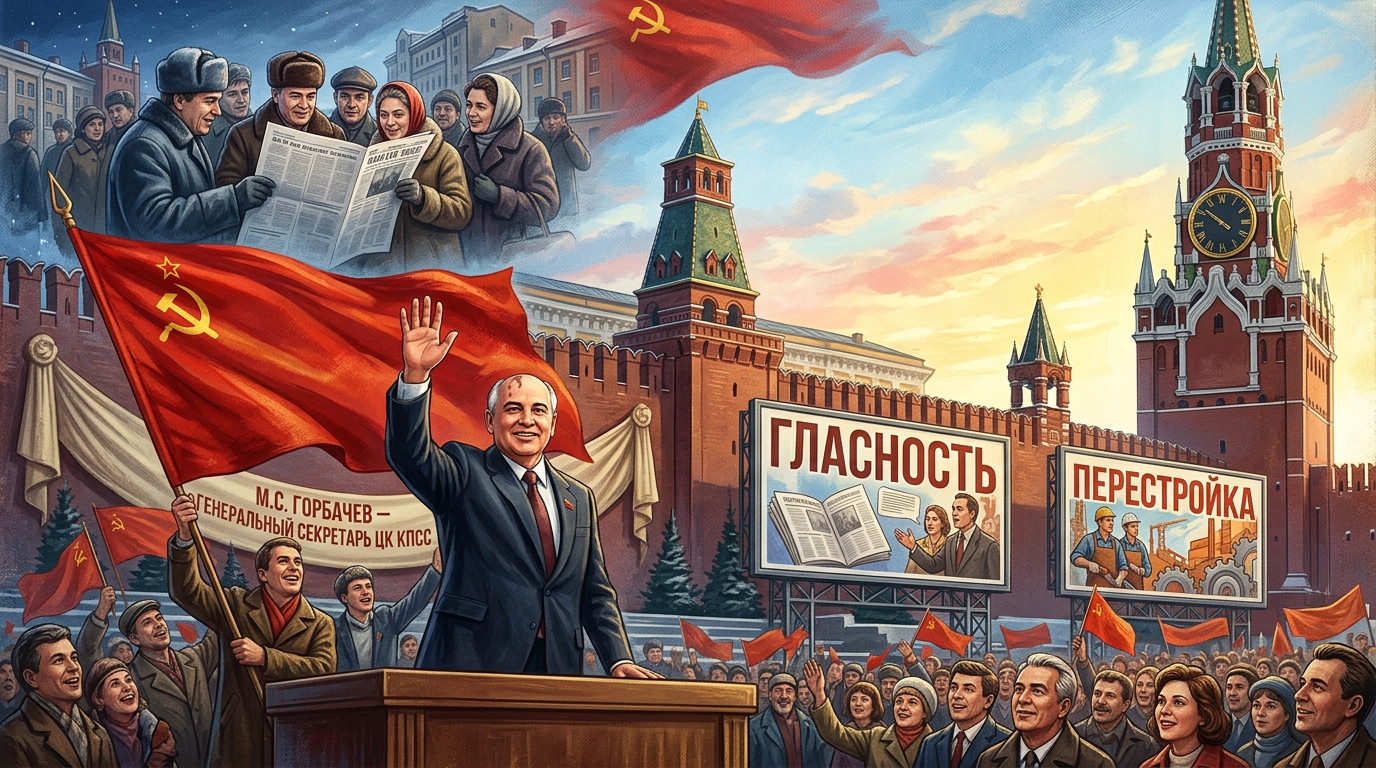
- February 1986 (The 27th CPSU Congress): Gorbachev officially introduces the concepts of Perestroika (restructuring) and Glasnost (openness) to the party lexicon. He argues that economic reforms are impossible without a parallel transformation of political culture and public participation.
- April 26, 1986 (The Chernobyl Nuclear Disaster): The catastrophic explosion at the Chernobyl nuclear power plant in Ukraine becomes the defining catalyst for Glasnost. The initial instinct of the Soviet bureaucracy is to cover up the disaster, delaying evacuation and putting millions of lives at risk.
"Chernobyl... was perhaps the real cause of the collapse of the Soviet Union five years later. Indeed, the Chernobyl catastrophe was an historic turning point: there was the era before the disaster, and there was the completely different era that followed." — Mikhail Gorbachev, reflecting in 1996[^3].
The shock of the disaster and the international outcry convince Gorbachev that the culture of secrecy within the Soviet state is a mortal threat to its survival. From this point forward, Glasnost is aggressively expanded to dismantle bureaucratic censorship.
1987–1988: Political and Cultural Liberalization
- January 1987 (The Central Committee Plenum): Gorbachev introduces Demokratizatsiya (democratization), proposing multi-candidate elections for local councils and party offices, rather than the traditional system of ratifying single, state-approved candidates.
- June 1987 (The Law on State Enterprise): This landmark law grants state enterprises more financial independence, allowing them to make some decisions based on market demand rather than directives from Moscow’s central planning ministries (Gosplan). However, without a free market to set prices, the reform creates massive economic imbalances, hoarding, and severe shortages of basic foodstuffs.
- December 1987 (The Washington Summit): Gorbachev and U.S. President Ronald Reagan sign the Intermediate-Range Nuclear Forces (INF) Treaty, marking the first time the two superpowers agree to eliminate an entire category of nuclear weapons.
- June 1988 (The 19th All-Union Party Conference): Gorbachev pushes through radical constitutional reforms. He proposes the creation of a new legislative body, the Congress of People's Deputies, with two-thirds of its members elected through competitive, multi-candidate secret ballots. This effectively strips the CPSU of its absolute monopoly on political power.
Geopolitical Consequences and Aftermath
The initiatives launched by Gorbachev starting in 1985 rapidly developed a momentum that disrupted the postwar geopolitical order. By attempting to save the Soviet Union through reform, he inadvertently dismantled the pillars that held it together.
Gorbachev's Reform Trio
- Perestroika (Restructuring)
- Glasnost (Openness)
- New Thinking (Foreign Policy)
Result: Dissolution of the USSR (Dec 25, 1991)
The Collapse of the Eastern Bloc and the "Sinatra Doctrine"
Historically, the Soviet Union maintained its dominance over Eastern Europe through military force, as demonstrated by the invasions of Hungary in 1956 and Czechoslovakia in 1968 (the Brezhnev Doctrine). Gorbachev, however, rejected this approach. Under his "New Thinking" (novoe myshlenie) in foreign policy, he declared that the nations of the Warsaw Pact had the right to choose their own path.
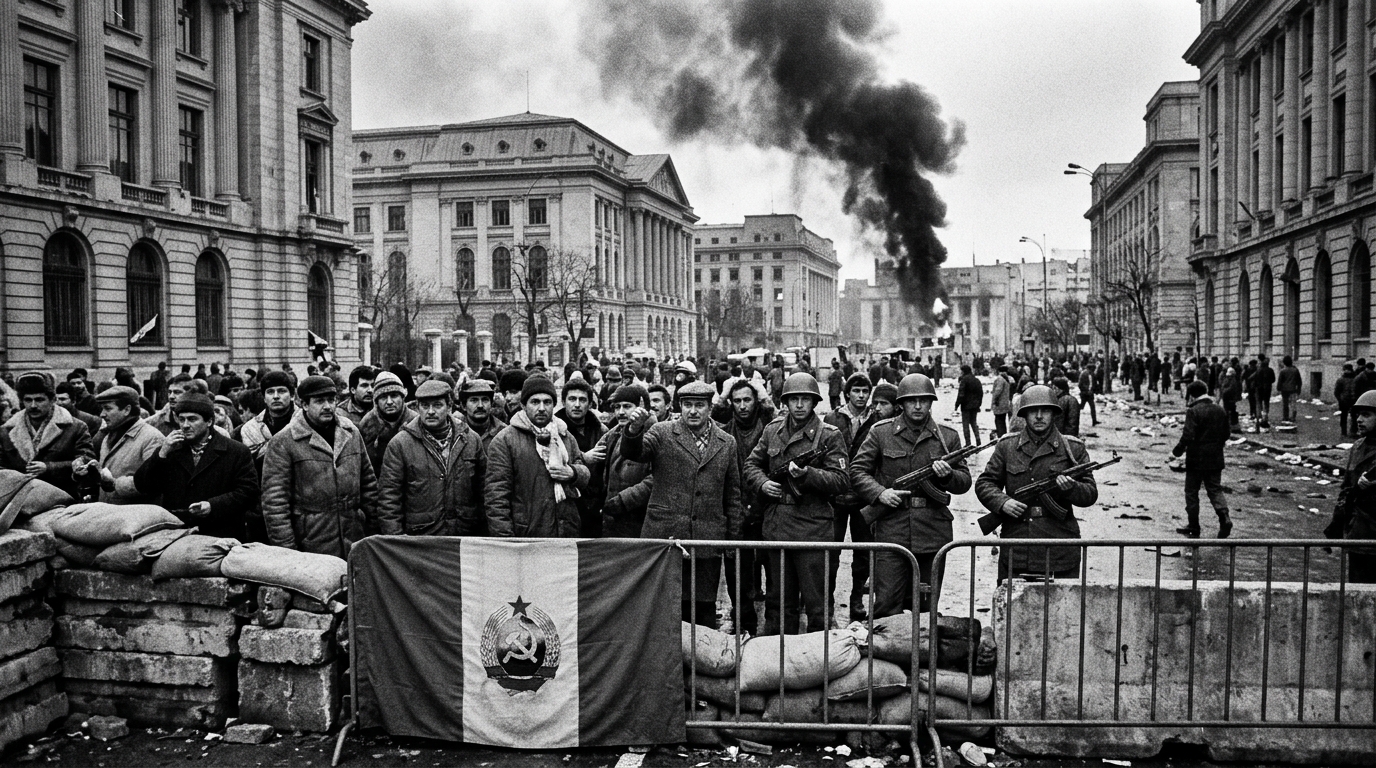
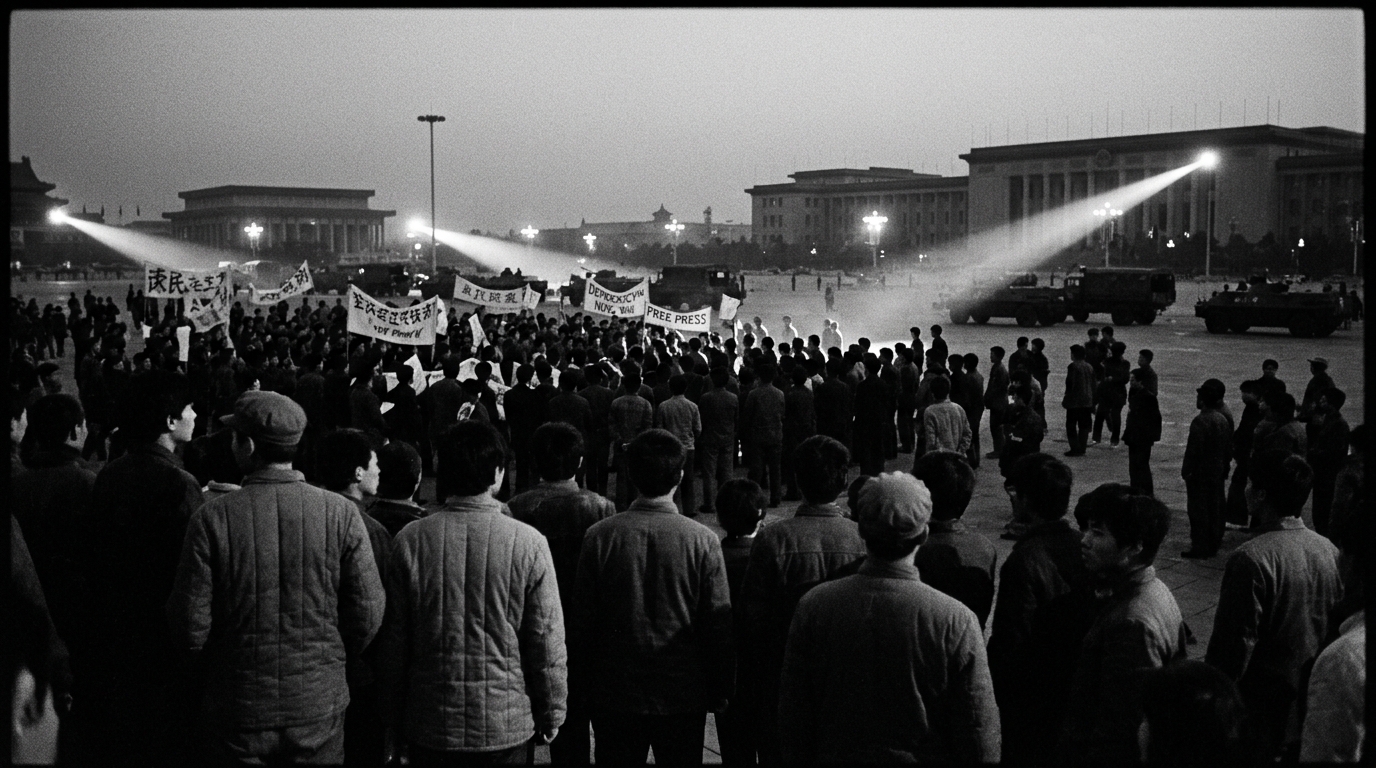
Gorbachev's foreign ministry spokesman, Gennady Gerasimov, famously dubbed this the "Sinatra Doctrine," referencing Frank Sinatra’s song "My Way." When popular pro-democracy protests swept through Poland, Hungary, East Germany, Czechoslovakia, Bulgaria, and Romania in the autumn of 1989, Gorbachev kept Soviet troops in their barracks.
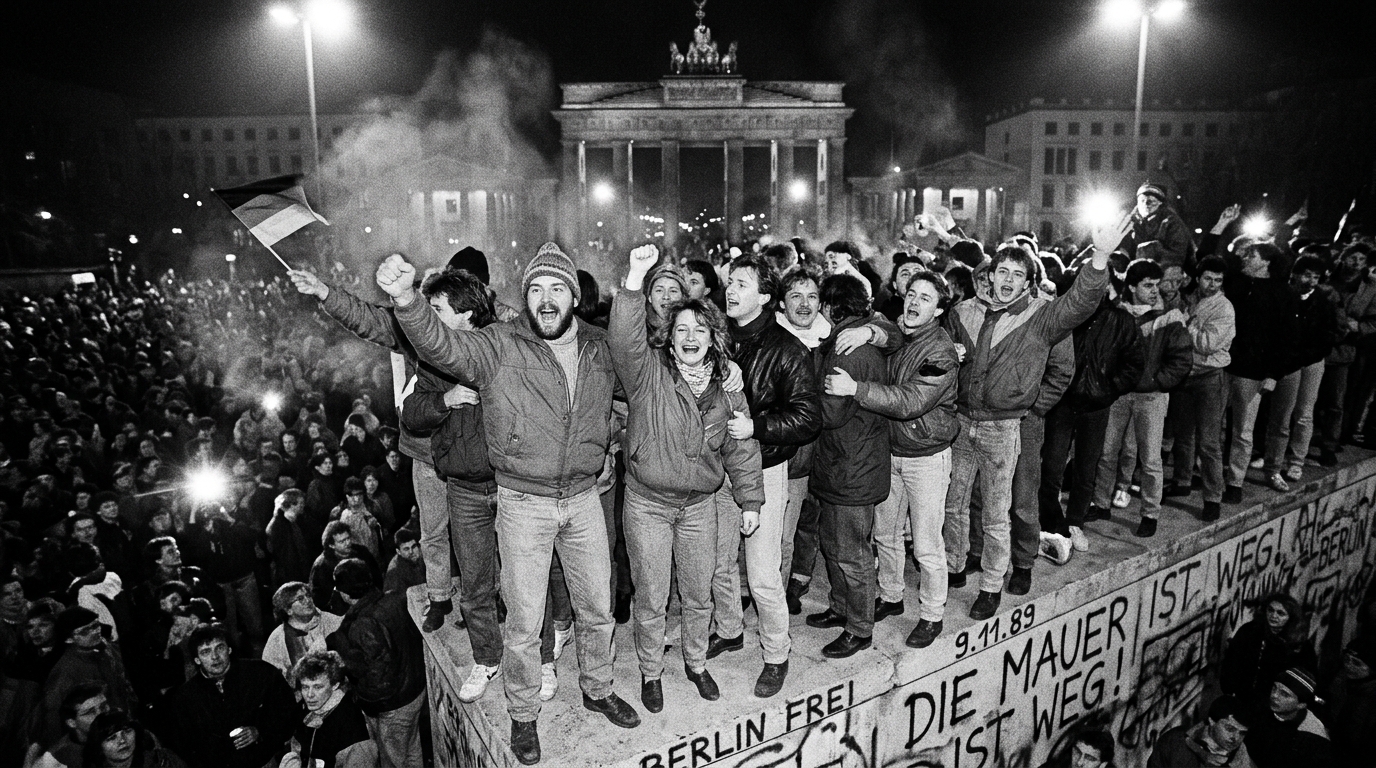
- November 9, 1989: The fall of the Berlin Wall symbolizes the collapse of communism in Europe and the end of the Cold War.
- Reunification of Germany: Gorbachev agrees to the reunification of Germany within NATO, a concession that would have been unthinkable under any of his predecessors.
Domestic Economic Disintegration
While Gorbachev’s political reforms succeeded in creating a freer society, his economic policies were disastrous. By dismantling the command economy’s administrative controls without implementing a fully functioning market mechanism, he created a chaotic hybrid system.
- Hyperinflation and Deficits: The state budget deficit ballooned as tax revenues evaporated and the government printed money to cover expenses.
- Empty Shelves: Rationing was introduced in major Soviet cities, including Moscow and Leningrad, for the first time since World War II. Long lines for bread, meat, and consumer goods became a daily reality for Soviet citizens[^4].
- Strikes: In 1989, massive coal miners' strikes broke out in Siberia and the Donbas region, paralyzing key sectors of the economy and presenting a direct challenge to the "workers' state."
The Rise of Ethnic Nationalism and the Collapse of the Union
Glasnost allowed long-repressed ethnic, territorial, and national grievances to surface. Throughout the fifteen republics of the USSR, popular fronts emerged, initially supporting Perestroika but quickly pivoting to demands for outright independence.
| Republic/Region | Year | Event / Outcome |
|---|---|---|
| Baltic States (Estonia, Latvia, Lithuania) | 1988–1990 | Launch of the "Singing Revolution"; declarations of sovereignty. |
| Nagorno-Karabakh (Armenia & Azerbaijan) | 1988 | Eruption of violent ethnic conflict over the disputed enclave. |
| Georgia & Uzbekistan | 1989 | Deadly ethnic riots and clashes with Soviet security forces. |
| Russian SFSR | 1990 | Election of Boris Yeltsin as Chairman of the Russian Supreme Soviet. |
By 1990, the central Soviet government had lost control over the periphery. The rise of Boris Yeltsin, who positioned himself as a populist defender of Russian sovereignty against the federal Soviet bureaucracy, created a fatal dual-power dynamic in Moscow.
The August Coup and the End of the Soviet Era
In August 1991, conservative members of Gorbachev’s own government—including the head of the KGB, the defense minister, and the vice president—staged a desperate coup d'état to halt a new Union Treaty that would have decentralized power to the republics. The coup failed within three days due to popular resistance led by Boris Yeltsin and a refusal by key military units to fire on their own citizens.
Although Gorbachev was released from house arrest in Crimea, his political authority was fatally compromised. Yeltsin was now the dominant political figure in Moscow. On December 8, 1991, the leaders of Russia, Ukraine, and Belarus signed the Belovezha Accords, declaring that the Soviet Union had ceased to exist. On December 25, 1991, Gorbachev resigned as President of the USSR, and the Soviet flag was lowered from the Kremlin for the last time.
Analysis of Key Actors and Decisive Actions
The trajectory of the Soviet Union's transformation was deeply shaped by the personal dynamics, rivalries, and philosophical divides of its key figures.
Mikhail Gorbachev: The Tragedy of the Middle Ground
Gorbachev was a tragic figure in political history. He was a reformer who sought to humanize communism, believing that socialism and democracy could coexist. However, his political positioning was fundamentally unstable. He tried to steer a middle course between two increasingly radicalized factions:
- The Party Conservatives: Led by Yegor Ligachev, they believed Gorbachev's reforms were dismantling the foundations of the socialist state.
- The Radical Reformers: Led by Boris Yeltsin and intellectual Andrei Sakharov, they argued that the reforms were moving too slowly and demanded a rapid transition to a market economy and Western-style pluralism.
Gorbachev’s hesitation to fully commit to either path ultimately alienated both sides. When he allied with conservatives in late 1990 to restore order, he lost the trust of the democratic reformers. When he returned to the reform camp in 1991, the conservatives launched the August Coup.
Boris Yeltsin: The Populist Disrupter
Yeltsin was Gorbachev’s great rival. Originally brought to Moscow by Gorbachev to clean up the corrupt Moscow party apparatus, Yeltsin was a natural populist who recognized that the Soviet public was growing increasingly frustrated with the slow pace and material hardships of Perestroika.
After being ousted from the Politburo in 1987 for criticizing the leadership, Yeltsin staged a political comeback by winning a seat in the new Congress of People's Deputies. His masterstroke was recognizing that he could dismantle the Soviet center by declaring the sovereignty of the Russian Federation—the largest and wealthiest republic—thereby leaving Gorbachev as a leader without a country.
Alexander Yakovlev and Yegor Ligachev: The Ideological Civil War
Within the Politburo, the ideological battle for the soul of the CPSU was waged between Alexander Yakovlev and Yegor Ligachev.
Mikhail Gorbachev (The Central Arbiter)
- Alexander Yakovlev (The Radical Reformer)
- VS.
- Yegor Ligachev (The Conservative Guardian)
- Alexander Yakovlev: Often called the "godfather of glasnost," Yakovlev was an intellectual who had spent a decade as ambassador to Canada. He returned to Moscow convinced that the Soviet system was morally bankrupt and needed deep democratization. He encouraged the publication of banned literature, the exposure of Stalinist crimes, and the rehabilitation of political dissidents.
- Yegor Ligachev: Originally a supporter of economic modernization, Ligachev became the voice of conservative alarm. He famously clashed with Yeltsin (coining the phrase, "Boris, you are wrong") and argued that Glasnost was being used by anti-socialist forces to destroy public morality and patriotism.
Trivia and Lesser-Known Facts
- The "Mineral Secretary" (Mineralny Sekretar): During the deeply unpopular anti-alcohol campaign of 1985–1988, Soviet citizens mockingly referred to Gorbachev as the "Mineral Secretary" or the "Lemonade Secretary," due to his promotion of mineral water over vodka at state dinners.
- The "Novosibirsk Report": In 1983, a sociologist named Tatyana Zaslavskaya drafted a highly confidential paper arguing that the Soviet command economy had reached its limits because it treated workers like mindless cogs in a machine. This document, which leaked to the West, was quietly read by Yuri Andropov and Mikhail Gorbachev, serving as the intellectual blueprint for Perestroika[^5].
- The Pizza Hut Commercial: In 1997, to raise funds for his foundation, Gorbachev appeared in an international television commercial for Pizza Hut. In the ad, a Russian family argues over Gorbachev's legacy inside a Moscow restaurant. The argument is resolved when an elderly woman points out that because of Gorbachev, they have Pizza Hut.
- The "I-Don't-Know" Phone Call: After spending decades in internal exile in the closed city of Gorky, the dissident physicist and Nobel laureate Andrei Sakharov was freed by Gorbachev in December 1986. To do so, Soviet technicians had to install a telephone in Sakharov's apartment specifically so Gorbachev could call him personally and invite him back to Moscow.
References and Literature
- The Gorbachev Factor - Archie Brown's definitive study on the domestic political dynamics and institutional transformations of the Gorbachev era.
- Collapse: The Fall of the Soviet Union - Vladislav M. Zubok's detailed archival exploration of the economic, social, and political decisions that led to the dissolution of the USSR.
- Armageddon Averted: The Soviet Collapse 1970-2000 - Stephen Kotkin's structural analysis of why the Soviet Union collapsed so peacefully compared to other historical empires.
- Gorbachev: His Life and Times - William Taubman’s comprehensive biography of the Soviet leader, focusing on his personality, upbringing, and decisions during his time in power.
---
Footnotes & Explanations
- Stephen Kotkin, Armageddon Averted: The Soviet Collapse 1970–2000 (Oxford University Press, 2001), 18–22. ↩
- William Taubman, Gorbachev: His Life and Times (W. W. Norton & Company, 2017), 212. ↩
- Mikhail Gorbachev, "Chernobyl: The turning point," Project Syndicate, April 2006. ↩
- Vladislav M. Zubok, Collapse: The Fall of the Soviet Union (Yale University Press, 2021), 84–89. ↩
- Archie Brown, The Gorbachev Factor (Oxford University Press, 1996), 122–124. ↩