Key Takeaways
- The 2020 conflict fundamentally shifted modern warfare paradigms by demonstrating the dominance of relatively low-cost Unmanned Aerial Vehicles (UAVs) and loitering munitions against conventional armor and static defenses, proving particularly effective against Soviet-era military hardware.
- The war marked a definitive geopolitical realignment, strengthening the Azerbaijan-Turkey strategic axis and affirming Turkey's growing influence in the South Caucasus, while exposing the limitations and complexities of Russia's traditional security umbrella over Armenia.
- The resulting territorial changes effectively ended the precarious status quo that had persisted since the 1994 Bishkek Protocol, reasserting Azerbaijani control over significant portions of Nagorno-Karabakh and the surrounding districts.
- The conflict served as a powerful case study for military strategists globally, highlighting the imperative for adaptable air defense systems, effective electronic warfare capabilities, and agile ground tactics in an era of pervasive battlefield surveillance and precision strike from unmanned platforms.
Historical Context and Origins
The roots of the Nagorno-Karabakh conflict are deeply embedded in centuries of ethno-religious tension, imperial rivalries, and the tumultuous administrative decisions of the Soviet era. Nagorno-Karabakh, meaning "mountainous Karabakh" in a mixture of Russian and Turkic, is a region internationally recognized as part of Azerbaijan but historically populated by a significant Armenian majority. This demographic reality often clashed with the region's administrative status, particularly after the Bolsheviks, under Joseph Stalin, controversially assigned the predominantly Armenian-populated Nagorno-Karabakh Autonomous Oblast (NKAO) to Soviet Azerbaijan in 1923 as a means of appeasing Turkey and solidifying Soviet control in the Caucasus.
This decision laid the groundwork for a "frozen conflict" that would erupt into full-scale war with the collapse of the Soviet Union. As the Soviet system fragmented in the late 1980s, the NKAO’s Armenian majority voted to secede from Azerbaijan and join Armenia, sparking widespread ethnic violence. The First Nagorno-Karabakh War (1988–1994) saw an emboldened Armenia, supported by the local Karabakh Armenian forces, secure control over the NKAO and seven surrounding Azerbaijani districts, which were ethnically cleansed of their Azerbaijani populations. This conflict resulted in an estimated 30,000 casualties and over a million displaced persons, creating a de facto independent Republic of Artsakh (Nagorno-Karabakh) that remained unrecognized by the international community, including Armenia itself.
For nearly three decades, the Organization for Security and Co-operation in Europe (OSCE) Minsk Group, co-chaired by France, Russia, and the United States, attempted to broker a peaceful resolution. These efforts consistently stalled, trapped between Armenia’s demand for security guarantees and self-determination for Artsakh, and Azerbaijan’s unwavering insistence on territorial integrity and the return of its occupied lands. The Minsk Group’s mandate, often criticized for its lack of tangible progress, became synonymous with diplomatic paralysis, fueling a sense of grievance and inevitability of renewed conflict in Baku.
By 2020, several factors converged to create a volatile environment:
- Azerbaijan's Military Modernization: Fuelled by vast oil and gas revenues, Azerbaijan had undertaken an ambitious military modernization program, investing heavily in advanced weaponry, including drones, from Turkey and Israel. This steadily eroded Armenia’s conventional military advantage and the perceived impregnability of the "Nagorno-Karabakh Line of Contact."
- Armenia's Political Transition: The 2018 "Velvet Revolution" brought Nikol Pashinyan to power in Armenia, promising democratic reforms. However, his administration struggled with the legacy of the conflict, maintaining a rigid stance on Artsakh's status while facing internal criticism for failing to adequately modernize the military or prepare for a renewed war.
- Shifting Geopolitical Sands: Turkey, under President Recep Tayyip Erdoğan, adopted a more assertive foreign policy, openly backing Azerbaijan. This challenged Russia's traditional role as the sole regional power broker and implicitly encouraged Azerbaijan to seek a military solution.
- Internal Pressure: In both Yerevan and Baku, nationalistic narratives and unaddressed grievances created immense domestic pressure on leaders to either defend or reclaim the disputed territories. For Azerbaijan, the "frozen conflict" was a constant open wound, whereas for Armenia, any concession on Artsakh's status was viewed as an existential threat.
The failure of diplomatic channels, coupled with Baku’s growing military confidence and strategic patience, created a "now or never" atmosphere. The 2020 war was thus not merely a territorial dispute; it was a collision between an emboldened Azerbaijani state, backed by cutting-edge military hardware and a refined strategy, and an Armenian military that relied on static defensive doctrines and Soviet-era equipment that had remained largely unchanged since the 1990s.
Timeline of Events and Key Moments
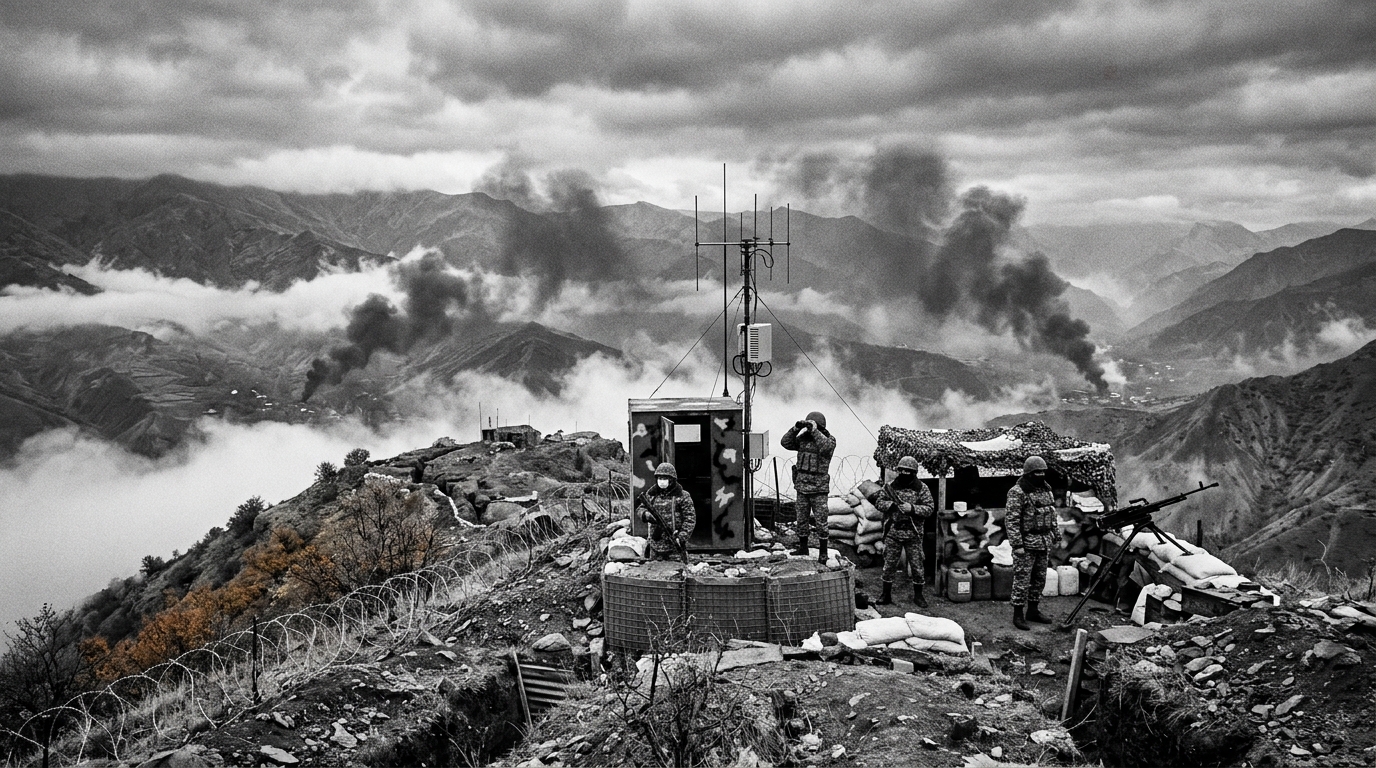
The 44-day war, which began on September 27, 2020, was characterized by a rapid, high-intensity offensive by Azerbaijani forces, effectively leveraging drone technology and superior ground coordination.
| Phase | Duration | Key Developments | Strategic Significance |
|---|---|---|---|
| Phase I: Mobilization & Initial Breakthroughs | Sept 27 – Oct 10 | Hostilities erupt along the Line of Contact; rapid Azerbaijani breakthroughs in the south, targeting Jabrayil and Fuzuli districts. Extensive drone strikes against Armenian air defenses, armor, and artillery. | Azerbaijan establishes air superiority, neutralizes key defensive lines, and begins to seize strategic Azerbaijani territories outside the NKAO, signaling intent to reclaim all occupied districts. |
| Phase II: The Southern Drive & Advance on Lachin | Oct 11 – Oct 25 | Azerbaijan captures the strategic towns of Jabrayil and Fuzuli, securing control over the Iranian border region. Operations shift towards cutting the Lachin Corridor, the main supply route to Stepanakert. Intense battles for Hadrut. | Azerbaijani forces establish a strong southern front, severing supply routes and isolating Armenian forces in the NKAO from the Iranian border. This psychological blow severely impacted Armenian morale. |
| Phase III: The Battle for Shusha & Strategic Encirclement | Oct 26 – Nov 8 | Azerbaijani special forces conduct a daring, high-altitude infantry assault on the strategically vital fortress city of Shusha (Shushi to Armenians). Simultaneously, drones continue to decimate Armenian reinforcements and logistical nodes. | The capture of Shusha, a city of immense cultural and strategic importance overlooking Stepanakert, was the decisive turning point. It effectively cut off Stepanakert and made continued Armenian resistance untenable. |
| Phase IV: Cessation of Hostilities & Peace Deal | Nov 9 – Nov 10 | The signing of a tripartite statement between Azerbaijani President Aliyev, Armenian Prime Minister Pashinyan, and Russian President Putin, mediated by Moscow. | Formal end to hostilities. Armenia agrees to withdraw from three additional districts (Kalbajar, Aghdam, Lachin), and Russia deploys peacekeepers to the Lachin Corridor and other key areas. |
The fall of Shusha, a city steeped in both Azerbaijani and Armenian history and culture, proved to be the psychological and strategic turning point of the conflict. By controlling this fortress city, which overlooks the capital of the separatist region, Stepanakert, Azerbaijan effectively severed the primary supply and communication lines to the heart of the Armenian-controlled territory. This military triumph, achieved through a combination of drone-enabled precision strikes and highly effective special forces infantry assaults in challenging mountainous terrain, compelled the Armenian leadership to accept a ceasefire on terms largely dictated by Azerbaijan and Russia.
Geopolitical Consequences and Aftermath
The conclusion of the 2020 Nagorno-Karabakh War fundamentally reordered the South Caucasus, initiating a new era of regional dynamics and power balances. The most immediate consequence was the return of the seven occupied districts surrounding Nagorno-Karabakh to Azerbaijani control, along with significant portions of the NKAO itself, and the establishment of a Russian peacekeeping mission.
- The Turkish Factor: Turkey’s overt and robust support for Azerbaijan signaled a profound shift in regional power. Ankara demonstrated that its "One Nation, Two States" policy was not mere rhetoric, but a viable security commitment backed by military aid, training, and critical technological transfers. This engagement marked Turkey's re-emergence as a significant player in the South Caucasus, challenging Russia's historical dominance and introducing a more complex, multi-polar regional security architecture. Turkish influence is now cemented, particularly through its economic ties and aspirations for trans-regional trade routes that bypass Armenia.
- Armenian Domestic Turmoil and Strategic Reassessment: Prime Minister Pashinyan faced severe domestic upheaval, including widespread protests, calls for his resignation, and accusations of betrayal. The loss of territory, perceived as a national catastrophe and a deep humiliation, plunged Armenia into political instability. The war forced a painful re-evaluation of Armenia's security doctrine, its over-reliance on Russia, and the need for comprehensive military reform. It also led to a demographic crisis, with thousands of ethnic Armenians displaced from areas now under Azerbaijani control.
- Russian Strategy and Evolving Influence: Vladimir Putin’s mediation confirmed Russia’s indispensable role as the primary arbiter in the region, yet the outcome highlighted a nuanced erosion of Moscow’s singular dominance over the former Soviet periphery. While Russia deployed peacekeepers, ensuring its continued military presence, it allowed a Turkish-aligned Azerbaijani victory to occur, effectively endorsing the territorial changes. This complex outcome demonstrated Russia’s strategic pragmatism, prioritizing stability and its own security interests (e.g., maintaining a foothold) over blindly supporting its traditional Armenian ally. The war ultimately solidified Russia’s role as a balancing act between competing interests.
- Iranian Concerns: Iran, sharing a border with both Azerbaijan and Armenia, watched the conflict with unease. Azerbaijan’s rapid advance along the Aras River border initially raised concerns about spillover and the potential for increased Turkish influence along its northern frontier. Iran also maintains a complex relationship with its own Azerbaijani minority, and any irredentist sentiment from Baku is closely monitored. Tehran expressed concerns about the potential for extremist elements operating near its border and has generally advocated for the inviolability of international borders.
- International Law and Norms: The war presented a stark challenge to the international community's reliance on "frozen conflict" frameworks and highlighted the tension between the principle of territorial integrity (Azerbaijan's claim) and the right to self-determination (Armenian population of Karabakh). The decisive military action by Azerbaijan, effectively reversing the outcome of the 1990s war, set a precedent for future territorial disputes, emphasizing military solutions over prolonged diplomatic stalemates.
Analysis of Key Actors and Decisive Actions
The defining feature of the 2020 Nagorno-Karabakh War was the innovative integration of Unmanned Aerial Vehicles (UAVs), specifically the Turkish-made Bayraktar TB2 combat drones and the Israeli-made Harop loitering munitions (kamikaze drones). These technologies, combined with effective command and control, provided Azerbaijan with an asymmetric advantage that proved insurmountable for the Armenian armed forces.
The Drone Revolution: Doctrine, Technology, and Countermeasures
Azerbaijan's military doctrine was fundamentally reoriented to leverage the capabilities of its newly acquired drone arsenal. The strategy involved a multi-layered approach:
- Reconnaissance-Strike Complex: Small, inexpensive reconnaissance drones provided real-time battlefield intelligence, identifying Armenian positions, troop movements, and high-value targets. This intelligence was then rapidly fed to Bayraktar TB2s or ground-based artillery.
- Air Defense Suppression (SEAD): Harop loitering munitions were instrumental in systematically hunting and destroying Armenia's Soviet-era air defense systems, including the S-300, Osa, and Tor-M2KM. These "kamikaze drones," with their ability to loiter for extended periods and dive onto radar emitters, effectively blinded and decapitated Armenia's protective umbrella.
- Precision Strike and Psychological Warfare: Once air defenses were neutralized, the Bayraktar TB2s, armed with MAM-L and MAM-C laser-guided munitions, could operate with relative impunity, striking Armenian tanks, artillery pieces, armored personnel carriers, and logistical convoys with pinpoint accuracy. The daily release of high-definition drone footage of these strikes on social media became a powerful tool of psychological warfare, demoralizing Armenian troops and domestic populations while galvanizing Azerbaijani national support.
Armenia’s military was heavily reliant on Soviet-era air defense systems, such as the S-300 and Osa platforms. These systems, designed for intercepting high-flying aircraft and larger missiles, proved largely ineffective against small, low-altitude, and radar-signature-diminished drones. Their radar systems struggled to detect the drones, and their slower reaction times were outmatched by the rapid targeting cycles of Azerbaijan. Furthermore, Armenia's electronic warfare (EW) capabilities, though deployed, were insufficient to counter the sheer volume, varied guidance systems, and adaptive nature of Azerbaijan's drone fleet. While some GPS jamming was attempted, drones could switch to inertial navigation or exploit other guidance methods, and the modular nature of the systems allowed for rapid software updates to mitigate EW threats. This technological overmatch allowed Azerbaijan to achieve near-total situational awareness and the ability to strike targets with surgical precision from a distance, minimizing direct troop engagement risk.
The Role of Leadership and Military Strategy
"The liberation of our lands is our primary mission. We have restored justice." – President Ilham Aliyev, following the liberation of Shusha.
President Ilham Aliyev of Azerbaijan, leveraging decades of oil wealth, had meticulously overseen a strategic military buildup. His administration prioritized modernizing the armed forces, specifically targeting technical training in drone warfare and special operations tactics. He maintained a consistent diplomatic posture that insisted on Azerbaijan's territorial integrity, setting the stage for a military solution when diplomatic avenues proved fruitless. Aliyev’s leadership demonstrated a clear strategic vision, effective resource allocation, and a willingness to use force to achieve national objectives. The offensive was meticulously planned and executed, combining drone superiority with well-trained special forces for critical ground objectives like the capture of Shusha.
In contrast, Nikol Pashinyan’s administration in Armenia, despite coming to power on a wave of democratic reform, struggled to reconcile its domestic agenda with the hard-power realities of a defense budget that could not keep pace with Azerbaijan’s technological surge. Pashinyan inherited an army with outdated equipment, a rigid command structure, and a defensive doctrine that had not significantly evolved since the 1990s. His government faced challenges in effectively communicating the military realities to the public and was slow to adapt to Azerbaijan's hybrid warfare approach. The political divisions within Armenia also hampered a unified national response, ultimately contributing to the military defeat and subsequent domestic instability.
A Shifting Regional Order: Great Powers, Proxies, and the Future of the South Caucasus
The 2020 Nagorno-Karabakh War did not just redraw maps; it fundamentally reconfigured the geopolitical landscape of the South Caucasus, creating a new, more complex web of alliances and rivalries.
Russia's Evolving Role: While Russia effectively intervened to broker the ceasefire and deploy peacekeepers, its regional influence is no longer as exclusive. Moscow found itself in a difficult position, balancing its long-standing security alliance with Armenia (through the Collective Security Treaty Organization, CSTO) with its burgeoning economic and political ties to Azerbaijan and Turkey. The Russian decision to allow Azerbaijan to achieve significant territorial gains before intervening suggests a pragmatic shift: prioritize regional stability and a limited peacekeeping presence over unconditionally backing a vulnerable ally. This outcome has led to a re-evaluation in Moscow about the efficacy of its "frozen conflict" policy and the limits of its power projection in its traditional backyard, especially when confronted by an assertive Turkey. The war demonstrated that Moscow prefers to maintain its strategic leverage by being the indispensable mediator and security guarantor, rather than being drawn into direct conflict on behalf of a weak ally.
Turkey's Ascent: The conflict dramatically elevated Turkey's status as a regional power. Ankara's unwavering political, military, and technological support for Azerbaijan proved decisive. This intervention aligns with President Erdoğan's broader foreign policy objectives, often characterized as neo-Ottomanism, seeking to expand Turkish influence across the Turkic world, the Eastern Mediterranean, and North Africa. The success in Nagorno-Karabakh has not only strengthened the Azerbaijan-Turkey strategic partnership but also positioned Turkey as a co-guarantor of regional security alongside Russia, a dynamic reminiscent of the Syrian conflict. This assertive posture challenges the established post-Soviet order and introduces a new layer of complexity to great power competition in the Caucasus.
The Zangezur Corridor and Regional Connectivity: A critical, long-term consequence outlined in the ceasefire agreement is the provision for new transport links, notably the "Zangezur corridor" (a proposed route through Armenia's Syunik province, connecting Azerbaijan proper to its Nakhchivan exclave and further to Turkey). This corridor holds immense geopolitical significance for Azerbaijan and Turkey, offering direct land access and enhancing trade routes. For Armenia, however, it represents a further erosion of sovereignty and a potential vulnerability. The implementation of this corridor, and the broader opening of communication lines, remains a contentious issue and a key determinant of future regional stability and economic integration. Its establishment would significantly alter trade dynamics, bypassing Russia's traditional choke points and creating new avenues for Turkish and Azerbaijani influence.
The West's Marginalization: The OSCE Minsk Group, co-chaired by France and the United States, was largely sidelined during the conflict. Their inability to broker a lasting peace for decades, and their ultimate absence from the ceasefire negotiations, highlighted the decline of Western influence in resolving conflicts in Russia's perceived sphere of influence. This marginalization underscores a broader trend where regional powers and Russia are increasingly dictating outcomes, leaving Western diplomatic efforts to largely issue condemnations or offer humanitarian aid without substantive impact on the ground.
Trivia and Lesser-Known Facts
- Electronic Warfare and Counter-Measures: While Armenia utilized GPS jamming, Azerbaijan's drones often employed multiple navigation systems, including inertial guidance and optical targeting, rendering simple jamming ineffective. Some reports suggested rapid software updates were pushed to drones mid-conflict to overcome Armenian EW efforts.
- The 'TikTok War': The 2020 conflict is often referred to as the "TikTok War" or "Drone War" due to Azerbaijan's sophisticated use of social media. High-definition drone strike footage, often accompanied by patriotic music, was released daily on platforms like TikTok and YouTube. This was a deliberate information operation designed to demoralize Armenian forces, rally domestic support in Azerbaijan, and shape international perceptions.
- The Iranian Border and Regional Sensitivity: Azerbaijan’s rapid advance along the Aras River, which forms its border with Iran, forced Iran to station additional military units on its side of the frontier. This was done to prevent accidental spillover artillery fire and to monitor the changing dynamics, highlighting the conflict's regional fragility and the intricate web of geopolitical interests. Iran also voiced concerns about the presence of foreign fighters (reportedly Syrian mercenaries) on both sides of the conflict.
- The Shusha Assault: The capture of Shusha, a pivotal moment, was reportedly achieved through a daring and highly challenging infantry assault by Azerbaijani special forces, navigating rugged terrain to bypass heavily fortified roads. This demonstrated a combined arms approach, where drones softened the defenses, but well-trained ground troops delivered the decisive blow.
- Unrecognized Entities: Despite controlling significant territory for decades and holding its own elections, the "Republic of Artsakh" (Nagorno-Karabakh) remained unrecognized by any UN member state, including Armenia. This lack of international recognition critically weakened its diplomatic standing and legitimacy during the conflict.
References and Literature
- The Journal of Strategic Studies (2021) - A deep dive into the integration of UAVs in modern localized conflicts and their implications for future warfare.
- Foreign Affairs: The Lessons of the Nagorno-Karabakh War - Comprehensive analysis regarding the decline of traditional armored warfare doctrines and the rise of drone superiority.
- BBC News: Nagorno-Karabakh conflict - In-depth reporting on the timeline, humanitarian impact, and geopolitical consequences of the 44-day war.
- International Crisis Group (ICG) - Various reports offering detailed analysis of the conflict's origins, dynamics, and post-war challenges.
- Centre for Strategic and International Studies (CSIS) - Insights into Turkey's role, drone technology, and the broader implications for NATO and regional security.