Key Takeaways
- The Johannesburg expansion signaled a definitive pivot toward a 'Global South' centric geopolitical framework, moving beyond the group's origins as a mere economic investment acronym to a more politically assertive bloc.
- The inclusion of major energy producers like Saudi Arabia and Iran fundamentally shifts the bloc's potential to influence global energy markets and accelerate de-dollarization efforts, presenting a direct challenge to the established international financial order.
- The event highlighted underlying strategic friction between India’s desire for a non-aligned 'voice for the global south' and China’s vision of BRICS as a counter-hegemonic pole to the West, underscoring the bloc's inherent complexities and diverse national interests.
- The expansion demonstrated a growing appetite among developing nations for greater representation and autonomy in international affairs, aiming to reshape global governance structures to be more inclusive and equitable.
Historical Context and Origins: From Investment Thesis to Geopolitical Force
To comprehend the seismic shift that unfolded in Johannesburg in August 2023, one must meticulously deconstruct the unassuming origins of BRICS. The acronym itself was a product of financial prognostication, coined in 2001 by Jim O'Neill, a renowned economist at Goldman Sachs. His seminal paper, "Building Better Global Economic BRICs," identified a select group of emerging economies—Brazil, Russia, India, and China—as possessing the potential for significant economic growth that would reshape the global economic landscape. This initial conception was purely an investment thesis, devoid of any overt political or strategic intent. The primary focus was on the projected GDP growth, burgeoning populations, and increasing integration into the global economy, positioning these nations as future titans of commerce.
However, the nascent idea began to acquire a political dimension in the wake of the 2008 global financial crisis. This crisis starkly illuminated the inherent fragilities within the international financial architecture, which was heavily dominated by the U.S. dollar and Western-led institutions such as the International Monetary Fund (IMF) and the World Bank. The crisis fostered a sense of disillusionment among many developing nations, who felt that these institutions, while ostensibly global, often prioritized the interests of their founding Western powers. This sentiment paved the way for a more formal articulation of the BRIC grouping.
In 2009, the four constituent nations held their inaugural summit in Yekaterinburg, Russia. This meeting marked a crucial step from an informal discussion forum to a more structured entity with shared geopolitical and economic aspirations. The subsequent addition of South Africa in 2010, a move championed by Russia and China, was significant for two primary reasons: it provided a vital geographical representation from the African continent, and it underscored the group's expanding ambitions beyond mere economic collaboration. The inclusion of South Africa transformed the acronym to BRICS, solidifying its image as a bloc representing a diverse array of emerging economies from different continents.
For over a decade following South Africa's admission, BRICS primarily functioned as a consultative forum. Its summits were characterized by declarations on global economic governance, trade liberalization, and development finance. While it produced initiatives like the Contingent Reserve Arrangement (CRA) and laid the groundwork for the New Development Bank (NDB), it largely operated within the existing global framework, advocating for reforms rather than outright challenges to the established order. The narrative was one of reformist multilateralism.
However, the early 2020s witnessed a dramatic acceleration of geopolitical realignments. The escalating strategic competition between the United States and China, coupled with the widespread international condemnation and isolation of Russia following its full-scale invasion of Ukraine in February 2022, created a profoundly altered global milieu. This period of intensified geopolitical friction and the perceived weakening of Western dominance provided fertile ground for BRICS to shed its reformist cloak and embrace a more revisionist and counter-hegemonic posture. The group's members, particularly China and Russia, began to view BRICS not merely as a platform for advocating change but as a viable vehicle for constructing an alternative global order that could potentially dilute or even supplant Western influence. This strategic recalibration was the critical precursor to the expansive ambitions that would come to define the Johannesburg summit.
The Johannesburg Summit of 2023: A Defining Moment
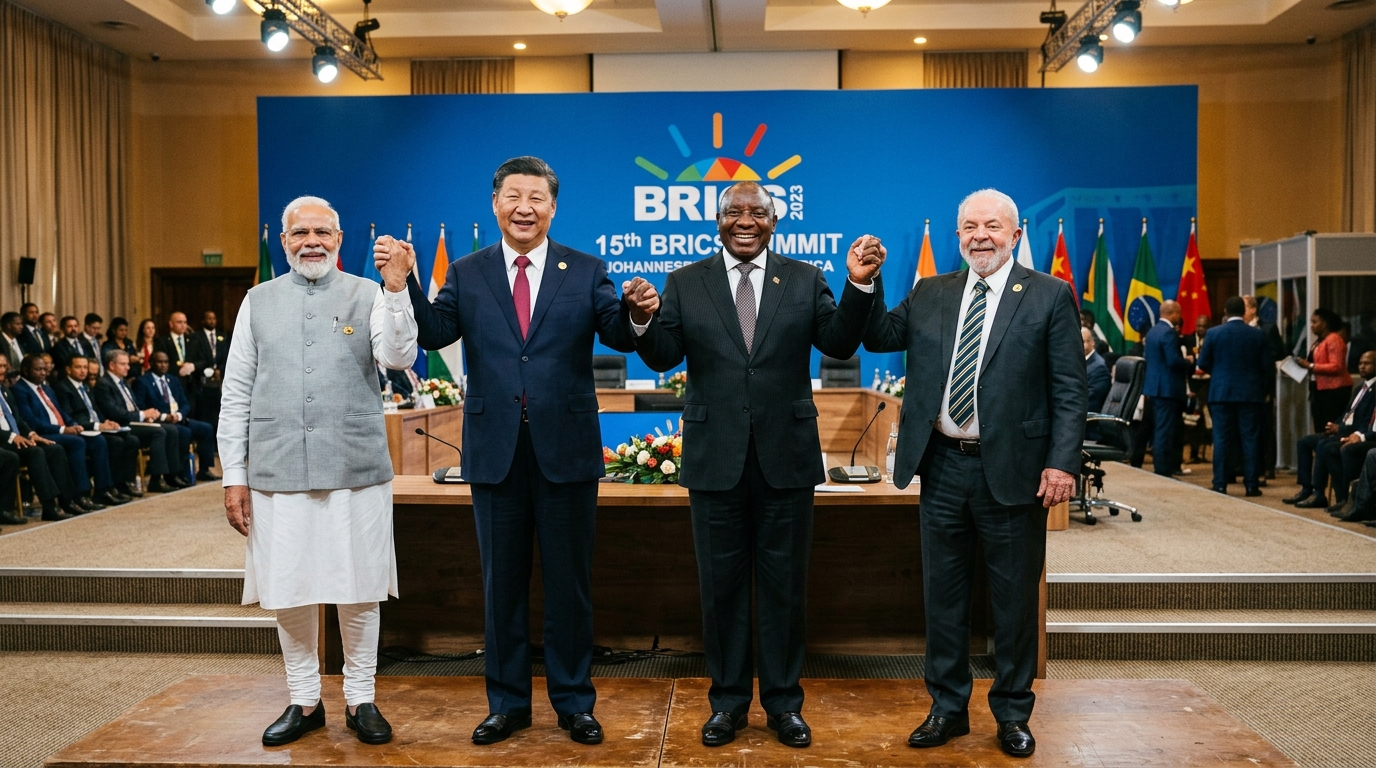
The 15th BRICS Summit, convened in Johannesburg, South Africa, from August 22-24, 2023, was not merely another meeting on the international calendar; it was a watershed event that fundamentally reconfigured the geopolitical landscape. The summit’s overriding agenda, and indeed its most consequential outcome, was the decision to significantly expand the bloc's membership. This expansion was the culmination of months of intense diplomatic efforts, internal deliberations, and a palpable desire among many non-Western nations to find greater collective representation and influence in global affairs.
The formal process leading up to the summit saw a record number of countries express interest in joining BRICS, a testament to its growing allure. Over 40 nations had either formally applied or informally indicated their desire for membership. This surge of interest underscored a widespread sentiment of dissatisfaction with the current international system, which many perceived as unbalanced, exclusionary, and heavily biased towards the interests of established Western powers. The BRICS framework, with its emphasis on shared development goals, economic cooperation, and a more equitable distribution of global power, presented an attractive alternative.
South Africa, as the host and chair for 2023, played a pivotal role in orchestrating the summit and navigating the complex discussions surrounding expansion. President Cyril Ramaphosa and his diplomatic team worked tirelessly to build consensus among the existing BRICS members on the criteria and process for admitting new countries. The summit itself was characterized by a robust exchange of views, particularly regarding the pace and scope of the expansion. While China, under President Xi Jinping, strongly advocated for a broad and rapid expansion to bolster its geopolitical influence, other members, notably India, adopted a more measured approach. New Delhi expressed concerns about diluting the bloc's identity and ensuring that any new members aligned with its core principles of multipolarity and strategic autonomy, thereby avoiding the perception of BRICS becoming a mere appendage of Chinese foreign policy. Brazil, under President Luiz Inácio Lula da Silva, also voiced a desire for a structured and well-considered expansion process.
After extensive deliberations, a crucial consensus was forged. On August 24, 2023, President Ramaphosa stood before the world and announced the historic decision: six countries were formally invited to join the BRICS bloc. These included: Argentina, Egypt, Ethiopia, Iran, Saudi Arabia, and the United Arab Emirates. This list represented a strategic blend of significant economic actors, crucial geopolitical players, and countries with substantial energy reserves. The announcement was met with a mix of anticipation and apprehension globally, signaling the dawn of a potentially new era in international relations. The subsequent official entry of these nations was slated for January 1, 2024, although events would later alter the course for one of the invited members.
Geopolitical Consequences and Immediate Aftermath: Reshaping Global Governance
The 2023 BRICS expansion in Johannesburg carries profound and far-reaching geopolitical consequences, fundamentally challenging the established post-World War II international order. The admission of key global energy producers—Saudi Arabia, Iran, and the UAE—into the bloc is perhaps the most immediately impactful development. These nations collectively control a significant portion of the world's proven oil and gas reserves. Their inclusion transforms BRICS into a formidable bloc with considerable leverage over global energy markets. This newfound collective power opens up avenues for greater influence on oil pricing, production quotas, and, crucially, the potential for settling energy transactions in currencies other than the U.S. dollar. This development directly targets the "exorbitant privilege" long enjoyed by the U.S. dollar as the world's primary reserve currency, a cornerstone of American economic and geopolitical influence since the Bretton Woods Agreement.
The expansion also significantly enhances the bloc's geographical and strategic reach. The inclusion of Egypt, a nation that controls the vital Suez Canal—one of the world's most critical maritime chokepoints for global trade—and Ethiopia, a strategically important country in the Horn of Africa, grants BRICS a more robust presence in key regions of Africa and the Middle East. This provides the bloc with greater influence over trade routes and regional security dynamics, areas traditionally dominated by Western powers. The integration of these nations strengthens BRICS's capacity to promote alternative development models and infrastructure projects, potentially offering developing countries more options outside the conditional lending frameworks of Western-dominated financial institutions.
Furthermore, the expansion signals a clear intent to bolster the role and influence of the New Development Bank (NDB), often referred to as the BRICS Bank. Established in 2015, the NDB was conceived as an alternative development finance institution capable of funding infrastructure and sustainable development projects in BRICS and other emerging economies. The infusion of capital from wealthy new members like Saudi Arabia and the UAE is expected to significantly increase the NDB's lending capacity, allowing it to compete more effectively with the World Bank and the IMF. Critically, the NDB operates with fewer "Western-style" conditionalities that often attach political or economic reform requirements to loans. This offers a more appealing financing model for many developing nations seeking to advance their development agendas without external political interference.
However, the expansion is not without its inherent complexities and potential fault lines. The bloc remains a diverse collection of nations with differing political systems, national interests, and foreign policy orientations. For instance, the strategic relationship between India and China, marked by border disputes and economic competition, remains a significant underlying tension. Similarly, while Saudi Arabia and the UAE have joined BRICS, they maintain strong security and economic ties with the United States and its allies. This necessitates a careful balancing act for these nations, as they pursue their strategic autonomy and engage with BRICS without alienating their traditional partners. This dynamic suggests that BRICS will likely continue to be a "coalition of convenience" or a forum for shared interests rather than a tightly integrated military or political alliance. Its effectiveness will depend on its ability to bridge these internal divergences and present a united front on key global issues.
The immediate aftermath saw the world grappling with the implications of this expanded bloc. Financial markets reacted with volatility, as investors assessed the potential impact on currency markets and global trade. Geopolitical analysts began dissecting the shifts in power balances, with many predicting a more fragmented and multipolar international system. The U.S. and its allies, while acknowledging the development, initially adopted a posture of watchful observation, assessing the extent to which BRICS+ would translate its expanded membership into concrete policy challenges to the existing global order.
Analysis of Key Actors and Decisive Actions: Navigating a Multipolar World
The success and direction of the expanded BRICS bloc are intrinsically linked to the strategic objectives and diplomatic acumen of its key member states and their leaders. The Johannesburg summit provided a crucial platform for these actors to assert their visions for a recalibrated global order.
Xi Jinping: Architect of a New World Order?
For President Xi Jinping of China, the 2023 BRICS expansion represented a significant personal and national triumph. China has long been a principal architect and proponent of strengthening BRICS as a counterweight to Western dominance. Xi has consistently advocated for a more multipolar world, where the influence of institutions like the G7 and NATO is diminished, and the voices of emerging economies are amplified. At the Johannesburg summit, Xi positioned China as the preeminent champion of the Global South, articulating a vision of global governance that prioritizes multilateralism, shared development, and non-interference in domestic affairs.
His active participation and strong advocacy for expansion underscored China's ambition to solidify its role as a leader of the non-Western world. The inclusion of energy-rich Middle Eastern nations and strategically important African countries was seen as a move to enhance China's economic and geopolitical reach, particularly in sectors crucial to its Belt and Road Initiative and its broader quest for global influence. Xi’s rhetoric consistently framed the expansion not as an anti-Western move, but as an effort to make global governance more representative and equitable. However, many observers interpret this push as a direct challenge to the established liberal international order, seeking to create alternative institutions and norms that reflect China's growing power and its distinct worldview.
Narendra Modi: The Pragmatic Navigator of Strategic Autonomy
Prime Minister Narendra Modi of India played a particularly nuanced and crucial role in the Johannesburg expansion. India, while a founding member of BRICS and a proponent of a multipolar world, has also maintained strong strategic partnerships with Western nations, particularly the United States, within the framework of the Quad (Quadrilateral Security Dialogue). Modi's approach to the expansion was characterized by a careful balancing act, aiming to enhance India’s global standing and that of the Global South without alienating its traditional partners or allowing BRICS to become overly dominated by China.
India's position was that expansion should proceed on the basis of careful consideration of consensus and shared principles, ensuring that the bloc retained its distinct identity and was not perceived as a mere proxy for any single member's agenda. This cautious stance was instrumental in shaping the final list of invitees and the criteria for admission. Modi's emphasis on the importance of national sovereignty, equitable development, and a multilateral framework that respects diverse national interests resonated with many prospective members and helped to assuage concerns about a purely China-centric expansion. India’s participation ensures that BRICS continues to be a platform for diverse voices within the Global South, aiming to carve out a unique space that is neither fully aligned with the West nor solely dictated by Beijing. His engagement reflects India's long-standing policy of strategic autonomy, seeking to maximize its freedom of maneuver on the global stage.
Cyril Ramaphosa: The Diplomatic Architect and African Mediator
As the host and chair of the 15th BRICS Summit, President Cyril Ramaphosa of South Africa emerged as a pivotal diplomatic architect of the expansion. South Africa, as an African nation, has consistently advocated for greater representation of the continent in global forums. Ramaphosa's leadership was critical in mediating between the various interests and viewpoints of the existing BRICS members and the myriad of countries seeking admission.
His primary objective was to facilitate an expansion that was both substantial enough to signal a significant shift in global power dynamics and carefully managed to avoid jeopardizing South Africa's own delicate economic and diplomatic relationships with Western countries. South Africa relies heavily on trade and investment from Western nations, and a perception of BRICS as an overtly anti-Western bloc could have had adverse consequences. Ramaphosa's success in brokering the consensus for expansion, particularly in navigating the differing perspectives of China and India, is widely regarded by regional analysts as a testament to his diplomatic skill and South Africa's growing stature as a mediator on the global stage. He skillfully steered the summit towards a historic agreement, ensuring that the expanded BRICS bloc was positioned as a force for reformed global governance rather than a purely confrontational bloc. His pronouncements throughout the summit emphasized partnership, mutual growth, and the need for a more inclusive international system.
Historical Precedents & Context: The Long Road to Multipolarity
The 2023 BRICS expansion is not an isolated phenomenon but rather the latest manifestation of a long-standing trend towards multipolarity, a gradual shifting of global power away from the unipolar dominance that characterized the post-Cold War era. The seeds of this shift were sown long before the Johannesburg summit.
The Non-Aligned Movement (NAM): The intellectual and political precursor to many of the aspirations of the Global South can be traced back to the Non-Aligned Movement, which emerged during the Cold War. Founded in 1961, NAM sought to allow member states to pursue a foreign policy independent of the two major Cold War blocs led by the United States and the Soviet Union. While NAM's influence waned with the end of the Cold War, its core principle of non-alignment and its emphasis on the collective voice of developing nations remain influential. BRICS can be seen, in part, as a modern manifestation of this desire for independent agency on the global stage, albeit with a greater focus on economic cooperation and the creation of alternative institutions.
Post-Colonial Aspirations and the "Third World Project": The desire for a global order that is not dictated by former colonial powers has a deep historical lineage. The Bandung Conference of 1955, which brought together newly independent Asian and African nations, was a landmark event in articulating these aspirations. It laid the groundwork for NAM and fostered a sense of solidarity among developing countries seeking to assert their sovereignty and challenge the existing international hierarchy. The post-colonial discourse of the mid-20th century, with its emphasis on self-determination and economic justice, continues to inform the rhetoric and objectives of many BRICS member states today.
Economic Liberalization and its Discontents: The rise of neoliberal economic policies since the late 1970s and early 1980s, championed by institutions like the IMF and World Bank, brought about periods of growth for some developing nations but also led to increased inequality, financial instability, and a perception that global economic rules were rigged in favor of developed countries. The 2008 financial crisis was a critical turning point, exposing the fragility of the global financial system and eroding trust in the established economic order. This created an opening for alternative economic models and institutions, which BRICS and its New Development Bank sought to provide.
The Rise of China and the "China Model": China's extraordinary economic growth over the past four decades has fundamentally altered the global balance of power. Its success in lifting hundreds of millions out of poverty through a state-directed capitalist model has presented an alternative development paradigm to the Western liberal democratic model. This "China Model" has become increasingly attractive to some developing countries seeking rapid economic development without necessarily embracing Western political reforms. China's increasing assertiveness in international affairs, its extensive global infrastructure initiatives like the Belt and Road Initiative, and its growing diplomatic influence have all contributed to the perception that a multipolar world is not only possible but inevitable. BRICS serves as a key platform for China to project its influence and shape a more favorable international environment.
The Ukraine War as an Accelerator: The Russian invasion of Ukraine in 2022 served as a significant catalyst for the BRICS expansion. The ensuing sanctions imposed by Western nations on Russia, and Russia's subsequent pivot towards non-Western partners, highlighted the potential for geopolitical fragmentation and the growing desire among many nations to reduce their dependence on the U.S. dollar and Western financial systems. The West's unified response, while demonstrating its economic power, also reinforced the sense among many in the Global South that the international order was being wielded as a tool for geopolitical advantage, prompting a stronger impetus to build alternative frameworks. The Johannesburg summit thus occurred at a moment when the appetite for such a recalibration was particularly strong.
Trivia and Lesser-Known Facts
- The "BRICS+1" Flop: While six nations were initially invited to join the bloc, Argentina ultimately declined membership. This decision was heavily influenced by the election of Javier Milei as president in late 2023, who had campaigned on a staunchly pro-United States platform and expressed skepticism about Argentina's alignment with blocs perceived as anti-Western. This highlights the fluid nature of geopolitical alliances and the impact of domestic political shifts on international engagements.
- The Unpronounceable Acronym Conundrum: During the summit, considerable informal debate, and even some humor, surrounded the issue of the bloc's name. With the potential for significant expansion, the original acronym "BRICS" was becoming increasingly anachronistic. Some suggested new nomenclature like "BRICS+", "BRICS-AFRIC", or a completely new name. However, no consensus was reached, and for practical purposes, the bloc continued to be referred to as BRICS, with the understanding that it represented an expanded grouping. This reflects the challenges of rebranding established international groupings and the inertia of established nomenclature.
- Energy Market Dominance Shift: The inclusion of Iran, Saudi Arabia, and the UAE marks a dramatic shift in the bloc's control over global energy resources. Together, the expanded BRICS now accounts for approximately 40% of global oil production and controls a significant majority of the world's proven oil reserves. This concentration of energy power provides the bloc with unprecedented leverage in global energy markets and significantly enhances its capacity to promote the use of alternative currencies in oil trade, a critical step in de-dollarization efforts. This was a stark contrast to the original BRICS grouping, which had a much more limited direct impact on global energy supply.
- The Ethiopian Factor: A Symbol of Pan-African Ambition: The inclusion of Ethiopia, a landlocked nation and a historical hub of African diplomacy (home to the African Union headquarters), was a symbolic move. It underscored the bloc's commitment to broader African representation and its ambition to foster development across the continent. Ethiopia's relative political stability and its strategic location make it a key player in East African development and security, aligning with BRICS's stated goals of promoting inclusive growth and regional integration.
- Iran's Strategic Embrace: Iran's inclusion is particularly noteworthy given its complex geopolitical standing and ongoing sanctions from Western powers. For Tehran, membership in BRICS offers a crucial opportunity to break out of international isolation, enhance its economic ties, and find alternative markets for its energy exports. For the other BRICS members, particularly China and Russia, Iran's inclusion represents a step towards solidifying a more cohesive anti-Western bloc, though it also introduces new diplomatic complexities for members like India that maintain better relations with the West.
Modern Historiographical Debates: Recalibrating the Global Order
The 2023 BRICS expansion in Johannesburg has ignited robust debate among historians and geopolitical analysts, reshaping scholarly interpretations of contemporary international relations. A central theme in these debates revolves around the notion of a "decline" or "erosion" of Western hegemony versus a more nuanced understanding of a "multipolar transition."
One school of thought argues that the expansion represents a definitive step towards the decline of the liberal international order established after World War II. Proponents of this view, often citing the rise of China and the perceived failures of Western interventions and economic policies, see BRICS+ as a direct challenge to institutions like the G7, the IMF, and the World Bank. They interpret the bloc's actions as an attempt to construct parallel structures of governance and finance that will ultimately supplant or significantly diminish the influence of Western-led bodies. This perspective often highlights the ideological underpinnings of BRICS, emphasizing its commitment to national sovereignty and a non-interventionist foreign policy as a counterpoint to Western liberal universalism.
Conversely, a significant body of scholarship emphasizes the transition to multipolarity and regionalism rather than a simple decline of the West. These analysts argue that the world is not necessarily moving towards a bipolar system (West vs. BRICS+) but rather a more complex, fragmented landscape with multiple centers of power. They point to the fact that many BRICS members, including key new entrants like Saudi Arabia and the UAE, maintain strong ties with Western powers. This suggests that these nations are pursuing a strategy of hedging and diversification, seeking to maximize their options and retain flexibility in a rapidly changing global environment. From this perspective, BRICS is not necessarily an anti-Western alliance but a platform for emerging powers to assert their interests and carve out greater autonomy within a multipolar system. The focus here is on the agency of these emerging powers and their ability to strategically navigate between different global blocs.
Another area of active debate concerns the ideological coherence of BRICS. While proponents often emphasize shared aspirations for a more equitable global order, critics question the bloc's ability to forge a unified ideological front. The diverse political systems, economic models, and national interests of BRICS members—ranging from authoritarian states to democracies, from oil-rich monarchies to developing economies—present significant challenges to ideological cohesion. Historical analysis of past BRICS declarations reveals a tendency towards broad consensus on aspirational goals, but a lack of concrete policy coordination on contentious issues. Modern historiographical debates explore whether the expansion, by adding more diverse members, will further dilute any potential for ideological unity or, conversely, create new opportunities for coalition-building around specific shared grievances against the established order.
Finally, significant attention is being paid to the long-term implications for global economic governance. The expansion's impact on de-dollarization efforts and the role of the New Development Bank is a crucial focus. Historians are examining whether this expansion represents a genuine threat to the dollar's dominance or a more incremental shift towards a multi-currency system. The NDB's future role as an alternative to the World Bank and IMF is also a subject of intense scrutiny, with debates centering on its capacity, its lending practices, and its potential to reshape development finance paradigms. This historical lens seeks to understand whether BRICS is merely advocating for reforms within the existing system or actively building an alternative global economic order.
References and Literature
- O'Neill, J. (2001). Building Better Global Economic BRICs. Goldman Sachs Global Economics Paper. [Accessed via academic databases and financial archives].
- Stuenkel, O. (2020). The BRICS and the Future of Global Order. Cambridge University Press.
- Allison, G. (2017). Destined for War: Can America and China Escape the Thucydides Trap? Houghton Mifflin Harcourt.
- Strange, S. (1994). States and Markets. Pinter Publishers.
- Rodrik, D. (2011). The Globalization Paradox: Democracy and the Future of the World Economy. W. W. Norton & Company.
- Financial Times. Various articles on BRICS summits and global economic trends. [Accessible via FT.com archives].
- Council on Foreign Relations (CFR). Briefings and analyses on international relations and economic policy. [Accessible via cfr.org].
- The New Development Bank (NDB). Official reports, press releases, and publications. [Accessible via ndb.int].
- Journal of Global South Studies. Academic articles on the evolving role of emerging economies. [Accessible via JSTOR or university library subscriptions].
- Foreign Affairs. In-depth analysis and commentary on international affairs. [Accessible via foreignaffairs.com].
- Al Jazeera. Reporting and analysis on global political and economic developments. [Accessible via aljazeera.com].