Key Takeaways
- The 18th National Congress marked a decisive departure from the 'collective leadership' model toward centralized authority under Xi Jinping.
- The 'Chinese Dream' was articulated as a grand narrative to unify domestic nationalistic fervor with ambitious global economic outreach, tying individual aspirations to national rejuvenation.
- The transition initiated a period of assertive Chinese foreign policy, moving away from the 'hide your strength' doctrine toward proactive global engagement and the shaping of a new international order.
Historical Context and Origins
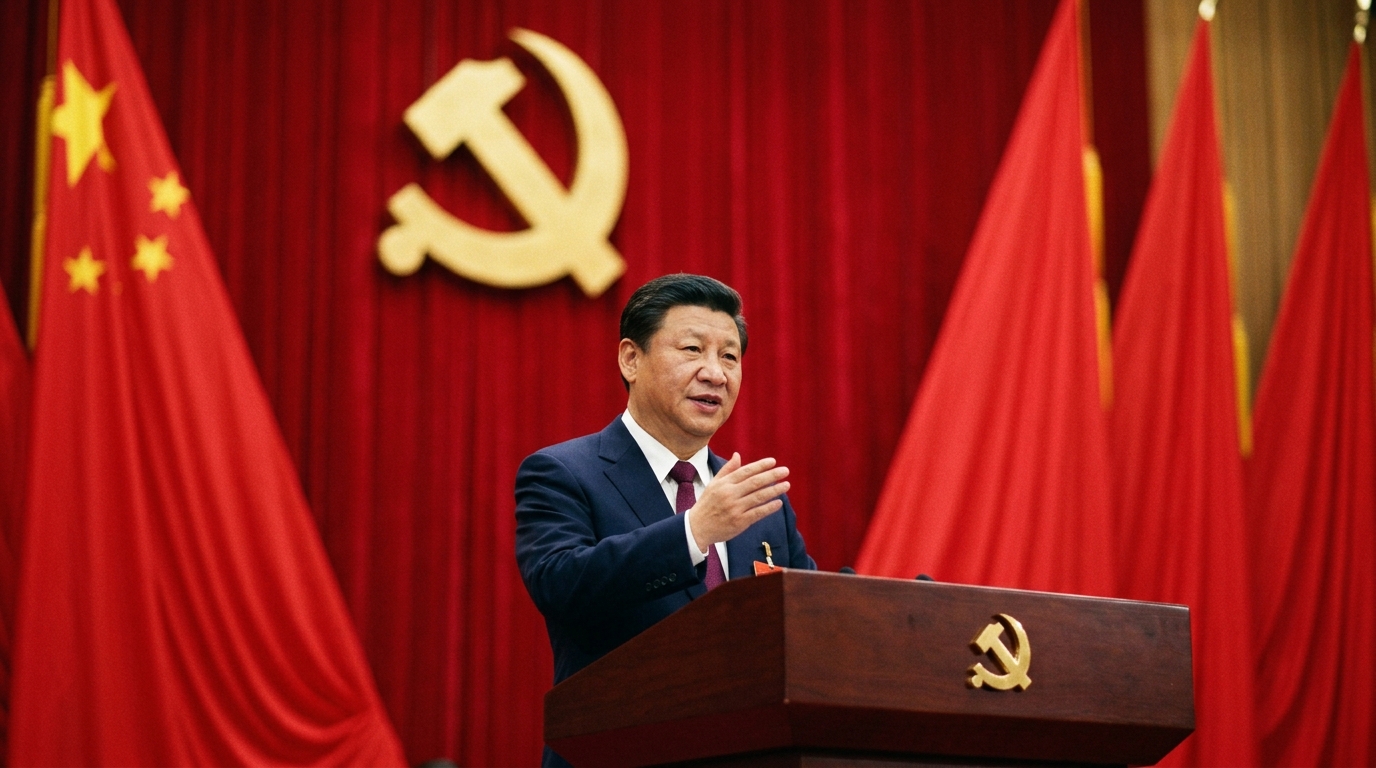
The ascension of Xi Jinping to the position of General Secretary of the Chinese Communist Party (CCP) at the 18th National Congress in November 2012 was not merely a routine transition of power; it was a watershed moment in the trajectory of the People's Republic of China (PRC). To understand the seismic shift of 2012, one must look at the preceding decade—the Hu Jintao and Wen Jiabao era (2002-2012). The "Hu-Wen" years were characterized by a focus on "Harmonious Society" (和谐社会, héxié shèhuì) and a model of collective leadership, a deliberate reaction against the perceived hyper-centralization of the Mao era and the rapid, often chaotic marketization of the Deng Xiaoping and Jiang Zemin eras. This period saw China's economy continue its meteoric rise, yet it also sowed the seeds of profound internal challenges.
While the "Harmonious Society" doctrine aimed to address burgeoning social inequalities and regional disparities—a direct consequence of Deng's "let some get rich first" policy—its implementation often lacked the centralized authority needed for decisive action. The collective leadership model, while designed to prevent the emergence of another strongman like Mao, arguably led to a fragmentation of power. Individual Politburo Standing Committee (PBSC) members were granted significant autonomy over their respective portfolios, which, combined with a focus on consensus, often resulted in policy paralysis or uncoordinated initiatives. This decentralization fostered fertile ground for patronage networks and localized corruption to flourish, eroding public trust in the Party's legitimacy.
By 2012, the party elite harbored deep anxieties. The rapid economic growth that had sustained legitimacy since the 1990s was decelerating from its double-digit peaks. Moreover, the environmental costs of unchecked industrialization were becoming catastrophically apparent, leading to widespread public discontent. Perhaps most critically from the Party's perspective, corruption was viewed not just as a moral failing but as an existential threat to the party’s survival. High-profile scandals, such as the one involving Bo Xilai, a charismatic and ambitious Politburo member, exposed the deep fissures and factionalism within the CCP's upper echelons, hinting at a potential crisis of control. In this climate, the CCP leadership settled on Xi Jinping—a man with deep familial ties to the revolutionary generation, known as a 'princeling' (太子党, tàizidǎng)—to serve as the stabilizing force required to steer the nation through its next phase of development. His background offered both a perception of ideological purity and a strong, unifying figure capable of asserting central authority over a sprawling and increasingly complex state apparatus.
Pre-2012 Political Landscape and Succession Dynamics
The years leading up to 2012 were marked by a complex interplay of factional politics, ideological debates, and a looming leadership transition that underscored the vulnerabilities of the collective leadership model. The CCP was nominally led by Hu Jintao, whose background in the Communist Youth League (CYL) faction often placed him at odds with the "Shanghai Gang" associated with former President Jiang Zemin, who continued to exert influence from behind the scenes. This delicate balance of power often resulted in cautious, incremental policymaking rather than bold reforms.
The Bo Xilai scandal proved to be the pivotal moment that reshaped the succession dynamics. Bo, a high-flying Politburo member and Party Secretary of Chongqing, was seen as a potential contender for a top leadership position. He cultivated a populist image by launching "red culture" campaigns and cracking down on organized crime, initiatives that resonated with some segments of the public and certain Party elders. However, his ambitious and unconventional style, coupled with allegations of corruption and abuse of power against his family, ultimately led to his downfall in early 2012, just months before the Party Congress. The scandal, which included the defection of his police chief, Wang Lijun, to a U.S. consulate and the murder conviction of Bo's wife, Gu Kailai, for the killing of a British businessman, exposed the brutal realities of power struggles at the highest levels of the CCP.
The Bo Xilai affair profoundly shocked the Party, revealing the extent of internal disunity and personal ambition that threatened its stability. It underscored the perceived need for a leader strong enough to restore discipline, curb corruption, and reassert central control. In this tumultuous environment, Xi Jinping emerged as the consensus candidate. His 'princeling' status provided him with a unique blend of legitimacy and connections across different factions, especially within the military, which viewed him as a natural successor. Unlike other potential candidates, Xi had spent his career diligently working his way up through provincial leadership roles, maintaining a low profile while steadily accumulating experience and support, avoiding the controversies that plagued others. His selection was not just a matter of lineage, but a calculated decision by the Party's most influential figures to safeguard the CCP's long-term survival in the face of profound internal and external pressures.
Timeline of Events and Key Moments
The transition of 2012 and the immediate aftermath redefined the operational logic of the Chinese state, marking a clear pivot towards a more centralized and assertive leadership. The following table outlines the sequence of the transition and its seminal early developments:
| Date | Event | Significance |
|---|---|---|
| October 2012 | Bo Xilai expelled from Party | Signals the final purge of a major political rival, clearing Xi's path to power. |
| November 8, 2012 | 18th National Congress Begins | The formal commencement of the leadership transition, laying out the Party's future direction. |
| November 15, 2012 | Xi Jinping elected General Secretary | Xi assumes the top position, signaling the decisive end of the Hu-Wen era and the start of a new, centralized leadership. |
| November 29, 2012 | First "Chinese Dream" Speech | Xi visits the "Road to Rejuvenation" exhibition, formally introducing the slogan as the grand narrative for national purpose. |
| December 2012 | Xi's first southern tour to Shenzhen and Guangdong | Emulates Deng Xiaoping's 1992 southern tour, signaling commitment to reform while asserting new authority. |
| January 2013 | Launch of Anti-Corruption Drive | Xi launches the "Tigers and Flies" campaign, initiating a sweeping purge to consolidate power and restore Party legitimacy. |
| March 2013 | Xi Jinping elected President of the PRC | Consolidates state and Party leadership under one individual, further cementing his authority. |
| September 2013 | Announcement of BRI (Kazakhstan) | Xi formalizes the "Silk Road Economic Belt" strategy, signaling a new era of proactive foreign and economic policy. |
| October 2013 | Announcement of BRI (Indonesia) | Xi introduces the "21st Century Maritime Silk Road," completing the strategic vision of the Belt and Road Initiative. |
| November 2013 | Third Plenum of the 18th Central Committee | Unveils ambitious economic reforms, giving the market a "decisive role" while paradoxically strengthening Party control over the economy. |
The "Chinese Dream" Narrative
Soon after his election, on November 29, 2012, Xi Jinping visited the National Museum of China, specifically the "Road to Rejuvenation" exhibition. It was here that he formally invoked the "Chinese Dream" (中国梦, Zhongguo Meng), a concept designed to bridge the gap between national prestige and personal aspiration, and to offer a compelling vision for China's future. The Dream was presented as the "great rejuvenation of the Chinese nation" (中华民族伟大复兴, Zhonghua Minzu Weida Fuxing), a teleological narrative that inextricably linked the historical grievances of the "Century of Humiliation" (1839-1949) to a future where China occupies its rightful place as a global power, strong, prosperous, and respected.
Unlike the American Dream, which emphasizes individual opportunity and upward mobility, the Chinese Dream is inherently collective. It posits that individual success and happiness are intrinsically tied to the nation's strength and prosperity. This narrative serves multiple critical functions. Domestically, it acts as a powerful unifying force, marshaling nationalistic fervor and channeling it towards shared goals. It provides an overarching ideological framework that legitimizes CCP rule by presenting the Party as the indispensable vanguard leading China toward its glorious destiny. It also aims to counteract the allure of Western liberal ideas by offering an alternative, distinctively Chinese vision of modernity and progress. Internationally, the Chinese Dream projects an image of a confident, revitalized China that seeks to regain historical prominence and contribute to global governance, albeit on its own terms. It is a declaration of intent for China to be a major player, not just economically, but politically, culturally, and militarily, fulfilling what the Party perceives as its historical mandate.
Ideological Reassertion and the Cult of Personality
One of the most defining features of Xi Jinping's early tenure was the aggressive reassertion of Party ideology and a palpable shift towards a more personalized leadership style, gradually evolving into a cult of personality. This represented a stark departure from the collective, often technocratic, image cultivated by his predecessors.
Immediately after 2012, the CCP under Xi embarked on a systematic campaign to tighten ideological control across all spheres of Chinese society. This included a significant crackdown on dissent, stricter censorship of media, internet, and academia, and a renewed emphasis on Marxist-Leninist thought blended with "socialism with Chinese characteristics." Universities were mandated to promote Party ideology, with lecturers cautioned against discussing "Western values" such as constitutionalism, universal human rights, and press freedom. The "Document No. 9," issued in 2013, explicitly warned against seven "subversive" currents, signaling the Party's deep concern over ideological erosion and its determination to reassert control over public discourse.
Furthermore, Xi Jinping began to build a strong personal image, culminating in the establishment of "Xi Jinping Thought on Socialism with Chinese Characteristics for a New Era" (Xi Jinping Xinshidai Zhongguo Tese Shehuizhuyi Sixiang) at the 19th Party Congress in 2017. This elevation of his personal ideology to the same level as Mao Zedong Thought and Deng Xiaoping Theory cemented his intellectual and political dominance. The widespread propagation of "Xi Jinping Thought" through official media, textbooks, and daily study sessions for Party members aimed to cultivate unwavering loyalty and ideological unity around his leadership.
The consolidation of power was not just ideological but also structural. Xi established and chaired numerous "Leading Small Groups" (LSGs) covering virtually every major policy domain, from national security and economic reform to cybersecurity and military reform. These LSGs, often bypassing traditional ministerial bureaucracy, allowed Xi to directly steer policy and decision-making, concentrating authority at the very top. This move effectively undermined the collective leadership model and centralized power in the hands of the General Secretary, providing him with unprecedented control over the Party and state apparatus. This deliberate construction of a robust, personalized leadership was seen as essential to overcoming the factionalism and inertia that plagued the Hu-Wen era, and to effectively pursue the ambitious goals of the Chinese Dream.
Geopolitical Consequences and Aftermath
The rise of Xi Jinping marked the decisive end of the Taoguang Yanghui (韬光养晦, "hide your strength, bide your time") policy famously championed by Deng Xiaoping. Under Xi, China’s foreign policy became markedly more proactive, assertive, and ambitious, signaling a new era of engagement on the global stage.
- The Belt and Road Initiative (BRI): Announced in two parts in 2013—the "Silk Road Economic Belt" in Kazakhstan and the "21st Century Maritime Silk Road" in Indonesia—this massive infrastructure investment program rapidly evolved from a regional connectivity project into a strategic tool to integrate China into the global market on its own terms. By financing and constructing ports, railways, energy pipelines, and digital infrastructure across Asia, Africa, Europe, and even parts of Latin America, China effectively created a network of economic interdependencies. This initiative served multiple purposes: it absorbed China's vast industrial overcapacity, secured diversified supply chains for resources, created new markets for Chinese goods and services, and perhaps most importantly, expanded China's geopolitical influence, positioning Beijing as a central hub in a new global economic order. Early reactions from recipient countries were mixed; while many welcomed the much-needed infrastructure, concerns grew over debt sustainability and the strategic implications of Chinese control over critical infrastructure.
- Increased Assertiveness in Territorial Disputes: The shift in 2012 prompted a more confrontational approach in maritime territorial disputes, particularly in the South China Sea. Beijing moved from diplomatic protest and historical claims to the physical construction of artificial islands on disputed features, which were then heavily militarized with airfields, radar installations, and missile systems. This demonstrated a willingness to challenge existing regional norms and assert its "nine-dash line" claims more forcefully against neighbors like Vietnam, the Philippines, Malaysia, and Brunei. Similarly, in the East China Sea, China established an Air Defense Identification Zone (ADIZ) in November 2013, covering disputed territories and requiring all aircraft to report flight plans to Beijing, escalating tensions with Japan, South Korea, and the United States. This aggressive posture signaled a move toward regional hegemony, challenging the established U.S.-led security architecture in Asia.
- Global Governance Reform and Alternative Institutions: Xi’s administration began to advocate more explicitly for an alternative international order, one less dominated by Western powers and more reflective of a multipolar world. By establishing institutions like the Asian Infrastructure Investment Bank (AIIB) in 2014, China signaled its intent to rewrite, rather than simply abide by, existing international norms and financial architectures. The AIIB, along with the New Development Bank (NDB) established by the BRICS nations, offered alternatives to the World Bank and International Monetary Fund, often perceived as Western-dominated. This move aimed to give developing nations greater say in global finance and infrastructure development, while simultaneously promoting Chinese standards and influence. China also increased its engagement and leadership roles in existing international bodies, seeking to shape their agendas from within.
- Military Modernization and Power Projection: Complementing its diplomatic and economic assertiveness, Xi's early years saw an acceleration of the People's Liberation Army (PLA)'s modernization drive. The goal was to transform the PLA into a world-class fighting force capable of defending China's expanding overseas interests and projecting power beyond its immediate periphery. This included significant investments in naval expansion (including aircraft carriers), advanced air capabilities (stealth fighters), cyber warfare, and strategic missile forces. This military build-up provided the muscle behind China's more confident foreign policy, allowing it to back its territorial claims and global ambitions with credible force.
Analysis of Key Actors and Decisive Actions
The success of Xi's rise and subsequent consolidation of power depended fundamentally on his ability to neutralize entrenched interests and reshape the Party-state apparatus. The anti-corruption campaign, personally spearheaded by Xi and executed by his trusted ally, Wang Qishan, was the primary instrument for this transformation. It was not merely a moral crusade but a systematic and highly effective consolidation of power, targeting both political rivals and corrupt officials indiscriminately.
"We must adhere to the principle that both tigers and flies are swatted," Xi declared, emphasizing that no official, regardless of rank, was immune from scrutiny.
This rhetoric was quickly matched by action. High-profile "tigers" brought down included:
- Bo Xilai: As discussed, his downfall pre-dated Xi's formal ascension but cleared the path.
- Zhou Yongkang: A former member of the Politburo Standing Committee and China's powerful security tsar, his arrest and conviction in 2015 marked an unprecedented move against a figure of such high rank since the Cultural Revolution. His conviction for corruption, abuse of power, and leaking state secrets sent a chilling message throughout the Party.
- Xu Caihou and Guo Boxiong: Both former Vice Chairmen of the Central Military Commission (CMC), these powerful generals were purged for corruption, sending a clear signal that the military was not beyond the reach of the campaign and, crucially, asserting Xi's authority over the PLA.
By targeting both high-level officials ("tigers") and low-level functionaries ("flies"), Xi effectively bypassed the traditional bureaucratic friction that had often paralyzed his predecessors. The campaign served dual purposes: it restored a measure of public faith in the Party's legitimacy by demonstrating a commitment to accountability, and more strategically, it systematically neutralized political factions (such as elements of the Youth League faction and Jiang Zemin's "Shanghai Gang") that could challenge the authority of the General Secretary, thereby consolidating power into the core leadership. The establishment of the National Supervisory Commission in 2018, merging various anti-corruption bodies, institutionalized this power, giving it broad investigative powers beyond Party members, underscoring its permanent and pervasive role in governance.
Beyond the anti-corruption drive, Xi undertook aggressive structural reforms. The reorganization of the People's Liberation Army (PLA) was a monumental task. Launched in 2015, these reforms aimed to streamline the military's command structure, reduce its sheer size while increasing its combat readiness, and most importantly, enhance its loyalty to the Party and to Xi himself. The seven military regions were consolidated into five theater commands, and new branches like the PLA Rocket Force and Strategic Support Force were created, emphasizing joint operations and modern warfare capabilities. This reorganization was crucial for transforming the PLA from a largely land-based force into a modern, integrated military capable of projecting power and protecting China's growing global interests.
Furthermore, ideological control was significantly enhanced, as discussed previously, with stricter censorship of media and the internet, a push for greater ideological discipline within the Party, and an emphasis on Marxist-Leninist thought infused with Xi Jinping's own ideology. The establishment of new Party leading small groups, often chaired by Xi, allowed for more centralized decision-making and oversight across various policy domains, effectively bypassing traditional ministerial structures and ensuring that his vision permeated all levels of governance.
Socio-Economic Transformations and Challenges
While Xi Jinping's ascent in 2012 focused heavily on political consolidation and foreign policy recalibration, his administration also inherited and immediately began to address profound socio-economic challenges and catalyze significant transformations within China. The overarching goal was to shift China's growth model, enhance its technological prowess, and address the glaring social disparities that threatened stability.
One of the most pressing issues was environmental degradation. Decades of rapid, unchecked industrialization had led to severe air and water pollution, soil contamination, and resource depletion. Cities frequently experienced "airpocalypses," and public discontent over environmental issues was growing. Xi's government declared a "war on pollution," initiating stricter environmental regulations, closing down polluting factories, investing heavily in renewable energy, and promoting ecological civilization. While the challenges remained immense, these early years saw a genuine effort to decouple economic growth from environmental devastation.
Wealth inequality and social welfare were also critical concerns. Despite impressive GDP growth, the benefits were unevenly distributed, leading to a widening gap between the rich and the poor, and between urban and rural areas. Xi's administration emphasized "common prosperity" (共同富裕, gòngtóng fùyù) as a long-term goal, aiming to build a moderately prosperous society (xiaokang shehui) by 2021. This involved significant investment in poverty alleviation programs, particularly in rural areas, expanding access to healthcare and education, and strengthening the social security net. The Third Plenum of 2013, while asserting the market's "decisive role," also outlined reforms to land rights, the hukou (household registration) system, and state-owned enterprises (SOEs), all aimed at fostering more equitable development and urban integration.
In the realm of economic innovation and technological self-reliance, Xi's leadership quickly recognized the necessity of moving beyond being the "world's factory" to becoming a global leader in advanced technologies. Early initiatives laid the groundwork for policies like "Made in China 2025," aiming to upgrade China's industrial base, foster indigenous innovation, and reduce reliance on foreign technology in strategic sectors. This pivot was driven by a recognition of China's vulnerability to technological bottlenecks, particularly in areas like semiconductors, and a desire to dominate future industries like artificial intelligence, 5G, and biotechnology. These moves represented a strategic long-term vision to transform China into a high-tech, innovation-driven economy, providing another pillar for its "great rejuvenation."
The interplay between these domestic socio-economic policies and the broader geopolitical strategy was clear. A more prosperous, technologically advanced, and socially stable China was seen as a prerequisite for asserting greater influence on the world stage and achieving the aspirations of the Chinese Dream. The early years of Xi's tenure thus laid the foundation for a comprehensive transformation, aiming to address internal vulnerabilities while simultaneously bolstering China's external power.
Trivia and Lesser-Known Facts
- The "Princeling" Factor: As noted, Xi Jinping belongs to the "Princeling" class—children of the first generation of Communist revolutionaries. His father, Xi Zhongxun, was a revered revolutionary veteran who was purged during the Cultural Revolution but later rehabilitated. This background gave Xi Jinping a unique blend of Party orthodoxy, a deep understanding of its internal workings, and, crucially, the trust of the military establishment, which had felt sidelined during the Hu-Wen years. His personal narrative includes periods of hardship during the Cultural Revolution, which is often used to bolster his image as a leader who understands the struggles of ordinary people.
- Economic Philosophy and the Third Plenum: While the West often characterizes Xi as a pure statist, the early years of his tenure, particularly the 2013 Third Plenum of the 18th Central Committee, were actually intended to give the market a "decisive role" in resource allocation. This document outlined ambitious economic reforms, including opening up state monopolies, liberalizing interest rates, and granting farmers more property rights. However, the practical implementation of many of these market-oriented reforms was later subsumed by a strengthening of state interventionism and Party control, especially over key strategic industries and the digital economy. This complex interplay between market forces and state guidance remains a defining feature of China's economic model under Xi.
- The "Core" Title: It took until October 2016 for Xi Jinping to be officially designated the "core" (核心, hexin) of the CCP Central Committee. This title, previously held by Mao Zedong, Deng Xiaoping, and Jiang Zemin, signifies a leader of paramount authority whose leadership cannot be questioned. While the formal designation came later, the structural foundations for this elevation—through the anti-corruption campaign, military reforms, and ideological tightening—were firmly laid in the 2012 transition period and the years immediately following. It marked the formal end of any pretense of collective leadership.
- Global Perception Shift: The initial period of Xi's leadership saw a subtle but significant shift in how China was perceived globally. While previous leaders had sought to reassure the world of China's "peaceful rise," Xi's more assertive stance, particularly with the BRI and South China Sea actions, gradually led to increased scrutiny and concern from established Western powers, rather than just developing nations. This era marked the beginning of a more openly competitive relationship between China and the United States.
References and Literature
- The Party: The Secret World of China's Communist Rulers - Richard McGregor's seminal work offers a deep dive into the inner workings of the CCP and the institutional mechanisms of leadership transition and power consolidation.
- Foreign Affairs: "The Return of Red China" - Various academic analyses and articles published in Foreign Affairs provide insightful perspectives regarding the policy shift from collective leadership to centralized power and its implications.
- Xi Jinping: The Governance of China (Official Publication) - The primary source text, a multi-volume collection of Xi Jinping's speeches and writings, outlining the conceptual framework of the Chinese Dream and initial policy goals, published by the Foreign Languages Press.
- Brookings Institution: The 18th Party Congress Report - Offers comprehensive summaries and analyses of the political environment, organizational changes within the CPC, and policy directions articulated during the 2012 transition.
- China's Future (2nd Edition): Dilemmas and Opportunities - By David Shambaugh, this book provides an expert's view on the challenges facing China and the transformations initiated under Xi Jinping.
- The Dictator's Handbook: Why Bad Behavior is Almost Always Good Politics - While not directly about Xi, this work offers a theoretical framework for understanding how leaders consolidate and maintain power, which can be applied to Xi's actions post-2012.
- The New Long March: Star-up, Innovation and the Future of China - By Jonathan Fenby, provides insights into China's economic transformation and innovation drive under Xi's leadership.