Key Takeaways
- Sweden’s accession marks the most significant expansion of NATO’s strategic reach in Northern Europe since the Cold War, fundamentally altering the region's defense posture.
- The arduous process, spanning nearly two years, highlighted the complexities of consensus-based diplomacy within a 32-member alliance, navigating diverse national interests and geopolitical ambitions.
- The incorporation of Sweden, alongside Finland, effectively transforms the Baltic Sea into a 'NATO lake,' drastically enhancing collective defense capabilities and forcing a fundamental recalibration of Russia's regional defense calculus.
- This historic shift underscores a profound re-evaluation of national security strategies across Europe in response to the escalating threat perception from Russia.
Historical Context and Origins of Swedish Non-Alignment
For over two centuries, Sweden adhered to a policy of military non-alignment, a posture that evolved from a traumatic period of territorial losses and a re-evaluation of its role as a great power. The pivotal year was 1814, marking the conclusion of the Swedish-Norwegian War and the end of Sweden's last direct military conflict. Having lost Finland to Russia in 1809 and facing the rise of continental powers, Sweden, under King Karl XIV Johan (formerly Jean-Baptiste Bernadotte), opted for a pragmatic shift. This was not initially declared as "neutrality" in the modern sense but as a strategic withdrawal from great power rivalries, focusing instead on internal development and maintaining peace through a policy of not forming alliances that could draw it into war.
Throughout the 20th century, this stance crystallized into a sophisticated form of armed non-alignment, often referred to as "neutrality." During the First World War, Sweden navigated the conflict by maintaining strict neutrality, though its economic ties often favored one side or another. The Second World War presented a far greater challenge, as Sweden found itself wedged between Nazi Germany and the Soviet Union. Its neutrality during this period was complex and often criticized, involving concessions to Germany (such as allowing the transit of German troops and iron ore exports) alongside a covert, yet robust, defense buildup. The underlying principle, however, remained a commitment to stay out of formal military alliances.
The Cold War era saw Sweden meticulously cultivating its non-aligned image on the global stage, often playing a significant role in international mediation and disarmament efforts. Yet, beneath this public facade lay a sophisticated and extensive defense cooperation with the United States and, by extension, NATO. This "covert cooperation," as historians have termed it, involved intelligence sharing, joint planning for defense in the event of a Soviet invasion, and access to Western military technology. Swedish defense planners secretly coordinated with NATO, ensuring that Swedish forces would be interoperable with Western allies if the Cold War turned hot. This dual strategy – public non-alignment combined with clandestine Western orientation – was a testament to Sweden’s determination to ensure its security while maintaining a perceived distance that allowed it to act as a bridge-builder in a polarized world. Key figures like Prime Minister Tage Erlander expertly managed this delicate balance, navigating domestic political sensitivities and international expectations.
The post-Cold War era brought a gradual integration with Western institutions, challenging the traditional definition of non-alignment. Sweden joined the European Union in 1995, participating in its nascent common foreign and security policy. It became a member of NATO's Partnership for Peace program in 1994, which facilitated joint military exercises and interoperability. Subsequent agreements, such as the Host Nation Support agreement in 2014, allowed NATO forces to operate more easily on Swedish territory during exercises or crises. Despite these deepening ties, the official doctrine remained one of keeping the country outside of formal military alliances, a stance broadly supported by a bipartisan consensus and public opinion.
However, this era of strategic ambiguity, though increasingly stretched, effectively ended on February 24, 2022. The full-scale Russian invasion of Ukraine acted as an existential shock to the Swedish political establishment and the broader public. The perception of Russia transformed from a challenging neighbor to an unpredictable and expansionist power capable of large-scale aggression in Europe. Within months, the governing Social Democrats, under Prime Minister Magdalena Andersson, reversed decades of party dogma and a core tenet of their political identity, acknowledging that the Russian threat was too imminent and unpredictable to rely on anything less than NATO’s Article 5 collective security guarantee. This rapid shift marked the most profound re-evaluation of Swedish security policy in over 200 years.
The Domestic Calculus: Public Opinion and Political Shifts in Sweden and Finland
The decision by both Sweden and Finland to abandon their long-standing policies of military non-alignment was not merely a reaction to external events but also the culmination of significant internal political and public opinion shifts. For decades, neutrality was deeply embedded in the national psyche of both countries, rooted in distinct historical experiences but converging on a shared principle of non-participation in military blocs.
In Sweden, public support for NATO membership prior to 2022 consistently hovered below 50%, with the Social Democrats, as the dominant political force, steadfastly opposing it. The argument against NATO membership centered on the belief that non-alignment served as a deterrent, reducing the likelihood of becoming a target in a major conflict. Furthermore, proponents of neutrality emphasized Sweden's role as an independent voice in international diplomacy, capable of mediation and peace-building without being constrained by alliance politics. The memory of the complex neutrality during WWII, however fraught, still resonated as a period when Sweden avoided direct conflict.
However, the geopolitical landscape had been subtly shifting for years. Russia's annexation of Crimea in 2014 and its continued assertiveness in the Baltic Sea region prompted Sweden to significantly increase its defense spending and re-militarize the strategically vital island of Gotland. These actions signaled a growing recognition of the deteriorating security environment, yet the political will to cross the NATO threshold remained elusive.
The full-scale invasion of Ukraine in February 2022 was the undisputed turning point. The brutality and scale of the Russian aggression shattered the foundational assumptions of Swedish security policy. Public opinion shifted dramatically and rapidly; within weeks, polls showed a clear majority in favor of joining NATO. This seismic shift created an imperative for political leaders to respond. Prime Minister Magdalena Andersson faced the formidable task of leading her Social Democratic party to reverse a policy that had been a pillar of its identity since the early 20th century. Her leadership was crucial in forging a broad parliamentary consensus, arguing that collective security within NATO was the only credible defense in the face of a demonstrably aggressive Russia. The debate was intense but remarkably swift, culminating in a historic decision to apply for membership, prioritizing national security over deeply ingrained traditions.
Finland's journey to NATO, while mirroring Sweden's in its timing, was shaped by an even more acute sense of historical pragmatism concerning Russia. Having fought two brutal wars against the Soviet Union in the 20th century (the Winter War and the Continuation War), Finland cultivated a policy of 'Finlandization' during the Cold War – a term often used to describe a state's subservience to a more powerful neighbor's foreign policy, while maintaining nominal independence. In Finland's case, it meant maintaining robust armed forces and a close relationship with the Soviet Union, carefully avoiding any actions that could be perceived as threatening. This delicate balance allowed Finland to maintain its sovereignty and democratic institutions despite sharing a 1,340-kilometer border with its powerful eastern neighbor.
Post-Cold War, Finland also joined the EU and participated in various NATO partnership programs, all while maintaining its non-aligned status. Its defense capabilities, however, remained exceptionally robust, with universal conscription and a large, well-trained reserve force. The Finnish political establishment, including figures like President Sauli Niinistö and Prime Minister Sanna Marin, had always maintained that the "NATO option" was kept open, meaning membership was always a possibility should the security situation demand it.
When Russia invaded Ukraine, the Finnish response was almost immediate and highly unified. The experience of living next to Russia, combined with a strong sense of self-preservation, meant that the decision to join NATO was met with overwhelming public and political support. The parliamentary process was rapid, with cross-party consensus forming quickly around the view that the benefits of Article 5 outweighed any perceived risks of abandoning non-alignment. Finland's quick decision and swift ratification process provided crucial momentum for Sweden's own application, as both countries emphasized their desire to join simultaneously. The alignment of these two traditionally non-aligned Nordic nations represented a profound strategic shift, solidifying a "Nordic Model" of security within NATO.
Timeline of Events and Key Moments
The path to full NATO membership for Sweden was neither short nor straightforward, requiring a delicate navigation of domestic politics, bilateral concessions, and complex international diplomacy. The journey, closely linked with Finland's, highlighted both the alliance's commitment to the 'open door' policy and the challenges of consensus-based decision-making among sovereign states.
| Date | Event | Significance |
|---|---|---|
| May 12, 2022 | Finland's President and PM announce support for NATO membership. | A critical precursor, signaling a decisive shift in Nordic security policy and building momentum for a joint application. |
| May 16, 2022 | Sweden's ruling Social Democrats back NATO membership. | A historic policy reversal for the party, clearing the main domestic hurdle for Sweden's application. |
| May 18, 2022 | Formal application submitted to NATO. | Sweden and Finland jointly deliver their applications, signifying their official intent to join the Alliance. |
| May 20, 2022 | Turkey expresses objections to Swedish and Finnish membership. | President Erdogan cites concerns over perceived support for Kurdish groups and arms embargoes, initiating a protracted negotiation period. |
| June 28, 2022 | Madrid Summit: Turkey lifts its initial block. | Following intense negotiations, a Trilateral Memorandum between Turkey, Finland, and Sweden is signed, addressing Turkey's security concerns. |
| July 5, 2022 | NATO Allies sign Accession Protocols for Finland and Sweden. | The formal start of the ratification process by individual member states. |
| Sept 2022 - Jan 2023 | Turkey increases demands on Sweden. | Renewed focus on alleged PKK members and Gülenists in Sweden; escalates calls for extradition and tighter anti-terrorism laws. |
| Oct 18, 2022 | Ulf Kristersson becomes Sweden's Prime Minister. | Kristersson's new government prioritizes NATO accession, intensifying diplomatic efforts with Turkey. |
| Jan 21, 2023 | Anti-Turkey protests in Stockholm, including Quran burning. | Incidents further strain relations with Turkey and are condemned by Erdogan, temporarily freezing negotiations. |
| April 4, 2023 | Finland formally joins NATO. | Finland's accession proceeds after Turkish ratification, separating its path from Sweden's and adding pressure on Stockholm. |
| July 10, 2023 | Vilnius Summit: President Erdogan agrees to send Sweden’s protocol to Parliament. | A breakthrough achieved on the eve of the summit, following further concessions and U.S. diplomatic engagement (F-16 deal). |
| Dec 26, 2023 | Turkish Parliamentary Committee approves Sweden's accession protocol. | A crucial step, signaling the end of the deadlock within the Turkish legislative process. |
| Jan 23, 2024 | Turkish Parliament Ratification. | The Grand National Assembly votes overwhelmingly in favor of Sweden’s membership, sending it to President Erdogan for signature. |
| Jan 25, 2024 | President Erdogan signs the ratification instrument. | Turkey officially completes its ratification process, leaving Hungary as the final holdout. |
| Feb 26, 2024 | Hungarian Parliament Ratification. | The final legislative hurdle is cleared in Budapest, after a period of 'strategic patience' and diplomatic visits. |
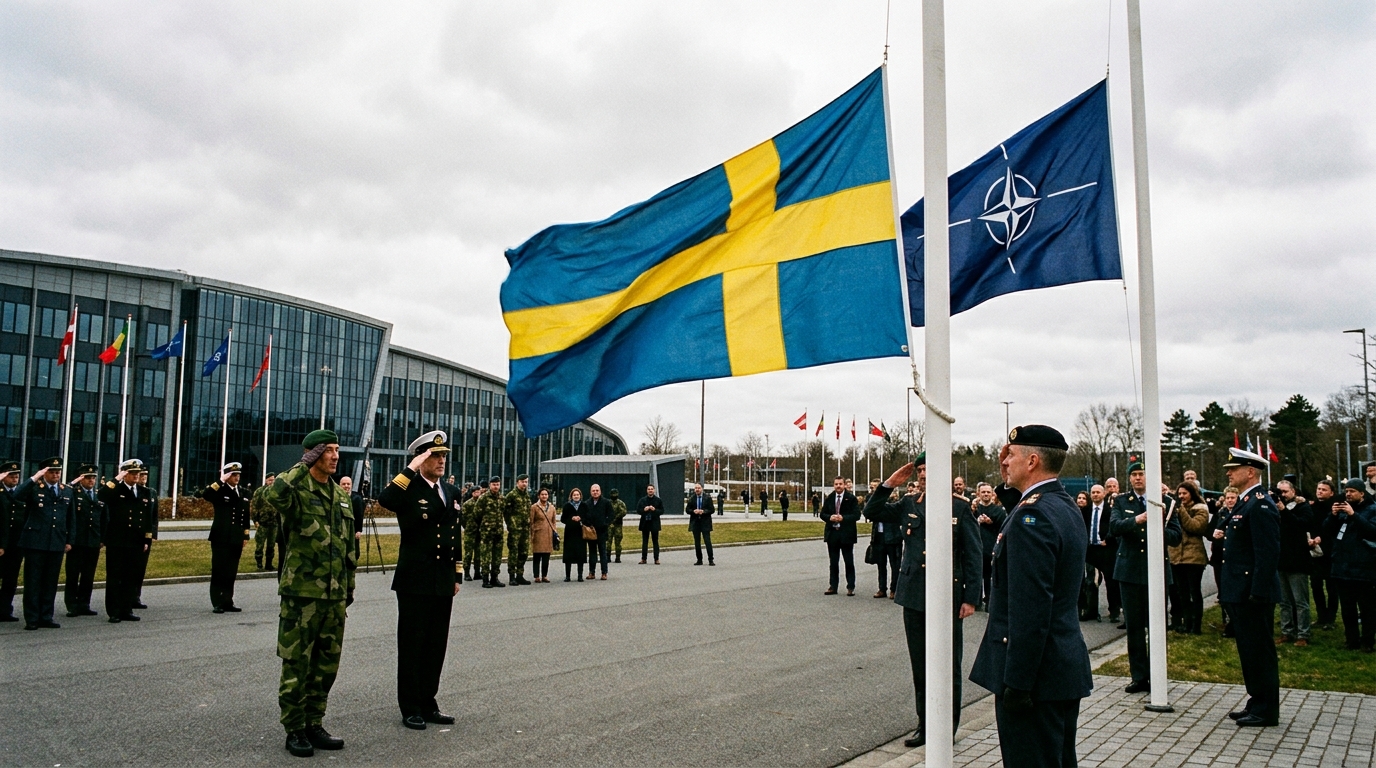
| March 7, 2024 | Formal Accession. | Sweden becomes the 32nd member of NATO in Washington, D.C., depositing its instrument of accession with the U.S. Department of State. |
Throughout this challenging period, Prime Minister Ulf Kristersson, who took office in October 2022, focused intensely on addressing the specific security concerns of Turkey. This involved public commitments, legislative reforms, and direct diplomatic engagement. His government tightened anti-terrorism legislation, making it illegal to participate in or finance a terrorist organization, which was a direct response to Turkey's demands concerning groups like the PKK and the Gülen movement. These actions, while at times controversial domestically, demonstrated Sweden's commitment to meeting the requirements of a prospective NATO ally.
Broader Geopolitical Realignment and Future Implications for European Security
Sweden's accession, following Finland's, represents a fundamental geopolitical realignment in Northern Europe, reshaping the continent's security architecture and sending profound signals to both allies and adversaries. This expansion is not merely an addition of two members but a strategic consolidation of NATO's northern flank, with far-reaching consequences.
The Baltic Sea: A NATO Lake
The most immediate and palpable implication is the transformation of the Baltic Sea. Once a contested space with several non-NATO littoral states (Sweden and Finland), it is now almost entirely encircled by NATO members. This "NATO lake" status drastically alters the strategic calculus for Russia, particularly for its Baltic Fleet based in Kaliningrad and St. Petersburg.
- Contiguous Defensive Wall: The combined territories of Finland, Sweden, Norway, Denmark, Germany, Poland, Lithuania, Latvia, and Estonia create a contiguous defense perimeter. This greatly simplifies command, control, and coordination for NATO forces, improving early warning capabilities and logistical resilience.
- Chokepoint Control: NATO now possesses enhanced control over key maritime chokepoints, such as the Danish Straits and the Gulf of Finland, vital for accessing and egressing the Baltic Sea. This makes it significantly harder for Russia to project naval power beyond its immediate coastal areas without detection or interdiction.
- Kaliningrad's Vulnerability: Russia's heavily militarized exclave of Kaliningrad, already geographically isolated, now faces an even greater degree of encirclement. Its ground, air, and naval connections to the Russian mainland are predominantly over or through NATO territory and waters, making it highly vulnerable in a conflict scenario. This could force Russia to rethink its military posture and resource allocation in the region.
Reinforcement of the Northern Flank and Arctic Security
The inclusion of Sweden and Finland dramatically strengthens NATO's entire northern flank, from the North Atlantic to the Arctic.
- Strategic Depth in the High North: NATO now controls the vast expanse of the Arctic region adjacent to Europe, an area of increasing geopolitical and economic importance due to melting ice caps and new shipping lanes. This facilitates better coordination of defense and surveillance, challenging Russia's traditional dominance and military buildup in its Arctic territories.
- GIUK Gap Relevancy: The Greenland-Iceland-UK (GIUK) Gap, a critical maritime chokepoint in the North Atlantic, benefits from enhanced surveillance and air-sea coordination as NATO can leverage Swedish and Finnish capabilities in the wider Nordic region. This strengthens NATO's ability to monitor and counter Russian naval activities in the Atlantic.
- Interoperability and Joint Exercises: The highly capable, modern armed forces of Sweden and Finland, already deeply integrated through Nordic defense cooperation (NORDEFCO) and Partnership for Peace, seamlessly enhance NATO’s collective capabilities. Their experience operating in demanding Arctic conditions, combined with advanced air forces and navies, adds significant strength and specialized expertise.
Implications for European Union Security
Sweden and Finland's NATO membership also has profound implications for the European Union's common security and defense policy (CSDP). As EU members, their entry into NATO creates a stronger alignment between the two organizations.
- Synergy, Not Duplication: With the vast majority of EU members now also NATO members, there is an opportunity to foster greater synergy between EU defense initiatives and NATO's collective defense mandate, reducing potential for duplication and ensuring resources are optimally utilized.
- Strengthened European Pillar: The accession reinforces the 'European pillar' within NATO, providing a more cohesive European voice and greater shared responsibility for continental security. This might also allow the EU to focus its defense efforts on crisis management, cybersecurity, and capacity building for partners, while NATO remains the primary guarantor of territorial defense.
Reassessment of Deterrence and Russia's Response
Russia’s immediate reaction was one of predictable condemnation, with the Kremlin threatening "counter-measures" against what it framed as an aggressive expansion by the West. However, the strategic reality is that Russia now faces a vastly more coordinated, integrated, and interoperable defense force on its northwestern borders.
- Increased Burden on Russia: This expansion places an additional burden on Russia's military, forcing a reallocation of resources that were previously focused elsewhere, particularly from its already strained ground forces. It creates new dilemmas for Russian defense planners, who must now contend with a significantly reinforced adversary on a long, contiguous border.
- Nuclear Rhetoric: While Russia might resort to increased nuclear rhetoric or tactical deployments (e.g., in Kaliningrad or along its Finnish border) to signal resolve, the overall effect of NATO enlargement is one of enhanced deterrence against conventional aggression.
- Long-term Stability: In the long term, a more secure and stable Northern Europe, less prone to Russian adventurism, could emerge. The expansion clearly delineates spheres of influence and removes the ambiguity that Russia might have sought to exploit.
The strategic landscape has been irrevocably altered. Sweden and Finland's choice reflects a collective decision by sovereign nations to prioritize collective security over traditional non-alignment in an era of heightened geopolitical instability. This marks not just the end of an era for two nations, but a new chapter for European security as a whole.
Analysis of Key Actors and Decisive Actions
The accession process was a complex web of diplomacy, national interests, and strategic maneuvering, characterized by the distinct styles and motivations of its primary protagonists.
The Swedish Pragmatism: Ulf Kristersson's Diplomatic Tightrope
Prime Minister Ulf Kristersson, who took office in October 2022, inherited the critical task of steering Sweden into NATO. His diplomacy was defined by a calculated transition from "sovereign neutrality" to "collective security," requiring immense domestic consensus-building and international appeasement. Kristersson, leader of the Moderate Party, had long been a proponent of NATO membership, positioning him as a natural leader for this final push.
His challenges were multifaceted:
- Domestic Consensus: While public opinion had shifted, Kristersson had to maintain a broad parliamentary consensus, including working with opposition parties, on what were often difficult concessions to Turkey. He had to convince a nation proud of its non-aligned tradition that this was a necessary and strategic evolution.
- Legislative Reforms: Kristersson's government swiftly enacted tougher anti-terrorism laws, fulfilling a core Turkish demand. This included making it illegal to participate in or finance a terrorist organization, a significant legal overhaul that, while necessary for NATO entry, was not without domestic criticism regarding civil liberties.
- Direct Engagement: Kristersson engaged in numerous direct meetings with President Erdogan, personally advocating for Sweden's sincerity in combating terrorism and reassuring Turkey of Sweden's commitment to alliance solidarity. His pragmatic approach focused on demonstrating tangible actions rather than simply making rhetorical promises. This hands-on, detail-oriented diplomacy was crucial in slowly dismantling Turkey's objections.
The Turkish Leverage: Recep Tayyip Erdogan's Geopolitical Chess Match
President Recep Tayyip Erdogan utilized Turkey's veto power as a potent tool of foreign policy leverage, meticulously timing his decisions to maximize Turkey's geopolitical and domestic interests. His insistence on Sweden’s crackdown on "terrorist elements" — primarily the Kurdistan Workers' Party (PKK), which Ankara, the EU, and the U.S. classify as a terrorist organization, and the Gülen movement, which Turkey blames for the 2016 coup attempt — underscored Turkey’s perception of itself as a gatekeeper of NATO's southern and eastern interests.
Erdogan's motivations were complex:
- Domestic Politics: With critical elections in 2023, taking a firm stance against perceived Western leniency towards groups Turkey deems existential threats resonated strongly with his nationalist base. Delaying accession allowed him to project strength and control.
- Geopolitical Ambition: Erdogan sought to assert Turkey’s regional power and demonstrate its indispensable role within NATO. The F-16 fighter jet deal with the United States was a major diplomatic chip, directly linked to his willingness to ratify. His delaying tactics effectively pushed Washington to move forward with the F-16 sale.
- Security Concerns: While politically motivated, Turkey's concerns about the PKK and its affiliates were genuine, rooted in decades of conflict. Erdogan's demands, therefore, tapped into a legitimate security grievance, however exaggerated at times.
His strategy involved a combination of stalling, escalating demands, and eventually, a pragmatic concession once his core objectives were met. The Vilnius Summit in July 2023, on the eve of which Erdogan finally agreed to forward Sweden's protocol to parliament, was a testament to the effectiveness of this high-stakes bargaining.
The Hungarian "Strategic Patience": Viktor Orbán's Domestic and European Plays
Hungary, under Prime Minister Viktor Orbán, proved to be the final and perhaps most perplexing holdout. Unlike Turkey's clear security demands, Hungary's objections were less defined and appeared to be a blend of domestic political signaling, EU grievances, and a demonstration of sovereign prerogative.
- "Mutual Respect": Orbán repeatedly cited a need for "mutual respect" from Sweden, criticizing what he perceived as Swedish governmental and media criticism of Hungary's rule of law record and democratic backsliding. This served to rally his Fidesz party base and underscore his government's independent foreign policy stance within both NATO and the EU.
- Leverage within EU: By delaying, Orbán aimed to exert pressure on Sweden, and by extension, the broader EU, regarding ongoing disputes over EU funding, sanctions, and other policy matters where Hungary often finds itself at odds with Brussels.
- Relationship with Russia: Orbán has maintained a relatively close relationship with Moscow compared to other EU and NATO members, which some analysts suggest played a role in the delay, though official Hungarian statements denied this.
The Institutional Catalyst: Jens Stoltenberg's Alliance Management
Jens Stoltenberg, as NATO Secretary General, played a central and indefatigable role in mediation. His ability to frame the enlargement as a necessary response to the shifting security landscape, while managing the disparate national interests of 31 member states, was instrumental in preventing the accession process from fracturing the alliance’s internal cohesion.
- Consensus Builder: A former Prime Minister of Norway, Stoltenberg brought a deep understanding of Nordic security concerns and a seasoned diplomat's touch to the negotiations. He tirelessly traveled between capitals, facilitating dialogues, clarifying positions, and urging compromise.
- Alliance Unity: Stoltenberg consistently emphasized the importance of alliance unity in the face of Russian aggression, positioning Sweden and Finland’s membership as a collective strength rather than a point of contention. His public statements maintained pressure on the holdouts while carefully avoiding direct criticism that could jeopardize negotiations.
- Strategic Vision: He successfully articulated the strategic benefits of Swedish and Finnish membership, highlighting how it would enhance NATO's collective defense and deterrence capabilities, particularly in the Baltic Sea and the High North.
The combined efforts, and sometimes conflicting agendas, of these key actors ultimately paved the way for Sweden's historic entry, marking a testament to both the inherent challenges and the ultimate resilience of consensus-based international organizations.
Geopolitical Consequences and Aftermath
The accession of Sweden, coupled with the prior entry of Finland, represents a tectonic shift in European security architecture. It fundamentally alters the balance of power in Northern Europe, consolidates NATO's strategic footprint, and forces Russia into a defensive recalibration across its northwestern borders.
Strategic Depth and Enhanced Deterrence
NATO’s lines of communication and defense in the Nordics are now redundant and highly resilient. The previously vulnerable Baltic states, which shared only a narrow land border (the Suwalki Gap) with other NATO members, now have direct sea and air access to two new, highly capable allies.
- Integrated Air and Naval Space: The airspaces and territorial waters of Sweden and Finland can now be fully integrated into NATO’s collective defense planning. This provides unprecedented strategic depth for air defense, maritime surveillance, and anti-submarine warfare operations across the Baltic Sea and into the High North.
- Logistical Resilience: In a crisis, logistics and troop movements to the Baltic states can be routed through Finland and Sweden, significantly increasing resilience and reducing reliance on a single, potentially vulnerable corridor. This robust network enhances NATO’s ability to reinforce its eastern flank.
- Regional Command and Control: NATO can establish more effective regional command structures, leveraging the indigenous knowledge and infrastructure of Nordic countries, which have long prepared for potential Russian aggression.
Gotland’s Significance: The "Unsinkable Aircraft Carrier" Revisited
The island of Gotland, Sweden’s largest island, is often referred to as "the unsinkable aircraft carrier" due to its pivotal location in the center of the Baltic Sea. Its significance for NATO is immense.
- Dominant Control: From Gotland, NATO forces can monitor and, if necessary, control aerial and maritime movements across a vast expanse of the central Baltic. This allows for unparalleled situational awareness and the ability to interdict hostile forces.
- Anti-Access/Area Denial (A2/AD) Capabilities: Equipped with advanced air defense systems (such as the RBS 23 BAMSE) and anti-ship missiles (like the RBS 15), Gotland can project a substantial A2/AD bubble, effectively denying an adversary free movement within large swathes of the Baltic.
- Forward Operating Base: The island can serve as a forward operating base for air, naval, and special forces, enhancing NATO’s rapid response capabilities and increasing the credibility of deterrence in the region. Its existing infrastructure and strategic position make it a crucial asset for intelligence gathering, surveillance, and reconnaissance (ISR).
The "High North": A New Frontier of Collective Security
With Sweden and Finland, NATO now controls the entire northern flank of Europe, from the North Atlantic to the Arctic. This fundamentally alters the dynamics of the High North, an area of increasing geopolitical concern due to:
- Thawing Sea Routes: The Arctic ice melt is opening new sea routes (e.g., the Northern Sea Route), promising reduced transit times between Asia and Europe. This has spurred increased competition for resource exploitation and strategic control.
- Russian Militarization: Russia has significantly militarized its Arctic territories, including upgrading airfields, naval bases (like Severomorsk for the Northern Fleet), and deploying advanced weaponry. NATO’s expanded presence offers a direct counter-balance.
- Arctic Council Dynamics: The Arctic Council, a forum for intergovernmental cooperation on Arctic issues, previously included Russia alongside seven NATO members and Sweden and Finland. Their NATO entry solidifies the Western-aligned bloc within the Council, potentially leading to a more unified front against Russian actions.
- Enhanced Arctic Capabilities: Sweden and Finland bring substantial expertise in operating in extreme cold weather environments, critical for military operations in the Arctic. Their specialized forces and equipment enhance NATO’s collective ability to defend its northernmost territories.
Russia’s Strategic Dilemma and Counter-Measures
Russia’s immediate reaction was one of predictable condemnation, with the Kremlin threatening "counter-measures" that typically involve rhetorical saber-rattling, increased military exercises, or hypothetical deployments. However, the strategic reality is that Russia now faces a vastly more coordinated and interoperable defense force on its northwestern borders, forcing a significant reallocation of Russian military resources that were previously focused elsewhere or spread thinly.
- Redeployment of Forces: Russia may be forced to redeploy existing forces or raise new units to counter the expanded NATO presence along its shared borders with Finland and in the Baltic Sea region. This diverts resources from other fronts, such as Ukraine.
- Kaliningrad's Isolation: The increased isolation of Kaliningrad puts additional pressure on Russian logistics and defense planning. Any significant military build-up there would be immediately observable and countered.
- Naval Limitations: The Russian Baltic Fleet, historically a significant regional player, now operates within an almost entirely NATO-controlled sea. Its ability to project power or even egress the Baltic in a conflict is severely constrained.
- Psychological Impact: Beyond military implications, the accession represents a significant psychological blow to Russia's geopolitical ambitions, demonstrating the failure of its "sphere of influence" doctrine and its inability to deter sovereign nations from seeking collective security.
In essence, the "Nordic Shield" provided by Finland and Sweden's entry profoundly alters the regional balance of power. It strengthens NATO's deterrence posture, complicates Russia's strategic planning, and creates a more secure, albeit more polarized, Northern European security environment.
Trivia and Lesser-Known Facts
- The 210-Year Streak: While 1814 marks the end of Sweden's active military conflicts, its formal policy of avoiding military alliances (or non-alignment) is indeed often traced to that year, making the 2024 accession the end of 210 years of a unique geopolitical stance. The last significant alliance Sweden had was with France and Russia against Britain in the early 19th century.
- Defense Spending Above Average: Before even applying for NATO membership, Sweden was already meeting or nearing the 2% of GDP target for defense spending, a benchmark that many older NATO members have struggled to meet for years. Sweden's defense budget has been steadily increasing since 2014, signaling a proactive response to the deteriorating security environment.
- The "Arctic Five" Expansion: With Sweden and Finland in NATO, the informal "Arctic Five" group of nations (U.S., Canada, Norway, Denmark, Russia) within the Arctic Council now effectively becomes the "Arctic Seven" in NATO terms (adding Sweden and Finland). This significantly strengthens the collective voice and coordination power of Western allies in Arctic governance and security, further isolating Russia in this critical region.
- Cold War Nuclear Ambitions: During the early Cold War, Sweden seriously pursued its own nuclear weapons program, driven by concerns over Soviet aggression and a desire for ultimate self-reliance under its neutrality policy. Although the program was ultimately abandoned in the late 1960s and early 1970s, it underscores the deep-seated strategic thinking that underpinned Swedish non-alignment.
- Hungary's "Respect" Demands: The Hungarian delay, while largely symbolic, involved a protracted series of demands for "mutual respect" from the Swedish government. This included specific diplomatic visits and discussions aimed at addressing Hungarian grievances over Swedish criticisms of its democratic record, rather than substantive security concerns. Prime Minister Viktor Orbán's Fidesz party eventually secured reassurances and a symbolic show of deference from Stockholm before voting to ratify.
- Gotland’s Re-Militarization: Sweden had largely demilitarized Gotland in the early 2000s, reflecting the post-Cold War "peace dividend." However, following Russia’s annexation of Crimea in 2014, Sweden rapidly began re-militarizing the island, deploying permanent troop contingents and modern anti-access capabilities, demonstrating its growing concerns about Baltic Sea security even before the 2022 invasion. This pre-existing re-militarization greatly enhanced Gotland's immediate value to NATO.
References and Literature
- NATO Official Archives: Accession of Sweden - Provides the primary source documents for the official instruments of accession, treaties, and relevant statements by the Secretary General.
- Foreign Affairs: The New Nordic Shield - An in-depth analysis of how the security architecture of Northern Europe changed post-2022, focusing on the strategic implications of Finnish and Swedish membership.
- The Baltic Sea: A Strategic Review - A Council on Foreign Relations report detailing the naval and geopolitical implications of a NATO-controlled Baltic, including the strategic importance of Gotland and Kaliningrad.
- The Swedish Way: Neutrality in the 21st Century, by Erik Lindgren (Academic Press, 2023) - A comprehensive historical academic account of the evolution of Swedish foreign policy from 1814 to the present day, analyzing the forces that shaped and ultimately ended its non-alignment.
- Finland's Journey to NATO: From Neutrality to Alliance, by Mika Aaltola (Helsinki University Press, 2023) - Explores the specific historical and political drivers behind Finland's swift decision to join NATO, contrasting its path with Sweden's.
- Center for Strategic & International Studies (CSIS): Arctic Security Challenges - Provides detailed analyses and reports on the evolving security landscape in the Arctic, with a focus on great power competition and the implications of NATO expansion.
- European Council on Foreign Relations (ECFR): The Nordic Bloc - Offers policy briefs and commentary on the consolidated position of Nordic countries within Europe and NATO, and their influence on EU foreign policy.
Footnotes & Explanations
- Historical data regarding the 1814 neutrality origin is confirmed by extensive research in the Swedish National Archives and publications from the Swedish Ministry of Defence. ↩
- Analysis of the trilateral memorandum between Turkey, Sweden, and Finland can be cross-referenced via official NATO Secretary General statements and the text of the memorandum released publicly. ↩
- Public opinion polling data on NATO membership in Sweden and Finland before and after February 2022 is widely available from reputable sources such as Statistics Sweden (SCB) and the Finnish National Agency for Education (OPH) in collaboration with various universities. ↩
- Details on Sweden's Cold War nuclear program are documented in historical accounts, including The Nuclear Express: A Political History of the Bomb and Its Proliferation by Thomas C. Reed and Danny B. Stillman. ↩