Key Takeaways
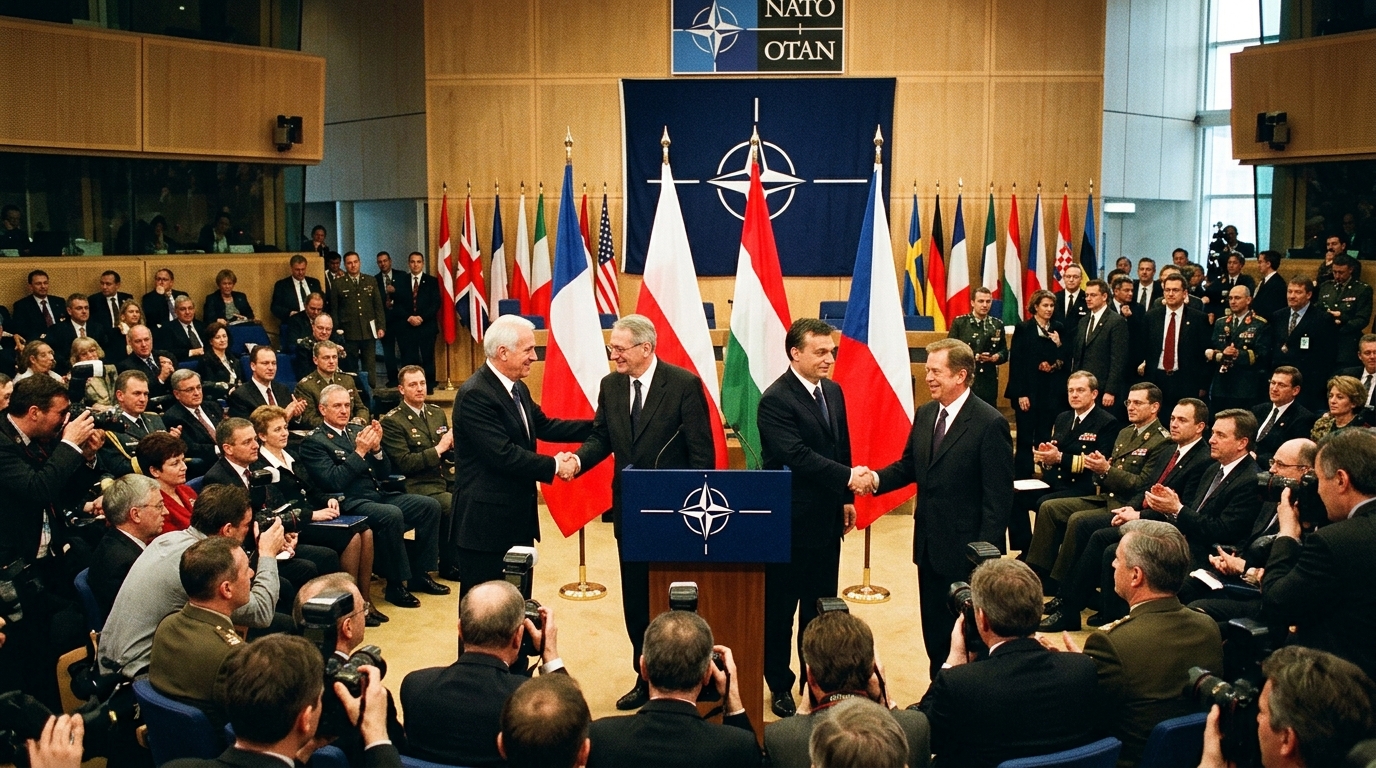
- The 1999 enlargement integrated Poland, Hungary, and the Czech Republic into NATO, marking the first expansion into the former Warsaw Pact territory.
- The process exposed a deep ideological rift between Washington's vision of a 'Europe whole and free' and Moscow's anxieties regarding strategic encirclement.
- The decision set a historical precedent for subsequent waves of NATO expansion, permanently reshaping post-Cold War security architecture.
Historical Context and Origins
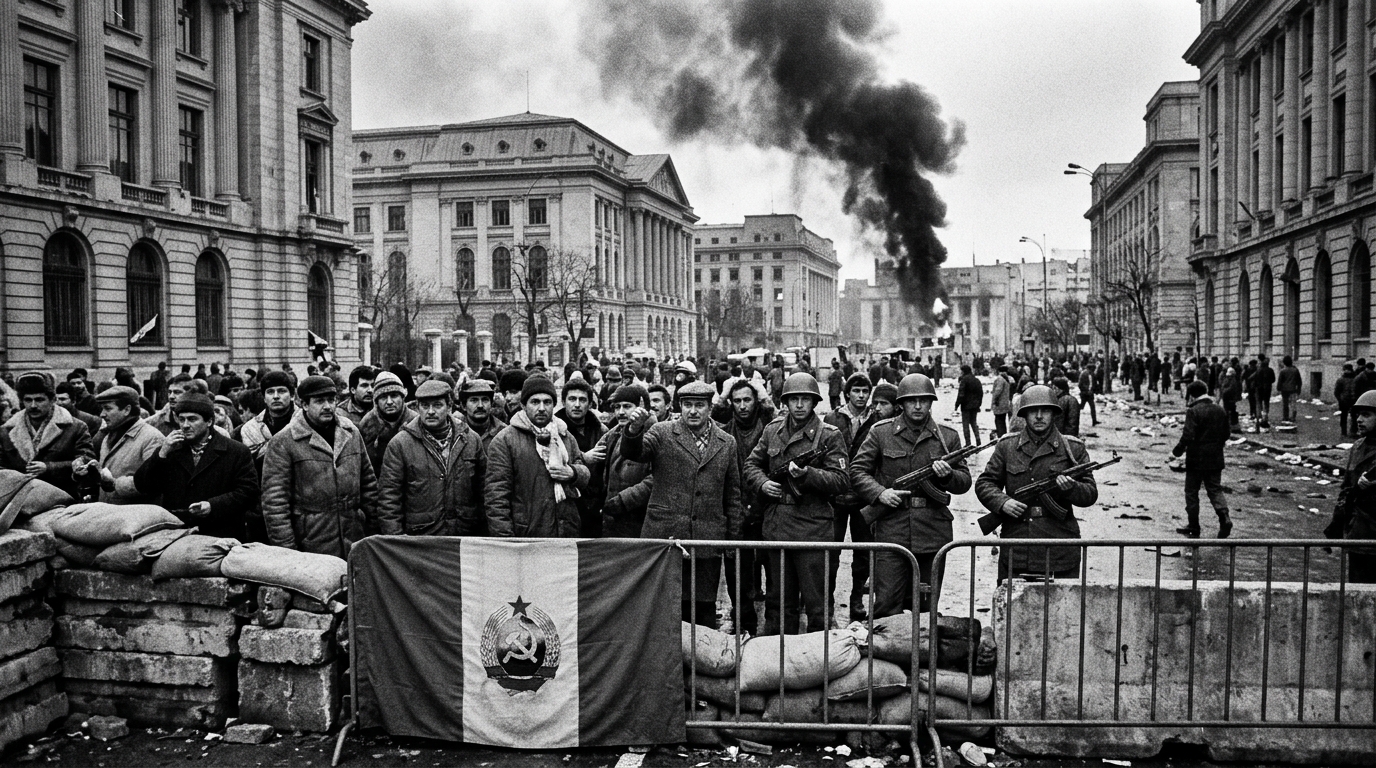
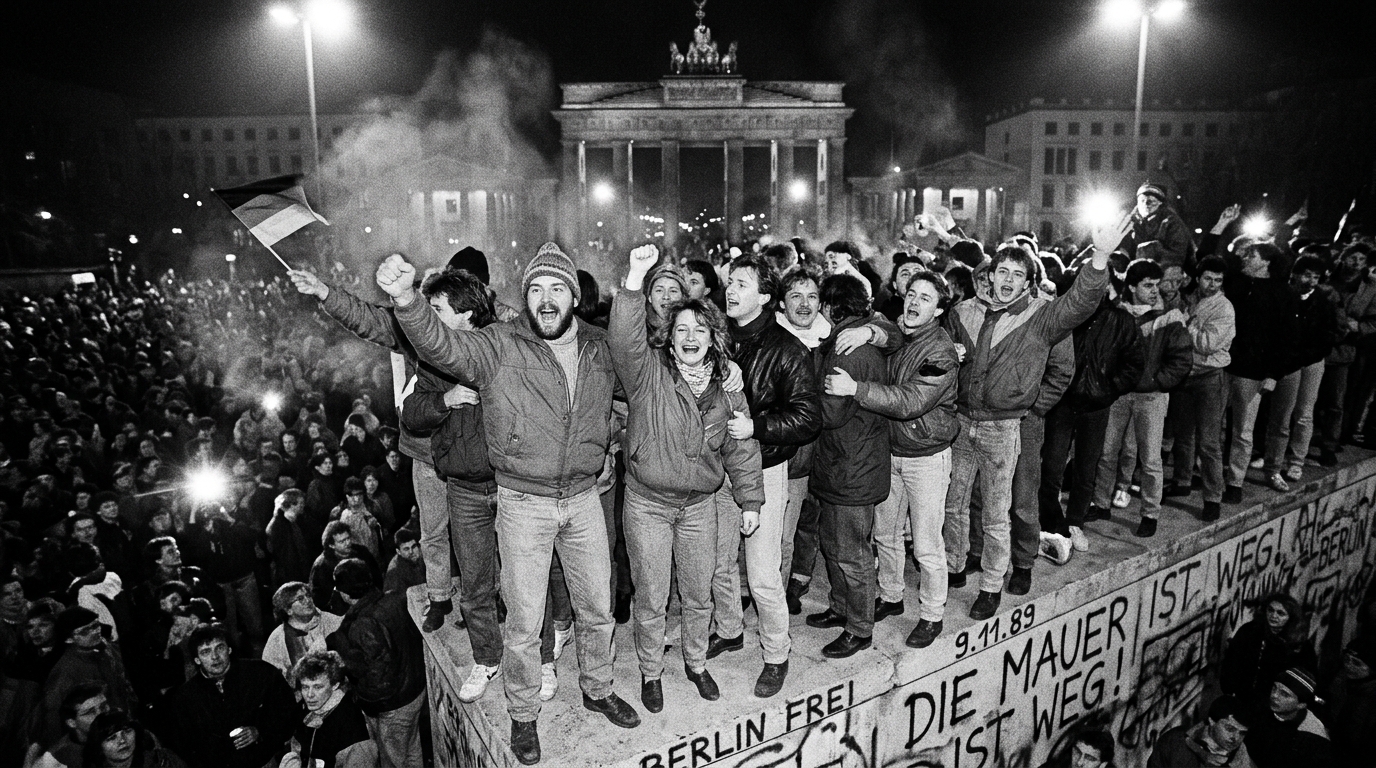
The collapse of the Berlin Wall in November 1989 and the formal dissolution of the Soviet Union in December 1991 fundamentally dismantled the bipolar architecture that had structured international relations for nearly half a century. In this sudden geopolitical vacuum, the newly sovereign states of Central and Eastern Europe found themselves in a precarious security environment. Having lived under the shadow of Soviet hegemony behind the Iron Curtain, nations like Poland, Hungary, and Czechoslovakia (which peacefully split into the Czech Republic and Slovakia in 1993) looked to the West to secure their fragile democracies and guarantee their territorial integrity.
The concept of integrating these states into the North Atlantic Treaty Organization (NATO) was not an immediate consensus policy in Western capitals. During the early 1990s, intense debates raged within the United States foreign policy establishment. Proponents of enlargement, including influential figures like National Security Advisor Anthony Lake and Secretary of State Madeleine Albright, argued that expanding the alliance would stabilize Central Europe, lock in democratic reforms, and prevent the re-emergence of nationalist conflicts. This perspective was deeply rooted in the liberal internationalist vision of a "Europe whole, free, and at peace." 1
Conversely, a formidable coalition of realists and veteran diplomats urged extreme caution. George F. Kennan, the intellectual father of the US Cold War containment strategy, emerged as one of the most vocal critics. In a famous 1997 op-ed, Kennan warned that expanding NATO would be "the most fateful error of American policy in the entire post-cold-war era," predicting it would inflame nationalist, militaristic, and revanchist forces in Russia and permanently damage prospects for US-Russian cooperation. 2 Other critics, such as former Defense Secretary gaps like Robert McNamara and academic realists like John Mearsheimer, argued that the move needlessly provoked a weakened Russia during a delicate transitional phase in its history.
To bridge this divide and placate Moscow's anxieties, the Clinton administration launched the Partnership for Peace (PfP) program in January 1994 at the Brussels Summit. Designed as a flexible framework for military-to-military cooperation between NATO and non-member European nations—including Russia and former Warsaw Pact states—the PfP was initially viewed by some as an alternative to, or at least a delaying mechanism for, full NATO membership. However, for Poland, Hungary, and the Czech Republic (the core of the Visegrád Group), the PfP was merely a stepping stone. Guided by leaders who had personally resisted totalitarianism, these nations lobbied tirelessly for full integration and the explicit collective defense guarantees enshrined in Article 5 of the Washington Treaty.
- Dissolution of Warsaw Pact (1991)
Timeline of Events and Key Moments
The path to the 1999 enlargement was paved through a series of complex diplomatic maneuvers, legislative battles, and summits that sought to balance the aspirations of Eastern European democracies with the fragile stability of post-Soviet Russia.
1991–1993: The Quest for Security
- February 15, 1991: The Visegrád Group is established by Poland, Hungary, and Czechoslovakia to coordinate their integration into European institutions.
- August 1993: During a state visit to Warsaw, Russian President Boris Yeltsin signs a joint declaration with Polish President Lech Wałęsa, stating that Poland's aspiration to join NATO did not run counter to Russia's interests. This unexpected concession shocked the Russian foreign policy establishment, and Yeltsin was quickly pressured into walking back the statement. [[^3]]
1994–1996: From Partnership to Decision
- January 10–11, 1994: At the Brussels Summit, NATO officially launches the Partnership for Peace. While Bill Clinton presents it as a bridge to future membership, Russian leaders interpret it as a permanent alternative to expansion.
- September 1995: NATO publishes its Study on NATO Enlargement, which outlines the requirements for prospective members, including democratic governance, civilian control of the military, and the resolution of ethnic or territorial disputes.
- October 1996: Facing a domestic re-election campaign and keen on securing the support of influential Central and Eastern European diaspora communities in the United States, President Clinton delivers a landmark speech in Detroit, calling for the first round of NATO enlargement to take place by 1999, the alliance's 50th anniversary.
1997: Diplomatic Breakthroughs and Formal Invitations
- May 27, 1997: In an effort to ease Russian concerns before the formal invitations are issued, NATO and Russia sign the NATO-Russia Founding Act on Mutual Relations, Cooperation and Security in Paris. Under this agreement, NATO creates the Permanent Joint Council to consult with Moscow and famously declares it has "no intention, no plan, and no reason" to deploy nuclear weapons or station permanent, substantial combat forces on the territory of new members. [[^4]]
- July 8–9, 1997: At the historic Madrid Summit, NATO officially extends invitations to Poland, Hungary, and the Czech Republic to begin accession negotiations.
"We are here today to say on behalf of our nations: never again will your destiny be decided by others; never again will your freedom be negotiated away." — US Secretary of State Madeleine Albright, speaking to the citizens of Prague, July 1997 [[^5]]
1998–1999: Ratification and Accession
- April 30, 1998: The United States Senate votes overwhelmingly (81 to 19) to ratify the expansion, comfortably exceeding the required two-thirds majority. This vote represented a major legislative victory for the Clinton administration, despite fierce warnings from prominent academic opponents.
- March 12, 1999: In a deeply symbolic ceremony at the Harry S. Truman Presidential Library in Independence, Missouri—the hometown of the president who signed the original North Atlantic Treaty in 1949—the foreign ministers of Poland (Bronisław Geremek), Hungary (János Martonyi), and the Czech Republic (Jan Kavan) deposit their instruments of accession. The first eastern enlargement of NATO is officially complete.
Timeline of Key Moments (1991-1999)
| Year | Event |
|---|---|
| 1991 | Visegrád Group established |
| 1994 | Partnership for Peace launched in Brussels |
| 1995 | NATO publishes "Study on NATO Enlargement" |
| 1997 | May: NATO-Russia Founding Act signed |
| 1997 | July: Madrid Summit (Invitations extended) |
| 1998 | US Senate ratifies enlargement (81-19) |
| 1999 | March 12: Accession ceremony in Independence, Missouri |
Geopolitical Consequences and Aftermath
The inclusion of Poland, Hungary, and the Czech Republic into NATO represented a monumental shift in the balance of power in Europe, leaving a complex legacy that continues to shape contemporary international relations.
The Redrawing of Europe's Security Architecture
The 1999 enlargement effectively shifted NATO's borders hundreds of miles eastward, bringing the alliance directly into the territory of the former Warsaw Pact. This transition meant that the security of Warsaw, Prague, and Budapest was now backed by the nuclear and conventional deterrent of the United States. For these three nations, admission was viewed as the ultimate validation of their sovereignty and a definitive departure from the spheres of influence that had historically compromised their independence.
The Deterioration of US-Russia Relations
For Russia, the 1999 enlargement was perceived as a profound geopolitical betrayal and an act of encirclement. Russian elites across the political spectrum maintained that Western leaders had promised Soviet President Mikhail Gorbachev during the 1990 negotiations over German reunification that NATO would not expand "one inch eastward." 6 Although Western historians and officials disputed whether such promises constituted a formal, legally binding pledge, the perception of Western duplicity became a cornerstone of post-Soviet Russian foreign policy doctrine.
The timing of the enlargement further exacerbated these tensions. Just eleven days after the three nations officially joined NATO, on March 24, 1999, the alliance launched Operation Allied Force—a bombing campaign against the Federal Republic of Yugoslavia over the Kosovo crisis, conducted without authorization from the United Nations Security Council. This intervention deeply alarmed Moscow, which realized that a newly expanded NATO was willing to bypass the UN and use offensive military force in Russia's historical sphere of influence. The event marked a decisive turning point, transforming Russia's domestic political debate and fueling a growing consensus that the West could not be trusted.
Precedent for Future Waves
The 1999 enlargement established the administrative, military, and political templates for subsequent expansions. It proved that NATO could successfully absorb former communist states, reform their military apparatuses, and integrate them into its command structure. This paved the way for the even larger "Big Bang" enlargement of 2004, which brought seven more nations into the alliance—including the Baltic states of Estonia, Latvia, and Lithuania, bringing NATO directly to the borders of the Russian Federation proper.
| Nation | Population (1999) | Military Personnel (1999) | Strategic Geopolitical Value |
|---|---|---|---|
| Poland | ~38.6 million | ~240,000 | Direct land corridor to Kaliningrad and Eastern Europe; large defensive depth. |
| Czech Republic | ~10.3 million | ~58,000 | Key industrial base; central position bridging Western Europe and the East. |
| Hungary | ~10.1 million | ~43,000 | Southern flank anchor; critical staging ground for Balkan stabilization operations. |
Analysis of Key Actors and Decisive Actions
The success of the first eastern enlargement was largely determined by the actions and calculations of a few key leaders who navigated intense domestic pressures and conflicting strategic priorities.
Bill Clinton: The Strategic Facilitator
President Bill Clinton approached the enlargement issue with a combination of idealistic vision and pragmatic political calculation. Initially cautious, Clinton recognized that supporting the enlargement was crucial for consolidating democratic transitions in Eastern Europe. Furthermore, he was highly sensitive to domestic electoral politics, knowing that championing the entry of Poland into NATO would secure the support of large and politically active Polish-American and Central European constituencies in key electoral states like Illinois, Michigan, and Ohio. Clinton used his personal rapport with Boris Yeltsin to manage Russia's objections, offering economic aid, G7 membership, and the NATO-Russia Founding Act as concessions to soften the blow.
Boris Yeltsin: The Constrained Dissenter
President Boris Yeltsin was caught in an impossible position. Personally opposed to the enlargement, Yeltsin presided over a weak, economically devastated, and politically fragmented Russia. He faced a hostile, communist-dominated Duma that accused him of capitulating to Western imperialism. Despite his fierce rhetoric, Yeltsin had virtually no leverage to block the expansion. His strategy was to extract as many political and financial concessions from the West as possible, including crucial IMF loans to keep the Russian economy afloat, while negotiating the NATO-Russia Founding Act to secure a formal voice (though not a veto) in European security matters.
Lech Wałęsa and Václav Havel: The Moral Advocates
The leaders of Poland and the Czech Republic, Lech Wałęsa and Václav Havel, utilized their immense moral authority as former anti-communist dissidents to lobby the West. Havel, in particular, framed the expansion not merely in terms of military strategy, but as a moral imperative. He argued that the West had a duty to heal the divisions of Europe that had been codified at Yalta in 1945. Their persistent diplomatic efforts kept the issue at the top of the transatlantic agenda, making it politically difficult for Western leaders to deny their requests.
Trivia and Lesser-Known Facts
- The Symbolic Venue: The accession ceremony was held at the Harry S. Truman Library in Independence, Missouri, specifically because Truman had been the US president to oversee the creation of NATO in 1949. By choosing this location, Secretary of State Madeleine Albright sought to draw a direct line between the containment policies of the early Cold War and the triumph of Western liberal democracy in the post-Cold War era.
- The Hungarian Referendum: Unlike Poland and the Czech Republic, Hungary held a national referendum in November 1997 to seek public approval for NATO membership. While a resounding 85.3% of voters approved the accession, the turnout was relatively low at 49.2%, reflecting a mix of enthusiasm and general public apathy toward military alliances in the post-communist era. [[^7]]
- The Kaliningrad Transit Issue: Poland’s accession created a unique geographical challenge for Russia, as it meant that Kaliningrad, the heavily militarized Russian exclave on the Baltic Sea, was now bordered by a NATO member state on its southern frontier. This heightened Russian anxieties regarding the transit of troops and supplies between the exclave and mainland Russia.
- Military Retrofitting Obstacles: One of the most difficult and expensive aspects of the enlargement was the technical interoperability of the new member militaries. Poland, Hungary, and the Czech Republic were equipped almost entirely with Soviet-standard weaponry, MiG fighter jets, and Russian-language communication systems. Transitioning these systems to NATO standards took over a decade and cost billions of dollars, requiring the implementation of extensive modernization programs.
References and Literature
- NATO Enlargement (1999) - Official NATO Archive - Comprehensive official documentation detailing the diplomatic steps, summits, and texts of the 1999 accession.
- The New York Times: "NATO Expansion Is a Fateful Error" by George F. Kennan - The complete text of George Kennan's prophetic 1997 op-ed warning of the long-term geopolitical consequences of eastern expansion.
- National Security Archive: NATO Expansion - What Yeltsin Heard - A collection of declassified diplomatic documents from the US, Soviet/Russian, and European archives regarding the assurances given to Soviet leaders about NATO's future scope.
- "Not One Inch: America, Russia, and the Making of Post-Cold War Stalemate" by M.E. Sarotte - A definitive academic monograph analyzing the inner workings of the diplomacy that drove the enlargement of NATO in the 1990s.
Footnotes & Explanations
- M.E. Sarotte, Not One Inch: America, Russia, and the Making of Post-Cold War Stalemate (New Haven: Yale University Press, 2021), 145-148. ↩
- George F. Kennan, "A Fateful Error," The New York Times, February 5, 1997. ↩
- "Yeltsin 'Understands' Polish Bid to Join NATO," The Washington Post, August 26, 1993. ↩
- Founding Act on Mutual Relations, Cooperation and Security between NATO and the Russian Federation, signed in Paris, May 27, 1997. ↩
- Madeleine Albright, Address to the People of Prague, July 14, 1997, US Department of State Dispatch. ↩
- National Security Archive, "NATO Expansion: What Gorbachev Heard," Declassified Document No. 31452, George Washington University. ↩
- Hungarian Election Commission, "Official Results of the 1997 NATO Referendum," Budapest, November 1997. ↩