Key Takeaways
- The 2010 Cablegate leak marked a paradigm shift in the digital age, challenging traditional diplomatic secrecy and the control of classified information, exposing candid assessments of world leaders and sensitive international dealings.
- The disclosures severely strained US-led international relations, forcing extensive damage control and sparking global debates on trust, transparency, and national security.
- The crisis ignited a global debate on the tension between institutional transparency, national security, and the protections afforded to whistleblowers and journalists, leading to profound legal and socio-political repercussions for key figures like Julian Assange and Chelsea Manning.
- It prompted significant overhauls in US government information security protocols and ushered in a new era of digital activism and 'hacktivism'.
Historical Context and Origins
The year 2010 stands as a watershed moment in the annals of global intelligence, digital transparency, and international relations. Before the seismic impact of WikiLeaks' "Cablegate," the intricate dance of diplomacy was largely conducted behind closed doors, its confidential exchanges considered sacrosanct for effective statecraft. This veil of secrecy allowed diplomats to engage in nuanced negotiations, express skepticism, and offer candid assessments without the immediate and often disruptive pressures of public scrutiny. The presumption was that such discretion was not merely conventional but a necessary lubricant for the machinery of international relations.
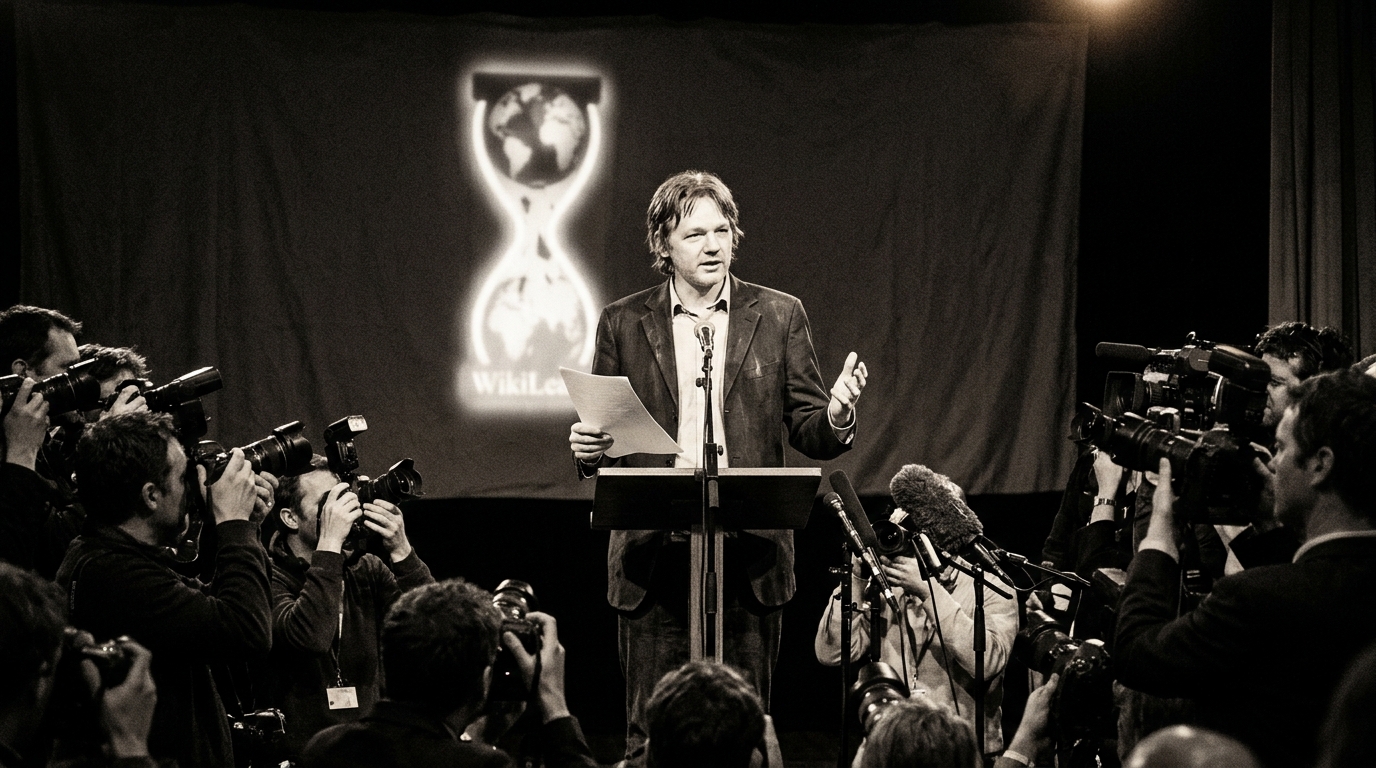
WikiLeaks, an international non-profit organization founded by its enigmatic figurehead, Julian Assange, had already begun to challenge this established order throughout the late 2000s. Its initial publications, ranging from Scientology internal documents to reports on corruption in Kenya and the financial dealings of Icelandic banks, gradually built its reputation as a formidable purveyor of leaked datasets. These earlier disclosures, while significant, were often confined to specific niches. However, the "Collateral Murder" video, released in April 2010, graphically depicting a US Apache helicopter attack in Baghdad, followed by the "Afghan War Logs" in July and "Iraq War Logs" in October of the same year, escalated WikiLeaks into a global phenomenon. These releases laid bare the brutal realities of modern warfare and triggered intense scrutiny of military conduct, immediately placing the security apparatus of the United States on high alert. The stage was set for an even grander revelation.
The source of the quarter-million State Department cables, Bradley (later Chelsea) Manning, an intelligence analyst with the US Army, leveraged her access to the Secret Internet Protocol Router Network (SIPRNet). This global classified network, designed to facilitate the rapid sharing of sensitive but unclassified and classified information among military personnel, intelligence agencies, and diplomatic staff, became the unexpected conduit for one of history's most significant data breaches. The irony was profound: the post-9/11 imperative to "connect the dots" and enhance inter-agency information sharing, a direct response to intelligence failures, had inadvertently created a massive vulnerability. Mid-level officials like Manning had unprecedented access to vast repositories of data, often with insufficient oversight or technical safeguards against bulk downloading. When this treasure trove of diplomatic exchanges entered the public domain in November 2010, the meticulously crafted "black box" of American diplomacy, along with the broader conventions of international secrecy, was irrevocably shattered.
Assange and WikiLeaks articulated a philosophy of "radical transparency," believing that exposing government secrets was a moral imperative in democratic societies. They argued that citizens had a fundamental right to know the truth about how their governments conducted foreign policy, waged wars, and interacted with other nations in their name. This belief system propelled the publication of the cables, viewed by Assange not merely as leaked documents, but as raw historical records deserving of public access and journalistic scrutiny.
Timeline of Events and Key Moments
The unfolding of Cablegate was a meticulously planned and dramatically executed series of events, orchestrated by WikiLeaks to maximize impact and ensure the widespread dissemination of the documents. What WikiLeaks termed "the most significant leak in history" began with a strategic partnership with major international media outlets.
| Date | Event Description |
|---|---|
| May 2010 | Chelsea Manning, then Bradley Manning, is arrested in Iraq after confessing to an online contact that she had leaked classified documents to WikiLeaks. |
| Jul 25, 2010 | WikiLeaks publishes "Afghan War Logs" (76,900 classified documents), drawing intense condemnation from the Pentagon. |
| Oct 22, 2010 | WikiLeaks publishes "Iraq War Logs" (nearly 400,000 classified military field reports), detailing civilian deaths and abuses. |
| Nov 28, 2010 | WikiLeaks begins the coordinated release of 251,287 secret US State Department cables. Major international media partners—The New York Times (US), The Guardian (UK), Der Spiegel (Germany), El País (Spain), and Le Monde (France)—publish their initial analyses. |
| Nov 29, 2010 | US Secretary of State Hillary Clinton denounces the leaks, calling them an "attack on the international community" and condemning WikiLeaks' actions. |
| Nov 30, 2010 | US Attorney General Eric Holder announces a criminal investigation into the leaks. Sweden issues an international arrest warrant for Julian Assange concerning sexual assault allegations. |
| Dec 2, 2010 | Amazon Web Services terminates hosting services for WikiLeaks, citing terms of service violations. |
| Dec 4-7, 2010 | Major financial institutions, including PayPal, Visa, and MasterCard, freeze donations and services to WikiLeaks, sparking online retaliatory attacks from "hacktivist" groups like Anonymous. |
| Dec 7, 2010 | Julian Assange voluntarily surrenders to British police and is arrested in London based on the Swedish warrant. He is denied bail. |
| Dec 16, 2010 | Assange is granted bail by the High Court in London, but remains under strict conditions, including electronic tagging and daily reporting to police. |
| Feb 2011 | Manning is formally charged with 22 offenses, including aiding the enemy, a capital offense. |
| Feb 24, 2011 | A British court rules for Assange's extradition to Sweden, a decision he appeals. |
| Aug 16, 2012 | Julian Assange seeks and is granted political asylum in the Ecuadorian Embassy in London to avoid extradition to Sweden and potential onward extradition to the US. |
| Jul 30, 2013 | Chelsea Manning is convicted on 17 of 22 charges, including violations of the Espionage Act, but acquitted of the most serious charge of "aiding the enemy." |
| Aug 21, 2013 | Manning is sentenced to 35 years in military prison. |
| Jan 17, 2017 | President Barack Obama commutes Chelsea Manning's sentence, leading to her release in May 2017. |
| Apr 11, 2019 | Julian Assange is removed from the Ecuadorian Embassy and arrested by British police for breaching bail conditions. The US Department of Justice unseals an indictment against him under the Espionage Act. |
Geopolitical Consequences and Aftermath
The fallout of Cablegate was immediate and profound, triggering ripples across diplomatic channels, intelligence communities, and the nascent field of cybersecurity that continue to be felt today. The unprecedented public exposure of confidential communications fundamentally reshaped the dynamics of international relations and government transparency.
Diplomatic Strain and Damage Control
The leaks exposed the unvarnished, often blunt and critical, assessments US diplomats held regarding foreign leaders, allied nations, and sensitive geopolitical situations. World leaders, from staunch allies to strategic partners, found themselves confronted with their private dealings and public personas laid bare.
- Middle East: Cables revealed Saudi Arabia's persistent pleas to the US to "cut off the head of the snake" by taking military action against Iran, creating significant regional tension. They also shed light on the fragility of regimes in Yemen and Egypt, predicting unrest long before the Arab Spring.
- Europe: Germany reacted with particular indignation to cables suggesting US diplomats viewed Chancellor Angela Merkel as risk-averse and that the US actively engaged in intelligence gathering on allied European officials. Italian Prime Minister Silvio Berlusconi's personal conduct was detailed, causing embarrassment.
- Asia: China's alleged involvement in cyberattacks against the US was detailed, straining already complex relations. North Korean nuclear ambitions and internal stability were subjects of candid, often alarming, assessments.
- Global Impact: The descriptions of various world leaders—questioning the mental stability of certain heads of state, describing others as vain, corrupt, or autocratic—necessitated an immediate, massive, and global "damage control" campaign by the US State Department. Secretary Hillary Clinton embarked on extensive shuttle diplomacy, personally engaging with offended allies and partners to reassure them of the United States' commitment and reliability. This period was characterized by a frantic effort to rebuild trust and manage the public perception of US foreign policy. The leaks undeniably fostered a climate of suspicion, making foreign officials wary of candid exchanges with US representatives, fearing that their words might one day appear on the front page of an international newspaper.
Security Repercussions and Systemic Overhaul
In the wake of the disclosures, the US government initiated a sweeping and unprecedented overhaul of its information systems and security protocols. The "need-to-know" principle, a cornerstone of intelligence access, was rigorously re-emphasized, moving from a culture of "information sharing" to one of "information safeguarding."
- Technical Controls: The practice of downloading classified data onto portable media, the method utilized by Manning, was severely restricted or entirely blocked on classified networks. USB ports were physically disabled or digitally locked. Enhanced auditing capabilities were implemented to track every action taken by users on classified systems. Data Loss Prevention (DLP) technologies became a priority, aiming to prevent sensitive information from leaving secure networks.
- Human Factor: Insider threat programs were dramatically expanded across all government agencies, involving more extensive psychological profiling, stricter monitoring of employee behavior, and mandatory security awareness training focusing on the dangers of unauthorized disclosure. Security clearances and access privileges were reviewed and often curtailed, especially for contractors and junior personnel.
- Chilling Effect on Diplomacy: The leak inadvertently strengthened the centralization of US intelligence, but also cast a long shadow over how future diplomatic cables would be written. Diplomats and foreign service officers, acutely aware that their candid observations could one day be released to the public, adopted a more cautious, sterilized, and anodyne tone in official reporting. This "chilling effect" arguably reduced the granularity and honesty of diplomatic reporting, potentially impairing policy-makers' ability to gain accurate ground-level insights.
"This disclosure is not just an attack on America's foreign policy interests; it is an attack on the international community – the alliances and partnerships, the conversations and negotiations that safeguard global security and advance economic prosperity. To be clear, this is not about transparency; it is about theft. And it is about a breach of faith by people who are sworn to uphold the national security of the United States." — Hillary Clinton, November 2010.
Socio-Political and Legal Ramifications
Beyond the immediate diplomatic and security crises, Cablegate ignited profound and enduring debates regarding freedom of the press, the right to transparency, government secrecy, and the legal status of whistleblowers and publishers.
Whistleblowers, Press Freedom, and the Espionage Act
The cases of Chelsea Manning and Julian Assange became focal points for these debates. Manning, as the leaker, was prosecuted under the Espionage Act of 1917, a law originally designed to combat spies during wartime. Her conviction and lengthy sentence sparked international outcry, with many arguing that the application of such a severe law stifled legitimate whistleblowing and served as a deterrent to government accountability. Conversely, the US government maintained that Manning had endangered national security and the lives of US personnel.
For Julian Assange, the publisher, the legal landscape was even more complex. The US government explored various legal avenues, ultimately pursuing an indictment against him under the Espionage Act, along with charges related to computer intrusion. This unprecedented move raised alarm bells among press freedom advocates globally. The central question became: If Assange, as the head of WikiLeaks, could be prosecuted for publishing classified information, what distinguished his actions from those of traditional journalists who often rely on leaked materials? Critics argued that prosecuting a publisher, even a controversial one, set a dangerous precedent that could undermine the First Amendment's protections for the press and severely limit investigative journalism into government misconduct. Proponents of the prosecution, however, argued that WikiLeaks' methods—including the alleged solicitation of classified information and publishing unredacted documents—went beyond traditional journalistic practices, crossing into illicit activity that jeopardized national security.
Public Opinion and the Rise of Hacktivism
Public reaction to Cablegate was deeply divided. For many, WikiLeaks became a symbol of digital age transparency, holding powerful governments accountable. Assange was lauded by supporters as a courageous journalist and freedom fighter. This sentiment fueled the rise of "hacktivism" — politically motivated hacking. When financial institutions like Visa, MasterCard, and PayPal blocked donations to WikiLeaks, groups like Anonymous launched retaliatory distributed denial-of-service (DDoS) attacks, temporarily disrupting these companies' websites in what they dubbed "Operation Avenge Assange." This marked a significant escalation of cyber warfare into the realm of political protest, demonstrating the power of decentralized online communities.
Conversely, a substantial portion of public opinion, particularly within the US and among those concerned with national security, condemned WikiLeaks' actions. They viewed the leak as reckless, irresponsible, and potentially harmful to US interests and personnel. The unredacted nature of some documents, which supposedly contained names of informants and human rights activists, drew particular criticism, raising questions about WikiLeaks' ethical considerations regarding potential harm.
Analysis of Key Actors and Decisive Actions
The Cablegate crisis was shaped by a confluence of distinct personalities, institutional imperatives, and individual motivations, each leaving an indelible mark on its unfolding and legacy.
- Julian Assange: The Architect of Radical Transparency: For Assange, Cablegate was the ultimate manifestation of his "radical transparency" philosophy. He believed that state secrecy was inherently anti-democratic and that the public had an unqualified right to access information about their government's activities. His strategic decision to partner with established media outlets like The New York Times and The Guardian was crucial. This collaboration provided a veneer of legitimacy and journalistic vetting, ensuring the immense volume of data was analyzed, contextualized, and presented with credibility, rather than being dismissed as mere "hacking" or propaganda. Assange's ambition was not just to leak documents but to transform journalism itself, creating a new model of "scientific journalism" where raw data could be verified and scrutinized by the public. His subsequent legal battles and asylum in the Ecuadorian Embassy underscored his determination, transforming him from a technologist into a global icon of the transparency movement, albeit one often mired in controversy.
- Hillary Clinton: The Face of Institutional Resilience: As US Secretary of State, Hillary Clinton found herself at the epicenter of the diplomatic storm. Her approach was characterized by a robust defense of traditional diplomacy and a concerted effort to isolate WikiLeaks, framing its actions as a criminal breach of international norms and a threat to national security rather than a legitimate act of journalism. Clinton led the global damage control campaign, personally contacting foreign leaders to apologize and reassure them of America's continued reliability. Her public statements were resolute, emphasizing the dangers posed by the leaks to US personnel and diplomatic efforts. Her tenure as Secretary of State became inextricably linked with the struggle to uphold traditional diplomatic decorum and privacy amidst the relentless pressures of digital transparency and an increasingly interconnected world.
- Chelsea Manning: The Conscience of the Soldier: Manning's motivations, as later articulated in court, stemmed from a profound disillusionment with the "true cost of war" and the disparity between official rhetoric and the grim realities documented within the SIPRNet. Witnessing firsthand the suffering and perceived abuses in Iraq, she felt compelled to expose what she believed were truths the public needed to confront. Her actions were driven by an ethical imperative, a desire to spark public debate and potentially bring about change. Manning systematically downloaded vast quantities of data, believing that widespread public access would force greater accountability from the government. Her decision, while celebrated by transparency advocates, led to her prosecution, conviction, and a lengthy prison sentence, making her a poignant symbol of the personal sacrifices made by whistleblowers.
- The Media Partners: Gatekeepers and Catalysts: The collaboration between WikiLeaks and major news organizations was unprecedented. The Guardian, The New York Times, Der Spiegel, El País, and Le Monde played a critical role in filtering, editing, and publishing the cables responsibly. These outlets invested significant resources in reviewing the massive dataset, identifying newsworthy stories, and, controversially, redacting names and sensitive information they deemed potentially harmful. Their involvement lent significant credibility to the leaks and ensured their far-reaching impact. However, they also faced criticism for their role in disseminating classified information, leading to intense debates within the journalistic community about the ethical boundaries of publishing leaked state secrets.
Intelligence Failures and Systemic Vulnerabilities
The Cablegate leak laid bare not just the inner workings of US diplomacy but also critical systemic vulnerabilities and intelligence failures within the US government's classified information infrastructure. The incident exposed a paradox: the very measures taken post-9/11 to enhance information sharing inadvertently created the conditions for the largest intelligence breach in history.
Technical and Procedural Gaps
- SIPRNet's Open Architecture: The Secret Internet Protocol Router Network (SIPRNet) was designed to be widely accessible, allowing military personnel and diplomats across the globe to share information rapidly. This "share everything" ethos, driven by lessons from the intelligence failures leading up to 9/11, meant that hundreds of thousands of individuals, including junior analysts like Manning, had access to vast databases containing sensitive diplomatic and military information. There was a fundamental misalignment between the ease of access and the security controls in place to prevent bulk exfiltration.
- Lack of Data Loss Prevention (DLP): At the time of the leak, SIPRNet lacked robust data loss prevention technologies that could monitor and prevent large-scale data transfers to unauthorized external devices. Manning was able to burn CDs disguised as Lady Gaga music to circumvent physical security checks and download gigabytes of classified data onto personal storage devices without raising immediate alarms.
- Insufficient Auditing and Monitoring: While some audit trails existed, they were not sufficient to detect or flag the anomalous behavior of a single user downloading an unprecedented volume of classified information over an extended period. The sheer volume of data and the decentralized nature of its access made comprehensive real-time monitoring a significant challenge.
- Weak Access Control Enforcement: The "need-to-know" principle, meant to restrict access to only what is necessary for one's job, was often loosely enforced in practice. Many personnel, including Manning, held broad access privileges, allowing them to browse a wide array of classified documents irrespective of their immediate operational requirements.
Human Intelligence Failures
- Insider Threat Underestimation: The US intelligence community had historically focused more on external threats (e.g., foreign state actors) than on internal insider threats. There was an insufficient understanding of the psychological profiles and motivations that could lead an authorized user to become a leaker.
- Inadequate Vetting and Monitoring: While security clearances involve extensive background checks, the ongoing monitoring of personnel for signs of disaffection, distress, or potential security risks was often reactive rather than proactive. Manning's deteriorating mental state and public expressions of disillusionment, though potentially overlooked or dismissed, highlight a failure in recognizing escalating insider threat indicators.
- Training and Awareness Gaps: While security awareness training existed, it often failed to instill a deep appreciation for the consequences of unauthorized disclosures or provide clear guidance on reporting suspicious activity by colleagues.
Government Response and Rectification
In the aftermath of Cablegate, the US government embarked on an aggressive, multi-faceted strategy to prevent future breaches:
- Technical Hardening: USB drives were largely disabled on classified networks. Data transfer protocols were severely restricted. New DLP systems were deployed, designed to detect and block large transfers of sensitive data. Encryption was mandated for data at rest and in transit on classified systems.
- Enhanced Insider Threat Programs: Agencies developed sophisticated insider threat programs that combined behavioral analysis, automated monitoring of network activity, and stricter supervisory oversight. These programs aimed to identify high-risk individuals before they could inflict damage.
- Security Clearance Reviews: A comprehensive review of security clearance policies and procedures was initiated, with an emphasis on continuous evaluation and more frequent background checks. Access privileges were re-evaluated to ensure a stricter adherence to the "need-to-know" principle.
- Information Governance: A renewed focus was placed on proper classification markings, data retention policies, and the secure destruction of classified information. The goal was to reduce the overall volume of sensitive data accessible to a broad user base.
These changes, while bolstering security, also introduced new challenges, particularly the potential for over-classification and the creation of information silos, which could inadvertently hinder effective collaboration and intelligence analysis.
Long-Term Legacy and Modern Historiographical Debates
The WikiLeaks Cablegate leak of 2010 stands as a transformative event, fundamentally altering the landscape of international relations, information security, and public discourse around government transparency. Its legacy continues to shape geopolitical dynamics and provoke spirited historiographical debates.
Enduring Impact on Diplomacy and Statecraft
- The "WikiLeaks Effect": The leak permanently ingrained a new layer of caution into diplomatic communications. Diplomats worldwide became acutely aware that their candid, often sensitive, exchanges could be exposed. This led to a discernible "chilling effect," where official cables became less frank and more guarded, forcing diplomats to rely more on unrecorded conversations, back-channel communications, or highly encrypted platforms. While ostensibly protecting secrecy, this shift could also reduce the fidelity and honesty of recorded historical diplomatic exchanges, potentially hindering future historical analysis.
- Erosion of Trust: The breach severely damaged trust between the US and its allies, forcing a period of intense rebuilding. While immediate crises were managed, the underlying suspicion that private communications could become public persisted, complicating sensitive negotiations and intelligence sharing.
- Transparency vs. Effectiveness: Cablegate reignited the perennial debate about the optimal balance between government transparency and the practical necessities of effective diplomacy and national security. While proponents argued for greater accountability through openness, critics underscored the need for secrecy to foster sensitive negotiations, protect sources, and prevent adversaries from gaining strategic advantages.
Legal and Ethical Precedents
- The "Assange Precedent": The ongoing legal battle surrounding Julian Assange—his asylum, arrest, and extradition proceedings—has established a complex legal precedent for publishers of classified information. The US government's use of the Espionage Act against him has alarmed press freedom organizations globally, raising fears that it could criminalize routine journalistic practices involving leaked documents and stifle investigative reporting on government misconduct. The outcome of his case will likely define the boundaries of press freedom in the digital age for decades.
- Whistleblower Status: Chelsea Manning's case highlighted the precarious legal status of whistleblowers, particularly those within the military. Her severe sentence, later commuted, underscored the government's determination to punish unauthorized disclosures, while also sparking a global discussion about the ethical obligations of individuals to expose perceived wrongdoing versus their loyalty to state secrecy.
Catalyzing Digital Activism and Cybersecurity Evolution
- Rise of Hacktivism: Cablegate galvanized the nascent "hacktivist" movement, demonstrating the power of decentralized online communities to challenge state and corporate power through cyber means. This marked a turning point in the use of cyber tactics for political protest and information warfare.
- Cybersecurity Prioritization: The leak served as a stark wake-up call for governments and corporations worldwide, forcing a rapid acceleration in cybersecurity investments and the development of advanced data loss prevention and insider threat detection capabilities. It underscored the critical importance of securing digital infrastructures against both external and internal threats.
Modern Historiographical Debates
Historians and political scientists continue to grapple with Cablegate's ultimate significance:
- Net Positive or Negative? Was the leak a net positive for democratic accountability by revealing uncomfortable truths, or a net negative by damaging diplomatic trust and potentially endangering individuals? There is no consensus. Some argue it was a necessary shock to a system that had become too opaque, while others maintain it was an irresponsible act that undermined national security.
- The Role of WikiLeaks: How should WikiLeaks be characterized? As a journalistic organization, a politically motivated actor, or a mere conduit for information? Its methods, editorial decisions, and the persona of Julian Assange remain subjects of intense scrutiny and varied interpretations.
- Information Warfare: Cablegate also sparked debates about the role of information in modern warfare and geopolitics. The ability of a single individual, enabled by digital tools, to disrupt state operations on a global scale highlighted a new frontier in asymmetric conflict and the challenges of managing information in an interconnected world.
In conclusion, the 2010 WikiLeaks Cablegate leak was far more than a simple data dump. It was a catalyst that ripped open the curtain on secret diplomacy, forced a re-evaluation of government information security, and ignited enduring debates about the fundamental tensions between state power, public accountability, and individual freedom in the digital age. Its repercussions continue to ripple through the legal, political, and technological spheres, marking it as a truly pivotal moment in contemporary history.
Trivia and Lesser-Known Facts
- The Scramble for Interpretation: Upon the initial release, the US State Department activated a "task force" comprising hundreds of diplomats and intelligence analysts working around the clock to assess the damage, identify potential sources, and craft responses to specific revelations. They preemptively reached out to many implicated foreign officials to offer explanations and apologies.
- Specific Cable Highlights: Beyond general assessments, some cables contained particularly revealing details. One highlighted the immense wealth and opulent lifestyles of various Middle Eastern rulers, while another described specific alleged torture methods used by Egyptian security forces. Yet another cable detailed then-Pope Benedict XVI's alleged efforts to prevent the Vatican from cooperating with a UN sex abuse investigation.
- The Encryption Puzzle: Julian Assange had boasted that the full, unredacted archive of all 251,287 cables was encrypted and distributed widely, acting as an "insurance policy." He claimed if anything happened to him or WikiLeaks, the password would be released, making the full archive public. While a version of the password was eventually published years later, it pertained to a partial, not the full, archive.
- Pre-Publication Redactions: Before the public release, the media partners (e.g., The Guardian, NYT) spent weeks meticulously sifting through the cables. They made efforts to redact names of informants, human rights activists, and other individuals whose lives or safety could be jeopardized by exposure. This act of journalistic responsibility was a point of contention between WikiLeaks and its partners, as WikiLeaks initially advocated for maximalist publication. The later unredacted release of the entire archive by other sources caused significant controversy.
- The "Lady Gaga" Cover: Chelsea Manning famously told her online confidant, Adrian Lamo, that she used a CD labeled "Lady Gaga" to smuggle classified data out of her secure facility, burning the files onto the disc while lip-syncing to music. This anecdote became a vivid illustration of the simple yet effective methods used to bypass sophisticated security systems.
- Diplomatic Language Decoded: The cables provided a rare public glossary of diplomatic shorthand and euphemisms. For example, "demarche" (a formal diplomatic protest or request), "strictly protect" (protect source at all costs), and "readout" (summary of a meeting) became part of the public lexicon, offering a glimpse into the internal language of statecraft.
References and Literature
- Assange, Julian. WikiLeaks: Inside Julian Assange's War on Secrecy. OR Books, 2011. - Assange's own account and philosophical defense of WikiLeaks' mission.
- Domscheit-Berg, Daniel. Inside WikiLeaks: My Time with Julian Assange at the World's Most Dangerous Website. Broadway Books, 2011. - A former WikiLeaks associate's perspective on the organization's internal workings and challenges.
- Harding, Luke and Leigh, David. WikiLeaks: Inside Julian Assange's War on Secrecy. Guardian Books, 2011. - An insider account from The Guardian journalists who worked directly with Assange on the Cablegate release.
- Manning, Chelsea. Readme.txt: A Memoir. Farrar, Straus and Giroux, 2024. - Manning's own reflections on her motivations, actions, and the aftermath of the leak.
- Schmidt, Eric and Cohen, Jared. The New Digital Age: Reshaping the Future of People, Nations and Business. Knopf, 2013. - Explores the broader geopolitical implications of digital information and state secrecy, with Cablegate as a key case study.
- The WikiLeaks Files: The World According to US Empire - A comprehensive collection of analyses from various journalists, academics, and activists, dissecting the revelations within the cables and their implications for US foreign policy.
- State Department Cablegate Archives - The primary archive of the released documents, hosted by WikiLeaks, serving as a public record for researchers and the general public.
- Open Secret: The Global Exposure of US Diplomacy - An analytical piece published in Foreign Affairs discussing the structural damage to US intelligence gathering and diplomatic practice in the post-2010 era.
- The Guardian: The WikiLeaks Files - An extensive historical record of the original 2010 reportage, ongoing analysis, and the unfolding crisis by one of the key media partners that first broke the story.
- The New York Times: WikiLeaks Coverage - The archived coverage from The New York Times, another primary media partner, offering extensive analysis and news reporting from the time.
Footnotes & Explanations
- SIPRNet: The Secret Internet Protocol Router Network, a classified system used by the US Department of Defense and Department of State for information up to the SECRET level. ↩
- Red Notice: An international request for cooperation issued by Interpol, seeking the location and arrest of a person pending extradition, surrender, or similar legal action. ↩
- Espionage Act of 1917: A United States federal law passed shortly after the U.S. entered World War I. It has been amended numerous times over the years and is codified under Title 18 of the United States Code, primarily prohibiting interference with military operations or recruitment, insubordination in the military, and support of U.S. enemies during wartime. It has been controversially used to prosecute whistleblowers and publishers of classified information. ↩
- Hacktivism: The act of hacking, or breaking into a computer system, for a politically or socially motivated purpose. ↩