Key Takeaways
- The 2018 trade war marked the definitive end of the 'engagement' era, shifting the US-China relationship from cooperative competition to systemic rivalry.
- The conflict transcended mere trade imbalances, evolving into a structural struggle over intellectual property and global leadership in critical emerging technologies.
- Economic decoupling, initially viewed as a strategic threat, became a cornerstone of both American national security policy and Chinese 'Dual Circulation' strategy.
- The imposition of unilateral US tariffs under Section 301 and China's retaliatory measures fundamentally altered global supply chains and trade dynamics.
- The "High-Tech Cold War" aspect of the conflict underscored a deeper competition for dominance in areas like 5G, AI, and semiconductors, signaling a long-term strategic contest.
Historical Context and Origins
The US-China trade war of 2018 did not emerge in a vacuum; it was the culmination of three decades of mounting friction following China’s accession to the World Trade Organization (WTO) in 2001. For decades, the prevailing wisdom in Western capitals, often termed the "Washington Consensus," was that economic integration would inevitably lead to political liberalization within China. This grand bargain, underpinning China's Most Favored Nation (MFN) status and WTO entry, posited that exposure to global markets and democratic norms would gradually transform China into a responsible stakeholder in the liberal international order.
By the mid-2010s, that thesis had largely collapsed under the weight of President Xi Jinping’s increasingly assertive state capitalism and policies like "Made in China 2025." This ambitious industrial blueprint, launched in 2015, aimed for China to achieve self-sufficiency in ten high-tech industries, including robotics, artificial intelligence, new energy vehicles, and biotechnology, by 2025. This wasn't merely about domestic growth; it was about global leadership, displacing foreign technology and dominating future strategic sectors. To Washington, this was a clear declaration of intent to challenge US technological primacy, explicitly outlining practices long criticized by American businesses: massive state subsidies, forced technology transfers, intellectual property (IP) theft, cyber espionage, and discriminatory market access barriers.
Even before the Trump administration, a bipartisan consensus had begun to harden in Washington regarding China. The Obama administration, while still pursuing engagement, had also launched the Trans-Pacific Partnership (TPP) – a multilateral trade agreement explicitly designed to counter China's growing economic influence in Asia by setting high labor and environmental standards that China could not easily meet. However, TPP's eventual failure to pass Congress highlighted a domestic political shift. Intellectuals and policy practitioners, such as Robert Lighthizer (who would become Trump's USTR), Peter Navarro, and even former Treasury Secretary Lawrence Summers, started voicing concerns about the unsustainability of the trade imbalance and the strategic implications of China's economic model. They argued that China was not just playing by different rules, but actively subverting the spirit of open trade to its national advantage, "hollowing out" the American industrial base and undermining its technological edge.
The election of Donald Trump in 2016 provided the political volatility necessary to challenge this increasingly untenable status quo. Trump’s "America First" platform tapped into deep-seated grievances among the American working class, particularly in the Rust Belt, regarding the offshoring of manufacturing jobs, stagnant wages, and what was perceived as unfair trade practices enabled by globalization. This populist mandate provided the political cover for a radical departure from decades of US trade policy, setting the stage for a unilateral and confrontational approach. The intellectual heavy lifting for the conflict was provided by a growing circle of hawkish advisors—such as Lighthizer, a veteran trade lawyer with a long history of negotiating against Japan in the 1980s, and Navarro, an economist and vocal critic of China—who viewed the trade deficit not merely as an accounting quirk, but as a mechanism through which China was systematically eroding American economic strength and national security.
Timeline of Events and Key Moments
The transition from diplomatic friction to open economic warfare occurred in rapid succession throughout 2018, characterized by escalating tariffs and retaliatory measures. The initial salvo was preceded by the Trump administration's use of Section 232 tariffs on steel and aluminum imports in March 2018, primarily aimed at China, but impacting global allies too, signaling a new era of protectionism.
| Date | Event | Significance |
|---|---|---|
| January 2018 | First Solar Tariffs | US imposes tariffs on imported solar panels and washing machines, largely affecting Chinese and South Korean manufacturers. |
| March 1, 2018 | Section 232 Tariffs | US announces 25% tariffs on steel and 10% on aluminum imports, citing national security concerns. China condemns the move. |
| March 22, 2018 | Section 301 Investigation Findings | The Office of the USTR releases findings on unfair Chinese practices regarding IP theft, forced technology transfer, and state-backed cyber intrusions. Recommends tariffs. |
| April 3, 2018 | US Announces First List | USTR proposes 25% tariffs on $50 billion of Chinese goods, targeting industries like aerospace, IT, and machinery. |
| April 4, 2018 | China Retaliates | China announces plans for retaliatory tariffs on 106 US products worth $50 billion, including soybeans, automobiles, and chemicals. |
| May 2018 | ZTE Ban & Reversal | US imposes an export ban on ZTE for violating Iran sanctions; later lifts it after China's intervention and a fine. Highlights US leverage over tech supply chains. |
| July 6, 2018 | First Wave of Tariffs Enacted | The US imposes 25% tariffs on $34 billion of Chinese goods. China immediately retaliates with 25% tariffs on $34 billion of US goods, including agricultural products. |
| August 23, 2018 | Second Wave of Tariffs | US imposes 25% tariffs on an additional $16 billion in Chinese goods. China retaliates with 25% tariffs on $16 billion of US goods. |
| September 24, 2018 | Third Wave/Peak Conflict | US announces 10% tariffs on an additional $200 billion in Chinese goods, escalating to 25% by January 2019. China retaliates with tariffs on $60 billion of US goods. |
| December 1, 2018 | G20 Truce (Buenos Aires) | Trump and Xi agree to a 90-day pause in tariff increases, opening a window for negotiations. |
| May 2019 | Negotiations Break Down | US accuses China of backtracking on commitments; tariffs on $200 billion of Chinese goods increase to 25%. China retaliates. |
| August 2019 | Currency Manipulation | US Treasury officially designates China as a currency manipulator, further escalating tensions. |
| January 15, 2020 | "Phase One" Trade Deal | US and China sign an interim agreement where China commits to purchasing additional US goods and making IP protection reforms, in exchange for some tariff reductions. |
"China has been taking advantage of the United States for many years. We are going to change that, and we’re going to change it quickly." — Donald Trump, setting the tone for the confrontational approach.
Economic Theory and Policy Debates
The 2018 trade war ignited fierce debates among economists, policymakers, and international relations scholars, challenging long-held assumptions about global trade. At its core, the conflict pitted a renewed mercantilist approach from the US against China's state-capitalist model, both diverging significantly from the free-trade orthodoxy of the WTO.
The Trump administration's rationale for tariffs was rooted in a simplistic, yet politically resonant, view of trade deficits: they represented a "loss" for the US, jobs shipped overseas, and an unfair playing field. Advisors like Peter Navarro championed "strategic trade theory," arguing that targeted tariffs could compel China to alter its unfair practices, repatriate manufacturing jobs, and reduce the trade deficit. They believed tariffs were a necessary tool to force a recalibration of the global economic order, protecting domestic industries deemed crucial for national security and economic prosperity. This view resonated with the "infant industry" argument, typically applied to developing economies, but repurposed here to protect established, yet struggling, American sectors.
Conversely, the overwhelming majority of mainstream economists criticized the tariffs, warning of adverse consequences. Their arguments were manifold:
- Consumer Burden: Tariffs are essentially taxes on imported goods, typically borne by domestic consumers and importing businesses, not foreign exporters. Studies from organizations like the National Bureau of Economic Research and the Federal Reserve found that nearly all the costs of the US tariffs were passed on to American consumers and companies.
- Retaliation and Economic Harm: China’s retaliatory tariffs harmed specific US industries, most notably agriculture (soybeans, pork) and automotive, which faced significant market access barriers and lost sales. This generated substantial lobbying against the tariffs from affected sectors.
- Supply Chain Disruptions: The tariffs forced multinational corporations to reconfigure complex global supply chains, leading to increased costs, reduced efficiency, and uncertainty. This "China Plus One" strategy was costly and did not always lead to reshoring jobs to the US, but rather to other low-cost jurisdictions.
- Ineffectiveness on Trade Deficit: Despite the tariffs, the aggregate US trade deficit with China remained stubbornly high, or even increased in some periods, as global trade flows simply rerouted, or US consumers continued to demand Chinese goods. The fundamental drivers of the trade deficit—differences in national savings rates and consumption patterns—were largely unaffected by tariffs.
- Damage to WTO: The unilateral imposition of tariffs circumvented the WTO's dispute settlement mechanisms, undermining the rules-based international trade system that the US had largely constructed. This erosion of multilateralism raised concerns about future global trade stability.
While the immediate economic efficacy of the tariffs in reducing the trade deficit or bringing back manufacturing was debated and often found wanting, a segment of the policy community argued that the tariffs served a crucial strategic purpose: to signal a fundamental shift in US policy toward China. By demonstrating a willingness to incur economic costs, the US underscored its seriousness about addressing China's non-market practices and technological ambitions. This strategic signaling, they contended, was more important than short-term economic metrics, laying the groundwork for a broader policy of "de-risking" and technological containment that would gain bipartisan support in subsequent administrations. The debate thus shifted from purely economic efficiency to geopolitical necessity, blurring the lines between trade policy and national security strategy.
Geopolitical Consequences and Aftermath
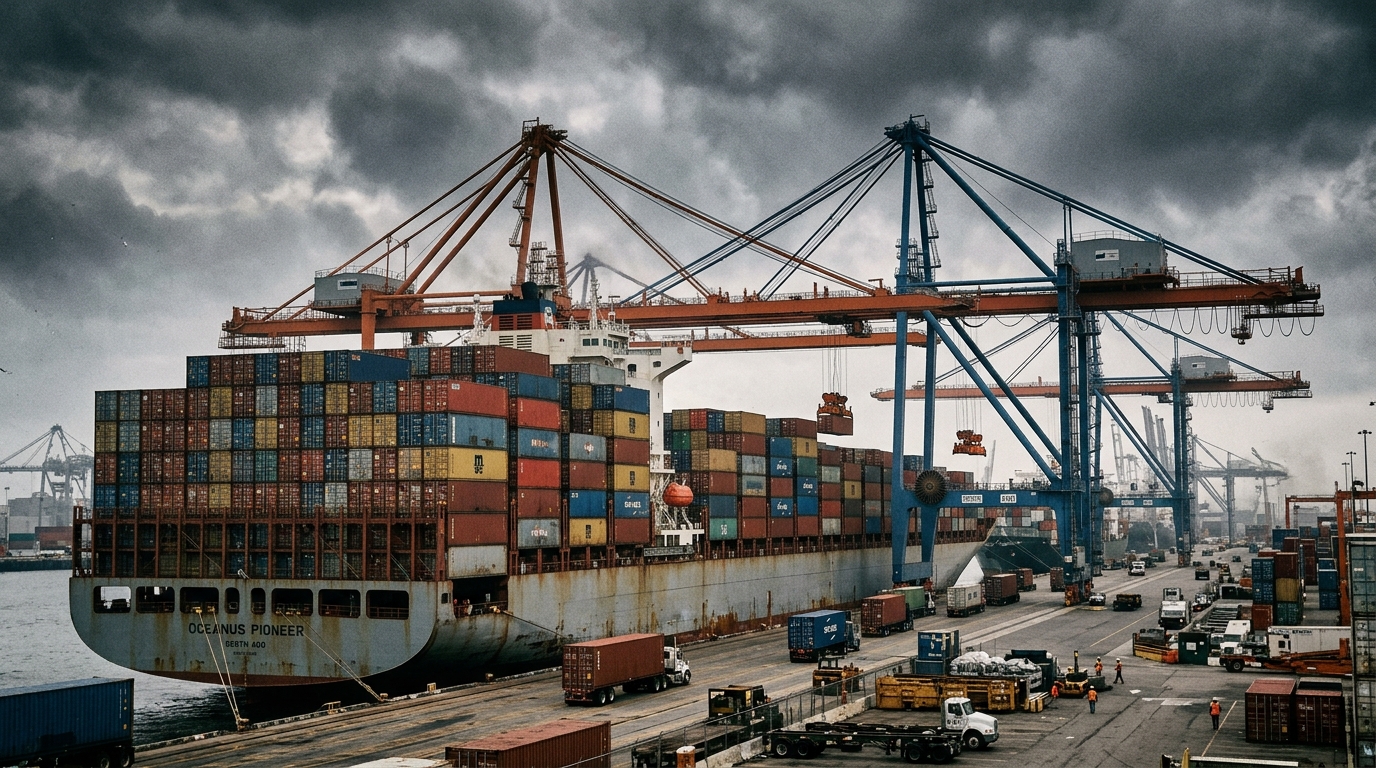
The 2018 conflict functioned as a geopolitical earthquake, permanently altering the international order and accelerating trends that were already nascent. The most profound consequence was the initiation of "decoupling." While total economic separation remained impractical and undesirable for many, the trade war forced companies to reassess the "just-in-time" supply chain models that had defined globalization since the 1990s. This shift was not merely about cost efficiency but about mitigating geopolitical risk, leading to the "China Plus One" strategy where companies diversified their manufacturing base to countries like Vietnam, Mexico, India, and Thailand. This re-regionalization of supply chains marked a significant departure from the hyper-globalization era.
Furthermore, the focus explicitly shifted from commodity trade (e.g., soybeans, steel) to the "High-Tech Cold War." The targeting of Chinese firms like ZTE and Huawei, particularly the imposition of export controls on critical US-origin technology, highlighted the American fear that China was achieving a technological breakthrough that would provide it with an insurmountable military and intelligence advantage. This signaled that the struggle was not merely about balance-of-trade sheets, but about the future of 5G infrastructure, artificial intelligence, quantum computing, and advanced semiconductors—technologies deemed critical for national security and future economic competitiveness. This competition over technological leadership effectively transformed US-China relations from one of "cooperative competition" to systemic rivalry, defining foreign policy for years to come.
The trade war also severely strained the credibility and efficacy of multilateral institutions, particularly the World Trade Organization (WTO). The Trump administration's unilateral actions and its deliberate obstruction of appointments to the WTO's Appellate Body weakened the organization's dispute resolution mechanism. This signaled a broader decline in adherence to rules-based international trade, prompting other nations to question the impartiality and utility of such bodies when major powers act outside their frameworks.
In terms of geopolitical alignment, the trade war placed many US allies in a difficult position. European nations, Japan, and South Korea, deeply integrated into both the US and Chinese economies, found themselves caught in the crossfire. While many shared US concerns about China's unfair trade practices, they were reluctant to fully align with the confrontational US approach due to their own significant economic ties with Beijing. This spurred discussions within allied nations about "de-risking" – reducing strategic dependencies on China without full decoupling – and diversifying economic partnerships, exemplified by initiatives such as the EU's Indo-Pacific strategy. The conflict ultimately accelerated a global reassessment of China's role in the international system, pushing more countries to adopt a more cautious and strategic stance toward Beijing, even if their tactics differed from Washington's. The trade war thus acted as a catalyst for a broader geopolitical realignment, solidifying the perception of a long-term great power competition.
Global Repercussions and Third-Party Impacts
The US-China trade war, while ostensibly a bilateral dispute, sent ripple effects across the global economy, profoundly impacting third-party countries and multilateral institutions. No nation or industry remained untouched by the escalating tariffs and the subsequent restructuring of global supply chains.
One of the most immediate impacts was felt in global agricultural markets. China's retaliatory tariffs specifically targeted US agricultural products, particularly soybeans, which had been a major US export to China. This forced China to seek alternative suppliers, primarily from Brazil and Argentina, leading to price volatility and significant shifts in trade patterns. While US farmers bore the brunt of these tariffs, with many requiring government aid, the reshuffling created new opportunities for South American agricultural producers.
The manufacturing sector, especially electronics and automotive industries, also experienced significant disruptions. Companies with extensive supply chains involving both US and Chinese components found themselves caught in a complex web of tariffs. For instance, German automakers exporting vehicles to China that contained US-made parts faced increased costs due to Chinese retaliatory tariffs, even though Germany was not directly involved in the trade war. This intricate interconnectedness highlighted the fragility of globalized production networks. Many multinational corporations initiated the "China Plus One" strategy, investing in new manufacturing facilities in Southeast Asian nations like Vietnam, Malaysia, and Thailand, as well as Mexico and India. These countries experienced an influx of foreign direct investment and job creation, benefiting from the relocation of production capacity away from China. However, this shift was not without challenges, as these nations often lacked the infrastructure, skilled labor, and supply chain maturity of China.
The trade war also exacerbated existing pressures on global economic growth. The International Monetary Fund (IMF) and the World Bank repeatedly warned that the escalating tariffs and trade uncertainty were dampening global investment, reducing business confidence, and slowing down international trade volumes. This contributed to a general slowdown in global GDP growth projections, impacting export-oriented economies worldwide.
Moreover, the conflict put immense pressure on multilateral trading systems. The US's use of Section 301 and its disregard for WTO rulings weakened the institution's authority. This forced other countries to consider their own trade defense mechanisms and deepened discussions on reforming or circumventing the WTO. The trade war also intensified efforts by some nations to forge new regional trade agreements or strengthen existing ones (e.g., the Comprehensive and Progressive Agreement for Trans-Pacific Partnership - CPTPP, and the Regional Comprehensive Economic Partnership - RCEP), often viewed as alternative frameworks to mitigate future unilateral trade actions.
Ultimately, the trade war compelled a broader conversation among US allies about "de-risking" and "friend-shoring" or "ally-shoring." This concept involves re-orienting supply chains to countries with shared geopolitical values, aiming to reduce strategic vulnerabilities to both China and other potentially disruptive actors. This strategic shift has long-term implications for global economic integration, moving towards a more fragmented, security-conscious, and politically aligned trade landscape, rather than a purely efficiency-driven one.
Analysis of Key Actors and Decisive Actions
Donald Trump and the Populist Mandate
Donald Trump utilized the trade war as a primary vehicle to demonstrate strength to his domestic constituency and fulfill campaign promises of bringing back American jobs. By circumventing traditional multilateral institutions like the WTO and opting for unilateral tariffs under the authority of Section 301 of the Trade Act of 1974, he signaled a decisive disregard for the global trade rules-based order that the US itself had largely constructed post-WWII. This approach, championed by figures like USTR Robert Lighthizer, reflected a strategic shift from engaging China within the WTO framework to directly confronting its alleged unfair practices outside it. Trump’s aggressive rhetoric, often delivered via Twitter, captivated his base, framing the conflict as a necessary battle against foreign economic exploitation and a reassertion of American sovereignty. The targeting of specific industries for retaliation by China (e.g., soybeans in Midwestern states) sometimes backfired politically, but the administration largely insulated affected farmers with federal aid programs, maintaining political support for the broader strategy. His actions were a gamble, prioritizing immediate visible action over painstaking diplomatic negotiations, fundamentally reshaping America's approach to global trade.
Xi Jinping and the Resilience Strategy
For Xi Jinping, the trade war served as a powerful rallying cry for nationalist sentiment within China. Beijing consistently framed the conflict as an unwarranted American attempt to "contain" China’s legitimate rise and impede its national rejuvenation. This narrative resonated deeply with the Chinese public, bolstering support for Xi and the Communist Party. In response, China accelerated its efforts toward "indigenous innovation" and technological self-sufficiency (zili gengsheng), particularly in critical sectors where it relied heavily on foreign, especially US, technology. The trade war effectively ended the era of "hiding strength and biding time" (tao guang yang hui), a diplomatic principle championed by Deng Xiaoping. Instead, it inaugurated a more assertive and nationalistic posture, where economic self-sufficiency was explicitly elevated to the highest national security priority. Beijing responded to US tariffs with reciprocal duties, albeit carefully calibrated to minimize damage to its own export economy while maximizing political pressure on US industries. The unveiling of the "Dual Circulation" strategy in 2020, emphasizing domestic demand and technological self-reliance while still engaging with international markets, was a direct strategic response to the vulnerabilities exposed by the trade war, aiming to make China more resilient to external shocks.
Trivia and Lesser-Known Facts
- The Soybean War's Precision: China specifically targeted US agricultural exports, particularly soybeans, knowing that farmers in the US Midwest were a critical political demographic for the Republican Party and Donald Trump. This was a calculated move to inflict political pain and pressure the US administration. The initial 25% tariff on US soybeans immediately impacted global prices and supply chains, forcing China to dramatically increase imports from Brazil.
- The "301" Tool's Resurrection: The legal basis for the tariffs—Section 301 of the Trade Act of 1974—had been largely dormant for decades. Most modern US administrations preferred using the WTO's dispute settlement mechanism to address trade grievances. Its resurrection by the Trump administration was a clear signal of the administration's rejection of international arbitration and its preference for unilateral strong-arm tactics. This move was controversial, even domestically, for potentially undermining the international rules-based order.
- Huawei’s Unexpected Boost: Despite the intense pressure during 2018, including a de facto ban on selling US technology to Huawei, the company actually saw a significant spike in domestic Chinese support. Consumers viewed Huawei as a symbol of national resilience against foreign aggression, leading to increased sales within China and a surge of patriotic fervor around the brand. This unanticipated "backfire" effect demonstrated the limits of economic coercion against a nation with strong nationalist sentiment.
- The "Phase One" Deal's Skepticism: While the "Phase One" trade deal signed in January 2020 was touted as a de-escalation, many analysts and economists remained skeptical. The agreement committed China to purchasing an additional $200 billion in US goods and services over two years, a target deemed unrealistic even before the COVID-19 pandemic. More importantly, it left unresolved the fundamental structural issues of China's state-led economic model, forced technology transfers, and industrial subsidies, which were at the heart of the US grievances.
- The Role of Think Tanks: Beyond government officials, a network of think tanks and academics played a crucial role in shaping the intellectual framework for the trade war. Organizations like the Information Technology and Innovation Foundation (ITIF) and individual scholars across various universities had been publishing detailed reports on China's industrial policies and their implications for US technological leadership for years, providing the analytical ammunition for the more confrontational stance.
References and Literature
- U.S. Trade Representative, Section 301 Report - The official government document outlining the grievances regarding China’s technology transfer and IP policies, which served as the primary legal justification for the tariffs.
- Foreign Affairs: The New China Scare - A comprehensive analysis of the shift in Washington’s consensus regarding China’s strategic intentions, exploring the intellectual and political currents that led to the trade war.
- The Wall Street Journal: The Trade War of 2018 - Extensive journalistic coverage of the daily mechanics of the tariff implementation, market reactions, and the ongoing negotiations throughout the conflict.
- Peterson Institute for International Economics (PIIE) - A leading research organization that published numerous analyses and economic impact studies on the tariffs, their effects on US consumers and businesses, and global trade flows.
- Council on Foreign Relations (CFR) - Provides detailed policy analyses and expert commentaries on the strategic implications of the US-China trade war, focusing on its geopolitical dimensions and long-term consequences.
- World Trade Organization (WTO) - Offers official reports and statistics on global trade trends, though its role and authority were significantly challenged by the unilateral actions taken during the trade war.
*
Footnotes & Explanations
- Section 301 of the Trade Act of 1974 is a law that permits the President to take all appropriate action to obtain the removal of any act, policy, or practice of a foreign government that violates an international trade agreement or is unjustifiable and burdens or restricts U.S. commerce. ↩
- The "China Plus One" strategy refers to the corporate practice of diversifying manufacturing investments away from a sole reliance on China into other Asian nations (or other regions globally) to mitigate geopolitical risk and tariff exposure. ↩