Key Takeaways
- The October 7 attack, codenamed 'Al-Aqsa Flood,' was a multi-pronged assault that killed over 1,200 people, mostly civilians, and resulted in the abduction of over 240 hostages, fundamentally altering Israel's national security doctrine and internal political landscape.
- The sophisticated nature and success of the Hamas operation exposed critical intelligence and operational failures within the Israeli defense establishment, challenging long-held assumptions about Israeli deterrence and technological superiority.
- The subsequent war in Gaza has re-centered the Israeli-Palestinian conflict in global diplomacy, halted momentum on regional normalization efforts like the Abraham Accords, and significantly heightened tensions, drawing in elements of the Iranian-backed 'Axis of Resistance'.
- The conflict has precipitated a severe humanitarian crisis in Gaza, sparked widespread international debate over the laws of war, and placed immense pressure on key international actors, including the United States, to manage regional de-escalation and humanitarian aid.
Historical Context and Origins
The events of October 7, 2023, did not occur in a vacuum; they were the harrowing culmination of decades of unresolved territorial disputes, cycles of violence, internal Palestinian power struggles, and a significant shift in regional power dynamics. Understanding the roots of this conflict requires delving into the foundational elements that shaped the Gaza Strip and Hamas itself.
Hamas, an acronym for Harakat al-Muqawamah al-Islamiyyah (Islamic Resistance Movement), emerged in 1987 at the onset of the First Intifada (Palestinian uprising against Israeli occupation). It quickly distinguished itself from secular Palestinian factions like Fatah by combining religious nationalism with armed struggle, rooted in the ideology of the Muslim Brotherhood. Its charter calls for the liberation of all of historical Palestine and the destruction of Israel. Over the years, Hamas built a parallel infrastructure of social services and welfare programs alongside its military wing, the Izz ad-Din al-Qassam Brigades, gaining considerable popular support in Gaza.
The defining moment for Hamas's control over Gaza came in 2007. Following its unexpected victory in the 2006 Palestinian legislative elections—a result largely unacknowledged by Fatah and the international community—a violent struggle erupted between Hamas and the Fatah-led Palestinian Authority. Hamas ultimately seized de facto control of the Gaza Strip, expelling Fatah forces and establishing an independent governing authority. In response, Israel and Egypt imposed a comprehensive land, air, and sea blockade on Gaza, citing security concerns and the need to prevent arms smuggling. This blockade severely restricted the movement of goods and people, turning Gaza into what many observers describe as an open-air prison, breeding deep resentment and hardship among its 2.3 million residents.
Over the 16 years leading up to 2023, the region experienced multiple cycles of intense escalation and conflict, each leaving its own scars and reinforcing the deeply entrenched animosity.
- Operation Cast Lead (2008-2009): A major Israeli military offensive in response to rocket fire from Gaza, resulting in widespread destruction and casualties.
- Operation Pillar of Defense (2012): Triggered by Israel's assassination of Hamas military chief Ahmed Jabari, leading to an eight-day conflict.
- Operation Protective Edge (2014): A prolonged and devastating 50-day war, one of the deadliest, prompted by the abduction and murder of three Israeli teenagers and subsequent escalations.
- Operation Guardian of the Walls (2021): A shorter but intense conflict sparked by tensions in Jerusalem (al-Aqsa Mosque, Sheikh Jarrah evictions) and Hamas rocket fire.
However, the period preceding October 2023 was marked by a strategic ambiguity and a pervasive sense of complacency within the Israeli security establishment. Under the shrewd leadership of Yahya Sinwar, Hamas appeared to be signaling a pivot toward internal governance and economic stability for Gaza. Sinwar, a former senior prisoner released in the 2011 Gilad Shalit prisoner exchange, cultivated an image of a pragmatist. This narrative, coupled with the apparent lull in large-scale conflict and Israel's granting of thousands of work permits to Gazans, led many Israeli analysts and policymakers to believe the group was deterred by the prospect of losing these economic concessions. This 'Conception' (Hebrew: Konseptzia), a term echoing the intelligence failure prior to the 1973 Yom Kippur War, asserted that Hamas was primarily a governing body, not a maximalist resistance movement actively planning a major offensive.
Simultaneously, the geopolitical landscape was shifting dramatically. The Abraham Accords, signed in 2020, normalized ties between Israel and several Arab nations—the UAE, Bahrain, Sudan, and Morocco—bypassing the traditional demand for a resolution to the Israeli-Palestinian conflict. This created an environment where the Palestinian cause risked being increasingly marginalized on the regional agenda. With Saudi Arabia potentially on the brink of a similar normalization deal, Hamas, facing internal pressure from a frustrated and impoverished Gazan population and a declining relevance in the eyes of some segments of the Palestinian population, sought a dramatic, destabilizing action. This was aimed not only at reasserting its role as the primary vanguard of the Palestinian national movement but also at disrupting the emerging regional order that isolated the Palestinians. Iran, a key patron of Hamas and a long-standing opponent of Israeli-Arab normalization, would undoubtedly view such an action as serving its broader strategic interests within the "Axis of Resistance."
Intelligence Failures and the 'Conception'
The unprecedented success of the October 7 attacks cannot be understood without a thorough examination of the profound intelligence and operational failures within the Israeli security establishment. This breakdown represents one of the most significant intelligence lapses in Israel's history, often drawing parallels to the surprise of the 1973 Yom Kippur War.
At the heart of the failure was the "Conception," a prevailing strategic assessment that had taken deep root within the Israeli military intelligence apparatus, particularly Unit 8200 (Israel's equivalent of the NSA) and Aman (Military Intelligence Directorate). This Conception held that Hamas, despite its rhetoric, was ultimately a rational actor primarily concerned with governing the Gaza Strip and improving the economic conditions of its population. The belief was that Hamas sought to avoid large-scale conflict with Israel, understanding the devastating consequences, and was therefore susceptible to a strategy of "economic deterrence" – offering limited economic incentives (like work permits) to maintain quiet, alongside military deterrence.
This Conception led to a dangerous blind spot. Intelligence analysts, steeped in this paradigm, consistently downplayed or misinterpreted numerous warning signs:
- Dismissal of Junior Analysts' Warnings: For months, and even weeks, leading up to October 7, junior analysts, particularly women serving in Unit 8200 on the Gaza border, reportedly observed and reported unusual and advanced training exercises by Hamas operatives. These included simulations of breaching border fences, taking hostages, and attacking military outposts. These reports, however, were often dismissed by senior command as mere exercises, "aspirational" rather than operational, or as part of Hamas's routine readiness drills. The prevailing senior view was that Hamas was not capable of, nor intended to launch, such a large-scale, coordinated assault.
- Over-reliance on Technological Barriers: Israel had invested over a billion dollars in a highly sophisticated, technologically advanced border barrier system dubbed the "smart fence." This barrier incorporated underground sensors, remote-controlled weaponry, surveillance cameras, and a complex network designed to detect and prevent infiltration. The belief in its impregnability fostered a false sense of security, leading to a reduction in human patrols and a degradation of traditional human intelligence gathering within Gaza. The attack demonstrated that low-tech solutions (bulldozers, drones for disabling cameras, paragliders) could effectively neutralize high-tech defenses when combined with overwhelming force.
- Misinterpretation of Hamas's Deception Strategy: Hamas deliberately cultivated the impression that it was focused on governance and economic issues. It reportedly created a sophisticated deception plan, including leaked documents suggesting internal disputes, public statements downplaying military intentions, and even reducing visible training activities to lull Israel into a false sense of security. This strategy, combined with Israel's pre-existing Conception, proved remarkably effective.
- Focus on Other Threats: The Israeli defense establishment was reportedly preoccupied with other perceived threats, including tensions in the West Bank, Iran's nuclear program, and the escalating judicial reform crisis that had divided Israeli society and reportedly impacted military readiness through reservist protests. This diffused focus contributed to the oversight of the growing threat from Gaza.
- Shabbat and Holiday Complacency: The attack was launched on Simchat Torah, a major Jewish holiday, and on Shabbat, a day when military readiness is often reduced. While Hamas has historically exploited such timing, the extent to which it was planned around this vulnerability highlights a repeated failure to adequately guard against such predictable patterns.
The collective impact of these failures was catastrophic. They resulted in a severe underestimation of Hamas's capabilities, its strategic ambition, and its willingness to sacrifice the status quo for a dramatic geopolitical intervention. The revelations of these failures have prompted profound self-reflection and calls for accountability within Israel, threatening the careers of top military and intelligence officials and severely eroding public trust in the country's security apparatus.
Timeline of Events and Key Moments
The operation, codenamed "Al-Aqsa Flood" (referencing the al-Aqsa Mosque in Jerusalem, a significant point of contention in the Israeli-Palestinian conflict), was characterized by its unprecedented scale, synchronized execution across land, sea, and air, and its brutal efficiency.
| Phase | Time (Approx.) | Action | Details & Significance |
|---|---|---|---|
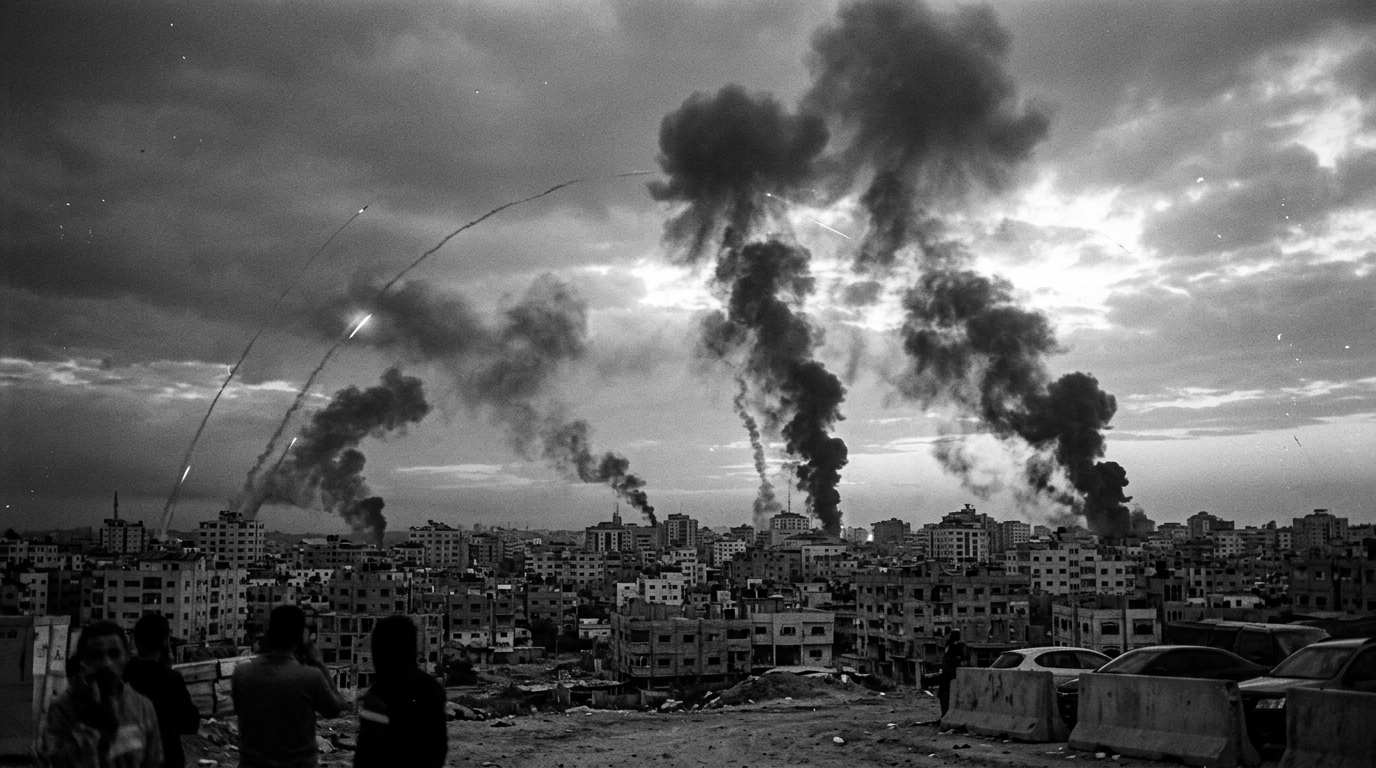
| Initial Barrage & Breach | 06:29 AM | Massive rocket barrage fired into Israel. | Thousands of rockets (estimated 2,500-5,000) overwhelm Iron Dome, providing cover for ground assault. Simultaneously, drones drop explosives on observation towers and automated firing posts along the border, disabling key surveillance and response systems. |
| Ground Infiltration | 06:30 AM - 07:00 AM | Perimeter fences breached at multiple points. | Hamas fighters, using bulldozers, motorcycles, pick-up trucks, and even paragliders, breach the technologically advanced "smart fence" at dozens of locations, overwhelming the thinly spread IDF forces. |
| Simultaneous Assaults | 07:00 AM - 10:00 AM | Hamas fighters target military outposts, kibbutzim, and the Nova music festival. | Militants infiltrate over 20 towns and kibbutzim in southern Israel (e.g., Sderot, Ofakim, Be'eri, Kfar Aza, Nir Oz), executing civilians, burning homes, and engaging in close-quarters combat with local security teams. Military bases like Re'im and Nahal Oz are overrun. The Nova music festival, a rave near Re'im, becomes a major site of massacre. |
| Chaos & Casualties | 10:00 AM - 06:00 PM | IDF struggles to mobilize; chaos in southern towns; reports of mass casualties and abductions. | With IDF units slow to respond due to surprise and dispersed forces, residents in southern Israel are left largely undefended for hours. Reports emerge of widespread atrocities: mass shootings, torture, sexual violence, and the abduction of over 240 Israelis and foreign nationals, including women, children, and the elderly. |
| IDF Counter-Offensive | 06:00 PM onwards | IDF begins to regain control; intense clashes. | Gradually, special forces and reservists arrive, engaging Hamas fighters in fierce battles. Many towns are only fully cleared after more than 24-48 hours. |
| Retaliation Begins | 08:00 PM (Oct 7) | Israel launches "Operation Swords of Iron." | Prime Minister Netanyahu declares Israel "at war." The IDF initiates extensive airstrikes on Gaza, targeting Hamas infrastructure, command centers, and rocket launchers. |
| Emergency Government | Oct 11 | Formation of a national unity government. | Following intense public pressure, PM Netanyahu forms an emergency war cabinet with opposition leader Benny Gantz, demonstrating a rare moment of political unity in Israel. |
| Ground Incursion Commences | Oct 27 (approx.) | Israel launches ground operations in Gaza. | After weeks of intense aerial bombardment, the IDF begins a phased ground invasion of the Gaza Strip, focusing initially on northern Gaza, with the stated objectives of dismantling Hamas and recovering hostages. |
The scale and ferocity of the attack caught the Israel Defense Forces (IDF) entirely off-guard, marking the most significant failure of intelligence and response since the 1973 Yom Kippur War. The attacks resulted in over 1,200 fatalities in Israel, predominantly civilians, and the abduction of an estimated 240 hostages, fundamentally shattering Israel's sense of security and altering its national psyche.
Geopolitical Consequences and Aftermath
The October 7 attack triggered a cascade of geopolitical shifts that continue to unfold, fundamentally altering the calculus for regional and international actors. The primary immediate consequence was the total abandonment of the pre-war status quo. Prime Minister Benjamin Netanyahu declared that Israel was in a state of war, moving beyond limited counter-terrorism operations toward the stated objective of dismantling Hamas’s governing and military capabilities, eliminating its leadership, and returning the hostages. This marked the beginning of "Operation Swords of Iron," a military campaign of unprecedented intensity in Gaza.
For the United States, the crisis necessitated an immediate and dramatic return to Middle Eastern crisis management, diverting attention from its strategic "pivot to Asia" and concerns over Ukraine. President Joe Biden, while offering unequivocal support to Israel’s right to self-defense, faced the delicate and increasingly challenging task of preventing a wider regional war. This involved the rapid deployment of two carrier strike groups (USS Gerald R. Ford and USS Dwight D. Eisenhower) to the Eastern Mediterranean as a deterrent against Iranian-aligned actors like Hezbollah in Lebanon, and the Houthis in Yemen. Secretary of State Antony Blinken embarked on multiple rounds of shuttle diplomacy across the region, attempting to coordinate humanitarian aid, secure hostage releases, and de-escalate tensions. The Biden administration's approach, often termed a "bear hug," combined robust military and diplomatic support for Israel with increasingly vocal calls for adherence to international humanitarian law and the protection of Palestinian civilians.
The Abraham Accords, which represented a cornerstone of pre-October 7 regional diplomacy, suffered a significant setback. While existing signatories (UAE, Bahrain, Morocco) maintained their diplomatic ties with Israel, further normalization efforts, particularly with Saudi Arabia, were effectively paused. Riyadh, which had been nearing a landmark deal, conditioned any future normalization on a credible path to Palestinian statehood and an end to the Gaza war, signalling a re-prioritization of the Palestinian issue within Arab foreign policy.
The conflict also dramatically activated and emboldened the "Axis of Resistance," a network of Iranian-backed militias designed to exert pressure on Israel and US interests across the region.
- Hezbollah in Lebanon: Engaged in daily, though generally contained, cross-border skirmishes with Israel, forcing the evacuation of tens of thousands of Israelis from their northern border towns and raising fears of a full-scale second front.
- Houthi rebels in Yemen: Launched a series of drone and missile attacks against Israel and, more significantly, began targeting international shipping in the Red Sea, claiming solidarity with Palestinians. These attacks severely disrupted global maritime trade, forcing major shipping companies to reroute, and prompted a multinational naval response led by the US.
- Iranian-backed militias in Iraq and Syria: Increased their attacks on US military bases, leading to retaliatory strikes by American forces.
This regional escalation brought the Middle East to the brink of a broader conflict, directly challenging US efforts to stabilize the region.
The international community found itself deeply polarized. While Western allies, particularly the US, UK, and Germany, largely stood by Israel’s right to self-defense, the escalating humanitarian catastrophe in Gaza led to massive global protests, condemnation from the Global South, and intense diplomatic pressure on the Netanyahu government. The unprecedented scale of civilian casualties, the displacement of over 85% of Gaza's population, and severe restrictions on aid entry sparked accusations of war crimes and genocide, leading to proceedings at the International Court of Justice (ICJ) and investigations by the International Criminal Court (ICC). This complicated the alliance dynamics between the US and Israel, as Washington faced increasing internal and external pressure to rein in Israel's military operation. The crisis also highlighted deepening divisions within international organizations, particularly the UN Security Council, which struggled to pass unified resolutions.
Analysis of Key Actors and Decisive Actions
Benjamin Netanyahu: The Challenge of Legacy and Survival
For Benjamin Netanyahu, the conflict represented not just the greatest national security crisis of his long political career, but an existential struggle for his political survival. Before October 7, Netanyahu was already grappling with unprecedented domestic unrest over his government's controversial judicial reform policies, and facing ongoing corruption trials. His image as "Mr. Security," a central pillar of his political brand, was utterly shattered by the intelligence failures and the devastating attack. His immediate response was to declare war and commit to the total dismantling of Hamas, a strategy that, while widely supported by the Israeli public initially, has become increasingly scrutinized as the war drags on and the hostage crisis remains unresolved. His decision-making has been influenced by a complex interplay of national security imperatives, the profound trauma inflicted on Israel, and the imperative to restore public trust and salvage his political legacy amidst growing calls for accountability. He formed an emergency war cabinet with opposition figures Benny Gantz and Gadi Eisenkot, a move that momentarily quelled some internal political dissent but has since seen renewed tensions.
Yahya Sinwar: The Architect of Asymmetry and Total Disruption
Yahya Sinwar, the undisputed leader of Hamas in Gaza, emerged as the central architect of the October 7 operation. A former top commander of Hamas's security apparatus and a founder of its military wing, Sinwar spent 22 years in Israeli prisons, where he learned fluent Hebrew and gained a deep understanding of Israeli society and its security mindset. Released in the 2011 Gilad Shalit prisoner exchange, he quickly rose through the ranks to become Hamas's de facto leader in Gaza in 2017. Sinwar's tenure has been defined by an unwavering commitment to armed struggle and a willingness to take extreme risks. By orchestrating a cross-border raid of such magnitude, knowing it would inevitably draw a massive Israeli response, Sinwar opted for a strategy of "total disruption." This approach prioritized breaking the regional status quo, derailing the Abraham Accords, and re-centering the Palestinian issue on the global agenda, even at the cost of immense suffering and destruction within Gaza. His gamble aimed to demonstrate that Israel's deterrence was fragile and that the Palestinian cause could not be ignored, regardless of the humanitarian toll. His strategic objectives extended beyond military gains, seeking to fundamentally alter the geopolitical landscape and galvanize Palestinian and Arab support for the 'resistance'.
Joe Biden: The Diplomatic Tightrope and Domestic Pressures
The Biden administration’s involvement underscored the intricate and often contradictory nature of American interests in the Middle East. President Biden's strategy, often described as "bear hug" diplomacy, involved providing robust and rapid military, intelligence, and diplomatic support to Israel while simultaneously attempting to manage the conflict's regional fallout and humanitarian consequences. This involved multiple presidential visits, billions in aid, and the deployment of significant military assets. However, Biden faced an increasingly difficult balancing act. Domestically, he faced pressure from a deeply divided electorate: unwavering support for Israel from many conservatives and mainstream Jewish organizations, contrasted with growing condemnation from progressive Democrats and Arab-American communities over the humanitarian crisis in Gaza. Internationally, the US found itself increasingly isolated as global condemnation of Israel's military operation intensified. Biden's administration worked to facilitate humanitarian aid, secure hostage releases, and advocate for a future two-state solution, even as Israel's actions made such a prospect seem increasingly remote. The conflict also directly impacted US strategic interests, particularly with the Red Sea shipping crisis, compelling a direct military response against the Houthis.
Other Key Actors
- Yoav Gallant (Israeli Minister of Defense): A former IDF major general, Gallant has been a key decision-maker in the war cabinet, advocating for aggressive military action to dismantle Hamas, but also facing criticism over the intelligence failure.
- Herzi Halevi (IDF Chief of Staff): As the head of the Israel Defense Forces, Halevi bears ultimate responsibility for the military's operational response and the intelligence failures. He has publicly acknowledged the IDF's failures and committed to a thorough investigation post-war.
- Mohammed Deif (Commander of the Izz ad-Din al-Qassam Brigades): The elusive military leader of Hamas, believed to be the mastermind behind the tactical execution of the "Al-Aqsa Flood" operation. His fate remains unknown, but he is a primary target of Israel.
Socio-Political and Domestic Impact in Israel
The October 7 attacks ripped through the fabric of Israeli society, leaving an indelible mark of trauma, grief, and a profound sense of betrayal. The immediate aftermath saw a rare moment of national unity, as internal political divisions—which had previously paralyzed the country over judicial reforms—were momentarily set aside in the face of an existential threat.
The psychological impact on the population was immense. The brutality of the attacks, widely disseminated through social media and survivor accounts, invoked deep historical traumas, particularly comparisons to the Holocaust, marking October 7 as the deadliest day for Jewish people since World War II. Communities in the Gaza envelope, once vibrant and secure, were decimated, with many residents displaced indefinitely. The constant threat of rocket fire, coupled with the ongoing hostage crisis, fostered a pervasive sense of insecurity and anxiety across the country. Therapy and mental health services saw an unprecedented surge in demand.
The attacks also shattered public trust in the country's security and political leadership. For decades, Israelis had been told their military and intelligence services were unparalleled, providing an ironclad shield against external threats. The multi-layered failures leading to October 7—the intelligence blind spots, the "smart fence" collapse, and the slow military response—generated intense public anger and calls for accountability. While the initial focus was on the war effort, a pervasive demand for resignations and a commission of inquiry has grown louder, particularly from the families of hostages and residents of the south. This demand is likely to shape Israeli politics for years to come, potentially leading to significant shifts in leadership once the immediate conflict subsides.
The hostage crisis, with over 240 individuals abducted into Gaza, became a deeply personal and national ordeal. The "Hostages and Missing Families Forum" emerged as a powerful advocacy group, staging daily protests, campaigning internationally, and putting immense pressure on the government to prioritize the return of all captives. Their plight became a constant reminder of the human cost of the conflict and a source of profound anguish for the nation.
On a societal level, the attacks led to a massive mobilization of reservists, impacting the economy and daily life. Thousands of ordinary citizens volunteered to assist displaced communities, provide aid, and support the war effort, demonstrating a powerful sense of collective resilience. However, the internal unity also masked simmering tensions and deep societal wounds. Debates over the future of Gaza, the role of ultra-Orthodox Israelis in the military, and the country's long-term security strategy are likely to re-emerge with renewed ferocity once the immediate crisis abates. The attacks fundamentally reshaped Israeli self-perception, transitioning from a belief in robust security to a stark realization of vulnerability, prompting a re-evaluation of national priorities and strategic doctrines.
Trivia and Lesser-Known Facts
- The "Smart Fence" Failure: The Israeli border barrier, a $1.1 billion project completed in 2021 and hailed as technologically impenetrable, failed due to a combination of low-tech tactics. Hamas utilized simple drones to disable surveillance cameras and remote-controlled gun turrets, then used bulldozers to breach the physical barrier at dozens of points, allowing thousands of fighters to infiltrate. This demonstrated a critical vulnerability in relying too heavily on technology over human intelligence and ground presence.
- The Role of Tunnels ("Gaza Metro"): The "Gaza Metro," an expansive underground network, proved far more sophisticated and extensive than even international intelligence estimates suggested. This subterranean city, used for command and control, weapons storage, and troop movement, functioned as the primary logistics artery for the Hamas operation, allowing forces to move largely undetected and emerge in unexpected locations. It complicated Israel's ground offensive immensely.
- Intelligence Dismissals and "Walls of Jericho": In the weeks prior to the attack, multiple reports from junior-level IDF intelligence personnel, including women conscripts tasked with monitoring Gaza, warned of unusual and advanced training activities by Hamas, including drills mimicking an invasion of Israeli territory and taking hostages. These reports were reportedly dismissed by senior command as mere exercises or a 'Walls of Jericho' scenario—a theoretical, unlikely operational plan that Hamas lacked the capacity to execute.
- Hamas's Pre-Attack Preparations: Hamas reportedly conducted meticulous preparations for over two years, including extensive training simulations, drone reconnaissance missions over Israeli border communities, and a sophisticated deception campaign to convince Israel that it was focused on economic stability rather than a major attack. They even reportedly built a mock Israeli town in Gaza to practice the assault.
- The Nova Festival Massacre: The Nova music festival near Kibbutz Re'im became the site of the highest density of casualties in the initial stages of the attack, with over 360 young people systematically hunted down and killed by Hamas militants who stormed the festival grounds. The scale and brutality of this single event shocked the world and became a symbol of the October 7 atrocities.
- International Fighters: While predominantly carried out by Hamas and Palestinian Islamic Jihad, reports indicated the presence of fighters from other foreign entities, including some who were not Gazan, although the exact affiliations and numbers remain under investigation.
"We are at war, not in an operation, not in rounds, but at war. The enemy will pay a price like it has never known." — Benjamin Netanyahu, in his first televised address following the October 7 attacks, articulating Israel's profound shift in strategic approach.
The aftermath of October 7 remains a fluid, developing situation, characterized by ongoing conflict, diplomatic maneuvering, and immense human suffering. As the war continues to redraw the borders of diplomacy and security, it serves as a stark reminder of the fragility of peace in the Middle East and the profound impact that non-state actors can have on the global order. The legacy of these attacks will undoubtedly shape regional dynamics, international relations, and the prospects for Israeli-Palestinian peace for decades to come.
References and Literature
- The Institute for National Security Studies (INSS) - Offers comprehensive academic analyses of Israel's security challenges, intelligence failures, and the strategic implications of the October 7 attack.
- Council on Foreign Relations (CFR) - Provides in-depth briefings and analysis on the historical background of the Israel-Hamas conflict, US foreign policy, and regional geopolitical developments.
- Foreign Affairs: The October 7 Paradox - A scholarly journal offering critical perspectives on the breakdown of regional security paradigms, the future of the Middle East, and global implications.
- United Nations Office for the Coordination of Humanitarian Affairs (OCHA) - Occupied Palestinian Territory - Delivers data-heavy reporting on the humanitarian impacts, casualty figures, displacement statistics, and demographic information related to the conflict zones.
- Amnesty International - Publishes investigative reports and analyses on human rights violations and international humanitarian law concerns by all parties to the conflict.
- Human Rights Watch - Offers detailed reports and advocacy on human rights issues, including alleged war crimes and civilian protection during the conflict.
- The New York Times - Anatomy of the Hamas Attack - In-depth journalistic investigations and interactive features detailing the timeline and nature of the attacks.
Footnotes & Explanations
- Initial reports estimated the death toll at 1,200, a figure that includes both military and civilian casualties, subsequently slightly revised. ↩
- The Nova music festival became the site of the highest density of casualties in the initial stages of the attack, highlighting the indiscriminate targeting of civilians. ↩