Key Takeaways
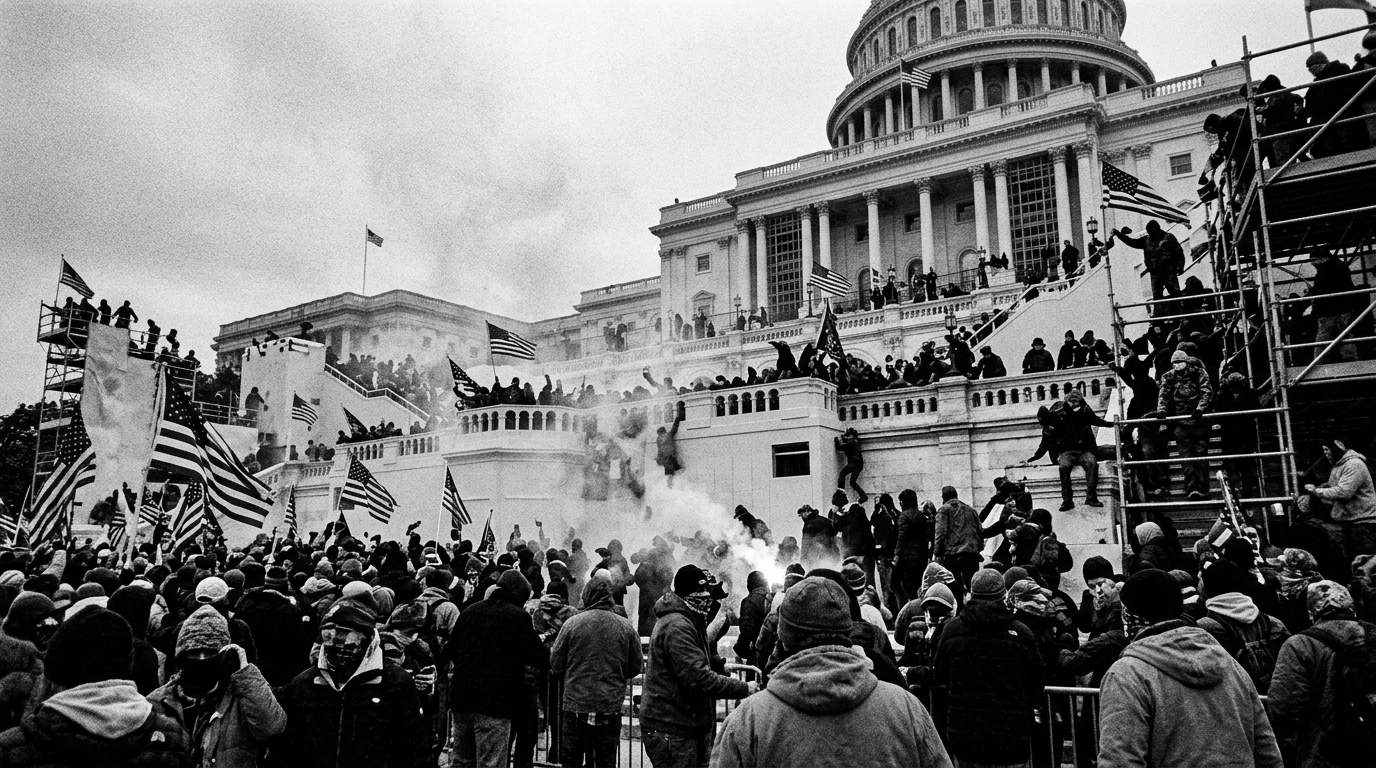
- The January 6 attack represented the most significant breach of the U.S. Capitol since the War of 1812, fundamentally challenging the peaceful transition of power.
- The event served as a catalyst for a profound re-evaluation of domestic radicalization, digital disinformation ecosystems, and the resilience of American democratic institutions.
- The constitutional crisis prompted an unprecedented second impeachment of Donald Trump, setting a new historical precedent regarding executive accountability.
Historical Context and Origins
The assault on the U.S. Capitol on January 6, 2021, did not occur in a vacuum; it was the culmination of months, if not years, of deepening political polarization within the United States. Following the November 2020 presidential election, President Donald Trump and his legal team launched a series of meritless challenges in courts across several swing states, attempting to overturn the electoral results. Despite these efforts being resoundingly rejected by the judiciary—including by judges appointed by Trump himself—the "Stop the Steal" movement gained significant traction.
The origins of the event can be traced to the erosion of trust in the electoral process, fueled by a relentless disinformation campaign. Trump’s repeated assertions that the election was "rigged" were amplified through social media, creating a fertile environment for radicalization. Historically, this period was characterized by a breakdown of the consensus that had long defined American politics: that losing a democratic election is a legitimate, albeit painful, outcome. The rhetoric shifted from a contest between policy ideologies to a binary framing of "survival," suggesting that the loss of the presidency was synonymous with the collapse of the nation itself.
This polarization has deeper roots, tracing back decades to the rise of partisan media, the decline of civic education, and the increasing fragmentation of information ecosystems. The internet and social media, in particular, accelerated the formation of echo chambers, allowing unsubstantiated claims and conspiracy theories to spread unchecked among like-minded individuals. The "Stop the Steal" movement itself was not entirely new; similar, though far less impactful, efforts to question election results had emerged in prior cycles. However, the unique position of a sitting president actively promoting and legitimizing these claims from the highest office in the land provided an unprecedented level of official sanction to what were fundamentally anti-democratic grievances.
Weeks before January 6, President Trump had explicitly called on supporters to come to Washington D.C., stating, "Big protest in D.C. on January 6th. Be there, will be wild!" This call, combined with the continuous barrage of election fraud claims from the President and his allies, effectively served as a direct invitation and implied endorsement for the actions that would unfold. The rally held that morning was meticulously planned to coincide with the constitutional duty of Congress to certify the Electoral College votes, creating a pressure point intended to disrupt the lawful process. The grievances articulated by the movement also tapped into broader socio-economic anxieties, cultural resentments, and a sense of disenfranchisement felt by a segment of the population, providing fertile ground for the propagation of an anti-establishment narrative that ultimately targeted the very institutions of American governance.
Timeline of Events and Key Moments
The events of January 6 followed a rapid and violent trajectory that transitioned from a protest to an insurrection within a matter of hours. The day began with a rally designed to pressure lawmakers and Vice President Mike Pence, but it quickly devolved into a full-scale assault on one of the most sacred symbols of American democracy.
| Time (EST) | Event Description |
|---|---|
| January 5, 2021 | Early arrivals of various groups, including QAnon adherents, Oath Keepers, and Proud Boys, begin to gather in Washington D.C., with some expressing violent intentions on public forums. |
| 10:00 AM | The "Save America" rally officially begins on the Ellipse near the White House. Speakers, including Rudy Giuliani and Congressman Mo Brooks, address the crowd, reiterating claims of widespread voter fraud and encouraging attendees to march to the Capitol. Giuliani notably suggests "trial by combat." |
| 12:00 PM | President Donald Trump delivers his speech at the rally, urging thousands of supporters to march to the Capitol. He states, "We're going to walk down to the Capitol... because you'll never take back our country with weakness." He also criticizes Vice President Mike Pence for his perceived unwillingness to unilaterally reject electoral votes. |
| 12:30 PM | Many rally attendees, following Trump's direction, begin to walk towards the Capitol building, which is approximately two miles away. |
| 1:00 PM | The Joint Session of Congress, presided over by Vice President Pence, convenes in the House chamber to certify the electoral votes from the 2020 presidential election. Objections to Arizona's electoral votes are immediately raised by Republican representatives and senators. |
| 12:50 PM - 1:10 PM | Initial confrontations begin at the outer perimeter of the Capitol grounds as protestors overwhelm security barriers and push past Capitol Police officers. Some officers are seen being physically assaulted or retreating. |
| 1:10 PM - 1:40 PM | The first significant breaches of the Capitol grounds occur. Rioters push past bicycle racks, tear down fences, and engage directly with the small contingent of Capitol Police. |
| 2:10 PM | Rioters, using improvised weapons and sheer force, manage to break through windows and doors on the west side of the Capitol. The first rioters enter the building. |
| 2:13 PM | Vice President Mike Pence is quickly evacuated from the Senate chamber by Secret Service agents, just minutes before rioters reach that floor. Speaker Nancy Pelosi is also evacuated shortly thereafter. |
| 2:24 PM | President Trump tweets criticism of Vice President Mike Pence, stating, "Mike Pence didn’t have the courage to do what should have been done..." This tweet is seen by many as further inciting the mob, even as Pence's life was reportedly in danger. |
| 2:30 PM - 3:00 PM | Rioters extensively penetrate the Capitol building, roaming through hallways, vandalizing offices, and occupying legislative chambers. Senators and representatives are evacuated to secure, undisclosed locations. Reports of gunfire within the Capitol emerge. |
| 2:44 PM | Ashli Babbitt, an Air Force veteran, is shot and killed by a Capitol Police officer as she attempts to breach a barricaded door leading to the Speaker's Lobby, adjacent to the House chamber. |
| 3:00 PM - 4:00 PM | Law enforcement reinforcements, including the D.C. Metropolitan Police Department, begin to arrive. The National Guard's deployment, initially delayed, is slowly approved and mobilized after numerous calls for help. |
| 4:17 PM | President Trump releases a video message telling his supporters to "go home," but also reiterates his false claims of a "rigged election" and tells the rioters, "We love you, you're very special." |
| 5:40 PM | FBI agents and other federal law enforcement agencies join the effort to clear the Capitol. |
| 6:00 PM | The Capitol building is officially declared secure by law enforcement. |
| 8:00 PM | Both the House and Senate reconvene to resume the certification of the Electoral College votes, symbolizing the resilience of democratic processes in the face of attack. |
| 8:06 PM | Senate Majority Leader Mitch McConnell delivers a powerful speech condemning the attack and reaffirming the constitutional process. |
| 3:40 AM (Jan 7) | Congress successfully certifies the Electoral College votes, officially affirming Joe Biden as the winner of the 2020 presidential election. |
Geopolitical Consequences and Aftermath
The global perception of the United States shifted instantaneously on January 6. For decades, the U.S. Department of State had utilized the "peaceful transfer of power" as a benchmark of democratic stability when evaluating other nations. When that transfer was physically contested, the U.S. lost significant "soft power." The images of the world's oldest continuous democracy under siege by its own citizens sent shockwaves across the globe, severely undermining America's moral authority and credibility as a beacon of democratic governance.
Foreign adversaries, most notably Russia and China, capitalized on the imagery of a besieged Capitol. Through state-controlled media, they portrayed the event as proof of the failure of the American democratic system, often juxtaposing it with their own authoritarian stability. Chinese officials, for instance, drew parallels to the 2019 Hong Kong protests, cynically noting the U.S. government's differing reactions to unrest at home versus abroad. Russian state media used the incident to amplify narratives about Western decadence and hypocrisy, bolstering arguments for its own illiberal governance model. Iran's leadership also seized upon the chaos as evidence of American decline. These nations leveraged the events to delegitimize Western democratic ideals and strengthen their own geopolitical standing.
Allies, while expressing solidarity with American democratic institutions, voiced profound concern and disappointment. Leaders from the United Kingdom, Germany, France, Canada, and Australia condemned the violence and emphasized the importance of a peaceful transition, often delicately balancing support for the U.S. constitution with implicit criticism of the preceding political rhetoric. This forced the incoming Biden administration to prioritize "restoring America's standing in the world" and "proving that democracy can still deliver" as central tenets of its foreign policy agenda. The damage extended beyond immediate diplomatic statements; it raised fundamental questions among international partners about the reliability and internal stability of the United States, potentially influencing future alliances, trade agreements, and cooperation on global challenges.
Domestically, the attack initiated a massive federal investigation, resulting in hundreds of arrests and the largest prosecution in the history of the Department of Justice. The event also sparked an internal reckoning within the Republican Party, leading to a profound debate regarding the future of conservative movement and the influence of the "Make America Great Again" (MAGA) faction. This division manifested in unprecedented votes, such as the impeachment of a president by a bipartisan House vote shortly after leaving office, and internal party struggles that continue to shape the American political landscape, impacting everything from candidate selection to legislative priorities at both federal and state levels. The attack also galvanized efforts by civil society groups and some lawmakers to strengthen electoral processes and combat disinformation, recognizing the profound vulnerabilities exposed on that day.
Analysis of Key Actors and Decisive Actions
The role of Donald Trump remains the central point of historical analysis. His refusal to concede the election, coupled with a relentless campaign of false fraud allegations, culminating in his incendiary speech at the "Save America" rally, established the causal link that prosecutors and historians argue incited the mob. For months, Trump had laid the groundwork, dismissing legitimate election results as fraudulent and urging his supporters to "fight like hell." On January 6, his speech explicitly directed attendees to march to the Capitol, telling them to "fight much harder" and promising to join them – a promise he did not keep. His subsequent delay in condemning the violence and his tweet criticizing Vice President Pence further fueled the unrest, solidifying the perception among critics that he deliberately incited and prolonged the insurrection.
Conversely, the role of Mike Pence was viewed by many institutionalists as the final line of defense against an unconstitutional power grab. Despite immense pressure from President Trump and his allies, Pence steadfastly refused to unilaterally reject electoral votes, stating publicly, "It is my considered judgment that my oath to the Constitution constrains me from claiming unilateral authority to determine which electoral votes should be counted and which should not." His adherence to the constitutional constraints of his office, even as rioters searched for him within the Capitol chanting "Hang Mike Pence!", preserved the structural continuity of the government and upheld the rule of law. His actions were decisive in preventing a complete constitutional breakdown.
The security failure was equally analyzed and subject to intense scrutiny. The Capitol Police and other intelligence agencies faced widespread criticism for their apparent lack of preparedness. Despite ample public intelligence, including threats of violence circulating on social media, the Capitol Police force was understaffed, inadequately equipped, and seemingly overwhelmed by the sheer size and aggressive intent of the mob. The initial response was slow and uncoordinated, with critical delays in mobilizing reinforcements like the National Guard. This failure suggested a systemic breakdown in intelligence gathering, threat assessment, and inter-agency coordination, leading to several high-profile resignations and calls for comprehensive security reforms.
Other key actors included congressional leaders such as Speaker Nancy Pelosi and Senate Majority Leader Mitch McConnell, who, once evacuated, worked to ensure the continuity of government and reconvene Congress as swiftly as possible. Their determination to complete the certification process, even late into the night, sent a powerful message about the resilience of democratic institutions. Several Republican members of Congress, while still voicing concerns about election integrity, ultimately condemned the violence and voted to certify the election, signaling a break from the most extreme factions within their party, though others continued to support the narrative of a stolen election. The collective actions and inactions of these figures shaped the immediate trajectory of the crisis and defined its legacy.
"The events of January 6 were a manifestation of the fragility of the American experiment. We learned that institutions are only as strong as the individuals who commit to defending them against the pressures of populist fervor, and that the guardrails of democracy must be actively maintained." [^1]
Intelligence Failures and Security Lapses
The profound breach of the U.S. Capitol on January 6, 2021, exposed critical intelligence failures and systemic security lapses that allowed an armed mob to overrun the legislative seat of American democracy. This was not a spontaneous riot but the culmination of weeks, if not months, of openly expressed threats and calls for violence.
Pre-January 6 Warnings: Numerous intelligence streams indicated a high likelihood of violence. The FBI had collected raw intelligence, including specific online threats of "war" and calls to target the Capitol. The Department of Homeland Security (DHS) also issued warnings. Researchers and open-source intelligence analysts had been monitoring extremist forums and social media platforms, noting explicit plans to disrupt the certification process and engage in violent confrontation. Despite this, these warnings were either not adequately disseminated, not properly assessed, or not acted upon with sufficient urgency by the agencies responsible for Capitol security. The lack of a comprehensive "all hazards" threat assessment specifically for January 6, which would typically involve multiple federal, state, and local agencies, was a significant oversight.
Lack of Unified Command and Coordination: A critical flaw was the fractured command structure among the various law enforcement entities responsible for the Capitol complex and Washington D.C. The U.S. Capitol Police (USCP) has primary jurisdiction over the Capitol grounds, but its capabilities are limited. The Metropolitan Police Department (MPD) of Washington D.C., the National Guard, and federal agencies like the FBI all played roles, but effective coordination was severely lacking. There was confusion over who had the authority to request and deploy the National Guard. The USCP Chief, Steven Sund, testified that his requests for National Guard assistance were initially delayed or denied by Pentagon officials, seemingly out of concern for the optics of militarizing the Capitol and in reaction to the criticism over the use of federal forces during the 2020 summer protests. This delay proved catastrophic.
Insufficient Force and Equipment: The USCP was drastically understaffed for the expected crowd size and the level of threat. Only approximately 1,200 officers were on duty, a force designed for routine security, not a violent insurrection. Many officers lacked riot gear, body armor, and training for crowd control scenarios of this magnitude. They were quickly outnumbered and outmaneuvered, with many bravely fighting hand-to-hand against a determined and often weaponized mob. Videos and testimonies showed officers using their bodies to block doors, fighting for hours, and suffering severe injuries.
Internal Investigations and Reforms: The aftermath prompted numerous investigations, including by the House Select Committee to Investigate the January 6th Attack, the Government Accountability Office, and internal reviews by the USCP and Pentagon. These investigations highlighted:
- Failures in intelligence analysis and dissemination.
- Inadequate training and equipment for Capitol Police.
- Breakdowns in inter-agency communication and command.
- Resistance to acknowledging the true nature of the threat from domestic extremism.
In response, significant changes have been implemented, including leadership overhauls within the USCP, increased funding for intelligence gathering and officer training, and efforts to improve inter-agency cooperation. However, the events of January 6 serve as a stark reminder of the constant need for vigilance and adaptation in protecting democratic institutions against evolving threats, particularly from within.
Long-term Domestic and Legal Ramifications
The January 6th attack unleashed a cascade of long-term domestic and legal ramifications, fundamentally altering the American political landscape and legal precedents for years to come.
Legal Processes and Accountability: The Department of Justice launched an unprecedented investigation, resulting in charges against over 1,000 individuals from nearly all 50 states. Charges ranged from trespassing and disorderly conduct to more severe felonies like assault on a federal officer, seditious conspiracy, and obstruction of an official proceeding.
- Sentencing: Hundreds have been sentenced, with penalties varying widely based on the severity of the crimes, cooperation with authorities, and individual roles in the riot. Many received prison sentences, some stretching into years for those involved in planning or direct assaults.
- Conspiracy Cases: High-profile cases targeted leaders of extremist groups like the Oath Keepers and Proud Boys, resulting in convictions for seditious conspiracy – a rare charge that signifies attempts to overthrow or oppose government authority by force. These convictions set significant legal precedents for prosecuting politically motivated violence and domestic extremism.
- Presidential Accountability: The attack led to President Trump's second impeachment by the House of Representatives, charging him with "incitement of insurrection." While he was acquitted by the Senate, the impeachment proceedings marked the first time a U.S. president faced such charges twice, signaling a profound institutional response to perceived executive misconduct in undermining democratic processes. Legal debates continue regarding his potential culpability under various statutes.
Congressional Response and Legislative Efforts: In addition to impeachment, Congress established the House Select Committee to Investigate the January 6th Attack. This committee conducted extensive investigations, interviewed over 1,000 witnesses, and produced an 845-page final report detailing its findings, including specific recommendations to prevent similar attacks. Key legislative outcomes include:
- Electoral Count Reform Act of 2022: This bipartisan legislation reformed the outdated Electoral Count Act of 1887, clarifying the Vice President's ceremonial role in counting electoral votes and raising the threshold for congressional objections, aiming to prevent future attempts to subvert the certification process.
- Security Enhancements: Significant investments were made in Capitol security, including reinforced windows, upgraded surveillance, and improved training and equipment for the Capitol Police.
Political Repercussions and Party Dynamics: The January 6th attack exacerbated existing fault lines within the Republican Party. It forced a national debate on the influence of former President Trump, the role of disinformation, and the party's future direction.
- Internal Divisions: While some Republicans condemned the attack and sought to distance themselves from the "Stop the Steal" narrative, others continued to embrace it, leading to ongoing ideological clashes and primary challenges within the party.
- Impact on Elections: The events of January 6th became a litmus test for many voters and candidates in subsequent elections, influencing campaigning, fundraising, and voter turnout, particularly regarding issues of election integrity and democratic norms.
Erosion of Norms and Threats to Democracy: The attack profoundly damaged trust in the peaceful transfer of power, a cornerstone of American democracy. It normalized certain forms of political violence for a segment of the population and emboldened those who reject election outcomes they dislike.
- Threats to Election Workers: Following 2020, there was a documented increase in threats and harassment against election officials at local and state levels, fueled by persistent false claims of fraud.
- Challenges to Democratic Institutions: The event highlighted the fragility of democratic norms, demonstrating that institutions alone are insufficient without the commitment of political actors to uphold them. It spurred a renewed focus on civic education, media literacy, and the resilience of democratic processes.
The legacy of January 6, 2021, is therefore multifaceted: a massive legal undertaking, significant legislative reform, an ongoing redefinition of political party identities, and a sober reassessment of the health and future of American democracy. It underscored that the fight to maintain democratic principles is an ongoing one, requiring constant vigilance and commitment from its citizens and leaders.
Trivia and Lesser-Known Facts
- Historic Breach: Prior to 2021, the last time the Capitol was breached by an external force with hostile intent was during the War of 1812, when British troops burned the building in August 1814. The January 6th attack marked the first time the Capitol was attacked by domestic forces aiming to disrupt a constitutional process.
- Congressional Archives and Artifacts: During the riots, some rioters sat in the chair of the Speaker of the House (specifically, in her office), stole sensitive government property (including a laptop from Pelosi's office), and vandalized historic artwork and statues. This necessitated a complete security sweep of the chamber and congressional offices to ensure no surveillance equipment was planted and to assess the damage to invaluable historical artifacts.
- The 25th Amendment Discussion: In the immediate aftermath, there were serious discussions within President Trump's Cabinet and among congressional leaders regarding the invocation of the 25th Amendment to remove Trump from power. While the measure was never formally initiated, it highlighted the extreme alarm within the highest levels of government about the President's actions and state of mind.
- The "QAnon" Factor: The insurrection was notable for the highly visible presence of iconography related to QAnon, a sprawling conspiracy theory that had migrated from fringe internet forums into mainstream political consciousness during the 2020 election cycle. Individuals like the "QAnon Shaman" (Jacob Chansley) became symbols of the movement's fervent belief in the "deep state" and a coming "storm" that would expose high-profile pedophiles and Satanists.
- Gallows Erected: Outside the Capitol, a makeshift gallows with a noose was erected, underscoring the mob's violent intent towards Vice President Mike Pence and other perceived traitors. Chants of "Hang Mike Pence!" were also heard within the Capitol.
- Law Enforcement Casualties: Beyond the widely reported deaths of rioters, several Capitol Police officers were severely injured, with five officers dying in the days and weeks following the attack, either directly or indirectly related to their service on January 6th (including by suicide). Hundreds more suffered physical and psychological trauma.
- Secret Service's Role: Vice President Pence and his family were kept in a secure location within the Capitol during the breach, reportedly refusing to leave the complex entirely to demonstrate his commitment to completing the certification process. His Secret Service detail played a critical role in his safety, navigating dangerous hallways filled with rioters.
- The Role of Former Military and Law Enforcement: A notable demographic among the rioters were former or active-duty military personnel and law enforcement officers. This raised significant concerns about the infiltration of extremist ideologies into institutions meant to protect the nation and uphold the law.
References and Literature
- The January 6th Committee Final Report - The official government record detailing the findings, testimonies, and evidence regarding the insurrection, representing a monumental historical document.
- Foreign Affairs: The Future of Democracy - A leading journal offering academic analysis and policy discussions regarding the global impact of the U.S. domestic crisis on democratic norms and international relations.
- The New York Times: The Daily Reports on January 6 - A comprehensive journalistic archive documenting the hour-by-hour progression of the attack, offering detailed eyewitness accounts, photographs, and political reactions.
- Congressional Research Service: The Electoral Count Act - An authoritative deep dive into the legal framework that governed the certification process on that day, crucial for understanding the constitutional implications of the attack and the subsequent reforms.
- Riot.us database: A public database maintained by independent researchers and journalists tracking arrests, charges, and sentences related to the January 6th Capitol attack. (Note: A direct link might change, but searching "January 6th riot arrests database" often yields these resources).
- Academic Journals on Political Science and American History: Numerous peer-reviewed articles have been published in journals such as American Political Science Review, Journal of Democracy, and Political Research Quarterly, analyzing the antecedents, events, and consequences of January 6th from various academic perspectives.
Footnotes & Explanations
- Excerpt from the opening statements of the Select Committee to Investigate the January 6th Attack, paraphrasing remarks by Representative Bennie Thompson, Chairman of the Committee. ↩