Key Takeaways
- The 2014 annexation of Crimea marked the first time since the Second World War that a European nation forcibly redrew another sovereign state's borders.
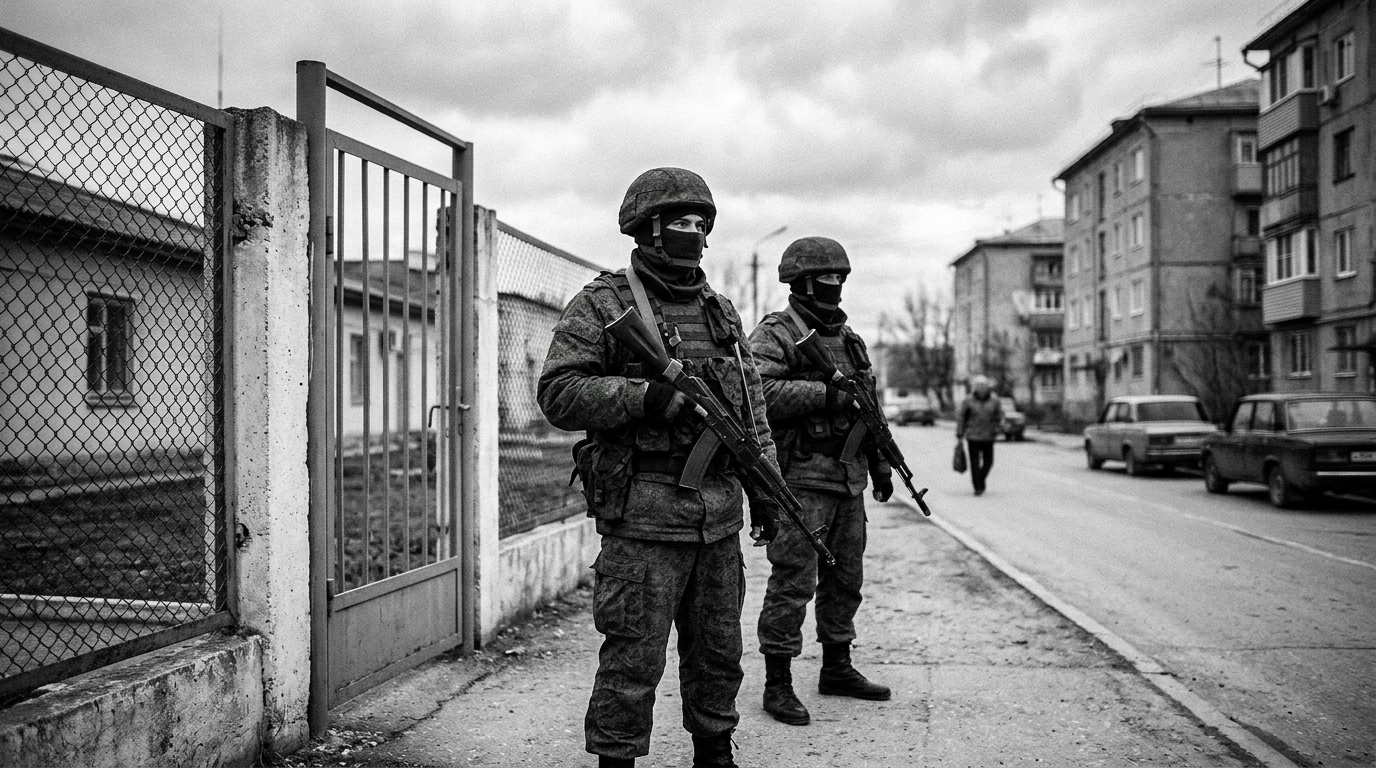
- The crisis utilized 'hybrid warfare' tactics, combining conventional military force with denial and deception through unidentified paramilitary actors.
- The event triggered a fundamental shift in international relations, leading to the collapse of the post-Cold War security architecture and the implementation of prolonged Western sanctions against Russia.
Historical Context and Origins
The Crimean Peninsula, a region of profound strategic and symbolic significance, has served as a central pivot point in Eurasian history for centuries. Its geographical position, commanding access to the Black Sea and connecting to the Sea of Azov, made it a coveted prize for empires throughout history, from ancient Greek colonies to the Mongol Golden Horde, the Ottoman Empire, and the Russian Empire. Catherine the Great's annexation of Crimea in 1783, following centuries of Tartar rule, cemented its status as a vital component of Russian geopolitical ambition, envisioned as a southern outpost for naval power and imperial expansion. Sevastopol, founded shortly thereafter, became the main base for the Russian Black Sea Fleet, a role it continues to play today.
Following the collapse of the Soviet Union in 1991, Crimea remained part of the newly independent Ukraine, albeit with a unique status as the Autonomous Republic of Crimea. This autonomy was a compromise to accommodate the peninsula's distinct demographic and historical ties to Russia. Ethnic Russians constituted the majority of Crimea's population, forming a vibrant Russian-speaking cultural space that often felt more connected to Moscow than to Kyiv. The peninsula also hosted the Black Sea Fleet of the Russian Navy, based in Sevastopol under a long-term lease agreement. This lease, initially contentious, was extended multiple times, most recently in 2010 under the Kharkiv Pact, which guaranteed Russia’s right to station its fleet until 2042 in exchange for discounted natural gas supplies for Ukraine. This arrangement frequently strained bilateral relations between Kyiv and Moscow, with Ukrainian nationalists viewing it as an infringement on sovereignty and Russian hardliners seeing any challenge to the lease as an existential threat to Russia's naval power.
The historical tensions were exacerbated by deep-seated identity politics. While the Ukrainian state, particularly after the Orange Revolution of 2004, increasingly promoted a sovereign, pro-European identity and sought closer ties with NATO and the European Union, a significant portion of the Crimean population identified strongly with Russian language, culture, and history. This duality was acutely exploited during the Euromaidan Revolution of 2013-2014. The protests erupted in November 2013 after then-President Viktor Yanukovych, under pressure from the Kremlin, unexpectedly backed out of signing an Association Agreement with the European Union. The demonstrations quickly escalated, transforming into a broader movement against corruption, state authoritarianism, and Russian influence. As the government of President Viktor Yanukovych collapsed in February 2014 under the weight of widespread civil unrest and violence in Kyiv, the Kremlin perceived not a democratic revolution, but a Western-backed coup designed to pull Ukraine irrevocably into the Western sphere of influence and, crucially, to potentially threaten the Black Sea Fleet's future in Sevastopol. Vladimir Putin famously described Ukraine as a "not genuine sovereign state" and viewed its pro-Western leanings as a direct threat to Russia's national security and its historical sphere of influence.
A critical backdrop to these events was the 1994 Budapest Memorandum. Signed by Russia, the United States, and the United Kingdom, it provided security assurances to Ukraine in exchange for the country giving up its Soviet-era nuclear arsenal, then the world's third-largest. These assurances included commitments to respect Ukraine's independence and sovereignty and its existing borders, and to refrain from the threat or use of force against its territorial integrity or political independence. The 2014 events, particularly Russia’s overt military intervention and annexation, effectively nullified these solemn guarantees, signaling the collapse of the post-Cold War cooperative framework in Europe and deeply undermining the principle of non-proliferation by demonstrating that renouncing nuclear weapons could, in fact, leave a nation vulnerable.
Historical Precedents and the 'Russian World' Ideology
The annexation of Crimea did not emerge from a vacuum; it drew heavily on deeply ingrained historical narratives and contemporary ideological constructs propagated by the Kremlin. Foremost among these was the concept of the "Russian World" (Russkiy Mir). This ideology posits a transnational community united by Russian language, culture, and Orthodox Christianity, extending beyond the borders of the Russian Federation itself. It asserts Russia's right, and even obligation, to protect and support ethnic Russians and Russian-speakers wherever they reside, often presenting these communities as inherently linked to Russia's destiny and under threat from external, often Western, influences.
In Crimea, the Russkiy Mir narrative resonated powerfully with a significant portion of the population. State-controlled Russian media had for years cultivated a sense of historical grievance regarding the 1954 transfer of Crimea from the Russian Soviet Federative Socialist Republic (RSFSR) to the Ukrainian Soviet Socialist Republic (Ukrainian SSR) by Nikita Khrushchev. While this transfer was an administrative decision within the Soviet Union, Moscow later reframed it as a "gift" or a "mistake" that unjustly severed Crimea from its historical homeland. This revisionist history served to legitimize the 2014 annexation as a "restoration of historical justice" rather than a violation of international law.
Furthermore, the annexation evoked a long history of Russian imperial expansionism, particularly under figures like Catherine the Great, who had secured Crimea for the Russian Empire in the late 18th century. The idea of "Novorossiya" (New Russia), a historical term for territories north of the Black Sea conquered by the Russian Empire, was also invoked. While often applied more broadly to southeastern Ukraine, the underlying sentiment—that these lands were historically and culturally Russian—provided a powerful, albeit historically selective, justification for Moscow's actions. This irredentist claim was bolstered by the assertion that the post-Soviet borders were artificial and unjust, particularly in regions with large Russian-speaking populations.
The Kremlin's actions also echoed aspects of 19th and early 20th-century geopolitical doctrines, such as the idea of spheres of influence and the "protection of kin." While international law has largely moved beyond such justifications, Russia's leadership demonstrated a willingness to reassert these principles, viewing the post-Cold War liberal international order as inherently biased against its interests and, therefore, not binding when perceived vital national security interests were at stake. The annexation of Crimea, therefore, was not merely a reaction to the Euromaidan Revolution but a deliberate manifestation of a broader geopolitical vision rooted in historical memory and a resurgent national identity.
Timeline of Events and Key Moments
The transition from political upheaval in Kyiv to the military occupation of Crimea was a rapid, meticulously planned, and surgically executed operation that showcased Russia's evolving hybrid warfare capabilities.
| Date | Event | Description and Context |
|---|---|---|
| February 22, 2014 | Viktor Yanukovych flees Kyiv; Oleksandr Turchynov becomes acting President. | Following months of protests and deadly clashes, President Yanukovych abandons Kyiv. Ukraine's parliament votes to remove him from office, leading to a provisional government. This dramatic shift creates a power vacuum and perceived instability that Russia immediately exploits. |
| February 23, 2014 | Russian special forces begin deployment to Crimea. | Although initially denied by Moscow, later revelations confirmed that Russian Spetsnaz and other special units were being covertly deployed to the peninsula even as the political crisis unfolded in Kyiv. Their mission was to secure strategic points and lay the groundwork for a broader intervention. |
| February 27, 2014 | Unidentified armed men seize the Crimean Parliament building and government offices in Simferopol. | Heavily armed, impeccably uniformed soldiers without insignia, later dubbed "little green men," take control of key administrative buildings. They hoist Russian flags, effectively paralyzing the local government and demonstrating a rapid, coordinated takeover. These forces were later confirmed by President Putin to be Russian military personnel. |
| February 28, 2014 | Russian forces secure airports and block Ukrainian military bases. | Simferopol International Airport and other strategic locations, including roadblocks on the Perekop Isthmus (the narrow land bridge connecting Crimea to mainland Ukraine), are taken. Ukrainian military bases are surrounded and blockaded, preventing any coordinated response and isolating Ukrainian troops. |
| March 1, 2014 | Russian Federation Council authorizes military intervention. | President Putin requests and receives unanimous approval from the Federation Council (Russia's upper parliamentary chamber) to use military force in Ukraine "to protect Russian citizens and compatriots." This provides a legal fig leaf for the ongoing, covert military operation. |
| March 6, 2014 | The Crimean parliament formally requests to join the Russian Federation. | Under the control of Russian forces and amidst intense pressure, the regional parliament votes to hold a referendum on Crimea's status and apply to join Russia. This move bypasses Ukrainian constitutional procedures and international norms. |
| March 10, 2014 | Referendum date moved forward to March 16. | The hastily organized referendum's date is accelerated, drastically reducing the time for campaigning, public debate, or proper international observation, further eroding its credibility. |
| March 16, 2014 | A disputed referendum on the status of Crimea takes place. | The referendum offers two choices: joining Russia or restoring the 1992 Crimean constitution and remaining part of Ukraine. With Russian military presence pervasive and voting irregularities reported, official results claim 96.77% voted to join Russia with an 83% turnout. These results are widely rejected internationally. |
| March 17, 2014 | Russia recognizes Crimea's 'independence.' | In an intermediate step, President Putin issues a decree recognizing Crimea as a "sovereign and independent state," setting the stage for its formal annexation. |
| March 18, 2014 | The Treaty on Accession of the Republic of Crimea to Russia is signed in Moscow. | President Putin, along with self-proclaimed Crimean leaders, signs the treaty absorbing the Republic of Crimea and the city of Sevastopol into the Russian Federation. This formalizes the annexation in Russian law, completing the process. |
| March 27, 2014 | UN General Assembly passes Resolution 68/262. | The UN General Assembly adopts a resolution affirming Ukraine's territorial integrity and declaring the Crimean referendum invalid. 100 member states vote in favor, 11 against (including Russia), and 58 abstain, demonstrating broad international condemnation. |
Geopolitical Consequences and Aftermath
The annexation had immediate and far-reaching consequences for the global order, irrevocably altering the post-Cold War security architecture. Firstly, it marked the resurgence of "Great Power" competition in Europe, ending two decades of relative peace and cooperation following the dissolution of the Soviet Union. The North Atlantic Treaty Organization (NATO) shifted its strategic posture from cooperative engagement with Russia to deterrence and collective defense, reinforcing its Eastern Flank with new rotational deployments and permanent bases. Member states bordering Russia, particularly the Baltic states and Poland, viewed the annexation as an existential threat, prompting increased defense spending and closer integration within the alliance. The annexation effectively solidified Russia's image as a revisionist power willing to challenge international law and norms through military force.
Economically, the United States and the European Union initiated a multi-layered sanctions regime against the Russian Federation. These measures, implemented in phases, targeted key sectors of the Russian economy including finance, energy, and defense, as well as individuals within Putin’s inner circle and state-owned enterprises. The sanctions aimed to induce a change in Russian behavior by inflicting economic pain and isolating Moscow financially. While they did cause initial economic disruption, currency depreciation, and reduced foreign investment, they also inadvertently solidified a long-term shift in Moscow's economic focus toward Asia, particularly China. Russia sought new markets, investment, and technological partnerships, accelerating its pivot away from traditional Western economic partners. Internally, the sanctions spurred import substitution policies and a drive for greater self-sufficiency in various sectors.
Furthermore, the annexation shattered the illusion of a rules-based order in Eastern Europe, demonstrating the efficacy of "hybrid warfare." This term refers to a military strategy that blends conventional warfare, irregular warfare, and cyber warfare with other influencing methods, such as disinformation, economic pressure, and electoral interference. The Crimean operation became a blueprint: utilizing unmarked military personnel to seize key infrastructure, orchestrating propaganda campaigns to legitimize actions, and applying diplomatic pressure, all while maintaining plausible deniability. This blurring of lines between peace and war posed a significant challenge to traditional Western defense and diplomatic responses, which were geared towards overt acts of aggression.
The occupation of Crimea provided a strategic template for subsequent Russian operations in the Donbas region of Eastern Ukraine. Just weeks after the Crimean annexation, similar tactics – the infiltration of armed "volunteers," the seizure of government buildings, and the declaration of "people's republics" – led to a prolonged armed conflict between Ukrainian forces and Russian-backed separatists. This created a "frozen conflict" that continues to defy diplomatic resolution, further destabilizing Ukraine and contributing to a humanitarian crisis, effectively preventing Ukraine's full integration into Western structures.
The international community's response, though largely unified in condemnation, highlighted its limitations. While the UN General Assembly passed Resolution 68/262 affirming Ukraine's territorial integrity, the UN Security Council was paralyzed by Russia's veto power. The G8 group of leading industrial nations suspended Russia, reverting to the G7, signifying Russia's diplomatic isolation from the top economic powers. However, the lack of a robust military response from Western powers demonstrated their deep reluctance to engage in direct confrontation with a nuclear-armed state, setting a concerning precedent for future acts of aggression.
Analysis of Key Actors and Decisive Actions
The annexation of Crimea was a complex interplay of individual decisions, geopolitical calculations, and institutional responses.
The role of Vladimir Putin was central and absolutely decisive. By viewing the Euromaidan Revolution not as a legitimate popular uprising but as a Western-backed encroachment on Russia's "sphere of influence" and a direct threat to its naval base in Sevastopol, Putin prioritized what he defined as core national security interests and geopolitical leverage over international law. His worldview, shaped by the perceived humiliation of Russia following the collapse of the Soviet Union and NATO's eastward expansion, led him to act decisively to reverse what he saw as an unfavorable geopolitical trajectory. His direct order to mobilize troops without insignia – the "little green men" – demonstrated a calculated willingness to absorb the costs of international isolation to secure a strategic naval asset and solidify a key part of his political legacy as a strong leader restoring Russia's power. His public justification, invoking the protection of Russian-speaking populations and rectifying historical injustices, resonated deeply within Russia and provided a powerful narrative for domestic consumption.
Conversely, Oleksandr Turchynov, serving as acting President of Ukraine during the onset of the crisis, faced an impossible situation. The Ukrainian state was in disarray following Yanukovych's flight. The military, severely neglected and underfunded for decades, was in a state of demoralization, lacking command-and-control capabilities, modern equipment, and widespread loyalty in Crimea itself. The new government in Kyiv was nascent, fragile, and grappling with internal political divisions and an empty treasury. Turchynov’s decision not to launch an all-out military response in Crimea was motivated by a pragmatic and grim assessment of Ukraine's military inferiority compared to Russia, the high risk of provoking a wider, devastating Russian invasion of mainland Ukraine, and the desire to prevent further bloodshed and civilian casualties in Crimea, where a direct clash could have ignited a larger conflict. This agonizing choice ultimately meant ceding Crimea without a fight, but it arguably saved the rest of Ukraine from a full-scale invasion at a moment of extreme vulnerability.
The United States, under the Obama administration, responded primarily through diplomatic pressure and economic sanctions. While condemning Russia's actions as a violation of international law and Ukraine's sovereignty, the US adopted a "containment" approach, focusing on punishing Russia economically and diplomatically rather than through direct military intervention. This approach was shaped by the desire to avoid direct military confrontation with a nuclear-armed power, concerns about escalating the conflict, and a reliance on European allies, many of whom had significant economic ties to Russia. This strategy was criticized by "hawks" for its perceived weakness and for not deterring further Russian aggression, yet it underscored the reluctance of Western powers to engage militarily in a region where Russian interests were deeply entrenched. The US also provided non-lethal aid to Ukraine and strengthened its security assurances to NATO allies.
The European Union's response was more varied, reflecting the diverse geopolitical and economic interests of its 28 member states. While generally united in condemning the annexation and imposing sanctions, the level of enthusiasm and the impact of these measures varied. Countries like Poland and the Baltic states, with their historical experiences of Russian domination, advocated for a stronger, more assertive stance. Others, like Germany and France, while supportive of sanctions, were more cautious due to their significant trade relations and energy dependence on Russia. This internal division within the EU made a unified and swift response challenging, though ultimately, a comprehensive sanctions regime was adopted and maintained.
The Crimean Population itself was not monolithic. While a significant portion of the ethnic Russian majority genuinely welcomed the annexation, driven by historical affinity, cultural ties, and effective Russian propaganda, other groups experienced fear and repression. The Crimean Tatars, an indigenous Turkic Muslim minority with a history of persecution under Russian rule (including forced deportation under Stalin), overwhelmingly opposed the annexation. They faced increased surveillance, harassment, and the suppression of their political organizations after the Russian takeover, leading many to flee to mainland Ukraine. Ukrainian speakers and ethnic Ukrainians also faced discrimination and pressure to adapt to the new Russian reality.
Domestic Reactions and Propaganda Warfare
The annexation of Crimea triggered profound domestic reactions within Russia and Ukraine, and globally, accompanied by an intense propaganda war.
In Russia, the annexation was presented by state media as a triumphant return of historical lands and a restoration of national pride. Vladimir Putin's approval ratings surged dramatically, reaching record highs. The narrative crafted by the Kremlin portrayed Russia as protecting its "compatriots" from a "fascist coup" in Kyiv orchestrated by the West. Crimea was framed as a sacred historical site, the "cradle of Russian Orthodoxy," linking the annexation to deep-seated cultural and spiritual values. Dissent was largely suppressed, and anyone questioning the legality or morality of the annexation was marginalized or labeled a traitor. The state-controlled media landscape, dominated by channels like Channel One and Russia-1, broadcasted relentless narratives of Ukrainian instability, Western aggression, and the righteousness of Russia's actions, shaping public opinion overwhelmingly in favor of the Kremlin. This allowed the annexation to become a powerful tool for consolidating Putin's power and reinforcing a nationalist, anti-Western consensus within Russia.
In Ukraine, the annexation had a galvanizing and transformative effect on national identity. The loss of territory, coupled with the ongoing conflict in Donbas, solidified a distinct Ukrainian identity in direct opposition to Russian aggression. It shattered any lingering illusions among many Ukrainians about the possibility of a neutral or pro-Russian geopolitical path, accelerating aspirations for closer integration with the European Union and NATO. The trauma of losing Crimea prompted a fundamental reassessment of Ukraine's security posture, leading to a renewed focus on military reform and national defense. Politically, the crisis strengthened pro-Western forces and marginalized overtly pro-Russian parties, although the initial shock and disorganization also exposed deep institutional weaknesses. Public opinion shifted dramatically, with a greater sense of shared purpose and resilience emerging among the population, despite the immense human and economic costs of the conflict. The Crimean Tatars, in particular, experienced a deepening sense of victimhood and renewed commitment to Ukrainian sovereignty, given their history of persecution.
Internationally, the annexation was met with widespread condemnation, though the intensity and nature of the responses varied. The United Nations General Assembly's Resolution 68/262, supported by 100 nations, affirmed Ukraine's territorial integrity and declared the referendum invalid. This was a significant diplomatic victory for Ukraine, demonstrating broad international legal consensus. However, the UN Security Council, where Russia holds a veto, was unable to take any substantive action. The G7 nations (formerly G8, with Russia suspended) strongly condemned the annexation, implementing sanctions and coordinating their responses. Within the European Union, while there was a unified front for sanctions, deep divisions existed regarding the extent of engagement with Russia, reflecting differing economic dependencies and historical perspectives. Countries like Poland and the Baltic States, acutely aware of historical Russian domination, advocated for the strongest possible stance, while others, like Italy or Hungary, often sought to maintain channels of dialogue and limit the economic impact on their own economies. This fragmented response, while impactful through sanctions, demonstrated the challenges of a truly unified international front against a powerful, nuclear-armed state.
The role of information warfare was paramount throughout the crisis. Russia employed sophisticated denial and deception tactics, initially denying the presence of its troops in Crimea despite overwhelming evidence. The term "little green men" itself became emblematic of this strategy, allowing Moscow to maintain a veneer of non-involvement while achieving its strategic objectives. Russian state media simultaneously flooded the information space with narratives discrediting the Kyiv government, alleging threats to Russian speakers, and portraying Western actions as hostile and provocative. This extensive propaganda machine, combined with cyber operations and targeted disinformation campaigns, aimed to sow confusion, delegitimize opposition, and shape both domestic and international perceptions to Moscow's advantage. This set a new precedent for how conflicts could be initiated and managed in the digital age.
Trivia and Lesser-Known Facts
- The Myth of the Insignia: The "little green men" were officially referred to as "polite people" (vezhlivyye lyudi) in Russian propaganda. This carefully crafted term was used to emphasize their disciplined, professional, and supposedly non-violent interaction with civilians, despite the fact that their presence was illegal under international law and their actions constituted an invasion. The narrative aimed to present them as peacekeepers rather than invaders.
- The Speed of the Referendum: The window between the announcement of the referendum and the actual vote was remarkably short—less than two weeks (March 6 to March 16). This compressed timeline, combined with the presence of armed men, a media blackout of pro-Ukrainian voices, and the lack of independent election observers from organizations like the OSCE, rendered the process illegitimate in the eyes of the vast majority of the international community.
- Water Scarcity: Following the annexation, Ukraine blocked the North Crimean Canal, which historically provided 85% of the peninsula's freshwater, primarily for agriculture and civilian use. This created a long-term environmental and agricultural challenge for the occupying administration, leading to severe water shortages, environmental degradation, and increased reliance on local groundwater and expensive desalinization projects. This issue became a significant point of contention and a humanitarian concern.
- Economic Impact on Crimean Residents: While some Crimean residents initially welcomed the annexation, the economic reality proved complex. While pensions and public sector salaries were initially boosted to Russian levels, the closure of Ukrainian markets, the disruption of supply chains, and international isolation severely impacted the local economy, particularly the tourism sector which heavily relied on Ukrainian visitors. Access to international banking services was cut off, and many global brands ceased operations in Crimea due to sanctions.
- The Black Sea Fleet's Modernization: With Crimea fully under Russian control, Moscow immediately initiated a rapid modernization and reinforcement program for its Black Sea Fleet. This included the deployment of new frigates, submarines (capable of launching Kalibr cruise missiles), and advanced anti-ship missile systems, significantly enhancing Russia's naval power projection capabilities in the Black Sea, Mediterranean, and beyond. This strategic gain was a primary driver for the annexation.
- The Fate of Ukrainian Military Personnel: During the annexation, Ukrainian military units stationed in Crimea were surrounded and blockaded. Many personnel were given a stark choice: defect to the Russian military, resign and remain in Crimea as civilians, or leave for mainland Ukraine. A significant number, estimated at over 10,000, chose to leave Crimea and remain loyal to Ukraine, despite facing immense pressure and uncertainty about their future.
"I want to say that the events in Crimea were a test of our strength. We passed that test with flying colors. We showed our unity and our determination." — Vladimir Putin, addressing the Russian Federal Assembly, 2014.
"We are dealing with a leadership in Russia that has chosen the path of confrontation, the path of violating international law, the path of undermining the basic principles of our international system." — Angela Merkel, German Chancellor, 2014.
References and Literature
- Foreign Affairs: The Sources of Russian Conduct - An analysis of how historical grievances and geopolitical insecurity drive modern Russian foreign policy, offering insights into Putin's strategic calculus.
- The Budapest Memorandum at 20 - A deep dive by the Brookings Institution into why the 1994 security assurances failed to prevent the 2014 crisis and its broader implications for nuclear non-proliferation.
- Serhii Plokhy, "The Gates of Europe: A History of Ukraine" - A comprehensive historical overview that provides essential context for the Crimean Peninsula's complex past within the broader narrative of Ukrainian statehood.
- United Nations Archive on Resolution 68/262 - The official record of the international community's formal rejection of the Crimean annexation, detailing the vote and the resolution's text.
- International Crisis Group: Russia and the Separatist Conflict in Eastern Ukraine - Provides detailed analysis of the spillover from Crimea into the Donbas region and the evolution of the hybrid conflict.
- Council on Foreign Relations: Russia Sanctions - An ongoing tracker and analysis of the various rounds of sanctions imposed on Russia by the U.S. and its allies since 2014.
Footnotes & Explanations
- This includes the initial reports from the OSCE Special Monitoring Mission, which documented the movement of unmarked vehicles and the seizure of infrastructure. ↩
- Economic analysis of the impact of the 2014 sanctions provided by the Peterson Institute for International Economics and the World Bank. ↩
- Detailed reporting on the Crimean Tatars' plight can be found in reports by Amnesty International and Human Rights Watch. ↩
- Statements from the EU Foreign Affairs Council and the European Parliament outline the EU's evolving policy towards Russia post-2014. ↩