Key Takeaways
- Operation Urgent Fury marked the first major US military engagement since the Vietnam War, signaling a decisive shift toward a more interventionist Cold War strategy under the Reagan Administration.
- The invasion was precipitated by a violent internal power struggle within Grenada's ruling New Jewel Movement (NJM), culminating in the execution of Prime Minister Maurice Bishop and the establishment of a hardline Revolutionary Military Council.
- The event underscored the Reagan Administration's doctrine of 'rollback,' aimed at directly confronting and dismantling Soviet and Cuban influence in the Western Hemisphere, rather than merely containing it.
- Significant logistical and communication failures during the operation became a primary catalyst for the landmark Goldwater-Nichols Act of 1986, fundamentally restructuring US military command.
- The invasion sparked a global debate on international law, sovereignty, and the justifications for humanitarian intervention, dividing the international community and straining diplomatic relations with key allies.
Historical Context and Origins
The journey of Grenada from a tranquil British colonial outpost to a flashpoint of Cold War conflict is a complex narrative rooted in post-colonial struggles, ideological fervor, and superpower rivalry. After gaining full independence from the United Kingdom in 1974, Grenada initially suffered under the increasingly autocratic and corrupt rule of its first Prime Minister, Eric Gairy. Gairy's reliance on a private militia (the "Mongoose Gang") and his suppression of political opposition fueled widespread discontent, creating fertile ground for radical change.
It was into this volatile environment that the New Jewel Movement (NJM) emerged, a socialist political party led by the charismatic and Cambridge-educated lawyer, Maurice Bishop. Bishop and his NJM advocated for a non-aligned foreign policy but with strong socialist domestic reforms. On March 13, 1979, the NJM launched a bloodless coup while Gairy was abroad, establishing the People's Revolutionary Government (PRG). Initially, the PRG enjoyed significant popular support, promising social justice, economic development, and an end to corruption. However, this popularity was soon tempered by Bishop's suspension of the constitution, abolition of democratic elections, and the suppression of dissenting voices, including the establishment of political detention centers.
The PRG swiftly forged close ties with Cuba and the Soviet Union, much to the alarm of Washington. Cuba, under Fidel Castro, saw Grenada as a natural ally in its anti-imperialist struggle and a strategic partner in the Caribbean. Havana provided substantial aid, including medical personnel, educators, and crucially, military advisors and construction workers. This assistance was instrumental in the ambitious project to construct a new 9,000-foot international airport at Point Salines, on Grenada's southwestern tip. While the PRG maintained the airport was vital for boosting tourism—a legitimate economic necessity for a small island nation—the sheer scale of the runway, its hardened aircraft shelters, and the heavy Cuban military presence involved in its construction raised significant red flags for the United States. From Washington's perspective, this airport had clear dual-use potential, capable of accommodating large Soviet military transport aircraft (like the An-12s) and even long-range bombers, effectively extending Soviet-Cuban air projection deep into the Caribbean basin and potentially threatening vital sea lanes.
By the early 1980s, Grenada had become a highly visible symbol of perceived Soviet-Cuban expansionism in President Ronald Reagan's "backyard." The rhetoric from Washington increasingly portrayed Grenada as a Soviet satellite, a "stepping stone" for communist penetration into Latin America. This heightened external tension coincided with a perilous internal power struggle within the NJM itself. The party was deeply divided between Maurice Bishop's more pragmatic, though still Marxist, faction—which showed some openness to improving relations with Western countries—and a hardline, orthodox Marxist-Leninist faction led by Deputy Prime Minister Bernard Coard and General Hudson Austin, commander of the People's Revolutionary Army.
Coard and Austin criticized Bishop for what they perceived as a lack of ideological rigor, slow pace of socialist transformation, and insufficient commitment to a pure Marxist-Leninist path. They demanded that Bishop agree to a power-sharing arrangement, where he would remain Prime Minister but effectively share power with Coard in a co-leadership model. Bishop initially resisted but eventually conceded, only to retract his agreement under popular pressure. The internal conflict escalated dramatically. On October 14, 1983, Bishop was placed under house arrest by the Coard-Austin faction. His arrest ignited massive popular protests from Grenadians who remained loyal to their charismatic leader. On October 19, a large crowd liberated Bishop from house arrest, marching with him towards the army headquarters at Fort Rupert. In a tragic and pivotal turn of events, Bishop and several key cabinet members loyal to him were recaptured by soldiers loyal to Coard and Austin, taken to the courtyard of Fort Rupert, and executed by firing squad.
The execution of Bishop and his loyalists plunged Grenada into unprecedented chaos. A brutal 24-hour shoot-to-kill curfew was immediately declared by the newly formed "Revolutionary Military Council" (RMC) led by General Austin, effectively placing the island under martial law. This internal collapse left the island in a state of terror and power vacuum, triggering an emergency meeting of the Organization of Eastern Caribbean States (OECS). Fearing the contagion of violence, instability, and radical Marxism, and concerned about the safety of their own citizens and over 600 American medical students attending St. George's University, the OECS leaders formally requested military intervention from the United States, Barbados, and Jamaica to restore order and establish a democratic government. This request, alongside the stated need to protect American citizens, provided the immediate legal pretext for Operation Urgent Fury.
Timeline of Events and Key Moments
The progression from internal insurrection to full-scale military intervention was remarkably rapid, unfolding over just a few crucial days in October 1983.
| Date | Event | Detailed Context |
|---|---|---|
| March 13, 1979 | New Jewel Movement (NJM) seizes power in a bloodless coup. | Maurice Bishop establishes the People's Revolutionary Government (PRG), suspending the constitution and beginning alignment with Cuba and USSR. |
| Early 1980s | Construction of Point Salines Airport intensifies. | Cuban engineers and laborers, along with military advisors, accelerate work on the 9,000-foot runway, raising US strategic concerns. |
| October 12, 1983 | Hardline NJM faction demands power-sharing. | Bernard Coard and General Hudson Austin insist Bishop concede power, leading to an internal party crisis. |
| October 14, 1983 | Maurice Bishop is placed under house arrest. | Bishop is detained by the Coard faction following intense political disagreements and his refusal to fully accept the power-sharing arrangement. |
| October 15-18, 1983 | US intelligence monitoring increases. | The US begins to actively monitor the escalating crisis, with increasing concern for American citizens on the island. |
| October 19, 1983 | Bishop is executed; RMC declares curfew. | Following mass protests that briefly free Bishop, he and several cabinet members are executed by firing squad. A 24-hour shoot-to-kill curfew is declared by the Revolutionary Military Council (RMC) led by Gen. Austin. |
| October 20, 1983 | OECS leaders meet to discuss options. | Regional leaders, alarmed by the violence and instability, convene to consider military intervention; US begins contingency planning. |
| October 21, 1983 | US Naval forces diverted to the Caribbean. | Carrier Battle Group and Amphibious Ready Group redirected, intelligence collection intensified. OECS formally requests intervention. |
| October 22-24, 1983 | Final invasion preparations. | Special Operations Forces (SOF) conduct reconnaissance. Diplomatic efforts with UK and OECS allies finalize. President Reagan gives the go-ahead. |
| October 25, 1983 (05:00 AST) | Operation Urgent Fury commences. | US Marine Corps and Army Rangers launch airborne and amphibious landings at multiple locations including Pearls Airport, Point Salines Airport, and True Blue Campus. |
| October 25, 1983 (Day 1) | Initial combat and student rescue. | Army Rangers secure Point Salines and rescue students at True Blue. Marines secure Pearls Airport. Fierce resistance encountered from Cuban forces and the Grenadian People's Revolutionary Army (PRA). |
| October 26, 1983 (Day 2) | Reinforcements and consolidation. | US paratroopers and additional forces arrive. Operations expand to secure additional objectives, including the Grand Anse campus, where more students are rescued. |
| October 27, 1983 | Major combat operations largely cease. | Most organized resistance is suppressed. The remaining American medical students are secured and begin evacuation. |
| October 28 - Nov 1, 1983 | Mopping-up operations and consolidation. | Search and destroy missions for remaining pockets of resistance. Collection of intelligence and captured documents. |
| November 2, 1983 | UN General Assembly passes resolution. | The UN General Assembly votes 108 to 9 to deplore the invasion as a violation of international law. |
| November 6, 1983 | Most US combat troops withdraw. | After ensuring security and setting up an interim administration, the bulk of US forces begin their departure. |
| December 1984 | Democratic elections held in Grenada. | Herbert Blaize's New National Party wins, restoring democratic rule to the island. |
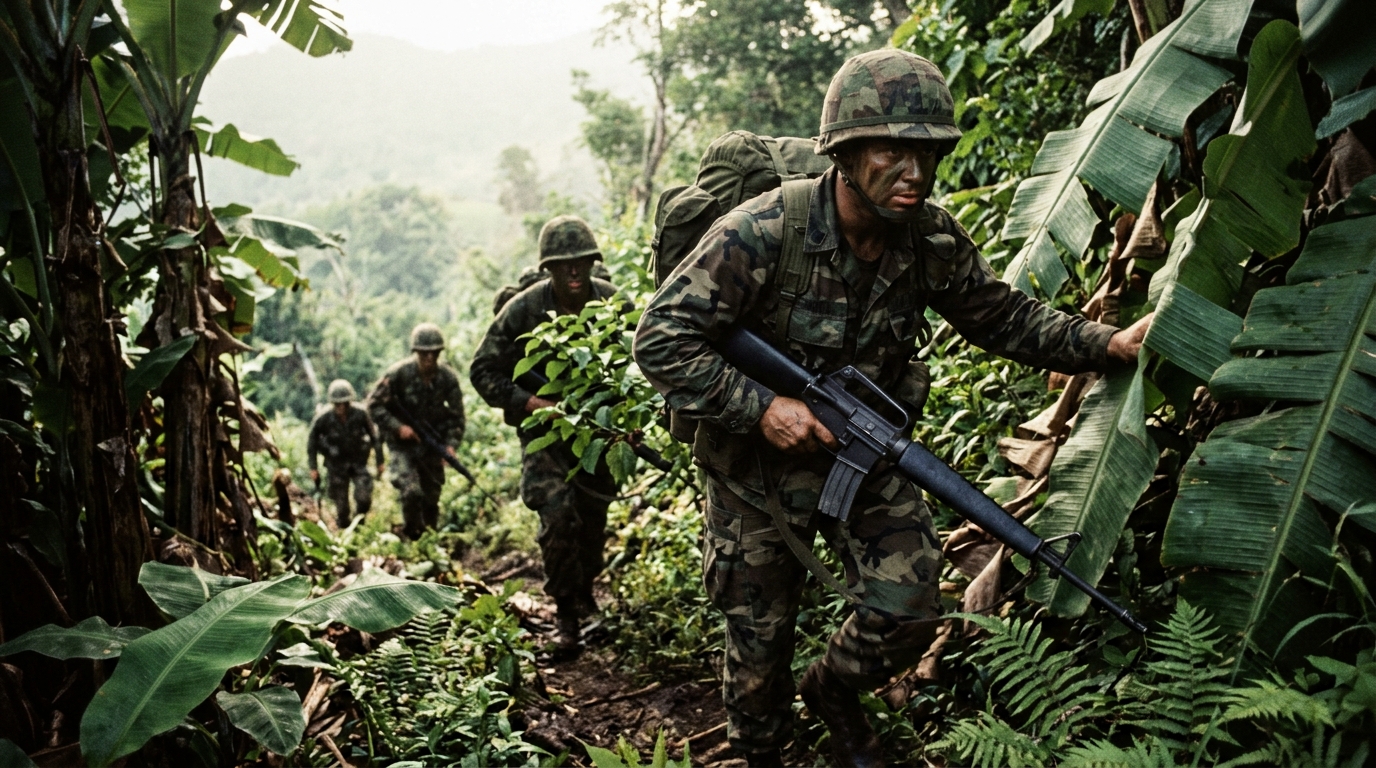
The invasion force, comprised of elements from the Marine Corps, Army Rangers, the 82nd Airborne Division, Navy SEALs, and specialized Delta Force operators, faced stiffer resistance than initially anticipated by US planners. While intelligence suggested a rapid collapse of the Grenadian forces, the presence of an estimated 700-800 heavily armed Cuban construction workers (many of whom were reservists or military personnel) and members of the People's Revolutionary Army (PRA) slowed the initial advance, particularly at Point Salines. The Cubans, acting as a de facto militia under Fidel Castro's directive to defend the airport to the death, put up a determined fight, resulting in more casualties on both sides than anticipated for such a small-scale operation. This resistance highlighted the complexities of intervention in Cold War proxy theaters.
Geopolitical Consequences and Aftermath
The aftermath of Operation Urgent Fury was multifaceted, spanning the immediate political stabilization of Grenada, significant reforms within the US military, a powerful reaffirmation of US foreign policy, and a divisive international debate.
On Grenada itself, the military success quickly led to the collapse of the Revolutionary Military Council. An interim government, comprising respected Grenadian figures, was installed with the assistance of the OECS and the United States. This paved the way for democratic elections in December 1984, which saw Herbert Blaize's New National Party sweep to power, marking a definitive shift away from Marxist rule and back towards a pro-Western, democratic system. The island's strategic alignment was firmly re-established with the United States and its Caribbean allies. Economically, Grenada received substantial reconstruction aid, helping to repair infrastructure damaged during the invasion and to kickstart its tourism industry, which the new airport at Point Salines eventually served as originally claimed. The long-term impact on Grenadian society included a period of healing from the political trauma and the reintegration of those who had supported the PRG.
However, the operation also exposed significant flaws in inter-service coordination and command-and-control within the US military. The various branches—Army, Navy, Air Force, and Marine Corps—operated under different doctrines, used incompatible radio systems, and lacked a unified command structure for joint operations. Incidents like Navy pilots being unable to communicate directly with Army ground forces, or special operations teams requiring commercial satellite phones to relay critical information to higher headquarters, became infamous. This lack of interoperability caused delays, confusion, and unnecessary risks, hindering tactical effectiveness. These glaring deficiencies became the primary catalyst for the Goldwater-Nichols Department of Defense Reorganization Act of 1986. This landmark legislation fundamentally restructured the US military command hierarchy, empowering the Chairman of the Joint Chiefs of Staff, creating unified combatant commands with authority over all forces in their geographic areas, and mandating joint training and doctrine development. Its goal was to ensure seamless cooperation between services, preventing future "Grenda-type" communication breakdowns and transforming how the US military plans and executes joint operations. Goldwater-Nichols is widely considered one of the most important pieces of defense legislation in US history, directly born from the lessons learned in Grenada.
From a geopolitical perspective, Operation Urgent Fury served as a potent psychological and strategic victory for the United States. For President Reagan, it allowed him to capitalize on a deeply felt national desire to overcome the "Vietnam Syndrome"—the public's reluctance toward foreign military involvement after the costly and inconclusive war in Southeast Asia. Grenada was presented as a swift, decisive, and successful intervention, popular at home and demonstrating American resolve. It signaled to the Soviet Union and Cuba that the era of détente-driven containment was indeed over, and that the Reagan Administration was willing to actively pursue a policy of "rollback," challenging communist gains directly within what it considered its sphere of influence. This action reinforced the Reagan Doctrine, which advocated overt and covert aid to anti-communist resistance movements in Soviet-aligned countries, and profoundly influenced subsequent US policy in Central America, particularly in Nicaragua and El Salvador.
"The events in Grenada were a watershed moment in the Cold War, demonstrating that the United States would not passively watch the expansion of Soviet-aligned regimes in its own backyard. It marked a decisive shift in American foreign policy, restoring confidence in military intervention as a tool against communist encroachment." — Department of State Archive Analysis
The international community's response, however, was sharply divided. While the OECS and several Caribbean nations hailed the intervention as a necessary act of liberation and regional security, a significant portion of the world condemned it. The United Nations General Assembly, on November 2, 1983, adopted a resolution by a vote of 108 to 9 (with 27 abstentions) deploring the "armed intervention" as a "flagrant violation of international law." Key US allies, most notably the United Kingdom under Prime Minister Margaret Thatcher, expressed strong disapproval and frustration, particularly because the US had not consulted London before launching the operation in a Commonwealth nation. This diplomatic friction highlighted the diverging interests and perspectives even among close allies, particularly concerning the limits of national sovereignty and the legitimacy of unilateral intervention.
The controversy also extended to the US media. Journalists were initially barred from accompanying the invasion forces, leading to widespread criticism about press freedom and government transparency. The administration argued that restricting access was necessary for operational security and troop safety, but many saw it as an attempt to control the narrative. The iconic images of rescued American medical students kissing the tarmac upon their return to the US played a crucial role in shaping positive public opinion within the United States, effectively overshadowing much of the international condemnation and domestic media criticism.
Analysis of Key Actors and Decisive Actions
Operation Urgent Fury was not merely a military endeavor but a complex interplay of political will, ideological conviction, and strategic calculation by various actors.
Ronald Reagan and the Doctrine of Rollback
For President Ronald Reagan, Grenada was far more than a rescue mission; it was a potent symbol and a strategic opportunity. Inheriting a nation still grappling with the "Vietnam Syndrome" and perceived weaknesses from the Iran hostage crisis and the Beirut barracks bombing, Reagan was determined to project an image of American strength and resolve. His foreign policy was defined by an aggressive stance against global communism, famously labeling the Soviet Union an "Evil Empire." Grenada, with its radical Marxist government, Cuban military presence, and strategic airport, presented itself as the "smoking gun" of communist expansionism in the Western Hemisphere.
Reagan's decision to intervene was driven by several motivations:
- Protecting American Lives: The primary public justification, the safety of American medical students, resonated deeply with the American public and provided a powerful humanitarian casus belli.
- Reaffirming US Dominance: Grenada allowed Reagan to demonstrate that the US would not tolerate Soviet or Cuban encroachment in its traditional sphere of influence, directly challenging the Brezhnev Doctrine (which asserted the right to intervene in socialist countries to preserve socialism) with his own implicit "Reagan Doctrine."
- Sending a Signal: The swift and decisive victory was intended to send an unequivocal message to Moscow, Havana, and other leftist movements in Central America (like the Sandinistas in Nicaragua) that the US was prepared to use military force to roll back communist gains.
- Domestic Political Gain: A successful military operation, particularly one framed as rescuing citizens and thwarting communism, would boost national morale and solidify his political mandate, especially after the perceived failure in Lebanon just days before.
Reagan masterfully leveraged public concern for the students to achieve broader strategic goals, portraying the operation as a necessary defense of freedom against tyranny. His swift action allowed him to bypass a potentially lengthy and contentious congressional debate, illustrating a presidential willingness to act unilaterally in perceived national security crises.
The Role of Cuba
Fidel Castro's Cuba had a significant presence and interest in Grenada, viewing the PRG as a legitimate revolutionary government and a crucial ally in the Caribbean. Cuba's involvement was multifaceted:
- Ideological Solidarity: Castro saw Bishop's NJM as part of a broader anti-imperialist movement, fostering revolutionary change in the region.
- Economic and Social Aid: Cuban doctors, teachers, and agricultural experts provided vital assistance to the island, earning goodwill.
- Military Assistance: Critically, Cuba provided military training, advisors, and equipment to the Grenadian People's Revolutionary Army (PRA). The "construction workers" at Point Salines were often military reservists or active-duty personnel, heavily armed and instructed to defend the airport.
The Organization of Eastern Caribbean States (OECS) and Allied Support
The formal request for intervention from the OECS was crucial for the US, providing a critical element of legitimacy and multilateral backing. The OECS, comprised of Antigua and Barbuda, Dominica, Grenada, Montserrat, St. Kitts and Nevis, St. Lucia, and St. Vincent and the Grenadines, genuinely feared the spread of instability and radicalism from Grenada. The chaos following Bishop's execution, the "shoot-to-kill" curfew, and the potential for a regional refugee crisis or further coups created a tangible security threat for these small island nations. Barbados and Jamaica, though not OECS members, also supported and participated in the intervention, contributing small contingents of troops to the multinational force. Their involvement lent further regional legitimacy to the operation, framing it as a Caribbean-led initiative supported by a larger ally, rather than a purely unilateral US invasion. This collaboration highlighted the regional security concerns and the willingness of some Caribbean leaders to cooperate with the US to counter perceived communist threats.
The United Kingdom's Dissent
While the OECS provided regional endorsement, a key US ally, the United Kingdom, expressed strong disapproval. Prime Minister Margaret Thatcher was particularly incensed that she had not been consulted by President Reagan prior to the invasion, especially given Grenada's status as a member of the Commonwealth. Thatcher viewed the invasion as a breach of international law and a dangerous precedent for unilateral intervention in sovereign states. Her government publicly condemned the action, causing a significant, albeit temporary, strain on the "special relationship" between Washington and London. This diplomatic rift highlighted the different priorities and legal interpretations even among close ideological partners. For the UK, the principle of national sovereignty and adherence to international law, especially concerning Commonwealth nations, was paramount.
Historical Precedents & Cold War Doctrine
The US intervention in Grenada was not an isolated event but rather a significant chapter in a long history of US engagement, and often intervention, in the Western Hemisphere, particularly within the context of Cold War ideologies. To understand Grenada, one must look at its historical precedents and the evolving Cold War doctrines that shaped US foreign policy.
The Monroe Doctrine and its Corollaries
At its core, Operation Urgent Fury resonated with the principles laid out in the Monroe Doctrine of 1823, which declared the Western Hemisphere off-limits to further European colonization or intervention. Over time, this doctrine evolved, notably with Theodore Roosevelt's Roosevelt Corollary in 1904, which asserted the right of the United States to intervene in the internal affairs of Latin American nations to stabilize their economies or prevent European intervention, often leading to military occupations. This established a long-standing pattern of US assertive action in its "backyard," driven by economic interests, security concerns, and later, ideological opposition to communism. Throughout the late 19th and early 20th centuries, the US intervened militarily in Cuba, Haiti, the Dominican Republic, Nicaragua, and Mexico, establishing a precedent of forceful protection of perceived American interests in the region.
Containment vs. Rollback
Post-World War II, US foreign policy against the Soviet Union was primarily defined by Containment, championed by George F. Kennan. This doctrine aimed to prevent the spread of communism into new areas, allowing it to eventually collapse under its own internal contradictions, rather than directly confronting or rolling back existing communist regimes. Containment guided US policy through crises in Korea, Vietnam, and various proxy conflicts. However, conservative voices in the US, particularly after the perceived failures in Vietnam and the rise of détente, advocated for a more aggressive posture.
Ronald Reagan's presidency marked a decisive shift from containment to Rollback. Reagan's doctrine sought to actively challenge Soviet-backed regimes and support anti-communist insurgencies, wherever they might be. Grenada offered the perfect opportunity to implement this new strategy. Unlike previous interventions driven by internal stability concerns or economic interests, Grenada was framed almost entirely through the lens of Cold War ideological confrontation. It was a direct test of the "Reagan Doctrine," a public declaration that the US would no longer tolerate the establishment of Soviet-aligned governments in the Western Hemisphere. The intervention was designed to send a clear signal: the US would not passively accept the expansion of Soviet or Cuban influence, even in small, seemingly insignificant nations. This psychological warfare was as important as the military victory itself, aiming to restore American credibility and deter future Soviet-Cuban adventurism.
The Legacy of Proxy Wars
Grenada also fit into the broader pattern of Cold War proxy wars. While the US and USSR avoided direct military confrontation, they frequently supported opposing sides in conflicts around the globe. Cuba, a committed Soviet ally, had actively projected its influence through military and civilian assistance programs in Africa (Angola, Ethiopia) and Latin America (Nicaragua, El Salvador, Grenada). The presence of Cuban military personnel on Grenada, armed and prepared to fight, turned the island into a miniature proxy battleground. The rapid US victory in Grenada, while not a direct clash with Soviet forces, was nevertheless a symbolic defeat for the Soviet-Cuban alliance and a boost for US anti-communist efforts, particularly influencing perceptions of American resolve in ongoing conflicts like those in Nicaragua and El Salvador.
International Law and Ethical Debates
The US invasion of Grenada ignited a fierce international debate over its legality and ethical implications, challenging core tenets of international law such as national sovereignty and the prohibition of intervention in internal affairs.
Legal Justifications Presented by the US
The Reagan administration articulated several justifications for Operation Urgent Fury, primarily:
- Request from the OECS: The US argued that its intervention was a response to a formal request from the Organization of Eastern Caribbean States (OECS), invoking the principle of collective self-defense or regional security. Article 8 of the OECS Treaty allows for joint action in response to external aggression or threats to peace and security. The OECS argued that the RMC's brutal takeover and declaration of a "shoot-to-kill" curfew constituted such a threat, destabilizing the entire region.
- Protection of Nationals: The US stressed the imperative to protect approximately 600 American medical students at St. George's University. Citing the volatile situation, the lack of a functioning government, and the imposed curfew, the administration claimed that the students were at imminent risk, potentially facing a hostage situation similar to the one in Iran years prior. This claim played heavily on public sentiment and was a powerful domestic justification.
- Restoration of Democracy: Though less emphasized as a strict legal justification, the broader US objective of restoring democratic governance to Grenada after Bishop's execution was frequently cited as a moral imperative, particularly by President Reagan.
International Condemnation and Counter-Arguments
The international community, however, largely rejected these justifications. The UN General Assembly resolution (A/RES/38/7), passed by a significant margin, "deeply deplored the armed intervention" as a "flagrant violation of international law and of the independence, sovereignty and territorial integrity of that State." Key counter-arguments included:
- Violation of Sovereignty: Critics argued that even with the internal chaos, Grenada remained a sovereign nation, and outside military intervention without a UN Security Council mandate was a violation of Article 2(4) of the UN Charter, which prohibits the threat or use of force against the territorial integrity or political independence of any state.
- Questionable OECS Mandate: While the OECS made a request, the legal authority of a regional body to authorize military intervention in a sovereign state without a UN Security Council resolution was widely disputed. Critics noted that the OECS Treaty was primarily for collective defense against external threats, not internal political upheavals. Furthermore, Grenada was a member of the OECS, and the request was made against its de facto government, raising questions of internal consent.
- Imminence of Threat to Students: Many international observers and even some US allies questioned the imminence of the threat to the American students. There was no direct evidence that the students were being held hostage or specifically targeted, although their safety in a chaotic environment was genuinely a concern. Critics suggested this was a convenient pretext to justify a pre-planned military operation.
- Non-Intervention Principle: The intervention was seen as a dangerous precedent, undermining the bedrock principle of non-intervention in the domestic affairs of sovereign states, particularly for smaller nations.
The Debate on Humanitarian Intervention
Grenada also became a flashpoint in the ongoing debate surrounding humanitarian intervention. While the US emphasized the humanitarian aspect of rescuing its citizens, critics argued that this did not constitute a legitimate basis for violating a nation's sovereignty, especially without clear evidence of genocide, mass atrocities, or explicit UN authorization. The operation highlighted the tension between a state's right to self-determination and the international community's responsibility to protect, a debate that continues to shape discussions on interventions to this day. The strong condemnation by the UN and many nations underscored the international community's reluctance to legitimize unilateral military actions, even when framed with humanitarian concerns.
Trivia and Lesser-Known Facts
- Radio Troubles and the Phone Booth: The infamous communication breakdowns were so severe that at one point, a Navy pilot providing close air support had to use his personal credit card from a local pay phone on the island to call a commercial operator, who then patched him through to the Pentagon to request better coordination with ground forces. This stark reality check was a major impetus for Goldwater-Nichols.
- The "Hostage" Narrative's Power: While concerns for the students were genuine, there was no concrete evidence that they were being held hostage or actively prevented from leaving before the invasion. In fact, many students initially stated they felt relatively safe. However, the image of their "rescue" was a powerful PR tool, effectively shifting American public opinion in favor of the invasion.
- The "Missing" Medal Controversy: The sheer volume of medals awarded after Operation Urgent Fury (over 8,000, including the Armed Forces Expeditionary Medal) led to widespread public and military criticism, giving rise to the cynical joke that more medals were awarded than actual combat participants. This highlighted issues with medal criteria and the military's eagerness to reward service, sometimes disproportionately.
- Intelligence Bonanza: Following the invasion, US forces discovered a vast cache of secret documents and intelligence materials from the PRG, detailing its extensive ties with Cuba, the Soviet Union, and other communist regimes. These documents included military agreements, ideological texts, and economic plans, which the Reagan administration used to further justify its claims of a Soviet-Cuban threat and to demonstrate the extent of communist penetration in the Caribbean.
- Caribbean Contingent: While a US-led operation, forces from Barbados and Jamaica played a crucial supporting role, particularly in security and stabilization efforts after the initial combat phase. This provided a crucial "multilateral" façade and demonstrated regional buy-in for the intervention.
- Cuban Fate: Approximately 700 Cubans were captured during the invasion. Many were indeed construction workers, but a significant number were active or reserve military personnel. They were eventually repatriated to Cuba via third countries, with negotiations between the US and Cuba facilitated by diplomatic channels.
- Initial Objective Misinformation: Some initial intelligence regarding the location of the American students was inaccurate, leading to misdirected initial raids and unnecessary risks for some units. This further underscored the need for improved intelligence gathering and dissemination within a joint operational framework.
The invasion of Grenada remains a pivotal study in the intersection of intelligence, political maneuvering, military execution, and international law during the Cold War. While it achieved its immediate strategic goals—the eradication of a Marxist-Leninist regime and the restoration of a pro-Western political order on the island—it continues to provoke debate over its legal legitimacy and long-term implications for the principles of sovereignty and non-intervention. It undeniably stands as a defining example of 1980s realpolitik and a critical turning point in the modernization of the US military.
References and Literature
- The Invasion of Grenada: A Retrospective - Official US Department of State archives regarding the geopolitical decision-making process and diplomatic exchanges.
- Operation Urgent Fury: The Planning and Execution of Joint Operations in Grenada by Ronald H. Cole - A comprehensive military analysis from the Joint History Office, detailing the logistical successes and failures and their impact on future military reform.
- Foreign Affairs: Grenada and the Cold War - A detailed academic breakdown of the strategic regional balance of power in the 1980s, analyzing the "Reagan Doctrine" and its application.
- The Grenada Invasion: A New Perspective by Jeffrey M. Berry - An in-depth exploration of the political fallout within the Caribbean Community (CARICOM) and the OECS, including the differing regional responses.
- Grenada: The Untold Story by Gregory Sandford and Richard Vigilante - Offers a more critical perspective on the US justifications and the broader context of the Cold War.
- Goldwater-Nichols: A 25-Year Retrospective by the Center for Strategic and International Studies (CSIS) - An analysis of the Act's genesis and its profound impact on US military operations and jointness.
Footnotes & Explanations
- Historical data derived from the 1984 Congressional Report on the Grenada Intervention and declassified National Security Council documents. ↩
- Strategic implications analyzed by the Center for Strategic and International Studies (CSIS) and the National Archives. ↩
- Legal and ethical debates extensively documented in UN General Assembly records and various international law journals. ↩