Key Takeaways
- The coalition's decisive victory marked the transition to 'network-centric warfare,' where precision munitions and integrated intelligence fundamentally altered military doctrine.
- Operation Desert Storm represented the first instance of a major conflict broadcast in real-time, effectively bypassing traditional media controls and giving rise to the 'CNN Effect.'
- The swift 100-hour ground campaign exposed the obsolescence of Soviet-style massed armor doctrine against modern, technologically superior forces, redefining expectations for future conflicts.
- The war cemented the United States' position as the post-Cold War sole superpower, but also sowed seeds of future regional instability and controversy over interventionist foreign policy.
Historical Context and Origins
The geopolitical stage upon which Operation Desert Storm unfolded was complex, deeply rooted in centuries of Middle Eastern history, the legacies of colonial influence, and the immediate aftermath of the Cold War. Saddam Hussein, the authoritarian ruler of Iraq, had emerged from the devastating Iran-Iraq War (1980-1988) with a sense of both triumph and deep precariousness. While he had held Iran's revolutionary tide at bay, albeit with immense human and economic cost, his nation was burdened by an estimated $80 billion in foreign debt. A significant portion of this was owed to Gulf Arab states, particularly Kuwait and Saudi Arabia, who had supported Iraq as a bulwark against revolutionary Iran.
Hussein perceived Kuwait, a small, oil-rich emirate carved out by British colonial powers, as a historical part of Iraq – a claim rooted in the Ottoman Empire's administrative divisions and perpetuated by pan-Arab nationalist ideologies. By mid-1990, these historical grievances were amplified by immediate economic pressures. Hussein accused Kuwait of a two-pronged economic assault: first, by overproducing oil beyond its OPEC quota, thereby driving down global oil prices and hindering Iraq's ability to repay its debts; and second, by "slant-drilling" into the shared Rumaila oil field, effectively stealing Iraqi petroleum reserves. This narrative of victimhood, coupled with a desire to control Kuwait's vast oil wealth and strategic Persian Gulf coastline, formed the immediate casus belli.
On August 2, 1990, Iraqi forces, spearheaded by the elite Republican Guard, crossed the border into Kuwait. The invasion was swift and brutal, overwhelming the small Kuwaiti defense force within hours. The world watched in disbelief as a sovereign nation was completely annexed, becoming Iraq's "19th province." The international community, fearing that Hussein's ambitions extended further—potentially to the vast oil fields of Saudi Arabia, which would grant him control over an estimated 40% of global oil reserves—moved with surprising, unprecedented speed.
Under the diplomatic leadership of George H. W. Bush, the United States immediately condemned the invasion. The United Nations Security Council, freed from the Cold War gridlock of Soviet vetoes, passed a series of increasingly stringent resolutions. Resolution 660 demanded immediate and unconditional withdrawal. Resolution 661 imposed comprehensive economic sanctions. Critically, Resolution 678, passed in November 1990, authorized member states "to use all necessary means" to uphold previous resolutions if Iraq did not withdraw by January 15, 1991. This landmark resolution provided the legal and moral backbone for military intervention.
Bush masterfully assembled a truly diverse and unprecedented international coalition of 35 nations, ranging from traditional Western allies like the United Kingdom and France to Arab states like Saudi Arabia, Egypt, Syria, and Morocco. This broad coalition was crucial in countering Saddam's attempts to frame the conflict as a Western-led attack on Islam. As the January 15, 1991, deadline for withdrawal passed without Iraqi compliance, the U.S.-led coalition launched Operation Desert Storm.
Historical Precedents and Geopolitical Stage
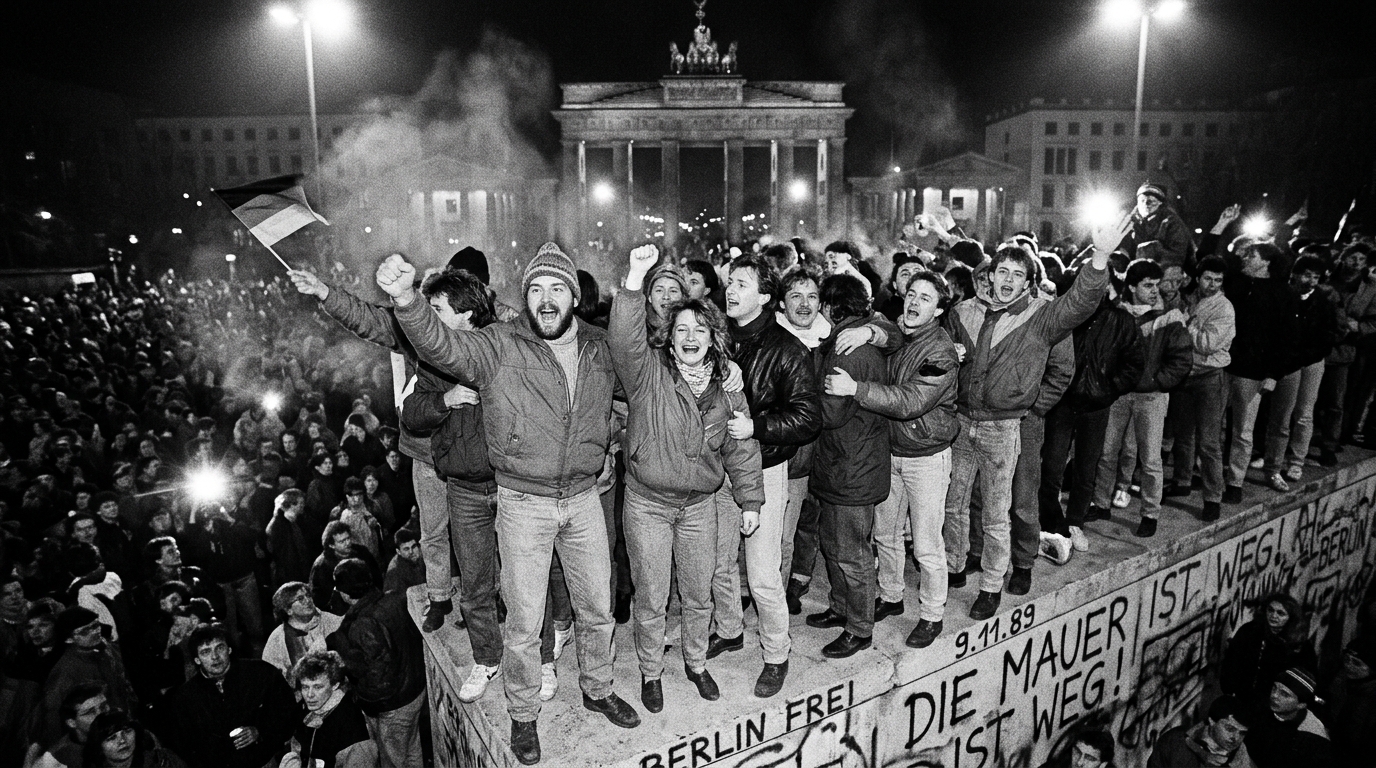
Operation Desert Storm did not occur in a vacuum; it was a product of distinct historical forces converging at a unique moment. The most significant of these was the end of the Cold War. The fall of the Berlin Wall in 1989 and the impending collapse of the Soviet Union fundamentally reshaped the global geopolitical landscape. For decades, superpower rivalry had often paralyzed the UN Security Council, preventing collective action on many international crises. With the Soviet Union weakened and increasingly cooperative, a "New World Order," as articulated by President Bush, seemed possible – one where international law and collective security might prevail over unilateral aggression.
This "New World Order" vision, however idealistic, provided the diplomatic opening for robust UN action against Iraq. It allowed the United States, as the sole remaining superpower, to exert unparalleled influence in marshaling international consensus and resources. The Gulf War thus became the first major test of this post-Cold War international system, demonstrating both its potential for collective action and the immense power projection capabilities of the United States.
Furthermore, the conflict drew upon a rich, if often troubled, history of Western engagement in the Middle East. From the Sykes-Picot Agreement of 1916 that carved up the Ottoman Empire, to the establishment of oil concessions and military bases, Western powers had long been deeply entrenched in the region. The invasion of Kuwait, a major oil producer, directly threatened the stability of global energy markets, an interest that transcended ideological divides and spurred a swift, unified response from oil-consuming nations.
The military precedents were also crucial. The Vietnam War had left a deep scar on the American psyche, creating a powerful aversion to prolonged, high-casualty conflicts. Military doctrine had undergone a significant transformation, emphasizing overwhelming force, technological superiority, and decisive action to avoid a repeat of Vietnam's quagmire. The Gulf War was, in many respects, a proving ground for these new doctrines and for the professional, all-volunteer American military forged in the post-Vietnam era. It was also a test for the advanced weapons systems developed during the Cold War but never truly employed on such a scale.
Timeline of Events and Key Moments
The conflict followed a meticulously planned, multi-phase escalation strategy designed to first dismantle Iraq's ability to wage war, then to engage and destroy its ground forces.
| Phase | Duration | Focus | Key Technologies / Tactics |
|---|---|---|---|
| Initial Air Assault | Jan 17, 1991 (first few hours) | Decapitation strikes against Iraqi command and control, air defense, and critical infrastructure. | F-117 Nighthawk stealth fighters, Tomahawk cruise missiles, SEAD missions. |
| Dominance & Suppression | Jan 17 – Feb 23, 1991 | Sustained air campaign against military targets, supply lines, strategic sites (WMD facilities, Scud launchers), and Republican Guard units. Maintenance of air supremacy. | F-15, F-16, A-10, B-52 aircraft; laser-guided bombs, cluster munitions; constant aerial surveillance. |
| Ground Offensive: "The Left Hook" | Feb 24 – Feb 28, 1991 | Massive armored thrust through the western Iraqi desert to outflank the main Iraqi forces entrenched in Kuwait and southern Iraq, targeting the Republican Guard. | M1 Abrams tanks, Bradley Fighting Vehicles, AH-64 Apache helicopters; GPS navigation; integrated battlefield intelligence. |
| Cessation of Hostilities | Feb 28, 1991 | President Bush declares a ceasefire after 100 hours of ground combat, with Kuwait liberated and Iraqi forces largely destroyed or in retreat. | Diplomatic negotiations for armistice terms; establishment of no-fly zones. |
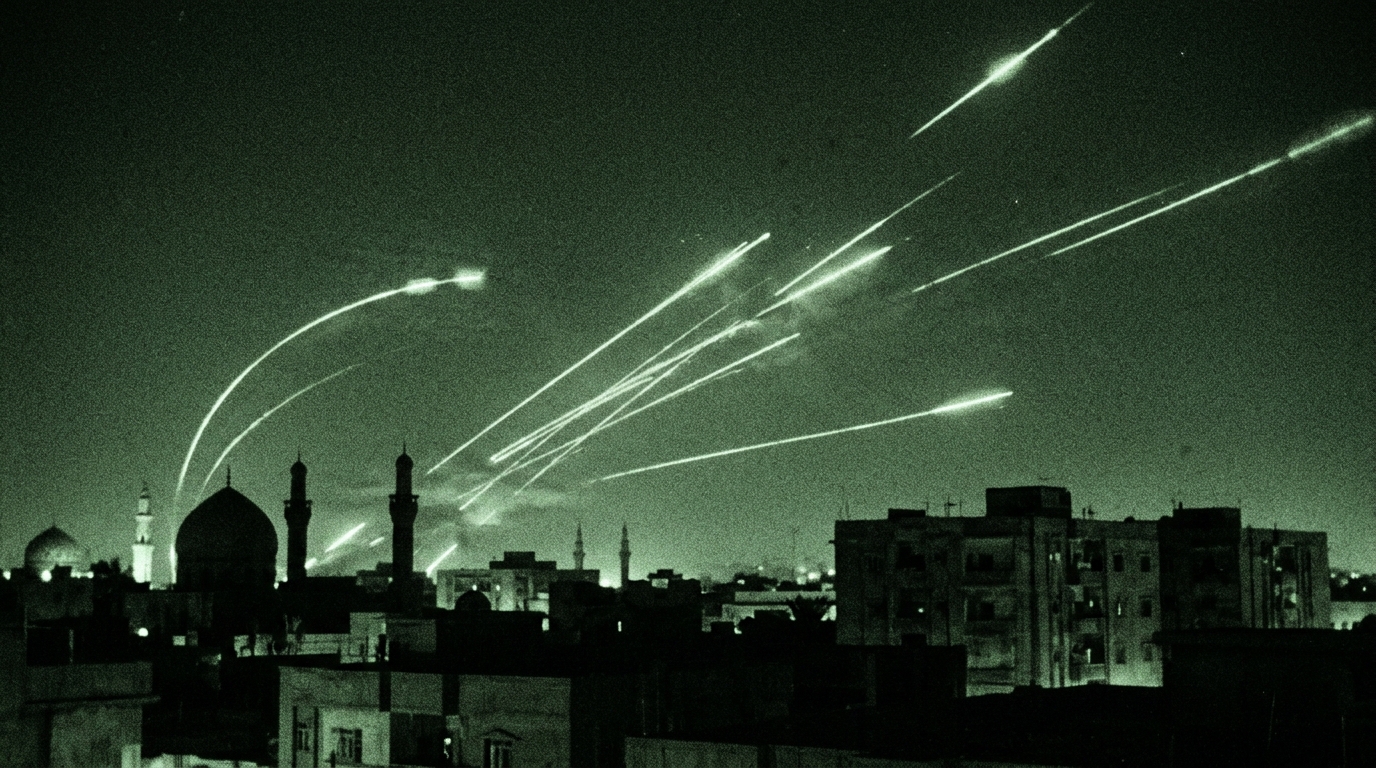
The air campaign, initially code-named "Instant Thunder" and later integrated into Operation Desert Storm, commenced with overwhelming force on January 17, 1991. The opening hours were critical: F-117 Nighthawk stealth fighters, making their combat debut, penetrated Baghdad’s dense air defenses largely undetected, delivering precision-guided munitions against key command-and-control centers, communication nodes, and radar sites. Simultaneously, a barrage of Tomahawk cruise missiles launched from naval vessels struck other strategic targets deep within Iraq. For the first time in history, the world watched live on CNN as tracer fire streaked across the night sky over Baghdad, illuminating the shock and awe of modern aerial warfare.
This phase aimed to achieve air supremacy quickly, degrade Iraq's military leadership, and destroy its strategic capabilities, including chemical and biological weapon facilities, nuclear research sites, and ballistic missile launchers (Scuds). Coalition air forces flew over 100,000 sorties, systematically dismantling Iraq's infrastructure and isolating its front-line troops. The relentless bombing campaign also focused heavily on the elite Republican Guard divisions dug in around Kuwait, aiming to "shape the battlefield" by destroying their armor and demoralizing their ranks. A significant challenge was the hunt for mobile Scud missile launchers, which Iraq used to target Israel and Saudi Arabia, threatening to fracture the fragile coalition.
On the ground, General H. Norman Schwarzkopf, Commander-in-Chief of U.S. Central Command (CENTCOM), executed a masterstroke of deception and maneuver. While the Iraqi army sat in heavily fortified bunkers along the Kuwaiti border, anticipating a direct frontal assault or an amphibious landing from the Persian Gulf, the coalition performed a massive, secret envelopment known as "The Left Hook." This involved the rapid repositioning of hundreds of thousands of coalition troops, thousands of tanks, and support vehicles far to the west. The U.S. XVIII Airborne Corps, VII Corps, and British 1st Armored Division then swept through the open desert of southern Iraq, catching the Iraqi forces entirely off guard.
The ground offensive began on February 24. Coalition forces rapidly breached the "Saddam Line" (Iraq's heavily mined and entrenched defenses along the Kuwaiti border) with specialized breaching units. While a Marine Expeditionary Force directly assaulted Kuwait, the main thrust was the "Left Hook," covering vast distances with unprecedented speed. The Battle of 73 Easting, a tank engagement fought by the U.S. 2nd Armored Cavalry Regiment against elements of the Iraqi Republican Guard's Tawakalna Division, demonstrated the overwhelming superiority of coalition armor and tactics. By February 28, after just 100 hours of ground combat, President Bush declared a ceasefire. Kuwait was liberated, and the bulk of Iraq's offensive military capability lay in ruins.
Geopolitical Consequences and Aftermath
The conclusion of the war in February 1991 left the United States as the undisputed global hegemon, a position often described as the "unipolar moment." The swift, decisive victory against a substantial regional power seemingly validated the efficacy of advanced military technology and the new American military doctrine. However, the aftermath was fraught with complexity and long-term repercussions that would shape global events for decades.
- Regional Instability and the Containment of Iraq: The decision by President Bush to halt the advance and leave Saddam Hussein in power proved to be one of the most controversial aspects of the war. This decision was driven by fears that Hussein's removal would lead to a power vacuum, potentially unleashing civil war, the fragmentation of Iraq, or an Iranian-backed Shi'ite ascendancy that could destabilize the entire region. The consequence was a guaranteed period of subsequent containment, including:
- Legacy of Technology and the Revolution in Military Affairs (RMA): The success of advanced weapon systems like the M1 Abrams tank, the AH-64 Apache attack helicopter, and laser-guided munitions convinced military planners worldwide that technology was the new determinant of national power. This fueled the concept of a "Revolution in Military Affairs" (RMA), advocating for smaller, more agile forces equipped with high-tech weaponry and sophisticated C3I (Command, Control, Communications, and Intelligence) capabilities. Defense spending priorities shifted globally, leading to significant investments in precision-guided munitions, stealth technology, and information warfare systems, influencing military doctrines up to the present day.
- The Gulf Syndrome (Environmental and Health Impacts): The war had severe environmental consequences. As Iraqi forces retreated, they deliberately set fire to over 700 Kuwaiti oil wells, creating massive black clouds that blotted out the sun for months and caused widespread air pollution. An estimated 11 million barrels of oil were dumped into the Persian Gulf, creating the largest oil spill in history. These acts of environmental terrorism, alongside the destruction of infrastructure, served as a grim reminder of the ecological and human costs of modern conflict. Furthermore, thousands of coalition veterans reported a cluster of chronic and debilitating symptoms, collectively known as "Gulf War Syndrome," whose causes remain a subject of ongoing research and debate.
- Impact on U.S. Foreign Policy and the "New American Exceptionalism": The swift victory rehabilitated the image of the U.S. military after Vietnam and fostered a sense of renewed American exceptionalism and confidence in its ability to project power globally. This success arguably contributed to a more interventionist U.S. foreign policy in the years that followed, culminating in later conflicts where regime change was explicitly sought, demonstrating the enduring influence of the perceived "unfinished business" of 1991.
Analysis of Key Actors and Decisive Actions
George H. W. Bush: The Architect of Consensus and the "New World Order"
President Bush’s primary accomplishment was not merely winning a war, but assembling and maintaining a truly international coalition with an unprecedented UN mandate. His diplomatic acumen was instrumental in:
- Securing UN Resolutions: Navigating the post-Cold War landscape to achieve unanimous Security Council resolutions condemning Iraq and authorizing force.
- Building a Diverse Coalition: His insistence on integrating Arab nations like Egypt and Saudi Arabia, alongside traditional Western allies, was critical. This broad-based support prevented Saddam from successfully framing the conflict as a "Christian-Western crusade" against Islam, a key propaganda objective for Baghdad.
- Strategic Restraint: Bush carefully defined the war's objectives—liberating Kuwait and restoring regional stability—and explicitly avoided the goal of overthrowing Saddam Hussein. This restraint was crucial for maintaining coalition unity and adhering to the UN mandate. His famous declaration of a "New World Order" captured the aspirations for a post-Cold War era governed by international law and collective security, even if its realization proved more elusive.
Norman Schwarzkopf: The Master of Maneuver and Logistics
"Stormin' Norman," as he was known, was a towering figure whose leadership style combined meticulous planning with a deep understanding of logistics and maneuver warfare. He was the antithesis of the indecisive generals often associated with the Vietnam era. His approach prioritized speed, overwhelming force, and deception to minimize coalition casualties and achieve decisive victory.
- Innovative Planning: Schwarzkopf, along with his chief planner Lt. Gen. Frederick Franks Jr., developed the daring "Left Hook" strategy. This involved shifting the main invasion force hundreds of miles west in a massive "Great Wheel" movement, a logistical marvel involving hundreds of thousands of troops and vast amounts of equipment. This deception plan, codenamed Operation Broadsword, convinced Iraqi intelligence that the main attack would be a frontal assault from Kuwait's coast.
- Combined Arms Synchronization: His command achieved unprecedented levels of synchronization between air and ground forces, effectively paralyzing the Iraqi army before the ground war even began. His operational plan is now a standard case study in military academies worldwide for its audacity and effectiveness in exploiting the enemy's weaknesses.
- Commander's Presence: Schwarzkopf’s powerful persona, direct communication style, and iconic press briefings instilled confidence among his troops and the American public.
Saddam Hussein: The Failed Strategist and Miscalculator
Saddam Hussein's strategy was built on a series of profound miscalculations, ultimately leading to his military's catastrophic defeat.
- Misreading International Resolve: He underestimated the international community's unified response and the U.S.'s willingness to use decisive military force. He believed the Arab world would not unite against him, and that Western nations would be deterred by the prospect of high casualties.
- Attrition Warfare Mentality: Hussein’s strategy relied on the hope that Iraqi infantry, entrenched in fortified positions, could weather the coalition’s bombs and inflict heavy casualties in a prolonged ground war, thereby eroding American public support (the "Vietnam syndrome"). He profoundly misunderstood the American military's technological evolution, its emphasis on precision and maneuver, and the resilience of an all-volunteer, professional force.
- Overestimation of Own Capabilities: He overestimated the effectiveness of his Soviet-style armored divisions and air defenses, and believed his chemical weapons threat would serve as a deterrent.
- Isolation and Propaganda: Operating in an increasingly isolated regime, Saddam was likely fed filtered intelligence and surrounded by sycophants, leading to a distorted view of his own military's strength and the coalition's resolve. His propaganda machine, though effective domestically, failed to sway international opinion.
"The liberation of Kuwait has begun. We have more than one reason to begin this momentous venture. It is well understood that our goal is not the conquest of Iraq, but the liberation of Kuwait. And we will not fail." — George H. W. Bush, January 16, 1991. This address articulated the clear, limited objectives that helped maintain coalition cohesion.
Domestic Reactions and International Public Opinion
Operation Desert Storm was unique not only for its military innovations but also for its profound impact on public opinion, both domestically and internationally.
United States: A Resurgent Patriotism
In the United States, the war generated overwhelming public support, a stark contrast to the divisive sentiments surrounding the Vietnam War. This "rally 'round the flag" effect was fueled by several factors:
- Clear Objectives: President Bush articulated clear, limited objectives—liberating Kuwait and reversing aggression—which resonated with the American public and the principles of international law.
- Technological Marvel: The televised precision of the air war, with "smart bombs" hitting targets with seemingly effortless accuracy, created a perception of a technologically superior, almost antiseptic conflict, initially minimizing public concern about casualties.
- Swift Victory: The short duration and low coalition casualties instilled a sense of pride and validation in the professional, all-volunteer military, marking a healing moment after the Vietnam trauma.
- Media Coverage: While the "CNN Effect" created immediate awareness, initial media coverage largely reflected government narratives, fostering a sense of national unity and purpose.
However, dissenting voices did exist. Anti-war movements, though smaller than during Vietnam, organized protests, raising concerns about civilian casualties, the long-term presence in the Middle East, and the economic costs of war. These voices were largely overshadowed by the dominant narrative of triumphant patriotism.
International Coalition: A Fragile Unity
Support for the coalition was strong among Western allies, largely due to shared economic interests (oil security) and adherence to international law. However, even within the coalition, nuances existed:
- Arab Nations: The participation of Saudi Arabia, Egypt, and Syria was critical but delicate. Their leaders faced the challenge of balancing support for international law with domestic public opinion often sympathetic to Saddam Hussein's anti-Western rhetoric, despite his aggression against Kuwait. They feared the perception of being collaborators with Western powers.
- European Allies: While countries like the UK and France were key military contributors, there were debates within their societies about the extent of military involvement and the potential for regional destabilization. Germany and Japan, constrained by post-WWII constitutional limits, provided significant financial aid rather than troops.
The Arab Street: Divided Loyalties
Public opinion across the broader Arab world was deeply divided. While some condemned Saddam's aggression against Kuwait, many segments of the population harbored sympathy for him as a strong leader who defied the West and Israel. Saddam's attempts to link the Kuwait invasion to the Palestinian cause, though opportunistic, resonated with many who felt a deep sense of injustice regarding the Israeli-Palestinian conflict. This created significant challenges for Arab leaders who joined the coalition and fueled anti-American sentiment that would persist and intensify in the following decades.
Trivia and Lesser-Known Facts
- The CNN Effect and Peter Arnett: Peter Arnett’s live reporting from the Al-Rashid Hotel in Baghdad, often under missile attack, made CNN the primary source of news for both the public and, allegedly, even the Pentagon, which lacked real-time battlefield assessments from inside Iraq. This unprecedented access sparked debates about journalistic ethics, objectivity, and the potential for a "CNN effect" to pressure governments into action or inaction. It cemented CNN's reputation and fundamentally changed news coverage of conflicts.
- The "Great Turkey Shoot" (Highway of Death): During the retreat from Kuwait in the final days of the ground war, coalition air power decimated a massive, congested column of Iraqi military and civilian vehicles on Highway 80, the main road between Kuwait City and Basra. This event, dubbed the "Highway of Death," involved extreme carnage and generated controversy. Critics argued it was excessive force against a defeated, retreating army, while supporters maintained it was a legitimate target of opportunity. It served as a grim visual testament to the lethality of modern air power and raised questions about rules of engagement in a fluid battlefield.
- Stealth Debut and the F-117 Nighthawk: The F-117 Nighthawk, a revolutionary stealth attack aircraft, made its combat debut in Operation Desert Storm. Its ability to penetrate the most heavily defended airspace undetected was a game-changer. Despite flying only 2% of the total coalition sorties, the F-117 struck over 40% of the strategic targets hit in the first 24 hours of the air campaign, including critical command centers and air defense nodes in Baghdad. This demonstrated the immense value of stealth technology and fundamentally altered air warfare doctrine, paving the way for future stealth platforms.
- The Patriot Missile's Mixed Legacy: The Patriot missile defense system became a symbol of hope for civilians under Scud attack in Israel and Saudi Arabia. Televised intercepts fueled public confidence in its capabilities, portraying it as a near-perfect shield. However, post-war analyses revealed a much lower interception rate than initially claimed, particularly against tactical ballistic missiles, raising questions about its actual effectiveness. Despite its technical shortcomings, its psychological impact in bolstering morale and preventing Israeli retaliation (which could have shattered the coalition) was undeniable.
- The Role of GPS: Operation Desert Storm was the first major conflict where the Global Positioning System (GPS) played a significant role. While not fully deployed or as sophisticated as today, it provided crucial navigation capabilities for coalition forces moving through the featureless desert, particularly during the "Left Hook" maneuver. This foreshadowed GPS's indispensable role in future military and civilian applications.
Socio-Economic Aftermath and Humanitarian Concerns
While Operation Desert Storm was a swift military victory, its socio-economic and humanitarian repercussions for Iraq and the broader region were profound and long-lasting.
- Humanitarian Crisis in Iraq: The destruction of Iraq's infrastructure—power grids, water treatment plants, communication networks, and transportation—during the air campaign led to a severe humanitarian crisis. Combined with the UN sanctions regime that restricted imports, including essential medicines and food, the Iraqi civilian population suffered immensely. Reports from international organizations and NGOs highlighted skyrocketing rates of child mortality, malnutrition, and disease throughout the 1990s. The debate over whether these sanctions constituted "collective punishment" became highly contentious, particularly as Saddam Hussein exploited the suffering for propaganda purposes, blaming the West entirely.
- Refugee Flows and Internal Displacement: The uprisings in the north and south of Iraq in the immediate aftermath of the war, brutally suppressed by Saddam’s forces, triggered massive refugee flows. Hundreds of thousands of Kurds fled to the mountains of Turkey and Iran, while Shi'ites fled towards the southern marshes. This humanitarian catastrophe led to the establishment of "Operation Provide Comfort" in the north, creating a safe haven for Kurds and laying the groundwork for the northern no-fly zone. These internal displacements and refugee crises highlighted the unforeseen human cost of the decision to leave Saddam in power.
- Economic Strain on the Region: While Kuwait was liberated, its economy and infrastructure were devastated by the Iraqi occupation and the deliberate destruction of its oil fields. Rebuilding efforts were massive and costly. Saudi Arabia and other Gulf states, while benefiting from increased oil prices post-war, also bore significant financial costs related to hosting coalition forces and supporting the war effort. The long-term instability caused by the ongoing containment of Iraq, with its fluctuating oil production and regional tensions, continued to cast a shadow over regional economic development.
- The Precedent of Intervention: The war set a powerful precedent for international intervention under a UN mandate to reverse aggression and protect vital interests. However, the subsequent challenges of nation-building, dealing with enduring dictatorships, and managing humanitarian crises without full regime change would deeply influence future foreign policy debates, notably leading up to the 2003 invasion of Iraq. The legacy of Desert Storm thus remains a complex tapestry of military triumph, strategic quandaries, and enduring human consequences.
References and Literature
- The Generals' War: The Inside Story of the Conflict in the Gulf - By Michael R. Gordon and Bernard E. Trainor. A highly detailed and comprehensive look at the strategic and command-level decisions made by the coalition leadership, based on extensive interviews.
- Desert Victory: The War for Kuwait - The official U.S. Department of Defense report on the conduct of the Persian Gulf War, offering an authoritative (from the U.S. perspective) overview of operations and outcomes.
- The Gulf War and the "CNN Effect" - An academic analysis (often found in journals like International Security or Foreign Affairs) of how 24-hour news media influenced the strategic decision-making and public perception of the 1991 conflict.
- Crusade: The Untold Story of the Persian Gulf War - By Rick Atkinson. A Pulitzer Prize-winning narrative history that brings the human element to the forefront, covering the perspectives of soldiers and commanders.
- Saddam Hussein and the Crisis in the Gulf - By Judith Miller and Laurie Mylroie. Provides context on Saddam Hussein's motivations, ambitions, and miscalculations leading up to the invasion.
Footnotes & Explanations
- The coalition consisted of 35 nations, including significant contributions from the United Kingdom, France, Saudi Arabia, Egypt, and Syria, among others. ↩
- Total coalition casualties were remarkably low—under 300 fatalities (including non-combat and friendly fire incidents)—compared to estimated Iraqi losses exceeding 20,000 soldiers, with some estimates running much higher. ↩