Key Takeaways
- The 2017 crisis marked a critical inflection point, bringing the world closer to a nuclear conflict than at any point since the Cold War, primarily driven by North Korea’s accelerated missile and nuclear advancements.
- President Trump’s 'Fire and Fury' rhetoric dramatically departed from decades of 'strategic patience,' ushering in an era of high-risk, personality-driven confrontation with the DPRK.
- The crisis led to a fundamental shift in the regional and global security landscape, culminating in the unprecedented 2018 US-DPRK summits while effectively solidifying North Korea’s controversial status as a de facto nuclear-armed state.
- Key international actors, notably China and South Korea, played crucial roles in managing de-escalation, pursuing distinct diplomatic strategies amidst escalating tensions.
- The crisis highlighted severe intelligence challenges and provoked widespread domestic and international debate regarding the efficacy and risks of confrontational diplomacy.
Historical Context and Origins
The profound volatility of 2017 did not erupt in a vacuum; it was the culmination of decades of unresolved tensions and a critical failure of successive international strategies towards the Democratic People's Republic of Korea (DPRK). To understand the "Fire and Fury" confrontation, one must first recognize the deep-seated historical grievances and strategic calculations that underpinned North Korea's nuclear program, alongside the evolving, often contradictory, approaches adopted by the United States and its allies.
From the armistice that concluded the Korean War in 1953, the DPRK viewed itself as perpetually under existential threat from the United States and South Korea. This perception fueled a consistent drive for a robust defense capability, eventually evolving into the pursuit of nuclear weapons as the ultimate deterrent. Early diplomatic efforts, such as the 1994 Agreed Framework, attempted to freeze North Korea's nuclear program in exchange for aid and normalized relations. However, these agreements often collapsed due to mutual distrust, accusations of non-compliance, and shifts in political will in Washington and Pyongyang. The subsequent Six-Party Talks (2003-2009), involving the US, North and South Korea, China, Japan, and Russia, similarly failed to achieve lasting denuclearization, primarily because Pyongyang remained unconvinced that foregoing its nuclear ambitions would guarantee its survival or lead to genuine security guarantees.
This history of failed diplomacy set the stage for the "strategic patience" doctrine that defined the Obama administration’s approach. This policy was predicated on the belief that sustained diplomatic isolation and stringent economic sanctions, combined with the gradual decay of the North Korean economy, would eventually compel the regime to denuclearize or face internal collapse. The underlying assumption was that engaging in high-level talks would legitimize North Korea's provocations without yielding concrete results, thus it was better to wait for the regime to buckle under pressure. However, this strategy fundamentally miscalculated the resilience, determination, and adaptive capacity of the Kim Jong-un regime.
Upon the death of his father, Kim Jong-il, in December 2011, Kim Jong-un ascended to power at a young age, facing questions about his legitimacy and authority. He swiftly consolidated power through purges and by asserting a new national strategy: the Byungjin (병진) policy. Formally adopted in 2013, Byungjin was a dual-track approach that simultaneously pursued rapid economic development and the advancement of the country's nuclear weapons program. Far from weakening the regime, international sanctions often served as a pretext for Kim to rally domestic support, portraying external pressure as validation of North Korea's need for a nuclear deterrent. Under Kim Jong-un, North Korea embarked on an unprecedented acceleration of its missile and nuclear testing, learning from each failure and rapidly advancing its technological capabilities.
By January 2017, when Donald Trump was inaugurated, North Korea was already in the final stages of developing an intercontinental ballistic missile (ICBM) capable of delivering a nuclear warhead to the United States. Trump’s arrival in the Oval Office, marked by his disruptive approach to foreign policy and his penchant for direct, often confrontational, rhetoric, created an exceptionally volatile crucible. His explicit rejection of the "establishment" foreign policy, including "strategic patience," signaled a willingness to break norms. This coincided with Kim Jong-un's equally defiant posture and his nation's near-realization of its long-sought nuclear deterrent. The stage was thus set for a high-stakes, personality-driven confrontation between two leaders unburdened by traditional diplomatic constraints.
Timeline of Events and Key Moments
The crisis of 2017 unfolded through a series of rapidly escalating technological milestones by Pyongyang and increasingly aggressive verbal provocations from Washington, creating a continuous feedback loop of tension. The year began with a steady stream of missile tests, signaling North Korea's unwavering commitment to its Byungjin policy.
| Date | Event |
August 8, 2017 | "Fire and Fury" Statement | In response to intelligence assessments of North Korea's nuclear advancements, President Trump issued an improvised threat from his Bedminster golf club, stating that any further North Korean threats "will be met with fire and fury like the world has never seen." This statement dramatically escalated the rhetoric and hinted at preemptive military action.
August 29, 2017 | Missile overflies Japan | North Korea launched a Hwasong-12 intermediate-range ballistic missile (IRBM) that flew over Hokkaido, Japan, before landing in the Pacific. This blatant defiance demonstrated Pyongyang's ability to target regional allies and prompted Japan to activate its J-Alert warning system, causing widespread alarm.
September 3, 2017 | Sixth Nuclear Test | North Korea conducted its sixth and most powerful nuclear test to date, claiming it was a successful hydrogen bomb (H-bomb). Seismic activity indicated an explosion yield estimated between 120 and 250 kilotons, dwarfing previous tests and indicating a significant leap in its nuclear weapon sophistication. This test confirmed the fusion technology necessary for a true thermonuclear weapon.
September 15, 2017 | Missile overflies Japan | Another Hwasong-12 IRBM launch over Japan, reinforcing Pyongyang's capability and unwillingness to back down despite international condemnation and sanctions.
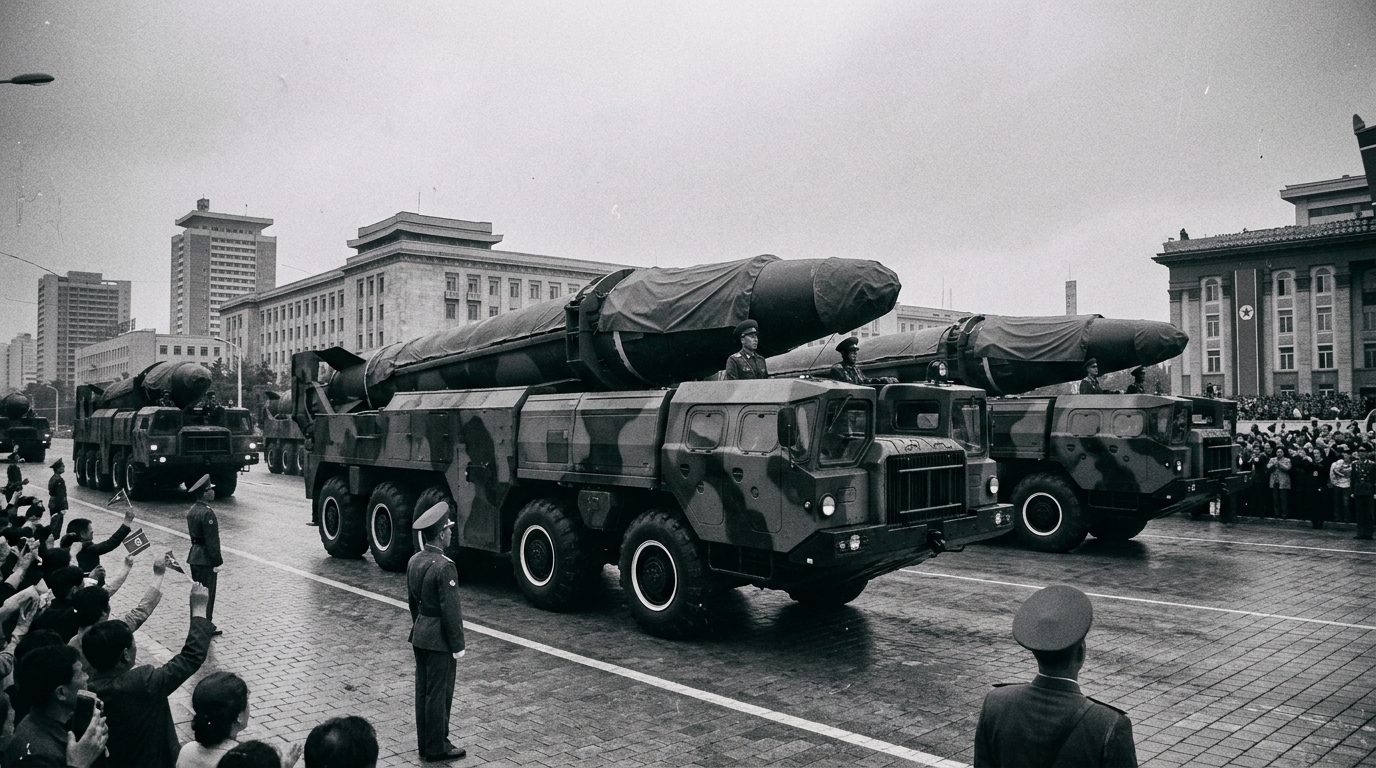
November 28, 2017 | Hwasong-15 ICBM Launch | The launch of the Hwasong-15 ICBM marked a definitive moment. The missile flew on a lofted trajectory, reaching an apogee of 4,475 km (2,780 miles) and covering a horizontal distance of 950 km (590 miles) during its 53-minute flight. Experts immediately calculated that if fired on a standard trajectory, the Hwasong-15 could reach any part of the continental United States, including Washington D.C. This test concretely established North Korea as a credible nuclear threat to the U.S. mainland.
The "Fire and Fury" incident itself occurred during a press conference in Bedminster, New Jersey. President Trump, departing from prepared remarks, delivered an ad-libbed warning that transcended conventional diplomatic language: "North Korea best not make any more threats to the United States. They will be met with fire and fury like the world has never seen." This was not just a threat of military action; it was a personal challenge, delivered in a manner designed to shock both Pyongyang and the international community.
Kim Jong-un’s response was equally unprecedented in its personal venom and directness. He issued a statement, officially carried by the state-run Korean Central News Agency, labeling Trump a "dotard"—an archaic term for an old person in their senile years—and asserting that the DPRK would consider the "highest level of hard-line countermeasure in history." This exchange removed any pretense of traditional diplomatic signaling, transforming the crisis into an existential standoff between two nuclear-armed personalities, each convinced of their own strategic correctness and willing to flout international norms. The rhetoric alone was sufficient to send shockwaves through global financial markets and elevate regional alert levels to their highest point in decades.
Intelligence Assessments and Miscalculations
The 2017 crisis brought into stark relief the persistent challenges in intelligence gathering and analysis concerning North Korea, highlighting both historical underestimations of Pyongyang's capabilities and the difficulty in discerning its true intentions. For decades, the global intelligence community, particularly that of the United States, struggled with the opaque nature of the North Korean regime. This often led to a cyclical pattern of underestimating the speed and sophistication of its technological advancements, only to be surprised by successful tests.
Prior to 2017, while intelligence assessments acknowledged North Korea's incremental progress, there was often skepticism regarding the immediate feasibility of its intercontinental ballistic missile program or its ability to miniaturize a nuclear warhead for delivery. Many analysts believed that while North Korea possessed ballistic missiles, the technical hurdles of developing a re-entry vehicle capable of surviving atmospheric re-entry and guidance systems precise enough for ICBMs would take many more years to overcome. The successful tests of the Hwasong-14 and Hwasong-15 in 2017, along with the powerful September nuclear test, shattered these assumptions. These tests demonstrated that North Korea had either developed or acquired the critical technologies faster than anticipated, catching many by surprise.
Specific technical breakthroughs included:
- Solid-fuel technology: While not fully demonstrated across its entire ICBM fleet in 2017, North Korea was increasingly moving towards solid-fuel missiles (like the Pukguksong series), which are quicker to launch, easier to hide, and more mobile than liquid-fueled counterparts. This progression significantly complicated pre-emptive strike scenarios.
- Re-entry vehicle (RV) design: The ability of a missile warhead to withstand the extreme heat and pressure of re-entering Earth's atmosphere at hypersonic speeds is a complex engineering challenge. North Korea's successful ICBM tests strongly suggested it had made significant strides in RV technology, even if complete verification remained difficult.
- Miniaturization: The size of the nuclear test on September 3, 2017, along with North Korea's public claims of a "two-stage thermonuclear weapon" capable of being mounted on an ICBM, indicated that Pyongyang was likely capable of miniaturizing a warhead to fit onto its ballistic missiles.
These rapid advancements fueled an intense debate within US intelligence and policy circles. Some argued that deterrence was the only viable path, accepting North Korea as a de facto nuclear power while focusing on preventing proliferation. Others advocated for a more aggressive "containment" strategy, or even a "preventive strike" option, though the latter was fraught with unimaginable risks of a full-scale regional war. The intelligence community faced the unenviable task of providing real-time assessments under extreme political pressure, often having to revise timelines and threat perceptions in the wake of each North Korean test. The challenge was compounded by the dual-use nature of many technologies and North Korea's sophisticated deception tactics. The lack of reliable human intelligence from within the deeply isolated regime meant that satellite imagery, signal intelligence, and seismic data became paramount, but these often provided only reactive rather than predictive insights. The year 2017 fundamentally recalibrated global intelligence assessments, confirming a grave new reality: North Korea's nuclear and missile programs were no longer a distant threat but an immediate, existential challenge.
Analysis of Key Actors and Decisive Actions
The 2017 crisis was largely shaped by the interplay of a few powerful personalities and strategic interests, each operating under distinct motivations and domestic constraints.
Donald Trump: The Disruptor's Diplomacy
President Donald Trump's approach was characterized by a radical departure from traditional US foreign policy. Eschewing the gradualism and multilateralism of his predecessors, Trump adopted a strategy of "maximum pressure" – a fusion of aggressive economic sanctions, bellicose rhetoric, and public intimidation. His personal, often derogatory, name-calling of Kim Jong-un was not merely impulsive; it was, for many, a deliberate attempt to bypass bureaucratic norms and signal that the U.S. was willing to break the status quo and consider all options, including military force.
Trump's "America First" doctrine prioritized direct results and projected strength. He believed that previous administrations had been weak and indecisive, allowing North Korea to advance its nuclear program unhindered. His public challenges to Kim Jong-un, often delivered via Twitter, aimed to create a sense of crisis that would force Pyongyang to the negotiating table on US terms. Domestically, this approach resonated with his base, fulfilling a campaign promise to challenge perceived foreign adversaries aggressively. However, it also created significant friction with his own diplomatic and military advisors, including Secretary of State Rex Tillerson, National Security Advisor H.R. McMaster, and Secretary of Defense James Mattis, who often sought to temper his rhetoric and reassure allies.
Kim Jong-un: The Strategist of Survival
Kim Jong-un, faced with the existential threat of "fire and fury," masterfully used the external pressure to consolidate his domestic power and legitimize his rule. By successfully testing ICBMs and a purported hydrogen bomb, he fulfilled a core promise to his military establishment and the North Korean populace: to develop a credible nuclear deterrent that could protect the nation from perceived US aggression. This achievement was heavily leveraged by state propaganda, bolstering Kim's image as a strong, decisive leader who had finally secured his country's long-term survival.
Kim's strategic calculus was rooted in two primary objectives: regime survival and international recognition as a nuclear-armed state. He observed the fates of leaders like Muammar Gaddafi (Libya) who had abandoned their nuclear programs only to face Western intervention. For Kim, nuclear weapons were not merely bargaining chips but the ultimate guarantee against external regime change. The Byungjin policy was a testament to this, proving that North Korea could simultaneously pursue economic development and nuclear armament, defying international expectations that it would collapse under sanctions. His sister, Kim Yo-jong, began to emerge as a prominent figure, often serving as a public face for some of the regime's more defiant statements, further highlighting the family's grip on power.
China: The Uneasy Ally and Regional Gatekeeper
The role of China, North Korea's principal economic benefactor and historical ally, was pivotal and complex. While Beijing consistently voted in favor of UN Security Council resolutions imposing tighter sanctions (such as limiting oil imports and restricting trade), it simultaneously pushed for a "double freeze"—the cessation of US-South Korean joint military exercises in exchange for a North Korean testing moratorium.
China's approach was driven by a perennial, two-fold fear:
- Instability on its border: An American military strike on North Korea could trigger a catastrophic humanitarian refugee crisis flowing into northeastern China, destabilize the entire region, and potentially lead to the collapse of the Kim regime.
- Geopolitical realignment: The collapse of North Korea could result in a unified, pro-US Korea directly on China's periphery, fundamentally altering the regional balance of power to Beijing's strategic disadvantage.
Under President Xi Jinping, China walked a diplomatic tightrope, seeking to rein in Pyongyang's provocations without pushing the regime to the brink of collapse. Beijing used its economic leverage, implementing some sanctions, but also maintained critical lifelines to prevent total implosion. China's nuanced position reflected its long-term strategic imperative to maintain regional stability and its strategic buffer against Western influence, even at the cost of tolerating a nuclear-armed neighbor.
South Korea: The Peacemaker's Gambit
South Korean President Moon Jae-in, who took office in May 2017, found himself in an unenviable position, sandwiched between an aggressive North Korea and a volatile US ally. Moon, a proponent of engagement, actively pivoted towards "détente" and diplomacy to prevent an unwanted military conflagration on the peninsula. His strategy was to leverage inter-Korean dialogue to create an off-ramp from the spiraling crisis. He understood that while the US might bear the brunt of an ICBM strike, South Korea would face immediate and devastating consequences from North Korea's conventional and WMD arsenal. The PyeongChang Winter Olympics in early 2018 became a crucial opportunity for Moon to initiate this "Olympic Détente."
Japan: The Anxious Ally
Japan, under Prime Minister Shinzo Abe, viewed the crisis with profound alarm. North Korean missiles repeatedly overflew its territory, demonstrating a direct and immediate threat. Japan responded by bolstering its alliance with the United States, advocating for stronger international sanctions, and accelerating its own missile defense capabilities. For Tokyo, the crisis underscored the urgent need for robust deterrence and the reliability of US extended deterrence commitments, especially as North Korea demonstrated the capacity to target not just Japan, but also the U.S. mainland.
The decisive actions of these key actors—Trump's aggressive posturing, Kim's defiant advancement, China's cautious balancing act, and South Korea's pursuit of dialogue—collectively shaped the trajectory of the 2017 crisis, pushing the region to the precipice of conflict before opening an unexpected pathway to high-stakes diplomacy.
International Reactions and Alliance Dynamics
The 2017 nuclear crisis with North Korea sent ripples of alarm across the globe, testing international institutions, straining alliances, and prompting a diverse range of responses from major powers. The United Nations Security Council (UNSC) found itself at the forefront of global efforts to contain Pyongyang's nuclear ambitions, while key alliances like those between the U.S. and South Korea, and the U.S. and Japan, faced unprecedented pressures.
The United Nations Security Council and Sanctions Regime
The UNSC responded to North Korea's accelerating provocations with a series of increasingly stringent sanctions resolutions. In 2017 alone, three major resolutions were passed, signaling a rare degree of unity among the permanent five members, including China and Russia:
- Resolution 2371 (August 5, 2017): Imposed in response to North Korea's July ICBM tests, this resolution banned North Korean exports of coal, iron, iron ore, lead, lead ore, and seafood. It also prohibited countries from increasing the number of North Korean laborers. These measures aimed to cut approximately $1 billion from North Korea's annual export revenue.
- Resolution 2375 (September 11, 2017): Following the sixth nuclear test, this resolution imposed further drastic measures, including a cap on refined petroleum product exports to North Korea, a ban on natural gas liquids, and a prohibition on all textile exports. It also authorized the inspection of vessels in international waters suspected of carrying illicit North Korean cargo. This significantly tightened the economic noose.
- Resolution 2397 (December 22, 2017): In the wake of the Hwasong-15 ICBM test, the UNSC further slashed refined petroleum exports by 89 percent and established a cap on crude oil deliveries. It also mandated the repatriation of all North Korean overseas workers within 24 months, a crucial blow to a significant source of foreign currency.
While these resolutions demonstrated international condemnation and a collective desire to curb North Korea's WMD programs, their enforcement proved challenging due to evasion tactics by Pyongyang and varying levels of commitment from member states. Crucially, the unity displayed by China and Russia in these votes was largely driven by their fear of regional instability, rather than full alignment with the US strategy of regime change or complete denuclearization.
Russia's Role: A Calculated Distance
Russia, while condemning North Korea's nuclear tests, often sided with China in advocating for a "double freeze" and cautioning against unilateral US military action. Moscow maintained historical ties with Pyongyang, dating back to the Soviet era, and viewed the crisis through the lens of its broader geopolitical competition with the United States. Russia's primary concerns were:
- Preventing a US military presence on its border with North Korea.
- Avoiding regional destabilization that could lead to a refugee crisis.
- Leveraging the crisis to criticize US foreign policy and its alliance system.
Russia frequently called for dialogue rather than confrontation, often implicitly blaming the US for escalating tensions through joint military exercises and missile defense deployments.
European Union: Calls for Diplomacy
The European Union, lacking direct military influence in the region, focused its efforts on strong diplomatic condemnations of North Korea's actions, support for UN sanctions, and calls for a peaceful, negotiated solution. European leaders expressed deep concern over the proliferation risks and urged all parties to de-escalate. Individual European nations, through their diplomatic channels, often sought to reinforce the message of denuclearization while emphasizing the need for robust diplomatic engagement.
Alliance Dynamics: Strain and Reinforcement
The 2017 crisis both strained and, paradoxically, reinforced existing US alliances in East Asia:
- US-South Korea Alliance: The alliance faced significant strain due to President Trump's "America First" rhetoric, his questioning of the cost-sharing arrangements for US troops in South Korea, and his often uncoordinated, personal approach to diplomacy. However, the palpable threat from North Korea also underscored the indispensable nature of the US security guarantee. The deployment of the Terminal High Altitude Area Defense (THAAD) anti-missile system in South Korea, while aimed at deterring North Korea, also created a diplomatic rift with China, which viewed the system as a threat to its own security.
- US-Japan Alliance: Japan felt acutely vulnerable to North Korea's missile tests, which repeatedly overflew its territory. This led to a strengthening of the US-Japan alliance, with Tokyo seeking firm assurances of US extended deterrence and collaborating closely on missile defense. Prime Minister Abe became one of Trump's most consistent international interlocutors, attempting to navigate the unpredictable US policy landscape.
The crisis also highlighted a fundamental divergence in approaches between Washington and Seoul. While Trump leaned into "maximum pressure," President Moon Jae-in was actively seeking opportunities for engagement and reconciliation, particularly in the lead-up to the PyeongChang Olympics. This divergence created tension but ultimately also provided avenues for de-escalation when the US and North Korea were not directly communicating.
In essence, 2017 transformed the North Korean nuclear issue from a regional problem to an urgent global crisis, demonstrating the limitations of the existing non-proliferation regime and forcing a re-evaluation of security paradigms across the Indo-Pacific and beyond.
The Path to Diplomacy: From Brinkmanship to Summits
The terrifying brinkmanship of 2017, characterized by the "Fire and Fury" rhetoric and North Korea's relentless weapons tests, paradoxically laid the groundwork for an unprecedented diplomatic pivot in 2018. This dramatic shift from the precipice of war to high-stakes summits was orchestrated by a confluence of factors, most notably South Korean diplomacy and Kim Jong-un's strategic calculation that his nuclear program had achieved a sufficient level of deterrence.
The first critical opening appeared with Kim Jong-un's New Year's Day address in January 2018. In a significant departure from his confrontational tone of 2017, Kim extended an olive branch to South Korea, expressing willingness to send a delegation to the PyeongChang Winter Olympics. This was a calculated move: it aimed to drive a wedge between Washington and Seoul, present North Korea as a responsible regional actor, and create an opportunity to ease international sanctions.
South Korean President Moon Jae-in seized this opportunity with both hands, initiating what became known as the "Olympic Détente." His government immediately facilitated North Korea's participation in the Games, including a joint marching team and a unified women's ice hockey team. This period of inter-Korean dialogue provided a vital circuit breaker for the escalating tensions and allowed South Korea to act as a crucial mediator. Kim Yo-jong, Kim Jong-un's sister, led the North Korean delegation to the Olympics, engaging in historic interactions with South Korean officials and formally inviting President Moon to Pyongyang.
The success of the "Olympic Détente" created momentum that Moon Jae-in skillfully exploited to bridge the gap between Washington and Pyongyang. Through discrete back-channel communications, South Korean envoys conveyed North Korea's readiness for dialogue directly to President Trump. In a stunning announcement on March 8, 2018, Trump accepted Kim Jong-un's invitation for a direct summit, becoming the first sitting US president to agree to meet a North Korean leader. This decision bypassed decades of diplomatic protocol and caught many seasoned diplomats by surprise, reflecting Trump's preference for direct, unconventional negotiations.
The first Singapore Summit on June 12, 2018, was a historic spectacle. The meeting between Trump and Kim, televised globally, culminated in a joint statement committing to "work toward complete denuclearization of the Korean Peninsula." While short on specific details and verification mechanisms, the summit succeeded in de-escalating immediate tensions, establishing a direct line of communication between the two leaders, and halting North Korea's nuclear and ICBM testing for a period. For Kim Jong-un, the summit was a major propaganda victory, granting him unprecedented international legitimacy and a photo opportunity with a sitting US president, fulfilling a long-held North Korean ambition. For Trump, it was hailed as a breakthrough in his "Art of the Deal" approach to foreign policy, a tangible "win" after the "fire and fury" period.
However, the euphoria of Singapore soon faded as working-level negotiations struggled to translate the broad commitments into concrete steps. The fundamental disagreement centered on the sequence of denuclearization and sanctions relief. North Korea demanded immediate, substantial sanctions relief in exchange for partial denuclearization steps (e.g., dismantling the Yongbyon nuclear complex), while the US insisted on full, verifiable denuclearization before significant sanctions could be lifted.
This impasse ultimately led to the collapse of the Hanoi Summit in February 2019. Despite extensive preparations, Trump and Kim failed to reach an agreement, walking away without a joint statement. The core sticking point was North Korea's demand for the lifting of five specific UN Security Council resolutions, which the US deemed too significant a concession for the limited denuclearization steps Pyongyang was offering. The failure in Hanoi signaled the limitations of personality-driven diplomacy without robust working-level negotiations and mutual trust.
Despite the lack of tangible denuclearization in the long run, the path from brinkmanship to summits fundamentally altered the dynamics of the North Korea crisis. It demonstrated that direct engagement, however unconventional, was possible and could temporarily defuse the immediate threat of conflict. It also cemented South Korea's crucial role as a facilitator of inter-Korean and US-DPRK dialogue, changing the regional security architecture for years to come.
Geopolitical Consequences and Aftermath
The 2017 crisis left an indelible mark on the geopolitical landscape, fundamentally reshaping perceptions of North Korea, altering regional security dynamics, and influencing international non-proliferation efforts.
Solidification of North Korea's Nuclear Status
Perhaps the most significant consequence was the de facto solidification of the DPRK's status as a nuclear-armed state. By late 2017, with the successful tests of the Hwasong-15 ICBM and a powerful thermonuclear device, the global intelligence community largely accepted that Pyongyang possessed the technical capacity to strike major American cities. This realization shattered the long-held international policy goal of preventing North Korea from becoming a nuclear power. From 2018 onwards, the diplomatic efforts shifted from complete, verifiable, and irreversible denuclearization (CVID) to managing North Korea's existing arsenal and preventing further proliferation, a subtle but critical change in strategic objectives.
The "New Normal" on the Korean Peninsula
The period of intense confrontation followed by high-level summits created a new, albeit fragile, equilibrium on the Korean Peninsula. While the threat of conflict receded from its 2017 peak, the underlying issues remained unresolved. The diplomatic thaw of 2018 and 2019, though ultimately stalling on denuclearization, did succeed in maintaining a degree of dialogue and preventing the immediate return to maximum tension. However, the breakdown of the Hanoi Summit and the subsequent lack of progress meant that North Korea continued to refine its weapons programs, albeit without ICBM or nuclear tests for a few years. This created a "new normal" where North Korea's nuclear status was tacitly acknowledged, and sporadic provocations continued without necessarily triggering a full-blown crisis.
Impact on Regional Alliances and Security Architecture
The crisis prompted a re-evaluation of security alliances across East Asia.
- US-South Korea: While the alliance endured, it was tested by the unpredictable nature of US policy and the divergence in approaches between Trump and Moon. The deployment of THAAD in South Korea, though necessary for defense, continued to strain relations with China.
- US-Japan: The alliance strengthened significantly as Japan faced direct threats from North Korean missiles. Tokyo increased its missile defense capabilities and deepened military cooperation with Washington, emphasizing the critical importance of extended deterrence.
- China's Role: Beijing's role as a reluctant enforcer of sanctions, combined with its consistent advocacy for a "double freeze," highlighted its delicate balancing act between its strategic interests and international responsibilities. The crisis reaffirmed China's determination to prevent regime collapse in Pyongyang, even if it meant tolerating a nuclear-armed neighbor.
Domestic Impacts and Political Legacy
In the United States, the crisis and subsequent summits had a profound domestic impact. President Trump's supporters lauded his willingness to engage directly with Kim Jong-un as a bold, unconventional approach that brought peace. Critics, however, viewed it as legitimizing a dictator and failing to achieve concrete denuclearization, while undermining traditional diplomacy. The "Fire and Fury" episode became a defining moment of Trump's presidency, showcasing his confrontational style.
In North Korea, Kim Jong-un emerged from 2017 with his authority consolidated, having delivered on his promise of a nuclear deterrent. The summits provided an image of a sovereign leader engaging on equal terms with the US president, a powerful propaganda victory used to bolster internal legitimacy and rally the populace.
Legacy and Modern Historiographical Debates
The 2017 crisis continues to be a subject of intense historiographical debate:
- Effectiveness of "Maximum Pressure": Was Trump's "fire and fury" a calculated strategy that forced Kim to the table, or did it merely escalate an already dangerous situation without yielding lasting results?
- Role of South Korea: Was Moon Jae-in's "Olympic Détente" the critical circuit breaker, or was Kim Jong-un already seeking dialogue having achieved his nuclear goals?
- The "De Facto" Nuclear State: Was 2017 the year North Korea definitively crossed the nuclear threshold, making denuclearization an unrealistic goal?
- Lessons for Non-Proliferation: What does the North Korean case imply for the global non-proliferation regime, and how should future nuclear aspirants be handled?
The North Korea Nuclear Crisis of 2017 fundamentally altered the trajectory of the Korean Peninsula and global security. It demonstrated the perilous consequences of unchecked proliferation, the risks of confrontational rhetoric, and the complex, often unpredictable, path to diplomacy in the 21st century.
Trivia and Lesser-Known Facts
- The "Dotard" Incident and Lexical Surge: When Kim Jong-un called President Trump a "dotard," the archaic term, meaning "an old person, especially one who has become weak or senile," saw an unprecedented surge in online dictionary lookups. This linguistic curiosity highlighted how the crisis permeated popular culture and public discourse, turning obscure vocabulary into viral content. It also underscored the deeply personal nature of the diplomatic exchanges.
- The Hawaii False Alarm: On January 13, 2018, just months after the peak of the "fire and fury" tensions, residents of Hawaii received an emergency alert on their phones: "BALLISTIC MISSILE THREAT INBOUND TO HAWAII. SEEK IMMEDIATE SHELTER. THIS IS NOT A DRILL." The message, which triggered widespread panic and fear of an imminent nuclear strike, was a false alarm caused by a state employee accidentally pressing the wrong button during a shift change. The incident, lasting 38 agonizing minutes before a correction was issued, was a direct byproduct of the heightened anxiety and readiness that had permeated the public consciousness following the 2017 crisis, demonstrating the psychological toll of the brinkmanship.
- Silent Diplomacy: The "New York Channel": Despite the chaotic public rhetoric and the absence of formal diplomatic ties, a crucial back-channel remained active throughout 2017. Known as the "New York Channel," this discrete line of communication allowed US and North Korean diplomats, primarily through their missions to the United Nations in New York, to exchange messages, clarify intentions, and even de-escalate potential misunderstandings. Joseph Yun, then the U.S. Special Representative for North Korea Policy, played a key role on the American side, communicating with North Korean counterparts like Pak Song-il. This channel served as a vital safety valve, demonstrating that even amidst the most hostile public exchanges, pragmatic back-room diplomacy can function to avert accidental escalation.
- The "Bloody Nose" Option: During 2017, within the Trump administration, there was internal debate about a "bloody nose" strategy—a limited military strike against North Korean military targets in response to a provocation. The aim was to demonstrate US resolve without triggering a full-scale war. However, this option faced significant opposition from Defense Secretary James Mattis and others who argued that it carried an unacceptably high risk of rapid escalation, potentially leading to a devastating conflict on the Korean Peninsula. The robust internal debate and ultimate rejection of this option underscore the extreme military risks considered during the crisis.
- Kim Jong-un's Public Appearances: During 2017, Kim Jong-un made numerous public appearances at missile test sites, often directly overseeing launches. These highly choreographed events, captured by North Korean state media, were crucial for domestic propaganda, showcasing his personal leadership in developing the nuclear deterrent and bolstering his image as a powerful, capable commander-in-chief, directly defying international pressure.
References and Literature
- Arms Control Association. (n.d.). Chronology of U.S.-North Korean Nuclear Diplomacy. Available at: https://www.armscontrol.org/factsheets/dprkchron
- Bulletin of the Atomic Scientists. (Various years). The 2017 North Korean Crisis and Beyond. Available at: https://thebulletin.org/tags/north-korea/
- Cha, Victor D. (2012). The Impossible State: North Korea, Past and Future. HarperLuxe. ISBN: 978-0061998508.
- Department of Defense. (2017). Nuclear Posture Review 2018. U.S. Government Publishing Office. [Relevant sections discussing North Korea's threat assessment].
- Foreign Affairs. (Various authors, 2017-2019). Analytical pieces evaluating the logic behind Trump's "Maximum Pressure" campaign and Kim's strategy. Available at: https://www.foreignaffairs.com
- International Atomic Energy Agency (IAEA). (Annual Reports). Reports on DPRK nuclear activities.
- Lankov, Andrei. (2013). The Real North Korea: Life and Politics in the Failed Stalinist Utopia. Oxford University Press. ISBN: 978-0199390038.
- Moon, Chung-in. (2018). The Kim-Trump Summits: From Singapore to Hanoi and Beyond. Yonsei University Press.
- Reuters. (Various reports, 2017-2019). News archives on North Korea missile tests, Trump's statements, and diplomatic developments. Available at: https://www.reuters.com
- United Nations Security Council. (2017). Resolutions 2371, 2375, 2397 on sanctions against the DPRK. Available via UN Digital Library.
- White House Archives. (2017-2019). Presidential statements and press briefings regarding North Korea. Available at: https://trumpwhitehouse.archives.gov/
- Yun, Joseph Y. (2020). Dealing with the Hermit Kingdom: My Twenty Years Working with North Korea. Pegasus Books. ISBN: 978-1643134177.
Footnotes & Explanations
- Strategic patience was characterized by the Obama administration's desire to let sanctions degrade North Korean capabilities over time. ↩
- Byungjin refers to the dual policy of economic growth and nuclear development. ↩
- The Hwasong-15 launch was the definitive moment in determining that the U.S. mainland was within range. ↩