Key Takeaways
- The April 2024 escalation marked the definitive end of the 'shadow war' doctrine, transitioning into an era of direct state-on-state military confrontation between Israel and Iran.
- Iran’s 'Operation True Promise' demonstrated a calibrated shift in deterrent strategy, prioritizing the restoration of deterrence and regional posturing over mass casualties, while signaling its capacity for direct engagement.
- The unprecedented involvement of a multi-national coalition led by the United States and regional partners in defending Israel highlighted the deepening integration of Middle Eastern security architectures against shared threats.
- Israel's limited counter-response near Isfahan served as a precise warning, demonstrating its capability to strike deep within Iran and target critical infrastructure, including facilities related to its nuclear program.
- The events brought into sharp focus the complex interplay of domestic political pressures in both Israel and Iran, the humanitarian crisis in Gaza, and the broader geopolitical competition for regional hegemony.
Historical Context and Origins
For over four decades, the profound hostility between the Islamic Republic of Iran and the State of Israel was predominantly defined by the "Shadow War"—a protracted, low-intensity, covert conflict conducted largely through proxies, cyber-attacks, and targeted assassinations. This indirect confrontation allowed both states to inflict damage and exert influence without triggering the catastrophic consequences of direct military engagement. Iran skillfully utilized its "Axis of Resistance," a meticulously cultivated network of state and non-state actors including Hezbollah in Lebanon, Hamas in Gaza, Palestinian Islamic Jihad, various Shiite militias in Syria and Iraq, and the Houthi movement in Yemen. This network served as a strategic depth and a means to project power, enabling Tehran to bleed Israeli defenses, harass its borders, and challenge its regional dominance while consistently maintaining a degree of plausible deniability.
Conversely, Israel engaged in a persistent "campaign between wars" (known as MABAM in Hebrew), a doctrine of proactive military operations aimed at degrading enemy capabilities, preventing arms transfers, and denying adversaries the ability to establish permanent military footholds near its borders. This campaign frequently involved airstrikes against Iranian assets and proxy infrastructure in Syria, cyber operations against Iranian nuclear facilities and infrastructure (such as the Stuxnet attack), and the assassination of key Iranian military and scientific personnel. The goal was to continuously push back Iranian influence and undermine its strategic objectives without escalating to a full-scale conventional war.
The events of 2024 did not materialize in a vacuum; rather, they were the culmination of decades of simmering tensions, intensified by recent regional developments. Following the devastating October 7, 2023, Hamas-led attacks on Israel, which initiated the ongoing Gaza war, the regional temperature spiked significantly. Israel’s subsequent large-scale military campaign in Gaza necessitated an intensification of its efforts to degrade Iranian assets and logistical pipelines in Syria. These assets acted as critical conduits for resupplying Hamas and Hezbollah, and for the broader entrenchment of Iranian influence on Israel's northern front. The Damascus incident, a direct attack on Iranian military leadership within a diplomatic compound, emerged as the critical flashpoint within this high-pressure, rapidly escalating environment.
Historical Precedents & The Evolution of the Shadow War
The "Shadow War" between Israel and Iran, while characterized by indirect engagement, has a rich and complex history stretching back to the Iranian Revolution of 1979. Prior to the revolution, Israel and Imperial Iran enjoyed a pragmatic, if discreet, alliance driven by shared interests in containing Arab nationalism and Soviet influence. The overthrow of the Shah and the rise of the Islamic Republic irrevocably shattered this relationship, replacing it with an ideological rivalry rooted in the new Iranian regime's anti-Zionist posture and revolutionary zeal.
Key Phases and Modus Operandi:
- Early Proxy Engagement (1980s-1990s): Iran's support for Hezbollah in Lebanon following Israel's 1982 invasion marked the genesis of its proxy strategy. Hezbollah, initially formed to resist Israeli occupation, evolved into a formidable military and political force, serving as Iran's primary deterrent and a constant threat on Israel's northern border. During this period, Israel focused on containing Hezbollah and countering Iranian efforts to arm and train various militant groups.
- Targeted Assassinations and Covert Operations (2000s-2010s): This phase saw an escalation in Israeli covert operations targeting Iran's nuclear program and its military architects.
- Syrian Civil War and the "Campaign Between Wars" (2011-present): The Syrian Civil War provided Iran with an unprecedented opportunity to establish a direct land bridge to Hezbollah and expand its military presence close to Israel's border. Iran deployed IRGC Quds Force personnel, Lebanese Hezbollah fighters, and various Shiite militias to prop up the Assad regime. In response, Israel intensified its "campaign between wars" (MABAM), conducting hundreds of airstrikes against Iranian weapons convoys, military bases, and personnel in Syria. Key figures like IRGC Quds Force commanders were frequently targeted, though typically not in diplomatic facilities. These strikes aimed to prevent the transfer of advanced weaponry to Hezbollah and disrupt the establishment of a permanent Iranian military infrastructure in Syria. This period saw Israel publicly acknowledge some of its strikes, signaling a more assertive posture against Iranian entrenchment.
- Maritime and Cyber Warfare: The shadow war also played out at sea, with a series of tit-for-tat attacks on commercial vessels in the Gulf and Red Sea, many attributed to both sides. Cyber warfare became another significant front, with both nations engaging in sophisticated attacks on critical infrastructure.
The Damascus strike on April 1, 2024, therefore, needs to be understood as a qualitative leap in this long-standing conflict. While Israel had frequently targeted IRGC personnel in Syria, the decision to strike a consular building – a piece of sovereign territory under international law – and to eliminate such a high-ranking officer as Brigadier General Mohammad Reza Zahedi, the most senior IRGC Quds Force commander killed since Qassem Soleimani in 2020, represented a deliberate escalation that fundamentally altered Iran's calculus for retaliation. Tehran perceived this as a direct affront to its national sovereignty and a severe blow to its regional prestige, signaling that the rules of engagement in the shadow war had been irrevocably changed.
Timeline of Events and Key Moments
The escalation moved with unprecedented speed and precision, transforming the regional status quo within the span of two weeks and fundamentally redefining the rules of engagement between these two long-standing adversaries.
| Date | Event | Significance |
|---|---|---|
| April 1, 2024 | Strike on the Iranian Consulate in Damascus, Syria | An Israeli airstrike targeted a consular annex adjacent to the main Iranian embassy building in the Mezzeh district of Damascus. The strike killed Brigadier General Mohammad Reza Zahedi, a senior commander in the IRGC's Quds Force responsible for operations in Lebanon and Syria, along with his deputy and several other IRGC officers. This was not merely another assassination; it was an attack on what the international community recognizes as sovereign Iranian diplomatic territory, an act that Tehran viewed as an egregious violation of the Vienna Convention on Diplomatic Relations and an existential provocation. Israel's apparent motivation was to cripple Iranian command and control over its proxy networks at a critical juncture in the Gaza war. |
| April 2-12, 2024 | Intense Diplomatic Posturing and Preparations | Following the Damascus strike, Tehran issued immediate and unequivocal threats of "punishment" and "severe revenge." Supreme Leader Ali Khamenei publicly vowed retaliation, while Iranian officials emphasized the attack was a "red line" crossing. The United States and its European allies, particularly the UK, France, and Germany, engaged in urgent diplomatic efforts to de-escalate, urging restraint on all sides. U.S. President Joe Biden publicly warned Iran against retaliation, while privately activating regional defense assets and intelligence-sharing mechanisms with Israel. Intelligence reports began circulating about an imminent large-scale Iranian attack, prompting Israel to enhance its air defense readiness and prepare for potential strikes. |
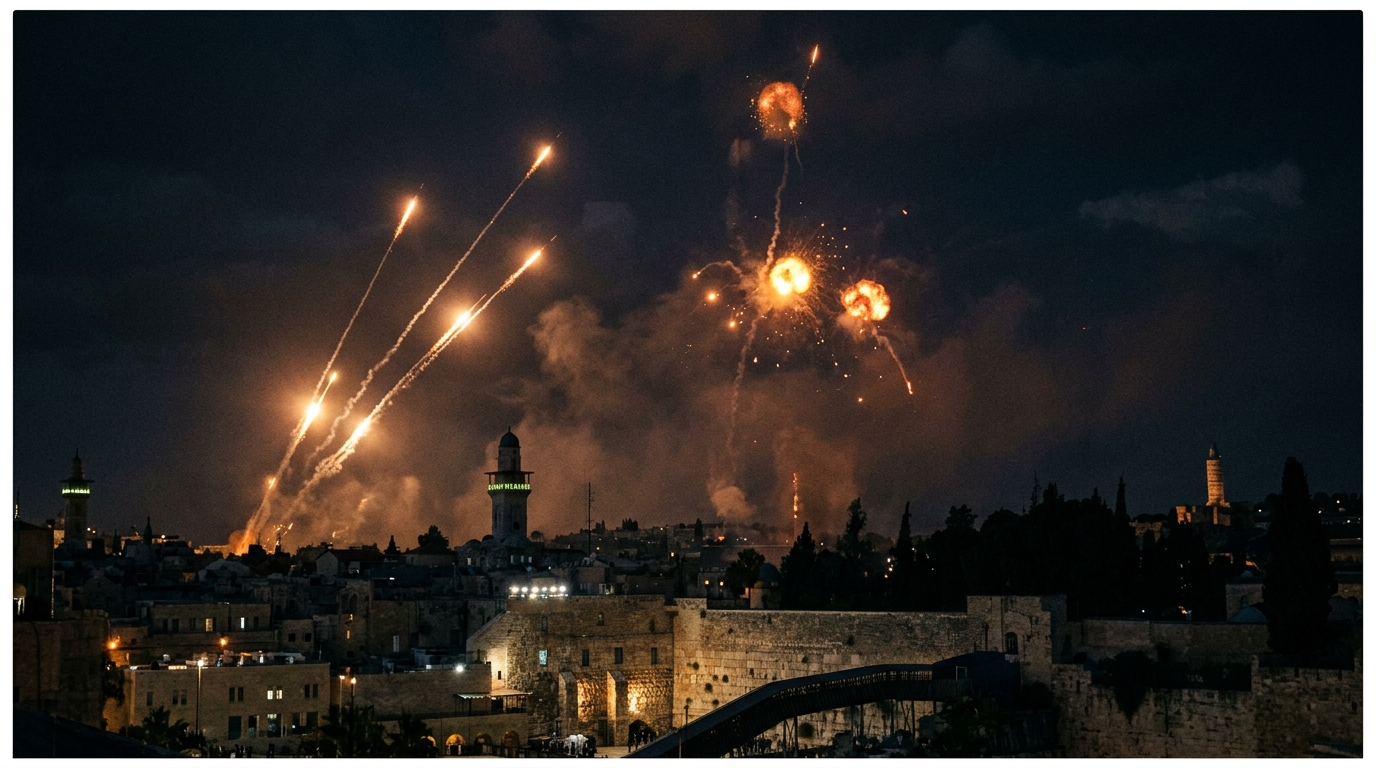
| April 13-14, 2024 | Iran's "Operation True Promise" | In an unprecedented direct military action, Iran launched "Operation True Promise" – a massive barrage targeting Israeli territory. Over several hours, Iran fired approximately 170 Shahed-136 kamikaze drones, over 30 cruise missiles (including Paveh types), and more than 120 ballistic missiles (such as Emad, Qadr, and Kheibar Shekan). The attack was launched directly from Iranian soil, as well as from proxy territories in Iraq, Syria, and Yemen. Crucially, Iran provided a window of notification to regional neighbors and potentially through back channels, allowing for the activation of a sophisticated regional air defense network. |
| April 14, 2024 | Defensive Interception and Coalition Response | The vast majority of Iranian projectiles were intercepted with near-total success. Israel’s multi-layered defense system (Iron Dome, David’s Sling, Arrow 2 & 3) formed the core of the defense. However, its efficacy was significantly augmented by direct operational support from a multi-national coalition. U.S. Central Command (CENTCOM) assets, including naval destroyers and fighter jets, directly engaged Iranian projectiles. The United Kingdom and France also provided air defense capabilities, while Jordan, critically, opened its airspace and intercepted numerous drones. This unprecedented coalition effort resulted in a reported 99% interception rate, with minimal damage and only one serious injury in Israel. |
| April 15-18, 2024 | International Appeals for Restraint | In the immediate aftermath of Iran's attack, global leaders, including the G7 and the UN Security Council, issued strong condemnations of Iran's actions and simultaneously called upon Israel to exercise maximum restraint in its response. The Biden administration, while reaffirming its "ironclad" commitment to Israel's security, actively discouraged a broad Israeli counter-retaliation, emphasizing the need to prevent a wider regional war. |
| April 19, 2024 | Israeli Counter-Response near Isfahan | In a highly calibrated and limited counter-response, Israel launched a surgical strike near the city of Isfahan in central Iran. The strike, reportedly involving small drones/loitering munitions and potentially a single missile, targeted an airbase and air defense radar systems. Isfahan is strategically significant, housing critical nuclear research facilities and military installations. The nature and location of the strike were a clear "warning shot," indicating Israel’s capability to penetrate Iranian airspace and strike sensitive targets deep within the country, including potentially its nuclear infrastructure, if it chose to do so, without immediately escalating to a full-scale war. |
The attack on the consular annex in Damascus, which resulted in the death of Mohammad Reza Zahedi, a senior commander in the Quds Force responsible for operations in Lebanon and Syria, along with his deputy and other officers, was not merely an assassination; it was an attack on what the international community largely recognizes as sovereign territory. Iran viewed this as an unforgivable "red line" crossing, necessitating a direct, overt response. For Tehran, this was seen as a deliberate act by Benjamin Netanyahu’s government, possibly aimed at broadening the conflict to regain internal political momentum and shift international attention away from the Gaza war.
Geopolitical Consequences and Aftermath
The immediate and profound consequence of this escalation was the total erosion of the "Gray Zone" in which both nations had operated for decades. By choosing to launch direct attacks from Iranian soil against Israeli territory—rather than exclusively via proxies—Tehran signaled a fundamental and dangerous shift in its defense doctrine and regional strategy. This move elevated the conflict from a proxy war to a direct state-on-state confrontation, redefining the parameters of acceptable aggression and retaliation.
The Shift in Regional Alliances and Security Architectures
Perhaps the most surprising and strategically significant outcome of "Operation True Promise" was the visible and unprecedented cooperation between Israel and several regional Arab states. Jordan, for instance, not only condemned Iran’s attack but also actively participated in the interception of Iranian drones and missiles flying through its airspace. While Jordan’s actions were primarily driven by national security concerns (preventing debris from falling on its territory and asserting sovereignty over its airspace), the operational coordination with Israel, the US, and European partners highlighted a deeper, albeit often discreet, alignment of interests.
This cooperation underscored a shared existential fear among moderate Sunni Arab states – particularly those in the Gulf like Saudi Arabia, the UAE, and Bahrain (signatories of the Abraham Accords) – regarding Iranian hegemony and its destabilizing influence in the region. Despite ongoing diplomatic tensions over the Gaza war and the Palestinian issue, the direct Iranian threat proved to be a powerful unifying factor, pushing these states toward a de facto security alignment with Israel and the West. This development signals the potential for a more formalized regional air defense architecture, transforming the Middle East's security landscape and solidifying a tacit anti-Iran front. It suggests that while the Abraham Accords focused on normalization, the Iranian threat could catalyze deeper military-to-military and intelligence cooperation, potentially leading to a more integrated regional security system under American patronage.
The Normalization of Direct Conflict and Redefining Deterrence
The events proved that neither party is currently interested in a total, all-out war, largely due to the immense risks and potential for regime-threatening devastation. However, both Israel and Iran have established a "new normal" in their relationship. Iran has demonstrated its willingness and capability to strike Israeli soil directly with a mass saturation attack, albeit one meticulously calibrated to achieve symbolic impact rather than mass casualties. This was a crucial psychological victory for Tehran, designed to restore its deterrence credibility.
Conversely, Israel's near-total defensive success, coupled with its swift, surgical counter-response, reaffirmed its qualitative military edge (QME) and its capacity for precision strikes deep within Iranian territory. The targeting of an airbase near Isfahan, a city housing critical nuclear research facilities, was a clear "warning shot" signaling Israel's ability to strike at the heart of Iran’s most sensitive infrastructure if provoked further. This established a new, dangerous threshold: direct strikes are now a recognized, if undesirable, component of their conflict. The implications for deterrence theory are profound, as both sides have now crossed a line that was once considered sacrosanct, creating a more volatile and unpredictable environment. The risk of miscalculation, or an unintended escalation due to an operational error, has demonstrably increased.
"The Islamic Republic has moved from the age of proxies to the age of direct engagement. This is a transformation that will necessitate a rewrite of every defense strategy in the Middle East for the next decade. The old rules of engagement are obsolete; new, more dangerous ones have been forged." — Geopolitical Analyst (Independent Summary)
Analysis of Key Actors and Decisive Actions
The decisions made by the leaders of Israel and Iran during this tense period were shaped by a complex interplay of domestic political pressures, strategic calculations, and the overarching desire for regime survival and national security.
Benjamin Netanyahu and the Israeli Calculus
For Prime Minister Benjamin Netanyahu, the Damascus strike and the subsequent Iranian retaliation presented a multi-faceted challenge. His immediate goals were undoubtedly twofold: first, to maintain Israel’s operational freedom to strike Iranian assets in Syria and Lebanon, essential for degrading the "Axis of Resistance" that fuels groups like Hezbollah and Hamas. Second, he aimed to ensure that the international community—specifically the Biden administration—remained firmly focused on the existential Iranian threat rather than solely on the humanitarian catastrophe unfolding in Gaza.
Domestically, Netanyahu was under immense pressure. His government faced widespread criticism over the failures of October 7th, internal divisions, and ongoing protests demanding new elections and the return of hostages. A strong, decisive response to Iranian aggression was crucial to re-establish the deterrent value of the Israel Defense Forces (IDF) and demonstrate national resolve, which could also serve to shore up his political standing. However, he also faced immense pressure from the United States and European allies to de-escalate. His decision to retaliate, albeit in a highly calibrated and limited manner near Isfahan, was a masterclass in strategic signaling. It reaffirmed Israel’s "doctrine of action" – that it would not absorb direct attacks without response – while also providing sufficient off-ramp for the international community and avoiding a full-blown regional war that the US desperately sought to avert. This strike reasserted Israel’s capacity for deep penetration and precision targeting, explicitly threatening Iran's most sensitive sites, including its nuclear facilities, without causing mass casualties that would necessitate a further Iranian response.
Ali Khamenei and the Iranian Dilemma
Supreme Leader Ali Khamenei faced an equally perilous dilemma, perhaps even more acute given the direct challenge to Iran's sovereignty. The Damascus strike, particularly the killing of Brigadier General Mohammad Reza Zahedi, represented a severe blow to the IRGC's prestige and a direct challenge to the legitimacy of the clerical regime, which prides itself as the leader of the "Axis of Resistance." To do nothing would have been perceived as weakness, eroding the regime's credibility both internally among hardliners and externally among its proxies and regional adversaries.
However, as an aging autocrat, Khamenei’s primary focus is regime survival and the preservation of the Islamic Revolution. A full-scale, uncalibrated war with Israel, almost certainly inviting a devastating American intervention, would jeopardize the very existence of the clerical regime. The calibration of "Operation True Promise"—which involved publicly telegraphing the attack to allies and adversaries alike, using slow-moving drones first to maximize warning time, and primarily targeting military infrastructure rather than population centers—strongly suggested an intent to perform a "theatrical" military maneuver. This strategy aimed to satisfy the IRGC hardliners and demonstrate strength, reclaim deterrence, and uphold revolutionary honor, without triggering a full-scale, devastating regional war. It was a high-stakes gamble to restore face and deterrence without suffering catastrophic blowback, a testament to the regime's strategic cunning in navigating perilous geopolitical waters.
International Diplomatic Responses and De-escalation Efforts
The direct exchange of strikes between Israel and Iran immediately triggered a flurry of international diplomatic activity, with global powers scrambling to prevent a wider conflagration in an already volatile Middle East. The overarching sentiment from the international community was a collective sigh of alarm and urgent calls for de-escalation.
United States Leadership: The Biden administration played a pivotal role in managing the crisis. Prior to Iran's attack, President Biden and his top diplomats engaged in intense back-channel communications, attempting to dissuade Tehran from direct retaliation while simultaneously reinforcing Israel's defensive capabilities. Following "Operation True Promise," the U.S. moved quickly to condemn Iran's actions and reaffirm its "ironclad" commitment to Israel's security. However, crucially, Biden privately cautioned Prime Minister Netanyahu against a broad counter-retaliation, emphasizing that the successful defense had already demonstrated Israel's superiority and that "winning" meant not escalating further. This public message, coupled with private pressure, underscored America's dual objectives: supporting its ally while desperately trying to avoid a regional war that would undoubtedly draw in U.S. forces, destabilize global energy markets, and distract from other pressing international issues.
United Nations and G7: The United Nations Security Council convened an emergency meeting following Iran's attack, where member states widely condemned the Iranian assault but also reiterated calls for restraint from all parties. UN Secretary-General António Guterres urged an immediate cessation of hostilities, warning of the devastating consequences of a full-blown regional war. Similarly, the G7 leaders (Canada, France, Germany, Italy, Japan, the United Kingdom, and the United States, plus the European Union) issued a strong statement condemning Iran’s "unprecedented attack" and calling for calm, while also signaling potential new sanctions against Iran. These multilateral bodies served as crucial platforms for expressing global concern and attempting to exert collective diplomatic pressure for de-escalation.
European Union and Regional Actors: European nations, including the UK, France, and Germany, played a dual role. They provided direct operational support to Israel's air defense (as detailed earlier), demonstrating solidarity with a key partner. Simultaneously, their diplomats engaged with Iran, leveraging their existing diplomatic channels to convey messages of restraint and warnings against further escalation. Regional actors, particularly Egypt, Qatar, and Jordan, also engaged in behind-the-scenes diplomacy, often serving as intermediaries between Washington and Tehran. Their actions reflected a desire to protect their own national interests from the spillover effects of an Israeli-Iranian war, which would inevitably destabilize their borders and economies.
Russia and China: Russia and China, while often critical of Western foreign policy, maintained a more nuanced stance. Both countries urged restraint on all sides, expressing concern about regional stability. Neither explicitly condemned Iran’s attack with the same fervor as Western nations, but they also did not endorse it, signaling a desire to avoid being drawn into the conflict or seeing their own regional interests jeopardized by widespread instability. Their non-committal stance highlighted the complex geopolitical fault lines that run through the Middle East, with Moscow and Beijing keen to maintain relationships with all regional players while upholding their positions as alternative global powers.
The concerted international diplomatic efforts, particularly the strong messaging from the U.S. and its allies, undoubtedly played a significant role in influencing the calibration of Israel's retaliatory strike. The global consensus against further escalation provided a critical off-ramp, allowing both sides to claim a measure of success while avoiding the abyss of all-out war. However, the underlying tensions and the newly established precedent of direct engagement suggest that this diplomatic success may be fragile and temporary.
Socio-Economic and Domestic Repercussions
The direct military exchanges between Israel and Iran, though limited in their immediate destructive impact, sent significant ripple effects through the domestic landscapes of both nations and across the broader global socio-economic fabric.
Impact on Israel:
- National Unity and Anxiety: The Iranian attack, while largely intercepted, generated a profound sense of national unity in the face of an external threat. However, it also underscored the constant state of vulnerability, leading to increased public anxiety. The cost of maintaining high alert and the potential for future, more damaging attacks weigh heavily on the populace.
- Economic Costs: The financial burden of intercepting the Iranian barrage was substantial, estimated in the hundreds of millions of dollars. This adds to the already immense economic strain caused by the ongoing war in Gaza, impacting government spending, national debt, and the broader economy. Sectors like tourism and foreign investment face heightened uncertainty.
- Political Dynamics: For Prime Minister Netanyahu, the crisis provided a temporary respite from intense domestic criticism regarding the Gaza war and his government’s performance. However, while the successful defense was a point of pride, the underlying political divisions and demands for accountability remain. The decision on the nature of retaliation also highlighted internal debates within the war cabinet between those advocating for a robust response and those urging restraint.
- Military Readiness: The events served as a critical real-world test for Israel's multi-layered air defense systems, proving their efficacy but also revealing the immense logistical and financial challenges of defending against saturation attacks. This will undoubtedly influence future defense budgeting and procurement.
Impact on Iran:
- Regime Credibility: "Operation True Promise" was largely hailed by hardliners and state media as a success, fulfilling Khamenei’s promise of retaliation and restoring revolutionary pride. It bolstered the image of the IRGC and the regime’s capacity to confront Israel directly, which was crucial for internal legitimacy after years of perceived inaction following Israeli strikes.
- Public Opinion: While regime supporters celebrated, many ordinary Iranians, already struggling under crippling international sanctions and economic mismanagement, viewed the escalation with apprehension. There is a palpable fear of wider war, which could further destabilize the country and exacerbate their economic woes. Public dissent, though often suppressed, reflects a desire for stability rather than adventurism.
- Economic Sanctions and Isolation: The attack triggered swift international condemnation and discussions about further sanctions, particularly from the U.S. and Europe. This will likely deepen Iran’s economic isolation, further devaluing its currency, inflating prices, and making it harder for the regime to finance its regional activities and develop its economy.
- Internal Power Dynamics: The IRGC’s perceived success in executing the retaliatory strike could further solidify its influence within the Iranian power structure, potentially at the expense of more moderate factions. This reinforces the hardline foreign policy posture of the Islamic Republic.
Global Socio-Economic Ripples:
- Oil Prices: The immediate aftermath saw a spike in global oil prices due to fears of supply disruptions in the Strait of Hormuz, a critical chokepoint for global oil trade. While prices later stabilized, the vulnerability of global energy markets to Middle Eastern conflicts was starkly highlighted.
- Shipping and Trade: Increased risks in the Red Sea and Persian Gulf due to Houthi attacks (Iranian proxies) and the broader regional tensions already disrupted global shipping lanes. The direct Israel-Iran strikes further exacerbated these concerns, leading to higher insurance premiums and longer transit times for goods.
- Investor Confidence: Geopolitical instability in the Middle East traditionally deters foreign investment. The direct exchange added another layer of uncertainty, impacting investor confidence in regional markets and potentially diverting global capital to safer havens.
In essence, while the immediate physical damage was contained, the socio-economic and domestic repercussions were far-reaching, signaling increased instability, deeper economic challenges for Iran, and persistent anxiety for the populations caught in the crossfire of this escalating rivalry.
Trivia and Lesser-Known Facts
- The "Seven-Minute" Warning: Highly classified intelligence reports, later leaked to the press, suggested that Iran provided a window of notification to regional neighbors, including potentially Iraq and Jordan, which effectively provided the United States and Israel with an exact several-hour window needed to activate the regional defense umbrella and position their assets. This deliberate signaling was a key component of Iran's strategy to balance retaliation with escalation control.
- The Cost of Interception: It is estimated that the cost for Israel and its allies to intercept the Iranian volley reached into the hundreds of millions of dollars, with some estimates exceeding a billion dollars. For instance, an Arrow 3 interceptor missile costs around $2-3 million, while a single Iron Dome interceptor costs about $50,000. This highlights the asymmetric economic cost of drone and missile warfare, where sophisticated interceptors are vastly more expensive than the projectiles they neutralize.
- Isfahan Significance: The Israeli retaliatory strike on April 19, targeting the vicinity of an airbase in Isfahan, was profoundly symbolic and strategically chosen. Isfahan houses critical components of Iran’s nuclear program, including the Natanz enrichment facility and various research centers, as well as several military bases. The precision and limited nature of the strike, coupled with its location, was a clear "warning shot" indicating that Israel possesses the capability to penetrate deep into Iranian airspace and strike at the heart of Iran’s most sensitive strategic infrastructure, including nuclear facilities, if it chose to do so in a future escalation.
- Jordan's Active Role: Jordan's open participation in intercepting Iranian drones was a significant diplomatic shift. While often critical of Israeli policies, Amman’s direct military action alongside Israel and Western powers against Iran highlighted a deeper, shared security imperative in the face of regional threats, showcasing how the common fear of Iranian destabilization can temporarily override traditional Arab-Israeli political grievances.
- The Role of U.S. CENTCOM: Beyond intelligence sharing, U.S. Central Command (CENTCOM) actively engaged in the defense. U.S. Navy destroyers in the region, equipped with Aegis combat systems, reportedly shot down multiple ballistic missiles, while U.S. Air Force fighter jets intercepted drones. This direct military involvement underscored the depth of the U.S. commitment to Israel's defense and its critical role in maintaining regional security.
References and Literature
- Council on Foreign Relations: The Iran-Israel Conflict - A comprehensive analysis of the historical trajectory of the shadow war between Tehran and Tel Aviv, with updated commentary on recent escalations.
- The International Institute for Strategic Studies (IISS) - Technical assessments of ballistic missile capabilities in the Middle East, the efficacy of modern air defense systems, and strategic implications of direct state-on-state confrontation.
- Foreign Affairs: The New Middle East Order - A deep dive into the shifting security architectures, the integration of Israeli and Arab defense networks, and the future of deterrence in the region.
- United Nations Security Council Archives (2024) - Official transcripts and briefings regarding the violation of diplomatic immunity following the Damascus strike and subsequent calls for de-escalation.
- Reuters: Explainer on Iran's Missile and Drone Capabilities - Detailed reports on the types of drones and missiles used by Iran in 'Operation True Promise' and their technical specifications.
- The Washington Institute for Near East Policy - Analysis of U.S. policy in the Middle East, including responses to the escalation and the role of regional alliances.
Footnotes & Explanations
- Historical analysis of the IRGC's regional strategy post-2020, focusing on the decentralization of command structures and the role of key figures like Mohammad Reza Zahedi. ↩
- Military reports and expert analyses on the operational efficacy of the Iron Dome, David's Sling, and Arrow 3 interceptors during the April 14 engagement, including contributions from coalition partners. ↩