Key Takeaways
- The 2006 Lebanon War significantly altered the understanding of asymmetric warfare, proving that non-state actors could achieve strategic stalemate against advanced conventional militaries.
- The conflict served as a critical crucible for Iranian regional influence, solidifying the 'Axis of Resistance' and deepening Lebanon's internal sectarian and political fragmentation.
- Israel's perceived failure to achieve decisive objectives led to the groundbreaking Winograd Commission, prompting a profound re-evaluation of military doctrine, political decision-making, and deterrence strategies.
- The war showcased the increasing importance of information warfare and psychological operations in modern conflicts, influencing both domestic and international perceptions.
Historical Context and Origins
The 2006 Lebanon War, known in Lebanon as the "July War" and in Israel as the "Second Lebanon War," was far from an isolated event. It was, rather, the violent culmination of decades of complex interactions, proxy conflicts, and unresolved territorial disputes that had deeply scarred the Levant. The conflict's roots trace back to the establishment of Israel in 1948, the subsequent Palestinian refugee crisis, and the rise of various armed groups operating from Lebanese territory.
Following Israel's withdrawal from its self-declared "security zone" in Southern Lebanon in May 2000—which ended an 18-year occupation stemming from the 1982 Lebanon War—Hezbollah, under the enigmatic leadership of Sayyed Hassan Nasrallah, strategically filled the vacuum. Having largely driven out the Israeli forces and their proxy South Lebanon Army (SLA), Hezbollah cemented its narrative as the authentic "resistance" force against Israeli occupation, garnering immense popular support, particularly among Lebanon's Shia community. This withdrawal, while celebrated by Lebanon and many in the Arab world, was viewed by Israel as a potential emboldening of its northern adversary, leaving the border highly volatile.
By 2006, the geopolitical landscape was intensely volatile and primed for instability. The region was grappling with the profound aftermath of the 2003 U.S.-led invasion of Iraq, which had not only dismantled Saddam Hussein's regime but also inadvertently empowered Iranian influence across the "Shia Crescent"—a contiguous land bridge stretching from Tehran through Iraq, Syria, and into Lebanon. This development significantly altered the regional balance of power, creating new alignments and anxieties. Hezbollah, intrinsically linked to Iran through ideological, financial, and military support, became a crucial vanguard for Tehran's regional ambitions. Syria, too, under Bashar al-Assad, played a vital role, acting as a critical transit point for Iranian arms and aid to Hezbollah. Over the intervening years, Hezbollah meticulously built a formidable, sophisticated network of underground bunkers, fortified positions, and a substantial arsenal of short-to-medium-range rockets, missiles, and anti-tank weaponry, transforming itself from a guerrilla group into a quasi-state military force.
For Israel, the primary and paramount concern was the perceived erosion of its deterrence along its northern border. The doctrine of deterrence, central to Israeli security strategy, dictated that any attack on its territory would be met with overwhelming and disproportionate force to dissuade future aggression. Following its unilateral disengagement from Gaza in 2005, a move championed by former Prime Minister Ariel Sharon, the new Israeli Prime Minister Ehud Olmert and Defense Minister Amir Peretz faced immense internal political pressure. They needed to demonstrate unequivocally that withdrawal, particularly from territories adjacent to hostile non-state actors, did not signify weakness or an open invitation for aggression. When Hezbollah operatives deliberately crossed the "Blue Line"—the internationally recognized border demarcated by the United Nations after the 2000 Israeli withdrawal—to ambush an IDF patrol, killing three soldiers and capturing two others (Ehud Goldwasser and Eldad Regev), while simultaneously launching rocket attacks, the Israeli political and military establishment viewed this as not merely an isolated incident but an audacious, existential challenge to its fundamental deterrence policy and national sovereignty. The immediate response was swift and robust, driven by a determination to restore deterrence and recover the captured soldiers.
Deeper Historical Precedents: A Troubled Border
The Israel-Lebanon border has historically been a flashpoint. Prior to 2000, Israel's military presence in southern Lebanon, which began in earnest with Operation Litani in 1978 and escalated dramatically with the 1982 invasion, was aimed at rooting out the Palestine Liberation Organization (PLO). While the PLO was eventually expelled, its place was gradually taken by emerging Shia resistance groups, most notably Hezbollah. The 1982 war itself, initially envisioned as a limited operation ("Peace for Galilee"), drew Israel deep into Lebanese civil strife and left a lasting legacy of resentment and conflict. The subsequent 18-year occupation of a "security zone" was a continuous low-intensity conflict, characterized by hit-and-run tactics, ambushes, and rocket fire, primarily from Hezbollah, against IDF positions and Israeli towns. This protracted engagement cost Israel dearly in lives and resources and fueled the internal debate that eventually led to the 2000 withdrawal. The Blue Line, established by the UN, was intended to stabilize this volatile frontier, but Hezbollah consistently challenged its validity, claiming that areas like the Shebaa Farms (Har Dov) were still occupied Lebanese territory, thus providing a casus belli for continued "resistance." The 2006 conflict, therefore, was not a new war but a resumption of hostilities within a long-standing and deeply embedded historical narrative of conflict and contested sovereignty.
Timeline of Events and Key Moments
The conflict unfolded over 34 days of exceptionally intense kinetic warfare, characterized by Israel's overwhelming air superiority and sophisticated asymmetric defensive and offensive tactics employed by Hezbollah. The immediate Israeli response, codenamed "Operation Just Reward" and later expanded to "Operation Change of Direction," aimed to neutralize Hezbollah's military capabilities, stop rocket fire, and secure the release of the captured soldiers.
| Phase | Duration | Key Developments |
|---|---|---|
| Initial Escalation | July 12–14, 2006 | Hezbollah's cross-border raid and rocket barrage spark the conflict. Israel launches immediate retaliatory airstrikes across southern Lebanon and Beirut. Prime Minister Olmert declares the raid an act of war, initiating "Operation Just Reward" with targets including Lebanese airports and major infrastructure, and a naval blockade. |
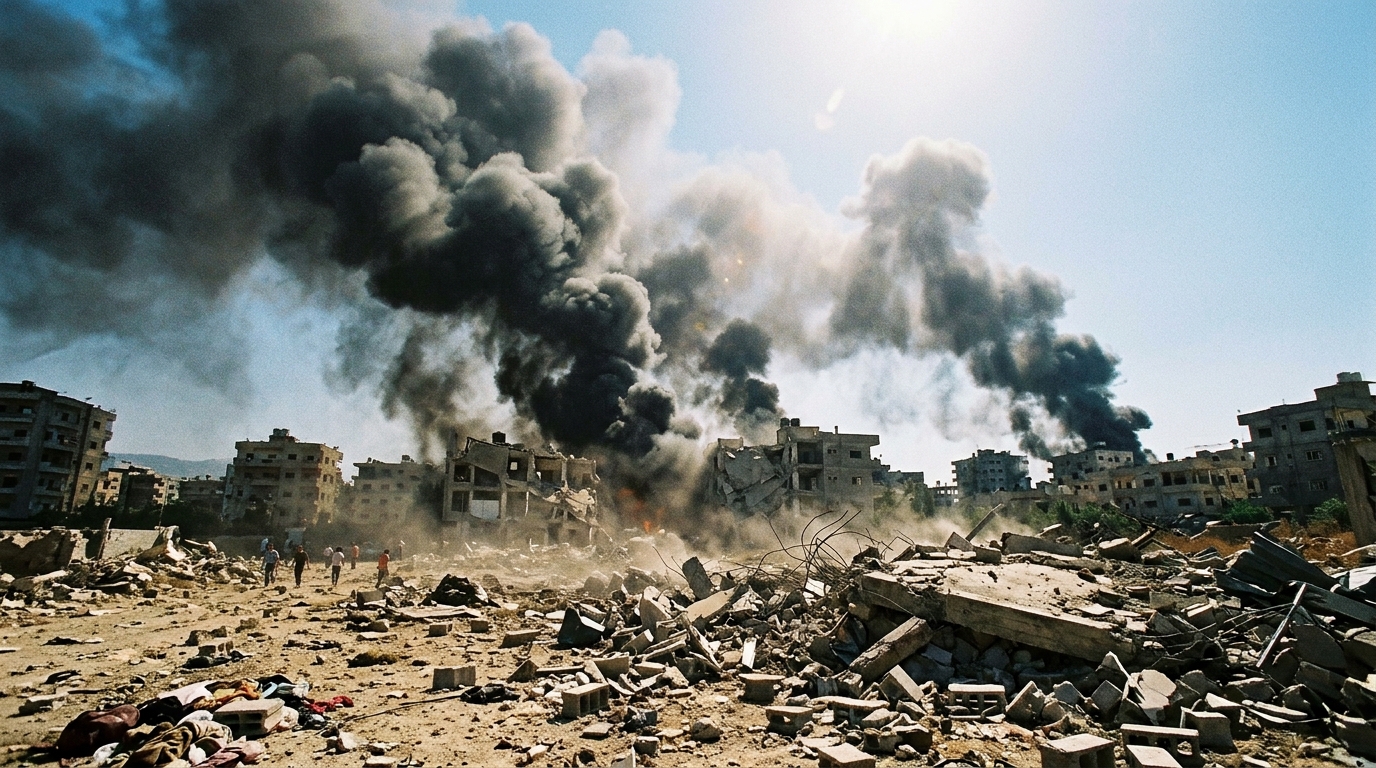
| Intense Air Campaign | July 15–20, 2006 | Israel intensifies its aerial bombardment, targeting Hezbollah's command and control centers, rocket launchers, arms depots, and infrastructure in the Dahiya quarter of Beirut (Hezbollah's stronghold) and throughout southern Lebanon. Civilian infrastructure, including roads, bridges, and the Jiyeh power plant, are also hit. Hezbollah responds with heavy rocket fire into northern Israel. |
| Ground Incursion & Battles | July 21–August 10, 2006 | IDF ground forces initiate limited incursions into southern Lebanon, primarily to clear rocket-launching sites and destroy fortified Hezbollah positions. Intense and bloody fighting erupts in key border towns like Bint Jbeil, Maroun al-Ras, and Ayta ash-Shab, where Hezbollah fighters, operating from deeply entrenched positions, inflicted significant casualties on advancing Israeli troops, effectively slowing their progress. |
| Escalated Ground Push | August 10–13, 2006 | As ceasefire talks intensify, Israel launches a major, late-stage ground offensive ("Operation Broadsword") to establish a security zone, pushing deeper into southern Lebanon, reaching the Litani River. This move aimed to improve Israel's negotiating position and destroy more of Hezbollah's long-range rocket capabilities before a ceasefire. Heavy urban combat ensues, leading to further casualties on both sides. |
| UN Resolution & Ceasefire | August 11–14, 2006 | UN Security Council Resolution 1701 is adopted on August 11, calling for a cessation of hostilities, the withdrawal of Israeli forces, and the deployment of the Lebanese Armed Forces (LAF) and an expanded UNIFIL. A ceasefire takes effect on August 14. |
One of the defining moments of the conflict, and a stark indicator of Hezbollah's advanced capabilities, occurred on July 14. Hezbollah successfully hit the INS Hanit, an Israeli Sa'ar 5-class corvette, with a shore-to-sea C-802 radar-guided missile (believed to be of Chinese origin, supplied via Iran/Syria). This attack, which killed four Israeli sailors, demonstrated unequivocally that the conflict had moved beyond traditional guerrilla warfare. Hezbollah, a non-state actor, possessed and was willing to use sophisticated conventional military hardware, challenging Israel's maritime supremacy and forcing a re-evaluation of its defense posture. This incident sent shockwaves through the Israeli military and intelligence communities, highlighting significant intelligence failures regarding Hezbollah's arsenal.
Geopolitical Consequences and Aftermath
The conclusion of the war saw the implementation of UN Security Council Resolution 1701, a complex diplomatic instrument calling for a comprehensive cessation of hostilities, the disarmament of all armed groups in Lebanon (specifically targeting Hezbollah), the withdrawal of Israeli forces, and the deployment of the Lebanese Armed Forces (LAF) alongside an expanded UNIFIL mission in the south. However, the practical application and enforcement of this resolution, particularly regarding Hezbollah's disarmament, remained profoundly fraught with difficulties, as the organization retained its arms and political influence.
Profound Consequences and Shifts:
- The Winograd Commission: In Israel, the perceived failures of the war—including the inability to stop rocket fire, recover the captured soldiers (who were later returned in a prisoner exchange in 2008 in exchange for five Lebanese prisoners and the remains of 199 other Lebanese and Palestinian fighters), and achieve a decisive military victory—led to widespread public outcry and the establishment of a state commission of inquiry. The Winograd Commission's final report, released in January 2008, was scathing. It concluded that the decision-making process within Prime Minister Olmert's cabinet and the IDF high command was severely flawed, characterized by a lack of clear strategic objectives, an over-reliance on air power without a synchronized and robust ground strategy, and significant intelligence and operational failures. The report severely damaged the credibility of Olmert, Peretz, and Chief of Staff Dan Halutz, leading to their eventual resignations or early retirement.
- Hezbollah’s Strategic Victory and Political Consolidation: Despite incurring massive losses in infrastructure, civilian casualties, and approximately 250-500 fighters killed, Hezbollah declared a "divine victory." Its ability to withstand the full might of the IDF and continue launching rockets until the very end significantly bolstered its prestige across the Arab and Islamic world. The war solidified a "balance of terror," where Hezbollah’s demonstrated capability to strike deep into Israel with rockets (approximately 4,000 rockets were fired during the war) served as a powerful deterrent against further large-scale Israeli operations for nearly two decades. Domestically, Hezbollah emerged as an even more dominant political force within Lebanon, leveraging its resistance narrative to consolidate its influence, obstruct attempts at disarmament, and strengthen its grip on state institutions.
- Regional Realignment and the Axis of Resistance: The war undeniably solidified the alliance between Damascus, Tehran, and the "Axis of Resistance." Syria, which had been under significant international pressure following the 2005 assassination of Rafic Hariri, saw its regional leverage restored through its unwavering alignment with Hezbollah and Iran. Iran, having successfully funded, trained, and equipped Hezbollah to challenge a conventional military, enhanced its standing as a powerful regional player and a patron of resistance movements. The conflict further exacerbated sectarian tensions in the region, particularly between Sunni states (like Saudi Arabia, which was critical of Hezbollah's actions) and the Shia-led "Axis."
- International Law and Rules of Engagement: The extensive Israeli bombing of Lebanese infrastructure, coupled with Hezbollah's embedding of military assets within civilian areas, sparked significant international debate on the application of international humanitarian law and the concept of proportionality in modern asymmetric conflicts.
Analysis of Key Actors and Decisive Actions
Ehud Olmert and the Israeli Command
The Israeli leadership, relatively new and untested, was fundamentally divided on the scope, objectives, and conduct of the war. Prime Minister Ehud Olmert’s Cabinet was severely criticized for failing to define what a "victory" truly looked like, shifting objectives throughout the conflict, and lacking a coherent strategic vision. Defense Minister Amir Peretz, a former trade union leader with limited military experience, and Chief of Staff Lt. Gen. Dan Halutz, an air force commander with little ground combat experience, were also heavily scrutinized. The initial reliance on massive air power, modeled perhaps on the U.S. "Shock and Awe" doctrine, proved insufficient against a decentralized, deeply entrenched, and highly motivated adversary like Hezbollah. The IDF, which had spent years focused on low-intensity counter-insurgency operations in the West Bank and Gaza, found itself dangerously unprepared for the high-intensity, conventional-style combat—especially in urban and complex terrain—encountered in southern Lebanon. Its ground forces struggled with logistics, command-and-control, and adapted tactics, leading to frustration and casualties. The delay in launching a decisive ground operation until the very last days of the conflict was a critical strategic error, diminishing its impact and allowing Hezbollah to sustain its rocket attacks.
Hassan Nasrallah and Hezbollah
Hassan Nasrallah, Hezbollah's Secretary-General, demonstrated a profound understanding of modern information warfare, psychological operations, and asymmetric strategy. By carefully timing his media appearances, delivering defiant speeches, and controlling the narrative—often appearing calm and resolute amidst destruction—he not only maintained the loyalty of his base but also garnered significant sympathy and admiration across the Arab and Muslim world. Hezbollah’s tactics were characterized by:
- Dispersed Command and Control: Operating through small, autonomous cells with pre-assigned targets and hardened positions significantly reduced the risk of a "decapitation" strike by the superior Israeli Air Force.
- Sophisticated Fortifications and Tunnels: The extensive use of "nature reserves"—heavily fortified subterranean complexes, often described as "underground cities"—allowed Hezbollah fighters to ambush advancing IDF armor and infantry from concealed positions, absorb massive bombardments, and then re-emerge to fight. These defensive networks integrated anti-tank positions, bunkers, and command posts.
- Advanced Anti-Tank Missiles: Hezbollah's arsenal included thousands of advanced anti-tank guided missiles (ATGMs), primarily Russian-made Metis-M and Kornet missiles supplied by Iran and Syria. These proved devastatingly effective against Israeli Merkava tanks and armored personnel carriers, eroding the IDF's perceived technological superiority.
- Persistent Rocket Fire: Despite intense aerial bombardment, Hezbollah maintained its ability to launch thousands of rockets (Katyushas, Fajr-3, Fajr-5, Ra'ad, and Zelzal-1 missiles) deep into northern Israel throughout the conflict, forcing hundreds of thousands of Israelis into shelters and disrupting daily life. This sustained fire, even if tactically limited in impact, achieved a significant psychological and strategic victory by challenging Israel's sense of security.
"The war was a test of willpower. We were prepared for a long conflict, while the Israeli leadership was looking for a quick exit strategy and underestimated our resilience and capabilities." — Attributed to analysts close to the Hezbollah leadership, reflecting their strategic patience.
The Information War and Psychological Operations
Beyond the kinetic battlefield, the 2006 Lebanon War was also a fierce contest in the information domain. Both sides engaged in extensive psychological operations (PSYOPS) to shape public opinion domestically and internationally. Hezbollah, with considerable experience in media manipulation, effectively leveraged images of civilian casualties and infrastructure destruction to portray Israel as an indiscriminate aggressor. Their use of Al-Manar television, coupled with a sophisticated online presence, disseminated their narrative of heroic resistance against a technologically superior foe. The imagery of damaged civilian areas, particularly in the Dahiya quarter, resonated deeply across the Arab world, bolstering Hezbollah's image as the vanguard against Israeli aggression. Israel, despite its advanced technological capabilities, struggled to effectively counter this narrative. Its initial communication strategy was often reactive, failing to articulate its war aims clearly or effectively convey the context of Hezbollah's deliberate embedding of military assets within civilian populations. The "empty stroller" symbolism, where images of damaged homes and civilian artifacts were used to highlight human suffering, became a potent tool for Hezbollah to sway international sentiment. This aspect of the conflict underscored the growing importance of strategic communications and perception management in modern warfare, where military victory does not automatically translate into moral or political victory.
Domestic Repercussions and Socio-Economic Impact
The war had profound and lasting domestic repercussions for both Israel and Lebanon.
In Israel:
- Political Fallout: The Winograd Commission's findings led to a severe crisis of confidence in Prime Minister Olmert, Defense Minister Peretz, and IDF Chief of Staff Halutz. While they initially weathered the storm, their political capital was severely diminished, contributing to their eventual departures from office. The public felt let down by the government's inability to achieve clear objectives, leading to widespread protests and a period of political instability.
- Societal Impact: Northern Israeli communities bore the brunt of Hezbollah's rocket attacks, leading to displacement, economic disruption, and psychological trauma. The perceived failure of the IDF to protect its citizens eroded trust in the military establishment, prompting widespread introspection about the nation's security doctrine and military preparedness.
- Economic Cost: The direct cost of the war to Israel was estimated at billions of dollars, covering military operations, damage to infrastructure, and compensation to affected citizens and businesses.
In Lebanon:
- Humanitarian Catastrophe: The war caused immense suffering. Over 1,100 Lebanese civilians were killed, and approximately one million people were displaced, representing a quarter of Lebanon's population. Vast areas of infrastructure, including roads, bridges, factories, and the Jiyeh power station, were severely damaged or destroyed, leading to an estimated economic loss of several billion dollars.
- Hezbollah's Reconstruction Effort: In the immediate aftermath, Hezbollah launched a massive and highly organized reconstruction effort in the devastated Shia-majority areas, often providing aid more efficiently than the Lebanese state. This initiative, funded largely by Iran, further cemented its social contract with its constituency, reinforcing its image as a provider and protector where the state was perceived to have failed.
- Political Fragmentation: The war deepened Lebanon's already fragile sectarian divisions. While many Lebanese praised Hezbollah's resistance, others, particularly Sunni, Druze, and some Christian factions, criticized its unilateral decision to launch the raid, blaming it for drawing Israel's wrath upon the country and undermining the authority of the Lebanese state. This further polarized Lebanese politics, leading to protracted governmental crises.
Intelligence and Military Doctrine Revisions
The 2006 war served as a brutal, real-world case study that forced both the IDF and Hezbollah to undertake significant intelligence and doctrinal revisions.
For Israel:
- Intelligence Overhaul: The war exposed critical intelligence failures, particularly regarding Hezbollah's extensive tunnel networks, advanced anti-tank missile capabilities, and command structure. Post-2006, Israel invested heavily in human intelligence, signal intelligence, and drone technology targeting Hezbollah, aiming for a more accurate and comprehensive "target bank" and understanding of its adversary's capabilities.
- IDF Doctrine Adjustment: The ground forces, in particular, underwent a profound transformation. There was a renewed emphasis on training for high-intensity, multi-front, and urban warfare scenarios. This included the development of new tactics, integration of advanced anti-missile defense systems for tanks (like the Trophy active protection system for Merkava tanks), and improvements in logistics and command-and-control for rapid ground maneuvers. The concept of "decisive victory" was re-examined, moving towards a more achievable goal of "restored deterrence" through overwhelming force.
- The "Dahiya Doctrine": While controversial, the perceived success of targeting Hezbollah's civilian infrastructure (the Dahiya quarter) led to the articulation of the "Dahiya Doctrine." This military strategy, named after the neighborhood in Beirut, advocates for the use of disproportionate force against civilian infrastructure that is perceived to support enemy combatants, aiming to inflict such a high cost that it deters future aggression. This doctrine became a permanent, albeit often implicit, fixture of Israeli defense policy in subsequent conflicts, including those in Gaza.
For Hezbollah:
- Adaptation and Enhancement: Hezbollah learned from the Israeli air campaign, further refining its underground infrastructure, diversifying its rocket arsenal (acquiring more precise and longer-range missiles), and enhancing its anti-aircraft and anti-ship capabilities.
- Strategic Patience: The war reinforced Hezbollah's strategy of strategic patience, protracted engagement, and the use of asymmetry. They continued to leverage their deep integration within Lebanese society as both a shield and a source of strength.
- Regional Deployment: Post-2006, Hezbollah increasingly became a regional expeditionary force, most notably deploying thousands of its fighters to Syria to support the Assad regime during the Syrian Civil War. This experience further honed their conventional warfare capabilities, transforming them into a hybrid military force capable of both guerrilla and more conventional operations, often acting as Iran's most potent proxy.
Trivia and Lesser-Known Facts
- The "Dahiya Doctrine": As mentioned, this doctrine evolved from the extensive Israeli bombardment of Hezbollah's stronghold in the Dahiya quarter of Beirut. It fundamentally shifted Israeli military thinking towards targeting civilian infrastructure used by non-state actors as a means of collective punishment and deterrence.
- Environmental Impact: Beyond human suffering, the conflict resulted in a significant environmental disaster. Israeli airstrikes on the Jiyeh power station fuel tanks caused massive quantities of oil (estimated at 15,000 tons) to leak into the Mediterranean Sea, devastating the Lebanese and Syrian coastlines, impacting marine life, and costing millions in cleanup efforts.
- The "Empty Stroller" Symbolism: During the war, Hezbollah employed a sophisticated psychological operations campaign, often showcasing damaged civilian areas, ruined homes, and everyday items like children's toys and empty strollers, to highlight human suffering and shift global public opinion against Israel. This effectively leveraged the media cycle against a militarily superior power, demonstrating the critical role of narrative control in modern warfare.
- Missed Opportunities for Prisoner Exchange: There were several diplomatic efforts during the war to negotiate the release of the captured Israeli soldiers, Ehud Goldwasser and Eldad Regev. These efforts, involving various intermediaries, ultimately failed to bear fruit during the conflict itself, prolonging the war and contributing to Israeli domestic frustration. The soldiers' remains were eventually returned in a 2008 exchange.
- The Role of Iran and Syria: While not direct combatants, Iran and Syria were indispensable to Hezbollah's operational capabilities. They provided continuous arms, funding, training, and logistical support, making them de facto parties to the conflict and highlighting the regional proxy dynamics at play.
References and Literature
- The Winograd Commission Final Report - The official, comprehensive document detailing the failures of the Israeli government and the IDF during the 2006 conflict, a critical source for understanding Israel's internal assessment.
- Harel, A., & Issacharoff, A. (2008). 34 Days: Israel, Hezbollah, and the War in Lebanon - A definitive and highly regarded journalistic account of the war, offering extensive detail on the political and military decisions made on both sides, and widely cited in subsequent analyses.
- Council on Foreign Relations: UN Security Council Resolution 1701 - An analysis of the diplomatic resolution that ended the 2006 hostilities, detailing its provisions, objectives, and the challenges encountered during its implementation, particularly concerning Hezbollah's disarmament.
- Foreign Affairs: The Lessons of the 2006 Lebanon War - Academic and policy perspectives on the fundamental shift from conventional warfare to asymmetric conflict in the 21st century, often drawing parallels and lessons from the 2006 experience.
- Human Rights Watch: "Why They Died: Civilian Casualties in Lebanon During the 2006 War" - A detailed report investigating the patterns of civilian harm during the conflict, contributing to the debate on international humanitarian law and rules of engagement.