Key Takeaways
- The JCPOA represented a rare instance of diplomatic consensus between the P5+1 and Iran, aiming to forestall nuclear proliferation through rigorous oversight.
- The deal necessitated deep compromises, with Iran capping its enrichment levels in exchange for the systematic lifting of debilitating economic sanctions.
- The agreement became a flashpoint for global diplomacy, reflecting the shifting balance of power in the Middle East and the fragility of international multilateralism.
- The deal's provisions drastically reduced Iran's uranium stockpile and restricted centrifuge operations, extending its 'breakout time' to over a year.
- The U.S. withdrawal in 2018 triggered a cascading series of events, unraveling the deal's constraints and reigniting regional tensions.
Historical Context and Origins
The Joint Comprehensive Plan of Action (JCPOA) did not emerge in a vacuum; it was the culmination of over a decade of escalating international tensions regarding Iran’s nuclear ambitions, dating back to the early 2000s. The roots of Iran's nuclear program stretch even further, to the 1950s under the Shah, as part of the U.S. "Atoms for Peace" program. However, it was the discovery of covert enrichment facilities at Natanz and a heavy water production plant at Arak in 2002-2003, exposed by an Iranian opposition group, that triggered widespread international alarm. These revelations ignited fears that Iran was secretly pursuing a nuclear weapons capability, in contravention of its obligations under the Nuclear Non-Proliferation Treaty (NPT), which it had signed as a non-nuclear weapon state.
The international community, led by the International Atomic Energy Agency (IAEA) and the UN Security Council, responded with increasing pressure. Successive UN Security Council resolutions (beginning with Resolution 1696 in 2006) imposed multiple rounds of punitive sanctions, targeting Iran's nuclear and missile programs, its financial sector, and its vital oil exports. These measures, coupled with unilateral sanctions from the United States and the European Union, were designed to cripple the Iranian economy and force Tehran to demonstrate transparency and compliance, ultimately compelling it to the negotiating table. The sanctions regime proved highly effective, leading to a dramatic decline in Iran's oil revenues, widespread inflation, and significant economic hardship for its populace.
By 2013, the political landscape in Iran shifted dramatically with the election of Hassan Rouhani. Rouhani, a former chief nuclear negotiator himself, ran on a platform of moderation, economic reform, and a promise to resolve the nuclear standoff. His victory signaled a readiness to engage with the West, famously appointing the US-educated and multilingual Mohammad Javad Zarif as his Foreign Minister, tasking him with leading the nuclear negotiations. This marked a significant departure from the more confrontational stance of his predecessor, Mahmoud Ahmadinejad.
Simultaneously, the Obama administration, having exhausted various avenues of pressure—including sanctions, cyber warfare (e.g., Stuxnet), and covert operations—sought a "legacy-defining" diplomatic breakthrough that would preclude the necessity of military intervention, an option that was always on the table but carried immense risks. President Obama's foreign policy embraced a degree of pragmatic realism, acknowledging that Iran was a significant regional power and that a diplomatic solution, however imperfect, was preferable to an open-ended confrontation.
The foundational origins of the deal are deeply rooted in the "secret talks" held in Oman throughout 2012 and 2013. These discreet meetings, initiated by the Obama administration and discreetly endorsed by Iran's Supreme Leader Ali Khamenei, bypassed the public diplomatic impasse that characterized the P5+1 (United States, United Kingdom, France, Russia, China, and Germany) negotiations with Iran at the time. Led by figures like then-Deputy Secretary of State William J. Burns and National Security Council staffer Jake Sullivan from the US side, these confidential dialogues allowed American and Iranian envoys to explore potential common ground and build a fragile trust away from the public spotlight and the complexities of multilateral diplomacy. These Omani talks proved instrumental in establishing the mutual willingness to negotiate and the foundational understanding that paved the way for the broader P5+1 grouping to adopt a similar framework, culminating in the Joint Plan of Action (JPOA) in late 2013, the interim agreement that preceded the JCPOA.
Pre-JCPOA Nuclear Diplomacy & Sanctions Regimes
The diplomatic saga surrounding Iran's nuclear program is a story spanning decades, punctuated by periods of cooperation, suspicion, and confrontation, long before the JCPOA entered the global lexicon. Iran's nuclear ambitions date back to the 1950s when the U.S. initiated its "Atoms for Peace" program, providing Tehran with its first research reactor and technical assistance. After the 1979 Islamic Revolution, the program slowed but was revived in the 1980s, largely in secret, fueling concerns about its ultimate intent.
The critical turning point came in August 2002 when the National Council of Resistance of Iran (NCRI), an opposition group, publicly revealed the existence of two previously undisclosed nuclear facilities: a uranium enrichment plant at Natanz and a heavy water production plant at Arak. These revelations, confirmed by subsequent IAEA investigations, dramatically escalated international concerns and exposed Iran's violation of its safeguards agreements under the NPT.
In the immediate aftermath, a diplomatic initiative emerged from Europe. The EU3 (France, Germany, and the United Kingdom), later expanded to E3+3 with the inclusion of the United States, Russia, and China (forming the P5+1), engaged Iran in early negotiations. From 2003 to 2005, the EU3 attempted to negotiate a long-term agreement. The Tehran Declaration of 2003 saw Iran temporarily suspend its enrichment activities, and the Paris Agreement of 2004 offered incentives for a verifiable halt to enrichment. However, these early efforts ultimately faltered, primarily because Iran insisted on its "unquestionable right" to enrich uranium for peaceful purposes under the NPT, while the international community demanded a full and verifiable cessation of enrichment. The election of hardliner Mahmoud Ahmadinejad in 2005 further hardened Iran's stance, leading to the resumption of enrichment activities.
With diplomacy yielding limited results, the international community pivoted to a strategy of escalating pressure. In 2006, the IAEA Board of Governors referred Iran’s file to the UN Security Council. This initiated a series of binding UN Security Council resolutions, beginning with Resolution 1696, which demanded Iran suspend its enrichment activities and cooperate fully with the IAEA. When Iran refused, the UNSC progressively imposed crippling sanctions:
- UNSC Resolution 1737 (2006): Imposed sanctions on nuclear-related trade, assets, and individuals.
- UNSC Resolution 1747 (2007): Expanded sanctions to include arms and further financial restrictions.
- UNSC Resolution 1803 (2008): Increased travel bans and cargo inspections.
- UNSC Resolution 1929 (2010): The most comprehensive resolution, targeting Iran's ballistic missile program, imposing an arms embargo, and significantly broadening financial and shipping restrictions. This resolution severely restricted Iran's access to international banking systems and its ability to export oil.
Beyond the UN, the United States and the European Union implemented their own extensive unilateral sanctions. The Iran Sanctions Act (ISA) from the US (originally ILSA in 1996) was continually strengthened, culminating in measures like the Comprehensive Iran Sanctions, Accountability, and Divestment Act (CISADA) of 2010 and provisions within the National Defense Authorization Act (NDAA). These targeted foreign financial institutions that transacted with Iran's central bank and cut off Iran's access to SWIFT, effectively isolating its economy. The European Union also imposed oil embargoes and frozen assets.
The cumulative effect of these sanctions was profound. Iran's oil exports, its primary source of revenue, plummeted by more than 50%. The national currency (rial) depreciated sharply, inflation soared, and access to essential goods and services became difficult. This economic strangulation created a strong domestic imperative for Iran to find a diplomatic off-ramp, which ultimately contributed to Rouhani's election and his mandate for negotiation, setting the stage for the direct talks that led to the JCPOA.
Timeline of Events and Key Moments
The path to the JCPOA was characterized by intense, iterative negotiation cycles held in various European cities, primarily Geneva, Lausanne, and Vienna, often stretching for days without sleep.
| Date |
Historical Context and Origins
The Joint Comprehensive Plan of Action (JCPOA) did not emerge in a vacuum; it was the culmination of over a decade of escalating tensions regarding Iran’s nuclear ambitions. Since the early 2000s, the discovery of clandestine enrichment facilities at Natanz and a heavy water production plant at Arak had triggered international alarm. These revelations, brought to light by the Iranian opposition group NCRI in 2002, exposed Iran’s covert nuclear activities, leading to widespread suspicions that Tehran was secretly pursuing a nuclear weapons capability in violation of its obligations under the Nuclear Non-Proliferation Treaty (NPT).
The international community, spearheaded by the International Atomic Energy Agency (IAEA) and the UN Security Council, responded with progressively stringent measures. Multiple rounds of punitive sanctions were imposed, beginning in 2006, designed to cripple the Iranian economy and force Tehran to the negotiating table. These sanctions, targeting Iran’s nuclear and missile programs, financial sector, and vital oil exports, severely constricted Iran’s access to international markets and banking systems. The impact was substantial, leading to a dramatic reduction in oil revenues, high inflation, and significant economic hardship for the Iranian populace. These pressures, combined with a persistent diplomatic track, formed the dual-track strategy favored by the P5+1 nations.
By 2013, the political landscape in Iran shifted dramatically with the election of Hassan Rouhani. Rouhani, a former chief nuclear negotiator himself known for his pragmatism, ran on a platform of moderation, economic reform, and a promise to resolve the nuclear standoff. His victory signaled a readiness to engage with the West, a clear departure from the more confrontational stance of his predecessor, Mahmoud Ahmadinejad. Rouhani famously appointed Mohammad Javad Zarif as his Foreign Minister, an articulate, US-educated diplomat fluent in English, entrusting him with the delicate task of leading the nuclear negotiations. Zarif’s diplomatic finesse and his ability to communicate directly with Western counterparts would prove crucial throughout the arduous talks.
Simultaneously, the Obama administration, having exhausted various avenues of pressure—including sanctions, cyber warfare (e.g., the Stuxnet virus attack on Iranian centrifuges), and covert operations—sought a "legacy-defining" diplomatic breakthrough. President Obama's strategic calculus acknowledged the immense risks and potential for regional destabilization inherent in a military confrontation with Iran. His foreign policy embraced a degree of pragmatic realism, recognizing that Iran was a significant, albeit challenging, regional power and that a verifiable diplomatic solution, however imperfect, was preferable to an open-ended escalation towards conflict or an unchecked Iranian nuclear capability. The goal was clear: to prevent Iran from developing a nuclear weapon and to extend its "breakout time"—the period needed to produce enough fissile material for a single weapon—to at least one year.
The deepest origins of the deal are rooted in the "secret talks" held in Oman throughout 2012 and 2013. These discreet meetings, initiated by the Obama administration and crucially endorsed by Iran's Supreme Leader Ali Khamenei, bypassed the public diplomatic impasse that often characterized the broader P5+1 (the United States, United Kingdom, France, Russia, China, and Germany) negotiations with Iran. Led by figures like then-Deputy Secretary of State William J. Burns and National Security Council staffer Jake Sullivan from the US side, and senior Iranian officials, these confidential dialogues provided a vital, backchannel avenue. They allowed American and Iranian envoys to explore potential common ground, build a fragile trust away from the public spotlight and domestic political pressures, and establish a foundational understanding of each side's red lines and priorities. These Omani talks proved instrumental in convincing both sides that a comprehensive agreement was possible and ultimately paved the way for the subsequent official negotiations that led to the interim Joint Plan of Action (JPOA) in November 2013, and ultimately, the comprehensive JCPOA.
Pre-JCPOA Nuclear Diplomacy & Sanctions Regimes
The diplomatic saga surrounding Iran's nuclear program is a story spanning decades, marked by periods of cooperation, suspicion, and ultimately, severe confrontation, long before the term JCPOA entered global discourse. Iran's nuclear ambitions date back to the 1950s under the Shah, a beneficiary of the U.S. "Atoms for Peace" program, which provided its first research reactor and technical assistance. Following the 1979 Islamic Revolution, the program slowed but was quietly revived in the 1980s, fueling early, largely unsubstantiated, concerns about its ultimate intent.
The critical turning point came in August 2002 when the National Council of Resistance of Iran (NCRI), an opposition group, publicly revealed the existence of two previously undisclosed nuclear facilities: a uranium enrichment plant at Natanz and a heavy water production plant at Arak. These revelations, subsequently confirmed by IAEA investigations, fundamentally escalated international concerns and exposed Iran's violation of its safeguards agreements under the NPT. It became clear that Iran had been pursuing a clandestine nuclear track for years, raising legitimate questions about the peaceful nature of its program.
In the immediate aftermath of these discoveries, a concerted diplomatic initiative emerged from Europe. The EU3 (France, Germany, and the United Kingdom), later expanded to E3+3 with the inclusion of the United States, Russia, and China (collectively forming the P5+1), engaged Iran in a series of initial negotiations. From 2003 to 2005, the EU3 attempted to negotiate a long-term agreement with Tehran. The Tehran Declaration of 2003 saw Iran temporarily suspend its enrichment activities, and the Paris Agreement of 2004 offered incentives for a verifiable halt to enrichment, including technology transfers for peaceful nuclear energy. However, these early efforts ultimately faltered. Iran steadfastly insisted on its "unquestionable right" to enrich uranium for peaceful purposes under the NPT, viewing any demand for permanent cessation as a violation of its sovereignty. Conversely, the international community, citing Iran's history of deception, demanded a full and verifiable cessation of enrichment activities. The election of hardliner Mahmoud Ahmadinejad as Iranian president in 2005 further hardened Iran's stance, leading to the resumption of enrichment activities and a more confrontational approach.
With diplomacy yielding limited results and Iran continuing to expand its enrichment capabilities, the international community pivoted to a strategy of escalating pressure through sanctions. In 2006, the IAEA Board of Governors formally referred Iran’s file to the UN Security Council, marking a significant escalation. This initiated a series of legally binding UN Security Council resolutions, beginning with Resolution 1696 in July 2006, which demanded Iran suspend all enrichment-related and reprocessing activities and cooperate fully with the IAEA. When Iran refused to comply, the UNSC progressively imposed increasingly severe sanctions:
- UNSC Resolution 1737 (December 2006): Imposed sanctions on nuclear-related trade, frozen assets of key individuals and entities involved in Iran's nuclear and missile programs.
- UNSC Resolution 1747 (March 2007): Expanded sanctions to include an arms embargo on Iran and further restrictions on financial transactions.
- UNSC Resolution 1803 (March 2008): Increased travel bans on designated individuals and authorized inspections of cargo to and from Iran.
- UNSC Resolution 1929 (June 2010): Represented the most comprehensive and far-reaching resolution. It targeted Iran's ballistic missile program, imposed a complete arms embargo, and significantly broadened financial and shipping restrictions, effectively tightening the noose around Iran's economy. This resolution prohibited states from providing vessels or aircraft to Iran if they could be used to transport prohibited items, and it urged states to inspect cargo more rigorously.
Beyond the UN framework, the United States and the European Union implemented their own extensive unilateral and multilateral sanctions. The Iran Sanctions Act (ISA) from the U.S. (originally the Iran and Libya Sanctions Act, ILSA, in 1996) was continually strengthened and expanded. Key legislative acts such as the Comprehensive Iran Sanctions, Accountability, and Divestment Act (CISADA) of 2010 and subsequent provisions within the National Defense Authorization Act (NDAA) specifically targeted foreign financial institutions that transacted with Iran's central bank, effectively cutting off Iran's access to the global financial system and vital hard currency. The European Union also imposed a significant oil embargo in 2012, which, combined with U.S. efforts to reduce Iranian oil purchases globally, drastically reduced Iran's oil revenues, its primary source of income.
The cumulative and compounding effect of these sanctions was profound. Iran's oil exports, which had peaked at around 2.5 million barrels per day, plummeted to less than 1 million. The national currency (rial) depreciated sharply, inflation soared, and access to essential goods, medicines, and technologies became difficult. The banking sector was largely isolated from international commerce. This economic strangulation, alongside the constant threat of military action, created a strong domestic imperative for Iran to find a diplomatic off-ramp, which largely contributed to Rouhani's election and his subsequent mandate for negotiation. The P5+1, too, recognized that sanctions alone might not prevent Iran from eventually acquiring a nuclear weapon, thus making a verifiable diplomatic solution increasingly attractive.
Timeline of Events and Key Moments
The path to the JCPOA was characterized by intense, iterative negotiation cycles held in various European cities, primarily Geneva, Lausanne, and Vienna, often stretching for days, weeks, and even months of continuous engagement.
| Date |
Geopolitical Consequences and Aftermath
The JCPOA functioned as a double-edged sword in global geopolitics, eliciting both fervent praise and vehement condemnation. For its proponents, the agreement stood as a testament to the efficacy of multilateral diplomacy, showcasing how sustained diplomatic engagement, backed by robust international cooperation, could avert a looming military confrontation. By binding Iran to rigorous constraints—such as reducing its stockpile of low-enriched uranium by 98% (from approximately 10,000 kg to 300 kg for 15 years), dismantling over two-thirds of its installed centrifuges, and reconfiguring the Arak heavy-water reactor to prevent the production of weapons-grade plutonium—the deal demonstrably extended Iran's "breakout time" from a mere 2-3 months to at least one year. This extension, coupled with the intrusive monitoring and verification regime by the IAEA, significantly reduced the immediate threat of an Iranian nuclear weapon.
However, the deal faced immediate and sustained backlash from key regional allies of the United States, particularly Israel and Saudi Arabia. These nations, viewing Iran as their primary regional adversary, perceived the agreement as a strategic failure that empowered the Islamic Republic. They argued that the systematic lifting of sanctions would provide the regime with a massive infusion of cash from unfrozen assets (estimated at $50-100 billion) that, they contended, would inevitably be funneled into its extensive network of proxy groups and destabilizing regional activities in conflicts spanning Syria, Yemen, Iraq, and Lebanon. For Israel, the "sunset clauses"—provisions that would gradually lift some restrictions on Iran's nuclear program after 10, 15, or 25 years—were particularly alarming, effectively creating a pathway for Iran to become a nuclear threshold state once the deal's core restrictions expired. Israeli Prime Minister Benjamin Netanyahu famously denounced the deal as a "historic mistake." Saudi Arabia, locked in a fierce sectarian and geopolitical rivalry with Iran, echoed similar concerns, fearing an emboldened Iran would further fuel regional proxy wars and challenge Riyadh's influence.
Domestically in the United States, the failure to include Iran’s ballistic missile program within the scope of the deal remained a primary grievance for the Republican opposition and many conservative foreign policy analysts. They argued that while the deal constrained Iran's nuclear path, it overlooked an equally potent and immediate threat: Iran's development and proliferation of increasingly sophisticated ballistic missiles, which could potentially carry nuclear warheads in the future and were already being used to threaten regional adversaries. This perceived omission fueled much of the American domestic opposition to the JCPOA from its inception.
Following the dramatic U.S. withdrawal from the JCPOA in May 2018 under President Donald Trump, and the subsequent "Maximum Pressure" campaign of extensive economic sanctions, the agreement entered a state of terminal decline. The U.S. reimposed all nuclear-related sanctions, and even added new ones, targeting Iran's oil exports, financial sector, and key industrial components. This move, designed to force Iran back to the negotiating table for a "better deal" or to provoke regime change, had profound consequences. In response to the U.S. reneging on its commitments, Iran gradually began exceeding the enrichment caps and other nuclear limitations established in the JCPOA, starting in 2019, in what it called "remedial steps." These incremental violations—including enriching uranium above the 3.67% purity limit, accumulating larger stockpiles of low-enriched uranium, and deploying advanced centrifuges forbidden by the deal—led to a precarious cycle of regional instability and diplomatic stalemates that persists into the 2020s.
The geopolitical fallout was extensive. It created deep fissures between the U.S. and its European allies (France, Germany, UK), who remained committed to preserving the JCPOA and attempted to create mechanisms like INSTEX (Instrument in Support of Trade Exchanges) to bypass U.S. sanctions, albeit with limited success. The withdrawal strained the transatlantic alliance and undermined the credibility of U.S. diplomatic commitments on the international stage. In the Middle East, tensions soared. This period witnessed a series of escalatory incidents, including attacks on oil tankers in the Persian Gulf, drone strikes on Saudi oil facilities, and the U.S. assassination of Iranian Quds Force commander Qassem Soleimani in January 2020, bringing the region to the brink of a wider conflict. The JCPOA's unraveling fundamentally altered the regional balance of power, creating a more volatile environment and placing a renewed focus on the unresolved issue of Iran's nuclear capabilities.
Analysis of Key Actors and Decisive Actions
The success of the 2015 negotiations, often described as some of the most complex in modern diplomatic history, was heavily reliant on the personal chemistry, strategic vision, and sheer tenacity of specific individuals and the concerted effort of the P5+1 nations.
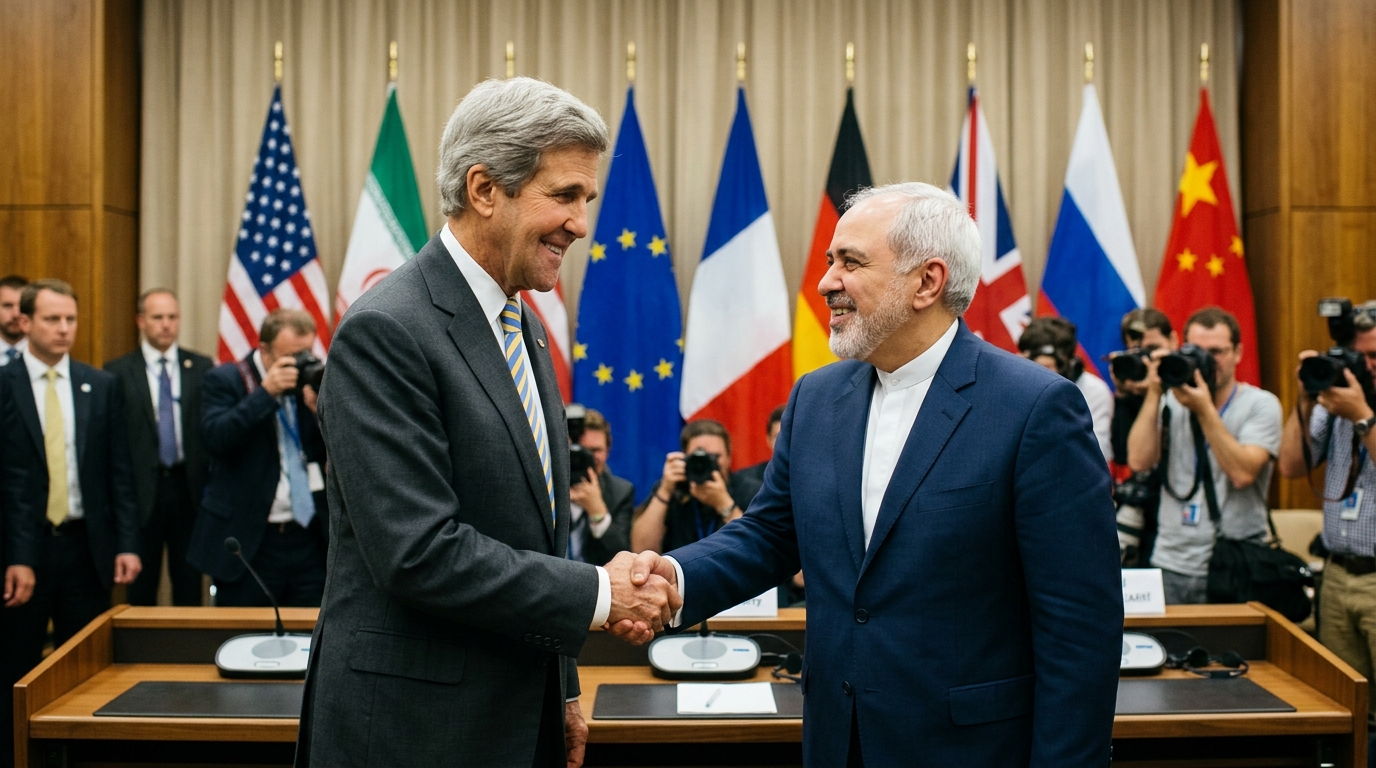
- John Kerry: As U.S. Secretary of State, Kerry invested unprecedented personal and political capital in the process. His willingness to engage in marathon, face-to-face sessions with his Iranian counterpart, Javad Zarif—sometimes lasting for 18 hours or more—broke the historical taboo of direct, sustained high-level diplomacy between the two nations, which had been largely absent since the 1979 revolution. Kerry's tireless negotiation style, combined with his deep understanding of international law and diplomacy, was critical in navigating technical complexities and political impasses. He fostered a grudging respect with Zarif, allowing for candid exchanges often described as vital to bridging seemingly insurmountable gaps.
- Barack Obama: President Obama's foreign policy represented a significant shift toward a realism-based approach, prioritizing de-escalation and non-proliferation through diplomacy. He pragmatically acknowledged that while Iran could not be trusted outright, a verifiable agreement was the most effective means to prevent it from acquiring a nuclear weapon without resorting to military force. His persistent pursuit of the deal, despite fierce domestic opposition and skepticism from regional allies, underscored his commitment to a diplomatic solution. Obama's strategic direction provided the mandate for Kerry's intense negotiations and allowed for creative compromises, such as the gradual sequencing of sanctions relief. His ability to maintain P5+1 unity, often against the backdrop of differing national interests, was paramount.
- Hassan Rouhani: Rouhani’s election as president in 2013 was a pivotal moment. He courageously navigated a highly complex and often hostile domestic landscape, managing hardline factions within the Islamic Revolutionary Guard Corps (IRGC), the conservative judiciary, and various clerical establishments. He presented the deal as a pragmatic necessity for Iran’s economic survival and a path to reintegration into the global community, justifying the concessions on the nuclear program as a temporary measure to safeguard national interests. His public support, alongside Foreign Minister Zarif's adept diplomacy, was crucial in securing the eventual, albeit reluctant, approval of Supreme Leader Ali Khamenei, who holds ultimate authority in Iran.
- Mohammad Javad Zarif: Iran’s Foreign Minister was an equally central figure. Educated in the U.S. and possessing extensive experience at the UN, Zarif was the public face of Iran’s negotiating team. His fluent English, articulate arguments, and deep understanding of Western political culture allowed him to effectively communicate Iran's positions, challenge Western narratives, and engage directly with his counterparts. His personal relationship with Kerry, built over hundreds of hours of talks, became legendary and was essential for breaking deadlocks and exploring creative solutions. Zarif was tasked with convincing both the international community of Iran's peaceful intentions and the domestic hardliners of the necessity and benefits of the agreement.
- The P5+1 Group: The unity of the P5+1 was a significant diplomatic achievement. Unlike in previous international conflicts where fissures often emerged between major powers, Moscow and Beijing worked in relative synchronization with the West on the nuclear file. This convergence of interests stemmed largely from a shared desire to prevent a regional war in the Middle East that could severely threaten global energy markets, create a new nuclear flashpoint, and destabilize geopolitical order. While each nation had its own particular priorities and red lines, the collective commitment to non-proliferation and averting military conflict provided a cohesive front, granting the negotiations international legitimacy and leverage. The consistent leadership of Federica Mogherini (EU High Representative for Foreign Affairs and Security Policy) and Helga Schmid (EU Political Director) provided a crucial coordinating role, facilitating communication and bridging gaps between the different P5+1 members and Iran.
"We have reached an agreement that will help make our world more secure—a deal that cuts off every one of Iran's pathways to a nuclear bomb. This deal is not built on trust; it is built on verification." – Barack Obama, July 14, 2015, underscoring the pragmatic, verifiable nature of the agreement.
The decisive actions included the strategic choice to engage in direct bilateral talks (Oman), the incremental yet substantial sanctions relief offered in the JPOA to build confidence, and the unwavering commitment by the lead negotiators to exhaust all diplomatic avenues. The P5+1's unity, despite internal differences, presented a formidable front that eventually compelled Iran to make unprecedented concessions on its nuclear program.
Domestic Opposition and Ratification Challenges
The path to the JCPOA, far from being a smooth diplomatic highway, was fraught with intense domestic opposition and ratification challenges in both Washington D.C. and Tehran. The very nature of the deal—a landmark agreement with a long-standing adversary—ensured it would be a flashpoint in the deeply polarized political landscapes of both nations.
Opposition in the United States
In the United States, the Obama administration faced a monumental task in selling the JCPOA to a skeptical Congress, particularly from the Republican Party. Critics argued vociferously that the deal was a "bad deal" that did not adequately protect American interests or those of its allies.
- Congressional Resistance: Many members of Congress, especially Republicans, expressed profound distrust of Iran, citing its history of supporting terrorism, its human rights abuses, and its ballistic missile program, none of which were directly addressed by the JCPOA. Senators like Ted Cruz, Marco Rubio, and Lindsey Graham, along with House Speaker John Boehner, became prominent voices against the agreement.
- Arguments Against the Deal:
- Netanyahu's Address to Congress: In a highly unusual move, Israeli Prime Minister Benjamin Netanyahu accepted an invitation from Speaker Boehner to address a joint session of Congress in March 2015, directly appealing to lawmakers to reject the emerging deal. His speech, delivered without the Obama administration's approval, underscored the depth of Israeli opposition and further fueled partisan divisions.
- The Iran Nuclear Agreement Review Act (INARA): To address congressional concerns and assert legislative oversight, Congress passed INARA in May 2015. This bipartisan bill mandated a 60-day review period for the JCPOA, during which Congress could vote to approve or disapprove the deal. Crucially, it did not require a two-thirds majority to approve the deal, but a two-thirds vote was needed to override a presidential veto of a disapproval resolution. This procedural mechanism made it exceedingly difficult for Congress to block the deal, as President Obama was prepared to veto any disapproval. Ultimately, efforts to pass a disapproval resolution failed to gather enough votes to overcome a filibuster in the Senate, let alone override a veto.
- Lobbying Efforts: Organizations like the American Israel Public Affairs Committee (AIPAC) spent millions lobbying against the deal, while pro-diplomacy groups worked to defend it.
Challenges in Iran
On the Iranian side, President Rouhani and Foreign Minister Zarif faced their own formidable array of hardline opposition, particularly from the IRGC and the Supreme Leader's office.
- Supreme Leader Ali Khamenei: While ultimately giving his blessing for negotiations to proceed, Khamenei remained deeply skeptical of American intentions. He frequently issued "red lines" during the talks, such as no inspections of military sites or interviews with Iranian nuclear scientists, which complicated the negotiations. His cryptic public statements often created uncertainty, forcing Zarif to constantly reassure both his domestic critics and his P5+1 counterparts. Khamenei’s approval was not a simple rubber stamp but a calculated decision, weighing the economic benefits of sanctions relief against the ideological purity of confrontation with the "Great Satan."
- Hardliner Factions: The IRGC, the Basij militia, and powerful conservative clerics viewed the deal with deep suspicion. They saw it as a capitulation to Western pressure, an erosion of national sovereignty, and a potential threat to the revolutionary ideals of confronting global hegemony. They feared that engagement with the West would weaken the regime's ideological foundations and empower internal reformist elements.
- Parliamentary (Majlis) Review: While Iran's parliament (Majlis) did eventually approve the deal, its role was largely symbolic. The final decision rested with the Supreme National Security Council and ultimately with Supreme Leader Khamenei, who issued his own set of conditions for implementation. Hardline lawmakers subjected Zarif to intense grilling and criticism, reflecting the deep domestic divisions.
- Concerns over Western Deceit: A historical memory of Western intervention and broken promises (e.g., the 1953 coup) fueled a pervasive mistrust among Iranian hardliners, making them wary of any agreement with the U.S. They framed the negotiations as a temporary tactical maneuver rather than a genuine rapprochement.
- Rouhani's Political Gamble: Rouhani staked his political capital on the deal, promising economic relief and a return to international legitimacy. Failure to deliver on these promises, particularly after the U.S. withdrawal, severely undermined his moderate agenda and empowered the hardline factions, demonstrating the precarious balance he had to maintain.
The domestic battles in both countries highlighted the inherent fragility of the JCPOA. In the U.S., the deal was never ratified as a treaty, making it an executive agreement that a future president could unilaterally withdraw from—a vulnerability that was ultimately exploited in 2018. In Iran, the grudging acceptance by the Supreme Leader meant that any perceived violation or betrayal by the West could easily empower hardliners to roll back Iran's commitments.
Geopolitical Consequences and Aftermath
The JCPOA functioned as a double-edged sword in global geopolitics, eliciting both fervent praise and vehement condemnation. For its proponents, the agreement stood as a testament to the efficacy of multilateral diplomacy, showcasing how sustained diplomatic engagement, backed by robust international cooperation, could avert a looming military confrontation. By binding Iran to rigorous constraints—such as reducing its stockpile of low-enriched uranium by 98% (from approximately 10,000 kg to 300 kg for 15 years), dismantling over two-thirds of its installed centrifuges, and reconfiguring the Arak heavy-water reactor to prevent the production of weapons-grade plutonium—the deal demonstrably extended Iran's "breakout time" from a mere 2-3 months to at least one year. This extension, coupled with the intrusive monitoring and verification regime by the IAEA, significantly reduced the immediate threat of an Iranian nuclear weapon. The unprecedented access granted to IAEA inspectors, including continuous surveillance and the Additional Protocol, was hailed as a benchmark for future non-proliferation agreements.
However, the deal faced immediate and sustained backlash from key regional allies of the United States, particularly Israel and Saudi Arabia. These nations, viewing Iran as their primary regional adversary and a state sponsor of terrorism, perceived the agreement as a strategic failure that not only failed to constrain Iran's broader destabilizing behavior but actually empowered the Islamic Republic. They argued that the systematic lifting of sanctions would provide the regime with a massive infusion of cash from unfrozen assets (estimated at $50-100 billion) that, they contended, would inevitably be funneled into its extensive network of proxy groups and destabilizing regional activities in conflicts spanning Syria, Yemen, Iraq, and Lebanon. For Israel, the "sunset clauses"—provisions that would gradually lift some restrictions on Iran's nuclear program after 10, 15, or 25 years—were particularly alarming, effectively creating a pathway for Iran to become a nuclear threshold state once the deal's core restrictions expired. Israeli Prime Minister Benjamin Netanyahu famously denounced the deal as a "historic mistake" and a "bad deal." Saudi Arabia, locked in a fierce sectarian and geopolitical rivalry with Iran, echoed similar concerns, fearing an emboldened Iran would further fuel regional proxy wars, such as the conflict in Yemen, and challenge Riyadh's influence across the Gulf. Other Gulf Cooperation Council (GCC) states also expressed apprehension, albeit with varying degrees of public criticism.
Domestically in the United States, the failure to include Iran’s ballistic missile program within the scope of the deal remained a primary grievance for the Republican opposition and many conservative foreign policy analysts. They argued that while the deal constrained Iran's nuclear path, it overlooked an equally potent and immediate threat: Iran's development and proliferation of increasingly sophisticated ballistic missiles, which could potentially carry nuclear warheads in the future and were already being used to threaten regional adversaries. This perceived omission fueled much of the American domestic opposition to the JCPOA from its inception.
Following the dramatic U.S. withdrawal from the JCPOA in May 2018 under President Donald Trump, and the subsequent "Maximum Pressure" campaign of extensive economic sanctions, the agreement entered a state of terminal decline. The U.S. reimposed all nuclear-related sanctions that had been lifted, and even added new ones, targeting Iran's vital oil exports, its financial sector, and key industrial components like metals and shipping. This aggressive move, designed to force Iran back to the negotiating table for a "better deal" or, for some, to provoke regime change, had profound consequences. In response to the U.S. reneging on its commitments, Iran gradually began exceeding the enrichment caps and other nuclear limitations established in the JCPOA, starting in May 2019, in what it called "remedial steps" under Article 26 of the deal, which allows for proportionate non-compliance in the event of sanctions relief not materializing. These incremental violations—including enriching uranium above the 3.67% purity limit to 4.5%, then 20%, and even 60%; accumulating larger stockpiles of low-enriched uranium; and deploying advanced centrifuges forbidden by the deal—led to a precarious cycle of regional instability and diplomatic stalemates that persists into the 2020s. Iran’s breakout time, which had been over a year, significantly shortened, with some estimates putting it at a matter of weeks by 2022.
The geopolitical fallout was extensive and multifaceted. It created deep fissures between the U.S. and its European allies (France, Germany, UK), who remained committed to preserving the JCPOA, seeing it as the best available non-proliferation tool. The E3 attempted to create mechanisms like INSTEX (Instrument in Support of Trade Exchanges) to facilitate legitimate trade with Iran and bypass U.S. sanctions, albeit with limited success due to the pervasive fear of secondary U.S. sanctions. The withdrawal severely strained the transatlantic alliance and undermined the credibility of U.S. diplomatic commitments on the international stage, questioning the reliability of future U.S. agreements. In the Middle East, tensions soared to unprecedented levels. This period witnessed a series of highly escalatory incidents, including attacks on oil tankers in the Persian Gulf, missile and drone strikes on Saudi oil facilities (blamed on Iran), and the U.S. assassination of Iranian Quds Force commander Qassem Soleimani in January 2020, bringing the region to the very brink of a wider, open conflict. The JCPOA's unraveling fundamentally altered the regional balance of power, creating a more volatile environment, and placing a renewed, urgent focus on the unresolved issue of Iran's increasingly advanced nuclear capabilities. The deal's legacy remains a subject of intense debate, a stark reminder of the challenges of multilateral diplomacy and the fragility of international agreements in the face of shifting political winds.
Trivia and Lesser-Known Facts
- The "Vienna Spirit": Negotiators spent so much time in the historic Palais Coburg hotel in Vienna, often sequestered for weeks during the final rounds of talks, that they reportedly consumed over 1,000 hotel breakfasts and countless cups of coffee. The camaraderie, even amidst intense disagreements, led to what some called the "Vienna Spirit," acknowledging the sheer human effort and dedication involved.
- The "Breakout" Clock: A central technical objective of the deal was to ensure that if Iran were to "break out" of the agreement and decide to pursue a nuclear weapon, it would take them at least 12 months to produce enough fissile material for a single bomb. This extended timeline provided the international community with crucial warning time to detect such a move and respond diplomatically or militarily, compared to the estimated 2-3 month window that existed prior to the talks.
- The Nuclear Archive: In a daring covert operation in January 2018, Israeli intelligence operatives seized a massive cache of Iranian nuclear documents (over 100,000 files) from a warehouse in Tehran. Israel subsequently claimed these documents proved Iran had an active, covert nuclear weapons program (the "Amad Plan") prior to 2003, fueling arguments from critics that the Iranian regime could not be trusted and that the JCPOA was built on false pretenses. Proponents countered that the archive simply confirmed pre-2003 activities, which was already known by intelligence agencies, and did not disprove Iran's compliance with the JCPOA's post-2015 constraints.
- Symbolism of UN Resolution 2231: The deal was not merely an executive agreement between nations; it was formally enshrined in UN Security Council Resolution 2231, adopted on July 20, 2015. This made the JCPOA a matter of international law, lending it significant diplomatic weight and requiring all UN member states to support its implementation, even if they were not direct signatories. This international endorsement made the U.S. withdrawal in 2018 particularly controversial, as it effectively violated a UN Security Council resolution.
- Parchin "Side Deal": A controversial element of the deal was a separate "roadmap for clarification of past and present outstanding issues" agreed between the IAEA and Iran. This included arrangements for sampling at the Parchin military site, which some critics termed a "side deal" that granted Iran too much control over inspections. The IAEA, however, maintained that its verification measures at Parchin were robust and consistent with its safeguards practices, ultimately confirming that it had no outstanding questions regarding Iran's past nuclear activities after completing its assessment.
- The Role of Persian Language: During the final stages of negotiation, the complexity of translating precise technical and legal terms led to instances where the Persian text of the agreement was finalized first on certain points, then translated into English for approval by the P5+1. This reflected the necessity of ensuring mutual understanding and buy-in from the Iranian side, whose domestic political landscape was heavily influenced by the exact wording.
- The "Red Line" on Centrifuges: One of the most contentious issues was the number of centrifuges Iran would be allowed to operate. Prior to the deal, Iran had over 19,000 installed centrifuges, with about 10,000 active. The JCPOA dramatically reduced this to 5,060 first-generation IR-1 centrifuges for 10 years, with the others placed under IAEA monitoring. This significant rollback was a major concession by Iran.
- The "Fatigue Factor": Negotiators often spoke of the intense fatigue that characterized the final weeks of talks. The round-the-clock sessions, often fueled by sugary snacks and little sleep, were designed to create an environment where the prospect of failure became unbearable, pushing parties to make difficult concessions to finally achieve a breakthrough.
References and Literature
- Arms Control Association: The JCPOA at a Glance - A comprehensive summary of the deal’s technical constraints, implementation status, and key figures, regularly updated.
- Foreign Affairs: The Iran Deal's Long Shadow - A deep analysis of the geopolitical implications of the 2015 agreement and its unraveling, often featuring articles from key participants and analysts.
- The Iran Deal: How the Obama Administration Tried to Stop an Iranian Nuclear Bomb, by Trita Parsi - An insightful, insider look at the negotiations, the diplomatic hurdles overcome by the negotiating teams, and the strategic thinking behind the deal.
- IAEA Official Archives on Iran - Technical reports, press releases, and official statements detailing the verification procedures used during the implementation phase and Iran's compliance status.
- United States Department of State Archive: Joint Comprehensive Plan of Action - Official U.S. government documents, statements, and fact sheets related to the JCPOA.
- Losing an Enemy: Obama, Iran, and the Triumph of Diplomacy. By Trita Parsi. Yale University Press, 2017. (ISBN: 978-0300218152)
- The Secret History of the Iran Nuclear Deal. By Eli Lake. Commentary Magazine, 2016. (An alternative perspective on the deal's genesis and execution.)
- The Iran Nuclear Deal: A Definitive Guide. By Emily B. Landau and Azriel Bermant. Begin-Sadat Center for Strategic Studies, 2015. (Provides an Israeli perspective and detailed analysis of the deal's technical aspects.)
Footnotes & Explanations
- Parsi, Trita. Losing an Enemy: Obama, Iran, and the Triumph of Diplomacy. Yale University Press, 2017. ↩
- International Atomic Energy Agency. "Verification and monitoring in the Islamic Republic of Iran in light of United Nations Security Council Resolution 2231 (2015)." Multiple reports issued quarterly by the Director General. ↩
- Lake, Eli. "The Secret History of the Iran Nuclear Deal." Commentary Magazine, March 2016. ↩
- Statement by Prime Minister Benjamin Netanyahu at the White House. The Prime Minister's Office, March 3, 2015. ↩
- U.S. Department of the Treasury. "Fact Sheet: Impact of Sanctions on Iran's Oil and Gas Sector." October 2014. ↩
- Congressional Research Service. "Iran Nuclear Agreement Review Act of 2015 (INARA)." R44085, updated regularly. ↩