Key Takeaways
- The conflict emerged as a direct consequence of the Euromaidan revolution and the subsequent annexation of Crimea, destabilizing eastern Ukraine.
- The establishment of the Donetsk and Luhansk People's Republics marked the transition from civil unrest to a militarized proxy war, heavily influenced by external actors.
- The failure of initial diplomacy and the escalation of the Anti-Terrorist Operation (ATO) led to the long-term entrenchment of the front line and a humanitarian crisis.
- Russia's hybrid warfare tactics and plausible deniability significantly shaped the initial phase, challenging international responses and the clarity of conflict dynamics.
- The Battle of Ilovaisk represented a critical turning point, exposing direct Russian military intervention and leading to the first Minsk Agreement.
Historical Context and Origins
The roots of the conflict in the Donbas—a region comprising the Donetsk and Luhansk oblasts—are deeply embedded in the complex historical trajectory of eastern Ukraine, stretching back to imperial Russian expansion and Soviet industrialization. Economically, the region was defined by its rich coal seams and heavy industry, a legacy of planned Soviet development that fostered strong economic, social, and cultural ties with Russia. Generations of workers from across the Soviet Union were relocated to the Donbas, contributing to a diverse but predominantly Russian-speaking population with a distinct industrial identity. This historical dependence on the Russian economic sphere, particularly after the collapse of the Soviet Union, meant that Ukraine's pivot towards European integration was often viewed with apprehension in the Donbas, interpreted by many as a threat to their livelihoods and established way of life.
Culturally and linguistically, the region leaned heavily toward strong connections with Moscow, a sentiment amplified by widespread access to Russian media and a shared historical narrative emphasizing a common Slavic heritage. This fostered a profound sociopolitical divide between the industrial east and the more pro-European western and central regions of Ukraine, where Ukrainian language and national identity were more strongly asserted. While not inherently predisposed to separatism, this fertile ground of cultural affinity and economic integration with Russia made the Donbas particularly susceptible to external manipulation when political stability fractured.
Following the Euromaidan revolution in early 2014, which saw the ousting of President Viktor Yanukovych amidst widespread protests against corruption and his government's rejection of an association agreement with the European Union, a sense of deep insecurity permeated the Donbas. Russian state media, operating with significant reach within the region, framed the change in government in Kyiv as an illegitimate, Western-backed "fascist coup," portraying the new Ukrainian government as hostile to Russian speakers and threatening the region's cultural and economic ties with Russia. This narrative, disseminated relentlessly, fueled fears among local populations that their identity, language rights, and economic interests were under existential threat.
The psychological impact of Russia's swift and largely bloodless annexation of Crimea in March 2014 cannot be overstated. The "Crimean scenario"—a rapid, surgical seizure of territory, justified by claims of protecting Russian speakers and facilitated by the deployment of unidentified Russian special forces ("little green men")—served as a potent psychological catalyst and a practical model for separatist actors in the east. It demonstrated that territorial changes could be achieved through decisive action and external backing, emboldening those in the Donbas who favored closer ties with Russia, greater autonomy, or outright independence from Ukraine. The perceived success in Crimea fueled fears within Ukraine of a similar outcome in the east and directly inspired the tactics used to seize administrative buildings and armories in Donetsk and Luhansk.
The transformation from civil protests into an armed insurgency occurred rapidly in April 2014. What initially appeared as localized demonstrations by pro-Russian activists quickly morphed into coordinated, militarized actions. Armed groups, often led by figures with ties to Russian intelligence services (notably Igor Girkin, a former Russian FSB colonel also known as Strelkov, who became the self-proclaimed Minister of Defense of the DPR), began systematically seizing administrative centers, police stations, and armories across the region. Key targets included the regional administration buildings in Donetsk and Luhansk, as well as crucial infrastructure and security service headquarters. This was not merely localized unrest; evidence later confirmed it was a coordinated effort, often directed and supplied from Russia, to paralyze the state apparatus in the region and establish de facto control, laying the groundwork for the declaration of the so-called "People's Republics." Local oligarchs, such as Rinat Akhmetov, Ukraine's richest man and a dominant figure in the Donbas economy, initially attempted to mediate but ultimately found their influence waning as the conflict escalated beyond their control, forcing difficult choices between Kyiv and the burgeoning separatist movement.
Timeline of Events and Key Moments
The transition from political unrest to active warfare followed a discernible trajectory of rapid escalation, marked by a series of critical events:
| Date | Key Event | Significance |
|---|---|---|
| March 1, 2014 | Pro-Russian rallies in eastern cities | First large-scale demonstrations following Euromaidan |
| March 6, 2014 | Formation of "Donbas People's Militia" | Early organized pro-Russian armed groups emerge |
| April 6, 2014 | Seizure of Donetsk Regional Administration | First major administrative building seizure, declaration of "Donetsk People's Republic" (DPR) |
| April 7, 2014 | Seizure of Luhansk SBU building | Escalation of armed action in Luhansk, leading to LPR |
| April 12, 2014 | Capture of Sloviansk by Igor Girkin | Critical turning point; marked the start of serious armed militancy under Russian-affiliated commanders |
| April 14, 2014 | Announcement of Anti-Terrorist Operation (ATO) by Kyiv | Ukraine's official military response to separatism |
| May 2, 2014 | Odessa clashes and fire | Tragic events highlighting nationwide tensions, hardening resolve on both sides |
| May 11, 2014 | Separatist Referendums in Donetsk and Luhansk | Illegitimate votes for "statehood," rejected by international community, used to justify secession |
| May 25, 2014 | Election of Petro Poroshenko as President of Ukraine | Legitimation of the Ukrainian state leadership and renewed mandate for national unity |
| June 13, 2014 | Ukrainian forces retake Mariupol | First significant urban center retaken by ATO forces |
| July 5, 2014 | Ukrainian forces regain Sloviansk and Kramatorsk | Major tactical victory for Ukraine, signaling potential momentum |
| July 17, 2014 | Malaysia Airlines Flight MH17 shot down | Global outrage, confirmed use of sophisticated weaponry, heightened international scrutiny |
| August 2014 | Battle of Ilovaisk | Major shift due to direct conventional Russian military intervention, devastating Ukrainian defeat |
| September 5, 2014 | Minsk Protocol (Minsk I) signed | First ceasefire agreement, established contact line, but frequently violated |
The declarations of the DPR and the Luhansk People's Republic (LPR) were subsequently bolstered by illegitimate referendums in May 2014, where heavily controlled voting processes purported overwhelming support for "state sovereignty." While the international community and Kyiv rejected the results as illegitimate and conducted under duress, these entities effectively operated as "gray zones" outside of Ukrainian control, forming self-proclaimed administrative structures and exerting authority through armed force, often with direct logistical and command support from Russia.
Geopolitical Consequences and Aftermath
The conflict fundamentally altered the European security architecture, unraveling decades of post-Cold War stability predicated on the inviolability of national borders. The "frozen conflict" model, previously established by Russia in Transnistria (Moldova), South Ossetia, and Abkhazia (Georgia), was applied to the Donbas with the explicit aim of keeping Ukraine in a state of perpetual instability. This strategy served Russia's core geopolitical objective: to prevent Ukraine from pursuing deeper integration with NATO or the European Union, thereby maintaining a strategic buffer zone and Moscow's sphere of influence. An unstable Ukraine, perpetually engaged in an internal conflict, was seen as incapable of meeting the criteria for Western integration, effectively granting Russia a de facto veto over Kyiv's foreign policy orientation.
"The war in Donbas is not merely a regional dispute; it is a fundamental challenge to the post-Cold War order in Europe, testing the resolve of international institutions and the integrity of national borders. It exposed the fragility of international law when confronted by a major power willing to use military force to revise established norms." — Geopolitical analyst remark on the 2014 crisis.
The international community's response was robust but constrained by the nature of Russia's hybrid warfare. Led by the EU and the US, a comprehensive regime of sanctions was imposed on Russia, targeting key sectors of its economy, including finance, energy, and defense, as well as individuals close to the Kremlin. These sanctions aimed to inflict economic pain and pressure Moscow to de-escalate, though their effectiveness in altering Russia's strategic calculus remained a subject of debate. Diplomatic efforts, notably the Normandy Format (involving Ukraine, Russia, Germany, and France), were initiated to seek a peaceful resolution, leading to the Minsk Agreements (Minsk I in September 2014 and Minsk II in February 2015). However, these agreements, while establishing ceasefires and outlining a political roadmap, were consistently undermined by violations, differing interpretations, and a lack of genuine political will from all parties to implement them fully, particularly regarding security provisions and border control.
The humanitarian toll was immediate and staggering. Thousands of civilians were displaced, creating a significant internally displaced persons (IDP) crisis within Ukraine, with hundreds of thousands fleeing the conflict zones. Infrastructure in industrial centers like Donetsk, Luhansk, and Mariupol was decimated, leading to widespread power outages, water shortages, and a collapse of essential services. The conflict caused immense environmental catastrophes, as coal mines were flooded due to damaged pumping stations, posing long-term risks of groundwater contamination and land subsidence. The social fabric of the Donbas was torn apart, with communities divided and a generation of children growing up amidst war.
Furthermore, the downing of Malaysia Airlines Flight MH17 on July 17, 2014, by a surface-to-air missile over separatist-controlled territory, brought the conflict to the center of global attention. Investigations by the Dutch Safety Board and the Joint Investigation Team (JIT) conclusively determined that the aircraft was shot down by a Russian-made Buk missile system, transported from Russia into eastern Ukraine and operated by Russian-backed forces. This horrific event, killing 298 people from 17 different countries, unequivocally confirmed the involvement of advanced weaponry that could only have originated from Russian inventories, directly challenging Russia's narrative of merely supporting local militias and significantly hardening international condemnation. It underscored the devastating potential of a conflict fueled by external actors and sophisticated military hardware.
Intelligence Failures and Information Warfare
The outbreak of the war in Donbas exposed critical intelligence failures on the Ukrainian side and highlighted the sophisticated nature of Russia's information warfare capabilities. Prior to the full-scale armed uprising, Ukrainian intelligence services (SBU) were largely unprepared for the scope and coordination of Russian-backed destabilization efforts. Decades of systemic corruption, Russian infiltration within Ukrainian security structures, and a lack of resources meant Kyiv struggled to accurately assess the threat, anticipate the scale of foreign involvement, or effectively counter the rapidly escalating hybrid aggression. Key individuals within the SBU and regional administrations, particularly in the east, were often compromised or sympathetic to pro-Russian sentiments, further hindering Kyiv's ability to respond decisively in the crucial initial weeks.
Conversely, Russian intelligence agencies, primarily the Main Intelligence Directorate (GRU) and the Federal Security Service (FSB), played a central and highly effective role in organizing, arming, and commanding separatist forces. GRU operatives like Igor Girkin (Strelkov) and Alexander Borodai were instrumental in coordinating the seizure of administrative buildings, establishing military command structures, and directing early combat operations. These efforts were meticulously planned, leveraging pre-existing networks of pro-Russian activists, former security personnel, and criminal elements in the region. The use of "little green men" – well-equipped, professional soldiers without identifying insignia – was a hallmark of this intelligence-driven intervention, providing both deniability and a decisive tactical edge in the early stages.
Parallel to the covert military operations, Russia launched an extensive and highly sophisticated information warfare campaign. This "propaganda blitz" aimed to:
- Legitimize Russian actions: By portraying the Euromaidan government as a "fascist junta" and portraying Russia as protecting Russian-speaking populations from "genocide."
- Demonize Ukraine: Spreading narratives of Ukrainian nationalism, Nazi collaboration, and aggressive intentions towards the Donbas.
- Discredit Western involvement: Characterizing the EU and US as orchestrators of a coup, seeking to undermine Russia.
- Create confusion and demoralization: Through a deluge of disinformation, fake news, and manipulated imagery disseminated across state-controlled media, social media, and proxy outlets.
Social media, particularly platforms like Telegram and VKontakte (Russia's equivalent of Facebook), became primary battlegrounds for both mobilization and psychological warfare. Russian state-controlled media, like RT and Sputnik, aggressively pushed Kremlin narratives to international audiences, while domestic Russian television channels saturated their viewers with highly charged, anti-Ukrainian content. This information asymmetry severely hampered Ukraine's ability to communicate its perspective effectively, both domestically and internationally, in the initial stages of the conflict, leaving many within the Donbas and beyond susceptible to Moscow's framing of events.
Analysis of Key Actors and Decisive Actions
The conflict saw a clash between two disparate visions of the Ukrainian state and a clear strategic calculus from the Russian side.
Petro Poroshenko, a wealthy businessman elected President in May 2014, faced the unenviable task of reforming a hollowed-out military, establishing state authority, and negotiating under the immense shadow of Russian military pressure. His strategy was multifaceted: to combine battlefield efforts to repel separatists with diplomatic pressure (the Minsk process), while simultaneously attempting to consolidate a fragile national identity and push through essential economic and anti-corruption reforms. However, this approach often left his administration vulnerable to accusations of compromise from increasingly vocal nationalist elements within Ukraine, who demanded a more decisive military victory. Poroshenko's challenge was to rebuild state capacity and national morale from a position of profound weakness, balancing Western demands for de-escalation with domestic calls for resolute action.
Vladimir Putin employed a doctrine of "plausible deniability" and hybrid warfare to achieve Russia's geopolitical objectives. By utilizing "little green men"—professional soldiers without insignia—and cultivating local proxies, Russia sought to exert decisive influence and achieve territorial gains without triggering a direct, full-scale military confrontation with Western powers or explicit international condemnation under conventional warfare rules. This "hybrid warfare" approach involved:
- Covert military intervention: Deployment of special forces, military advisers, and regular army units (as confirmed by events like Ilovaisk).
- Extensive arms supply: Providing separatists with a wide array of sophisticated weaponry, from small arms to tanks, artillery, and air defense systems.
- Information warfare: A relentless propaganda campaign to shape perceptions and justify actions.
- Economic pressure: Leveraging Russia's economic ties to Ukraine to exert influence.
- Diplomatic obstruction: Blocking international resolutions and consistently denying direct involvement.
This strategy effectively neutralized initial Ukrainian military gains and created an ambiguous battlefield that challenged the international community's ability to respond decisively.
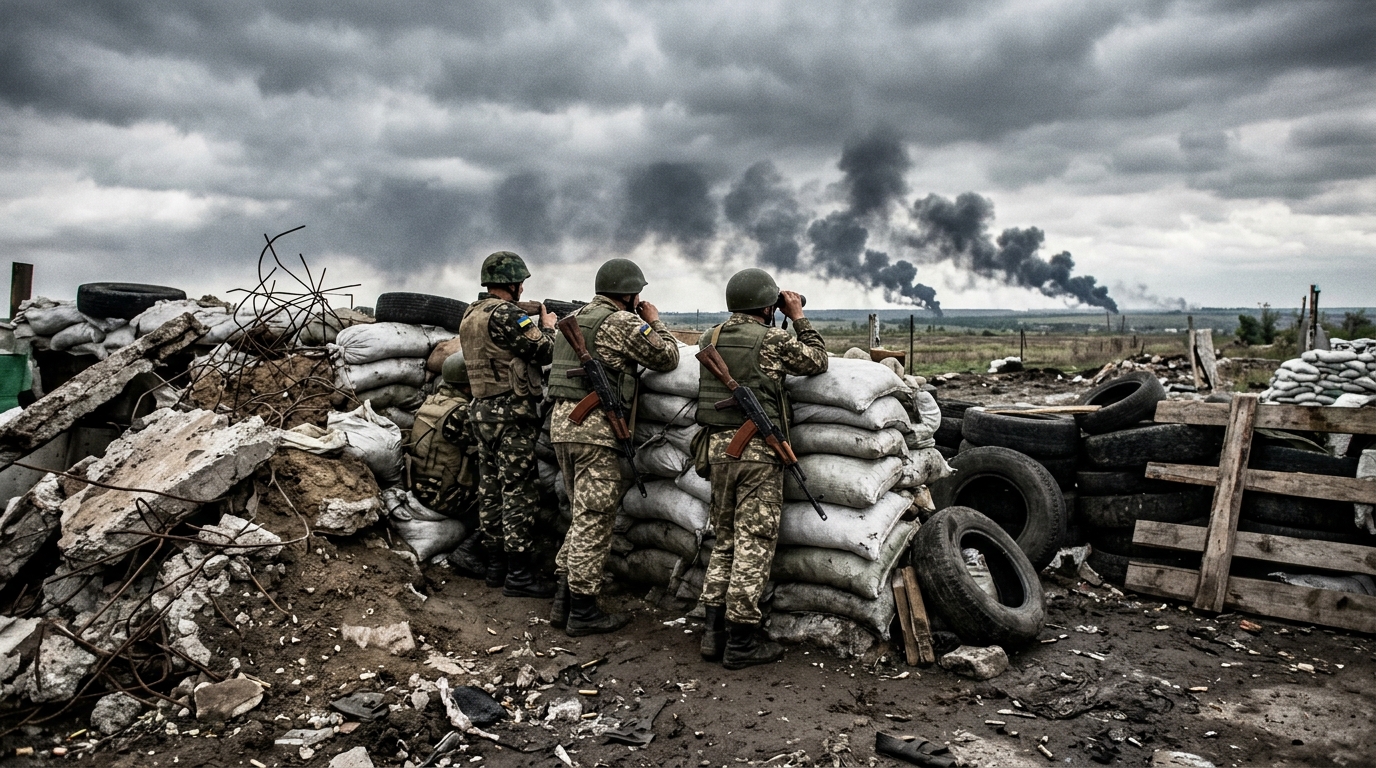
The Ukrainian military, initially caught off guard and severely underfunded after years of neglect and corruption, underwent a rapid, albeit painful, transformation. In the first months of the ATO, it relied heavily on hastily mobilized volunteer battalions—such as the Azov, Donbas, Aidar, and Dnipro-1 battalions—who often displayed fierce commitment but sometimes lacked professional military training and discipline. These volunteer units, composed of patriots from diverse backgrounds, filled critical gaps in manpower and equipment, often supported directly by civilian "Volonter" movements that provided everything from body armor to drones. By mid-summer 2014, the Ukrainian armed forces, with renewed determination, had successfully pushed separatists back to the outskirts of Donetsk and Luhansk, regaining control over significant swathes of territory, including strategic cities like Sloviansk and Kramatorsk.
However, this momentum was brutally reversed by the direct, large-scale intervention of regular Russian units, most notably at the Battle of Ilovaisk in August 2014. Ukrainian forces had largely encircled the city, aiming to sever key supply lines to Donetsk. As Ukrainian units attempted to withdraw through a pre-negotiated "green corridor," Russian regular army units, which had crossed the border in strength, attacked the retreating columns, inflicting devastating casualties. Hundreds of Ukrainian soldiers were killed, wounded, or captured, representing the most significant military defeat for Ukraine in the initial phase of the war. This decisive Russian action shattered any illusions about the limited nature of Russian involvement and forced Ukraine into a significantly weaker negotiating position, directly leading to the signing of the Minsk I Agreement in September 2014, which formalized a ceasefire but effectively froze the conflict along a new, militarily disadvantageous front line for Ukraine.
Socio-Economic Impact and Legacy
The outbreak of war in Donbas in 2014 unleashed a cascade of devastating socio-economic consequences that profoundly reshaped Ukraine and left an indelible mark on the conflict-affected region. The Donbas, once the industrial heartland of Ukraine, was plunged into an economic and social crisis that continues to reverberate.
The economic devastation was immediate and far-reaching. The conflict led to the destruction of critical infrastructure, including roads, bridges, railways, and utilities, severing vital supply chains and communication links. Many factories and mines, already struggling with outdated equipment and efficiency issues, were either damaged, expropriated by separatist authorities, or simply ceased operations due to the fighting and loss of access to Ukrainian and international markets. Coal mines, many of which date back to the Soviet era, were particularly hard hit. Damage to pumping stations led to widespread flooding, raising concerns about long-term environmental degradation, including groundwater contamination and methane gas emissions. The industrial base of the region, which had historically provided livelihoods for millions, was severely crippled, leading to mass unemployment and a humanitarian crisis. Ukraine's national economy suffered significantly from the loss of this industrial capacity, increased defense spending, and disruption to trade and investment.
The humanitarian crisis was immense. Over 1.5 million people became internally displaced persons (IDPs) within Ukraine, forced to flee their homes in search of safety. This mass displacement strained the resources of host communities and created complex challenges related to housing, employment, and social integration for those uprooted. The breakdown of law and order in the occupied territories, coupled with widespread human rights abuses documented by international organizations, further exacerbated the suffering of the civilian population. Access to essential services, including healthcare, education, and social welfare, became severely limited, particularly in the non-government-controlled areas.
The conflict also deepened societal divisions within Ukraine, even as it paradoxically forged a stronger sense of national identity in other parts of the country. The narratives of "traitors" and "patriots" often clashed, creating rifts within families and communities. For many in the Donbas, the conflict exacerbated a sense of alienation from Kyiv, fueled by years of perceived neglect and now active military engagement. For the rest of Ukraine, the invasion and occupation served as a powerful catalyst for national consolidation, accelerating the process of de-Russification and a pivot towards Europe. This dichotomy created a complex social landscape, where national unity was forged in the fires of conflict, yet deep wounds of division and resentment persisted.
The long-term psychological impact on veterans, civilians, and children exposed to the conflict is profound. Thousands of soldiers returned with physical injuries and post-traumatic stress disorder (PTSD), while civilians in the conflict zone endured years of shelling, loss, and insecurity. Children growing up near the contact line experienced interrupted education, trauma, and a distorted sense of normalcy, with profound implications for their future development. The legacy of the war has been the creation of a deeply traumatized society, requiring extensive and sustained efforts in rehabilitation, reconciliation, and peace-building. The frozen conflict model ensured that these wounds festered, creating a constant state of low-intensity warfare and insecurity that dominated Ukraine's domestic and foreign policy for years.
Trivia and Lesser-Known Facts
- The "Coalition of Irony": Many of the early separatist leaders were not locals but came from diverse backgrounds, including neo-imperialist monarchists, Soviet-nostalgic communists, and Russian nationalists, often united solely by their opposition to the Kyiv government and a shared ideological affinity with Moscow's revanchist narrative. Their diverse, sometimes contradictory, political leanings highlighted the opportunistic nature of the initial takeover.
- Volunteer Logistics: In the first months of the ATO, the Ukrainian military was so underfunded and disorganized that civil society organizations, collectively known as the "Volonter" movement, essentially ran much of the country’s logistics for the front line. Citizens organized crowdfunding campaigns, purchased everything from body armor, uniforms, and medical supplies to night vision goggles, drones, and even vehicle repairs, delivering them directly to soldiers. This grassroots effort proved vital in sustaining the fighting force.
- The Sloviansk Laboratory: The siege of Sloviansk in April-July 2014, led by Igor Girkin (Strelkov), became a strategic blueprint and a testing ground for the separatists. It demonstrated how long a well-entrenched, albeit smaller, force could hold a city against a state military force, effectively buying time until the prospect of overt Russian intervention became a political necessity or reality, as seen at Ilovaisk. It also allowed for the refinement of hybrid warfare tactics.
- Media Warfare: The conflict was one of the first major instances where social media, specifically Telegram and VKontakte (Russia's dominant social media platform at the time), were used as primary tools for both mobilization and psychological warfare by both sides. Separatists and their Russian backers adeptly used these platforms to spread disinformation, recruit fighters, and broadcast combat footage, often heavily edited or manipulated, while Ukrainian activists tried to counter with real-time updates and evidence.
- The "Cabbage" Legend: Early in the conflict, a persistent rumor circulated among Ukrainian soldiers that separatist fighters were using depleted uranium rounds or other exotic munitions. This was often debunked by military experts, but the fear and propaganda surrounding such claims were indicative of the psychological warfare at play.
- Early International Observers: The OSCE Special Monitoring Mission (SMM) to Ukraine deployed in March 2014 faced immense challenges, operating in an environment of escalating violence, disinformation, and frequent intimidation. Their unarmed monitors provided crucial, albeit often ignored, reports on ceasefire violations and troop movements, becoming the eyes and ears for the international community in a conflict zone where access was often denied by armed groups.
References and Literature
- The Conflict in Ukraine: What Everyone Needs to Know - An indispensable and in-depth analysis of the historical, geopolitical, and internal factors surrounding the 2014 uprising and its evolution.
- Foreign Affairs: The Sources of Russian Conduct - A contemporary perspective on the strategic logic behind Russia's interventionist policies during the 2010s, offering insights into Moscow's revisionist foreign policy.
- OSCE Special Monitoring Mission Reports (2014-2015) - Official records documenting the early stages of the ceasefire violations, security shifts, and humanitarian situation in the Donbas, providing ground-level, impartial (though often challenged) observations.
- Conflict in Ukraine: The Donbas - A detailed examination of the local dynamics, key actors, and socio-economic factors contributing to the escalation of the conflict in the Donbas region.
- The Hybrid War in Ukraine: Deception, Disinformation, and Russia's Real Agenda - Provides a comprehensive analysis of Russia's hybrid warfare strategy, including information operations, cyber attacks, and covert military action, specifically as applied in the 2014 conflict.
Footnotes & Explanations
- The concept of "Hybrid War" gained significant prominence during this conflict, referring to the integration of conventional military action, cyber warfare, sophisticated information campaigns, economic pressure, and covert operations to achieve political objectives, often below the threshold of declared war. ↩
- The term "Anti-Terrorist Operation" (ATO) was specifically chosen by Kyiv to frame the conflict as a domestic law-enforcement action against illegal armed formations and terrorists, rather than a formal "war" against another state. This legal framing had implications for international assistance and the application of international humanitarian law. ↩
- The Minsk Agreements (Minsk I in September 2014 and Minsk II in February 2015) were peace accords signed by representatives of Ukraine, Russia, the OSCE, and the leaders of the DPR and LPR. They aimed to establish a ceasefire, withdrawal of heavy weapons, and a political roadmap for decentralization and local elections, though full implementation remained elusive. ↩