Key Takeaways
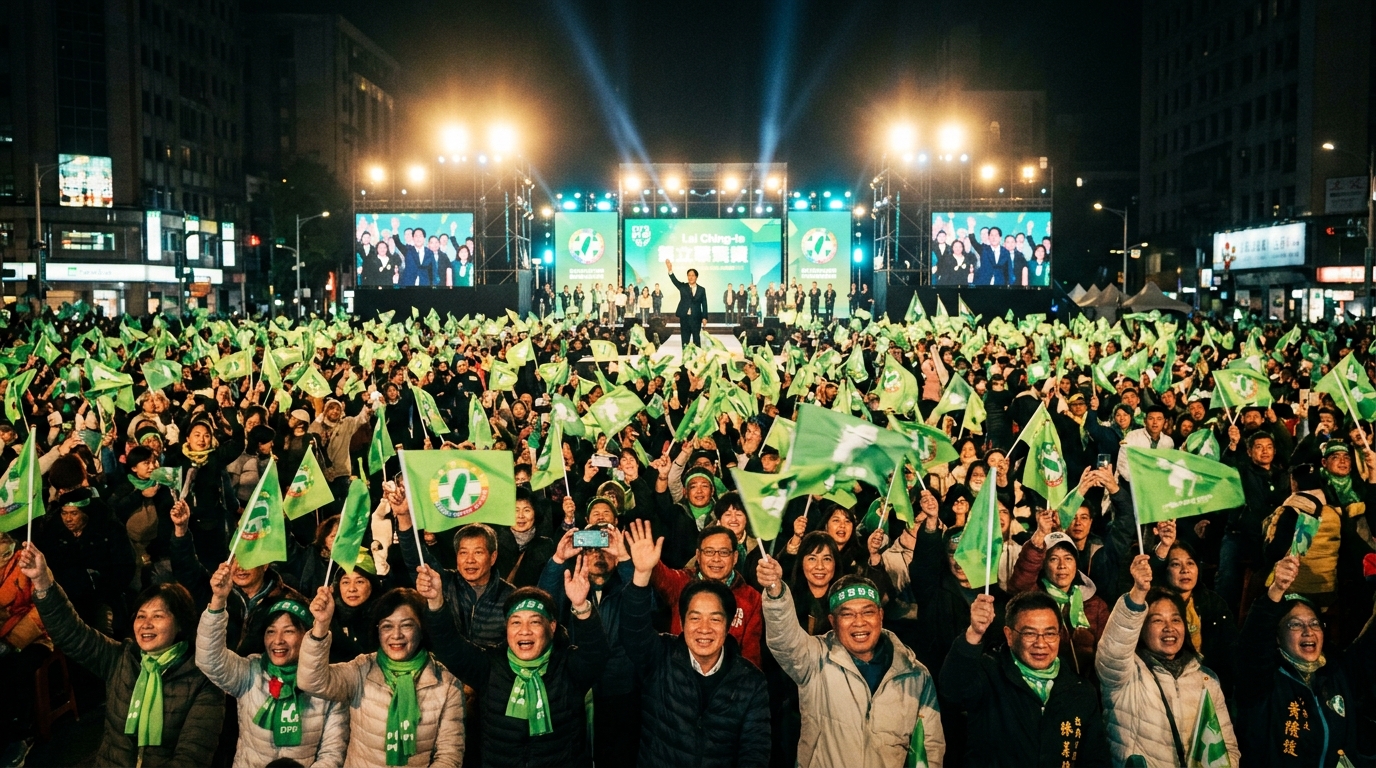
- William Lai's victory marks an unprecedented third consecutive term for the Democratic Progressive Party (DPP), signaling a consolidation of Taiwan's distinct democratic identity and a rejection of Beijing's preferred narrative.
- Beijing’s reaction underscores a deepening hardening of the cross-strait status quo, as China dismisses the election result as unrepresentative of the 'mainstream public opinion' on the island and continues its strategies of diplomatic isolation and military pressure.
- The election outcome reinforces the delicate triangular diplomacy involving Taipei, Beijing, and Washington, with profound implications for regional stability in the Indo-Pacific and global economic security, particularly regarding semiconductor supply chains.
- The DPP's loss of its legislative majority results in a 'divided government,' introducing new domestic political dynamics and challenges for the incoming Lai administration, requiring extensive inter-party negotiation and compromise.
Historical Context and Origins
To fully grasp the profound implications of the 2024 Taiwanese general election, one must embark on a journey back through the island's complex socio-political evolution, particularly its remarkable transition from authoritarian rule to a vibrant democracy. For nearly four decades, from 1949 to 1987, Taiwan was governed under martial law by the Kuomintang (KMT), led first by Chiang Kai-shek and then his son, Chiang Ching-kuo. The KMT, having fled mainland China after losing the civil war to Mao Zedong's Communists, maintained a fierce ambition to "retake the mainland" and viewed itself as the legitimate government of all China. This foundational narrative deeply influenced early cross-strait relations and domestic politics, emphasizing a shared Chinese identity.
However, beneath the surface of KMT dominance, a nascent pro-democracy movement began to stir, often referred to as the Tangwai (outside the party) movement. This movement, composed of intellectuals, dissidents, and activists, championed greater political freedoms, human rights, and eventually, a distinct Taiwanese identity separate from mainland China. The lifting of martial law in 1987 by Chiang Ching-kuo, followed by the ascension of Lee Teng-hui, the first native-born Taiwanese president, in 1988, marked a pivotal turning point. Lee Teng-hui, often hailed as the "father of Taiwan's democracy," deftly navigated the island's political landscape, pushing through constitutional reforms that paved the way for direct presidential elections in 1996.
It was out of this democratic ferment that the Democratic Progressive Party (DPP) officially formed in 1986, defying martial law restrictions. The DPP initially centered its platform on full democratization and later on the assertion of Taiwan's sovereign independence. By the 2000s, with Chen Shui-bian's historic presidential victory in 2000, the DPP successfully challenged the KMT's long-standing hegemony and fundamentally reshaped the Taiwanese political discourse. The focus began to shift decisively from a historical Chinese identity to a distinct, self-asserting Taiwanese identity, rooted in democratic values and a unique cultural heritage. This shift deeply antagonized Beijing, which views any move towards formal independence as a red line.
The delicate dance of cross-strait relations has long been defined by the "1992 Consensus," a term coined by former KMT Secretary-General Su Chi in 2000. This semi-official understanding posits that both sides of the Taiwan Strait acknowledge there is "one China," while holding differing interpretations of what that "one China" entails. For the KMT, this allowed for practical engagement with Beijing under the premise of "one China, different interpretations" (一中各表). However, the DPP has consistently rejected the "1992 Consensus," viewing it as an anachronistic framework that implicitly concedes Taiwan's subordinate status to Beijing. Since the inauguration of Tsai Ing-wen, the first DPP president to secure a second term, in 2016, Beijing has suspended formal communication channels with Taipei, citing the DPP's refusal to explicitly endorse the "1992 Consensus."
William Lai, having served as Tsai Ing-wen's Vice President, inherited a geopolitical landscape characterized by increased military "gray-zone" activities, heightened economic coercion from Beijing, and a deepening global recognition of Taiwan's strategic importance. The trajectory of cross-strait relations under the DPP has been one of maintaining the status quo – de facto autonomy without formal declaration of independence – while simultaneously strengthening Taiwan's democratic institutions and international partnerships. This approach directly contrasts with Beijing's "One Country, Two Systems" framework, which, particularly after its severe erosion in Hong Kong, holds almost no appeal for the vast majority of Taiwanese citizens. The 2024 election was thus not merely a domestic political contest, but a referendum on Taiwan's identity, its democratic future, and its delicate position in an increasingly volatile Indo-Pacific.
Historical Precedents & Context
The trajectory of Taiwan's presidential elections since 1996 provides crucial context for understanding the 2024 outcome. Taiwan’s democratic journey, while relatively young, has been marked by a vibrant, often contentious, political landscape.
The Era of Pendulum Swings (1996-2016): The initial direct presidential elections saw Lee Teng-hui secure victory, solidifying democratic foundations. However, the subsequent two decades witnessed a distinct pattern of power alternation:
- 2000-2008: Chen Shui-bian (DPP) served two terms, pushing for a stronger Taiwanese identity and testing the boundaries of cross-strait relations. His presidency was marked by heightened tensions with Beijing and internal political scandals.
- 2008-2016: Ma Ying-jeou (KMT) served two terms, advocating for closer economic ties with mainland China under the banner of the "1992 Consensus," leading to an era of relatively warmer cross-strait relations, albeit with growing domestic concerns about economic over-reliance on Beijing.
- 2016-2024: Tsai Ing-wen (DPP) served two terms, definitively rejecting the "1992 Consensus" and asserting Taiwan's sovereignty, while carefully avoiding a formal declaration of independence. Her tenure saw a significant hardening of Beijing's stance, but also increased international support for Taiwan.
Each change in presidential party brought a shift in cross-strait policy, highlighting the profound impact of domestic electoral choices on geopolitical dynamics. The "eight-year cycle" of power rotation became an unwritten rule, reflecting Taiwan's dynamic electorate and strong democratic checks and balances. The 2024 election, by granting the DPP an unprecedented third consecutive term, fundamentally broke this pattern, signaling a more entrenched public consensus on Taiwan's distinct democratic identity and a clear rejection of Beijing's preferred narrative for cross-strait relations. This outcome can be seen as a culmination of the "Sunflower Movement" of 2014, a student-led protest against a trade pact with mainland China, which galvanized a generation of Taiwanese youth to prioritize sovereignty and democracy over economic integration with an authoritarian neighbor.
The Shadow of Hong Kong: Another crucial historical precedent influencing the 2024 election was the dramatic erosion of autonomy in Hong Kong. Beijing's imposition of the National Security Law in 2020, following widespread pro-democracy protests, effectively dismantled the "One Country, Two Systems" framework, transforming Hong Kong from a semi-autonomous bastion of civil liberties into a more tightly controlled special administrative region. This served as a stark, real-time warning for Taiwanese voters. Beijing's consistent proposal of a similar "One Country, Two Systems" model for Taiwan lost virtually all credibility, further hardening public opinion against unification and bolstering support for parties committed to preserving Taiwan's democratic status quo. The images of Hong Kong's freedoms being curtailed deeply resonated with Taiwanese citizens, reinforcing the perceived existential threat posed by Beijing's overtures.
Timeline of Events and Key Moments
The path to the 2024 election was paved with intense domestic debates over critical issues such as economic policy, soaring housing costs, energy security, and an aging population, all overshadowed by the perennial, existential question of potential military conflict with mainland China.
| Date | Event Description |
|---|---|
| Jan 2023 | Lai Ching-te assumes the chairmanship of the DPP, solidifying his path to the presidential nomination and immediately articulating a platform of continuity with Tsai Ing-wen's cross-strait policies. |
| Aug 2023 | Lai Ching-te conducts a high-profile "private visit" transit through the United States, stopping in New York and San Francisco. This trip, while officially unofficial, allowed him to meet with American lawmakers and demonstrate robust U.S. support, sparking intense condemnation from Beijing, which conducted military drills in response. |
| Oct 2023 | KMT presidential candidate Hou Yu-ih visits the U.S., seeking to reassure Washington of his party's commitment to democratic values and regional stability, while also outlining a more moderate approach to cross-strait dialogue. |
| Nov 2023 | Attempted opposition coalition between the KMT and the nascent TPP (Taiwan People's Party) dramatically collapses after weeks of public disagreements over candidate selection (who would be president and who vice-president). This highly publicized failure splits the anti-DPP vote, widely seen as a critical misstep for the opposition. |
| Dec 2023 | Final presidential debates highlight the stark differences in candidates' approaches to cross-strait relations, with Lai emphasizing sovereignty, Hou advocating for dialogue and economic stability, and Ko focusing on youth issues and pragmatic governance. |
| Jan 13, 2024 | Election day: Lai Ching-te of the DPP secures victory with 40.05% of the vote. Concurrently, the DPP loses its majority in the Legislative Yuan, resulting in a hung parliament and a "divided government." |
| Jan 15, 2024 | Nauru, one of Taiwan's few remaining diplomatic allies, announces the severance of diplomatic ties with Taipei, opting to recognize the People's Republic of China. This move is widely interpreted as a direct retaliatory measure by Beijing following the election results. |
| Jan 2024 - Present | PRC increases "gray-zone" military activities, including air and naval incursions around Taiwan, and intensifies economic pressure through targeted trade restrictions, signaling Beijing's displeasure with the election outcome. |
The breakdown of the KMT-TPP coalition in late 2023 was arguably the most significant turning point of the campaign. Months of negotiations, often played out publicly in chaotic press conferences, failed to bridge the ideological and personal divides between KMT's Hou Yu-ih and TPP's Ko Wen-je. By failing to field a single joint candidate, the opposition effectively handed William Lai a plurality victory. This strategic miscalculation meant that even with a strong showing from both opposition parties (KMT secured 33.49% and TPP 26.46% of the vote), their combined strength was fractured, allowing the DPP to retain the presidency with a lower percentage than in previous elections. This outcome simultaneously led to the DPP losing its legislative majority—a "divided government" scenario that will significantly complicate the incoming administration's ability to implement its policy agenda. The electorate appeared to vote for presidential continuity but sought legislative checks and balances, perhaps signaling a desire for both stability in cross-strait policy and greater scrutiny on domestic governance.
Geopolitical Consequences and Aftermath
The victory of William Lai, signaling an unprecedented third consecutive term for the DPP, reverberates far beyond Taiwan's shores, serving as a firm rejection of Beijing’s political influence campaign and coercive tactics. However, the subsequent loss of the DPP’s legislative majority introduces a fascinating dichotomy, suggesting that while voters endorsed the DPP’s stance on national sovereignty, they also desired more internal checks and balances and accountability on domestic issues. This nuanced outcome complicates both Taipei's governance and Beijing's strategic calculations.
For the international community, the election is more than just a "stress test for the 'One China' policy"; it is a profound re-evaluation of the delicate balance between acknowledging Beijing's political principle and safeguarding democratic values and regional stability. Major powers like the United States, while adhering to their "One China" policy, have unequivocally emphasized their commitment to Taiwan's self-defense and democratic process. The Biden administration’s approach—dispatching unofficial delegations composed of former senior officials and reaffirming the Taiwan Relations Act—serves as a masterful exercise in balancing deterrence with diplomatic caution. This strategy aims to reassure Taipei of unwavering support without provoking an immediate, aggressive response from Beijing. The informal nature of these delegations allows Washington to signal strong backing without altering its official "One China" stance, a vital tightrope walk.
"The election result makes it clear that the Taiwanese people choose to continue walking on the right path—walking with democracies around the world, for peace, and for prosperity." — William Lai, Victory Speech, January 13, 2024.
Beijing’s response has been one of controlled escalation, calibrated to exert pressure without triggering a full-blown military confrontation that would have catastrophic regional and global consequences. Rather than immediate kinetic action, the Chinese state has focused on a multi-pronged approach encompassing "lawfare," gray-zone military tactics, economic coercion, and diplomatic isolation. The expansion of its maritime patrols, particularly in areas like the Kinmen archipelago, and persistent air incursions across the median line of the Taiwan Strait, serve as constant reminders of Beijing's military capabilities and intent. These "gray-zone" tactics are designed to wear down Taiwan's defenses, test its response mechanisms, and normalize a heightened state of military pressure, without crossing the threshold of outright war.
Economically, Beijing has continued its pattern of targeted trade restrictions, often disguised as food safety or agricultural concerns, aimed at penalizing Taiwan for its democratic choices and fostering economic dependence. The swift loss of Nauru as a diplomatic ally shortly after the election was a clear, albeit symbolic, signal from the PRC regarding its intention to further isolate Taipei on the international stage. This relentless campaign of poaching Taiwan's remaining diplomatic partners underscores Beijing's objective to strip Taiwan of any vestiges of sovereign statehood in the eyes of the world. Each lost ally, however small, chips away at Taiwan's international space, forcing Taipei to rely more heavily on unofficial ties and economic partnerships with major democracies.
Domestically, the "divided government" poses significant challenges for President Lai. With the KMT holding the most seats in the Legislative Yuan (though not an outright majority), and the TPP holding the balance of power, Lai will be forced into a position of constant negotiation and compromise. His policy agenda, particularly on domestic reforms, will require building cross-party consensus, a task made difficult by Taiwan's often fractious political environment. This situation could lead to legislative gridlock, forcing the executive to prioritize, and potentially dilute, its reform efforts. However, it also presents an opportunity for greater transparency and accountability, as power is more broadly distributed, preventing any single party from dominating the legislative process. The 2024 election has thus not only reshaped Taiwan's international standing but also fundamentally altered its internal political dynamics, promising a more complex and contentious governance landscape.
Analysis of Key Actors and Decisive Actions
The 2024 Taiwanese election was a masterclass in political maneuvering, influenced by the strategic calculations of multiple domestic and international actors. Each player's actions, or inactions, significantly shaped the final outcome and its aftermath.
Lai Ching-te: The Pragmatic Idealist
William Lai Ching-te, once known for his more forthright pro-independence rhetoric, particularly during his tenure as Tainan Mayor and Premier, performed a delicate and highly effective balancing act during the 2024 campaign. Recognizing the geopolitical realities and the mainstream desire for stability, he strategically positioned himself as a steadfast defender of the status quo established under President Tsai Ing-wen. This meant advocating for Taiwan's sovereignty and democratic way of life without crossing Beijing's explicit red line of a formal declaration of independence. His campaign emphasized "peace through strength" and "democratic resilience," echoing Tsai's approach. By framing himself as a continuity candidate, he successfully neutralized the "troublemaker" narrative aggressively pushed by Beijing and elements of the domestic opposition who sought to portray him as a dangerous provocateur.
His victory, despite a plurality vote, signifies that the maintenance of Taiwan's de facto autonomy and democratic identity is now the mainstream consensus in Taiwan, regardless of underlying ideological nuances. However, the loss of the DPP's legislative majority presents a formidable challenge. Lai now faces a "divided government," where he will need to forge cross-party alliances, particularly with the KMT and TPP, to pass crucial legislation. This requires a level of political pragmatism and negotiation skills that will be rigorously tested, potentially slowing down domestic reforms and forcing compromises on key policy initiatives. His ability to navigate this internal political landscape will be as crucial as his external diplomatic efforts in the coming years.
Xi Jinping: The Strategic Patient
Under the leadership of Xi Jinping, the People's Republic of China has adopted an increasingly assertive and long-term "new era" approach toward Taiwan. This strategy is centered on "reunification through integration," a multi-faceted plan that combines military intimidation, economic inducements and coercion, and diplomatic isolation. Beijing's goal is to make the cost of maintaining autonomy—both economically and militarily—prohibitively high for the Taiwanese populace, thereby slowly but surely compelling them towards unification on Beijing's terms, often citing the "One Country, Two Systems" framework as the only viable future.
Xi's actions are driven by a complex mix of historical narratives, nationalistic fervor, and domestic political imperatives. For the Chinese Communist Party (CCP), the "resolution" of the Taiwan question is seen as an indispensable step towards achieving the "great rejuvenation of the Chinese nation" by 2049. This makes Taiwan a core issue where compromise is perceived as weakness. Beijing's reaction to Lai's victory, characterized by swift condemnation, increased military maneuvers, and the severing of Nauru's ties, underscores this unwavering commitment. However, Beijing's actions also demonstrate a degree of strategic patience; while the rhetoric is harsh, and the military pressure tangible, a full-scale invasion is still deemed too costly in the short term, given the potential for international backlash and economic devastation. Instead, Xi appears committed to a sustained campaign of attrition designed to shift the balance of power decisively in Beijing's favor over time.
The United States and the "Triangulation"
Washington's objective remains the preservation of peace and stability across the Taiwan Strait, essentially maintaining the status quo and preventing any unilateral change by either side. The 2024 election cycle saw an unprecedented level of attention from American intelligence, policy, and congressional circles. The U.S. employs a policy of "strategic ambiguity," meaning it does not explicitly state whether it would intervene militarily if China attacked Taiwan, yet it continues to provide Taiwan with defensive weapons under the Taiwan Relations Act (TRA). This delicate balancing act is designed to deter a Chinese invasion while simultaneously discouraging Taiwan from declaring de jure independence.
Throughout the election, the U.S. maintained official neutrality but underscored its support for Taiwan's democratic processes. Post-election, the dispatch of an unofficial delegation led by former high-ranking officials signaled strong, bipartisan support for Taiwan's democracy and reinforced U.S. commitments to regional security. This move aimed to reassure Taipei and deter Beijing from overreacting. The U.S. also continues to bolster Taiwan’s defense capacity through arms sales and training, reinforcing the island’s ability to defend itself, thereby raising the costs and risks for any potential Chinese military action. The U.S. sees Taiwan as a critical node in its broader Indo-Pacific strategy, vital for maintaining a free and open regional order and safeguarding global supply chains, particularly in semiconductors. The challenge for Washington is to navigate this "triangulation" effectively, managing the complex interplay between Taipei's democratic aspirations, Beijing's nationalist ambitions, and its own strategic interests, without triggering a regional or global conflict.
The Opposition: KMT and TPP
The opposition's inability to form a united front was a decisive factor in the 2024 election outcome. The Kuomintang (KMT), led by Hou Yu-ih, struggled to articulate a compelling cross-strait policy that could both appease its traditional pro-China base and appeal to the younger, more independence-leaning electorate. Hou's platform focused on restarting dialogue with Beijing under the "1992 Consensus" and emphasizing economic stability, but it failed to fully assuage voter anxieties about Beijing's ultimate intentions. The KMT's historical baggage and internal divisions further hampered its campaign.
The Taiwan People's Party (TPP), led by the charismatic former Taipei Mayor Ko Wen-je, emerged as a significant third force, particularly attracting younger voters disillusioned with both traditional parties. Ko's platform centered on pragmatic governance, addressing domestic issues like housing, and advocating for a more "middle path" in cross-strait relations, neither overtly pro-independence nor overtly pro-unification. The dramatic collapse of the KMT-TPP coalition talks in November 2023, largely due to disagreements over who would lead the ticket, proved fatal for their chances. This split the anti-DPP vote, allowing Lai to win with a plurality. Post-election, the KMT and TPP now collectively hold a majority in the Legislative Yuan. This grants them significant power to shape Taiwan's domestic agenda, check presidential authority, and force the DPP into compromises, creating a new era of legislative jockeying and potential gridlock.
Socio-Economic Aftermath and Domestic Challenges
Beyond the high-stakes geopolitical drama, the 2024 election outcome also illuminated significant domestic socio-economic challenges that President Lai's administration must address, particularly in the context of a divided government. These issues resonate deeply with the Taiwanese populace and often underpinned voter decisions, even amidst the overriding concerns about cross-strait relations.
The Housing Crisis and Generational Discontent: A prominent campaign issue, particularly championed by the TPP's Ko Wen-je, was the escalating housing crisis. Taiwan's property prices, especially in major urban centers like Taipei, have soared, making homeownership an increasingly distant dream for younger generations and middle-income families. This issue fuels a sense of generational inequality and social frustration, as stagnant wages fail to keep pace with housing costs. President Lai's administration will face immense pressure to implement effective policies, such as affordable housing initiatives, property tax reforms, and tackling speculative investments, a task made harder by the need for legislative cooperation. Failure to address this could lead to persistent social unrest and political dissatisfaction among a key demographic.
Economic Diversification and Supply Chain Resilience: Taiwan's economy is heavily reliant on international trade and technology, with its semiconductor industry, dominated by TSMC, holding a critical global position. While this provides Taiwan with immense strategic leverage ("silicon shield"), it also presents vulnerabilities. Beijing's escalating economic coercion, including targeted bans on Taiwanese agricultural and industrial products, underscores the need for greater economic diversification and resilience. The "de-risking" strategies pursued by the Tsai administration, aimed at reducing economic over-reliance on mainland China and fostering closer ties with other Indo-Pacific nations (e.g., through the New Southbound Policy), will likely be continued and intensified by Lai. However, this shift requires significant investment, trade agreements, and navigating complex geopolitical considerations, particularly with China remaining Taiwan's largest trading partner.
Energy Policy and Environmental Concerns: Taiwan faces a critical energy dilemma, balancing the need for reliable power to fuel its high-tech industries with environmental sustainability goals and public safety concerns. The DPP has traditionally advocated for a nuclear-free homeland, phasing out nuclear power in favor of renewable energy sources. However, this transition has proven challenging, leading to concerns about power shortages and the reliance on fossil fuels. The opposition parties often advocate for reactivating existing nuclear power plants or expanding nuclear energy to ensure energy security. This contentious debate will require careful management by the Lai administration, potentially necessitating a review of the existing energy roadmap to achieve both environmental targets and industrial demand, while also placating an electorate divided on the issue.
Social Welfare and Aging Population: Like many developed nations, Taiwan grapples with an aging population and declining birth rates. This demographic shift places immense strain on social welfare systems, healthcare, and pension funds. The incoming administration will need to confront these long-term challenges with comprehensive reforms, including enhancing childcare support, addressing labor shortages, and ensuring the sustainability of social safety nets. These reforms are often politically sensitive and require broad societal consensus, which will be difficult to achieve in a 'divided government' scenario.
The success of the Lai administration will ultimately hinge not only on its ability to navigate the treacherous waters of cross-strait relations but also on its capacity to address these pressing domestic socio-economic issues. The 'divided government' mandates a collaborative approach, testing the maturity of Taiwan's democratic institutions to find common ground across party lines for the welfare of its citizens.
Geopolitical Realignment and International Reactions
Taiwan's 2024 election was not merely a domestic affair; its outcome has sent ripples across the Indo-Pacific and beyond, influencing geopolitical alignments and prompting nuanced reactions from major global players. The election underscored Taiwan's centrality to regional security and global economic stability, primarily due to its pivotal role in the semiconductor industry.
The "Indo-Pacific Strategy" and Taiwan's Centrality: The election results, affirming Taiwan's democratic trajectory, further solidify its position as a critical node in the broader "Free and Open Indo-Pacific" strategy championed by the United States and its allies. For Washington, Tokyo, Canberra, and New Delhi (the Quad members), a democratic Taiwan resilient against authoritarian pressure is essential for upholding a rules-based international order. Japan, in particular, views Taiwan's security as intrinsically linked to its own, given its proximity and the vital sea lanes connecting to its southern islands. Japanese officials have increasingly vocalized concerns about stability in the Taiwan Strait, reflecting a shift from a more understated approach.
Reactions from Key International Actors:
- United States: While maintaining "strategic ambiguity," the U.S. immediately dispatched a high-level, unofficial delegation post-election, signaling robust bipartisan support for Taiwan's democracy. This move, consistent with the Taiwan Relations Act, underscores Washington's commitment to ensuring peace and stability in the Strait and deterring any escalatory actions from Beijing. The U.S. continues to bolster Taiwan's defensive capabilities through arms sales and training, seeing a strong Taiwan as the best deterrent.
- Japan: As Taiwan's closest democratic neighbor, Japan expressed profound interest in the election. While official statements were cautious to avoid provoking Beijing, Japanese political leaders and media emphasized the importance of peace and stability in the Taiwan Strait. Japan's defense posture has increasingly focused on contingencies around Taiwan, and its strategic cooperation with the U.S. and other allies in the region reflects this concern.
- European Union: The EU, while upholding its "One China" policy, has also steadily increased its engagement with Taiwan, particularly in economic and technological spheres. Following the election, the EU emphasized its respect for Taiwan's democratic process and called for a peaceful resolution of cross-strait differences. The EU's interest is primarily driven by its commitment to democratic values, global supply chain resilience (especially semiconductors), and a desire to diversify trade away from China.
- Australia & Philippines: Australia, a key member of the AUKUS security pact and the Quad, reiterated its call for dialogue and de-escalation, aligning its stance with the U.S. on regional stability. The Philippines, directly adjacent to Taiwan and strategically vital for access to the South China Sea, has also reinforced its security cooperation with the U.S., reflecting growing concerns about Chinese assertiveness.
- ASEAN Nations: Most ASEAN member states maintained a cautious neutrality, reiterating their adherence to the "One China" policy while privately expressing concerns about regional stability. Any escalation in the Taiwan Strait would have devastating economic and security consequences for Southeast Asia, disrupting vital trade routes and potentially drawing them into a larger conflict.
"Chip Diplomacy" and Global Supply Chains: Taiwan's dominance in advanced semiconductor manufacturing, particularly through TSMC, provides it with immense geopolitical leverage, often referred to as a "silicon shield." The election outcome, by affirming a stable and democratic Taiwan, reassures global technology giants and nations reliant on its chip production. However, it also highlights the vulnerability of global supply chains to any potential conflict. This has spurred efforts in the U.S., EU, and Japan to diversify semiconductor production, though Taiwan's leading-edge capabilities remain irreplaceable in the short to medium term. Taiwan, in turn, uses its technological prowess for "chip diplomacy," deepening partnerships and garnering support from countries dependent on its high-tech exports.
The 2024 election therefore strengthens Taiwan's position as a crucial geopolitical fulcrum. While Beijing continues its efforts to isolate Taipei, the democratic world's increasing recognition of Taiwan's strategic importance—militarily, economically, and ideologically—signals a recalibration of international relations in the face of rising authoritarianism. The challenge for the international community is to navigate this complex landscape, balancing the imperative of de-escalation with the commitment to democratic values and a rules-based international order.
Trivia and Lesser-Known Facts
- The Plurality Paradox: Although William Lai won the presidency, his vote share (40.05%) was significantly lower than Tsai Ing-wen’s 2020 landslide (57.1%) and also lower than her 2016 victory (56.1%). This reflects a more polarized and fractured electorate, where no single party commands an overwhelming majority, a stark contrast to the previous two cycles.
- The "Tofu" Factor: During the campaign, candidate Ko Wen-je of the TPP, a former surgeon turned politician, successfully tapped into deep-seated voter dissatisfaction with high housing costs, stagnant wages, and the political establishment. His appeal, particularly among younger voters, demonstrated that pressing domestic policy concerns are now as critical to the electorate as the perennial cross-strait security issue. His grassroots, often irreverent, campaign style resonated with those tired of traditional party politics.
- Election Security: A Gold Standard: Taiwan’s electoral process was widely cited by international observers and cybersecurity experts as a gold standard for resilience against digital disinformation and foreign interference. The country has developed robust mechanisms, including sophisticated government and civilian fact-checking networks, rapid response protocols, and widespread media literacy campaigns, to counter foreign-funded influence operations, primarily from mainland China. This experience offers valuable lessons for other democracies facing similar threats.
- The Legislative Gridlock and Its History: With the DPP losing its majority in the Legislative Yuan, President Lai faces the prospect of a "divided government," where the executive and legislative branches are controlled by different parties. While this is a common feature of many mature democracies (e.g., the U.S. often experiences this), it is a relatively new and challenging environment for the Taiwanese executive. Historically, periods of divided government in Taiwan have sometimes led to political stalemates, but also to increased checks and balances and a more vibrant, albeit contentious, legislative debate.
- The "Lai-Tsai" Effect: Lai Ching-te's successful campaign strategy of portraying himself as a continuity candidate, building upon the "status quo" framework established by President Tsai Ing-wen, was crucial. This minimized Beijing's ability to paint him as a radical "separatist" in the eyes of the international community and a significant portion of the Taiwanese electorate. It demonstrated a pragmatic evolution in the DPP's approach to cross-strait relations, moving away from explicit independence calls towards maintaining de facto sovereignty.
- Record Voter Turnout (Though Lower): Despite intense international scrutiny and domestic excitement, the 2024 election saw a voter turnout of 71.86%, which was lower than the record 74.9% in 2020. This slight decrease could be attributed to various factors, including the sense that Lai's victory was somewhat inevitable after the opposition's collapse, or a slight voter fatigue with the intensity of political campaigns.
References and Literature
- Council on Foreign Relations: Taiwan’s 2024 Election - An in-depth analytical look at the implications of the legislative and presidential results for U.S.-China relations and regional stability.
- The Taiwan Relations Act (Official Text) - The foundational legal framework for U.S.-Taiwan relations, defining the security and diplomatic environment of the 2020s and beyond.
- Brookings Institution: The Future of Cross-Strait Relations - Academic analysis exploring the evolution of the DPP’s political platform, Beijing’s strategic calculus, and the ongoing challenges to the "status quo."
- Ministry of Foreign Affairs (Taiwan) Archives - Official records of the 2024 electoral transition, public statements regarding national sovereignty, and Taiwan's diplomatic efforts.
- International Crisis Group: Averting a Crisis in the Taiwan Strait - Detailed reports and recommendations on managing cross-strait tensions and the risks of escalation.
- Center for Strategic and International Studies (CSIS): Taiwan's Election Results - Expert commentary and analysis on the geopolitical ramifications of the election, including military and economic implications.