Key Takeaways
- The 2019 protests represented the most significant and sustained challenge to the 'One Country, Two Systems' framework since the 1997 handover, exposing deep fissures in Hong Kong society and its relationship with mainland China.
- Public opposition to the Fugitive Offenders and Mutual Legal Assistance in Criminal Matters (Amendment) Bill ignited widespread fears regarding the erosion of judicial independence, civil liberties, and the city's distinct common law system.
- The crisis served as a critical catalyst for Beijing to implement a comprehensive national security architecture, fundamentally altering Hong Kong's political status, diminishing its promised autonomy, and triggering a significant geopolitical realignment.
- The protest movement's decentralized nature, innovative tactics, and resilience garnered unprecedented international attention, while the government's steadfast refusal to meet demands led to escalating violence and a profound loss of public trust.
Historical Context and Origins
The geopolitical identity of Hong Kong has long been defined by the tension between its colonial British heritage—rooted deeply in the common law tradition, an independent judiciary, and a vibrant civil society—and its post-1997 status as a Special Administrative Region (SAR) of the People’s Republic of China. Under the visionary, albeit ultimately fragile, "One Country, Two Systems" framework, negotiated in the Sino-British Joint Declaration of 1984 and enshrined in Hong Kong's Basic Law, the city was guaranteed a "high degree of autonomy" for fifty years. This included the preservation of its capitalist system, distinct legal framework, currency, customs territory, and fundamental rights and freedoms, critically excluding only defence and foreign affairs from its self-governance.
The historical trajectory leading to the 2019 crisis is complex, stretching back decades. British colonial rule, though undemocratic in its zenith, paradoxically fostered robust institutions, a free press, and a legal system that was a bulwark against arbitrary power. The promise of "One Country, Two Systems" was, therefore, not merely a legal arrangement but a grand political experiment designed to bridge two fundamentally different socio-political ideologies. However, from the moment of the 1997 handover, anxieties over Beijing's long-term intentions were palpable. These anxieties were periodically reignited by perceived infringements on Hong Kong's autonomy.
By the 2010s, this arrangement began to face severe stress, exacerbated by Beijing’s increasingly assertive stance under President Xi Jinping. Prior instances of widespread public discontent had already signaled the growing friction: the half-million-strong protest against the controversial Article 23 anti-subversion legislation in 2003, and the largely peaceful but ultimately unsuccessful 2014 "Umbrella Movement," which sought genuine universal suffrage for the election of the Chief Executive and Legislative Council. The Umbrella Movement, in particular, left a generation of young activists disillusioned, feeling that peaceful, traditional methods of protest were no longer effective in swaying either the Hong Kong government or Beijing. This demographic, often referred to as the "post-handover generation," grew increasingly wary of Beijing’s tightening grip over the city's education, media, and political institutions, and the steady erosion of the boundaries between Hong Kong and mainland China.
It was against this backdrop of simmering distrust and frustrated democratic aspirations that the Hong Kong government, led by Chief Executive Carrie Lam, introduced the Fugitive Offenders and Mutual Legal Assistance in Criminal Matters (Amendment) Bill in early 2019. The immediate impetus for the bill was a tragic case: a Hong Kong resident, Chan Tong-kai, suspected of murdering his pregnant girlfriend in Taiwan, could not be extradited due to the absence of an extradition agreement. Ostensibly, the bill aimed to close this "loophole." However, the proposed amendments would allow for ad hoc extradition arrangements with any jurisdiction with which Hong Kong did not have a formal treaty, crucially including mainland China. For Hong Kong citizens, the bill was viewed not merely as a technical legal update, but as an existential threat to the city’s legal firewall against mainland Chinese law, which operates under a completely different, party-controlled judicial system with a track record of arbitrary detentions, forced confessions, and politically motivated prosecutions. The chilling prospect of being sent to mainland courts for trials that lacked due process galvanized broad sectors of society, from legal professionals and business figures to students and religious leaders, fearing the irreversible collapse of their cherished legal protections.
Historical Precedents and the Erosion of Autonomy
The 2019 extradition bill crisis did not emerge in a vacuum but was the culmination of a series of events and policies that, over two decades, progressively undermined the "high degree of autonomy" promised to Hong Kong. Understanding these historical precedents is crucial to grasping the depth of public anger and the fundamental fears the extradition bill triggered.
The Article 23 Debacle (2003): The first major challenge to Hong Kong's autonomy came in 2003 with the proposed implementation of Article 23 of the Basic Law, which mandates Hong Kong to enact its own laws to prohibit treason, secession, sedition, and subversion against the Chinese government. The draft bill was widely criticized for its vague wording, which critics argued could be used to suppress dissent and curtail civil liberties, mirroring similar laws on the mainland. On July 1, 2003, an unprecedented half-million people marched against the bill. The sheer scale of public opposition, combined with internal dissent and a subsequent loss of support from pro-Beijing allies, forced the government to withdraw the bill, leading to the resignation of Chief Executive Tung Chee-hwa. This event demonstrated the power of mass mobilization in Hong Kong and set a precedent for public resistance to perceived threats to fundamental freedoms.
The Moral and National Education Controversy (2012): Almost a decade later, the government's attempt to introduce a mandatory "Moral and National Education" curriculum sparked renewed outrage. Critics saw this as an attempt to "brainwash" Hong Kong's youth with patriotic and pro-Communist Party narratives, eroding independent thought and local identity. Led by student groups, most notably Scholarism (co-founded by a then-15-year-old Joshua Wong), protests and sit-ins gained significant momentum. The government eventually backed down, making the curriculum optional and effectively shelving it. This episode highlighted the emerging political consciousness of Hong Kong's younger generation and their willingness to directly confront government policies they viewed as undermining Hong Kong's distinct identity.
The 2014 Umbrella Movement: This movement represented the most significant push for universal suffrage in Hong Kong's history. Triggered by Beijing's restrictive framework for the 2017 Chief Executive election, which allowed only pre-screened candidates to stand, students and pro-democracy activists launched widespread civil disobedience actions. For 79 days, major thoroughfares in Admiralty, Causeway Bay, and Mong Kok were occupied by peaceful protesters demanding genuine universal suffrage. While the movement garnered immense international attention and showcased the resilience and creativity of Hong Kong's youth, it ultimately failed to achieve its goals, as both the Hong Kong government and Beijing refused to concede. The aftermath left many activists disillusioned with traditional protest methods, feeling that their demands for self-determination were being systematically ignored, paving the way for more radical approaches and a deeper sense of urgency.
The Causeway Bay Books Disappearances (2015): This incident sent a chilling message through Hong Kong. Five individuals associated with a bookstore specializing in gossipy books about Chinese leaders disappeared, only to reappear later in mainland Chinese custody. Their "confessions" and subsequent release under murky circumstances were widely seen as clear evidence of mainland security agents operating extra-judicially within Hong Kong, directly violating the "One Country, Two Systems" principle and the city's legal autonomy. It fueled deep fears that individuals could be arbitrarily seized and taken to the mainland for perceived political transgressions, without recourse to Hong Kong's independent judiciary.
Disqualification of Elected Lawmakers (2016-2018): Following the Umbrella Movement, several localist and pro-independence politicians were elected to the Legislative Council in 2016. However, during their oath-taking ceremonies, some altered their oaths or displayed banners, leading Beijing to issue an interpretation of the Basic Law. This interpretation allowed the Hong Kong government to disqualify six elected lawmakers, effectively preventing them from taking office and shrinking the pro-democracy bloc in LegCo. This move was seen as a deliberate act by Beijing to curtail political dissent and manipulate the electoral system, further eroding the democratic space.
These precedents, accumulating over two decades, created an environment of profound apprehension. The 2019 extradition bill was not an isolated legislative proposal but rather the perceived final nail in the coffin of Hong Kong's judicial independence, directly enabling the very fears that previous incidents like the Causeway Bay Books disappearances had brought to the fore. It was seen as an attempt to dismantle the last critical firewall protecting Hong Kong from the mainland's authoritarian legal system, prompting a desperate, existential struggle to preserve the city's unique identity and freedoms.
Timeline of Events and Key Moments
The escalation of the 2019 crisis can be observed through several distinct phases, characterized by increasing radicalization on both sides of the protest divide and a widening chasm between the government and its people.
| Period | Event | Significance |
|---|---|---|
| February–May 2019 | Introduction and Initial Debates on the Fugitive Offenders Bill | The government introduced the bill, citing the Taiwan murder case. Initial opposition came from the legal sector, business community, and human rights groups. Small-scale peaceful protests and petitions began, largely ignored by the government. Legal professionals, including the Bar Association, voiced serious concerns about due process and the independence of the judiciary in mainland China. |
| June 9, 2019 | "Million-Strong" March Against the Bill | Over a million people (organizers' estimate; police estimated 240,000) marched peacefully, representing Hong Kong's largest protest since 1997. Despite this overwhelming display of public will, Chief Executive Carrie Lam declared her intention to proceed with the bill's second reading. This defiance sparked widespread outrage and set the stage for further escalation. |
| June 12, 2019 | Legislative Council (LegCo) Siege and Violent Clashes | Protesters surrounded LegCo to prevent the second reading. Police responded with tear gas, rubber bullets, and bean bag rounds, marking the first widespread use of force. Clashes were intense, injuring dozens. Carrie Lam subsequently suspended the bill indefinitely, but refused to fully withdraw it, fueling distrust. The use of force was condemned internationally and domestically. |
| July 1, 2019 | Storming of LegCo on Handover Anniversary | On the 22nd anniversary of the handover, a smaller, more radical group of protesters broke into and vandalized the Legislative Council building, defacing symbols and spray-painting slogans. This act, while condemned by some moderate protesters, symbolized the youth's rejection of existing representative institutions and their profound frustration with the government's intransigence. It marked a significant shift towards more confrontational tactics. |
| July 21, 2019 | Yuen Long MTR Attack and Police Inaction | White-shirted thugs, suspected to be triad members, brutally attacked MTR passengers and protesters returning from a march in Yuen Long. Police were heavily criticized for their delayed response and alleged collusion with the attackers, appearing to stand by while citizens were assaulted. This event severely eroded public trust in the HKPF and government, leading to accusations of selective law enforcement and further radicalizing the movement. |
| August 2019 | Airport Occupations and General Strikes | Protesters occupied Hong Kong International Airport, disrupting flights and drawing international attention. Large-scale general strikes paralyzed parts of the city. Beijing issued stern warnings, and images of People's Armed Police massing near the border fueled fears of direct intervention. |
| October 1, 2019 | National Day Protests and First Live Round Firing | On China's National Day, widespread protests erupted across Hong Kong. A police officer fired a live round at a teenage protester, marking the first instance of live ammunition being used on a demonstrator. The government subsequently invoked emergency powers to ban face masks, further inflaming tensions and leading to more violent confrontations. |
| November 2019 | Siege of Universities (CUHK and PolyU) | Protesters fortified university campuses, using them as bases for operations. The siege of the Chinese University of Hong Kong (CUHK) saw intense clashes between protesters and police. The subsequent siege of the Hong Kong Polytechnic University (PolyU) became a desperate standoff, with hundreds of protesters trapped inside for days, facing tear gas, water cannons, and mass arrests. This period saw some of the most sustained and violent confrontations of the entire movement. |
| November 24, 2019 | District Council Elections: Pro-Democracy Landslide | Despite the turmoil, a record 71.2% voter turnout resulted in an overwhelming victory for pro-democracy candidates, who won over 80% of the seats, taking control of 17 out of 18 district councils. This result was a clear public repudiation of the government's handling of the crisis and a strong mandate for the pro-democracy cause. |
| December 2019 | Carrie Lam Withdraws Bill, Protests Continue for "Five Demands" | In a belated attempt to de-escalate, Carrie Lam formally withdrew the extradition bill. However, by this point, the movement had expanded beyond the bill to encompass the "Five Demands, Not One Less": complete withdrawal of the bill (achieved), an independent inquiry into police brutality, amnesty for arrested protesters, retraction of the "riot" categorization, and universal suffrage. The withdrawal was seen as too little, too late. |
| May 2020 | Announcement of the National Security Law (NSL) | Amidst the COVID-19 pandemic, Beijing announced its intention to directly impose a National Security Law on Hong Kong, bypassing LegCo. This move signaled a definitive end to any pretense of local legislative autonomy on national security matters and was widely condemned as a direct violation of the Joint Declaration. |
| June 30, 2020 | Implementation of the National Security Law | The National People’s Congress Standing Committee enacted the NSL. It criminalized secession, subversion, terrorism, and collusion with foreign forces, with penalties up to life imprisonment. This marked the formal end of the traditional protest era and ushered in a new era of political repression and heightened control from Beijing. |
The protest movement was notable for its leaderless nature, utilizing encrypted messaging apps like Telegram, LIHKG (a local Reddit-like forum), and decentralized decision-making to evade traditional police intelligence and coordinate spontaneous actions. This "be water" strategy—a phrase popularized by martial artist Bruce Lee, advocating adaptability and fluidity—allowed protesters to appear and disappear in the city's dense urban geography with remarkable efficiency, challenging conventional law enforcement tactics and prolonging the conflict.
Analysis of Key Actors and Decisive Actions
The 2019 protests were a complex interplay of forces, each actor making decisions that profoundly shaped the crisis and its ultimate outcome.
The Role of Carrie Lam
As Chief Executive, Carrie Lam found herself in an unenviable position, caught in a geopolitical vice between the demands of her superiors in Beijing and the escalating anger of the Hong Kong populace. Her background as a career civil servant, known for her efficiency but lacking political charisma, may have ill-prepared her for a crisis of this magnitude. Her decision to push the extradition bill forward without broad consultation and despite widespread warnings from legal and business communities is now widely cited by political analysts as a critical miscalculation of public sentiment. Initially, she adopted an unyielding stance, dismissing the June 9th "million-strong" march and declaring the bill would proceed. This perceived arrogance ignited widespread anger.
Once the protests became violent, her administration struggled to regain control, offering only piecemeal concessions and often appearing reactive rather than proactive. Her repeated refusals to address the "Five Demands," particularly an independent inquiry into police conduct and universal suffrage, fueled the movement's persistence. Lam's authority visibly waned as Beijing took an increasingly direct role, culminating in the imposition of the National Security Law. Her administration became heavily reliant on the Hong Kong Police Force (HKPF), whose tactics, in turn, became the primary source of public ire and a focal point of protest demands, further isolating her government from the populace. She consistently maintained that her government was acting in Hong Kong's best interests and under the framework of the Basic Law, but her credibility among the public was irrevocably damaged.
The Stance of Xi Jinping and the Chinese Communist Party (CCP)
For President Xi Jinping and the Chinese Communist Party (CCP), the Hong Kong protests represented a profound ideological and political threat. Beijing framed the movement not as a local aspiration for democracy but as a "color revolution" attempt, orchestrated by "foreign hostile forces" aiming to destabilize China and undermine its sovereignty. This narrative served several purposes: it discredited the protesters, justified a hardline response, and reinforced the CCP’s absolute authority.
Beijing’s response was characterized by a fundamental shift in perception: Hong Kong was no longer viewed primarily as a bridge between East and West, but as a potential base for foreign "subversive elements" and a dangerous precedent for dissent on the mainland. Xi’s broader doctrine of "comprehensive national security," which prioritizes state control over political liberalization, dictated a firm hand. The CCP feared that allowing the Hong Kong protests to succeed could embolden dissidents elsewhere in China and provide a model for challenging authoritarian rule. Propaganda campaigns demonized protesters as "rioters" and "terrorists," and state media consistently pushed the narrative of foreign interference. The eventual implementation of the National Security Law, directly imposed by Beijing without local legislative approval, demonstrated Xi’s unwavering commitment to asserting central control and his willingness to override the "One Country, Two Systems" framework when it conflicted with perceived national security interests. This move signaled an end to Beijing’s patient, hands-off approach and marked a decisive assertion of sovereignty.
The Hong Kong Police Force (HKPF)
The HKPF, once regarded as one of Asia's most professional police forces, became a central and highly controversial actor in the crisis. Initially, their response to large-scale protests involved traditional crowd control. However, as the movement escalated and became more confrontational, police tactics evolved to include widespread use of tear gas, rubber bullets, bean bag rounds, and water cannons, often in densely populated areas and against largely unarmed protesters. Accusations of excessive force, brutality, and arbitrary arrests became rampant.
The incident in Yuen Long on July 21st, where white-shirted assailants attacked MTR passengers and protesters while police were criticized for delayed response and alleged collusion, was a turning point. It irrevocably shattered public trust in the force. Protesters demanded an independent inquiry into police conduct, but the government refused, further fueling public anger. The HKPF's steadfast loyalty to the government and Beijing, combined with what many perceived as disproportionate force, led to a complete breakdown of their relationship with a significant portion of the Hong Kong public. The police, for their part, argued they were merely enforcing the law and responding to escalating violence from protesters, including petrol bomb attacks and vandalism, operating under immense pressure and without sufficient support from the government for de-escalation strategies.
The Protest Movement (Civilians)
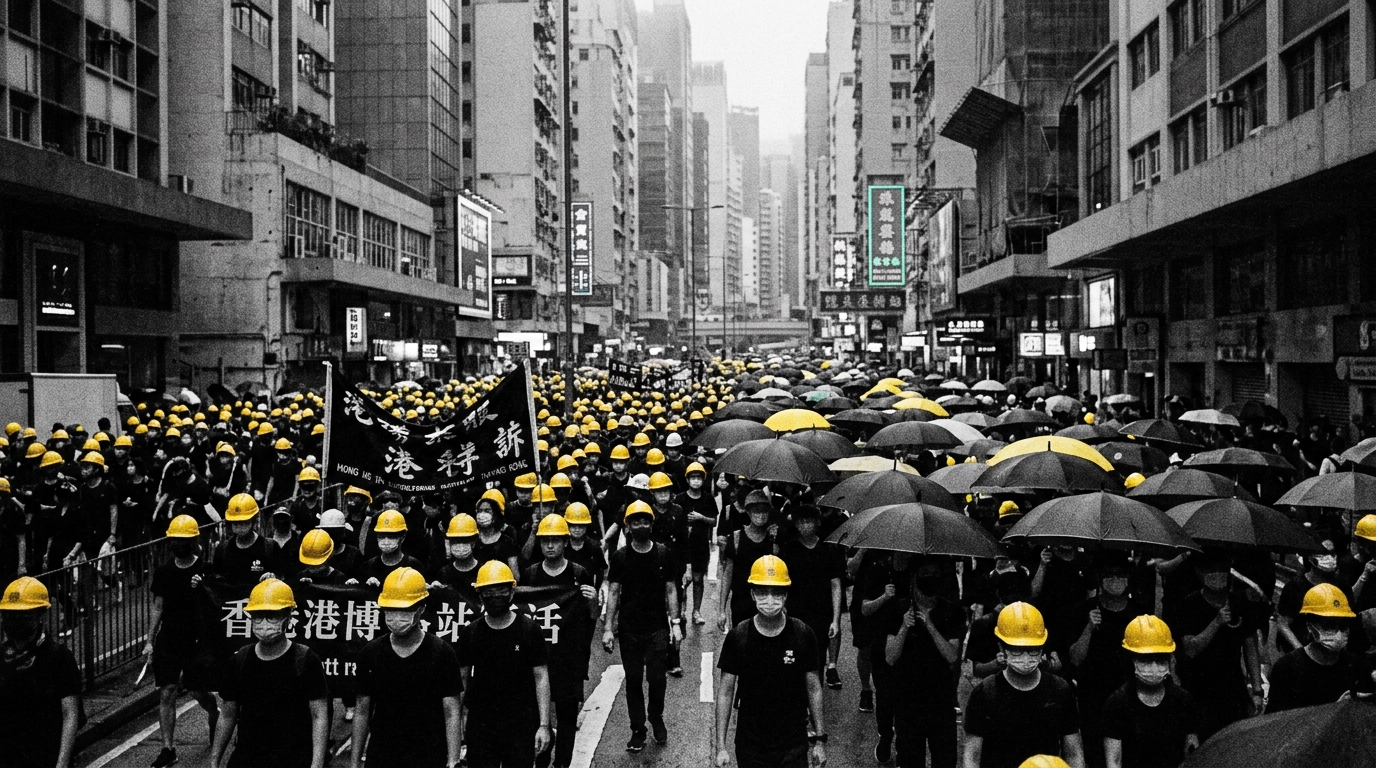
The 2019 protest movement was remarkably diverse, encompassing students, professionals, the elderly, and even civil servants. Its defining characteristic was its leaderless and decentralized nature, a deliberate strategy to avoid the pitfalls of the 2014 Umbrella Movement, which had seen key leaders arrested. Utilizing online forums and encrypted messaging apps, protesters adopted the "be water" philosophy, organizing flash mob demonstrations, road blockages, and boycotts that were difficult for police to predict or contain.
While united by the "Five Demands, Not One Less," the movement encompassed a spectrum of ideologies, from peaceful rational non-violent (PRNV) activists advocating for civil disobedience to "frontliners" who engaged in more confrontational tactics, including property damage and clashes with police. This internal diversity, while sometimes leading to tactical disagreements, also contributed to the movement's resilience. Protesters demonstrated immense creativity, using art, music, and online memes to spread their message and maintain morale. Their grievances stemmed from a deep-seated fear of losing Hong Kong's unique identity, a sense of betrayal by their government, and a desperate desire to protect their promised freedoms against Beijing's tightening grip. The movement's widespread support, particularly evident in the District Council elections, underscored the depth of public dissatisfaction and the powerful aspiration for self-determination.
Geopolitical Consequences and Aftermath
The 2019 Hong Kong crisis did not remain a localized issue; it quickly escalated into a significant flashpoint in international relations, forcing a profound realignment of foreign policy regarding Hong Kong and, more broadly, China.
International Repercussions
The brutal suppression of protests and the eventual imposition of the National Security Law drew widespread condemnation from democratic nations, fundamentally altering their diplomatic and economic engagement with both Hong Kong and Beijing.
- United States: The U.S. response was swift and robust. In November 2019, President Trump signed the Hong Kong Human Rights and Democracy Act, which mandated annual reviews of Hong Kong's autonomy to determine if it warranted its special trading status with the U.S. It also allowed for sanctions against officials deemed responsible for human rights abuses in the city. Following the NSL's implementation, the U.S. officially declared Hong Kong no longer autonomous, ending its preferential economic treatment. This included revoking tariff exemptions, suspending extradition treaties, and imposing targeted sanctions on Hong Kong and mainland officials, including Carrie Lam, under the Global Magnitsky Act. Hong Kong became a significant point of contention in the escalating U.S.-China trade war and geopolitical rivalry.
- United Kingdom: As a co-signatory of the 1984 Sino-British Joint Declaration, the UK government expressed "grave concern" over China's actions, initially through measured diplomatic language. However, the imposition of the NSL was unequivocally declared a "clear and serious breach" of the legally binding Joint Declaration. This led to a significant shift in UK policy:
- European Union, Canada, and Australia: These nations also expressed deep concern, issuing joint statements condemning the NSL and warning of its impact on Hong Kong's autonomy and rule of law. While their responses were generally more cautious than the U.S. or UK, some imposed limited sanctions, suspended extradition treaties, and offered visa pathways for Hong Kong residents. For instance, Canada suspended its extradition treaty with Hong Kong and banned the export of sensitive military items. Australia similarly suspended its extradition treaty and offered five-year visa extensions and pathways to permanent residency for Hong Kong citizens. These collective actions represented a significant international repudiation of Beijing's actions.
- Taiwan: The events in Hong Kong profoundly influenced public opinion in Taiwan, where the "One Country, Two Systems" model had long been proposed by Beijing as a framework for unification. The crackdown in Hong Kong served as a stark warning, reinforcing the Taiwanese public's resolve to resist unification under such terms. President Tsai Ing-wen's government offered humanitarian assistance to Hong Kong protesters seeking refuge, and public sentiment against Beijing's model hardened significantly, contributing to her re-election in 2020.
The National Security Law and its Immediate Impact
The implementation of the National Security Law (NSL) on June 30, 2020, marked a watershed moment. It fundamentally altered the legal and political landscape of Hong Kong, effectively ending the traditional protest era and ushering in an era of heightened political repression.
- Centralized Power: The NSL established the Committee for Safeguarding National Security, chaired by the Chief Executive and overseen by a Beijing-appointed advisor, effectively centralizing power and circumventing Hong Kong's local legislature.
- Broad Criminalization: The law criminalized vague definitions of secession, subversion, terrorism, and collusion with foreign forces, with maximum penalties of life imprisonment. Its extraterritorial reach meant it could apply to non-residents committing offenses outside Hong Kong.
- Erosion of Judicial Independence: The law allowed for certain cases to be tried in mainland courts, permitted the Chief Executive to designate judges for national security cases, and gave unprecedented powers to the police, including surveillance without judicial warrant.
- Mass Arrests and Crackdowns: The NSL led to the immediate arrests of prominent pro-democracy figures, activists, and former lawmakers, effectively dismantling the organized opposition. This included the arrests of Joshua Wong, Jimmy Lai (founder of Apple Daily), and many others.
- Media and Civil Society Clampdown: Independent media outlets like Apple Daily and Stand News were forced to close after their assets were frozen and executives arrested, stifling critical reporting. Numerous civil society organizations, unions, and human rights groups disbanded under pressure, fearing prosecution under the broad provisions of the law.
- Electoral System Overhaul: In 2021, Beijing further imposed a drastic overhaul of Hong Kong's electoral system, introducing a "patriots ruling Hong Kong" principle. This involved reducing directly elected seats, increasing the power of a Beijing-controlled election committee, and vetting all candidates for their loyalty to China. This effectively marginalized the pro-democracy camp and ensured that only Beijing-approved candidates could stand for election.
Impact on International Business Confidence
Hong Kong's reputation as a global financial hub was built on its independent judiciary, rule of law, free flow of information, and its unique status as a bridge to mainland China. The NSL and the subsequent crackdowns severely undermined these pillars. While some financial institutions initially showed resilience, longer-term concerns emerged:
- Legal Uncertainty: Foreign businesses grew wary of the NSL's vague wording and extraterritorial reach, fearing that their employees or data could be subject to mainland legal frameworks.
- Brain Drain and Talent Flight: The political repression and uncertain future prompted a significant emigration wave among both local and expatriate professionals, leading to a loss of talent and expertise.
- Data Security Concerns: The ability of mainland security agencies to operate in Hong Kong raised concerns about data privacy and the security of corporate information.
- Shift in Corporate Strategies: Some international firms began relocating parts of their regional operations or exploring alternative hubs, albeit a full exodus was not immediately observed due to Hong Kong's continued economic importance as a gateway to China. However, the perception shifted from Hong Kong being a uniquely safe and autonomous environment to one increasingly integrated into China's political system.
In essence, the 2019 protests and Beijing's response orchestrated a profound geopolitical realignment. Hong Kong transformed from a symbol of China's commitment to international agreements and pluralism into a stark illustration of Beijing's authoritarian assertiveness, becoming a central front in the broader ideological contest between democratic values and authoritarian governance.
Socio-Economic Aftermath and Geopolitical Realignment
The 2019 protests and Beijing's subsequent imposition of the National Security Law had profound and multifaceted socio-economic repercussions for Hong Kong, simultaneously triggering a significant geopolitical realignment that rippled across global capitals.
Economic Impact
Hong Kong's economy, already facing headwinds from the US-China trade war, was severely battered by the prolonged protests and the subsequent political crackdown.
- Tourism, Retail, and Hospitality: These sectors were immediately and drastically hit. International visitor arrivals plummeted, particularly from mainland China, which had been a major source of revenue. The frequent street clashes, airport occupations, and general strikes deterred tourists and shoppers. Many retail businesses, restaurants, and hotels faced significant losses, leading to closures and job cuts. The vibrant street-level economy, a hallmark of Hong Kong, suffered immensely.
- Foreign Direct Investment (FDI) and Capital Flight: While Hong Kong's stock market demonstrated remarkable resilience throughout the initial protest period, indicating continued confidence in its financial infrastructure, the long-term outlook became more cautious. The NSL, with its vague provisions and extraterritorial reach, introduced legal uncertainty that unnerved international investors. Concerns over the erosion of the rule of law, judicial independence, and the free flow of information led some multinational corporations to reassess their operational risks. While a mass exodus of capital or businesses was not immediately apparent, there was a noticeable shift in strategy, with some firms diversifying their regional operations or delaying expansion plans in Hong Kong. Reports of capital flight increased, as affluent residents sought to move assets out of the city.
- Brain Drain and Talent Exodus: The political climate created a palpable sense of unease and hopelessness, particularly among the educated middle class and young professionals. The UK's BNO visa scheme, alongside similar initiatives from Canada and Australia, offered viable exit routes. This resulted in a significant wave of emigration, leading to a "brain drain" of skilled professionals, entrepreneurs, and academics. This loss of talent, particularly in critical sectors like finance, technology, and education, poses a long-term threat to Hong Kong's competitiveness and innovation capacity. The city faces the challenge of replacing these individuals and maintaining its intellectual dynamism.
- Role as a Financial Hub: The crackdown raised fundamental questions about Hong Kong's future as Asia's premier financial hub. While its deep liquidity pools, robust regulatory framework (still largely intact post-NSL), and unique access to mainland Chinese markets (especially via Stock Connect and Bond Connect) meant it wouldn't be easily replaced by cities like Shanghai or Shenzhen, its distinct advantages—particularly its common law system and freedom of information—were severely compromised. The city's value proposition shifted from being a truly autonomous international financial center to one increasingly integrated into China's national financial strategy, raising concerns about its global appeal.
Social Impact
The protests left deep scars on Hong Kong society, exacerbating existing divisions and creating new ones.
- Deep Societal Divisions: The conflict created a profound schism between "yellow" (pro-democracy) and "blue" (pro-Beijing) camps, often along generational lines. Families, friendships, and workplaces were fractured by political disagreements. This polarization made reconciliation extremely difficult and created a climate of distrust and animosity.
- Mental Health Crisis: The prolonged trauma of the protests, the violence, the loss of hope, and the subsequent repression led to a widespread mental health crisis, especially among young people. High rates of anxiety, depression, and post-traumatic stress disorder were reported, reflecting the profound psychological toll of the political turmoil.
- Erosion of Civil Society: Under the NSL, the space for independent civil society organizations, trade unions, student bodies, and human rights groups rapidly shrank. Many were forced to disband, their leaders arrested or intimidated into silence. This dismantling of civil society severely curtailed avenues for public discourse, advocacy, and collective action, fundamentally altering the fabric of Hong Kong society.
- Self-Censorship: Fear of prosecution under the broad and vague provisions of the NSL led to pervasive self-censorship across media, academia, arts, and even daily conversations. This chilling effect significantly curtailed freedom of expression, a cornerstone of Hong Kong's past identity.
Geopolitical Realignment
The Hong Kong crisis served as a critical accelerant in the broader geopolitical competition between democratic nations and authoritarian China, particularly impacting the US-China relationship.
- US-China Relations: Hong Kong became a major flashpoint, further deteriorating already strained US-China relations. The crisis reinforced the narrative in Washington of China as an expansionist, authoritarian power that disregards international agreements. This contributed to a hardening of US policy across economic, technological, and military domains, accelerating calls for "decoupling" and forming alliances to counter China's influence.
- "New Cold War" Narrative: For many Western policymakers and commentators, Hong Kong's fate became a symbolic test case for the resilience of democratic values against authoritarian encroachment. It fueled a "New Cold War" narrative, framing the conflict as a global ideological struggle.
- Multilateral Institutions: The crisis prompted debates within international bodies like the United Nations Human Rights Council, G7, and other forums. While China strongly rejected external interference, the international community's widespread condemnation put pressure on these institutions to address human rights concerns and the erosion of autonomy in Hong Kong. However, China's growing global influence meant that concrete, coordinated actions beyond rhetorical condemnation and sanctions from a few countries remained challenging.
- Damage to China's Soft Power: Beijing's heavy-handed response severely damaged its international image, particularly in Western democracies. The "One Country, Two Systems" model, once touted as a unique solution for future unification with Taiwan and a symbol of China's pragmatism, lost all credibility. This tarnished China's soft power efforts and hardened public opinion against Beijing's global ambitions.
- Global Human Rights Discourse: The events in Hong Kong reinvigorated global discussions on corporate responsibility, supply chain ethics, and the role of international businesses operating in authoritarian states. Companies faced increased pressure to take stances on human rights issues, navigating a complex landscape where economic interests clashed with ethical considerations.
In conclusion, the socio-economic aftermath in Hong Kong is characterized by a weakened economy, a fractured society, and a significant exodus of talent, all under the shadow of stringent national security laws. Geopolitically, the crisis solidified Hong Kong's position as a focal point in the great power competition, accelerating a broader realignment in international relations and underscoring the profound challenges of managing China's rise in the 21st century.
Trivia and Lesser-Known Facts
- The "Lennon Wall" Phenomenon: Inspired by the original Lennon Wall in Prague, which became a symbol of protest against communist rule, Hong Kongers created sprawling post-it note mosaics across the city. These "Lennon Walls" appeared in underpasses, pedestrian tunnels, and public spaces, featuring colorful messages of support, political cartoons, protest slogans, and personal anecdotes. They became vibrant, evolving public spaces for collective expression and solidarity, often guarded by volunteers, and frequently torn down by pro-Beijing supporters or cleaned by authorities, only to reappear elsewhere.
- The "Be Water" Ethos: While the phrase originated with martial arts legend Bruce Lee, it was transformed by the Hong Kong protest movement into a core tactical manual. It advocated for fluidity, adaptability, and leaderlessness. Protesters would "be water" by quickly assembling for flash mob protests, blocking roads, then dispersing rapidly before police could encircle them, only to reappear elsewhere. This contrasted sharply with the static occupations of the 2014 Umbrella Movement and made the movement incredibly difficult for authorities to contain or dismantle through traditional law enforcement methods.
- Economic Resilience vs. Long-Term Erosion: Despite months of turmoil, general strikes, and airport occupations that severely impacted tourism and retail, the Hong Kong Stock Exchange remained remarkably active throughout much of the crisis. Its primary function as a crucial, albeit nervous, financial artery for Chinese capital inflow and outflow somewhat insulated it from the immediate political chaos. However, this apparent resilience masked deeper anxieties about the long-term erosion of the rule of law and judicial independence, which are fundamental to investor confidence and the city's future as a global financial center. The NSL's implementation has since accelerated capital and talent outflow, challenging this initial resilience.
- Diplomatic Friction and Treaty Breach: The crisis led to one of the most significant challenges to international treaty law in modern diplomatic history. The Sino-British Joint Declaration (1984), an international treaty registered with the United Nations, laid out the terms of Hong Kong's handover and its autonomy. Beijing's imposition of the National Security Law and subsequent actions were declared a "clear and serious breach" of this legally binding agreement by the United Kingdom and other nations. This raised fundamental questions about the enforceability of international treaties and the norms of international relations when confronted with powerful sovereign states, setting a precedent for potential future disputes.
- The "Five Demands, Not One Less": What started as a protest against an extradition bill quickly expanded into a movement with five key demands. While the bill's formal withdrawal was eventually achieved in September 2019 (a belated concession by Carrie Lam), the remaining demands became the rallying cry: 1) complete withdrawal of the extradition bill; 2) an independent inquiry into alleged police brutality; 3) retraction of the "riot" categorization for protests; 4) amnesty for arrested protesters; and 5) universal suffrage for both the Chief Executive and Legislative Council elections. The steadfast refusal of the government to address the remaining four demands was a critical factor in the protests' persistence and escalation.
- The Use of Symbolism: Protesters adopted a range of powerful symbols. The yellow umbrella became an enduring icon of the pro-democracy movement, stemming from its use to block tear gas during the 2014 Umbrella Movement. Gas masks and hard hats represented resistance and protection against police force. The song "Glory to Hong Kong" became an unofficial anthem, frequently sung at rallies. These symbols fostered a strong sense of collective identity and purpose throughout the diverse and leaderless movement.
References and Literature
- The Hong Kong Protest Movement: A History - A detailed analysis of the socio-political origins and evolution of the 2019 movement, often covering the nuances of internal dynamics.
- Sino-British Joint Declaration (1984) Official Archive - The foundational international treaty detailing the terms of the 1997 handover and the "One Country, Two Systems" framework, crucial for understanding the legal dispute.
- Hong Kong: The Long Shadow of the Handover by Sebastian Veg - A scholarly examination of the legal, political, and social shifts in the SAR during the 2010s, providing essential context for the 2019 crisis.
- National Security Law Analysis by the Law Library of Congress - A technical review and legal interpretation of the legislative framework imposed on Hong Kong in 2020, detailing its articles and implications.
- City on the Edge: Hong Kong Under Chinese Rule by Ho-fung Hung - An in-depth sociological and political economic analysis of Hong Kong's post-handover struggles and the forces leading to the 2019 protests.
- Amnesty International Reports on Hong Kong - Comprehensive reports detailing human rights violations, police brutality, and the impact of the National Security Law.
Footnotes & Explanations
- The Sino-British Joint Declaration is a binding international treaty between the UK and China that established the "One Country, Two Systems" principle and guaranteed Hong Kong's autonomy for 50 years. ↩
- The Hong Kong Human Rights and Democracy Act was signed by the US President in 2019, mandating annual certification of Hong Kong's autonomy and authorizing sanctions for human rights abuses. ↩