Key Takeaways
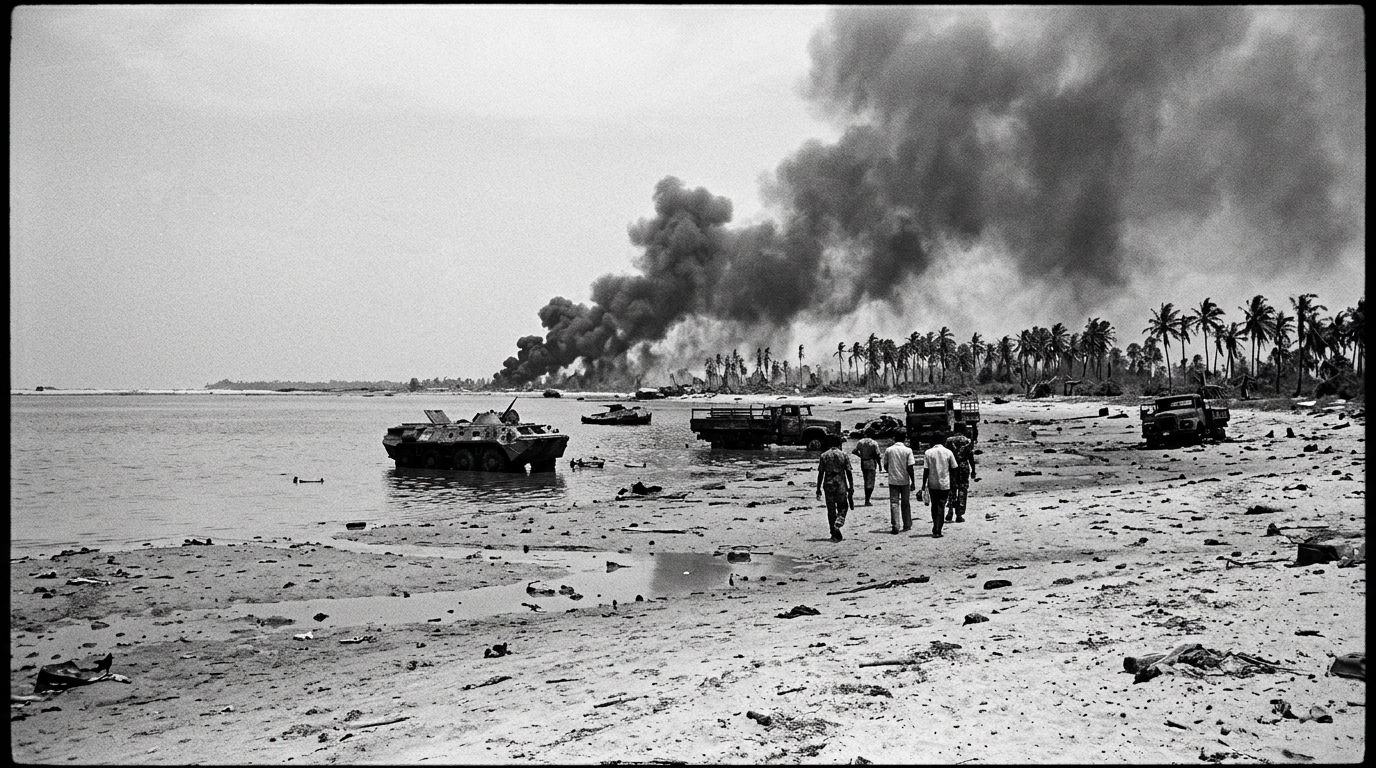
- The 2009 military victory represented the first instance in modern history where a conventional state military decisively defeated a dedicated insurgent organization utilizing sophisticated suicide tactics, maritime capabilities, and a quasi-state structure.
- The conflict's conclusion profoundly shifted Sri Lanka's regional geopolitical balance, drawing the nation closer into the economic and military orbit of China while severely straining relations with Western nations over human rights concerns and accountability mandates.
- The centralization of power under the Rajapaksa administration during and after the final stages of the war fundamentally altered Sri Lanka's domestic political landscape, prioritizing national security and executive authority over ethnic reconciliation and democratic norms for the following decade.
- The final offensive precipitated an acute humanitarian crisis, trapping hundreds of thousands of civilians and leading to widespread allegations of war crimes by both sides, issues that continue to dominate international human rights discourse and efforts for transitional justice.
Historical Context and Origins
The conflict in Sri Lanka, which tragically spanned over a quarter of a century (1983-2009), was deeply rooted in a complex interplay of historical grievances, linguistic nationalism, and perceived socio-economic discrimination between the majority Sinhalese and the minority Tamil populations. The seeds of discord were sown even before independence from British colonial rule in 1948, but they germinated rapidly in the post-colonial era.
Colonial Legacy and Post-Independence Policies: British colonial administration, following a classic 'divide and rule' strategy, had often favoured the Tamils, particularly those from the Jaffna peninsula, in education and civil service appointments, creating a sense of resentment among the Sinhalese majority. After independence, a series of legislative acts by successive Sinhalese-dominated governments sought to reverse these perceived imbalances, inadvertently marginalizing the Tamil-speaking population. The most impactful of these was the Sinhala Only Act of 1956, which declared Sinhala the sole official language, effectively displacing Tamil from government, education, and public life. This act, championed by Prime Minister S.W.R.D. Bandaranaike, was seen by Tamils as a direct assault on their identity and a deliberate move towards ethnic majoritarianism.
Further policies exacerbated these tensions:
- Citizenship Acts (1948, 1949): Denied citizenship to a vast population of 'Indian Tamils' (estate workers brought by the British), rendering them stateless.
- Standardization in Education: Introduced in the 1970s, it imposed district-based quotas for university admissions, which Tamils viewed as a deliberate attempt to limit their access to higher education, where they had historically excelled.
- State-sponsored Colonization Schemes: These initiatives saw Sinhalese settlers moved into traditionally Tamil-majority areas in the north and east, altering demographic balances and fueling fears of land alienation.
Rise of Tamil Nationalism and Militancy: Initially, Tamil political parties, such as the Federal Party (Ilankai Tamil Arasu Kadchi - ITAK), pursued non-violent, constitutional means to achieve autonomy and safeguard Tamil rights, advocating for a federal state. However, the consistent failure of these peaceful appeals, coupled with increasing instances of state-sponsored anti-Tamil pogroms (e.g., 1956, 1958, 1977, 1983), led many Tamil youths to believe that armed struggle was the only viable path. The "Vaddukkoddai Resolution" of 1976 by the Tamil United Liberation Front (TULF) formally called for the establishment of a separate, independent state of Tamil Eelam, providing ideological fodder for burgeoning militant groups.
Among these, the Liberation Tigers of Tamil Eelam (LTTE), founded by the enigmatic Velupillai Prabhakaran in 1976, rapidly eclipsed other groups. The LTTE distinguished itself through its ruthlessness, ideological rigidity, and a cult of personality built around Prabhakaran. It systematically eliminated rival Tamil militant organizations, consolidating its power as the sole representative of Tamil aspirations. The infamous Black July pogrom of 1983, a brutal week of anti-Tamil violence following the ambush and killing of 13 Sri Lankan soldiers by the LTTE, served as a critical turning point, pushing thousands of young Tamils into the ranks of militant groups and igniting the full-scale civil war.
By the early 2000s, the LTTE had evolved into one of the world's most sophisticated and formidable non-state armed groups. They maintained a functional quasi-state, particularly in the northern Vanni region, complete with an administrative apparatus, courts, police, banks, and taxation systems. Militarily, they boasted a well-trained ground force, a nascent but effective naval wing (the Sea Tigers), and even a rudimentary air wing. The 2002 Ceasefire Agreement (CFA), brokered by Norway, brought a period of relative calm, but both parties flagrantly violated its terms, using the time to rearm, recruit, and consolidate power. The peace process eventually collapsed under the weight of deep mutual distrust, the LTTE's non-negotiable demand for a separate state, and the hardline nationalist elements within the Sri Lankan government who saw negotiation as a capitulation to terrorism.
Timeline of Events and Key Moments
The final phase of the war, often termed "Eelam War IV," commencing in mid-2006, was characterized by an unprecedented scale of military mobilization and a systematic, relentless offensive by the Sri Lankan armed forces.
| Date | Event | Significance |
|---|---|---|
| Nov 2005 | Mahinda Rajapaksa is elected President. | Signaled a decisive shift towards a harder, more militaristic stance against the LTTE, backed by a strong nationalist mandate. |
| Jul 2006 | The Mavil Aru incident triggers resumption of full-scale hostilities. | LTTE's closure of an irrigation canal sparked a military response, effectively ending the CFA and marking the beginning of Eelam War IV. |
| Jan-Dec 2007 | Sri Lankan Army captures the Eastern Province. | A major strategic victory; it dislodged the LTTE from a key operational base, isolated their northern strongholds, and deprived them of vital coastal access. |
| Jan 2008 | Government formally withdraws from the 2002 Ceasefire Agreement. | Removed legal constraints on military operations, allowing for an all-out offensive and signifying the government's commitment to a military solution. |
| Jan 2009 | The LTTE's administrative capital, Kilinochchi, falls to government forces. | A massive psychological and strategic blow to the LTTE, symbolizing the collapse of their 'quasi-state' and severely demoralizing their cadres. |
| Apr 2009 | Mass civilian exodus from the 'No-Fire Zone'. | As military pressure intensified, hundreds of thousands of civilians, trapped by the LTTE, began fleeing towards army-controlled areas, exposing the scale of the humanitarian crisis. |
| May 18, 2009 | Final battle at Nandikadal Lagoon; death of Velupillai Prabhakaran. | The ultimate symbolic and operational victory for the government, confirming the complete military defeat of the LTTE and effectively ending the 26-year civil war. |
The military success was not merely a matter of superior manpower, though troop numbers were significantly increased. It was a result of a highly coordinated, multi-faceted effort that effectively neutralized the LTTE’s maritime logistics lines. By cutting off supply routes from across the Palk Strait and the Bay of Bengal, the Sri Lankan Navy, under the command of Vice Admiral Wasantha Karannagoda, effectively starved the LTTE of ammunition, fuel, and other vital supplies. This rendered their conventional military structures brittle and susceptible to the army's relentless "search and destroy" missions and precision artillery barrages.
Analysis of Key Actors and Decisive Actions
The final phase of the Sri Lankan civil war was a testament to the strategic resolve of the Sri Lankan government and the tactical prowess of its armed forces, contrasted sharply with the fatal miscalculations of the LTTE.
Mahinda Rajapaksa and the "War for Peace"
President Mahinda Rajapaksa, elected in 2005, ascended to power on a strong nationalist platform. Crucially, he redefined the conflict from an intractable ethnic grievance requiring political negotiation to a clear-cut struggle against a terrorist organization, the LTTE. This framing allowed the administration to garner significant international support, particularly in the post-9/11 security climate, where counter-terrorism efforts were globally prioritized.
Rajapaksa's leadership was characterized by several key decisions:
- Centralization of Authority: He consolidated power within the executive presidency, notably appointing his brother, Gotabaya Rajapaksa, as Defense Secretary, and General Sarath Fonseka as Army Commander. This trio formed a tight-knit war cabinet, ensuring streamlined decision-making and minimizing internal dissent.
- "War for Peace" Doctrine: This doctrine asserted that only a decisive military defeat of the LTTE would pave the way for lasting peace and reconciliation, rejecting the incremental peace-process approach.
- Military Reform and Empowerment: Rajapaksa backed a significant expansion and modernization of the armed forces. He appointed experienced, combat-hardened officers to lead the offensive, giving them unprecedented operational freedom and political backing. This included authorizing a substantial increase in military spending and actively seeking military hardware and intelligence from countries like China, Pakistan, and Russia, which were less inclined to attach human rights conditions to their aid.
- Unwavering Resolve: Rajapaksa famously leveraged an "all-or-nothing" strategy, ignoring intense international calls for a ceasefire in the final months of the conflict. He viewed these calls as a tactical lifeline for the trapped LTTE leadership, firmly believing that any pause would allow the Tigers to regroup and prolong the war.
The Tactical and Strategic Failure of the LTTE
The LTTE's decision to abandon mobile guerrilla warfare in favor of defending a fixed 'quasi-state' territory proved to be their ultimate undoing. Their leadership, driven by an almost cult-like devotion to Prabhakaran and his uncompromising vision of Tamil Eelam, failed to adapt to the realities of a state military that had significantly upgraded its technological capabilities, artillery coordination, and naval blockade efficacy.
Several factors contributed to their collapse:
- Static Defense: By attempting to defend Kilinochchi and the Vanni strongholds like conventional armies, the LTTE exposed their forces to the superior heavy artillery, multi-barrel rocket launchers, and precision air power of the Sri Lankan Army and Air Force. Their extensive trench lines and fortifications, once impenetrable, became death traps.
- Loss of International Support: The LTTE's continued reliance on suicide bombers (Black Tigers), the recruitment and use of child soldiers, political assassinations (including former Indian Prime Minister Rajiv Gandhi and Sri Lankan President Ranasinghe Premadasa), and their consistent refusal to negotiate sincerely alienated potential international sympathizers and led to their proscription as a terrorist organization by many countries, including the US, UK, Canada, and India. This drastically curtailed their ability to procure weapons and funds internationally.
- Internal Schisms: The defection of Colonel Karuna Amman, the LTTE's powerful commander of the Eastern Province, in 2004, was a significant blow. Karuna's forces, once a formidable part of the LTTE, subsequently aided the government in clearing the East, providing crucial intelligence and manpower.
- Human Shields Strategy: In the final stages, the LTTE forcibly herded hundreds of thousands of Tamil civilians into a shrinking 'No-Fire Zone,' using them as a human shield against the military advance. While this created a severe humanitarian crisis, it ultimately failed to deter the Sri Lankan military and further exacerbated international condemnation.
- Logistical Collapse: The effective naval blockade by the Sri Lankan Navy choked off the LTTE's vital supply lines, severing their access to arms, ammunition, and fuel, which were often smuggled from Southeast Asian markets. This severely impacted their operational capacity in the crucial final months.
"The LTTE were not merely a rebel group; they operated like a conventional state, and by doing so, they provided the Sri Lankan Army with a fixed target that they could systematically dismantle. Their overestimation of their own strength and an inability to adapt to the shifting geopolitical and military realities sealed their fate." — Historical security analysis.
Socio-Economic Aftermath and Humanitarian Crisis
The end of the war in May 2009 brought an end to active hostilities but left Sri Lanka grappling with a profound humanitarian crisis and a complex path towards recovery and reconciliation.
The Humanitarian Crisis in the Final Stages
The final months of the conflict were marked by intense fighting in a rapidly shrinking coastal strip in the Vanni region. Estimates suggest between 300,000 and 400,000 Tamil civilians were trapped in this 'No-Fire Zone,' caught between the advancing Sri Lankan military and the retreating LTTE, which actively prevented civilians from escaping to government-controlled areas, using them as human shields. The area was subjected to intense shelling from both sides. Independent reporting and UN assessments, notably the Darusman Panel report commissioned by the UN Secretary-General, documented credible allegations of widespread violations of international humanitarian law by both parties. These included:
- Mass Civilian Casualties: Estimates vary widely, but tens of thousands of civilians are believed to have died in the final five months alone, primarily from artillery shelling.
- Targeting of Hospitals: Reports indicated that hospitals and aid facilities, despite being clearly marked, came under repeated shelling.
- Denial of Aid: Access for humanitarian agencies was severely restricted, leading to shortages of food, medicine, and clean water.
Internally Displaced Persons (IDPs) and Resettlement
In the immediate aftermath, over 280,000 Tamil civilians who had escaped the conflict zone were housed in government-run Menik Farm welfare camps in Vavuniya. While the government cited security screening (to identify LTTE cadres disguised as civilians) and de-mining efforts as reasons for their prolonged detention, human rights organizations criticized the camp conditions, lack of freedom of movement, and the slow pace of resettlement. The camps, initially overcrowded and lacking adequate facilities, became a symbol of the government's post-war ethnic policies. While most IDPs were eventually resettled, often without adequate compensation or full return to their original lands, the process was fraught with challenges, including land disputes, militarization of the North, and persistent surveillance.
Economic Impact and Reconstruction
The end of the war ushered in a period of relative economic boom, fueled by significant infrastructure development projects, largely financed by external loans (predominantly from China). Roads, railways, ports (like Hambantota), and airports were built or upgraded, particularly in the North and East, aimed at integrating these once-isolated regions into the national economy. Tourism, a key sector, rebounded strongly. However, this growth was often criticized for being uneven, debt-driven, and failing to address the fundamental economic disparities that had contributed to the conflict. The militarization of the North and East also meant that vast tracts of land remained under military control, hindering agricultural and economic revival for local Tamil communities.
Reconciliation and Justice
The post-war period has been dominated by debates over accountability for war crimes and the prospects for genuine ethnic reconciliation. The government established the Lessons Learnt and Reconciliation Commission (LLRC) in 2010, but its mandate and findings were largely criticized by international human rights bodies for failing to adequately address accountability for atrocities. Persistent calls for an international investigation into war crimes have been consistently rejected by successive Sri Lankan governments, citing issues of national sovereignty. The lack of credible domestic mechanisms for justice has led to continued international scrutiny and resolutions at the UN Human Rights Council (UNHRC), maintaining pressure on Sri Lanka to implement transitional justice measures, including truth-seeking, reparations, and ensuring non-recurrence.
The legacy of the war also includes widespread trauma and mental health issues among the affected population, particularly in the North and East. The need for psychological support, rehabilitation, and addressing the root causes of ethnic division remains a significant challenge for long-term peace.
Geopolitical Realignment and International Scrutiny
The conclusion of the Sri Lankan civil war did not merely resolve an internal conflict; it significantly altered Sri Lanka's geopolitical alignment and thrust it into the spotlight of international human rights debates.
The India-Sri Lanka Dynamic
Historically, India has played a complex and often contradictory role in the Sri Lankan conflict. Initially, in the 1980s, India (particularly its intelligence agency RAW) clandestinely supported and trained various Tamil militant groups, including the LTTE, primarily driven by pressure from its own Tamil Nadu state. This policy backfired spectacularly with the assassination of former Indian Prime Minister Rajiv Gandhi by an LTTE suicide bomber in 1991. Subsequently, India maintained a more hands-off approach, though it remained deeply concerned about the spillover effects of the conflict and the humanitarian situation.
During the final offensive, India provided intelligence support and limited military aid but crucially withheld any direct intervention, despite intense pressure from Tamil Nadu. New Delhi's primary concern was to prevent a large influx of Tamil refugees and to ensure that no external powers, especially China, gained undue influence in Sri Lanka. Post-2009, India's influence in Sri Lanka waned as China rapidly filled the void. This spurred India to re-engage with Sri Lanka, attempting to balance its strategic interests with the humanitarian concerns of its domestic Tamil population. The evolving dynamic between India and Sri Lanka remains a crucial aspect of South Asian geopolitics.
China's Growing Influence
Perhaps the most significant geopolitical consequence of the war's end was Sri Lanka's pivot towards China. As Western nations increasingly criticized Sri Lanka for its human rights record and demanded accountability, Beijing stepped in as an "all-weather friend." China provided substantial financial aid, crucial loans for ambitious infrastructure projects (such as the Hambantota Port, Mattala Airport, and Colombo Port City), and vital military supplies (e.g., J-7 fighter jets, anti-aircraft weaponry, and radar systems) without attaching human rights conditions.
This close relationship allowed China to expand its footprint in the Indian Ocean, a move viewed with considerable alarm by India and Western powers, particularly the United States, as part of Beijing's "String of Pearls" strategy. The eventual leasing of the Hambantota Port to a Chinese company for 99 years due to Sri Lanka's inability to repay its debt became a stark illustration of China's growing strategic leverage and raised concerns about "debt-trap diplomacy."
Western Nations and Human Rights Scrutiny
In contrast to China, Western nations, led by the US, UK, and the EU, became increasingly vocal in their criticism of Sri Lanka's conduct during the final stages of the war. Allegations of war crimes, the humanitarian crisis, and the government's subsequent refusal to conduct credible investigations led to:
- Suspension of GSP+ trade concessions by the EU, impacting Sri Lanka's textile exports.
- Travel bans and asset freezes on certain Sri Lankan military and government officials.
- Repeated resolutions at the UN Human Rights Council (UNHRC) in Geneva, calling for accountability, transitional justice mechanisms, and international investigations. These resolutions were often met with strong opposition from Sri Lanka, backed by China and Russia, leading to protracted diplomatic battles.
- Impact on R2P Doctrine: The Sri Lankan case has been cited in debates surrounding the 'Responsibility to Protect' (R2P) doctrine, questioning the international community's capacity or will to intervene to prevent mass atrocities when state sovereignty is invoked.
Domestic Political Realignment
Internally, the victory fundamentally reshaped Sri Lanka's domestic political landscape. The Rajapaksa administration emerged immensely powerful, riding a wave of Sinhala Buddhist nationalism. The executive presidency became even more centralized, with significant amendments to the constitution (e.g., the 18th Amendment, later repealed by the 19th and 20th Amendments) that removed presidential term limits and concentrated power. This led to concerns about the erosion of democratic institutions, judicial independence, and media freedom. The military, which had played a heroic role in the war, maintained a significant presence in civilian life, particularly in the North and East, contributing to a sense of ongoing occupation among Tamil communities. This post-war triumphalism sidelined genuine efforts for ethnic reconciliation for many years, creating a deeply polarized society struggling to come to terms with its past.
Trivia and Lesser-Known Facts
- The Sea Tigers' Sophistication: The LTTE’s naval wing, the Sea Tigers, was remarkably sophisticated for a non-state actor. They operated suicide boats (Black Sea Tigers), torpedoes, and even attempted to develop indigenous mini-submarines. Their tactics, including swarming attacks on Sri Lankan Navy vessels, posed a significant threat to maritime security for decades.
- The LTTE Air Wing: While rudimentary, the 'Air Tigers' (Siruththai Vanapadai) conducted several daring, albeit largely symbolic, air raids using light aircraft (Zlin Z 43s) in 2007 and 2009, targeting Colombo's international airport and air bases. This was a unique capability for an insurgent group.
- Intelligence Successes: One of the less publicized but crucial factors in the government's victory was the significant improvement in intelligence gathering. This included enhanced human intelligence (HUMINT) due to LTTE defections (like Karuna Amman) and intensified signal intelligence (SIGINT) capabilities, often aided by international partners. This allowed the military to track LTTE leaders and disrupt their communication networks.
- LTTE's Global Funding Network: The LTTE maintained an extensive global network for fundraising, weapons procurement, and propaganda, primarily through the Tamil diaspora in North America, Europe, and Australia. Funds were collected through voluntary donations, extortion, and various front organizations, enabling them to sustain their war effort for decades.
- Prabhakaran's Obsession with the Cult of Personality: Velupillai Prabhakaran cultivated a fierce, unwavering loyalty among his cadres, portraying himself as a messianic figure destined to deliver Tamil Eelam. He rarely appeared in public, shrouded in mystique, and often ordered the assassination of any perceived rivals or dissenters within the Tamil movement. His unyielding ideological stance and refusal to compromise were central to both the LTTE's longevity and its ultimate downfall.
- The LTTE's "Baby Brigade": The systematic recruitment and forceful conscription of child soldiers, known as the "Baby Brigade," was a dark aspect of the LTTE's military strategy. Children, some as young as 10, were used in combat roles, as human shields, and in support functions, highlighting the group's disregard for international norms and human rights.
References and Literature
- Weiss, Gordon (2011). The Cage: The Fight for Sri Lanka and the Last Days of the Tamil Tigers. Penguin Random House. (A detailed account by a former UN official regarding the humanitarian disaster during the final weeks of the conflict and the international community's response.)
- Human Rights Watch. Still Waiting for Justice: Why the UN Human Rights Council Must Act on Sri Lanka. (Comprehensive reports documenting the conduct of both the military and the LTTE, focusing on allegations of war crimes and the need for accountability.)
- Council on Foreign Relations. The Sri Lankan Civil War. (A concise summary of the political and strategic factors that defined the 26-year insurgency, including a good overview of international implications.)
- Darusman, Marzuki; Sooka, Yasmin; Ratner, Steven R. (2011). Report of the Secretary-General’s Panel of Experts on Accountability in Sri Lanka. United Nations. (Often referred to as the 'Darusman Report,' this document provides a critical assessment of the alleged violations of international humanitarian and human rights law by both parties during the final stages of the conflict.)
- DeVotta, Neil (2004). Blowback: Linguistic Nationalism, Institutional Decay, and Ethnic Conflict in Sri Lanka. Stanford University Press. (Provides deep historical context on the origins of the conflict, particularly focusing on the role of linguistic nationalism and institutional failures.)
- Jeyaraj, D.B.S. (2011). The Post-War Political Landscape of Sri Lanka. Asian Journal of Political Science. (Analyzes the domestic political changes, concentration of power, and challenges to reconciliation in the aftermath of the war.)
- Kelegama, Saman (2010). The Economic Cost of the Sri Lankan Civil War. Institute of Policy Studies of Sri Lanka. (An insightful study into the economic impact of the prolonged conflict and the challenges of post-war economic reconstruction.)
- Perera, Jehan (2016). A New Era of Reconciliation: Sri Lanka's Journey Towards Sustainable Peace. Journal of Diplomacy and International Relations. (Examines the post-war efforts at reconciliation, their successes, and inherent limitations.)