Key Takeaways
- The Beslan crisis marked a turning point in Russian domestic policy, leading to the dramatic centralization of power under Vladimir Putin and the strengthening of the 'vertical of power'.
- The siege highlighted the extreme radicalization of the Chechen insurgency under Shamil Basayev, moving from ethno-nationalist goals towards a brutal, pan-Islamist and nihilistic form of terrorism.
- The failure of state intervention forces raised significant questions regarding Russian crisis management, intelligence coordination, and the ethical considerations of counter-terrorism tactics, drawing international condemnation and domestic criticism.
- The long-term legacy of Beslan includes deep psychological scars for survivors, a persistent public demand for truth, and a hardened Russian stance on regional autonomy and security issues, particularly in the North Caucasus.
Historical Context and Origins
The Beslan school siege, a tragedy of unparalleled horror in post-Soviet Russia, did not emerge from a vacuum but was the horrifying culmination of a decade of escalating conflict in the North Caucasus. To truly grasp its profound implications, one must delve deep into the volatile history of the First and Second Chechen Wars, understanding the evolution of a separatist movement into a radicalized insurgency employing brutal terrorist tactics.
The seeds of the conflict were sown with the collapse of the Soviet Union in 1991. Chechnya, a small, predominantly Muslim republic within the Russian Federation, declared independence under the leadership of former Soviet Air Force general Dzhokhar Dudayev. Moscow, initially preoccupied with its own internal transformations, tolerated this de facto independence for several years. However, by late 1994, alarmed by Chechnya's growing lawlessness, its emergence as a hub for organized crime and a perceived threat to Russia's territorial integrity, President Boris Yeltsin launched the First Chechen War. This brutal conflict (1994-1996) was marked by heavy civilian casualties, the destruction of Grozny, and significant Russian military setbacks. Despite superior firepower, the Russian forces were eventually forced to withdraw following the Khasavyurt Accord, which granted Chechnya de facto autonomy and postponed the question of its final political status until 2001.
The period between the two wars (1996-1999) proved to be a fertile ground for radicalization. Chechnya descended into anarchy, ruled by a patchwork of warlords and militias. The elected president, Aslan Maskhadov, struggled to assert control over the republic, which became increasingly criminalized, with kidnappings, arms trafficking, and oil smuggling rampant. Crucially, this era also saw the influx of foreign Islamist fighters, often referred to as "Wahhabis," who brought with them a more extreme, pan-Islamist ideology. Figures like Shamil Basayev, a prominent field commander in the First Chechen War, increasingly embraced this radical worldview, shifting the Chechen struggle from one of ethno-nationalist independence to a broader jihadist cause. The establishment of "Islamic courts" and the implementation of Sharia law in parts of Chechnya reflected this ideological shift.
The Second Chechen War erupted in August 1999, triggered by a series of events. Basayev, alongside foreign militant Ibn al-Khattab, launched an audacious incursion into the neighboring Russian republic of Dagestan, declaring a holy war to establish an Islamic state across the North Caucasus. Simultaneously, a series of apartment bombings in Russian cities, including Moscow, in September 1999, which killed hundreds, further inflamed public opinion and provided the Kremlin with a decisive casus belli. Although Basayev denied responsibility for the apartment bombings, their timing allowed then-Prime Minister Vladimir Putin to launch a swift and brutal "anti-terrorist operation" in Chechnya. Putin, who had risen to power on a platform of restoring order and national pride, adopted an uncompromising stance against Chechen separatism, promising to "drown them in the outhouse." The second war was characterized by a more disciplined Russian military campaign, leading to the eventual re-establishment of federal control over much of Chechnya, albeit at a terrible cost.
However, the insurgency simply transitioned from conventional warfare to asymmetric terrorism. Faced with overwhelming Russian military might, radicalized Chechen groups, particularly those led by Basayev, escalated their tactics to target Russian civilians beyond Chechnya's borders. The Beslan school siege was not an isolated incident but part of a grim progression. It followed the 2002 Moscow theater hostage crisis (Dubrovka), where 40 Chechen militants took over 800 hostages, leading to 130 civilian deaths during the ill-fated rescue operation. In the months leading up to Beslan, Russia had also experienced a spate of other attacks, including suicide bombings on public transport and the downing of two passenger planes, all claimed by Basayev's Riyadus-Salikhiin Brigade of Martyrs. These attacks demonstrated a clear strategy: to inflict maximum psychological trauma, undermine public trust in the state, and force a Russian withdrawal from Chechnya through sheer terror. Beslan represented the horrifying pinnacle of this strategy, intentionally expanding the conflict into a neighboring republic, North Ossetia, thereby exacerbating inter-ethnic tensions within the already volatile North Caucasus region.
Intelligence Failures and Warning Signs
The catastrophic outcome of the Beslan school siege brought into sharp focus the profound intelligence failures that preceded and accompanied the crisis. Despite Russia's vast security apparatus, the attack represented a significant lapse in its ability to protect its citizens and prevent a meticulously planned terrorist act.
Reports and subsequent investigations, including those by independent journalists and the European Court of Human Rights, have indicated that Russian security services possessed credible intelligence about an impending large-scale terrorist attack in the North Caucasus targeting a school or a large public gathering during "Knowledge Day" on September 1. For instance, there were specific warnings from the FSB (Federal Security Service) and other agencies about potential targets in North Ossetia and Ingushetia. However, these warnings appear to have been either dismissed, inadequately acted upon, or not effectively disseminated to local law enforcement and school authorities. Security measures in Beslan, including at School Number One, were notably lax on the morning of the attack, despite the heightened threat level across the region.
The failure to interdict the militants' movement was another critical intelligence and operational breakdown. The group of approximately 32 heavily armed terrorists traveled in a convoy of vehicles, including a GAZelle truck, from Ingushetia into North Ossetia, crossing multiple checkpoints, seemingly unimpeded. While the exact route and the reasons for the lack of interdiction remain contentious – with some allegations of corruption allowing passage – the fact that such a large, armed group could traverse a highly militarized region without being detected or stopped points to a severe systemic failure in border control, intelligence sharing between regional agencies, and checkpoint vigilance.
Once the siege began, intelligence gathering on the ground remained severely hampered. For much of the initial 52 hours, Russian security forces lacked accurate information regarding the precise number of militants, their exact positions within the school, the number of hostages (initial estimates varied wildly, complicating rescue planning), or the extent of the explosives planted throughout the building and on the hostages themselves. This intelligence vacuum contributed to the chaotic nature of the subsequent rescue attempt. Conflicting reports from sources inside and outside the perimeter further muddied the picture, making a coordinated, well-informed response exceedingly difficult. The lack of reliable intelligence meant that the special forces, when they eventually stormed the building, were operating largely in the dark, leading to improvisation rather than a meticulously planned operation. This foundational intelligence deficit is widely considered a major contributing factor to the unprecedented casualty count.
Timeline of Events and Key Moments
The tragedy unfolded with horrifying speed and brutality over three days, irrevocably scarring the small town of Beslan.
| Date | Time (Approx.) | Event Description | Key Details |
|---|---|---|---|
| September 1, 2004 | 09:15 | Militants storm School Number One during 'Knowledge Day' ceremonies. | A group of approximately 32 heavily armed Chechen and Ingush militants, some wearing suicide belts, arrive in a stolen GAZelle truck. They open fire, killing several adults instantly, and herd over 1,100 people into the school gym. |
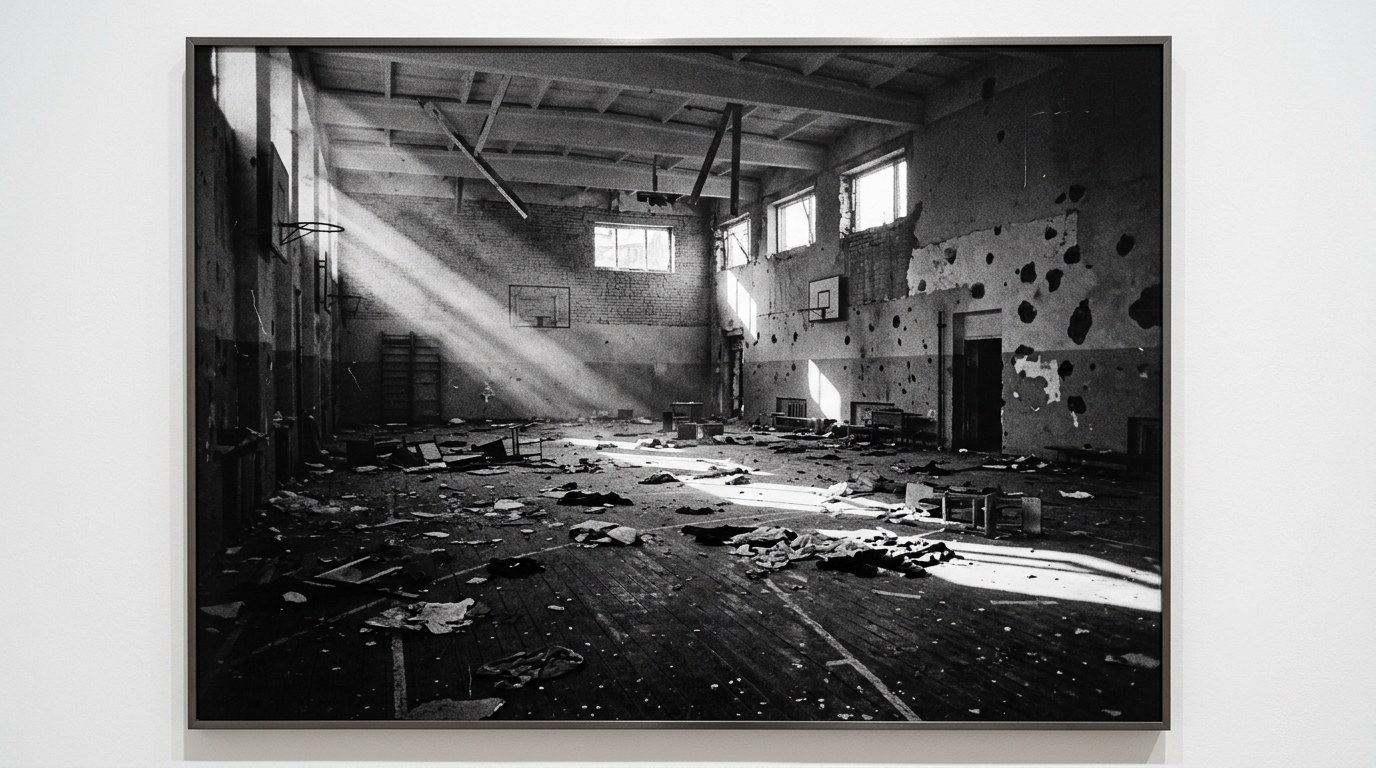
| Morning | Hostages herded into the school gym; booby traps set. | Over 1,100 hostages (initially reported as 350-400), including 777 children, are crammed into the sweltering gymnasium. Explosives, including landmines and 'shakhid belts', are rigged around the gym and basketball hoops, controlled by militants via pedal detonators. | |
| Late Morning | Initial attempts at negotiation and perimeter setup. | Security forces quickly surround the school, but the perimeter is chaotic, with local armed volunteers interspersed with official units. Negotiations begin, but militants refuse direct contact with federal authorities, demanding talks with specific high-level officials. | |
| Afternoon | Militants refuse food, water, or medical aid; bodies removed. | Hostages are denied water, food, and medicine. At least 20 adults (primarily men) are executed by the militants on the first day in various parts of the school, their bodies later discarded outside. | |
| September 2, 2004 | Morning | Stalled negotiations; desperation grows inside. | Negotiations make little headway. The militants demand the withdrawal of Russian troops from Chechnya and the recognition of Chechen independence. They reject proposals for food, water, or medical supplies for the hostages. |
| Midday | Ruslan Aushev mediates; secures release of some hostages. | Former Ingush President Ruslan Aushev enters the school alone, negotiating directly with the militants. He successfully secures the release of 26 mothers and their infants, a rare moment of hope amidst the horror. | |
| Ongoing | Conditions inside the gym deteriorate; no end in sight. | The intense heat, lack of ventilation, and absolute deprivation of food and water lead to severe dehydration and exhaustion among the hostages. The emotional and physical toll on children is immense. | |
| September 3, 2004 | Morning | Agreement to collect bodies; heightened tension. | An agreement is reached to allow a team from the Ministry of Emergency Situations (EMERCOM) to collect the bodies of those killed on September 1 and left outside the school. This move is intended to facilitate further negotiations. |
| 13:00 (Approx.) | Two powerful explosions occur in the gym. | While EMERCOM workers are near the school, two major explosions detonate inside the gymnasium. The exact cause is highly disputed: Russian officials claim accidental detonation by a militant; survivors and independent reports suggest possible external fire or a sequence of internal failures. | |
| 13:05 | Chaotic firefight erupts; hostages attempt to escape. | The explosions cause significant structural damage to the gym, including partial roof collapse, and ignite fires. This immediately triggers a chaotic firefight between the militants and a largely uncoordinated mix of special forces, local police, and armed civilians. Hostages begin to flee through the breaches. | |
| Afternoon | Special forces storm the building; high civilian casualties. | Federal special forces (FSB Alpha and Vympel units) launch a full-scale assault. The fighting is intense and prolonged, involving heavy weaponry like tanks, flamethrowers, and grenade launchers. Many hostages are caught in the crossfire or killed by collapsing debris and fires. | |
| Evening | End of siege; horrific discovery of dead. | The last remaining militants are neutralized or killed, many hiding among the fleeing hostages. The full extent of the tragedy becomes clear as rescuers discover hundreds of bodies, mostly children, amid the rubble and burning remains of the gym. The operation concludes around 22:00. |
The chaos on September 3 began when improvised explosive devices (IEDs) detonated inside the gymnasium. While the exact trigger remains a subject of intense debate—with survivors and independent investigators suggesting accidental detonation, premature fire from security forces, or a sequence of both—the result was an immediate descent into total tactical disarray. The initial blasts, coupled with the collapse of the roof and subsequent fires, created a horrifying scene that forced security forces to launch an unplanned and uncoordinated assault.
Geopolitical Consequences and Aftermath
The aftermath of Beslan profoundly reshaped the political landscape of Russia, providing President Vladimir Putin with a powerful justification for sweeping reforms that centralized power and curtailed democratic freedoms. Domestically, the tragedy evoked widespread grief, outrage, and a demand for firm action against terrorism, which the Kremlin skillfully channeled to consolidate its authority.
In the months following the siege, Putin moved decisively to dismantle elements of regional autonomy that he argued weakened the state's capacity to combat terrorism. His most significant reform was the abolition of the direct election of regional governors, replacing them with a system of presidential appointments subject to approval by regional legislatures. This move was framed as essential to building a robust "vertical of power" necessary for national security, but critics viewed it as a significant step back from democratic principles, concentrating immense power in the hands of the presidency and diminishing local accountability. Further reforms included changes to the electoral system for the State Duma, shifting entirely to proportional representation, and tightening control over non-governmental organizations, particularly those receiving foreign funding, on the grounds that they could be exploited by extremists.
"Terrorists always try to intimidate people, to disrupt society, to create panic. And we have to show that we are not afraid and that we will fight back. We will not allow the collapse of our state," Putin remarked in the days following the massacre, articulating the rationale for his subsequent authoritarian turn.
Internationally, the initial response to Beslan was largely one of sympathy and condemnation of the terrorists. Many Western leaders offered condolences and expressed solidarity with Russia in its struggle against what was increasingly viewed as a global phenomenon of Islamist terrorism. Russia actively positioned its conflict in Chechnya and the North Caucasus as part of the broader "Global War on Terror," seeking to align itself with the United States and its allies. This narrative provided a degree of diplomatic cover for Russia's often heavy-handed counter-insurgency operations.
However, this sympathy quickly eroded as more details emerged regarding the chaotic and devastating nature of the rescue operation. International observers, human rights organizations, and the European Court of Human Rights (ECtHR) later delivered scathing criticisms of the Russian state's conduct. In 2017, the ECtHR, in the landmark case of Tagayeva and Others v. Russia, ruled that Russia had violated the right to life by failing to take adequate measures to prevent the attack, and by its "serious shortcomings" in planning and controlling the rescue operation, contributing to the high number of casualties. The Court noted the use of disproportionate force, particularly heavy weaponry, in close proximity to the hostages. This ruling, while acknowledging the complexity of counter-terrorism, underscored the international community's concerns about the Russian state's prioritization of neutralizing terrorists over the safety of civilian hostages and its lack of transparency in the subsequent investigations.
The geopolitical consequences extended to the North Caucasus itself. The Beslan tragedy hardened Moscow's resolve, leading to an intensification of security operations and a further militarization of the region. While it effectively extinguished the large-scale Chechen separatist movement, it did so at the cost of fostering resentment and a deeper sense of injustice among many local populations. The crisis served as a stark reminder of the volatile inter-ethnic relations within the multi-ethnic North Caucasus, particularly between Ossetians and Ingush, further complicating regional stability.
Analysis of Key Actors and Decisive Actions
The Beslan tragedy was shaped by a confluence of decisions and actions by disparate actors, each operating under immense pressure and with distinct objectives, ultimately leading to a devastating outcome.
Shamil Basayev and the Militant Ideology
Shamil Basayev remains the most enigmatic and brutal figure in the Chechen wars. Initially emerging as a charismatic field commander during the First Chechen War, lauded by some as a nationalist hero, his ideology underwent a profound and violent transformation. By the mid-1990s, he had increasingly embraced radical Salafist-Wahhabist interpretations of Islam, influenced by foreign fighters and financiers. This ideological shift saw the Chechen struggle morph from one focused on ethno-nationalist independence into a nihilistic, pan-Islamist jihad aimed at destabilizing the entire North Caucasus and establishing an Islamic emirate.
Basayev's strategy was one of calculated extremism and psychological warfare. He believed that only by inflicting unimaginable suffering on the Russian populace—targeting the most innocent and vulnerable—could he break their will and force the Kremlin to the negotiating table. Beslan, targeting children on a national holiday, was his most horrifying manifestation of this doctrine. He sought to demonstrate the federal government's inability to protect its citizens and to exacerbate inter-ethnic tensions within the North Caucasus by expanding the conflict beyond Chechnya, particularly into the religiously mixed North Ossetia. His leadership was characterized by an unwavering commitment to violence and an absolute disregard for human life, including those of his own fighters, whom he often equipped with suicide belts. This extreme brutality, while terrifying, ultimately alienated many segments of the Chechen population who yearned for peace and stability, and discredited the broader Chechen independence movement in the eyes of many international observers.
The Kremlin's Security Apparatus and Vladimir Putin's Strategy
The Russian government's response to the Beslan siege was dictated by President Vladimir Putin's uncompromising "no-concessions" policy, forged in the wake of previous hostage crises like Dubrovka. This policy, born from a desire to project strength and deter future attacks, mandated that no negotiations would be held with terrorists over their political demands and that force would be used if necessary to free hostages. While presented as a principled stand against terrorism, this rigid approach effectively limited diplomatic options and set the stage for a military resolution, regardless of the human cost.
The command structure during the Beslan siege proved disastrously fragmented. Numerous federal and local agencies—including the FSB (Federal Security Service), MVD (Ministry of Internal Affairs), and GRU (Main Intelligence Directorate), alongside local police and military units—were present, but effective, centralized command and control were conspicuously absent. Special forces units like FSB Alpha and Vympel, renowned for their training, found themselves operating in an incredibly complex and chaotic environment with incomplete intelligence and unclear orders. The decision-making process was opaque, with accusations that political directives from Moscow overruled tactical considerations on the ground.
The heavy-handed use of armor and thermobaric weapons during the final assault has been widely criticized by military analysts and human rights observers. Tanks, armored personnel carriers (APCs), and RPO-A Shmel thermobaric flamethrowers were deployed against the school, causing massive structural damage, igniting fires, and generating intense heat and pressure waves that contributed significantly to the death toll among the hostages. While security forces argued these weapons were necessary to suppress militant fire and breach fortified positions, their use in a confined space packed with civilians was a catastrophic breach of standard hostage-rescue protocols. The prevailing view among critics is that the Russian authorities prioritized the neutralization of the militants, even at a devastating cost to the hostages, rather than a more cautious approach focused on minimizing civilian casualties.
Negotiators and Local Response
Amidst the official rigidity, a few individuals made desperate attempts to mediate. Dr. Leonid Roshal, a renowned pediatrician who had previously negotiated during the Dubrovka siege, was initially brought in but largely sidelined by the militants. It was former Ingush President Ruslan Aushev who achieved a limited, yet crucial, success. Risking his own life, Aushev entered the school on September 2 and persuaded the militants to release 26 mothers and their infants. This act offered a brief glimmer of hope and confirmed the dire conditions inside.
The local response, particularly from the people of Beslan and North Ossetia, was a mix of desperate heroism and tragic complication. Hundreds of armed local civilians, many of them fathers and relatives of the hostages, converged on the school, motivated by a desire to help or exact vengeance. While their presence stemmed from profound grief and solidarity, it created a chaotic security perimeter, making it difficult for federal forces to manage the situation, distinguish combatants, and maintain control. This spontaneous, uncoordinated local involvement underscored the depth of regional fear and anger, but ultimately added another layer of complexity to an already uncontrollable situation.
Socio-Economic Aftermath and Psychological Scars
The Beslan school siege left an indelible mark not only on the physical landscape of the small North Ossetian town but, more profoundly, on the minds and spirits of its inhabitants and the wider Russian society. The socio-economic aftermath was characterized by profound trauma, persistent grief, and a relentless struggle for truth and justice.
For the town of Beslan itself, the impact was catastrophic. A community of just over 30,000 people, Beslan lost 334 of its own, including 186 children, in a single day. Nearly every family in the town was affected, either by the loss of a loved one or by severe injuries. The school building, once a vibrant center of community life, became a charred monument to tragedy. The economic disruption was significant, as daily life came to a halt, and psychological wounds hindered recovery. Many residents, particularly survivors and bereaved parents, experienced severe post-traumatic stress disorder (PTSD), depression, and anxiety. Children who survived carried not only physical scars but also deep psychological trauma from witnessing unimaginable horrors. This trauma manifested in night terrors, behavioral issues, and difficulties in reintegrating into normal life. Grief counseling and long-term psychological support were desperately needed, and while some aid was provided, many argued it was insufficient for the scale of the tragedy.
The "Mothers of Beslan" committee, formally known as "Voice of Beslan," emerged from this devastation as a powerful and unwavering voice demanding transparency and accountability from the Russian government. Comprising survivors and victims' relatives, particularly mothers who had lost children, this organization refused to accept the official narrative of events. They relentlessly pushed for an independent investigation into the siege, questioning the origins of the explosions, the conduct of the rescue operation, and the overall intelligence failures. Their activism, characterized by public protests, open letters to President Putin, and testimonies to international bodies, brought uncomfortable truths into the public sphere. Despite facing significant governmental pressure, obstruction, and attempts to discredit them, the Mothers of Beslan became a symbol of civil society's struggle against state opacity, ensuring that the memory of the victims and the unresolved questions of the tragedy remained in the national consciousness. Their efforts highlighted the deep-seated distrust many ordinary Russians felt towards official investigations into major crises.
Beyond Beslan, the massacre had a profound societal impact across Russia. It intensified public fear of terrorism, leading to a hardening of attitudes towards Chechens and other ethnic groups from the North Caucasus, fueling xenophobia and prejudice. The incident was framed by state media as an unprovoked act of barbarism against innocent children, reinforcing the narrative of a global struggle against radical Islamism and legitimizing the Kremlin's assertive counter-terrorism policies. This narrative contributed to a greater consolidation of national identity around the idea of a strong, unified state capable of fighting external and internal threats.
However, beneath the surface of official unity, questions lingered. The perceived inadequacy of the state's response, the high civilian death toll, and the subsequent cover-up accusations sowed seeds of doubt among some segments of the population regarding the government's competence and honesty. The legacy of Beslan is therefore a complex tapestry of national grief, state consolidation, and an enduring quest for truth that continues to challenge the official narrative more than two decades later. The annual commemorations in Beslan remain deeply somber events, a stark reminder of the human cost of geopolitical conflict and unchecked extremism.
Modern Historiographical Debates and Unresolved Questions
The Beslan school siege, despite numerous official investigations and reports, remains a subject of intense historiographical debate and numerous unresolved questions. The official narrative, largely shaped by the Russian government, stands in stark contrast to the persistent inquiries by victims' families, independent journalists, and international human rights organizations.
One of the most contentious points of debate centers on the trigger for the initial explosions on September 3. The official Russian account maintains that the first explosion, occurring around 13:00, was caused by a militant's accidental detonation of an improvised explosive device (IED) inside the gymnasium, possibly triggered by a nervous movement or an attempt to adjust explosives. This explanation places the blame solely on the terrorists and justifies the subsequent storming as a reactive measure to save lives.
However, this narrative is fiercely contested. Survivors and many independent investigations, including those by the "Mothers of Beslan" committee and the former Russian State Duma deputy Yuri Saveliev, presented compelling evidence suggesting an alternative sequence of events. Saveliev's report, based on ballistics, forensic analysis, and witness testimonies, argued that the initial explosions were likely caused by external fire from Russian security forces, specifically thermobaric rockets (Shmel flamethrowers) fired from outside the school, or by grenades. These external detonations, it is argued, then caused the militants' internal explosives to detonate, leading to a catastrophic chain reaction. The European Court of Human Rights, while not definitively ruling on the precise origin, highlighted "substantial divergence" in accounts and found the official investigation "defective" for failing to adequately examine "the possibility that the first explosion was caused by a weapon fired by the security forces." This debate profoundly impacts the assessment of culpability and the ethical justification for the rescue operation.
Another key area of contention concerns the use of heavy weaponry by Russian security forces. The deployment of tanks, APCs, and thermobaric weapons in a civilian hostage situation is highly unusual and widely condemned by international counter-terrorism experts. Critics argue that these weapons, while effective in combat, were inherently indiscriminate and contributed directly to the high number of hostage deaths by causing fires, structural collapses, and blast trauma. The official response justifies their use as necessary to suppress militant resistance and protect escaping hostages, but the ethical implications of using such force where civilians were densely packed remain a heated point of discussion.
Furthermore, the lack of transparency and accountability in the official investigations has fueled skepticism. Victims' relatives and human rights groups have repeatedly accused the Russian authorities of obstruction, selective evidence presentation, and failure to prosecute individuals responsible for the operational failures. The unwillingness to conduct a truly independent and comprehensive inquiry has deepened the mistrust between the state and its citizens, contributing to the enduring psychological and social scars in Beslan.
Finally, the geopolitical framing of the event remains a subject of academic scrutiny. While Russia presented Beslan as an attack by global terrorists, aligning with the "War on Terror" narrative, some scholars argue that this framing downplayed the specific local grievances and the complex, internal dynamics of the Chechen conflict. The debate continues on how much the radicalization of Basayev and his ilk was a direct response to Russian military policy versus an autonomous ideological shift fueled by transnational Islamist movements. These modern historiographical debates ensure that the Beslan tragedy remains not merely a historical event, but a living wound and a crucial case study in the ethics of state power, counter-terrorism, and the pursuit of truth in the face of political expediency.
Trivia and Lesser-Known Facts
- Knowledge Day: The attack deliberately occurred on September 1, which is "Knowledge Day" across Russia and many former Soviet states. This is a significant national holiday marking the start of the academic year, ensuring that schools, including Beslan's School Number One, were at maximum capacity with students, parents, and teachers gathered for celebratory ceremonies. This timing maximized the number of potential hostages and the psychological impact of the attack.
- The Gym Environment: For 52 grueling hours, over 1,100 hostages were kept in the cramped, stifling school gymnasium without any food or water. The air conditioning was turned off, and militants covered the windows, trapping the heat. The desperate conditions led many, especially children, to drink their own urine, suck on damp clothes, or even chew on flowers from the decorations to stave off extreme dehydration. The psychological torment was compounded by the constant threat of explosives and the proximity to the armed terrorists.
- The "Mother's Beslan" Committee: The group "Mothers of Beslan" (officially "Voice of Beslan") was formed by survivors and victims' mothers to demand transparency and justice. Their persistence, despite severe bureaucratic pushback and accusations of being "agents of the West," kept the Beslan tragedy in the public consciousness and challenged the official narrative. They became a powerful symbol of citizen activism in Russia.
- Volunteer Response: In the early hours of the siege, hundreds of local civilians, many of whom were armed (a common practice in the North Caucasus), gathered around the school. These volunteers, driven by desperation and a desire to rescue their loved ones, complicated the security perimeter and made it difficult for federal forces to distinguish between combatants and civilians, adding to the chaos. Many actively participated in the uncoordinated rescue efforts once the final assault began.
- The "Children of Beslan": Many of the children who survived the siege, and even some who lost their lives, were part of the local wrestling club. The gym, where they were held hostage, was a familiar and cherished space for them, making the betrayal of its sanctity even more profound.
- Symbolic Grave: The school gymnasium, severely damaged during the assault, was preserved as a memorial site. The remnants of the building stand as a stark, open-air monument, with a large cross and photographs of the victims, a poignant and permanent reminder of the tragedy.
- International Athletes' Support: In the years following the siege, several international athletes and organizations, including members of the wrestling community, offered support to the children of Beslan, providing opportunities for psychological and physical rehabilitation and demonstrating solidarity beyond political borders.
The human cost of Beslan remains one of the most painful wounds in modern Russian history. With over 330 victims, including 186 children, the event transformed the small town of Beslan into a symbol of tragedy, resilience, and a focal point for debates regarding state accountability and the ethics of counter-terrorism warfare. The legacy of the crisis remains alive through ongoing annual commemorations, where the survivors and bereaved continue to seek a full accounting of the tactical errors that made the rescue operation so disastrous.
References and Literature
- The Beslan Massacre: A Case Study in Counter-Terrorism - An in-depth analysis of Russian security responses to regional insurgencies, often touching upon the strategic context of Beslan.
- The Beslan Tragedy: A Report by the European Court of Human Rights - The official legal assessment from the ECtHR in the case of Tagayeva and Others v. Russia (2017), detailing the state's responsibilities and failures during the hostage crisis.
- Chivers, C.J. (2004). The School: The Untold Story of the Beslan Massacre - A comprehensive investigative account of the events, based on extensive interviews with survivors, officials, and witnesses, providing crucial insights into the tragedy.
- The Caucasus Context: History and Conflict - Academic literature and policy analyses exploring the historical background, ethnic complexities, and ongoing conflicts in the North Caucasus, essential for understanding the roots of the Chechen wars.
- Kramer, M. (2006). The Beslan School Siege: Russia's 9/11? - An article offering a comparative perspective on the Beslan tragedy within the broader context of international terrorism.
- Saveliev, Y. (2006). A Report by State Duma Deputy Yuri Saveliev on the Beslan Tragedy - An independent, highly critical report commissioned by a Russian parliamentary commission, based on forensic evidence and expert analysis, which challenged the official narrative.