Key Takeaways
- The Rwandan Genocide was systematically planned and executed by Hutu extremists over 100 days in 1994, resulting in the slaughter of over 800,000 Tutsis and moderate Hutus.
- The international community, haunted by recent failures in Somalia and constrained by institutional risk-aversion, deliberately avoided classifying the slaughter as a 'genocide' to escape treaty obligations.
- The crisis profoundly transformed the geopolitical landscape of the African Great Lakes region, instigating decades of conflict in the neighboring Democratic Republic of the Congo.
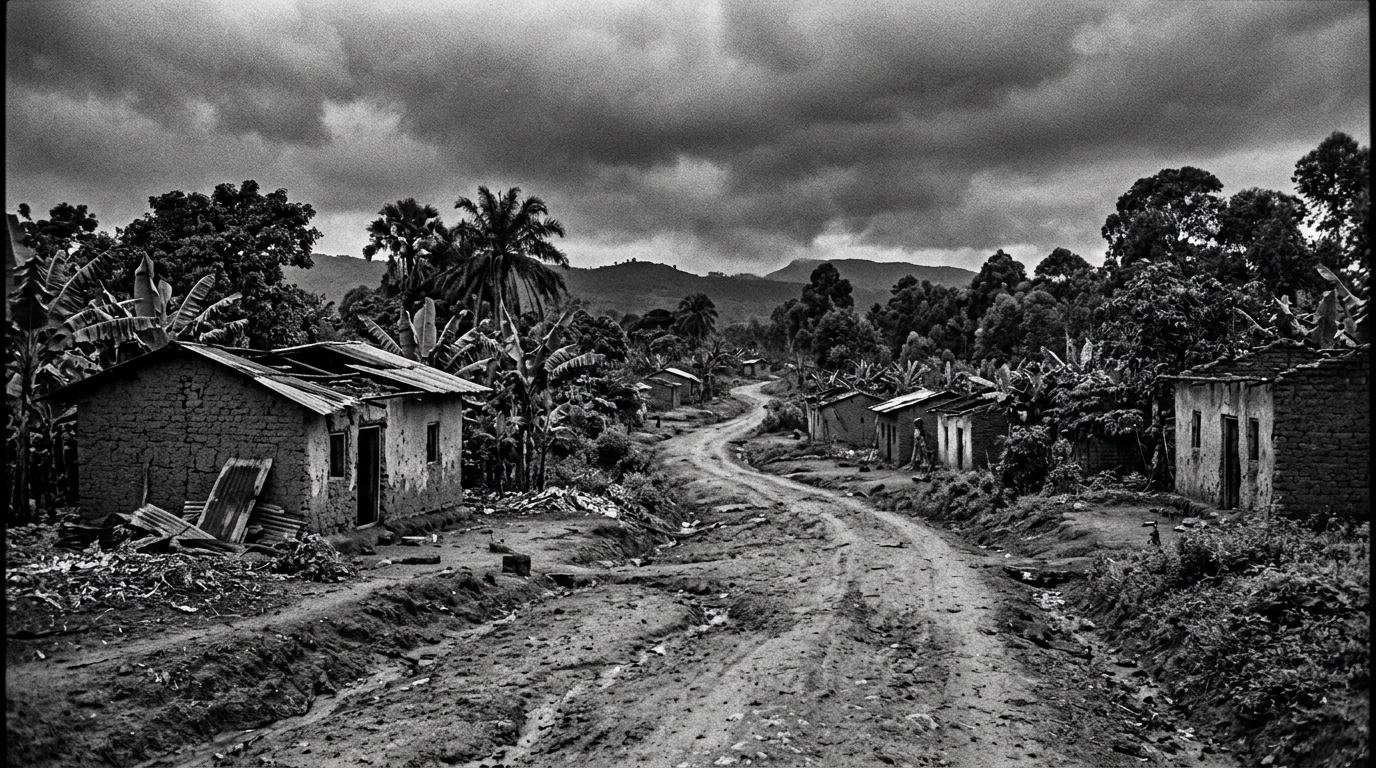
Between April and July 1994, the small East African nation of Rwanda descended into a carefully orchestrated campaign of mass extermination. Over the span of approximately one hundred days, Hutu extremists systematically slaughtered an estimated 800,000 to one million Tutsis and politically moderate Hutus. The velocity of the slaughter was unprecedented, outstripping the rate of killings during the Holocaust.
What characterized this catastrophe, however, was not merely the brutality of its execution, but the absolute paralysis of the international community. Despite unambiguous intelligence warning of the impending slaughter, the United Nations, the United States, France, and other global powers actively chose to look away, withdrawing peacekeepers and engaging in semantic gymnastics to avoid legal obligations to intervene. This article explores the historical architecture of the genocide, the mechanics of international avoidance, and the enduring geopolitical wreckage left in its wake.
Historical Context and Origins
To understand the sudden explosion of violence in 1994, one must dismantle the structural cleavages engineered during Rwanda’s colonial period. Prior to European arrival, the divide between the Hutu (traditionally agriculturalists) and the Tutsi (traditionally cattle-owning pastoralists) was characterized by social fluidity. They shared a common language (Kinyarwanda), worshipped the same god, and lived side-by-side. The Tutsi minority formed the aristocratic ruling class, but social mobility was possible; a wealthy Hutu could "become" a Tutsi (kwihutura), and vice versa.
The Colonial Construction of Race
This domestic social equilibrium was fundamentally disrupted by German colonization in 1884, and more permanently by Belgian administration after World War I. Influenced by the "Hamitic Hypothesis"—the pseudo-scientific racial theory that the Tutsi were a superior, non-African "Hamitic" race descended from Caucasian lineage 1—Belgian administrators institutionalized a rigid racial hierarchy.
In 1932 and 1933, the Belgian colonial administration conducted a census and issued compulsory ethnic identity cards. These cards permanently categorized every Rwandan as Hutu, Tutsi, or Twa, codifying a biological caste system. Tutsis were favored for administrative posts, higher education, and chieftainships, while the Hutu majority was subjected to forced labor and systematic disenfranchisement.
Colonial Hierarchy (1918–1959)
- Belgian Colonial Administration / Catholic Church
The 1959 Revolution and Post-Independence Polarization
By the late 1950s, the tide of decolonization shifted Belgian allegiances. As Tutsis began demanding independence, the Belgian administration and the Catholic Church pivotally switched their support to the Hutu majority, capitalizing on growing populist resentment. The "Social Revolution" of 1959, led by Hutu nationalists, resulted in widespread anti-Tutsi pogroms. Tens of thousands of Tutsis fled into neighboring Uganda, Burundi, and Zaire.
When Rwanda gained formal independence in 1962 under President Grégoire Kayibanda, the state was reconstituted as a "majoritarian" Hutu republic. The ethnic hierarchy was inverted, but the system of ethnic identity cards and quotas was preserved. Tutsis remaining in Rwanda were subjected to periodic violence and treated as second-class citizens.
In 1973, Major General Juvénal Habyarimana seized power in a bloodless coup. While stabilizing the economy for a time, his regime maintained a patronage network that favored Hutus from his northern home region (the Akazu). By the late 1980s, Rwanda faced a severe economic crisis driven by a collapse in global coffee prices, compounding domestic land shortages and demographic pressures.
The Rise of the RPF and the Arusha Accords
In 1987, Tutsi exiles in Uganda formed the Rwandan Patriotic Front (RPF), a highly organized military and political movement led by Fred Rwigyema and later Paul Kagame. On October 1, 1990, the RPF launched a military invasion of northern Rwanda from Uganda, demanding the right of return for refugees and a democratic, multi-ethnic government.
Habyarimana’s regime used the invasion to stoke ethnic fears, portraying all domestic Tutsis as internal accomplices to the RPF. Under intense international pressure, Habyarimana eventually signed the Arusha Accords in August 1993. This peace treaty designed a power-sharing transition government, integrated RPF soldiers into the national army, and cleared the path for the return of Tutsi refugees.
To Hutu extremists within the Akazu and the military, the Arusha Accords were an existential betrayal. They began preparing a radical contingency plan, stockpiling hundreds of thousands of agricultural machetes and organizing youth militias, most notably the Interahamwe ("those who stand/fight together") and the Impuzamugambi ("those who have the same goal").
Timeline of Events and Key Moments
The catalyst for the systematically planned extermination occurred on the evening of April 6, 1994.
The Spark: April 6, 1994
At approximately 8:20 PM, a Dassault Falcon 50 carrying President Habyarimana and Burundian President Cyprien Ntaryamira was shot down by surface-to-air missiles as it prepared to land at Kigali International Airport. Everyone on board was killed. While the perpetrators of the assassination remain a subject of intense historical debate—with theories pointing to either Hutu extremists fearing the Arusha Accords or the RPF—the reaction of the Hutu hardliners was instantaneous.
Within hours of the crash, the Rwandan Armed Forces (FAR) and the Interahamwe set up roadblocks across Kigali. Under the direction of Colonel Théoneste Bagosora, a key figure in the Akazu, the presidential guard began executing prominent moderate political figures to eliminate any constitutional leadership.
April 7: The Execution of Leadership and Peacekeepers
On the morning of April 7, Prime Minister Agathe Uwilingiyimana, a moderate Hutu who was the legal head of state following the president's death, was cornered, sexually assaulted, and assassinated by Rwandan government forces. Ten Belgian peacekeepers assigned by the United Nations Assistance Mission for Rwanda (UNAMIR) to protect her were disarmed, tortured, and brutally killed.
The execution of the Belgians was a calculated tactical move by Bagosora’s cabal. They recognized that the killing of Western soldiers would trigger a rapid evacuation of foreign forces, leaving the civilian population entirely vulnerable. The gambit succeeded; Belgium immediately withdrew its entire military contingent from UNAMIR.
The "Genocide Cable" and Ignored Warnings
The tragedy was compounded by the fact that the United Nations had received explicit, granular warnings months prior. On January 11, 1994, the commander of UNAMIR, Canadian Major-General Roméo Dallaire, sent the famous "Genocide Cable" to the UN Department of Peacekeeping Operations (DPKO) in New York, then headed by Kofi Annan 2.
| Actor / Stage | Action / Decision |
|---|---|
| General Roméo Dallaire (UNAMIR) | Sends "Genocide Cable" (Jan 11, 1994) warning of planned Tutsi slaughter and weapon stockpiles |
| UN Department of Peacekeeping Operations (Kofi Annan) | Denies permission to raid weapons caches and instructs Dallaire to avoid offensive action |
| Institutional Inaction | Results in bureaucratic paralysis |
Dallaire's cable detailed intelligence from a high-level informant within the Interahamwe, Jean-Pierre Turatsinze, who revealed that militias were registering all Tutsis in Kigali for systematic elimination and could kill up to 1,000 Tutsis in twenty minutes. The informant also disclosed the location of major weapons caches. Dallaire requested permission to raid these caches. DPKO denied the request, instructing Dallaire to avoid offensive action and merely brief the diplomatic corps in Kigali, citing the strict defensive parameters of UNAMIR’s Chapter VI mandate.
The Escalation of Mass Slaughter
With the withdrawal of the Belgians and the systematic neutering of UNAMIR, the genocidal regime launched a nationwide mobilization. The state apparatus was entirely co-opted for slaughter. Local mayors, administrators, and police chiefs were ordered to coordinate the killings. Citizens who refused to participate were themselves labeled accomplices and executed.
The genocidaires utilized state-of-the-art propaganda to orchestrate the killings. The Radio Télévision Libre des Mille Collines (RTLM), founded by Hutu extremists in 1993, broadcasted hate speech daily, referring to Tutsis as "cockroaches" (Inyenzi) and directing killers to specific locations where Tutsis were hiding.
"You have to kill the Tutsis, they are cockroaches... Go to work, clear the brush, fill the graves that are only half-full." — An RTLM radio broadcast excerpt, mid-April 1994
Tutsis sought refuge in places traditionally considered sanctuaries—churches, stadiums, and schools. Instead of offering safety, these locations became concentration points where militias could kill thousands of people at once with minimal effort. In places like the Nyarubuye Catholic Church and the Murambi Technical School, tens of thousands were butchered over several days by militias utilizing machetes, clubs, and small arms.
Geopolitical Consequences and Aftermath
The military victory of the Rwandan Patriotic Front, led by Paul Kagame, brought an end to the genocide in mid-July 1994. By capturing Kigali and establishing a coalition government, the RPF forced the genocidal government and military to flee. However, the end of the slaughter within Rwanda marked the beginning of a profound regional and geopolitical crisis.
RPF Military Victory (July 1994)
- Flight of 2 Million Hutus to Zaire (Including armed Genocidaires)
The Great Lakes Refugee Crisis and the Congo Wars
As the RPF advanced, over two million Hutus fled across Rwanda’s borders, primarily into the Kivu region of neighboring Zaire (now the Democratic Republic of the Congo, DRC). Fearing RPF retribution, this massive exodus included not only innocent civilians but also the entire political leadership of the genocide, the FAR soldiers, and the Interahamwe militias.
In the border camps established by the UN High Commissioner for Refugees (UNHCR), the genocidaires quickly re-established political and military control, using humanitarian aid to feed their militias and launching cross-border guerrilla raids into Rwanda. This situation proved intolerable for the new RPF government in Kigali.
In 1996, Rwanda, allied with Uganda and local Congolese rebels led by Laurent-Désiré Kabila, invaded Zaire to dismantle the refugee camps and eliminate the genocidaires. This action launched the First Congo War, which successfully overthrew the long-time dictator of Zaire, Mobutu Sese Seko.
However, relations between Kagame and Kabila rapidly soured, leading to the Second Congo War (1998–2003). Often referred to as "Africa's World War," this conflict involved nine African nations and numerous armed groups, resulting in an estimated 5.4 million deaths, primarily due to disease, displacement, and starvation 3. The eastern DRC remains deeply unstable to this day, as remnants of the genocidal forces (now operating as the FDLR) and various counter-militias continue to clash.
Transitional Justice and Reconciliation
Domestically, the post-genocide government faced the monumental task of delivering justice in a completely shattered society. The national judicial infrastructure was non-existent; lawyers, judges, and courts had been systematically targeted or had fled.
To resolve this crisis, Rwanda deployed a three-tiered justice strategy:
- The International Criminal Tribunal for Rwanda (ICTR): Established by the UN Security Council in late 1994 and located in Arusha, Tanzania, the tribunal prosecuted high-level planners, military leaders, and media executives. Notably, it was the first international court to recognize rape as a weapon of war and a component of genocide.
- National Court System: Prosecuted those who planned or executed the genocide with high cruelty.
- Gacaca Courts: Facing a backlog of over 100,000 prisoners, the government resurrected a traditional community justice system called Gacaca ("justice on the grass") in 2001. Over a decade, more than 12,000 local community courts processed over 1.2 million cases, focusing on truth-telling, community service, and local reconciliation.
Analysis of Key Actors and Decisive Actions
The failure to prevent or halt the Rwandan Genocide is widely analyzed as one of the most significant foreign policy failures of the late 20th century. A network of institutional risk-aversion, political calculation, and post-Cold War fatigue combined to produce global paralysis.
The United States and the "Somalia Syndrome"
The foreign policy of the Clinton administration in April 1994 was deeply haunted by the October 1993 Battle of Mogadishu ("Black Hawk Down"). The death of 18 US Army Rangers during a humanitarian intervention in Somalia had produced a severe domestic political backlash, leaving President Bill Clinton highly reluctant to commit US forces to any sub-Saharan African conflict.
Just weeks before the Rwandan genocide began, Clinton signed Presidential Decision Directive 25 (PDD-25). This document established highly restrictive criteria for US participation in UN peacekeeping missions, requiring a clear threat to international peace, a defined exit strategy, and a direct relation to US national interests. Rwanda met none of these criteria.
Consequently, the United States did not merely refuse to intervene; it actively worked at the UN Security Council to block others from intervening. US diplomats led the effort to reduce UNAMIR's troop levels and lobbied to ensure that the term "genocide" was not officially used in diplomatic briefings. Under the 1948 Genocide Convention, the formal recognition of a genocide legally binds signatories to act to prevent and punish the crime.
"If we use the word 'genocide', we have to do something about it. We have to be very careful. We are not going to get involved in this." — Internal US State Department memo discussion, April 1994 [^4]
During public press briefings, US officials engaged in semantic gymnastics, describing the situation as "acts of genocide" while stubbornly refusing to label the event a systematic "genocide."
The Semantic Barrier (PDD-25)
- Actor: US State Dept / Clinton Administration
- Action: Questioning "Are there acts of genocide?"
- Response: "Yes, but it is not a systemic 'Genocide'."
- Consequence 1: Avoids Legal Activation of the 1948 Genocide Convention
- Consequence 2: Zero U.S. Military Deployment / Mandate Stalled
The United Nations Security Council
The UN Security Council’s response was characterized by systemic paralysis. On April 21, 1994, two weeks into the genocide, rather than reinforcing General Dallaire's depleted troops, the Security Council voted unanimously (Resolution 912) to reduce the UNAMIR force from 2,548 to a skeleton crew of 270 soldiers.
In an extraordinary historical irony, Rwanda held one of the non-permanent seats on the UN Security Council during the genocide. The representative of the genocidal interim government, Jean-Damascène Bizimana, sat in closed-door sessions in New York, receiving intelligence on international hesitation and using his position to downplay the killings as an uncontrollable manifestation of "civil war."
France and "Opération Turquoise"
France maintained a long-standing geopolitical relationship with the Habyarimana regime as part of its Francafrique policy, which aimed to preserve French influence in Francophone Africa. Throughout the early 1990s, French military advisers trained the FAR, and French state companies supplied weapons to the Rwandan military, viewing the Anglophone RPF as an instrument of Anglo-American expansion in East Africa.
In late June 1994, as the RPF closed in on victory, France received authorization from the UN Security Council to deploy a unilateral military-humanitarian mission, Opération Turquoise. French forces established a "Humanitarian Safe Zone" in southwestern Rwanda. While the intervention saved some Tutsi lives, it also served as a protective shield for the fleeing genocidal government and military forces, allowing them to escape into Zaire with their heavy weaponry. In 2021, the landmark Duclert Commission, commissioned by French President Emmanuel Macron, concluded that France bore "heavy and overwhelming responsibilities" for failing to prevent the genocide, though it found no evidence of direct complicity in the killings.
Trivia and Lesser-Known Facts
- The Hero of the Mille Collines: Paul Rusesabagina, a manager at the luxury Hôtel des Mille Collines in Kigali, used his political connections, strategic bribery, and imported alcohol to shield 1,268 Tutsi and moderate Hutu refugees from the Interahamwe. His actions were later dramatized in the 2004 film Hotel Rwanda.
- The Intercepted Radio Broadcasts: Although the US possessed sophisticated electronic jamming capabilities in the region, the Pentagon rejected requests to jam the genocidal broadcasts of the RTLM. Officials concluded that the operation would cost too much ($8,500 per flight hour) and would violate international principles of freedom of speech.
- The Heroism of Mbaye Diagne: Senegalese Captain Mbaye Diagne, a UNAMIR military observer, saved hundreds of Rwandans by repeatedly driving unarmed through militia-controlled checkpoints, relying on his charisma, small bribes, and sheer courage. He was killed by an RPF mortar shell on May 31, 1994, just weeks before the end of the genocide. His death deeply traumatized the remaining UN force.
- The "Responsibility to Protect" (R2P) Legacy: The collective shame of the international community over its failure in Rwanda directly inspired the formulation of the "Responsibility to Protect" (R2P) doctrine. Adopted at the 2005 UN World Summit, R2P asserts that the international community has a duty to intervene militarily if a sovereign state fails to protect its own citizens from mass atrocities, war crimes, ethnic cleansing, or genocide.
References and Literature
- The US Department of State Declassified Archives on Rwanda - A comprehensive collection of declassified cables, memos, and intelligence briefings showing what the Clinton administration knew in real-time.
- The United Nations Independent Inquiry into the Actions of the United Nations During the 1994 Genocide in Rwanda - The official 1999 report commissioned by Secretary-General Kofi Annan, analyzing the systemic organizational failures of the UN.
- Prunier, Gérard. (1995). The Rwanda Crisis: History of a Genocide. Columbia University Press. - A definitive, academically rigorous historical account of the root causes, development, and aftermath of the genocide.
- Power, Samantha. (2002). “A Problem from Hell”: America and the Age of Genocide. Basic Books. - Contains an extensive, award-winning analysis of the United States' decision-making and diplomatic avoidance during the 100 days of the crisis.
---
Footnotes & Explanations
- This pseudo-scientific theory was popularized by 19th-century British explorer John Hanning Speke, who posited that any elements of complex civilization found in Africa were introduced by "Hamitic" peoples of semi-Caucasian origin. ↩
- For the complete annotated text of the "Genocide Cable" sent on January 11, 1994, see the National Security Archive electronic briefing book series. ↩
- See the International Rescue Committee (IRC) mortality surveys of the Democratic Republic of the Congo (1998-2007) for detailed epidemiological data. ↩
- This dynamic is discussed in depth in the declassified Department of State memoranda retrieved by the National Security Archive at George Washington University. ↩